The second Russia-Central Asia Summit and a meeting of the Council of Heads of State of the Commonwealth of Independent States (CIS) were held in the Tajik capital of Dushanbe from Thursday to Friday, focusing on regional security and cooperation in various fields.
Ahead of the two events, Russian President Vladimir Putin made a state visit to Tajikistan, where he was warmly welcomed by Tajik President Emomali Rahmon. Following the ceremonial reception, the two leaders held talks to review the current state and future trajectory of the relations between the two countries.
On Thursday evening, the second Russia-Central Asia Summit was held, during which leaders of the participating countries explored ways to deepen cooperation in the economic, trade, cultural, and humanitarian spheres.
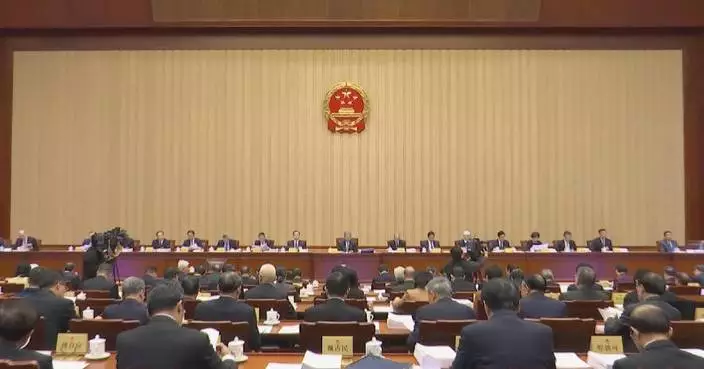
On Friday, the CIS Council of Heads of State convened at the Palace of the Nation in Dushanbe. Regional security dominated the agenda, with a focus on countering terrorism and extremism and enhancing border and military cooperation. The leaders also emphasized the importance of expanding economic collaboration within the CIS framework.
At the meeting, the heads of state decided to establish "CIS Plus", an expanded format of the organization, and granted the Shanghai Cooperation Organization (SCO) observer status within the Commonwealth. Participants noted that this decision will help broaden the organization's international engagement.
In an interview with the China Global Television Network (CGTN), CIS Secretary-General Sergey Lebedev highlighted the importance of cooperation between the CIS and China.
"I attended the SCO summit in Tianjin and the celebrations marking the 80th anniversary of victory in World War II in Beijing. Wherever I went, I was warmly received. I held meetings with [Chinese President] Xi Jinping and other leaders from CIS and SCO countries. This interaction is developing, and I am confident it has strong prospects," said Lebedev.
A total of 19 documents were signed following the meeting of the Council of Heads of State of CIS, including a declaration on cooperation in ensuring regional energy security.
The meeting also adopted the concept of military cooperation for CIS member states until 2030, a cooperation program to strengthen border security along the CIS external frontiers for 2026-2030, a cooperation program to counter terrorism and extremism, and a number of other documents.
It also decided that Turkmenistan will assume the CIS chairmanship in 2026 and Lebedev will continue to serve as CIS secretary-general for the next three years.
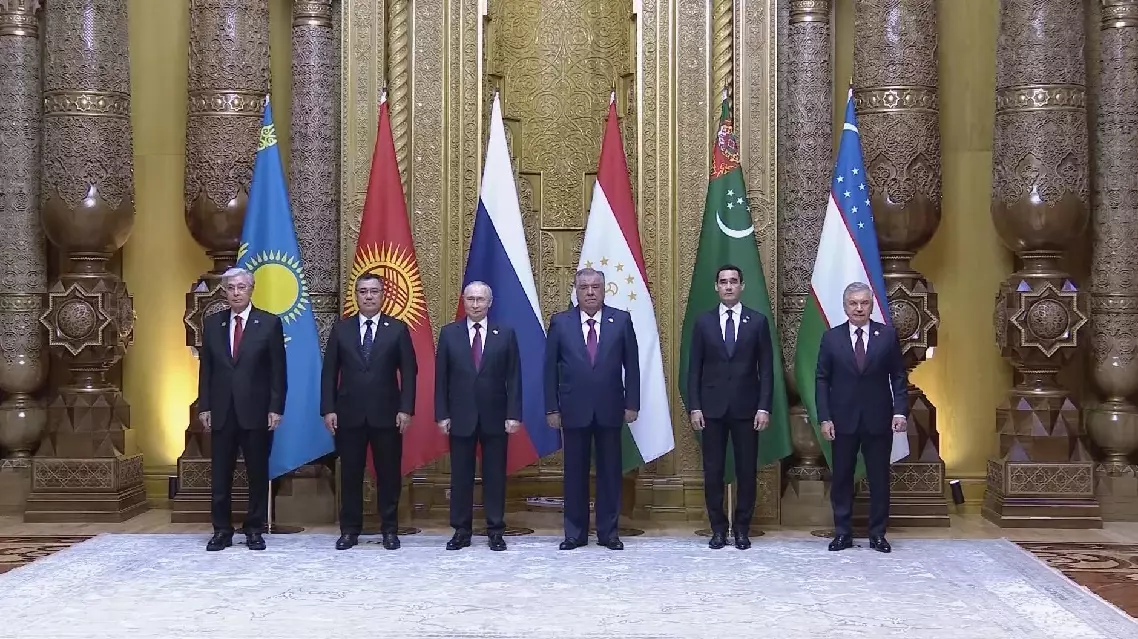
Heads of CIS states meet in Dushanbe for security, cooperation
The annual number of inbound and outbound travelers passing through Hong Kong's West Kowloon Station on the Guangzhou-Shenzhen-Hong Kong Express Rail Link exceeded 30 million for the first time on Sunday, fueled by accelerated regional integration and relaxed visa policies.
The daily average number of border crossings through West Kowloon Station reached 85,000 this year, while the highest single-day figure hit 136,000, according to the Shenzhen General Station of Exit and Entry Frontier Inspection in south China's Guangdong Province.
The West Kowloon Station connects Hong Kong with 96 stations in 19 provincial-level regions on the Chinese mainland.
"We mainly want to visit the Canton Tower in Guangzhou and experience the cruise on the Pearl River," said Mr. Sun, a Hong Kong resident, at the station.
The accelerated integration is also boosting study trips between Hong Kong and Guangdong Province.
"Today we will go to Xingning in Meizhou to film our Classical Prose Recitation Competition. We hope that during this trip, students will be able to learn about the culture of our motherland," said Lin Qing, a teacher at Hong Kong's South Yuen Long Government Primary School.
"I'm really looking forward to this trip because we can learn about Guangzhou, and also about some of the development and culture of the Maritime Silk Road," said a student from Hong Kong's Tseung Kwan O Government Secondary School.
This year, nearly 1.4 million foreign tourists have made entry and exit trips via West Kowloon Station, up 24 percent year on year.
China's National Immigration Administration (NIA) in November expanded the country's 240-hour visa-free transit program to five additional ports, including West Kowloon Station on the Guangzhou-Shenzhen-Hong Kong Express Rail Link.
"We want to go to Guangzhou and to Shenzhen. Guangzhou -- we know a little bit about older culture -- and Shenzhen I know a little bit because it's a tech hub. I love tech, so I really want to see more," said a tourist from the Netherlands at West Kowloon Station.
"We are going to Huizhou, and also to Shenzhen. Yeah," said a tourist from Spain.
"Because also we are content creators about drones. I think China brands are innovating in the technology world. So it's incredible, because I love to fly drones and try new technology," another Spanish tourist said.
China's new policy introduced in November raised the total number of ports eligible for the 240-hour visa-free transit from 60 to 65.
Under the policy, travelers from 55 eligible countries who meet certain criteria can enter China through any of these ports in 24 provincial-level regions and stay for up to 240 hours, or 10 days, without a visa before heading to a third destination, according to the NIA.
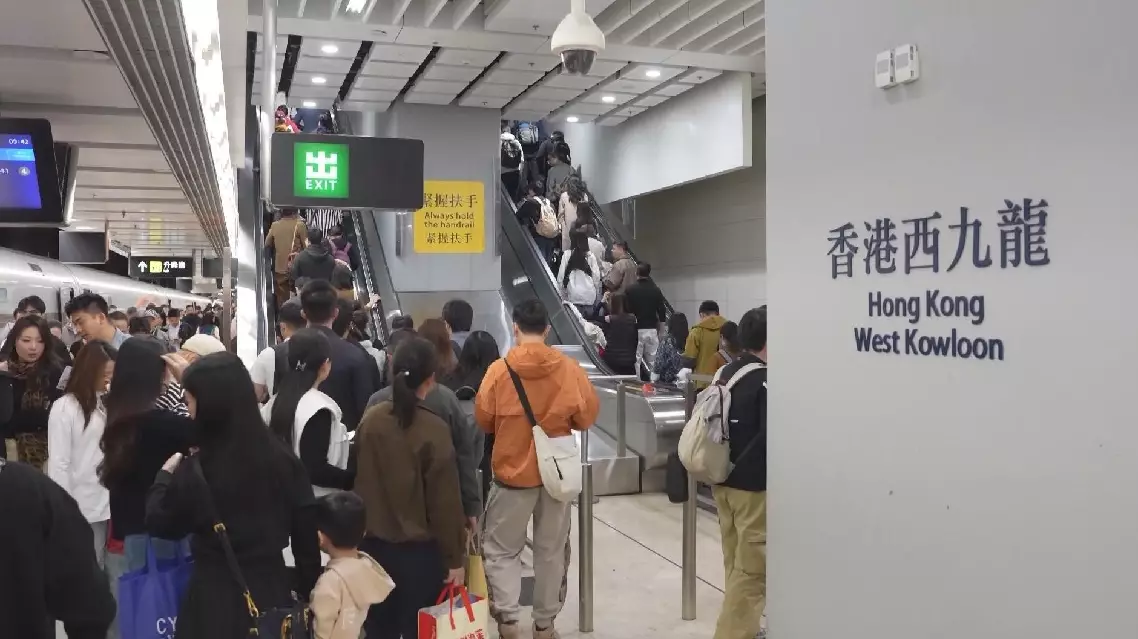
HK's West Kowloon Station sees annual passenger flow exceed 30 million