SEATTLE (AP) — Ramón Rodriguez Vazquez was a farmworker for 16 years in southeast Washington state, where he and his wife of 40 years raised four children and 10 grandchildren. The 62-year-old was a part of a tight-knit community and never committed a crime.
On Feb. 5, immigration officers who came to his house looking for someone else took him into custody. He was denied bond, despite letters of support from friends, family, his employer and a physician who said the family needed him.
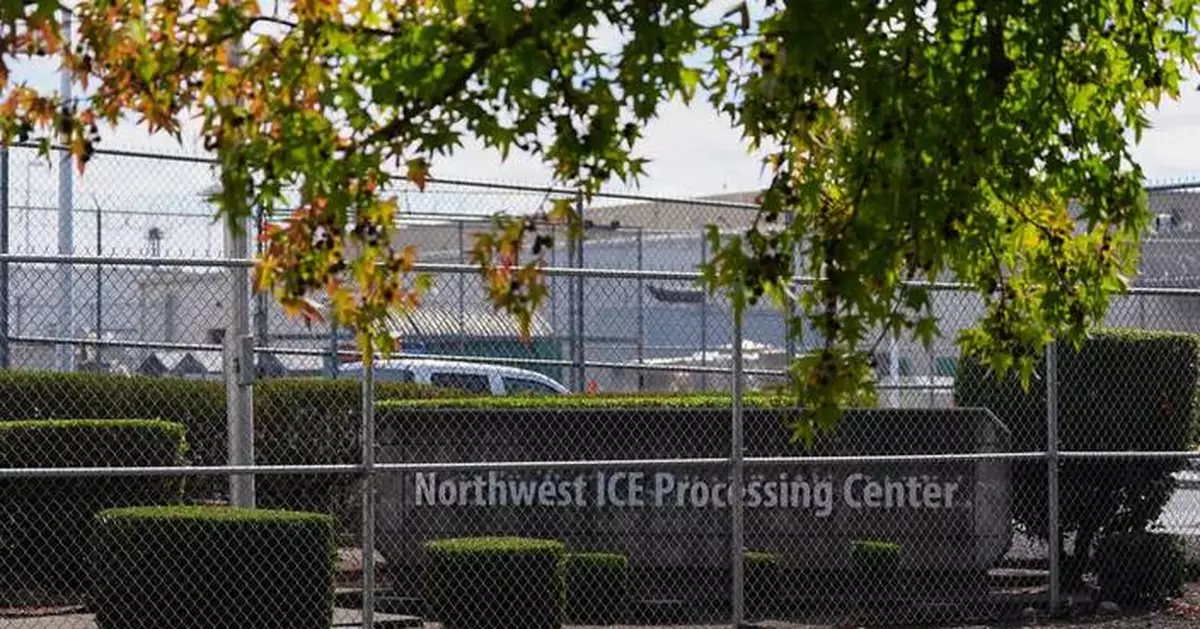
He was sent to a U.S. Immigration and Customs Enforcement detention center in Tacoma, Washington, where his health rapidly declined in part because he was not always provided with his prescription medication for several medical conditions, including high blood pressure. Then there was the emotional toll of being unable to care for his family or sick granddaughter. Overwhelmed by it all, he finally gave up.
At an appearance with an immigration judge, he asked to leave without a formal deportation mark on his record. The judge granted his request and he moved back to Mexico, alone.
His case is an exemplar of the impact of the Trump administration's aggressive efforts to deport millions of migrants on an accelerated timetable, casting aside years of procedure and legal process in favor of expedient results.
Similar dramas are playing out at immigration courts across the country, accelerating since early July, when ICE began opposing bond for anyone detained regardless of their circumstances.
“He was the head of the house, everything — the one who took care of everything,” said Gloria Guizar, 58, Rodriguez's wife. “Being separated from the family has been so hard. Even though our kids are grown, and we’ve got grandkids, everybody misses him.”
Leaving the country was unthinkable before he was held in a jail cell. The deportation process broke him.
It is impossible to know how many people left the U.S. voluntarily since President Donald Trump took office in January because many leave without telling authorities. But Trump and his allies are counting on “self-deportation,” the idea that life can be made unbearable enough to make people leave voluntarily.
The Justice Department's Executive Office for Immigration Review, which oversees immigration courts, said judges granted “voluntary departure” in 15,241 cases in the 12-month period that ended Sept. 30, allowing them to leave without a formal deportation mark on their record or bar to re-entry. That compares with 8,663 voluntary departures for the previous fiscal year.
ICE said it carried out 319,980 deportations from Oct. 1, 2024 to Sept. 20. Customs and Border Protection declined to disclose its number and directed the question to the Department of Homeland Security.
Secretary Kristi Noem said in August that 1.6 million people have left the country voluntarily or involuntarily since Trump took office. The department cited a study by the Center for Immigration Studies, a group that advocates for immigration restrictions.
Michelle Mittelstadt, spokesperson for the Migration Policy Institute, a nonpartisan think tank, said 1.6 million is an over-inflated number that misuses the Census Bureau data.
The administration is offering $1,000 to people who leave voluntarily using the CBP Home app. For those who don't, there is a looming threat of being sent to a third country like Eswatini, Rwanda, South Sudan or Uganda,.
Department of Homeland Security Assistant Secretary Tricia McLaughlin said the voluntary departures show that the administration’s strategy is working, and is keeping the country safe.
“Ramped-up immigration enforcement targeting the worst of the worst is removing more and more criminal illegal aliens off our streets every day and is sending a clear message to anyone else in this country illegally: Self-deport or we will arrest and deport you,” she said in a statement sent to The Associated Press.
A Colombian woman dropped her asylum claim at a June appearance in a Seattle immigration court, even though she was not in custody.
“Your lawyer says you no longer wish to proceed with your asylum application,” the judge said. “Has anyone offered you money to do this?” he asked. “No, sir,” she replied. Her request was granted.
Her U.S. citizen girlfriend of two years, Arleene Adrono, said she planned to leave the country as well.
“They treat her like a criminal. She’s not a criminal,” Adrono said. "I don’t want to live in a country that does this to people.”
At an immigration court inside the Tacoma detention center, where posters encourage migrants to leave voluntarily or be forcibly deported, a Venezuelan man told Judge Theresa Scala in August that he wanted to leave. The judge granted voluntary departure.
The judge asked another man if he wanted more time to find a lawyer and if he was afraid to return to Mexico. “I want to leave the country,” the man responded.
“The court finds you’ve given up all forms of relief,” Scala said. “You must comply with the government efforts to remove you.”
Ramón Rodriguez crossed the U.S. border in 2009. His eight siblings who are U.S. citizens lived in California, but he settled Washington state. Grandview, population 11,000, is an agricultural town that grows apples, cherries, wine grapes, asparagus and other fruit and vegetables.
Rodriguez began working for AG Management in 2014. His tax records show he made $13,406 that first year and by 2024, earned $46,599 and paid $4,447 in taxes.
“During his time with us, he has been an essential part of our team, demonstrating dedication, reliability, and a strong work ethic," his boss wrote in a letter urging a judge to release him from custody. "His skills in harvesting, planting, irrigation, and equipment operation have contributed significantly to our operations, and his absence has been deeply felt.”
His granddaughter suffers from a heart problem, has undergone two surgeries and needs a third. Her mother doesn't drive so Rodriguez transported the girl to Spokane for care. The child's pediatrician wrote a letter to the immigration judge encouraging his release, saying without his help, the girl might not get the medical care she needs.
The judge denied his bond request in March. Rodriguez appealed and became the lead plaintiff in a federal lawsuit that sought to allow detained immigrants to request and receive bond.
On September 30, a federal judge ruled that denying bond hearings for migrants is unlawful. But Rodriguez won't benefit from the ruling. He's gone now and is unlikely to come back.
__
Associated Press reporter Cedar Attanasio contributed to this story.
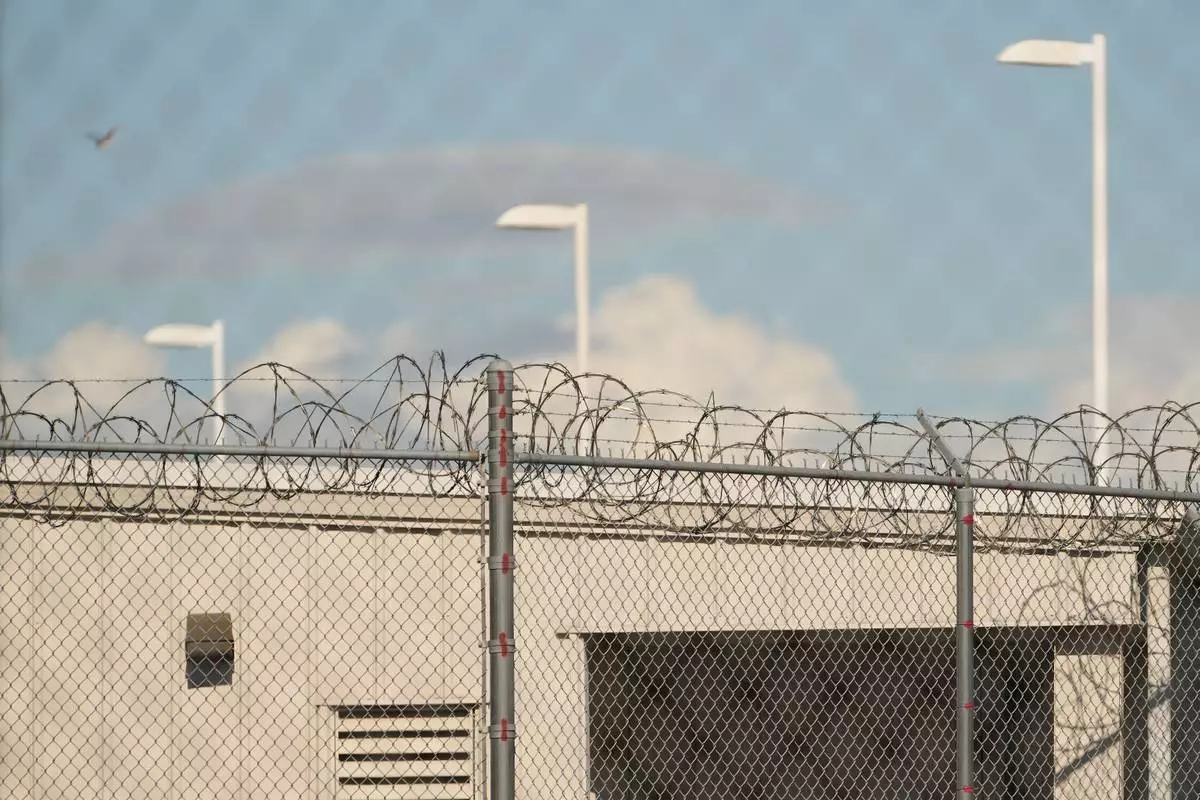
Barbed wire is seen through chain link fences at the Northwest U.S. Immigration and Customs Enforcement Processing Center, Aug. 13, 2025, in Tacoma, Wash. (AP Photo/Lindsey Wasson)
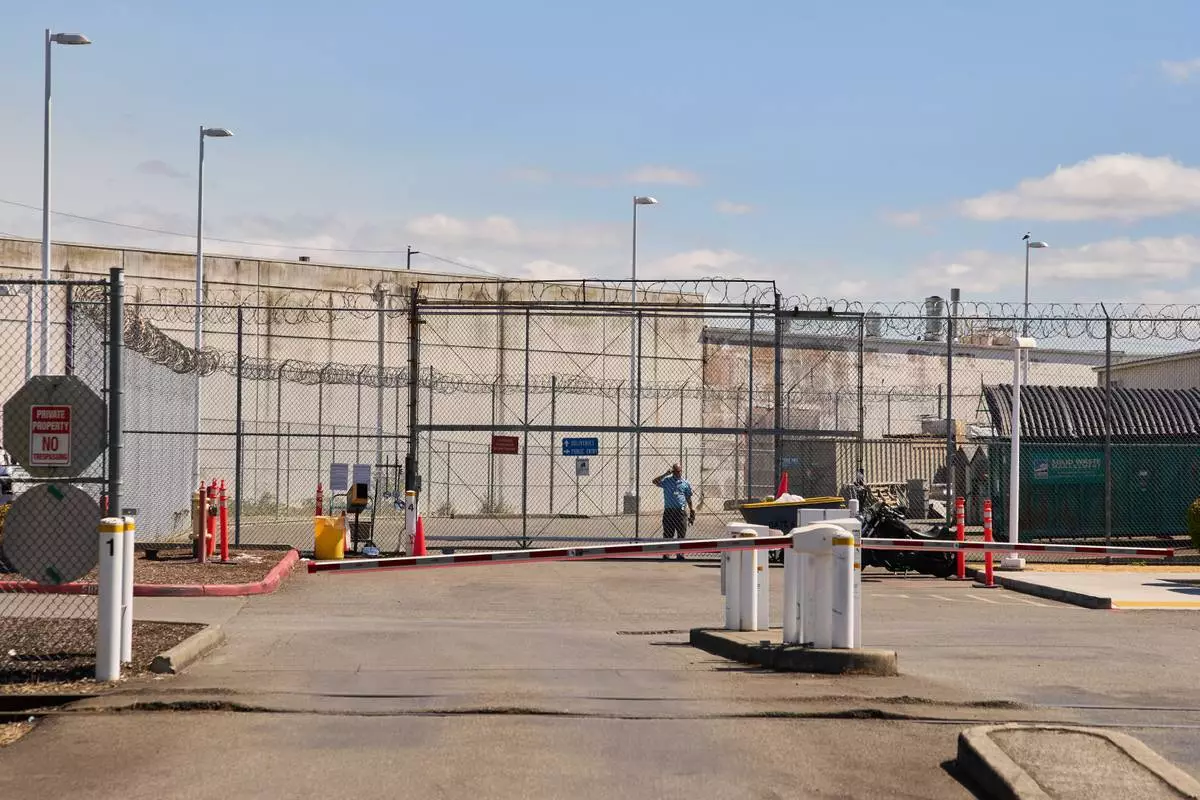
A GEO Group guard looks on from behind the fence at the Northwest U.S. Immigration and Customs Enforcement Processing Center, Aug. 13, 2025, in Tacoma, Wash. (AP Photo/Lindsey Wasson)
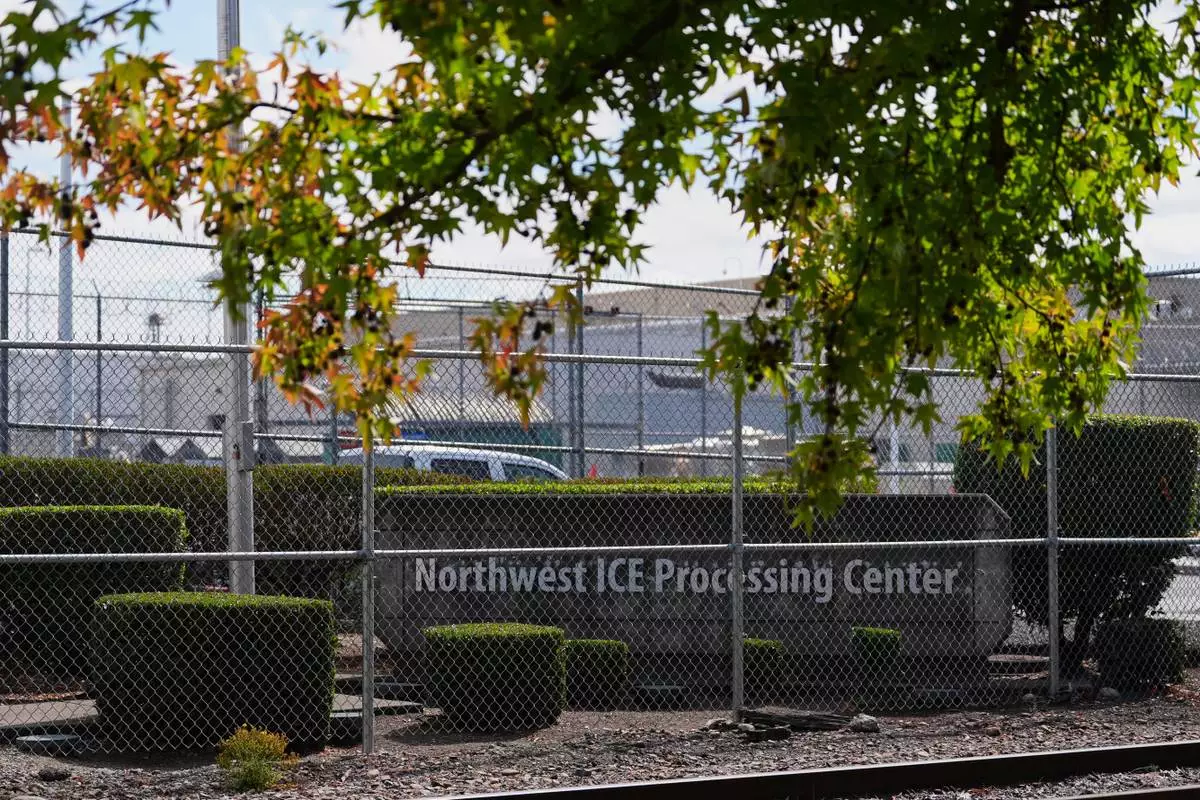
The entrance to the Northwest U.S. Immigration and Customs Enforcement Processing Center is seen, Aug. 13, 2025, in Tacoma, Wash. (AP Photo/Lindsey Wasson)
HAVANA (AP) — Cuban soldiers wearing white gloves marched out of a plane on Thursday carrying urns with the remains of the 32 Cuban officers killed during a stunning U.S. attack on Venezuela as trumpets and drums played solemnly at Havana's airport.
Nearby, thousands of Cubans lined one of Havana’s most iconic streets to await the bodies of colonels, lieutenants, majors and captains as the island remained under threat by the administration of U.S. President Donald Trump.
The soldiers' shoes clacked as they marched stiff-legged into the headquarters of the Ministry of the Armed Forces, next to Revolution Square, with the urns and placed them on a long table next to the pictures of those killed so people could pay their respects.
Thursday’s mass funeral was only one of a handful that the Cuban government has organized in almost half a century.
Hours earlier, state television showed images of more than a dozen wounded people described as “combatants” accompanied by Cuban Foreign Minister Bruno Rodríguez arriving Wednesday night from Venezuela. Some were in wheelchairs.
Those injured and the remains of those killed arrived as tensions grow between Cuba and the U.S., with Trump recently demanding that the Caribbean country make a deal with him before it is “too late.” He did not explain what kind of deal.
Trump also has said that Cuba will no longer live off Venezuela's money and oil. Experts warn that the abrupt end of oil shipments could be catastrophic for Cuba, which is already struggling with serious blackouts and a crumbling power grid.
Officials unfurled a massive flag at Havana's airport as President Miguel Díaz-Canel, clad in military garb as commander of Cuba's Armed Forces, stood silent next to former President Raúl Castro, with what appeared to be the relatives of those killed looking on nearby.
Cuban Interior Minister Lázaro Alberto Álvarez Casa said Venezuela was not a distant land for those killed, but a “natural extension of their homeland.”
“The enemy speaks to an audience of high-precision operations, of troops, of elites, of supremacy,” Álvarez said in apparent reference to the U.S. “We, on the other hand, speak of faces, of families who have lost a father, a son, a husband, a brother.”
Álvarez called those slain “heroes,” saying that they were an example of honor and “a lesson for those who waver.”
“We reaffirm that if this painful chapter of history has demonstrated anything, it is that imperialism may possess more sophisticated weapons; it may have immense material wealth; it may buy the minds of the wavering; but there is one thing it will never be able to buy: the dignity of the Cuban people,” he said.
Thousands of Cubans lined a street where motorcycles and military vehicles thundered by with the remains of those killed.
“They are people willing to defend their principles and values, and we must pay tribute to them,” said Carmen Gómez, a 58-year-old industrial designer, adding that she hopes no one invades given the ongoing threats.
When asked why she showed up despite the difficulties Cubans face, Gómez replied, “It’s because of the sense of patriotism that Cubans have, and that will always unite us.”
Cuba recently released the names and ranks of 32 military personnel — ranging in age from 26 to 60 — who were part of the security detail of Venezuelan President Nicolás Maduro during the raid on his residence on January 3. They included members of the Revolutionary Armed Forces and the Ministry of the Interior, the island’s two security agencies.
Cuban and Venezuelan authorities have said that the uniformed personnel were part of protection agreements between the two countries.
A demonstration was planned for Friday across from the U.S. Embassy in an open-air forum known as the Anti-Imperialist Tribune. Officials have said they expect the demonstration to be massive.
“People are upset and hurt. There’s a lot of talk on social media; but many do believe that the dead are martyrs” of a historic struggle against the United States, analyst and former diplomat Carlos Alzugaray told The Associated Press.
In October 1976, then-President Fidel Castro led a massive demonstration to bid farewell to the 73 people killed in the bombing of a Cubana de Aviación civilian flight financed by anti-revolutionary leaders in the U.S. Most of the victims were Cuban athletes.
In December 1989, officials organized “Operation Tribute” to honor the more than 2,000 Cuban combatants who died in Angola during Cuba’s participation in the war that defeated the South African army and ended the apartheid system. In October 1997, memorial services were held following the arrival of the remains of guerrilla commander Ernesto “Che” Guevara and six of his comrades, who died in 1967.
The latest mass burial is critical to honor those slain, said José Luis Piñeiro, a 60-year-old doctor who lived four years in Venezuela.
“I don’t think Trump is crazy enough to come and enter a country like this, ours, and if he does, he’s going to have to take an aspirin or some painkiller to avoid the headache he’s going to get,” Piñeiro said. “These were 32 heroes who fought him. Can you imagine an entire nation? He’s going to lose.”
A day before the remains of those killed arrived in Cuba, U.S. Secretary of State Marco Rubio announced $3 million in aid to help the island recover from the catastrophic Hurricane Melissa, which struck in late October.
The first flight took off from Florida on Wednesday, and a second flight was scheduled for Friday. A commercial vessel also will deliver food and other supplies.
“We have taken extraordinary measures to ensure that this assistance reaches the Cuban people directly, without interference or diversion by the illegitimate regime,” Rubio said, adding that the U.S. government was working with Cuba's Catholic Church.
The announcement riled Cuban Foreign Minister Bruno Rodríguez.
“The U.S. government is exploiting what appears to be a humanitarian gesture for opportunistic and politically manipulative purposes,” he said in a statement. “As a matter of principle, Cuba does not oppose assistance from governments or organizations, provided it benefits the people and the needs of those affected are not used for political gain under the guise of humanitarian aid.”
Coto contributed from San Juan, Puerto Rico.
Follow AP’s coverage of Latin America and the Caribbean at https://apnews.com/hub/latin-america
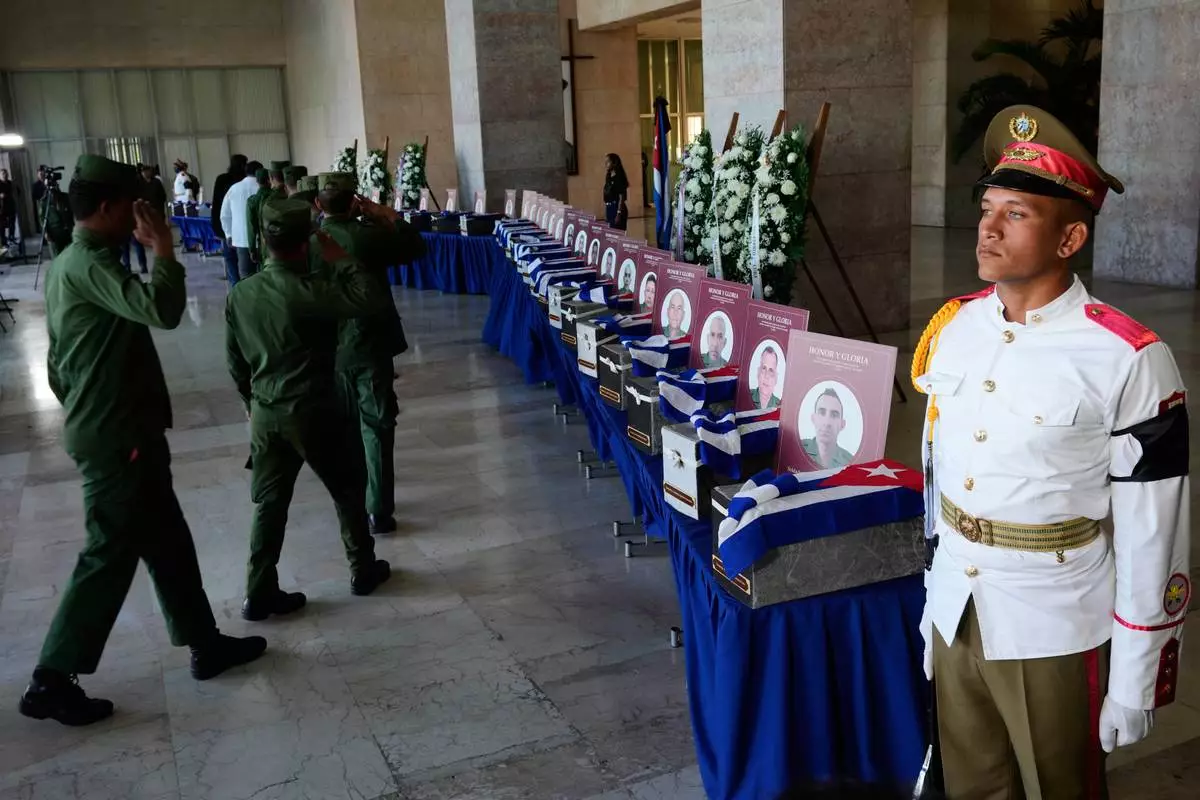
Military members pay their last respects to Cuban officers who were killed during the U.S. operation in Venezuela that captured Venezuelan President Nicolas Maduro, at the Ministry of the Revolutionary Armed Forces where the urns containing the remains are displayed during a ceremony in Havana, Cuba, Thursday, Jan. 15, 2026. (AP Photo/Ramon Espinosa)
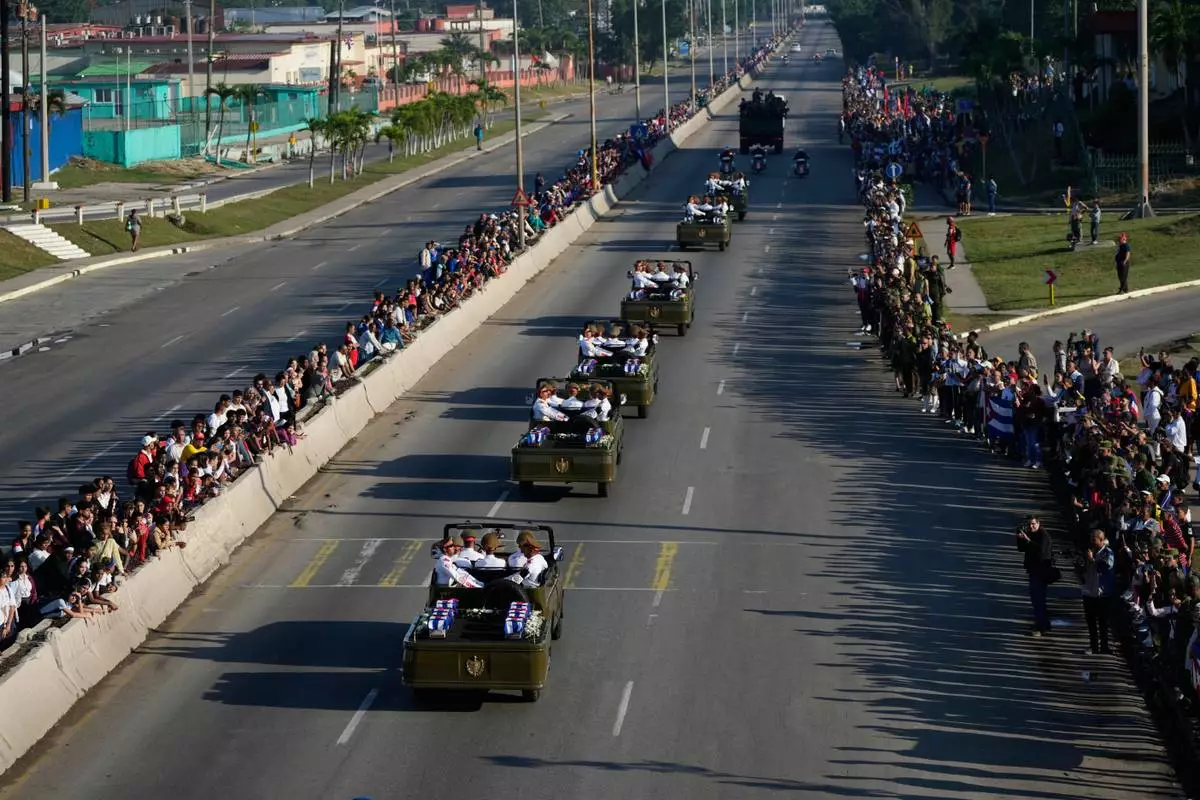
A motorcade transports urns containing the remains of Cuban officers, who were killed during the U.S. operation in Venezuela that captured Venezuelan President Nicolas Maduro, through Havana, Cuba, Thursday, Jan. 15, 2026. (AP Photo/Ramon Espinosa)
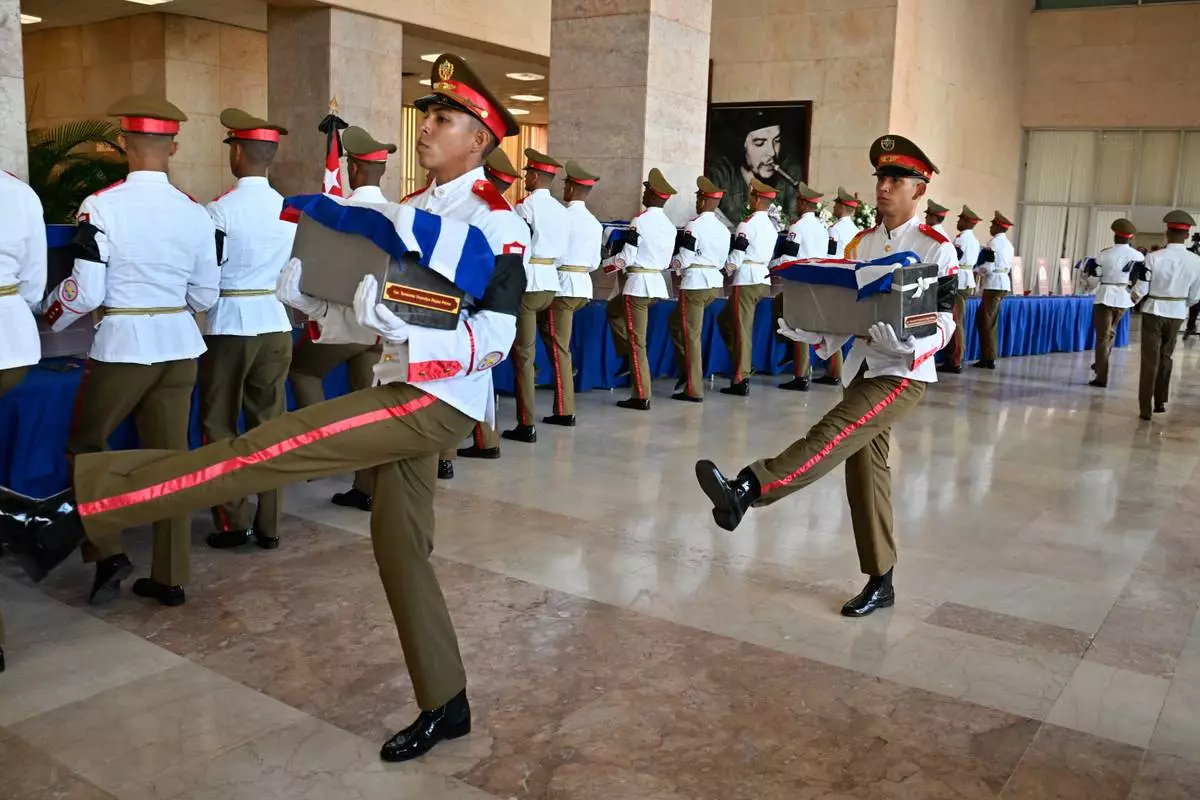
Soldiers carry urns containing the remains of Cuban officers, who were killed during the U.S. operation in Venezuela that captured Venezuelan President Nicolas Maduro, at the Ministry of the Revolutionary Armed Forces in Havana, Cuba, Thursday, Jan. 15, 2026. (Adalberto Roque /Pool Photo via AP)
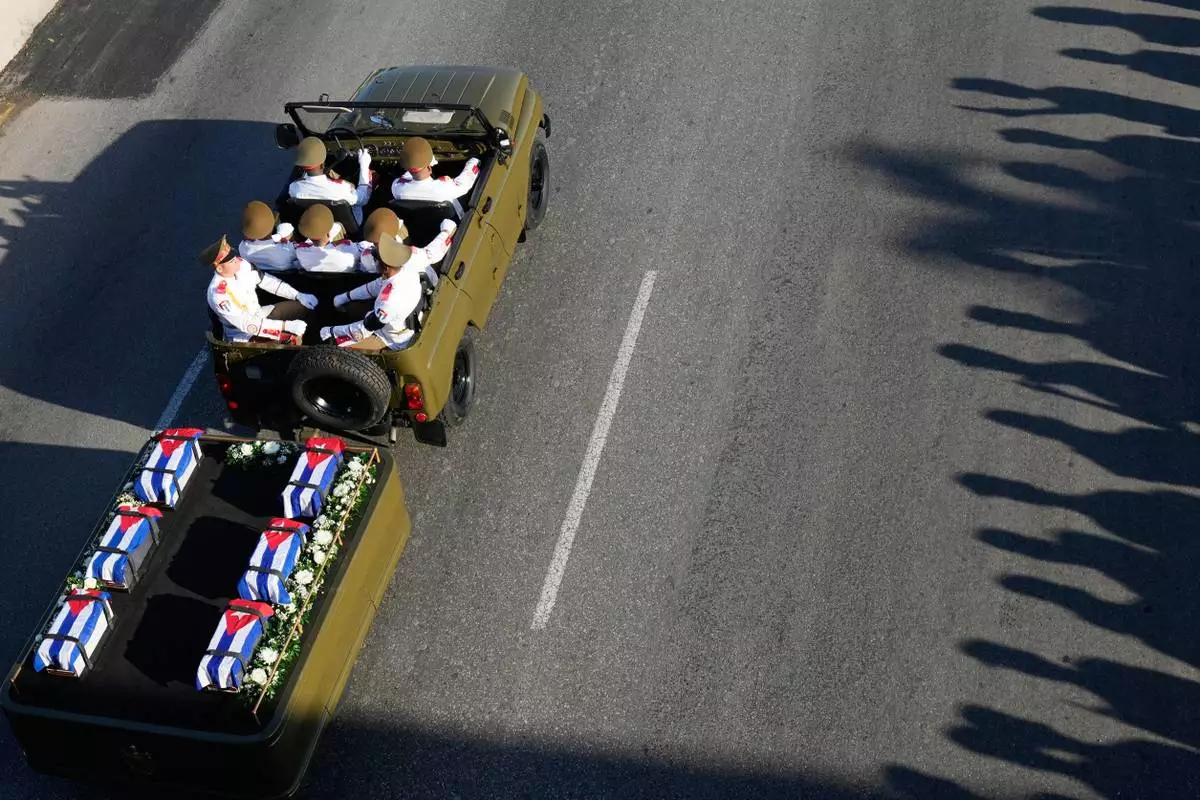
A motorcade transports urns containing the remains of Cuban officers, who were killed during the U.S. operation in Venezuela that captured Venezuelan President Nicolas Maduro, through Havana, Cuba, Thursday, Jan. 15, 2026. (AP Photo/Ramon Espinosa)
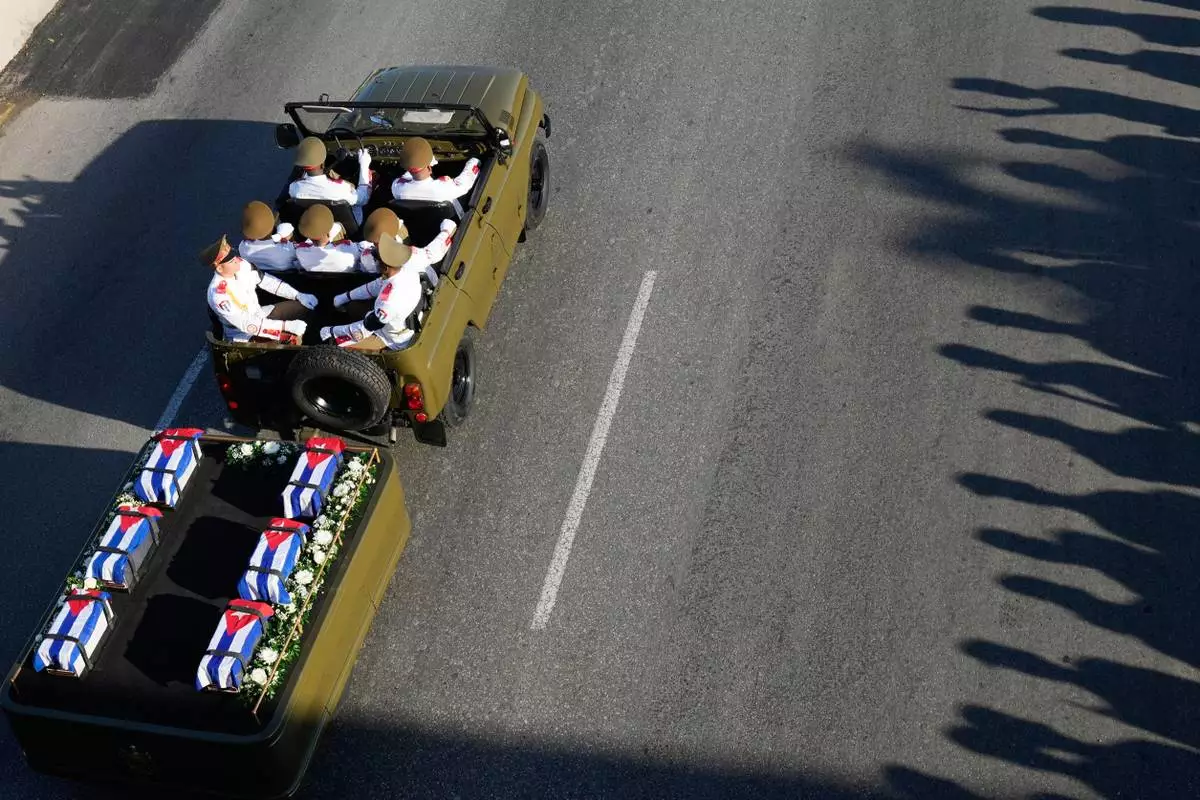
A motorcade transports urns containing the remains of Cuban officers, who were killed during the U.S. operation in Venezuela that captured Venezuelan President Nicolas Maduro, through Havana, Cuba, Thursday, Jan. 15, 2026. (AP Photo/Ramon Espinosa)
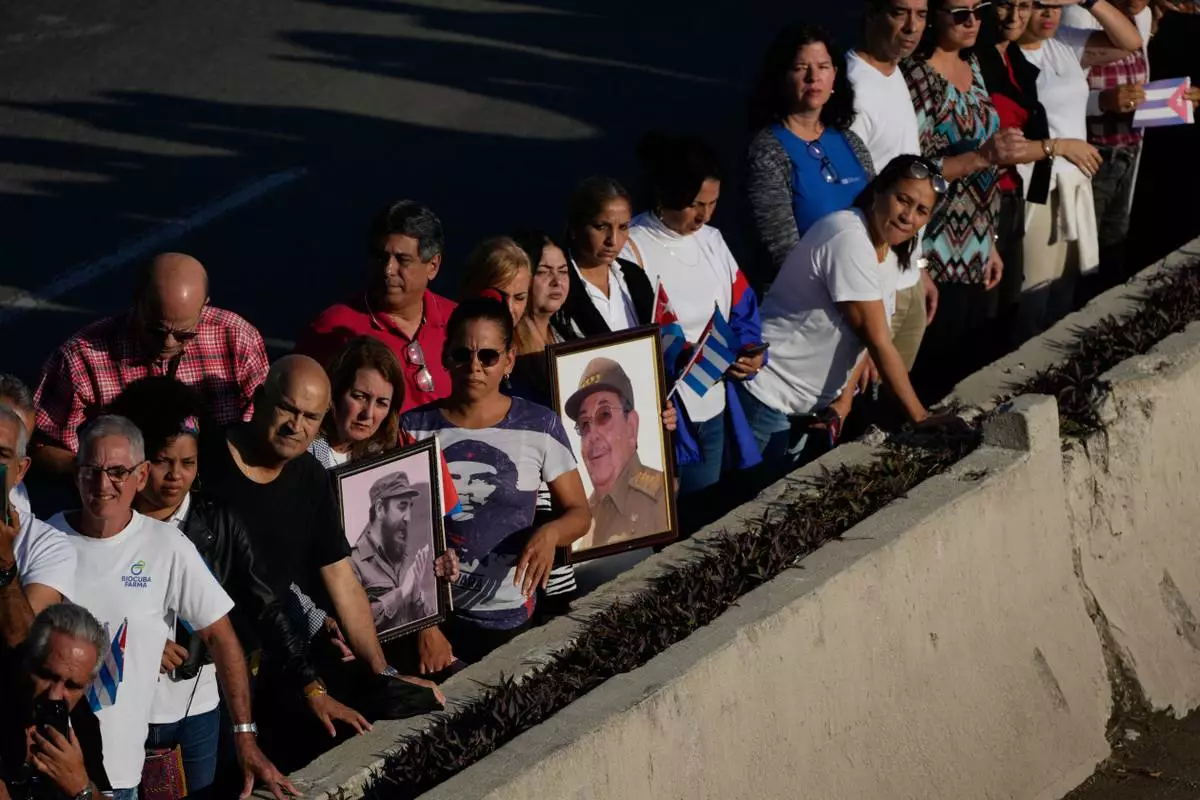
People line the streets of Havana, Cuba, Thursday, Jan. 15, 2026, to watch the motorcade carrying urns containing the remains of Cuban officers killed during the U.S. operation in Venezuela that captured Venezuelan President Nicolas Maduro. (AP Photo/Ramon Espinosa)
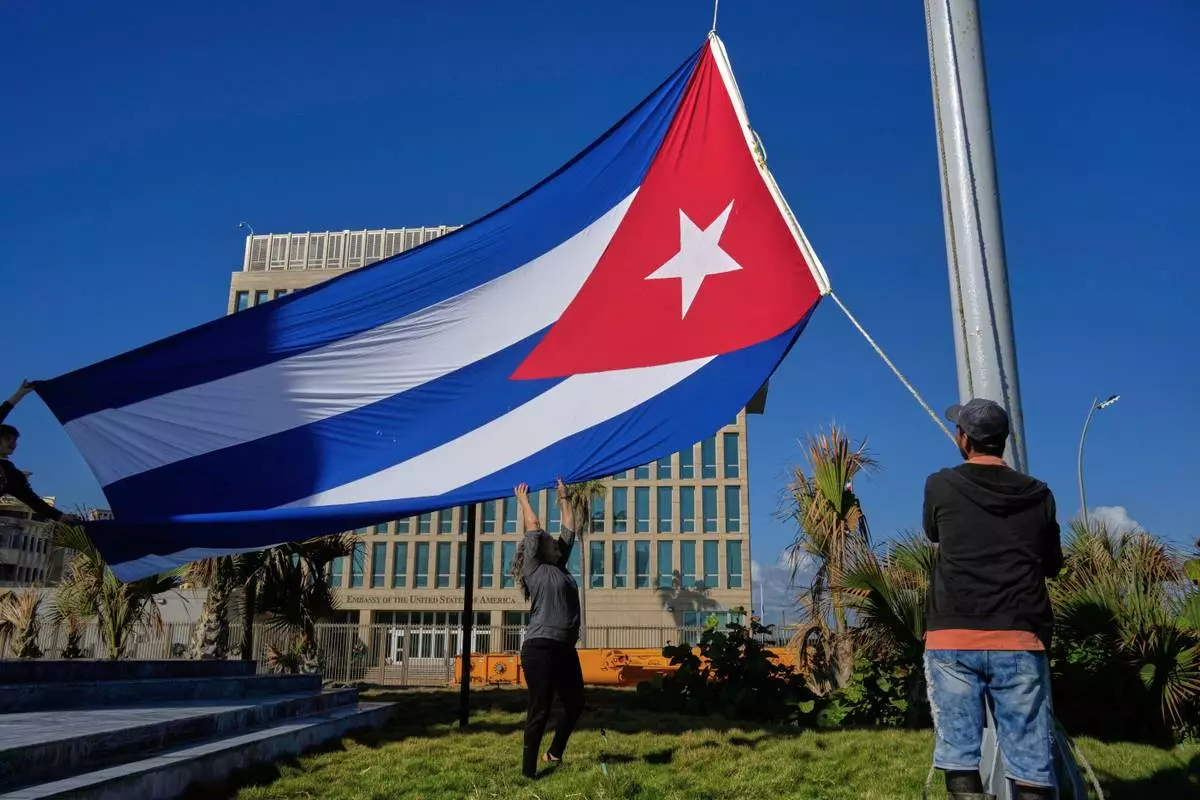
Workers fly the Cuban flag at half-staff at the Anti-Imperialist Tribune near the U.S. Embassy in Havana, Cuba, Monday, Jan. 5, 2026, in memory of Cubans who died two days before in Caracas, Venezuela during the capture of Venezuelan President Nicolas Maduro by U.S. forces. (AP Photo/Ramon Espinosa)