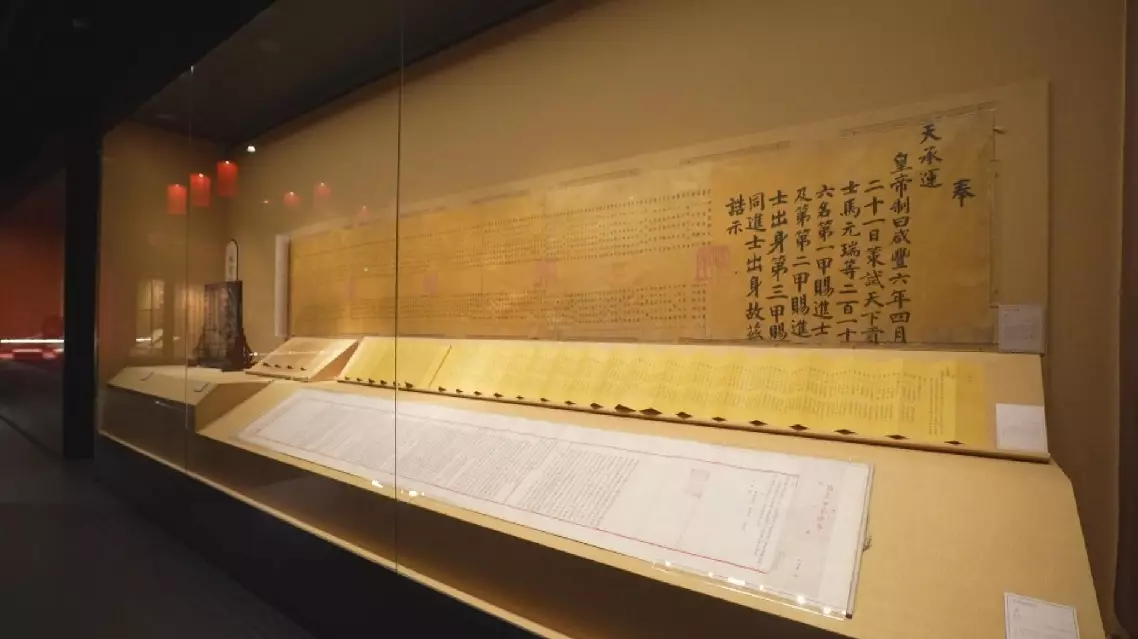
Archives and cultural relics from the Qing Dynasty (1644-1911) have been on display at a special exhibition since Saturday, which is co-hosted by the First Historical Archives of China and the Palace Museum in Beijing.
Friday marks the 100th anniversary of the establishment of the First Historical Archives of China. On the occasion, precious cultural relics from the royal family of the Qing Dynasty and the corresponding historical archives are presented to the public for the first time.
Among these cultural relics are the handwritten pieces of the emperors which were the wishes conveyed by the emperors on the Chinese New Year's Eve, as well as the ten-thousand-year-old verdant brush pen and the candlestick used by the emperors. There are two handwritings on the exhibition that record the history of a Chinese national hero and Qing Dynasty official Lin Zexu who ordered the destruction of more than 1,000 tonnes of smuggled opium confiscated from British dealers at Humen. One is the "memorial to the throne", also known as the working report, presented by Lin to the emperor, which is kept in the First Historical Archives of China. The other is a letter written by Lin to his teacher, which is kept in the Palace Museum. The two cultural relics demonstrate Lin's determination to ban the opium.
"For cultural relics, we mostly start from the related research, from their artistic craftsmanship, cultural value and so on. Archives are themselves clear written records. The transmission, expression and presentation of information from all aspects are more thorough. By comparing cultural relics with archives, a complete exhibition is curated," said Wu Huanliang, deputy director of the Exhibition and Education Office of the First Historical Archives of China.
Among the exhibits, Golden Lists of the Qing Dynasty Imperial Examination, listed in the Memory of the World Register, are the name of the successful candidates and were written on a sheet of yellow paper. They are representative documents of the examination system of the Qing Dynasty.
The original archival document showing the genealogy of the royal family, listed as China's documentary heritage, is also exhibited at the event.
"We hope that by exploring the archives included in the list of documentary heritage, they can play an educational role and help more people understand the value of our excellent cultural heritage," said Wang Jinlong, deputy head of the First Historical Archives of China.
The exhibition will run through Jan 5, 2026.
Archives, cultural relics vividly present history of China's Qing Dynasty