WASHINGTON (AP) — A Republican attack on a core provision of the Voting Rights Act that is designed to protect racial minorities comes to the Supreme Court this week, more than a decade after the justices knocked out another pillar of the 60-year-old law.
In arguments Wednesday, lawyers for Louisiana and the Trump administration will try to persuade the justices to wipe away the state's second majority Black congressional district and make it much harder, if not impossible, to take account of race in redistricting.
“Race-based redistricting is fundamentally contrary to our Constitution,” Louisiana Attorney General Elizabeth Murrill wrote in the state's Supreme Court filing.
A mid-decade battle over congressional redistricting already is playing out across the nation, after President Donald Trump began urging Texas and other Republican-controlled states to redraw their lines to make it easier for the GOP to hold its narrow majority in the House of Representatives. A ruling for Louisiana could intensify that effort and spill over to state legislative and local districts.
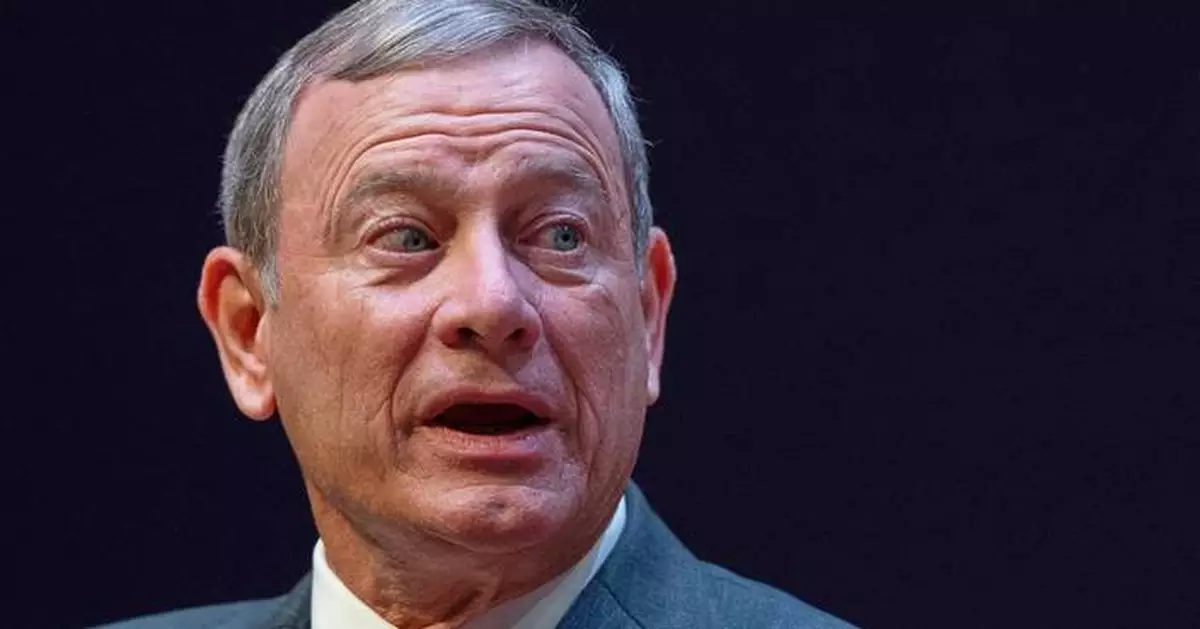
The conservative-dominated court, which just two years ago ended affirmative action in college admissions, could be receptive. At the center of the legal fight is Chief Justice John Roberts, who has long had the landmark civil rights law in his sights, from his time as a young lawyer in the Reagan-era Justice Department to his current job.
“It is a sordid business, this divvying us up by race,” Roberts wrote in a dissenting opinion in 2006 in his first major voting rights case as chief justice.
In 2013, Roberts wrote for the majority in gutting the landmark law's requirement that states and local governments with a history of discrimination, mostly in the South, get approval before making any election-related changes.
“Our country has changed, and while any racial discrimination in voting is too much, Congress must ensure that the legislation it passes to remedy that problem speaks to current conditions,” Roberts wrote.
Challenges under the provision known as Section 2 of the voting rights law must be able to show current racially polarized voting and an inability of minority populations to elect candidates of their choosing, among other factors.
“Race is still very much a factor in current voting patterns in the state of Louisiana. It’s true in many places in the country,” said Sarah Brannon, deputy director of the American Civil Liberties Union’s Voting Rights Project.
The Louisiana case got to this point only after Black voters and civil rights groups sued and won lower court rulings striking down the first congressional map drawn by the state's GOP-controlled Legislature after the 2020 census. That map created just one Black majority district among six House seats in a state that is one-third Black.
Louisiana appealed to the Supreme Court but eventually added a second majority Black district after the justices' 5-4 ruling in 2023 that found a likely violation of the Voting Rights Act in a similar case over Alabama’s congressional map.
Roberts and Justice Brett Kavanaugh joined their three more liberal colleagues in the Alabama outcome. Roberts rejected what he described as “Alabama’s attempt to remake our section 2 jurisprudence anew.”
That might have settled things, but a group of white voters complained that race, not politics, was the predominant factor driving the new Louisiana map. A three-judge court agreed, leading to the current high court case.
Instead of deciding the case in June, the justices asked the parties to answer a potentially big question: “Whether the state’s intentional creation of a second majority-minority congressional district violates the Fourteenth or Fifteenth Amendments to the U. S. Constitution.”
Those amendments, adopted in the aftermath of the Civil War, were intended to bring about political equality for Black Americans and gave Congress the authority to take all necessary steps. Nearly a century later, Congress passed the Voting Rights Act of 1965, called the crown jewel of the civil rights era, to finally put an end to persistent efforts to prevent Black people from voting in the former states of the Confederacy.
The call for new arguments sometimes presages a major change by the high court. The Citizens United decision in 2010 that led to dramatic increases in independent spending in U.S. elections came after it was argued a second time.
“It does feel to me a little bit like Citizens United in that, if you recall the way Citizens United unfolded, it was initially a narrow First Amendment challenge,” said Donald Verrilli, who served as the Obama administration's top Supreme Court lawyer and defended the voting rights law in the 2013 case.
Among the possible outcomes in the Louisiana case, Verrilli said, is one in which a majority holds that the need for courts to step into redistricting cases, absent intentional discrimination, has essentially expired. Kavanaugh raised the issue briefly two years ago.
The Supreme Court has separately washed its hands of partisan gerrymandering claims, in a 2019 opinion that also was written by Roberts. Restricting or eliminating most claims of racial discrimination in federal courts would give state legislatures wide latitude to draw districts, subject only to state constitutional limits.
A shift of just one vote from the Alabama case would flip the outcome.
With the call for new arguments, Louisiana changed its position and is no longer defending its map.
The Trump administration joined on Louisiana's side. The Justice Department had previously defended the voting rights law under administrations of both major political parties.
For four years in the 1990s, Louisiana had a second Black majority district until courts struck it down because it relied too heavily on race. Fields, then a rising star in the state’s Democratic politics, twice won election. He didn’t run again when a new map was put in place and reverted to just one majority Black district in the state.
Fields is one of the two Black Democrats who won election to Congress last year in newly drawn districts in Alabama and Louisiana.
He again represents the challenged district, described in March by Roberts as “a snake that runs from one end of the state to the other,” picking up Black residents along the way.
If that's so, civil rights lawyer Stuart Naifeh told Roberts, it's because of slavery, Jim Crow laws and the persistent lack of economic opportunity for Black Louisianans.
Fields said the court's earlier ruling that eliminated federal review of potentially discriminatory voting laws has left few options to protect racial minorities, making the preservation of Section 2 all the more important.
They would never win election to Congress, he said, “but for the Voting Rights Act and but for creating majority minority districts.”
Associated Press writer Gary Fields contributed to this report.
Follow the AP's coverage of the U.S. Supreme Court at https://apnews.com/hub/us-supreme-court.
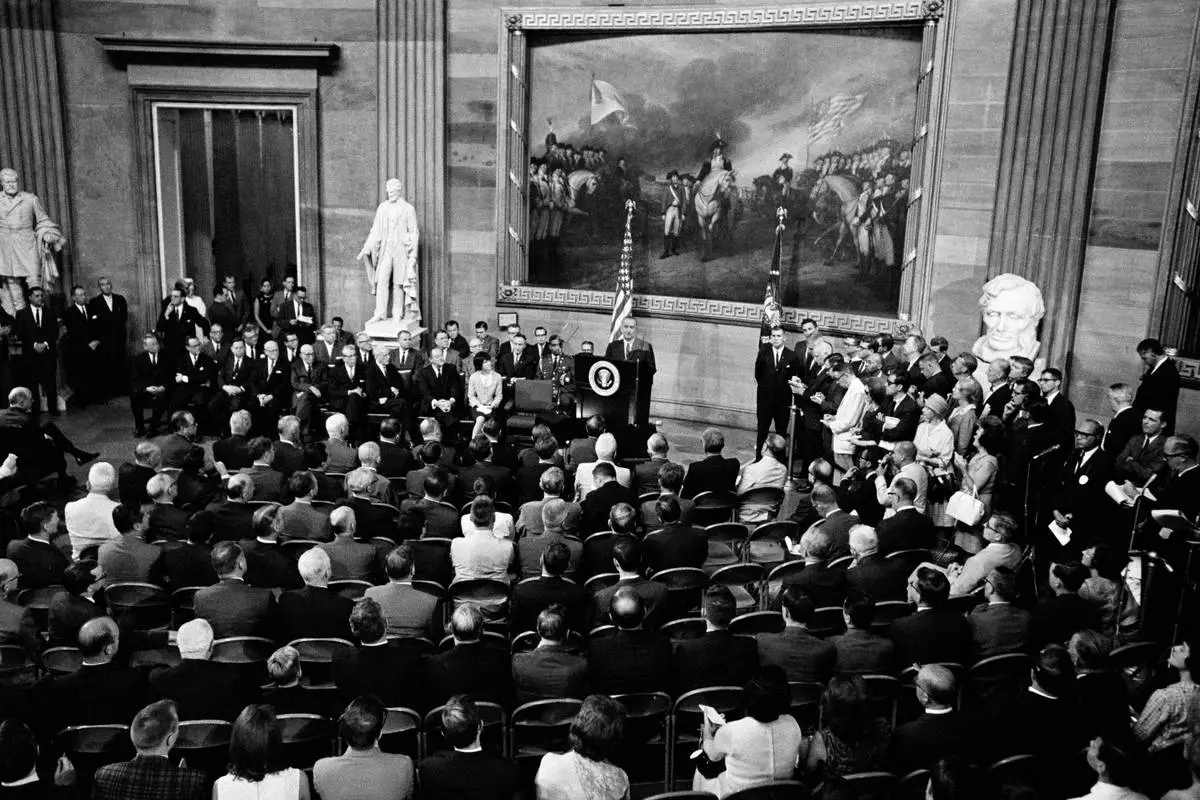
FILE - President Lyndon Johnson, at podium, speaks in the rotunda of the Capitol in Washington, before to signing the Voting Rights Act, Aug. 6, 1965. (AP Photo, File)
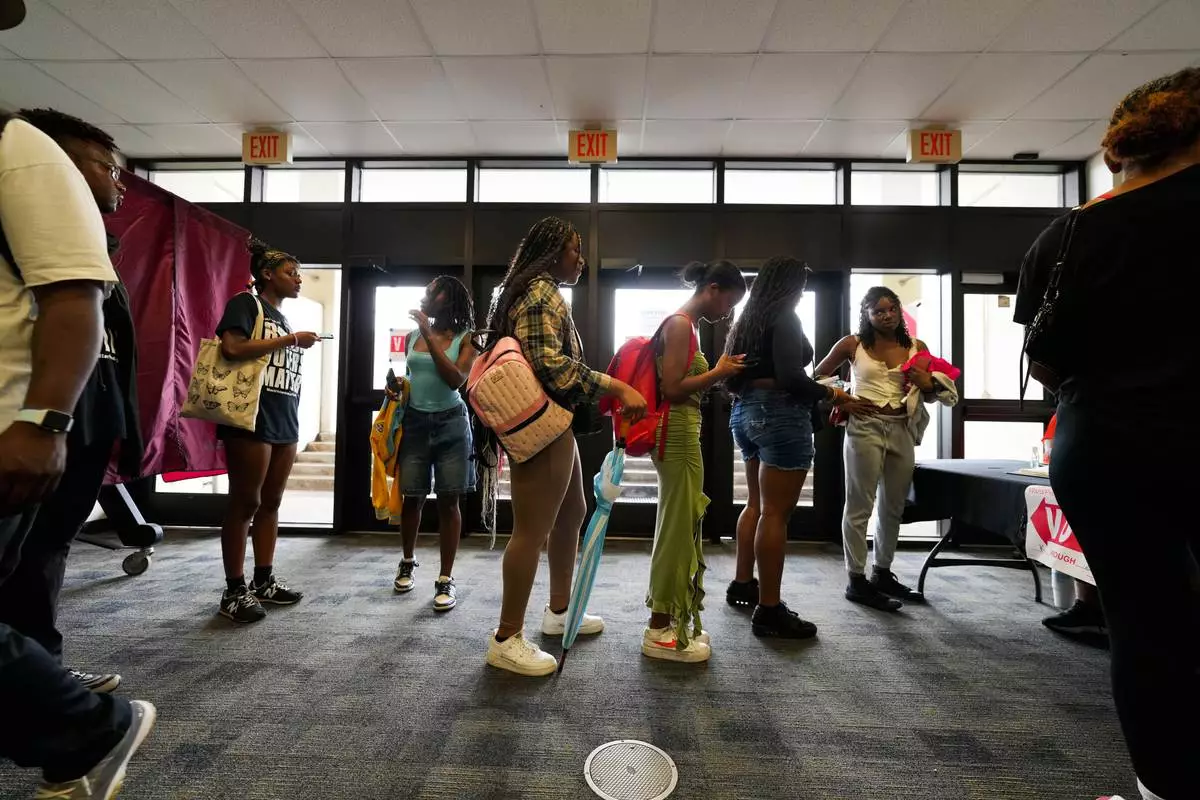
FILE - Students line up to vote at a campus polling place at Southern University in Baton Rouge, La., on Election Day, Nov. 5, 2024. (AP Photo/Gerald Herbert, File)
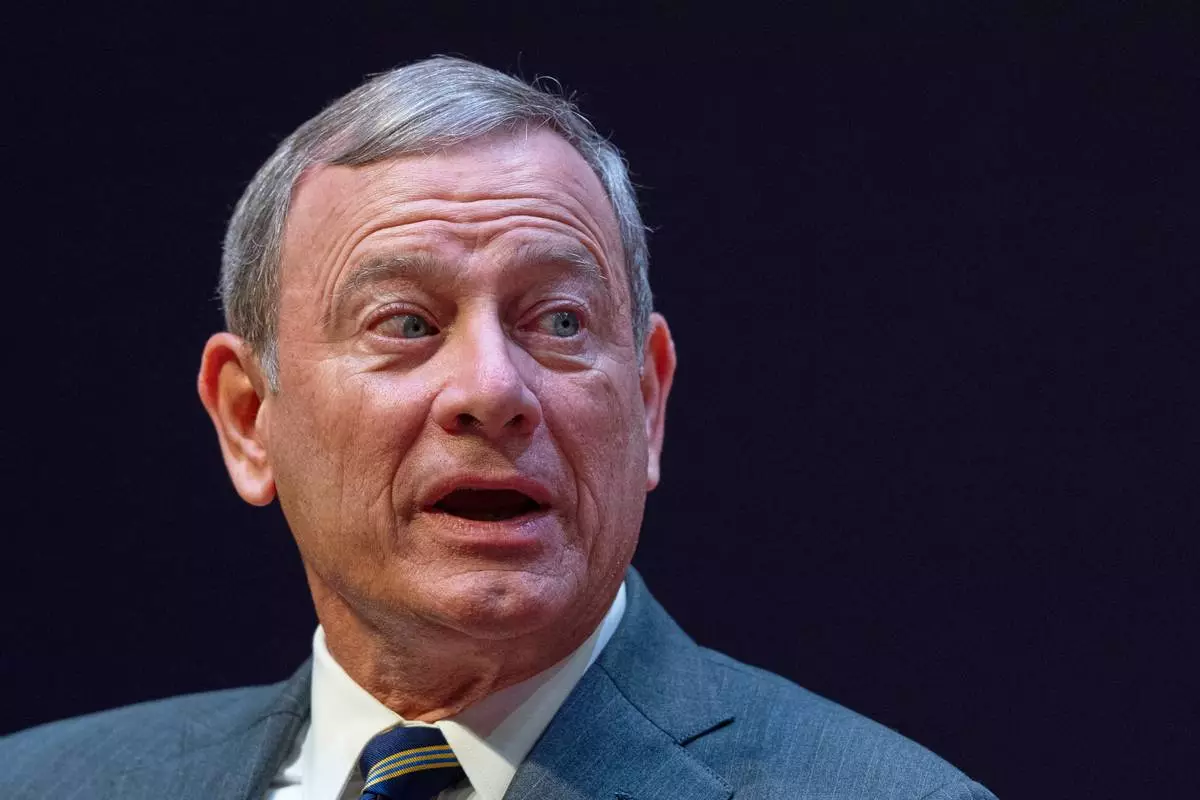
Chief Justice of the United States John Roberts speaks during lecture to the Georgetown Law School graduating class of 2025, in Washington, May 12, 2025. (AP Photo/Manuel Balce Ceneta, File)