WASHINGTON (AP) — The president was barely a year into his administration when a health care debate began to consume Washington.
On Capitol Hill, partisan divides formed as many Democrats pressed for guaranteed insurance coverage for a broader swath of Americans while Republicans, buttressed by medical industry lobbying, warned about cost and a slide into communism.
Click to Gallery
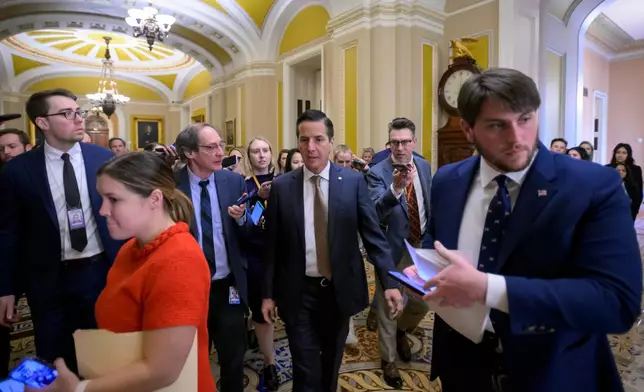
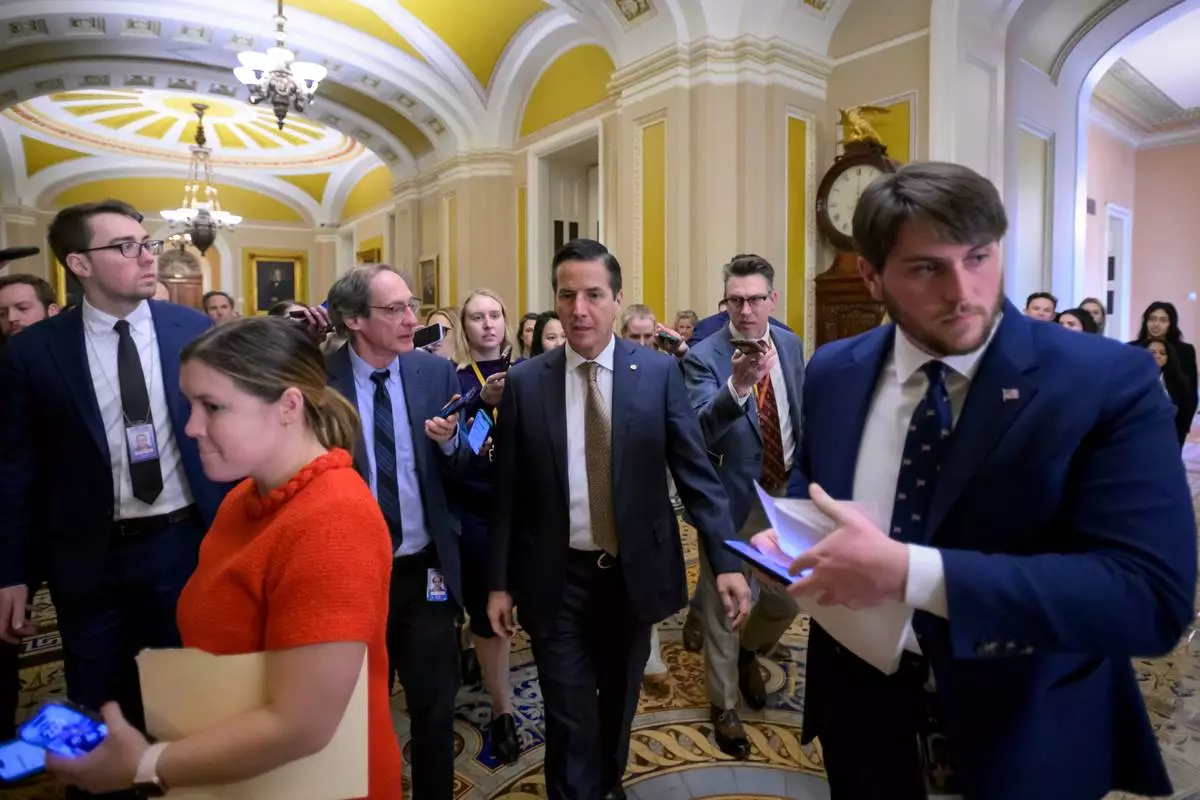
Sen. Bernie Moreno, R-Ohio, center, talks with reporters as he walks through the Ohio Clock Corridor at the Capitol, Tuesday, Jan. 13, 2026, in Washington. (AP Photo/Rod Lamkey, Jr.)
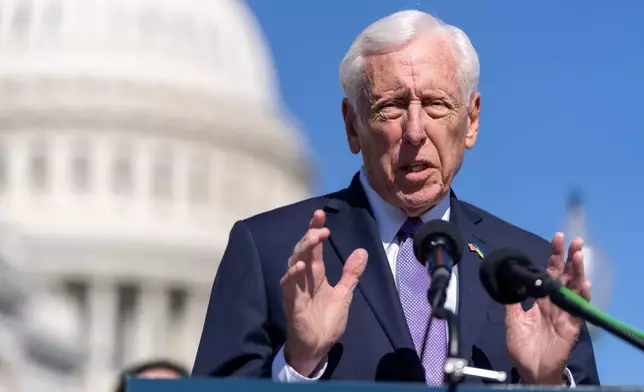
FILE -Rep. Steny Hoyer, D-Md., speaks at a news conference about the Protect Our Probationary Employees Act on Capitol Hill, March 11, 2025, in Washington. (AP Photo/Mark Schiefelbein, File)
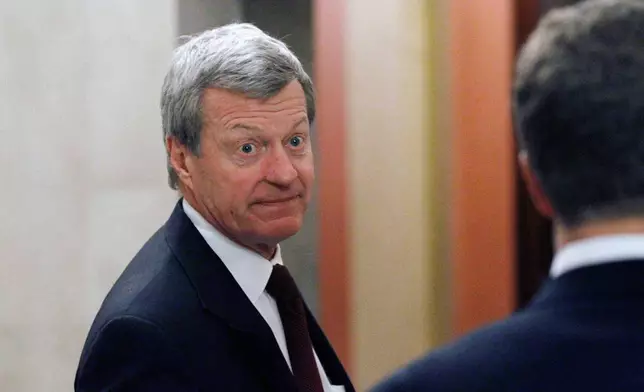
FILE - Sen. Max Baucus, D-Mont., enters the Speaker's office for a meeting about tax cuts on Capitol Hill in Washington, Dec. 1, 2010.(AP Photo/Alex Brandon, File)
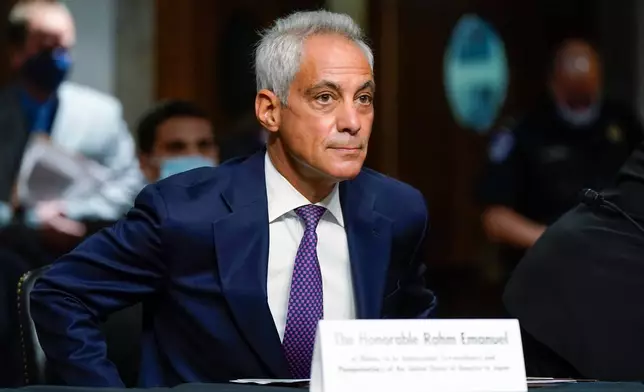
FILE - U.S. Ambassador to Japan nominee Rahm Emanuel arrives for a hearing to examine his nomination before the Senate Foreign Relations Committee on Capitol Hill in Washington, Oct. 20, 2021. (AP Photo/Patrick Semansky, File)
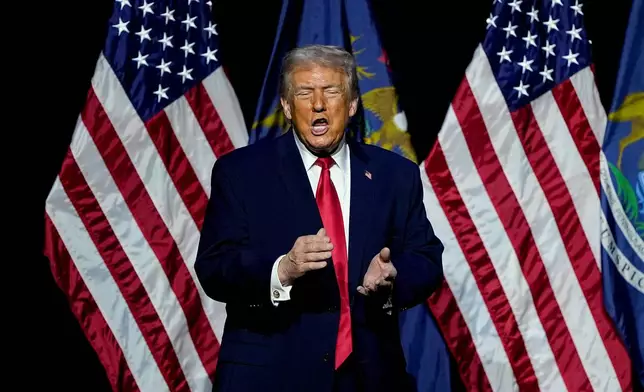
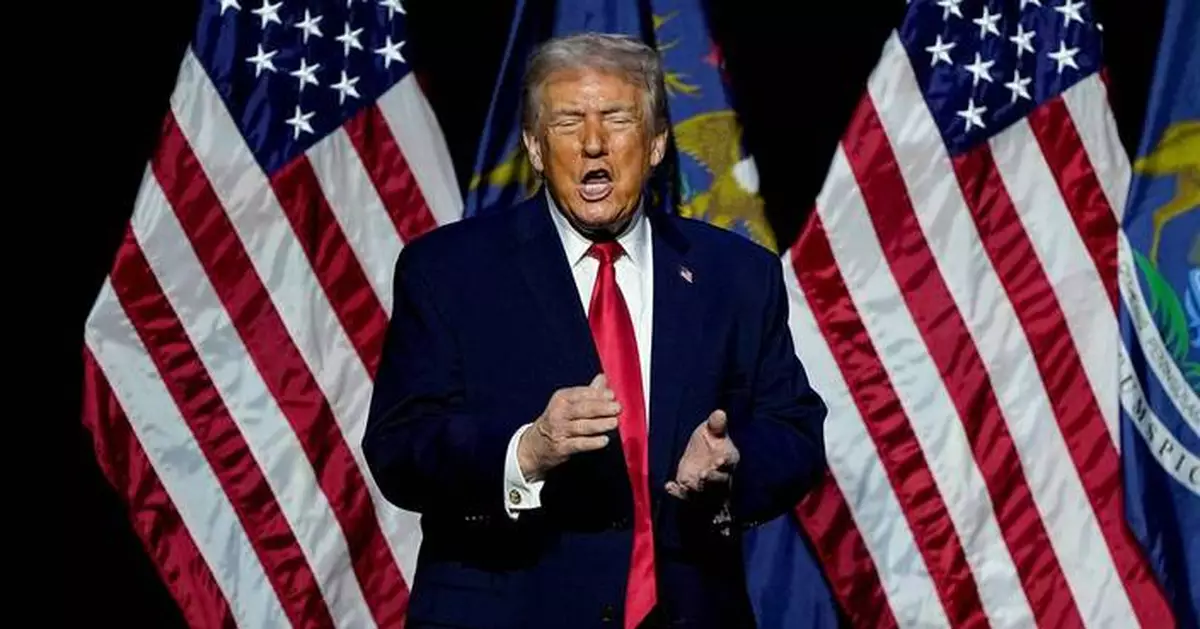
President Donald Trump speaks at the Detroit Economic Club Tuesday, Jan. 13, 2026 in Detroit. (AP Photo/Ryan Sun)
The year was 1945 and the new Democratic president, Harry Truman, tried and failed to persuade Congress to enact a comprehensive national health care program, a defeat Truman described as the disappointment of his presidency that “troubled me the most.” Since then, 13 presidents have struggled with the same basic questions about the government’s role in health care, where spending now makes up nearly 18% of the U.S. economy.
The fraught politics of health care are on display again this month as millions of people face a steep rise in costs after the Republican-controlled Congress allowed Affordable Care Act subsidies to expire.
While the subsidies are a narrow, if costly, slice of the issue, they have reopened long-festering grievances in Washington over the way health care is managed and the legacy of the ACA, the signature legislative achievement of President Barack Obama that was passed in 2010 without a single Republican vote.
“That's the key thing that I've got to convince my colleagues to understand who hate Obamacare,” said Sen. Bernie Moreno, R-Ohio, who is leading a bipartisan group of lawmakers discussing ways to extend some of the subsidies. “Let's take two years to actually deliver for the American people truly affordable health care.”
Democrats have heard that refrain before, and argue Republicans have had 15 years to offer an alternative. They believe the options being discussed now, which largely focus on allowing Americans to funnel money to health savings accounts, do little to address the cost of health care.
“They've had a lot of time,” said Rep. Steny Hoyer, the Maryland Democrat who was House majority leader during the ACA debate.
And with that, welcome back to the health care debate that never seems to end.
The often-tortured dynamics surrounding health care have remained remarkably consistent. Obamacare dramatically expanded coverage but remains — even in the minds of those who crafted the law — imperfect and more expensive than many would prefer.
And Washington seems more entrenched in stalemate rather than marching toward a solution.
“People hate the status quo but they’re not too thrilled with change,” Rahm Emanuel said as he reflected on the arc of the health care debate that he has watched as a top aide to President Bill Clinton, chief of staff to Obama and Chicago mayor. “That’s the riddle to the politics of health care.”
Major reforms inevitably run into a health industry — a broad group of interests ranging from pharmaceutical and health services companies to hospitals and nursing homes — that spent more than $653 million on lobbying in 2025, according to OpenSecrets, which tracks political spending.
“Any time you try to figure out how to bring costs down, somebody thinks ‘uh oh, I’m about to get less,’” said Hoyer, who announced last week he will not seek reelection after serving since 1981.
When Obamacare was passed, opinion on the law was mixed, although views tended to be more positive than negative, according to KFF polling. But the law has steadily grown in popularity. A KFF poll conducted in September 2025 found that about two-thirds of Americans have a favorable view of the ACA.
That's put Trump and Republicans in a bind.
Since the ACA's passage, Republicans largely dedicated themselves to the law's destruction. Trump issued social media posts calling for a repeal as early as 2011 and spoke in generalities during each of his presidential campaigns about delivering better coverage at lower cost. During his 2024 debate against Democratic rival Kamala Harris, he referred to “concepts of a plan.”
One thing he hasn't done — offer his own formal proposal.
During a speech to the Detroit Economic Club on Tuesday, Trump said he would soon announce a “health care affordability framework.” Throughout his second term, Trump has criticized Obamacare as unfairly subsidizing insurers, a point that could have been addressed had the legislation created a so-called “public option” that would have competed alongside the private sector. Republicans — and a sizable number of Democrats — objected to that approach, arguing it would give the government an outsize role in health care.
But in a reminder that the past is never really over, a small group of Democrats are aiming to revive the debate over the public option, even if the prospects in a Republican-controlled Congress are dim. Sens. Sheldon Whitehouse of Rhode Island and Elissa Slotkin of Michigan along with Rep. Jan Schakowsky of Illinois introduced legislation last week that would create a public health insurance option on the ACA exchanges.
Last year, a record 24 million people were enrolled in ACA, though fewer appear to be signing up this year as the expired subsidies make coverage more expensive. The Supreme Court has upheld the law and Republicans have failed to repeal, replace or alter it dozens of times. In the most famous example, Sen. John McCain, an Arizona Republican, cast the deciding vote in 2018 to keep the legislation in place, underscoring the lack of an alternative by noting there was “no replacement to actually reform our health care system and deliver affordable, quality health care to our citizens.”
Democrats successfully turned the repeal efforts into a rallying cry in the 2018 midterms and see an opportunity to do so again this year with the expired subsidies. Sen. Thom Tillis, R-N.C., who isn't seeking reelection, has warned this moment could be even more perilous for Republicans because, unlike the subsidies, voters didn’t lose anything during the 2018 debate.
“Us failing to put something else in place did not create this cliff,” Tillis said. “That’s the fundamental difference in an election year.”
Even those who crafted the ACA concede that the health care system created in its wake has problems. Former Sen. Max Baucus, a Montana Democrat who was one of the bill's architects as chair of the Finance committee, acknowledged that “nothing is perfect,” pointing to high health care costs.
“Bending the cost curve, that has not bent as much as we'd like,” he said.
That's in part why some Republicans have expressed openness to a deal on the subsidies. They see it less as an endorsement of ACA than a bridge that would give lawmakers time to address more complex issues.
“We need to get to a long-term solution,” said Rep. Don Bacon, R-Neb.
Veterans of past health care negotiations, however, are skeptical that lawmakers can produce anything meaningful without the type of in-depth negotiations that led up to the ACA.
“It takes a long time to figure all this out,” Baucus said.
Asked whether he's studied that history as he dives into the next chapter of health care talks, Moreno noted that he's only been in Congress for a year.
“I don't know s—-,” he said. “What that means is I don't have scars.”
Associated Press writer Amelia Thomson-DeVeaux in Washington contributed to this report.
Sen. Bernie Moreno, R-Ohio, center, talks with reporters as he walks through the Ohio Clock Corridor at the Capitol, Tuesday, Jan. 13, 2026, in Washington. (AP Photo/Rod Lamkey, Jr.)
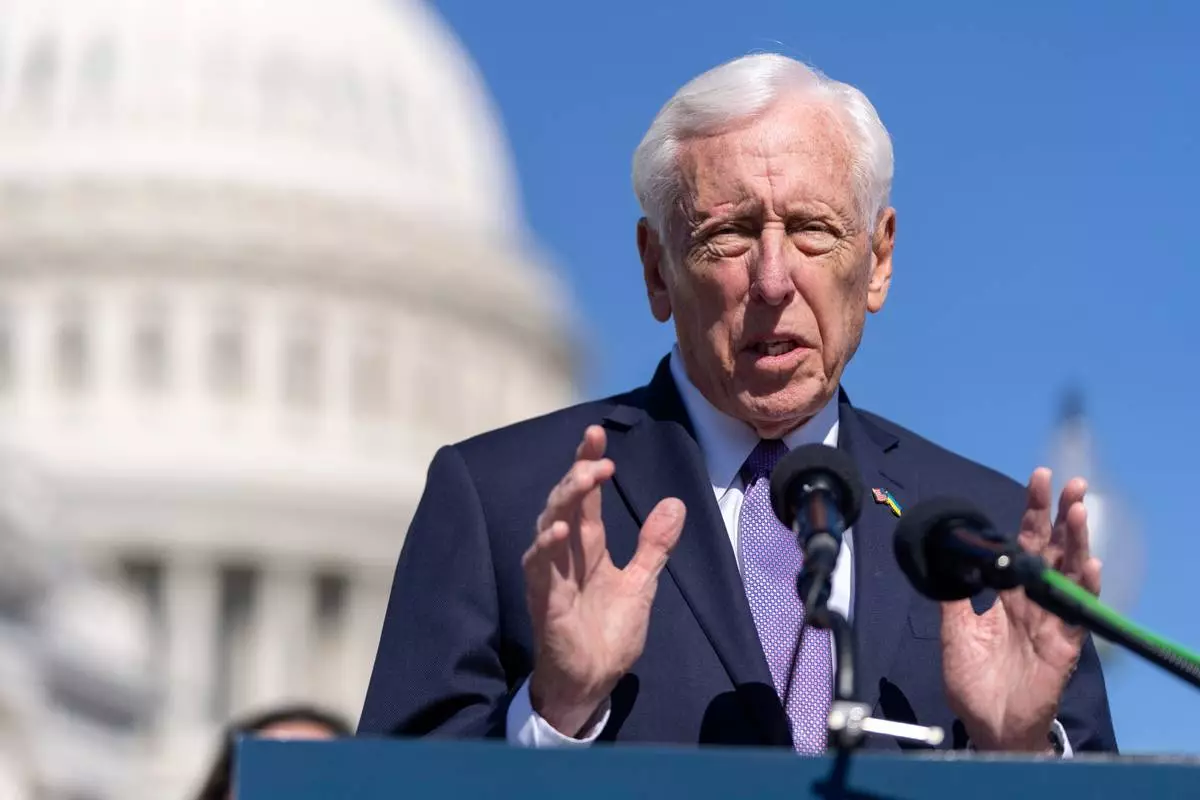
FILE -Rep. Steny Hoyer, D-Md., speaks at a news conference about the Protect Our Probationary Employees Act on Capitol Hill, March 11, 2025, in Washington. (AP Photo/Mark Schiefelbein, File)

FILE - Sen. Max Baucus, D-Mont., enters the Speaker's office for a meeting about tax cuts on Capitol Hill in Washington, Dec. 1, 2010.(AP Photo/Alex Brandon, File)
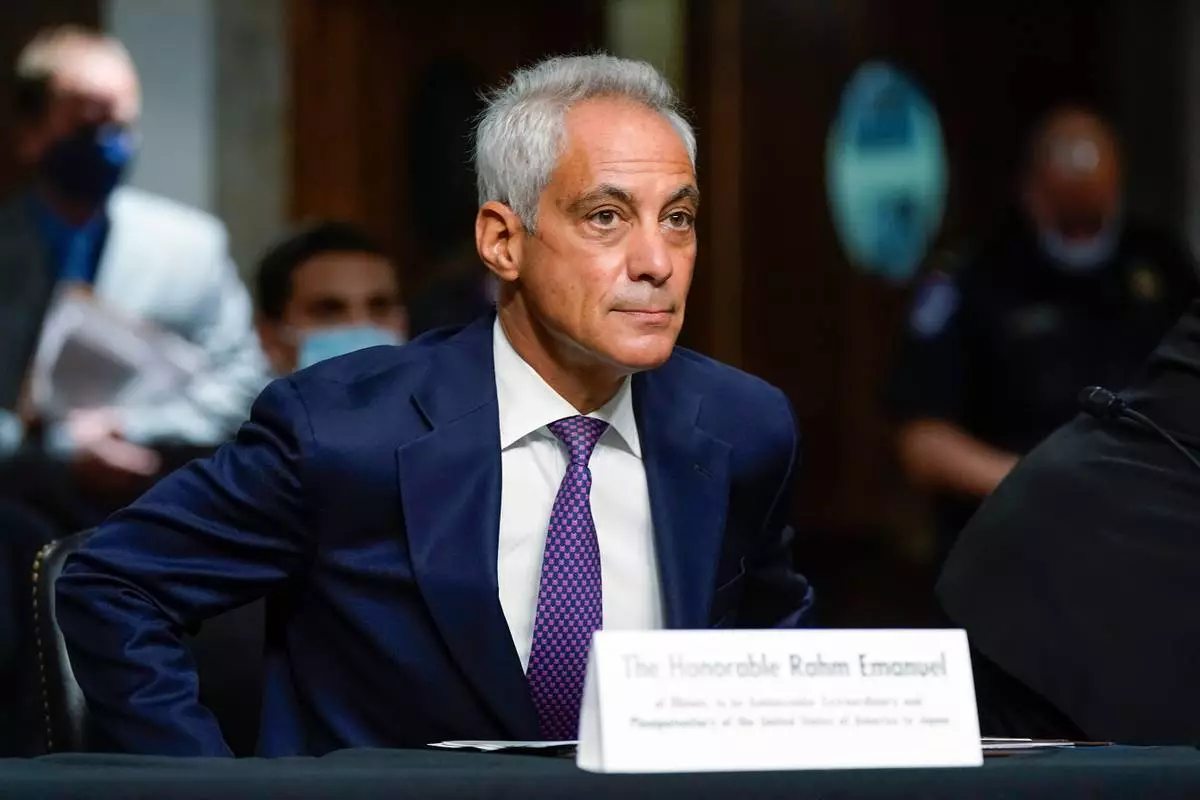
FILE - U.S. Ambassador to Japan nominee Rahm Emanuel arrives for a hearing to examine his nomination before the Senate Foreign Relations Committee on Capitol Hill in Washington, Oct. 20, 2021. (AP Photo/Patrick Semansky, File)
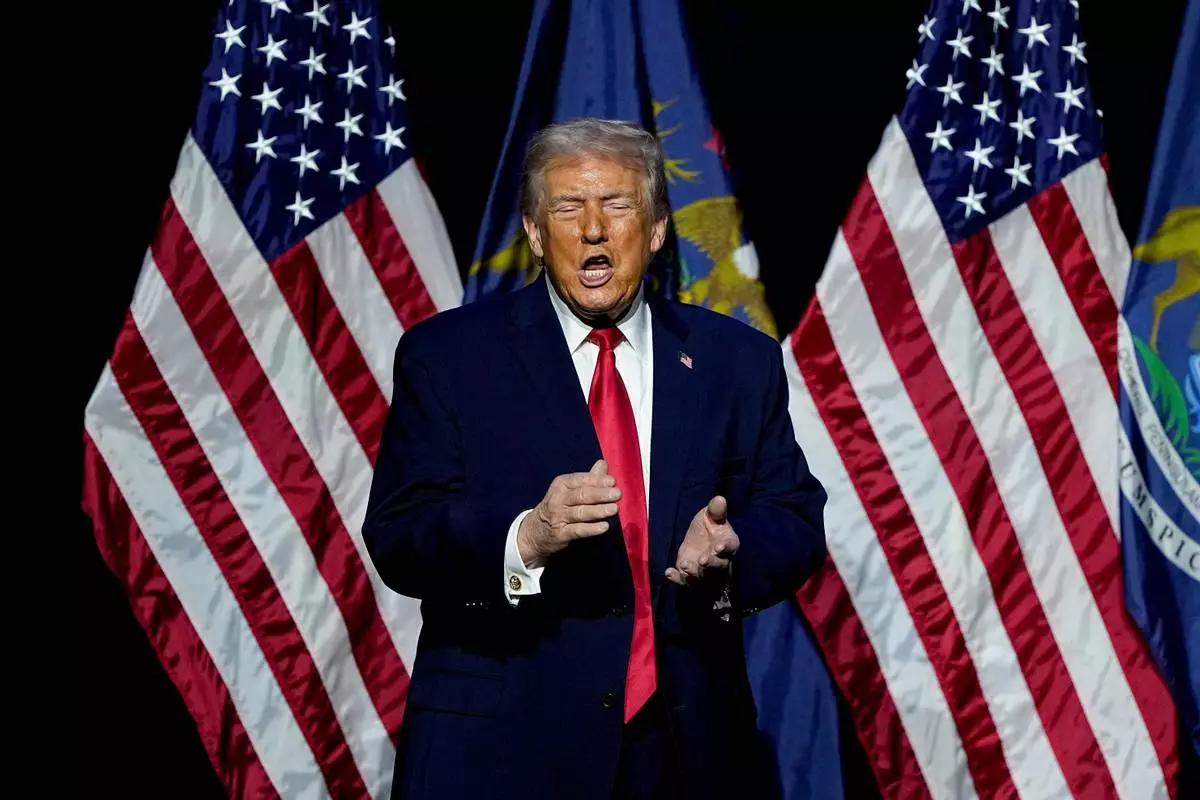
President Donald Trump speaks at the Detroit Economic Club Tuesday, Jan. 13, 2026 in Detroit. (AP Photo/Ryan Sun)