PARIS--(BUSINESS WIRE)--Oct 14, 2025--
The Estée Lauder Companies Inc. (NYSE:EL), under the High Patronage of Mr. Emmanuel Macron, President of the French Republic, today announced the opening of its Fragrance Atelier within its new La Maison des Parfums on Rue Volney in Paris. This newly established global innovation hub is fully dedicated to world-class fragrance expertise, advanced technologies and cutting-edge capabilities, and will accelerate the company’s strategic ambitions in luxury and prestige fragrances. Rooted in the legacy of Mrs. Estée Lauder’s pioneering vision and her lifelong passion for fragrance, the Atelier’s opening marks a significant milestone in the company’s longstanding commitment to fragrance excellence and craftsmanship.
This press release features multimedia. View the full release here: https://www.businesswire.com/news/home/20251013447078/en/
“It is with great pride and excitement that we open our Fragrance Atelier in Paris,” said Stéphane de La Faverie, President and Chief Executive Officer, The Estée Lauder Companies. “Building on our incredible heritage of creativity and innovation, the Atelier will propel our future growth in this dynamic category — uniting world-class expertise, cutting-edge technology, and the artistry of fragrance to accelerate innovation across our portfolio. Located in the cradle of perfumery, our teams will blend state-of-the-art technology, data-driven intelligence, and olfactive expertise to craft the next generation of extraordinary scents for our consumers worldwide.”
“The Fragrance Atelier is an exciting new model for creation — a space that harnesses creativity and science to shape the future of fragrance,” said René Lammers, The Estée Lauder Companies’ Chief Research & Innovation Officer. “This hub brings together experts from across our fragrance brands and partners in an environment purpose-built for experimentation. Together, they will accelerate the journey from inspiration to formulation and ultimately to the final consumer experience.”
A Bold Addition to The Estée Lauder Companies’ Innovation Network
The Atelier further enhances The Estée Lauder Companies’ global research and innovation network across the United States (New York and Minnesota), China (Shanghai), Europe (Belgium), and Canada (Toronto). Together, these sites seamlessly integrate category- and region-specific strengths to drive breakthrough discovery across the full spectrum of beauty. The Atelier introduces an AI-enabled, end-to-end creation process that combines olfactive and neuroscience modeling with real-time monitoring of patents, research, and regulations. These resources will accelerate discovery, develop new technologies, fuel experimentation, and enable faster response to evolving consumer trends, reducing fragrance development lead times by up to 30–50% in the coming years.
A Transformative Space Custom Built for Fragrance Innovation
Inside the Atelier, specialized co-creation and innovation spaces bring artistry and science to life. In the Music Room, perfumers from leading fragrance houses and brand teams collaborate to compose signature accords and explore new olfactive territories. In the adjoining laboratories, experts use CO₂ supercritical extraction, GCMS molecule analysis, and AI-driven sillage measurement to understand fragrance structure and longevity at the molecular level. Proprietary neuroscience-based consumer modeling transforms sensory data into insight, helping creators design fragrances that stir emotion and inspire desire.
Serving as a shared innovation engine for all fragrance brands within the company’s portfolio, the Atelier accelerates collaboration and discovery across Jo Malone London, TOM FORD, Le Labo, KILIAN PARIS, and Editions de Parfums Frédéric Malle, as well as across Estée Lauder, Clinique, AERIN Beauty, Aramis, and BALMAIN Beauty fragrances. Each brand retains its distinctive voice while drawing on shared access to next-generation technology, proprietary ingredients, and scientific expertise.
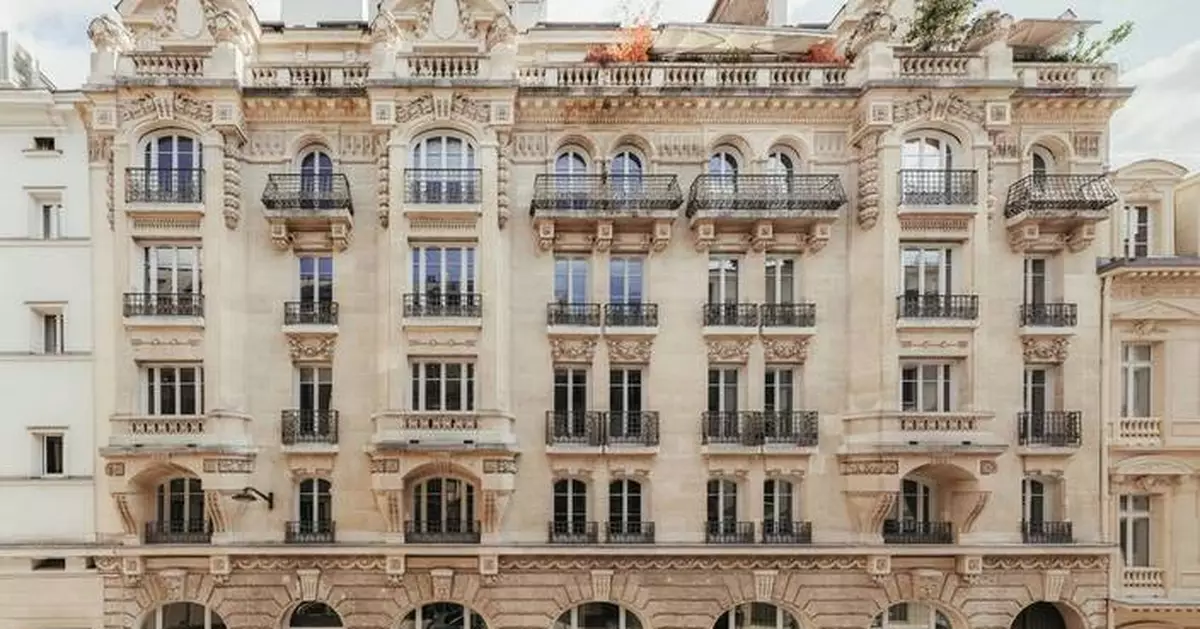
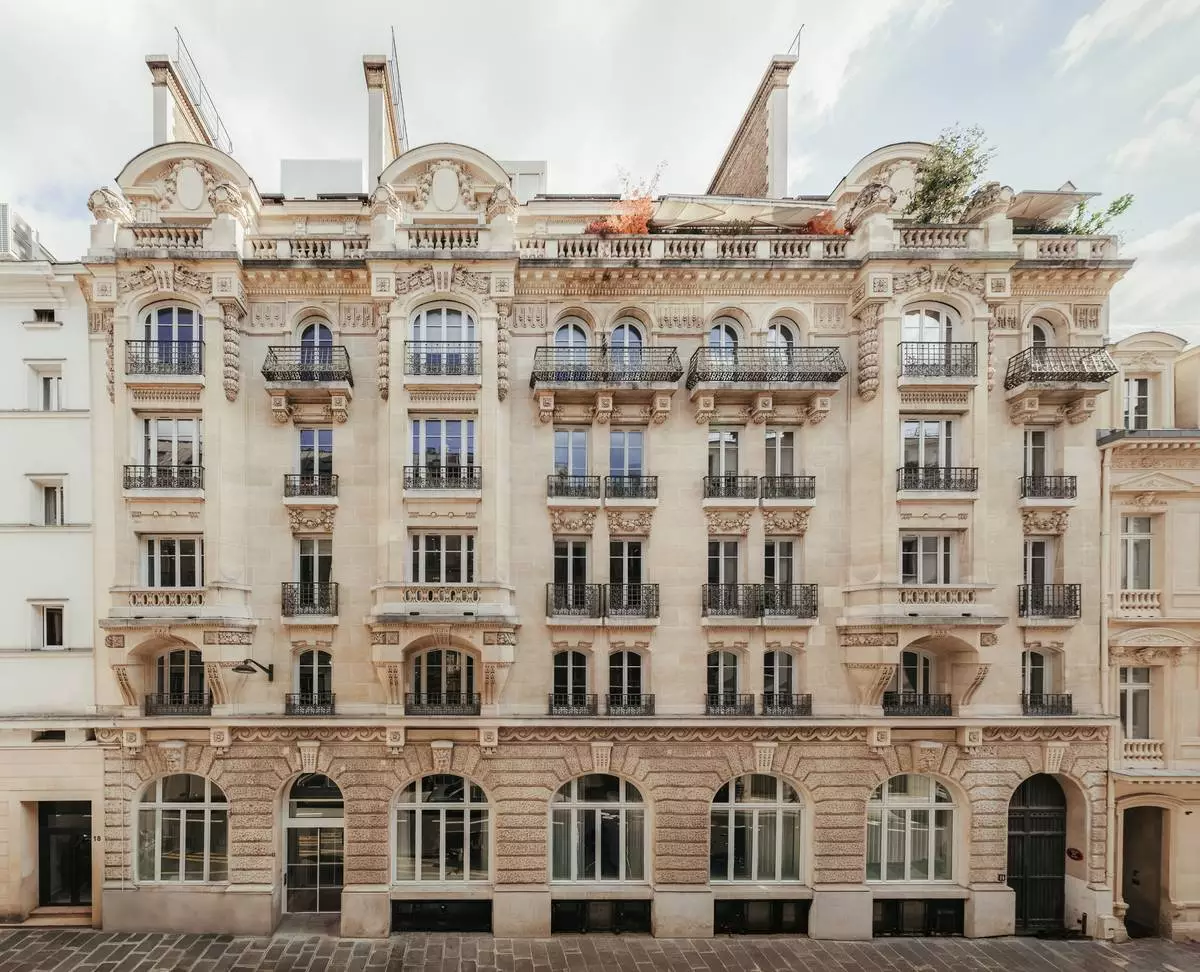
Located in the heart of Paris, La Maison des Parfums unites the company’s fragrance, creative, and innovation teams within a five-story, 2,000-square-meter space that blends French craftsmanship with modern design. Its architecture evokes the composition of a fragrance — travertine as the base, artisanal details as the heart, and light-infused finishes as the top note — creating an immersive environment where heritage and innovation coexist in harmony.
Deepening The Estée Lauder Companies’ Commitment to France
The Atelier’s opening underscores The Estée Lauder Companies’ enduring commitment to France, a country whose strong culture of innovation and investment continues to make it a vital strategic market and creative hub for the company. The company’s presence in France spans nearly six decades, beginning with its first French office in 1966. Today, Paris serves as the location for the company’s EUKEM regional headquarters, a newly created geographic cluster encompassing Europe, the United Kingdom and Ireland, and emerging markets in Asia, Africa and the Middle East, as well as the headquarters of the company’s French sales affiliate.
The Estée Lauder Companies employs more than 1,200 people in France and proudly operates the global headquarters of several of its brands there, including KILIAN PARIS, Editions de Parfums Frédéric Malle, Darphin Paris, and Lab Series. The establishment of La Maison des Parfums and the Fragrance Atelier builds on this foundation, further connecting the company to France’s world-renowned ecosystem of perfumers, suppliers, and creative talent.
“We are extremely proud that The Estée Lauder Companies has chosen France as the location for its new Fragrance Atelier — an innovative project announced at the most recent Choose France summit,” said Pascal Cagni, French Ambassador for International Investments and Chairman of the Board of Business France. “Their choice demonstrates the confidence that international leaders have in French excellence, which is driven by a unique ecosystem of creative talent, innovation, and globally recognized expertise. The French perfume and cosmetics industry, with more than €30 billion in revenue, is a key driver of growth and attractiveness. The Estée Lauder Companies’ Fragrance Atelier is a perfect demonstration of France’s ability to offer companies an environment conducive to the development of their most ambitious projects. I commend the remarkable work of the Business France teams which enables France to remain at the forefront of the global perfume industry.”
Cautionary Note Regarding Forward-Looking Statements
Statements in this press release may constitute forward-looking statements within the meaning of the Private Securities Litigation Reform Act of 1995. Such statements include those in the various quotations. Although the Company believes that its expectations are based on reasonable assumptions within the bounds of its knowledge of its business and operations, actual results may differ materially from the Company’s expectations. Factors that could cause actual results to differ from expectations include the ability to successfully implement the Company’s strategy, including Beauty Reimagined and the profit recovery and growth plan; successfully transition its leadership; and those other factors described in the Company’s filings with the Securities and Exchange Commission, including its most recent filings with the Securities and Exchange Commission. The Company assumes no responsibility to update forward-looking statements made herein or otherwise.
About The Estée Lauder Companies
The Estée Lauder Companies Inc. is one of the world’s leading manufacturers, marketers, and sellers of quality skin care, makeup, fragrance, and hair care products, and is a steward of luxury and prestige brands globally. The company’s products are sold in approximately 150 countries and territories under brand names including: Estée Lauder, Aramis, Clinique, Lab Series, Origins, M·A·C, La Mer, Bobbi Brown Cosmetics, Aveda, Jo Malone London, Bumble and bumble, Darphin Paris, TOM FORD, Smashbox, AERIN Beauty, Le Labo, Editions de Parfums Frédéric Malle, GLAMGLOW, KILIAN PARIS, Too Faced, Dr.Jart+, the DECIEM family of brands, including The Ordinary and NIOD, and BALMAIN Beauty.

Estée Lauder solid fragrance compact wall – which includes 272 heritage compacts. Ranging from 1970s-2010s.
The Exterior of La Maison des Parfums
Iran and the United States received a draft proposal late Sunday calling for a 45-day ceasefire and the reopening of the Strait of Hormuz, two Mideast officials speaking condition of anonymity told The Associated Press.
The proposal comes from Egyptian, Pakistani and Turkish mediators hoping the 45-day window would provide enough time for talks to reach a permanent ceasefire. Iran and the U.S. have not responded to the proposal, which was sent to Iranian Foreign Minister Abbas Araghchi and U.S. Mideast envoy Steve Witkoff, the officials said.
The head of intelligence for Iran’s paramilitary Revolutionary Guard was killed Monday in an attack targeting him, Iranian state media said. The Israeli military later confirmed the airstrike that killed Maj. Gen. Majid Khademi took place in Iran’s capital Tehran.
Strikes on cities across Iran have killed more people Monday, while in Israel's Haifa victims were found dead in rubble following an attack.
U.S. President Donald Trump on Sunday stepped up his threat to hit Iran's critical infrastructure hard if the country's government doesn’t reopen the Strait of Hormuz by his Tuesday deadline.
Trump punctuated his threat with profanity in a social media post, saying Tuesday will be “Power Plant Day, and Bridge Day, all wrapped up in one, in Iran.”
The war began with joint U.S.-Israel strikes on Feb. 28 and has killed thousands, shaken global markets, cut off key shipping routes and spiked fuel prices. Both sides have threatened and hit civilian targets, bringing warnings of possible war crimes from the United Nations and international law experts.
Here is the latest:
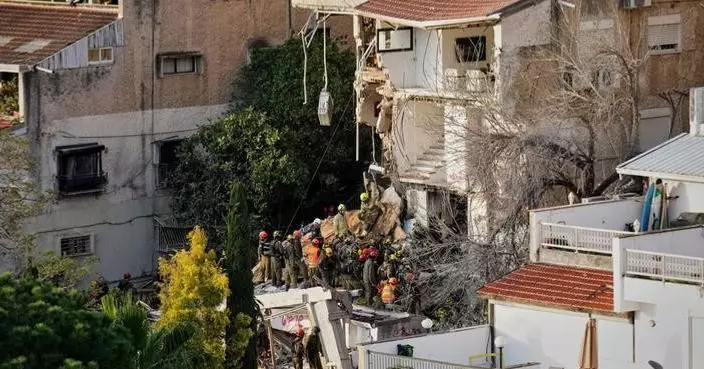
Israel’s military said four people were found dead at the site of a missile strike in Haifa.
They had been trapped under rubble and were found after hours of overnight rescue efforts, the mililtary said.
European Council President António Costa said Monday that an “escalation will not achieve a ceasefire and peace,” which was likely a warning aimed at U.S. President Donald Trump.
“Only negotiations will, namely the ongoing efforts led by regional partners,” he added in the statement posted on X.
Costa’s call comes as Trump has threatened to begin bombing power plants and bridges this week if Iran does not open the Strait of Hormuz.
He wrote that “any targeting of civilian infrastructure, namely energy facilities, is illegal and unacceptable.”
“The Iranian civilian population is the main victim of the Iranian regime,” Costa wrote. “It would also be the main victim of a widening of the military campaign.”
The death toll in an airstrike on a Iranian residential building has risen to at least 15 people, authorities said Monday
The strike hit near Eslamshar, a city southwest of Iran’s capital Tehran.
An airstrike hit an information and communication technology building at Tehran’s Sharif University of Technology on Monday morning, according to Mohammed Vesal, an economics professor at the university.
Vesal, who spoke to a team from The Associated Press that had traveled to Iran from abroad to report there, said the attack disrupted online learning for the university.
All students have left the campus because of the war.
“All web services of the university are down now because of this violent attack on our infrastructure,” Vesal said. “This is a purely academic institution.”
Sharif University of Technology is considered Iran’s top engineering school.
Multiple countries over the years have sanctioned the university for its work with the military, particularly on Iran’s ballistic missile program, which is controlled by the country’s paramilitary Revolutionary Guard.
Israel claimed the killing of the intelligence chief of Iran’s Revolutionary Guard on Monday.
Defense Minister Israel Katz made the announcement.
The Israeli military later confirmed the airstrike that killed Maj. Gen. Majid Khademi took place in Iran’s capital Tehran.
“The Revolutionary Guard are shooting at civilians and we are eliminating the leaders of the terrorists,” Katz said. “Iran’s leaders live with a sense of being targeted. We will continue to hunt them down one by one.”
Katz added Israel had “severely damaged” Iran’s steel and petrochemical industries, as well.
“We will continue to crush the Iranian national infrastructure and lead to the erosion and collapse of the terrorist regime, and its capabilities to promote terror and fire at the state of Israel,” he said.
The head of intelligence for Iran’s paramilitary Revolutionary Guard was killed Monday in an attack targeting him, Iranian state media said.
Maj. Gen. Majid Khademi died in the attack, which the Guard blamed on the United States and Israel.
It did not elaborate on where Khademi was killed. However, multiple airstrikes targeted residential areas around Iran’s capital, Tehran, early Monday morning.
Khademi took over for Gen. Mohammad Kazemi, who Israel killed in the 12-day war in June.
The Guard’s intelligence organization wields vast powers within Iran and answers only to the country’s supreme leader. It often has been linked to the detention of Western nationals or those with ties abroad. It also has been accused of carrying out extraterritorial killings and attacks targeting opponents of the country’s theocracy.
Iran and the United States have received a draft proposal that calls for a 45-day ceasefire and the reopening of the Strait of Hormuz as a possible way to end the war, two Mideast officials told The Associated Press.
The proposal comes from Egyptian, Pakistani and Turkish mediators working to halt the fighting, according to two officials who spoke on condition of anonymity to discuss private negotiations.
They hope the 45-day window would provide enough time for extensive talks between the countries to reach a permanent ceasefire.
Iran and the U.S. have not responded to the proposal, which was sent late Sunday night to Iranian Foreign Minister Abbas Araghchi and U.S. Mideast envoy Steve Witkoff, the officials said.
It remains unclear whether the sides would agree to such terms. Iran has insisted it will keep fighting until it receives financial reparations and a promise it won’t be attacked again. U.S. President Donald Trump has threatened to bomb Iranian bridges and power stations this week.
The news website Axios first reported terms of the proposal.
An Iranian drone attack damaged a telecommunications building in Fujairah in the United Arab Emirates on Monday, the state-run WAM news agency reported.
The attack targeted a building of the state-funded du telecom company.
No one was injured, WAM reported, quoting officials in Fujairah.
South Korea’s National Intelligence Service says there are no signs North Korea is providing Iran with weapons or other war-related supplies.
The spy agency’s officials told lawmakers Monday that North Korea may be taking a cautious approach to preserve the possibility of dialogue with the Trump administration, according to two lawmakers who attended the closed-door briefing.
North Korea’s Foreign Ministry has condemned the U.S.-Israeli attacks on Iran as illegal, but the NIS said Pyongyang has not sent an official condolence message over the death of Ayatollah Ali Khamenei, Iran’s late supreme leader.
North Korean leader Kim Jong Un in recent years has embraced the idea of a “new Cold War” and attempted to expand cooperation with countries confronting the U.S., including an economic delegation sent to Iran in April 2024.
South Korea plans to send at least five ships to Saudi Arabia’s Yanbu port in the coming weeks to establish new oil transport routes in the Red Sea.
The Ministry of Trade, Industry and Resources said Monday the ships will be deployed in phases beginning in mid-April and the number of vessels could increase depending on contracts with Saudi partners.
Officials did not disclose the companies involved but said some domestic refiners may use non-Korean shipping firms.
South Korea also plans to send special envoys to Saudi Arabia, Oman and Algeria to step up diplomatic efforts to secure alternative fuel supplies, ruling party lawmaker Ahn Do-geol said.
The foreign ministry did not immediately reveal when the envoys would be sent.
Iran has executed another man convicted over charges stemming from the nationwide protests that swept Iran in January.
The judiciary’s Mizan news agency identified the man hanged as Ali Fahim in a report Monday.
It was unclear when he was executed.
Fahim had been convicted of allegedly storming a military base to seize weapons.
Amnesty International said Fahim and others convicted in the case “were subjected to torture and other ill-treatment in detention, including beatings, floggings, prolonged solitary confinement, and death threats at gunpoint before being convicted in grossly unfair trials that relied on forced ‘confessions’ extracted under torture and lasted only a few hours.”
The Human Rights Activist News Agency had said Fahim and others had entered a Tehran base of the all-volunteer Basij militia, an arm of the Revolutionary Guard, after it had been burned, then had been forced into confessions.
Israel rescue services reported Monday morning several sites were hit by missiles launched from Iran toward multiple cities in the center of Israel.
In Petah Tikva, paramedics provided medical treatment to an injured woman in serious condition with a chest injury from shrapnel and evacuated her to the Beilinson Hospital.
Fire fighters in that city are handling cars on fire and continue searching to ensure there are no people trapped in the rubble.
In Tel Aviv, a man slightly injured by glass shrapnel was evacuated to the Ichilov Hospital.
Footage provided by rescue service Magen David Adom shows damage to residential buildings due to the attack.
Meanwhile, Israel’s military warned the public Monday morning of another missile barrage coming from Iran, the fourth-such alert of the day.
Israel’s Magen David Adom and Fire and Rescue services said early Monday that there are several reported sites of Iranian missile hits in the northern city of Haifa.
In one site, four people were slightly injured, including two children.
The missile attacks hit residential areas and a factory in the city.
The factory was hit by shrapnel from an interception.
It is unclear if all the reported hits were caused by shrapnel from interception or direct hits.
Video footage provided by Magen David Adom of the affected sites show active fire and bombed cars in what appears to be a residential area.
The missile strikes come a day after another attack from Iran also hit a Haifa residential area, killing two people and injuring others.
Two other people remain missing under the rubble caused by Sunday's strike and their fate is still unknown.
In the United Arab Emirates’ capital of Abu Dhabi, authorities said a Ghanaian man suffered wounds from shrapnel after the interception of an Iranian missile over the city’s Musaffah neighborhood.
That’s near Al Dhafra Air Base, which hosts U.S. forces and has been repeatedly targeted by Iran in the war.
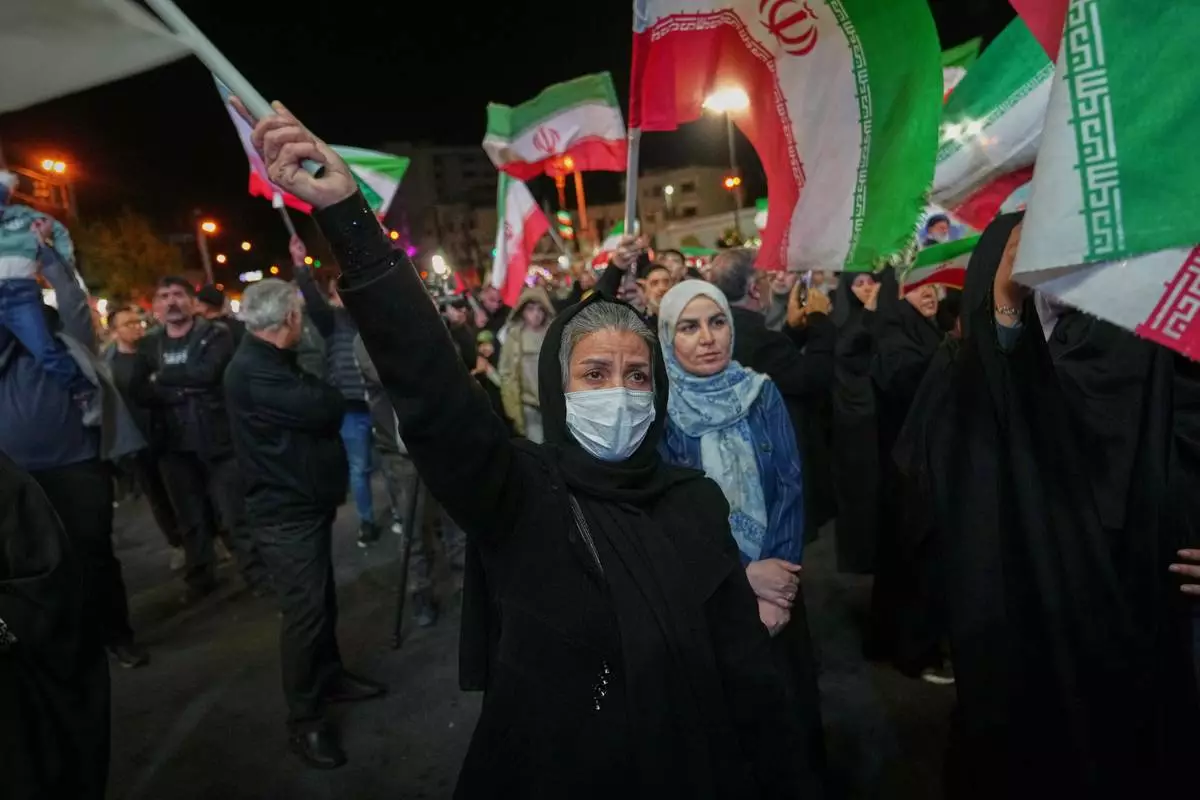
Women hold Iranian flags during a pro-government gathering in a square in Tehran, Iran, Sunday, April 5, 2026. (AP Photo/Francisco Seco)
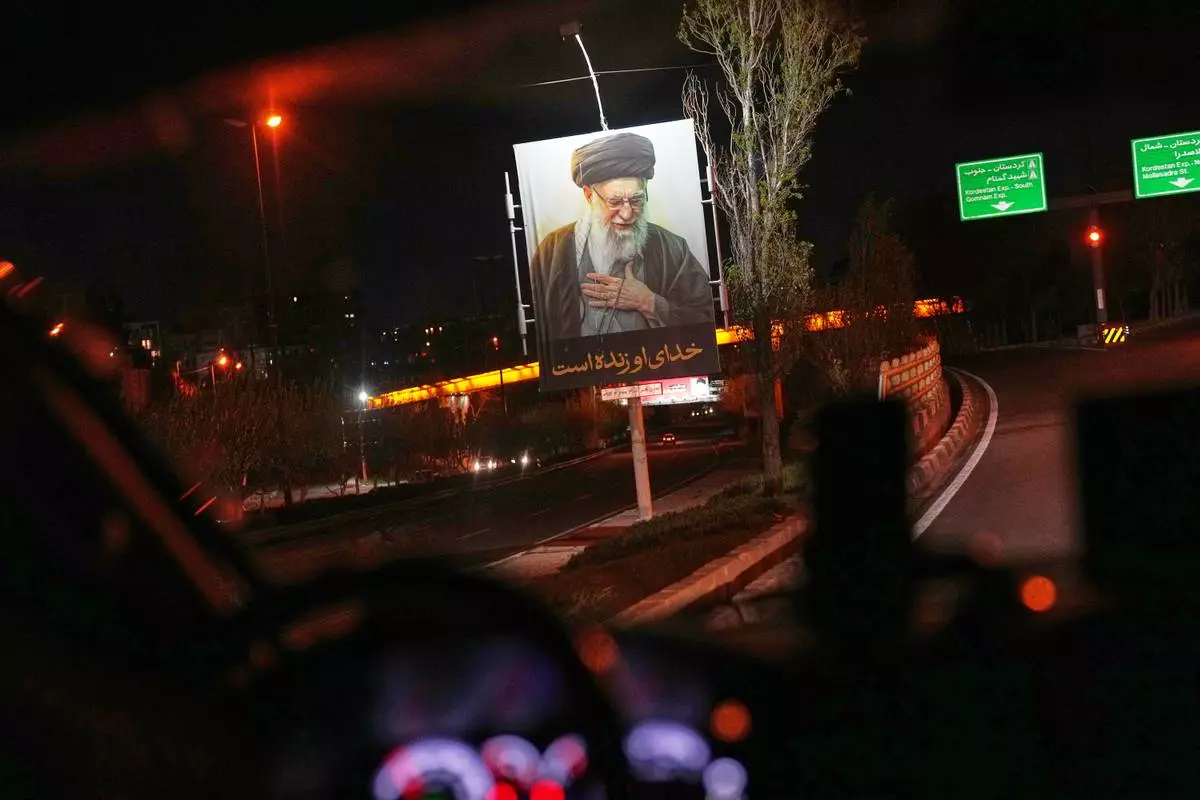
A picture of the late Iranian Supreme Leader Ayatollah Ali Khamenei hangs on the side of the road in the outskirts of Tehran, Iran, early Sunday, April 5, 2026. (AP Photo/Francisco Seco)
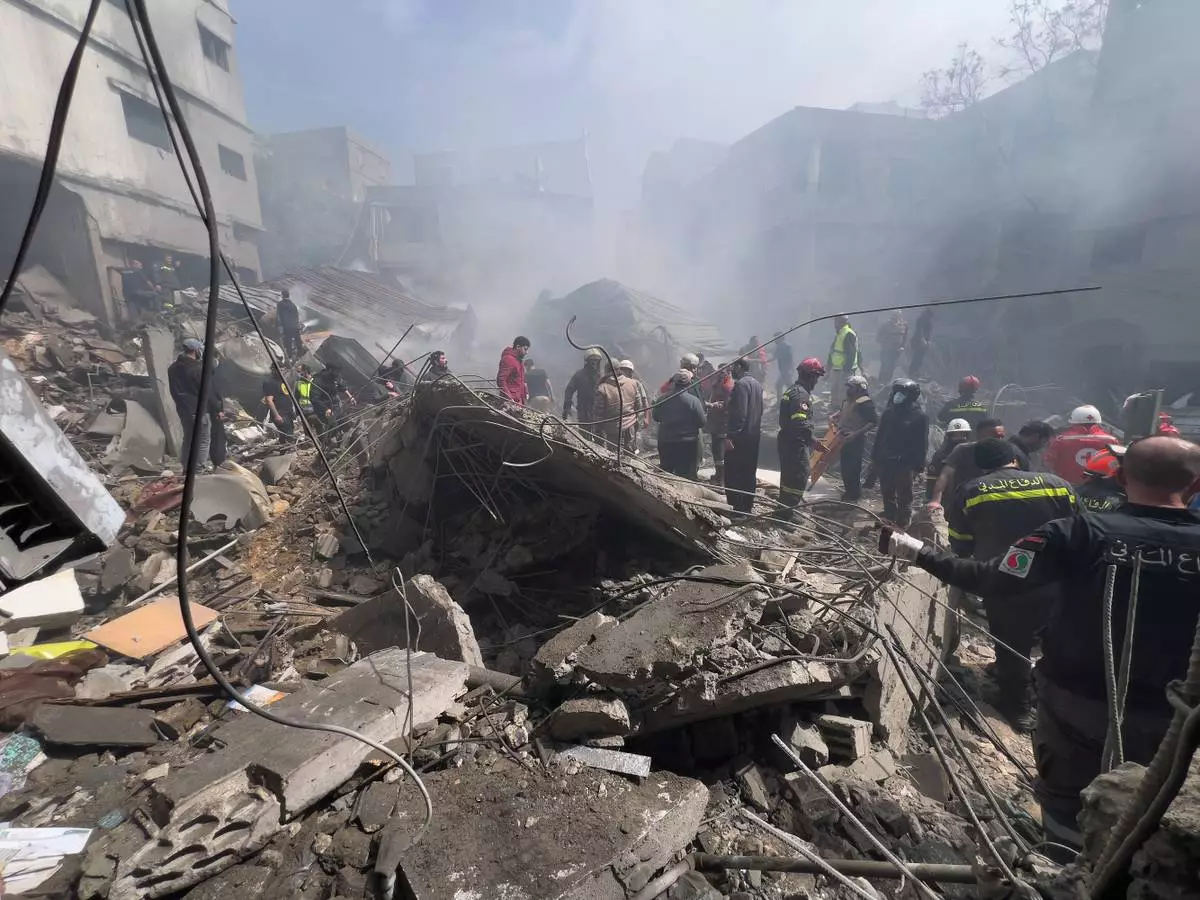
Rescue workers search for victims at the site of an Israeli airstrike that hit a crowded neighbourhood south of Beirut, Lebanon, Sunday, April 5, 2026. (AP Photo/Hussein Malla)
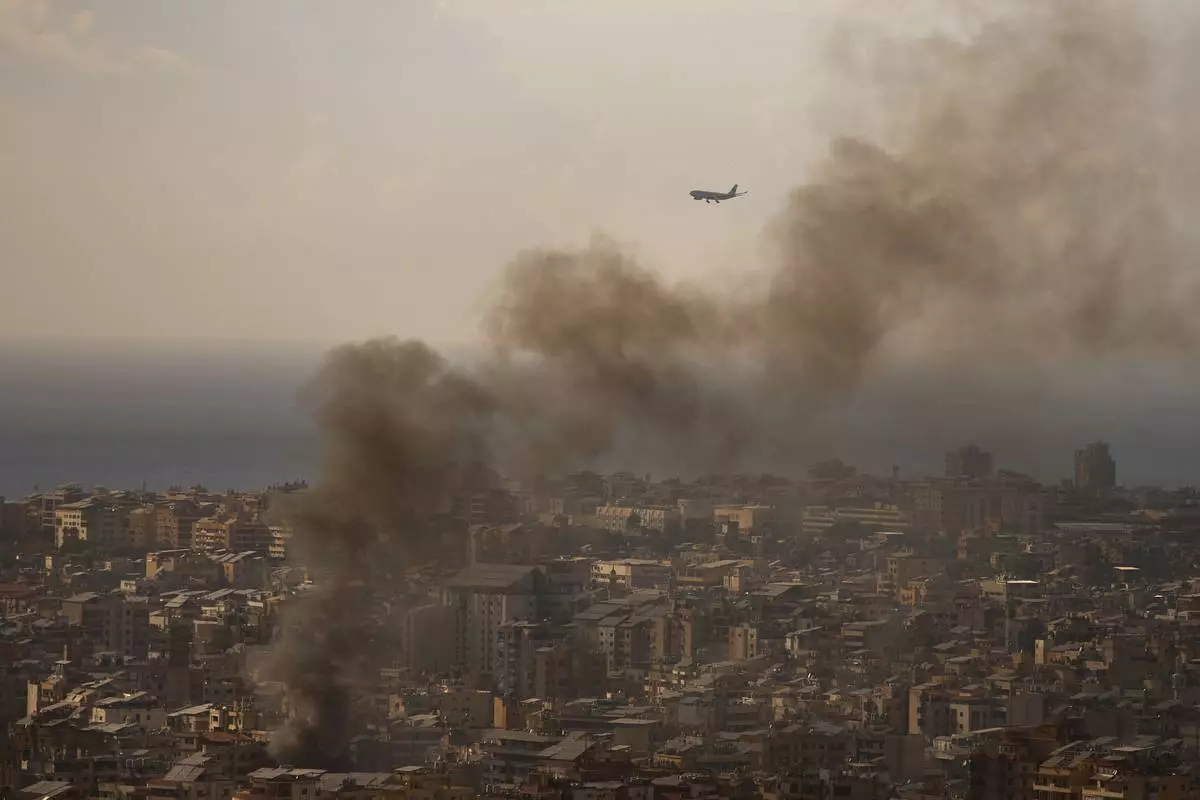
A commercial plane is preparing to land at Beirut Airport as smoke rises from Israeli airstrikes in Dahiyeh, a southern suburb of Beirut, Lebanon, Sunday, April 5, 2026. (AP Photo/Emilio Morenatti)
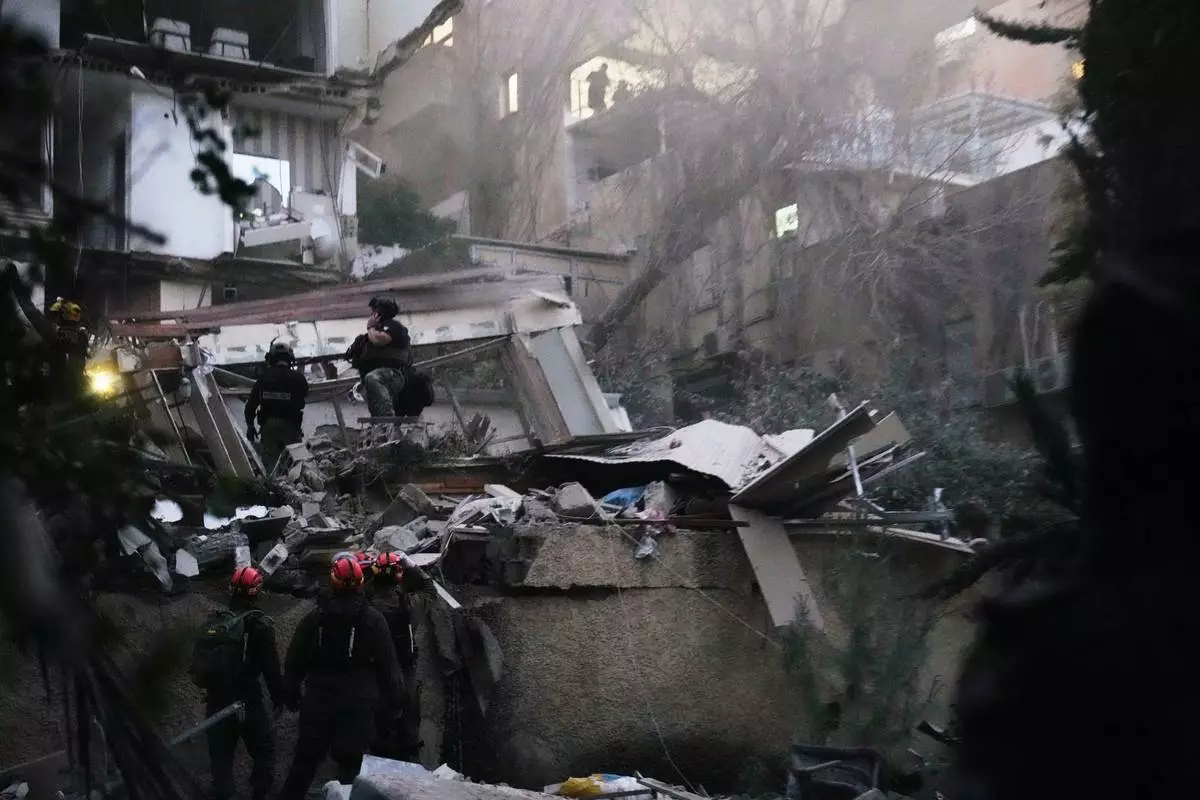
Israeli security forces and rescue teams work amid the rubble of a residential building struck by an Iranian missile in Haifa, Israel, Sunday, April 5, 2026. (AP Photo/Ariel Schalit)