BRUSSELS (AP) — Belgian police used tear gas and a water cannon in an attempt to disperse tens of thousands of people who flooded Brussels on Tuesday to protest Prime Minister Bart De Wever's proposed austerity measures.
Minor scuffles broke out between police and protesters, some of whom played drums and horns and set off flares and smoke bombs, while chanting against cuts to social welfare programs. The unusually large protest crippled traffic in the heart of the Belgian capital, blocking major roads. Strikes led to most flights being canceled at Brussels' airport.
Click to Gallery
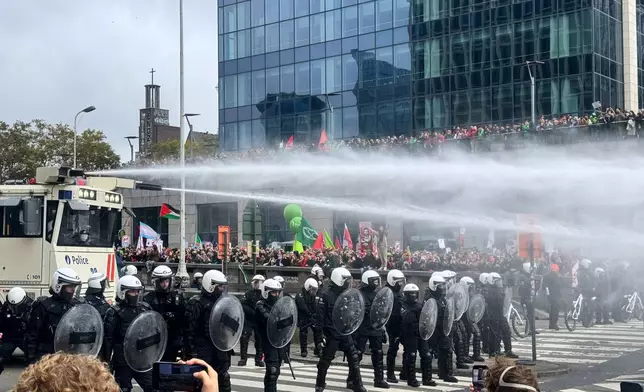
Police use a water cannon against protestors during a demonstration and general strike in Brussels, Tuesday, Oct. 14, 2025. (AP Photo/Sylvain Plazy)
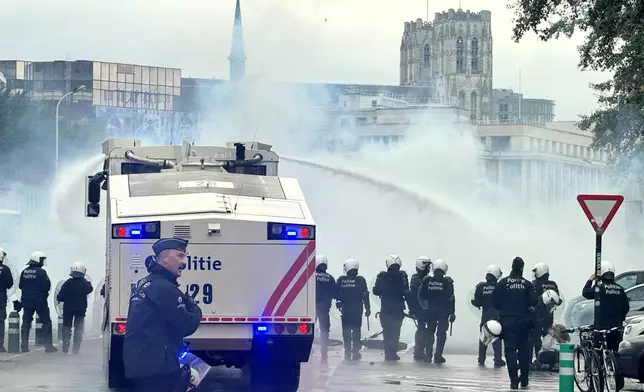
Police use a water cannon against protestors during a demonstration and general strike in Brussels, Tuesday, Oct. 14, 2025. (AP Photo/Sylvain Plazy)
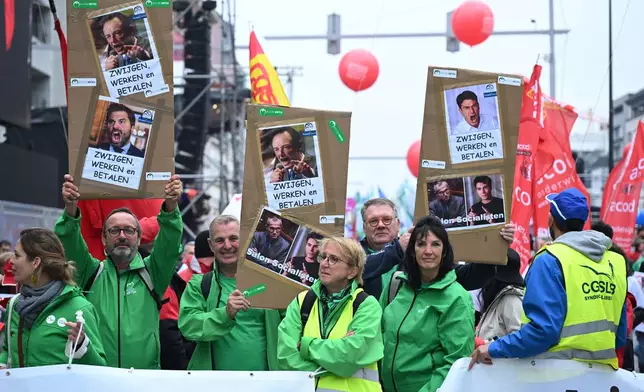
Demonstrators hold signs with photos of Belgian politicians which reads 'keep quiet, work and pay', during a general strike in Brussels, Tuesday, Oct. 14, 2025. (AP Photo/Harry Nakos)
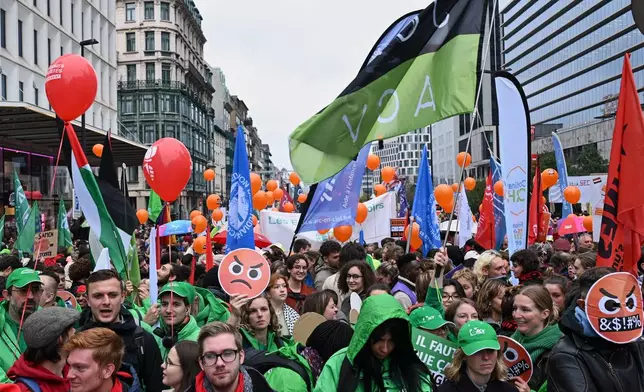
People march with signs and balloons during a demonstration and general strike in Brussels, Tuesday, Oct. 14, 2025. (AP Photo/Harry Nakos)

People dressed as zombies march during a demonstration and general strike in Brussels, Tuesday, Oct. 14, 2025. (AP Photo/Harry Nakos)
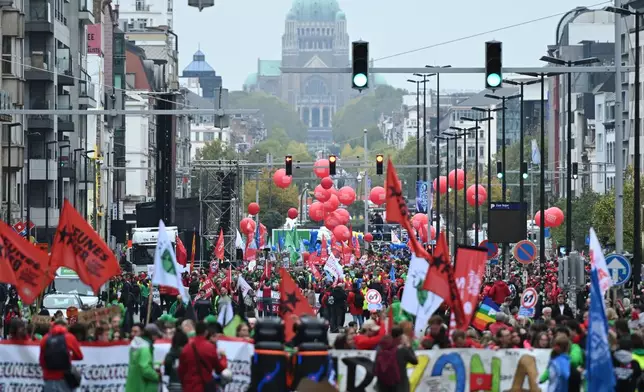
People march with signs crossed out with the number 67, referring to pension age, during a demonstration and general strike in Brussels, Tuesday, Oct. 14, 2025. (AP Photo/Harry Nakos)
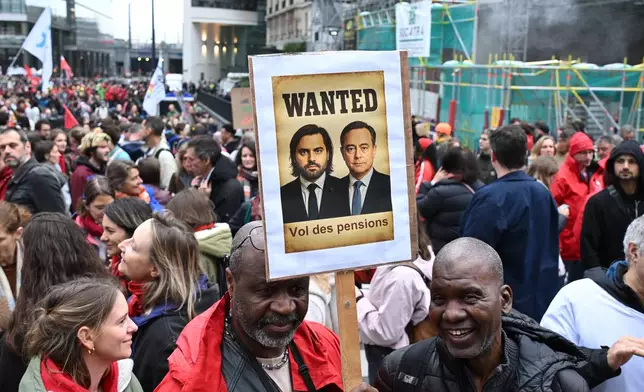
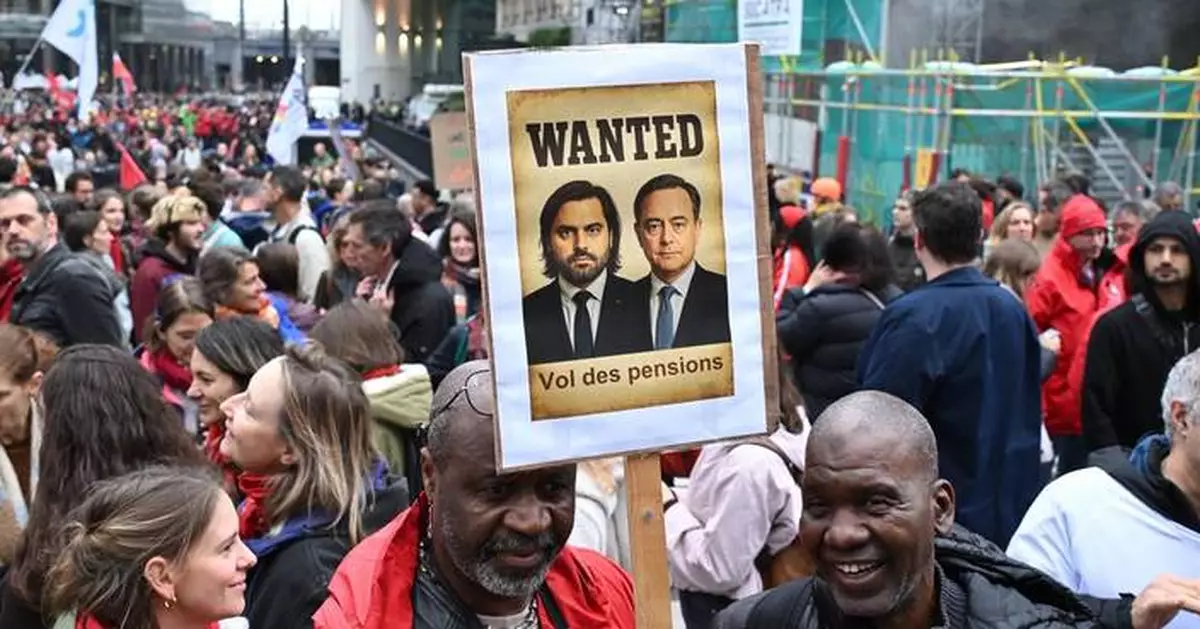
Two men hold a sign with a photo of Belgium's Prime Minister Bart De Wever, which reads 'Pension Theft', during a demonstration and general strike in Brussels, Tuesday, Oct. 14, 2025. (AP Photo/Harry Nakos)
Organizers estimated more than 150,000 people joined the demonstration, while the police put the crowd at 80,000.
Police vehicles chasing protesters were seen to smash up bicycles. Officers out of uniform but identified by red arm bands detained protesters, tying their hand with plastic bands. At one point, police officers on bicycles sheltered inside a hotel from a large group of protesters.
Belgium's Migration Minister Anneleen Van Bossuyt said on X that she had filmed protesters vandalizing the immigration office building downtown.
Belgium’s three major trade unions organized the protest and nationwide strikes against cuts to the pension, unemployment benefits, and health care systems proposed by De Wever.
He has vowed to slash spending to try and overcome the country's economic problems, which include a national debt totaling just over 100% of GDP, putting it among the worst in the 27-nation European Union.
“All the austerity measures, whether in terms of pensions, reductions of family allowances, all that, nothing is working anymore,” said Frédéric Kulcsar, a health care worker from the southern Belgian city of Charleroi.
Those policies drove people “to fight for greater job security and greater security for young people,” said Eric Manzi, Deputy Secretary General of the International Trade Union Confederation, a transnational labor rights organization.
“The Belgian government, as in most countries today, is implementing policies that do not really guarantee future employment, where work is becoming increasingly precarious and where retirement is not really granted," he said.
De Wever, a Flemish nationalist, took office in February with the formation of the so-called “Arizona Government,” named after the colors of the American state flag that resemble those of the Belgium’s ruling coalition parties.
Protesters threw sandbags and trash at a cardboard cut-outs of De Wever, Foreign Minister Maxime Prévot, and Finance Minister Jan Jambon, holding signs reading in French: “Imposing night shifts without bonus,” “More work for less pension," and “Less contribution from high earners,” referring to widespread criticism of the government's refusal to increase taxes on the wealthy.
“Arizona promised; Arizona lied,” read an enormous sign in Dutch at the protest.
Other signs showed a red line through the number 67, signifying disapproval of government plans to raise the retirement age by two years by 2030.
Peter Mertens, a lawmaker from the Workers' Party, said, "This is Belgium saying: enough is enough." “Together, we can make the government back down,” he said in a post on X.
———
Associated Press writer Sam McNeil, in Brussels contributed to this report.
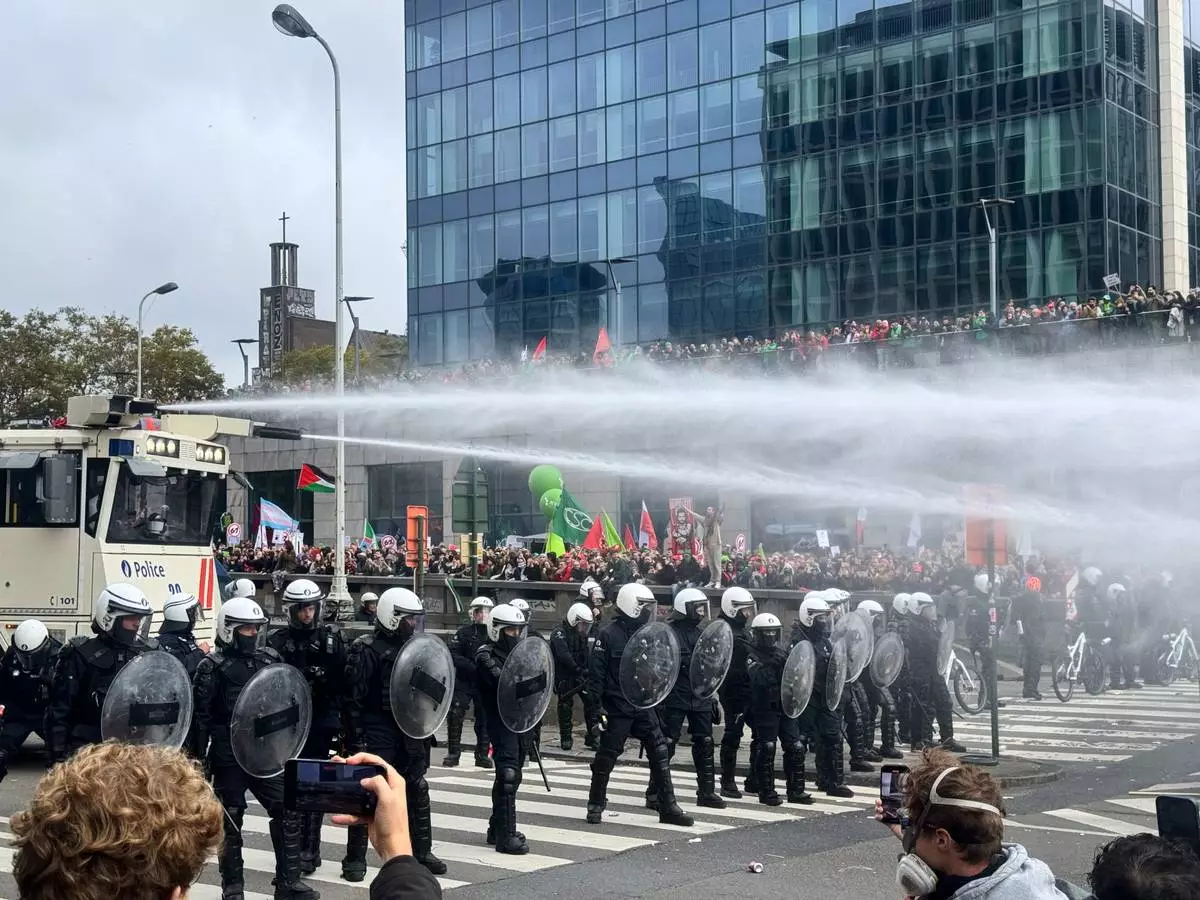
Police use a water cannon against protestors during a demonstration and general strike in Brussels, Tuesday, Oct. 14, 2025. (AP Photo/Sylvain Plazy)
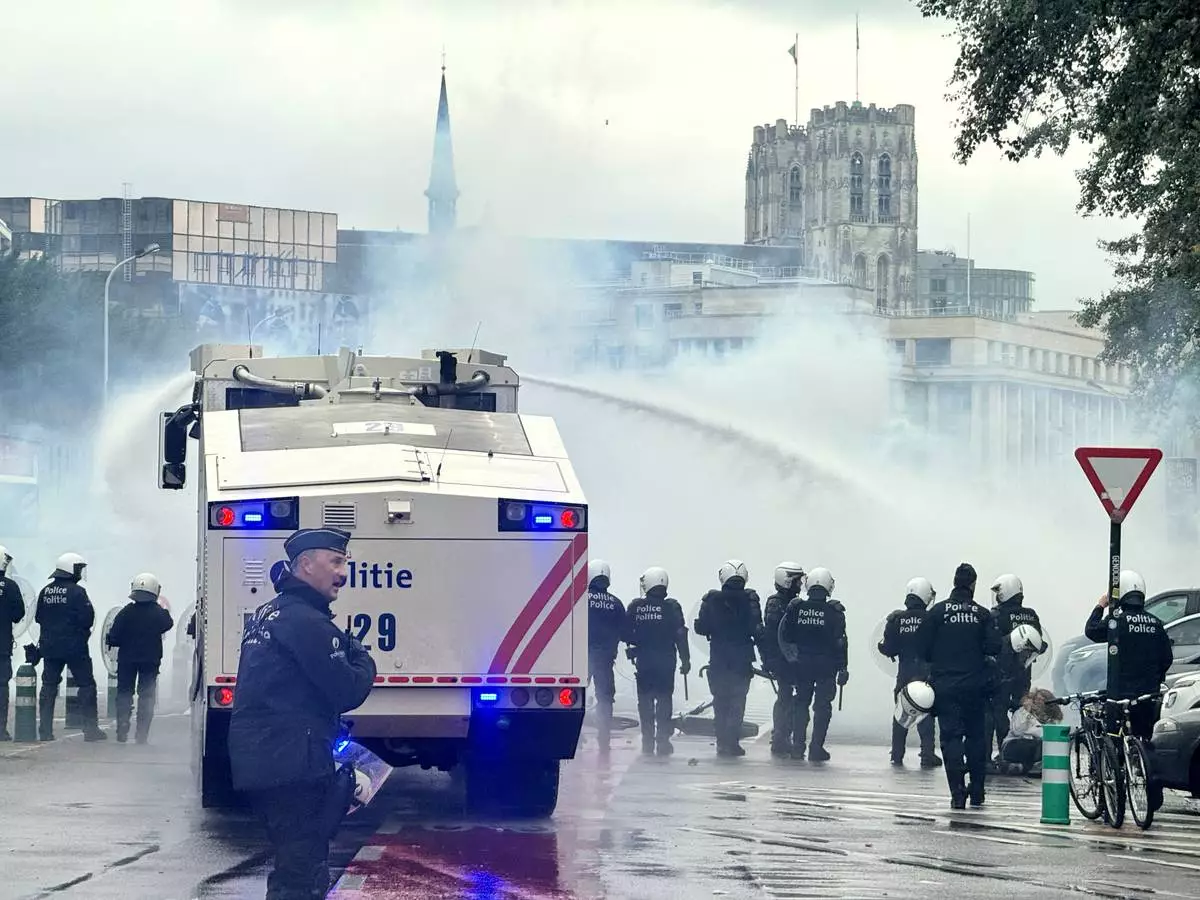
Police use a water cannon against protestors during a demonstration and general strike in Brussels, Tuesday, Oct. 14, 2025. (AP Photo/Sylvain Plazy)
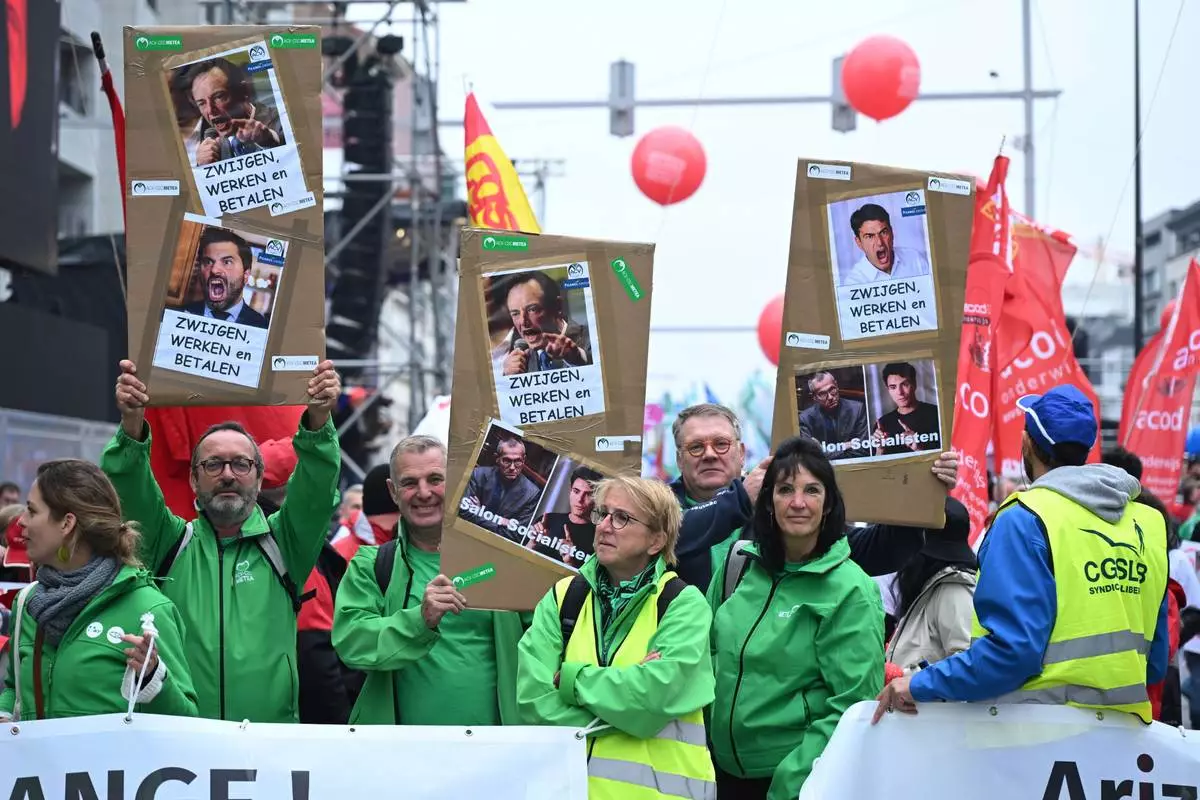
Demonstrators hold signs with photos of Belgian politicians which reads 'keep quiet, work and pay', during a general strike in Brussels, Tuesday, Oct. 14, 2025. (AP Photo/Harry Nakos)
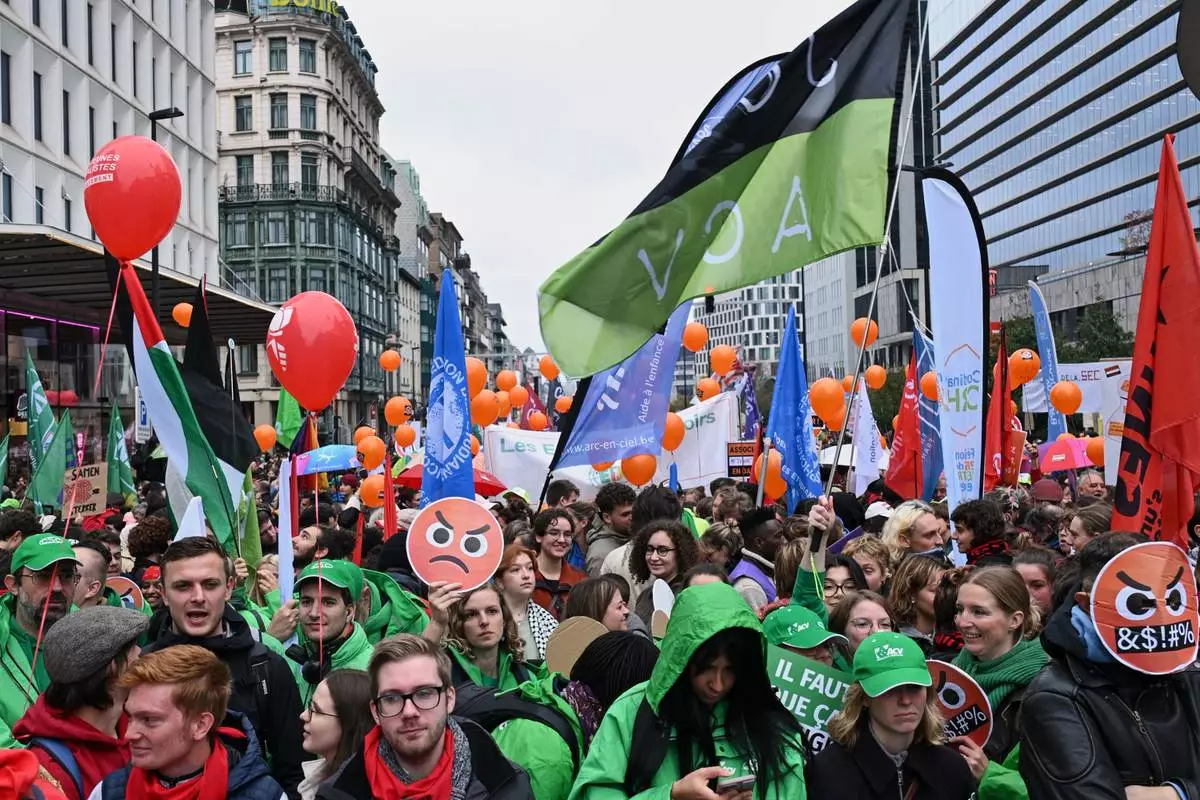
People march with signs and balloons during a demonstration and general strike in Brussels, Tuesday, Oct. 14, 2025. (AP Photo/Harry Nakos)
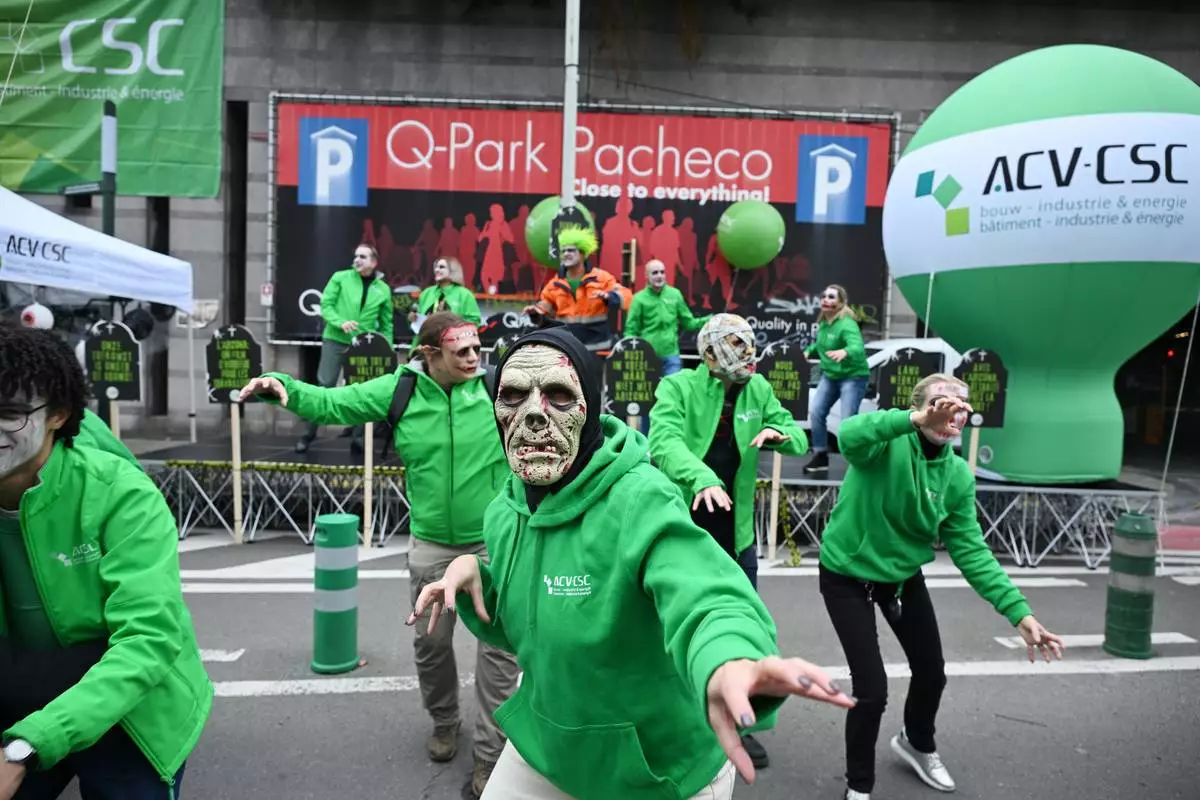
People dressed as zombies march during a demonstration and general strike in Brussels, Tuesday, Oct. 14, 2025. (AP Photo/Harry Nakos)
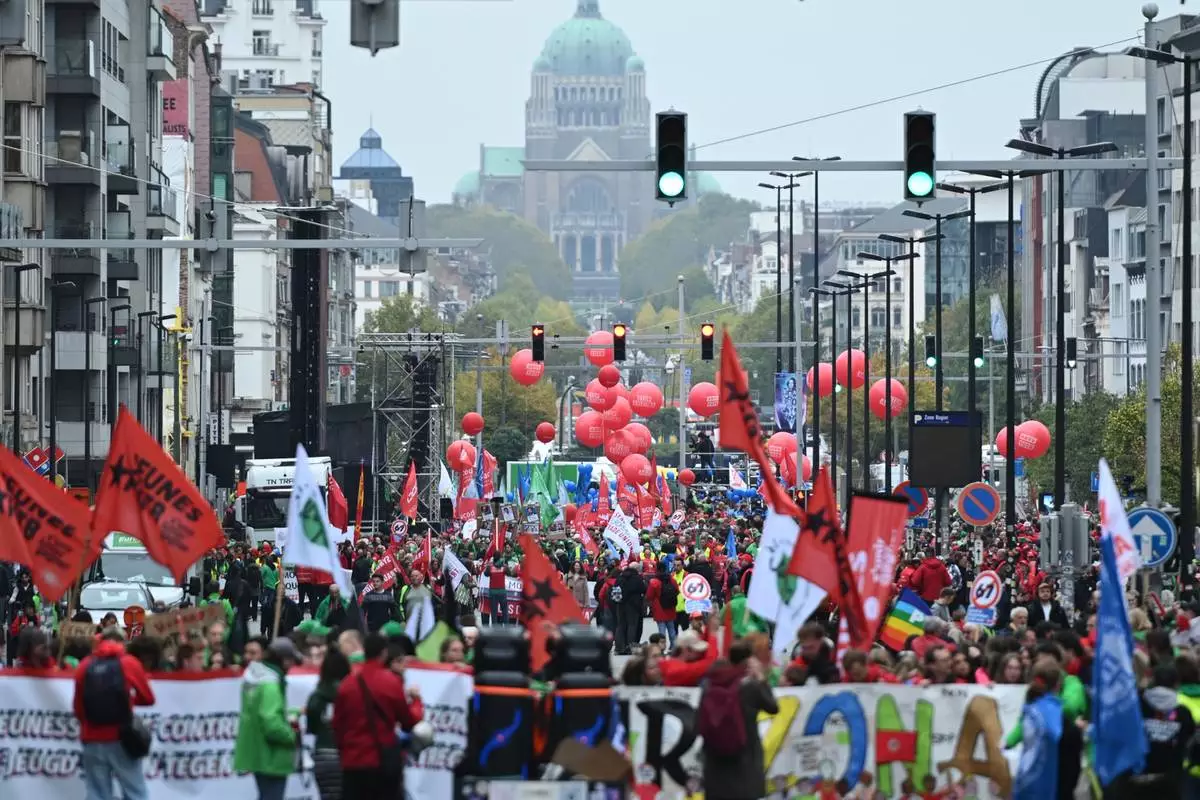
People march with signs crossed out with the number 67, referring to pension age, during a demonstration and general strike in Brussels, Tuesday, Oct. 14, 2025. (AP Photo/Harry Nakos)
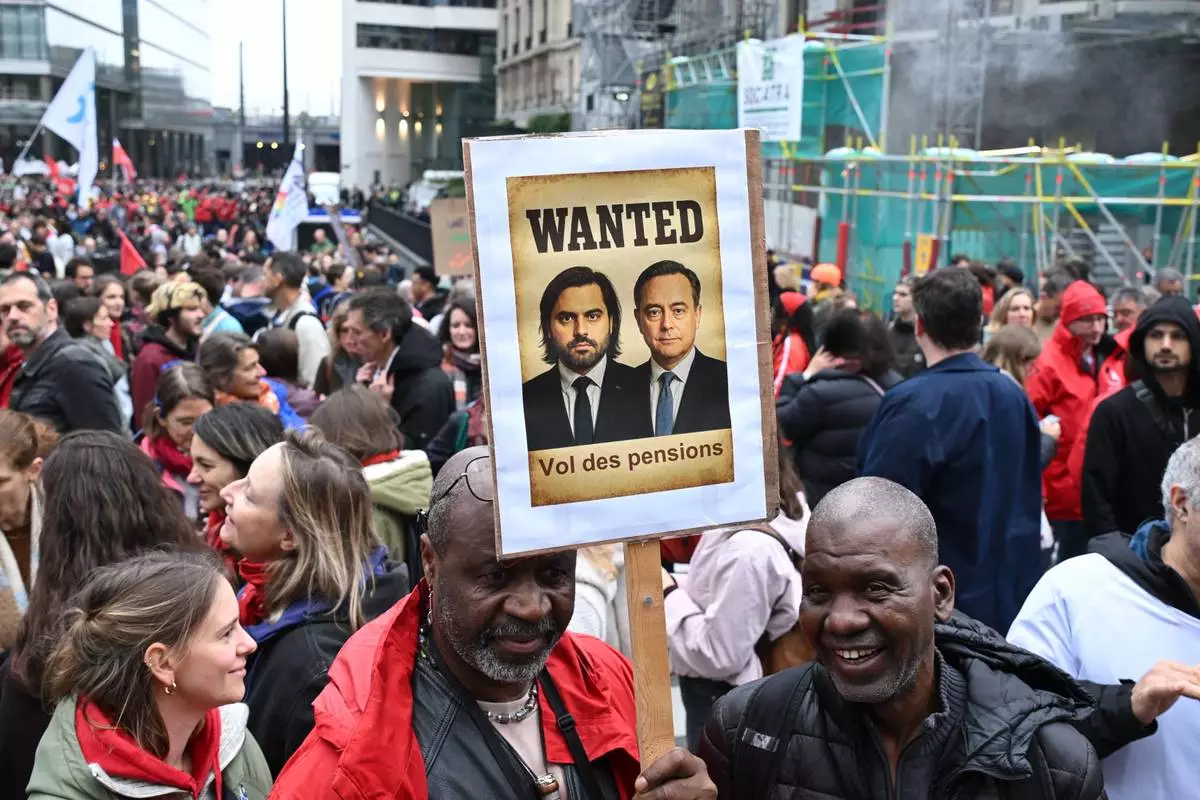
Two men hold a sign with a photo of Belgium's Prime Minister Bart De Wever, which reads 'Pension Theft', during a demonstration and general strike in Brussels, Tuesday, Oct. 14, 2025. (AP Photo/Harry Nakos)