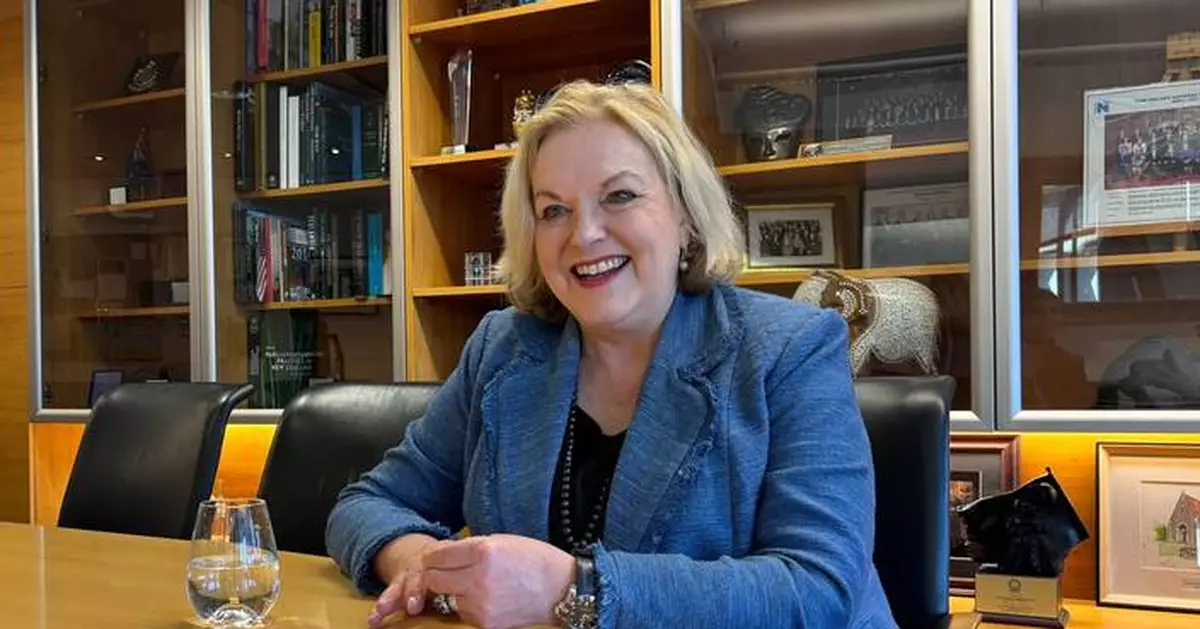
WELLINGTON, New Zealand (AP) — New Zealand’s defense minister warned in an interview that small countries in the South Pacific face growing pressure from great power competition for their rare minerals and fisheries wealth, and that more action was needed from regional neighbors to help in preserving island nations' sovereignty.
Judith Collins, who also oversees New Zealand’s intelligence and space portfolios, spoke to The Associated Press on Wednesday before departing for Washington D.C., where she will meet Trump administration officials including Secretary of War Pete Hegseth and Secretary of Homeland Security Kristi Noem.
New Zealand, a nation of 5 million in the South Pacific, is part of a vast region of mostly small island countries once seen as remote from global tensions. But Collins cited China’s encroaching presence in the region in recent months as evidence of its global security importance.
“I also say to the U.S. that you are a Pacific nation,” Collins told the AP, speaking in her parliamentary office in Wellington. “And it’s not just that you have Guam, it’s not just that you have Hawaii, as lovely as it is. It’s the fact that your entire California is on the Pacific Ocean, that Alaska is on the Pacific Ocean, that Russia is a Pacific nation.”
The seabed across the South Pacific is rich in rare earth minerals that are increasingly in demand for technologies such as electric vehicle batteries and defense systems, but mining has yet to begin at scale because international rules governing access are still being established
Collins said the potential wealth of the region's small island nations left them exposed to exploitation by powerful interests.
She didn’t cite China specifically. But her government expressed alarm in February when Beijing signed an agreement to collaborate on deep sea mining research with the Cook Islands, a nation of 17,000 people, which has close military, diplomatic and citizenship ties to New Zealand.
“The Pacific has enormous wealth but it’s just not in the hands of the people,” Collins said Wednesday. She added that she didn't want to see the promises of mineral wealth for those countries being "basically raped and pillaged off them.”
Collins said other recent moves by Beijing are evidence of a changed security landscape. They included Chinese naval live-fire drills near New Zealand in February, Beijing’s plans for a sixth base in Antarctica despite not being party to the treaty governing operations on the continent, and the launch of an intercontinental ballistic missile into the Pacific Ocean last September.
Collins may still face a challenge showing her counterparts in D.C. that New Zealand can contribute to regional security and to the work of the Five Eyes intelligence sharing group of countries, of which New Zealand is a member, along with the U.S., Britain, Canada and Australia.
The country’s military struggles with rundown hardware and recruitment woes, as illustrated in an embarrassing 2024 episode when one of New Zealand’s nine navy ships ran aground on a reef off Samoa, caught fire and sank.
Collins will meet an administration that wants its allies to do more and ask for less. President Trump has urged European nations to commit to big hikes in defense spending, warning that U.S. help in defending its allies in case of invasion was no longer guaranteed.
Collins said her government’s announcement in April that it would double defense spending to 2% of GDP in the next eight years was evidence that New Zealand was “not just people saying ‘gimme, gimme, gimme.’” But she admitted that the country could not afford enough ships and planes to patrol its sprawling oceanic zone and that of its nearest island neighbors, and said a more agile approach was needed.
“What we can use is new technology, like satellite surveillance, like for instance drones,” she said. “We have businesses in New Zealand who are producing drones now and other uncrewed aircraft that is just astonishing.”
Collins will ask Trump administration officials for changes to help those companies grow. The country’s defense industry and space sectors are hampered by strict U.S. import and export controls on military technology, she said.
New Zealand in 2024 ranked third in the world for verified successful vertical launches into space, behind the U.S. and China, partly due to the country’s latitudinal location and uncongested airspace.
But Collins said U.S. International Traffic in Arms Regulations prevented the sharing of products and knowledge between New Zealand and American space sector firms and more could be done if they were loosened.
She planned to seek an exemption to those rules, which she said had already been granted to other Five Eyes countries, although her chances of success at a time of U.S. trade tariffs were “not enormously huge,” Collins added.
The meetings in D.C. are some of the most significant to date between New Zealand and U.S. officials during this political term. Collins was among those who met in July with FBI director Kash Patel, the highest-ranking Trump administration official to visit New Zealand so far.
She and other officials received unusual gifts from Patel of inoperable 3D-printed pistols that were illegal to possess under New Zealand’s laws and had to be destroyed. Collins on Wednesday was light-hearted about the offering.
“I thought, well, that’s going to go well with my taser,” said Collins, gesturing to a decommissioned taser on display in her office. However, the gift had to be relinquished to the police, she added.
“It’s a shame, but that’s the way it is,” Collins said.
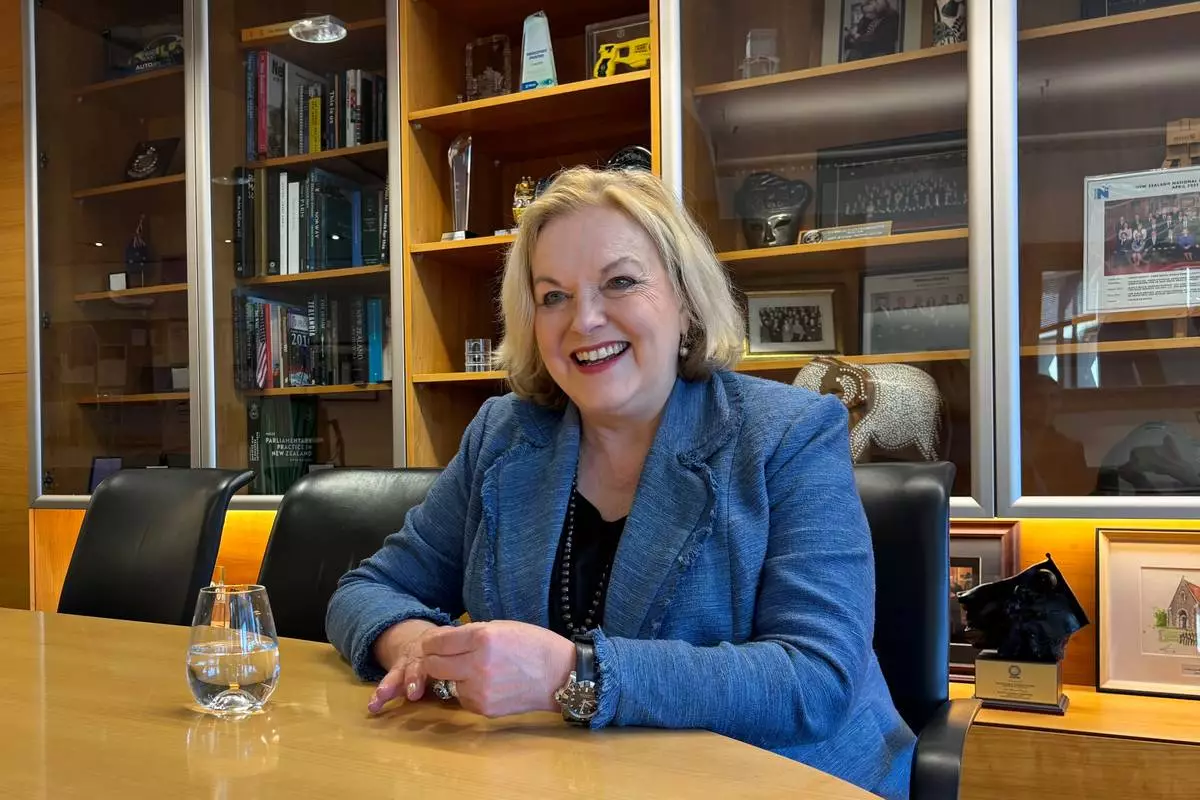
New Zealand's defense minister Judith Collins poses for a photo at her parliamentary office in Wellington, New Zealand, on Wednesday, Oct. 15, 2025. (AP Photo/Charlotte Graham-McLay)
GUATEMALA CITY (AP) — The death toll from suspected gangsters’ attacks on Guatemalan police rose to nine Monday, as Guatemalans saw heavier security in the streets and curtailed rights after Congress approved President Bernardo Arévalo's emergency declaration.
The violence started Saturday when inmates seized control of three prisons in apparently coordinated riots, taking 43 guards hostage. The gangs were demanding privileges for their members and leaders, according to authorities. Shortly after police liberated one prison Sunday morning, suspected gang members attacked police across the capital.
On Monday, National Civil Police Director David Custodio Boteo said that a ninth police officer had died early Monday from his injuries, adding that “there are several wounded who are in critical condition ... Some also suffered amputations.”
Police honored the fallen officers in a ceremony Monday, where flag-draped coffins sat in the Interior Ministry.
“Today it pains me to give each one of the families this flag, symbol of the nation that will not forget the sacrifice and commitment of their police fallen in the fulfillment of their duty,” Arévalo said Monday.
Outside the Interior Ministry, José Antonio Revolorio, 72, father of officer José Efraín Revolorio Barrera, 25, said, “I hope that the criminals who did this to my son will one day pay for it, that the law will go after them. And that this doesn’t end here, because my son was an honest man, competent at his work.”
Meanwhile, the government gazette published Monday Arévalo’s declaration of a 30-day state of emergency, saying there were “coordinated actions by self-named maras or gangs against state security forces, including armed attacks against civilian authorities.”
Among the rights that the declaration limits are freedom of action and demonstrations. It also allows police to arrest people without a judicial order if they are suspected gang members. Security forces could also prohibit the movement of vehicles in certain places or subject them to searches.
The unicameral Congress approved the state of emergency with minor changes Monday night on a vote of 149 in favor to 1 against, with 10 absent or on approved leave of absence. However, it had gone into effect Sunday.
Traffic in the capital Monday appeared lighter than usual.
“This situation is a shame. It affects people psychologically: they don't want to go out,” said Óscar López, a 68-year-old radio technician who had a doctor's appointment. “I agree with the president imposing the state of emergency because it doesn't stop the violence, but it relaxes people.”
Ileana Melgar, 64, said she was afraid of missing her appointment to renew her identification Monday. “But I was afraid to go out, I called my friend to go with me. You don't know if they will also stop (public) transportation and we can't get back home.”
The U.S. Embassy in Guatemala had instructed U.S. government personnel to shelter in place Sunday. That was lifted later in the day, but they were “advised to maintain a high level of caution when traveling.”
On Monday, the embassy condemned the attacks on police. “These terrorists, as well as those who cooperate with them or are linked to them, have no place in our hemisphere. The security of the Guatemalan people and the stability of our hemisphere must prevail. We reaffirm our support for Guatemala’s security forces to curb the violence.”
In October, the Congress reformed laws to declare members of the Barrio 18 and Mara Salvatrucha gangs terrorists. The changes lengthened prison sentences for gang members who commit crimes.
The United States government also declared those gangs foreign terrorist organizations last year.
As a safety precaution, school was suspended nationwide Monday.
__
AP journalist Emmanuel Andrés contributed to this report.
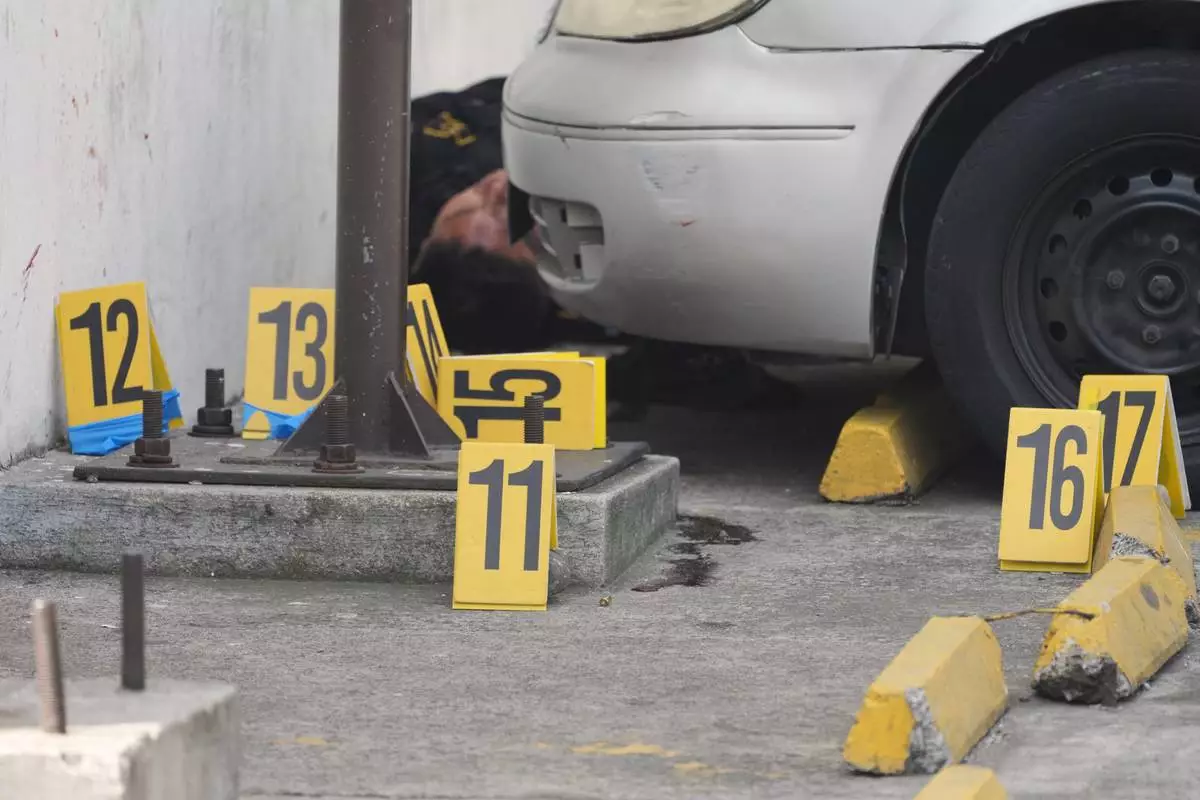
Evidence markers stand at the scene where police officers were killed in attacks reported after security forces retook control of a prison that houses gang leaders, in Villanueva, on the outskirts of Guatemala City, Sunday, Jan. 18, 2026. (AP Photo/Moises Castillo)
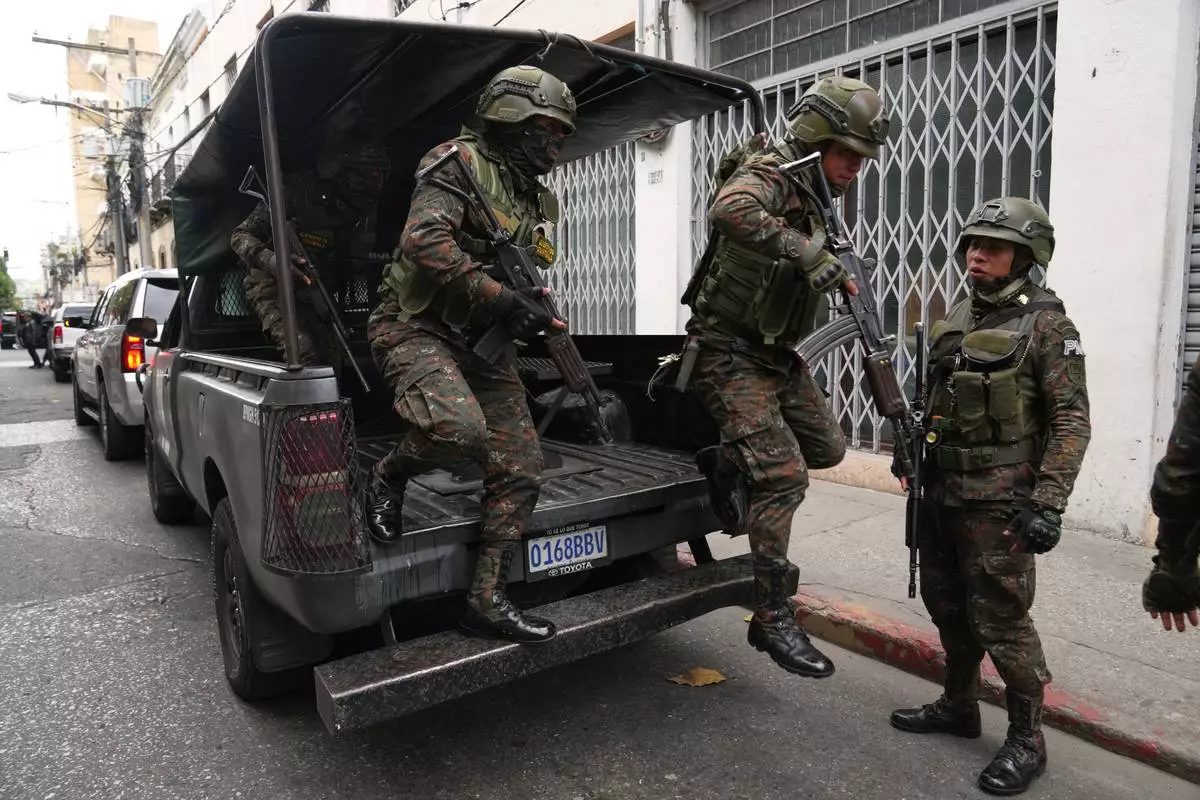
Deployed soldiers exit a vehicle around Congress in Guatemala City, Monday, Jan. 19, 2026, after President Bernardo Arévalo declared a state of emergency. (AP Photo/Moises Castillo)
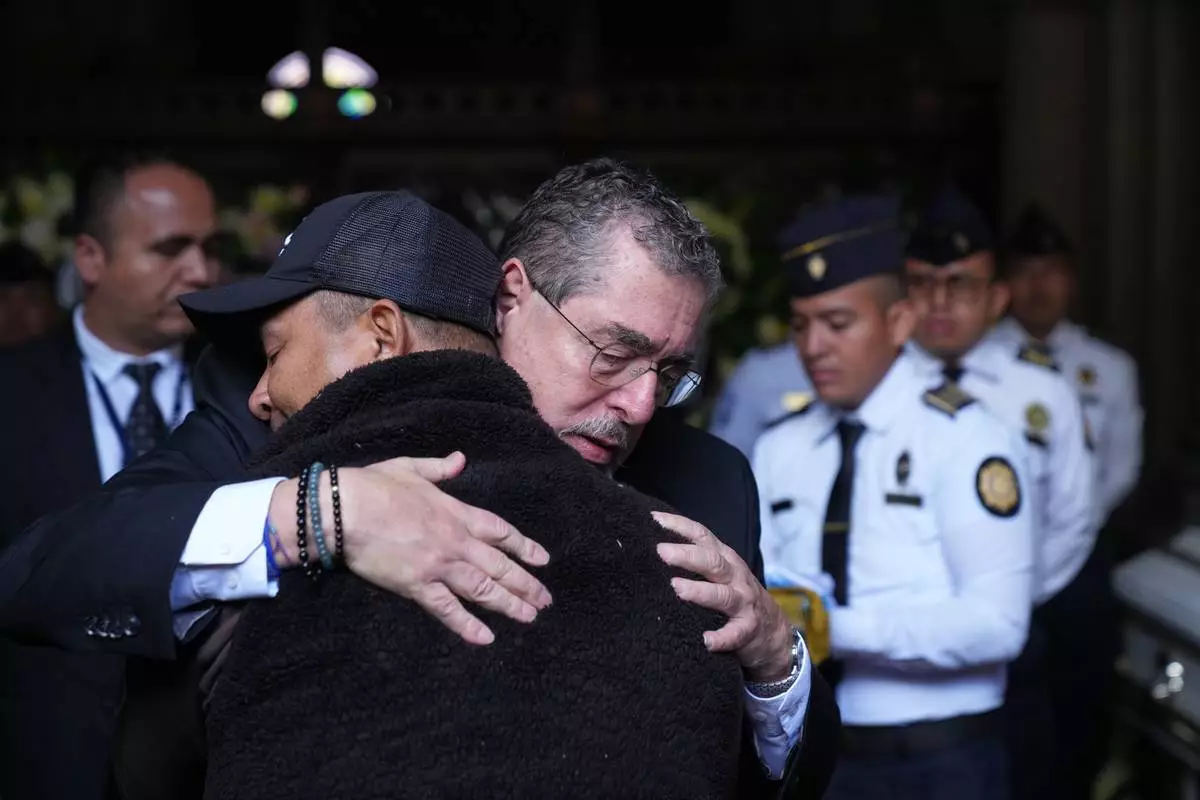
Guatemalan President Bernardo Arevalo comforts the relative of one of the police officers killed while retaking control of three prisons, during the wake for the officers at the Interior Ministry in Guatemala City, Monday, Jan. 19, 2026. (AP Photo/Moises Castillo)
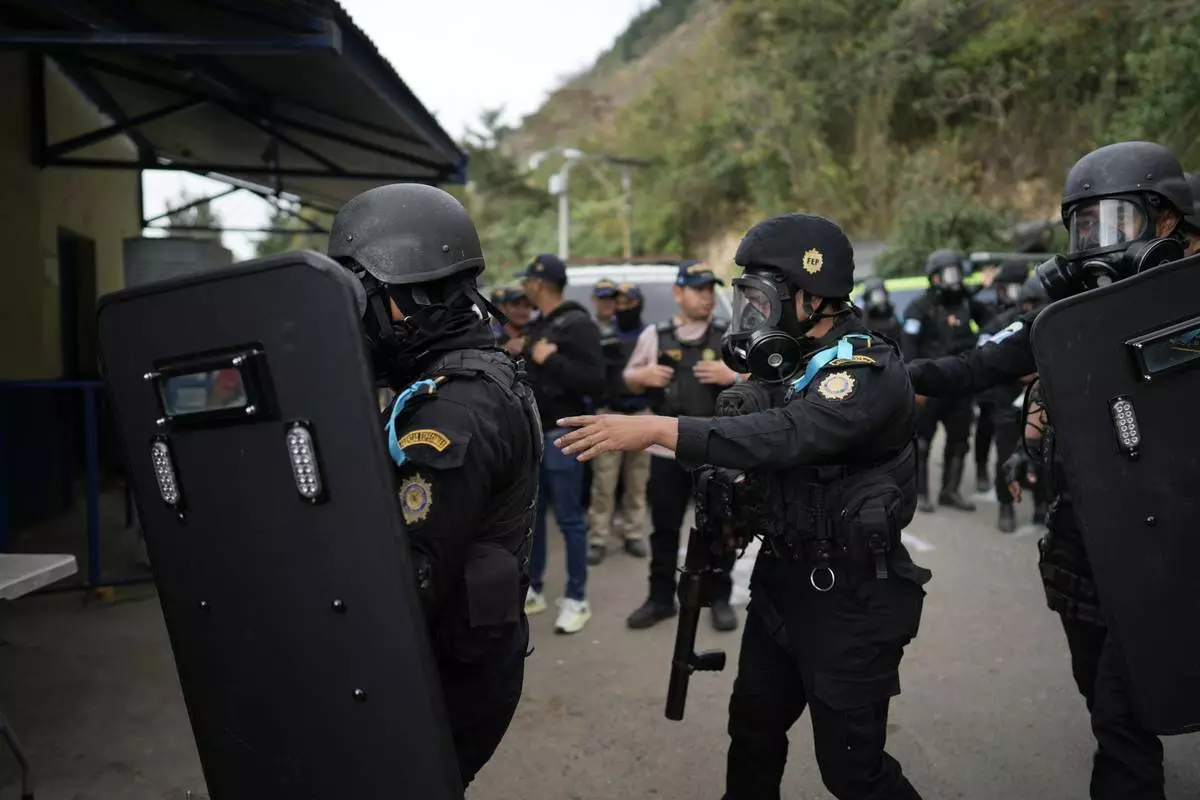
Security forces enter the Preventivo Zona 18 prison to free guards taken hostage and retake control of the facility in Guatemala City, Sunday, Jan. 18, 2026. (AP Photo/Emmanuel Andres)
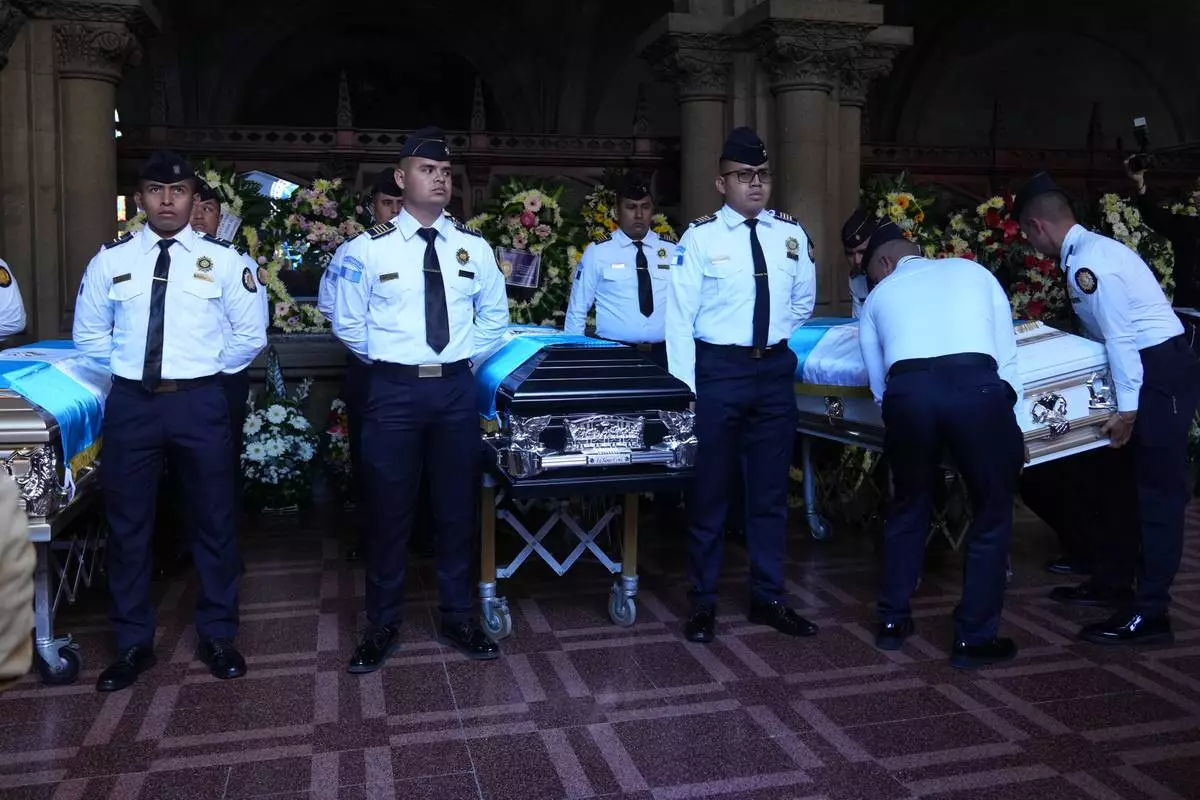
The wake for police officers killed while retaking control of three prisons is held at the Interior Ministry in Guatemala City, Monday, Jan. 19, 2026. (AP Photo/Moises Castillo)
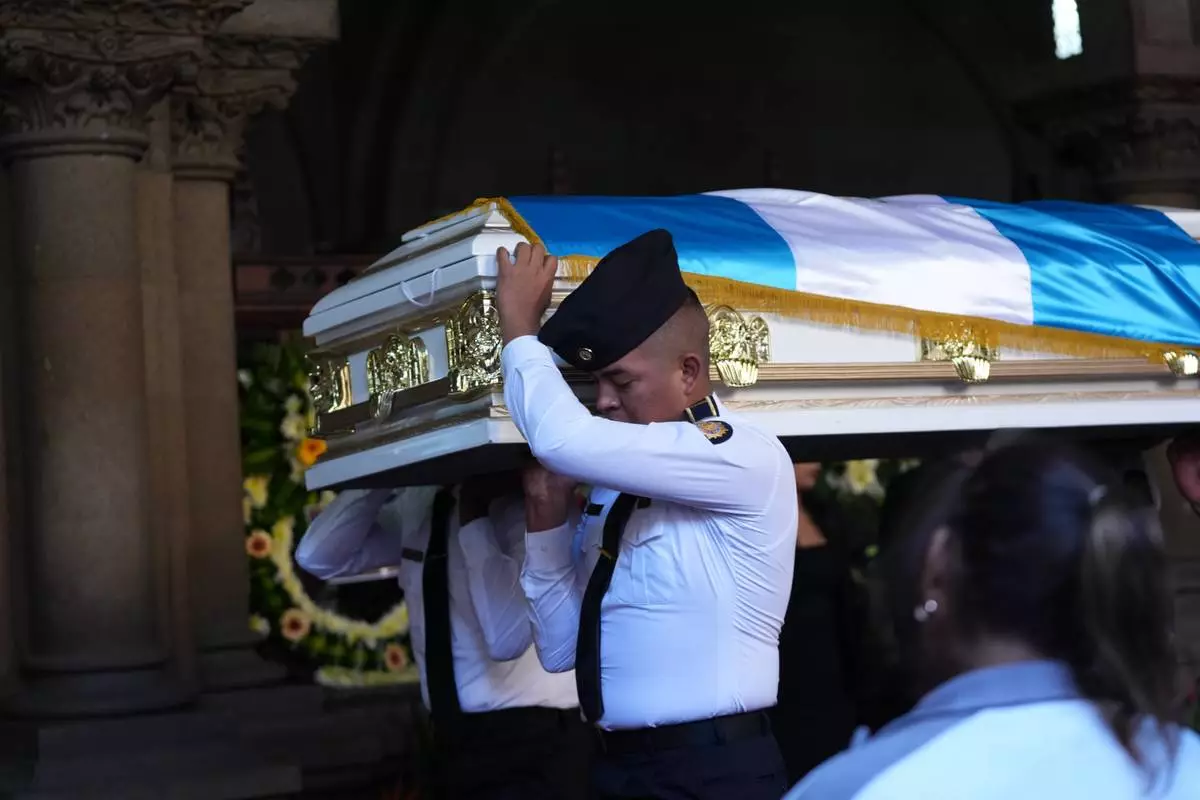
The wake for police officers killed while retaking control of three prisons is held at the Interior Ministry in Guatemala City, Monday, Jan. 19, 2026. (AP Photo/Moises Castillo)
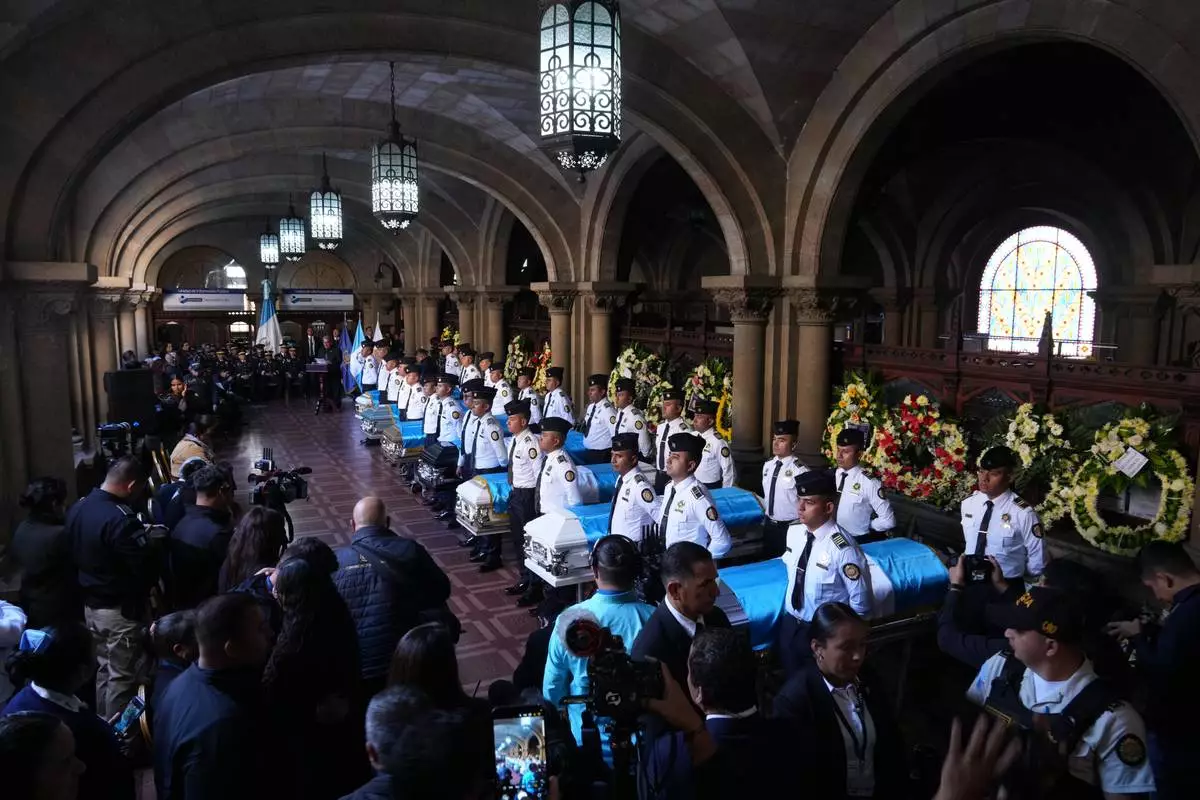
The wake for police officers killed while retaking control of three prisons is held at the Interior Ministry in Guatemala City, Monday, Jan. 19, 2026. (AP Photo/Moises Castillo)
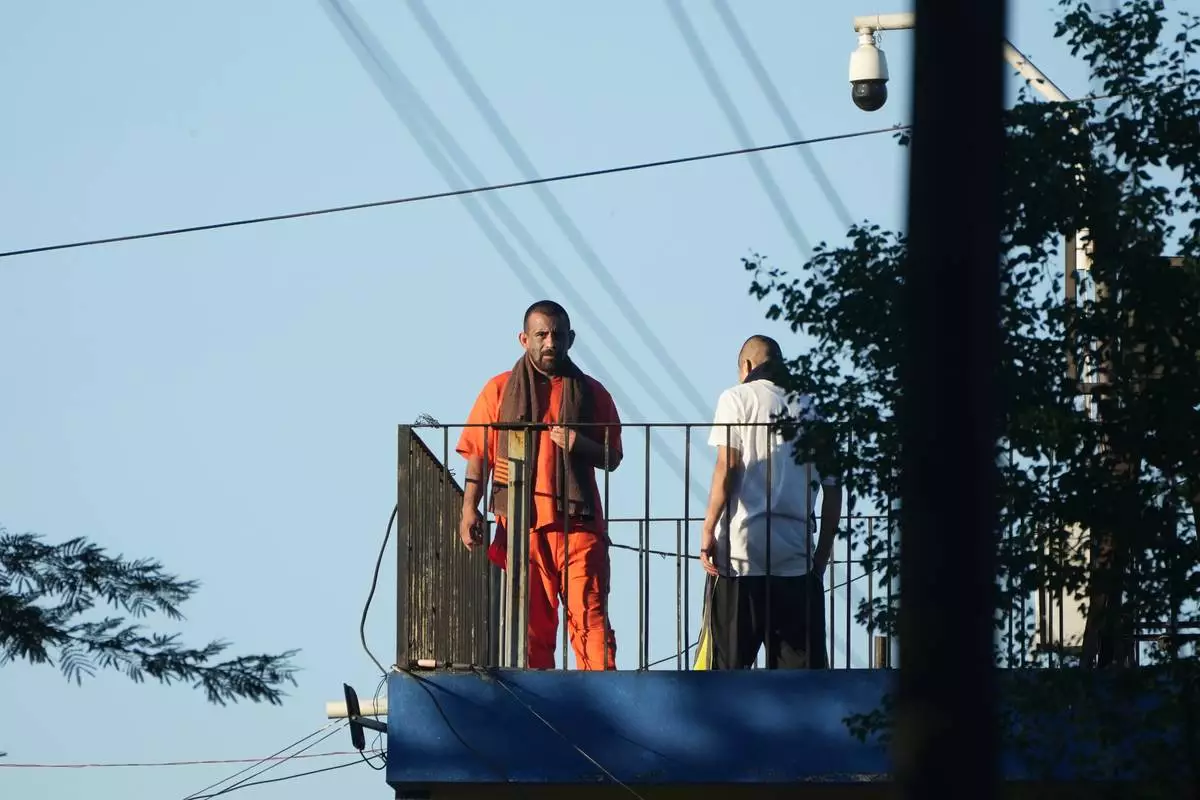
Inmates stand atop a guard tower at the Renovation maximum-security prison before security forces entered the facility to free guards taken hostage in Escuintla, Guatemala, Sunday, Jan. 18, 2026. (AP Photo/Moises Castillo)
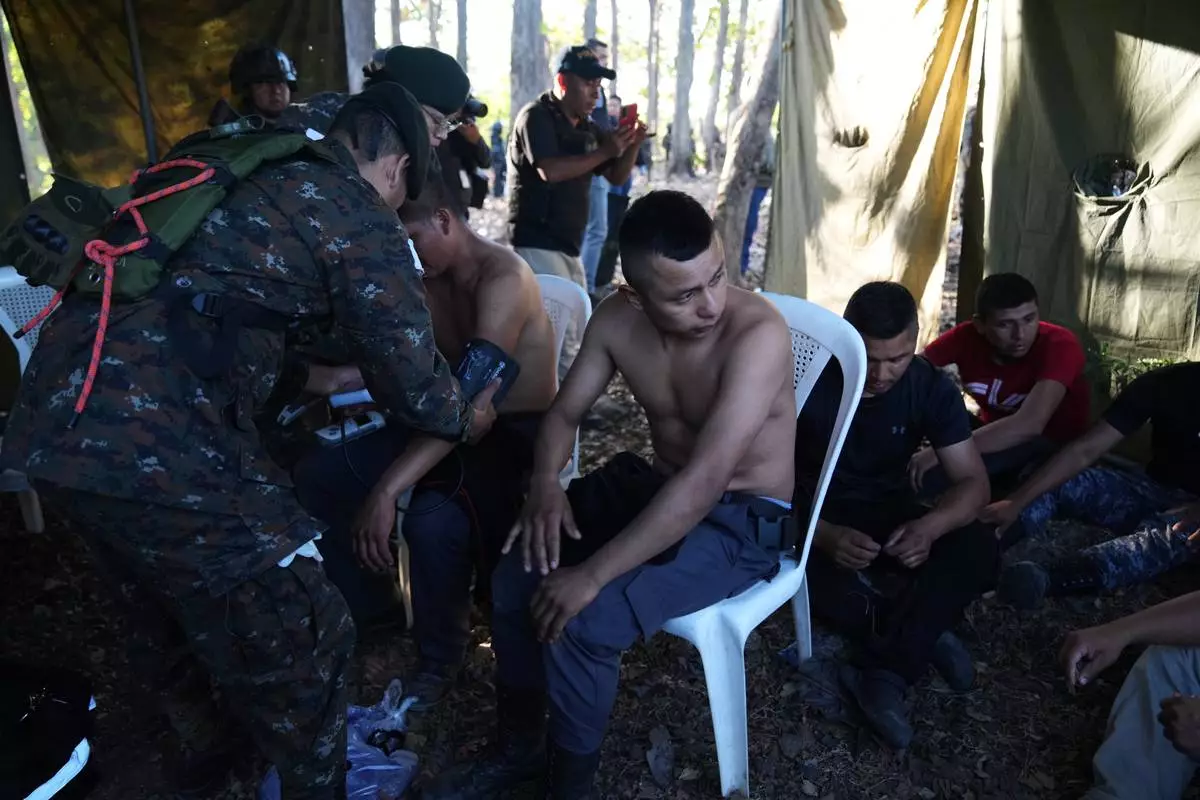
A medic checks on freed prison guards outside the Renovation maximum-security prison after security forces entered the facility to retake control in Escuintla, Guatemala, Sunday, Jan. 18, 2026. (AP Photo/Moises Castillo)
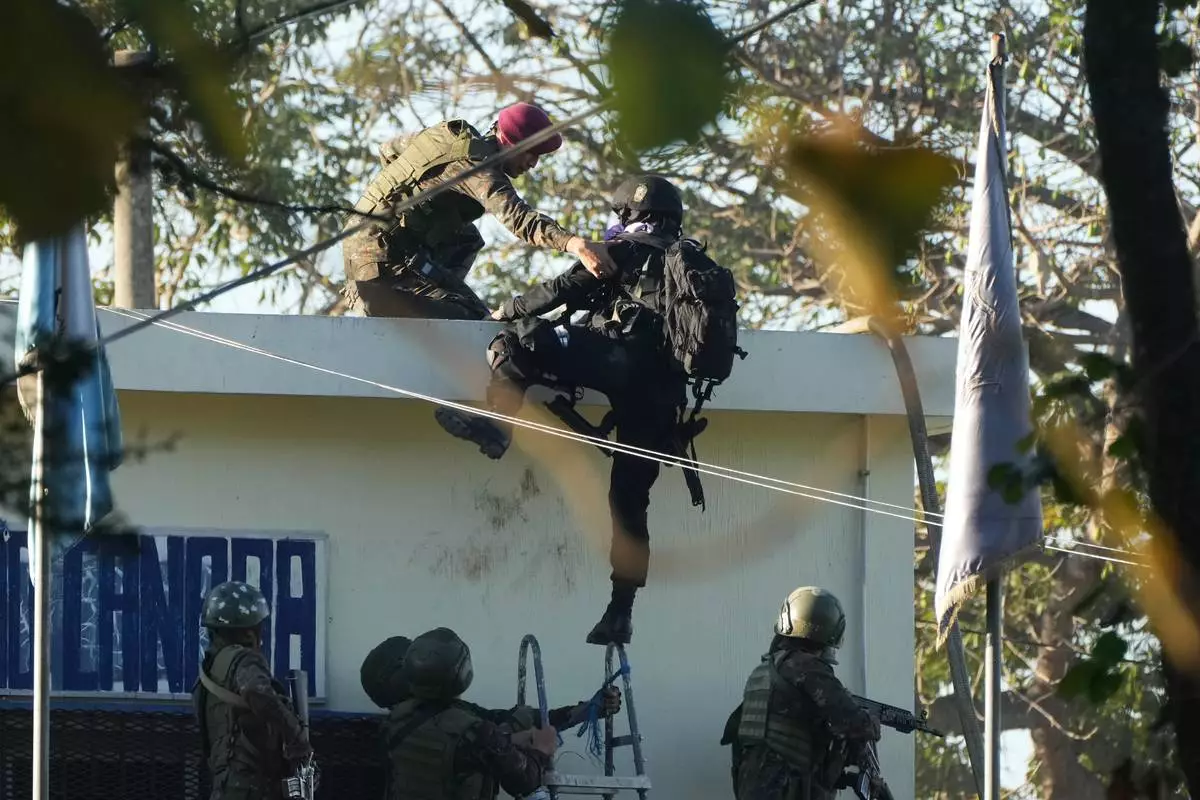
Security forces enter the Renovation maximum-security prison to free guards taken hostage and retake control of the facility, which houses gang leaders, in Escuintla, Guatemala, Sunday, Jan. 18, 2026. (AP Photo/Moises Castillo)
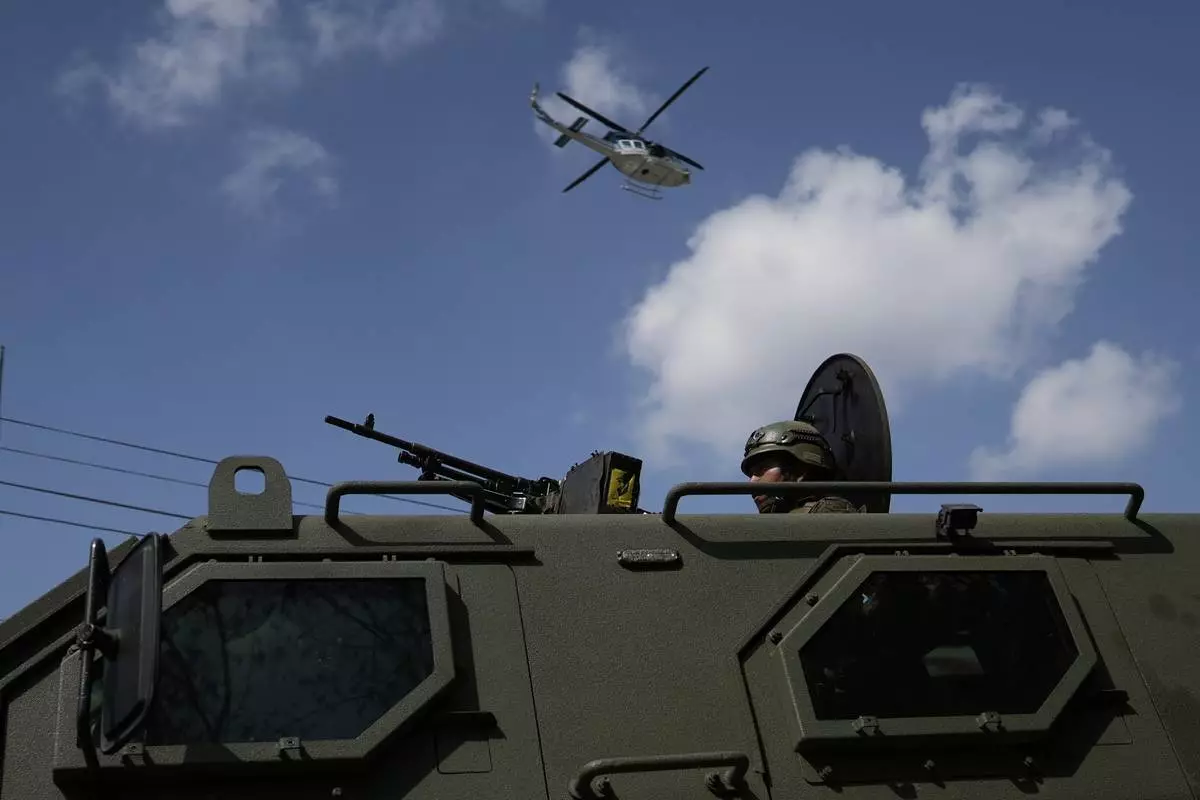
A soldier takes position in an armored vehicle outside the Preventivo Zona 18 prison during an operation to free guards taken hostage and retake control of the facility in Guatemala City, Sunday, Jan. 18, 2026. (AP Photo/Emmanuel Andres)
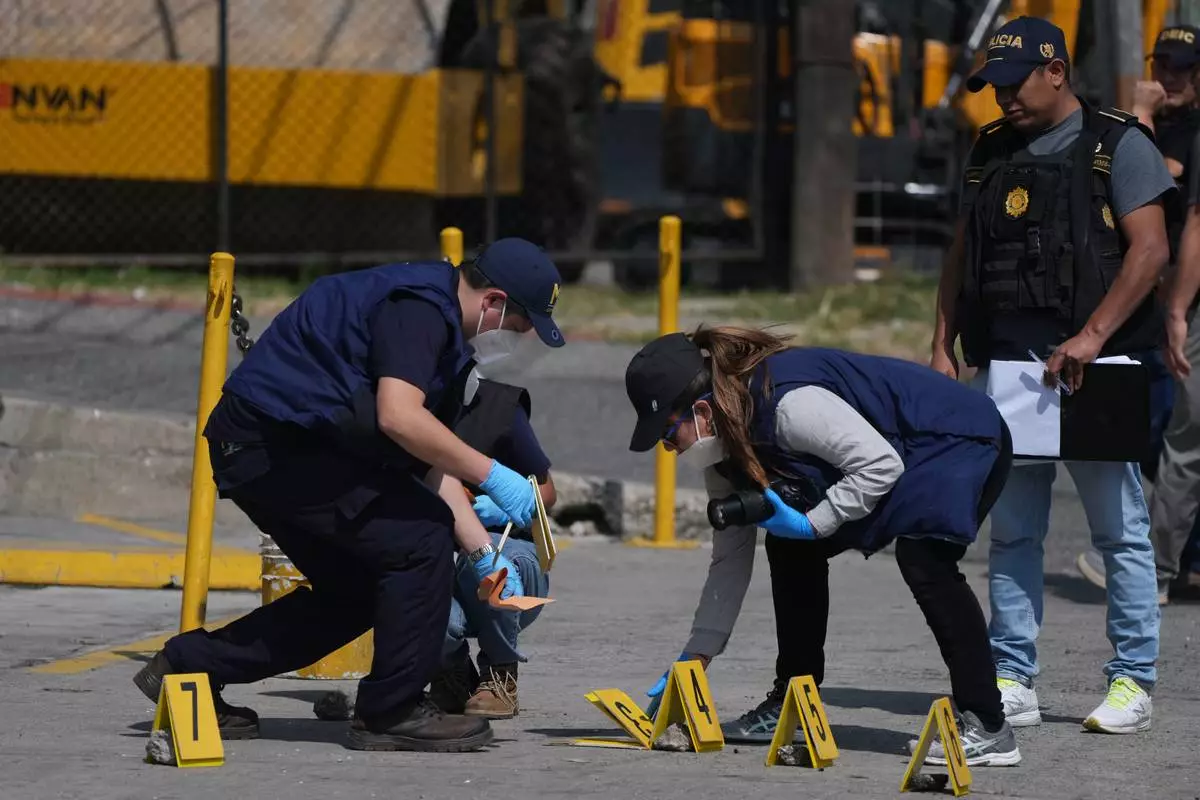
Forensic investigators place evidence markers at the scene where police officers were killed in attacks reported after security forces retook control of a prison that houses gang leaders, in Villanueva, outskirts of Guatemala City, Sunday, Jan. 18, 2026. (AP Photo/Moises Castillo)