Palestinians in the Israeli-occupied West Bank have been facing a daily reality of home demolitions, expanding settlements by Israel, and dwindling economic opportunities.
The encroachments cast a dark shadow over prospects for an independent state of Palestine, while international attention remains fixed on efforts to secure a peace deal in the Gaza Strip.
Life under military occupation is defined by a constant struggle for land and basic rights. According to United Nations figures, more than 13,000 properties have been demolished in the West Bank by the Israeli army since 2009.
While the Israeli government stated these actions primarily target homes linked to individuals involved in acts of violence, UN data indicated many demolitions occurred because properties lacked Israeli-issued construction permits, which are difficult for Palestinians to obtain.
The result is a direct clash between the basic housing needs of the Palestinian people and Israel's administrative and planning policies.
"Israel is doing everything in order to provoke the Palestinian people, to drag us to violence, but the policy of the PLO (Palestine Liberation Organization) since we signed the Oslo Agreement has been: we are committed to our commitments, which means peaceful negotiations on the basis and reference of United Nations' resolutions and the Arab peace initiative," said Nabil Abu Rudeineh, former deputy prime minister of Palestine.
Under international law, the West Bank is not Israel's but has been occupied by the Israeli military since it was seized in the Six-Day War between Israel and its Arab neighbors on June 5-10, 1967.
To realize an independent Palestinian state on the 1967 borders, the West Bank would be an integral part along with Gaza and East Jerusalem. However, Israel is rapidly taking over large areas of the region, moving in and building settlements that are defended with automatic weapons and the backing of the Israeli army.
These settlements have also been called colonies, as Israeli citizens have crossed into Palestinian territory, planted flags and started to build houses. Often, settlements start as outposts with temporary accommodation, but over time, many have developed into whole towns and are heavily guarded. Some also include Jewish-access roads that fragment Palestinian territory.
Settlements have been ruled illegal under international law, but land grabs continue. Latest figures revealed more than 1,000 Palestinians have been killed in the West Bank by Israeli forces or civilian settlers in the past two years.
Meanwhile, Palestinian Bedouins have been coerced into leaving land their families have lived on for generations.
"If they come to force us out, do you think we have the capacity to stop them? I cannot speak up. They carry guns, we cannot do anything," said Mohammed Rashid, a Palestinian goat herder.
One of the most controversial projects is the proposed E1 settlement of 3,400 Jewish-only homes which has been approved by Israeli Prime Minister Benjamin Netanyahu despite widespread opposition. Critics see it as part of a plan to create a "Greater Israel."
It has been claimed that E1 would complete a crescent of Israeli settlements around Jerusalem, separating the city from the rest of the West Bank and making it very difficult to create a Palestinian state with East Jerusalem as its capital.
"The displacement project of more than 12 Palestinian residents' community east to Jerusalem, is firstly a theft of Palestinian territory, and has a demographic impact that would deny Palestinians' presence on their own land. They also intend to build more than 3,400 homes, extending all the way to the Dead Sea, without any Palestinian presence," said Muyyad Shaaban, head of Palestinian Colonization and Wall Resistance Commission.
According to some observers, Israel seeks to annex the entire West Bank, a territory it refers to by its biblical names, Judaea and Samaria. U.S. President Donald Trump has said that is a move he will not permit.
Supporters of the controversial E1 plan argue that Palestinian concerns are overstated, claiming the project is necessary to provide additional housing for Jewish communities. However, they acknowledge it would serve as a strategic buffer to protect Jerusalem from potential attacks originating in the West Bank.
"It's a housing development, but it does have an importance for Jerusalem. It helps Maale Adumim, of course, but it also keeps safe Jerusalem on the east, and we believe in it. We think Jerusalem should stay, of course, in Israeli hands," said Rachel Har Zahav, an Israeli supporter of the E1 project and deputy mayor of the Israeli settlement of Maale Adumim.
Palestinians have welcomed growing support from the international community to recognize Palestinian statehood. The United Kingdom, France, Canada and Australia were among those backing Palestine at a United Nations General Assembly in New York. China also recognized the State of Palestine nearly four decades ago in 1988.
"This shows that our policy is the right policy and we urge the Americans to follow the British and the French and all these people you've mentioned to follow suit because this is the only way for peace in the region, not just here in Palestine, but in the region," said Nabil.
With many impatient for change, protests continued in the streets of Ramallah, the unofficial capital of the West Bank.
"Recognizing the establishment of a Palestinian state is a good thing. It's one of the results of the pressure caused by the war against Gaza," said a protester.
"We are here to deliver our message to the world that it must do its duty," said another protester.
For many young Palestinians, opportunities may already be limited. Despite the ongoing conflict, higher education in the West Bank is flourishing, with a greater proportion of graduates than in much of the Arab world.
Yet even for those with strong qualifications, escaping an economic reality shaped by the occupation has remained a challenge. Strict Israeli controls on the movement of people and goods, combined with the frequent withholding of tax revenues intended for the Palestinian Authority, have significantly constrained the local economy.
Many young people in the West Bank have found themselves in the "diploma trap" where high education collides with high unemployment, which has in turn led to a loss of aspiration, and for some, a feeling of hopelessness.
Sally Aljoboury spent four years at university to obtain a law degree and had dreams of earning a good salary working in international relations. However, the only job she has been able to find is taking telephone orders for food delivery.
"My feelings are clear. After four years of hard work and ambition, I am shocked by the reality of the lack of jobs in the labor market," said Aljoboury.
Omar Hadad, who studied media at college, had to drop out when he could no longer afford the fees. He now earns a tiny wage working at a car wash.
"In a tough situation like this, I'll search for another job domestically or find a way to immigrate so that I can go on with my life and to be free to do what I want," said Omar.
Meanwhile, many living in Israel feel under constant threat from extremists in the West Bank.
Gun and knife attacks on Israeli civilians and security patrols are frequent. Around 50 Israelis have been killed in Palestinian attacks in Israel and the West Bank since the conflict in Gaza began.
Those fears became all too real in September when two gunmen from the West Bank opened fire on a crowded bus in Jerusalem, killing six Israelis and injuring 21. The two attackers were shot dead, seen as terrorists by Israel, but considered martyrs by some Palestinians.
To Israel, such attacks justify its strict control over travel from the West Bank, where life unfolds amid constant military checkpoints and raids by the Israeli army, as residents face detentions, roadblocks, home demolitions, and revoked work permits.
"The pace of military action of the occupation forces has increased and caused the current tough situation in the job market to exist. This is not a new policy. It has been their policy for years. That includes targeting of lands, arrests, and the denial of entry permits to the occupied territories," said Diaa Al-Faqih, mayor of Qatanna in West Bank.
Many advocates have long held that the only hope for lasting peace between Israel and Palestine is for them to live side by side in equal status -- the so-called two-state solution. However, the path to a two-state solution is being steadily eroded by expanding settlements, persistent violence and profound distrust.
While there are international calls for peace, a decisive mechanism for change remains absent. When the destruction of homes, economic despair, and a loss of future become daily realities, the very foundation for peace is disappearing.
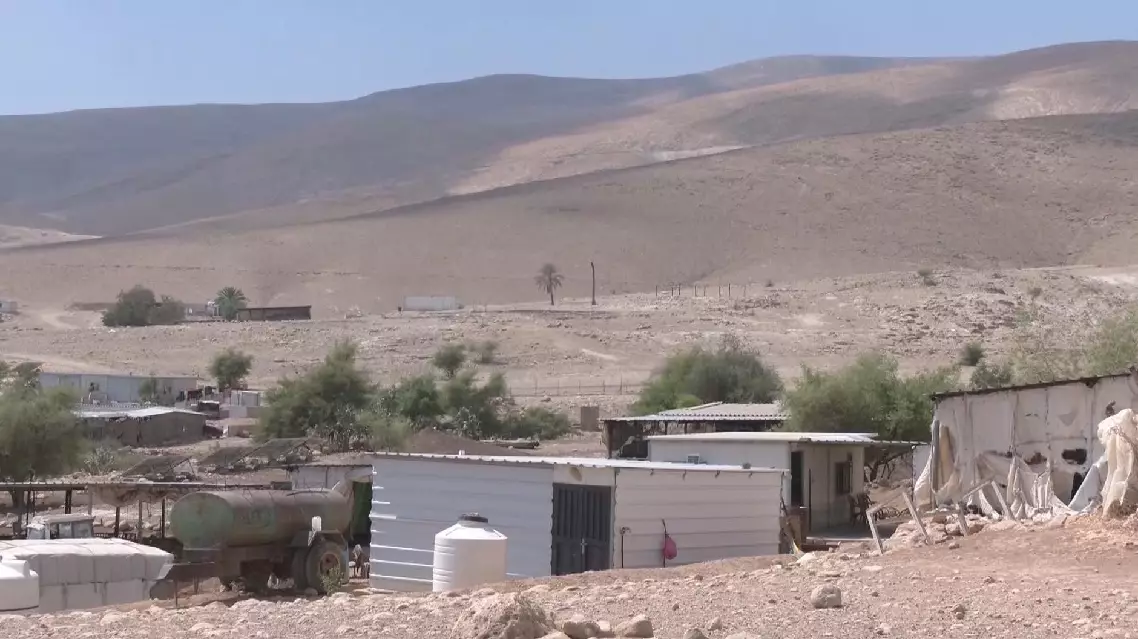
Palestinians in West Bank face continued hardship under Israel's expanding settlements