WASHINGTON (AP) — President Donald Trump confirmed Wednesday that he has authorized the CIA to conduct covert operations inside Venezuela and said he was weighing carrying out land operations on the country.
The acknowledgement of covert action in Venezuela by the U.S. spy agency comes after the U.S. military in recent weeks has carried out a series of deadly strikes against alleged drug-smuggling boats in the Caribbean. U.S. forces have destroyed at least five boats since early September, killing 27 people, and four of those vessels originated from Venezuela.
Asked during an event in the Oval Office on Wednesday why he had authorized the CIA to take action in Venezuela, Trump affirmed he had made the move.
“I authorized for two reasons, really,” Trump replied. “No. 1, they have emptied their prisons into the United States of America," he said. "And the other thing, the drugs, we have a lot of drugs coming in from Venezuela, and a lot of the Venezuelan drugs come in through the sea.”
Trump added the administration “is looking at land” as it considers further strikes in the region. He declined to say whether the CIA has authority to take action against President Nicolás Maduro.
Trump made the unusual acknowledgement of a CIA operation shortly after The New York Times published that the CIA had been authorized to carry out covert action in Venezuela.
On Wednesday, Maduro lashed out at the record of the U.S. spy agency in various conflicts around the world without directly addressing Trump’s comments about authorizing the CIA to carry out covert operations in Venezuela.
“No to regime change that reminds us so much of the (overthrows) in the failed eternal wars in Afghanistan, Iraq, Libya and so on,” Maduro said at a televised event of the National Council for Sovereignty and Peace, which is made up of representatives from various political, economic, academic and cultural sectors in Venezuela.
“No to the coups carried out by the CIA, which remind us so much of the 30,000 disappeared,” a figure estimated by human rights organizations such as the Mothers of the Plaza de Mayo during the military dictatorship in Argentina (1976-1983). He also referred to the 1973 coup in Chile.
“How long will the CIA continue to carry on with its coups? Latin America doesn’t want them, doesn’t need them and repudiates them,” Maduro added.
The objective is “to say no to war in the Caribbean, no to war in South America, yes to peace,” he said.
Speaking in English, Maduro said: “Not war, yes peace, not war. Is that how you would say it? Who speaks English? Not war, yes peace, the people of the United States, please. Please, please, please.”
In a statement, Venezuela’s Foreign Ministry on Wednesday rejected “the bellicose and extravagant statements by the President of the United States, in which he publicly admits to having authorized operations to act against the peace and stability of Venezuela.”
“This unprecedented statement constitutes a very serious violation of international law and the United Nations’ Charter and obliges the community of countries to denounce these clearly immoderate and inconceivable statements,” said the statement, which Foreign Minister Yván Gil posted on his Telegram channel.
Early this month, the Trump administration declared drug cartels to be unlawful combatants and pronounced the United States is now in an “armed conflict” with them, justifying the military action as a necessary escalation to stem the flow of drugs into the United States.
The move has spurred anger in Congress from members of both major political parties that Trump was effectively committing an act of war without seeking congressional authorization.
On Wednesday, Sen. Jeanne Shaheen, the ranking Democrat on the Senate Foreign Relations Committee, said while she supports cracking down on trafficking, the administration has gone too far.
“The Trump administration’s authorization of covert C.I.A. action, conducting lethal strikes on boats and hinting at land operations in Venezuela slides the United States closer to outright conflict with no transparency, oversight or apparent guardrails,” Shaheen said. "The American people deserve to know if the administration is leading the U.S. into another conflict, putting servicemembers at risk or pursuing a regime-change operation.”
The Trump administration has yet to provide underlying evidence to lawmakers proving that the boats targeted by the U.S. military were in fact carrying narcotics, according to two U.S. officials familiar with the matter.
The officials, who were not authorized to comment publicly and spoke on the condition of anonymity, said the administration has only pointed to unclassified video clips of the strikes posted on social media by Trump and Defense Secretary Pete Hegseth and has yet to produce “hard evidence” that the vessels were carrying drugs.
Lawmakers have expressed frustration that the administration is offering little detail about how it came to decide the U.S. is in armed conflict with cartels or which criminal organizations it claims are “unlawful combatants.”
Even as the U.S. military has carried out strikes on some vessels, the U.S. Coast Guard has continued with its typical practice of stopping boats and seizing drugs.
Trump on Wednesday explained away the action, saying the traditional approach hasn't worked.
“Because we’ve been doing that for 30 years, and it has been totally ineffective. They have faster boats,” he said. ”They’re world-class speedboats, but they’re not faster than missiles."
Human rights groups have raised concerns that the strikes flout international law and are extrajudicial killings.
Associated Press writer Jorge Rueda in Caracas, Venezuela, contributed to this report.
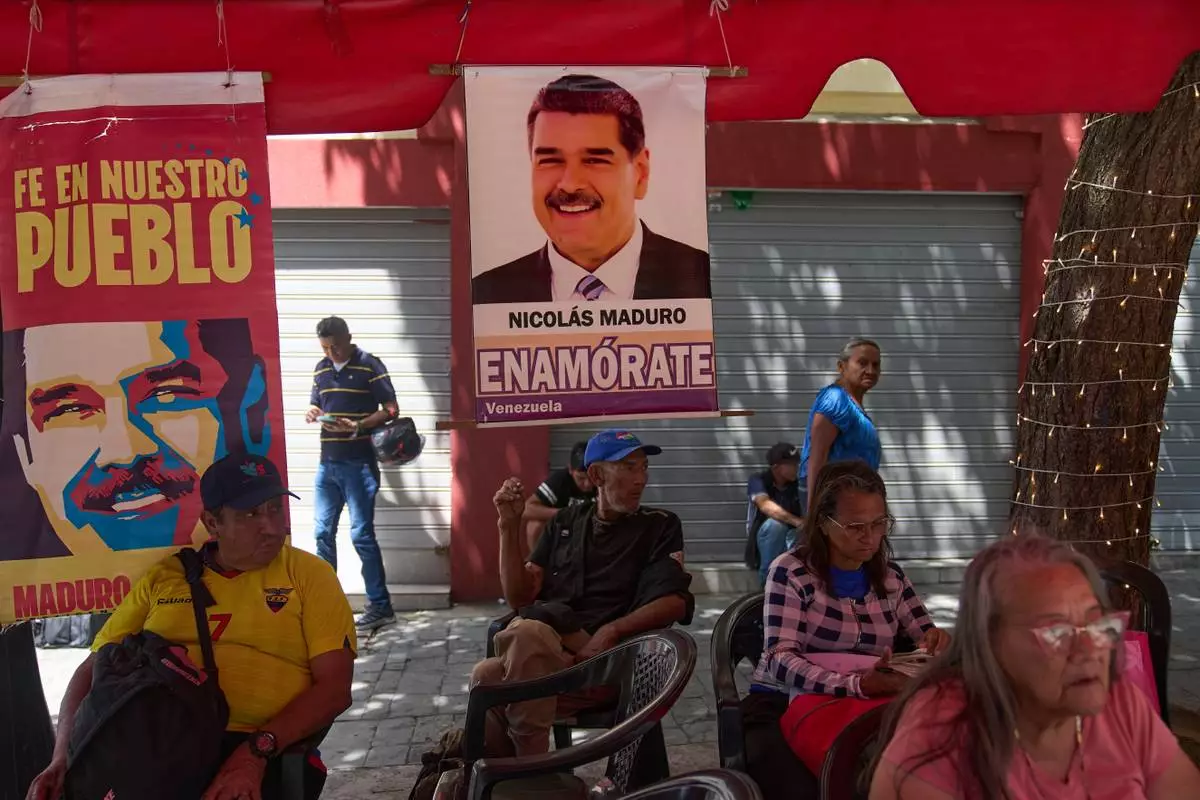
Images of Venezuelan President Nicolas Maduro cover walls in downtown Caracas, Venezuela, Thursday, Oct 16, 2025. (AP Photo/Ariana Cubillos)
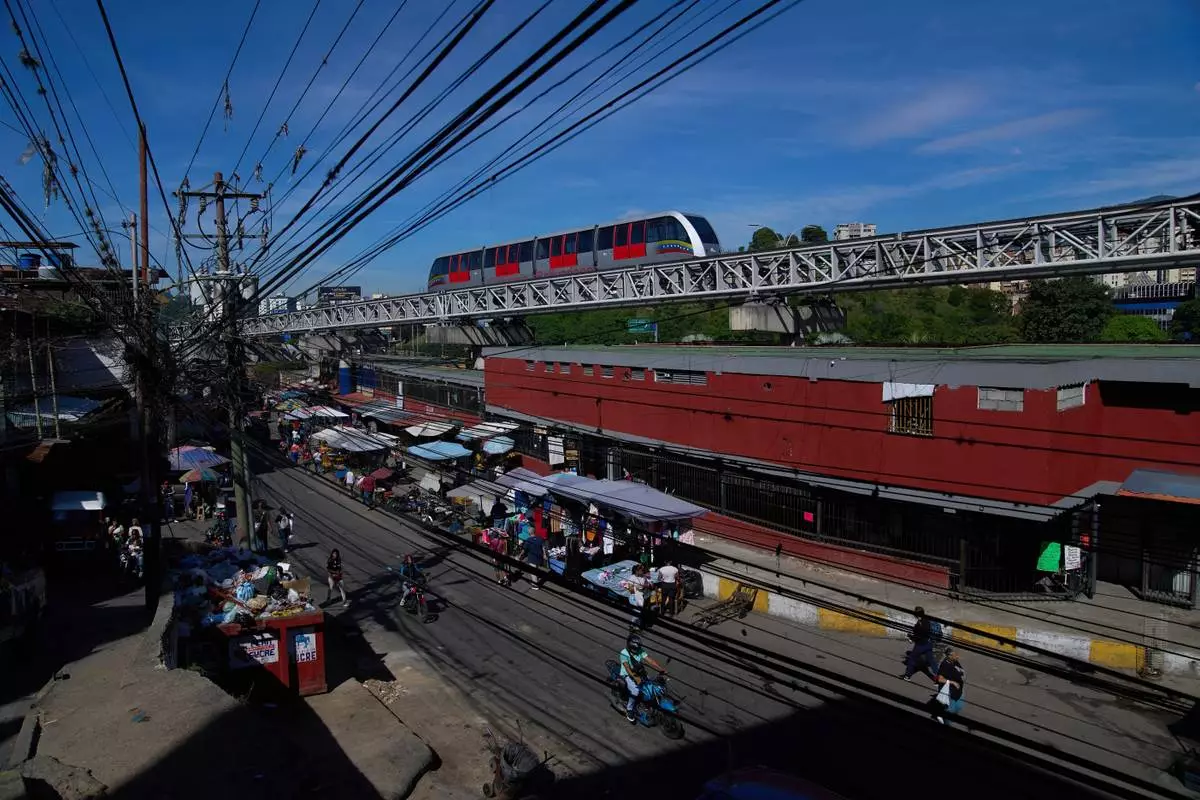
People walk past a street market below a metro line in Caracas, Venezuela, Thursday, Oct. 16, 2025. (AP Photo/Ariana Cubillos)
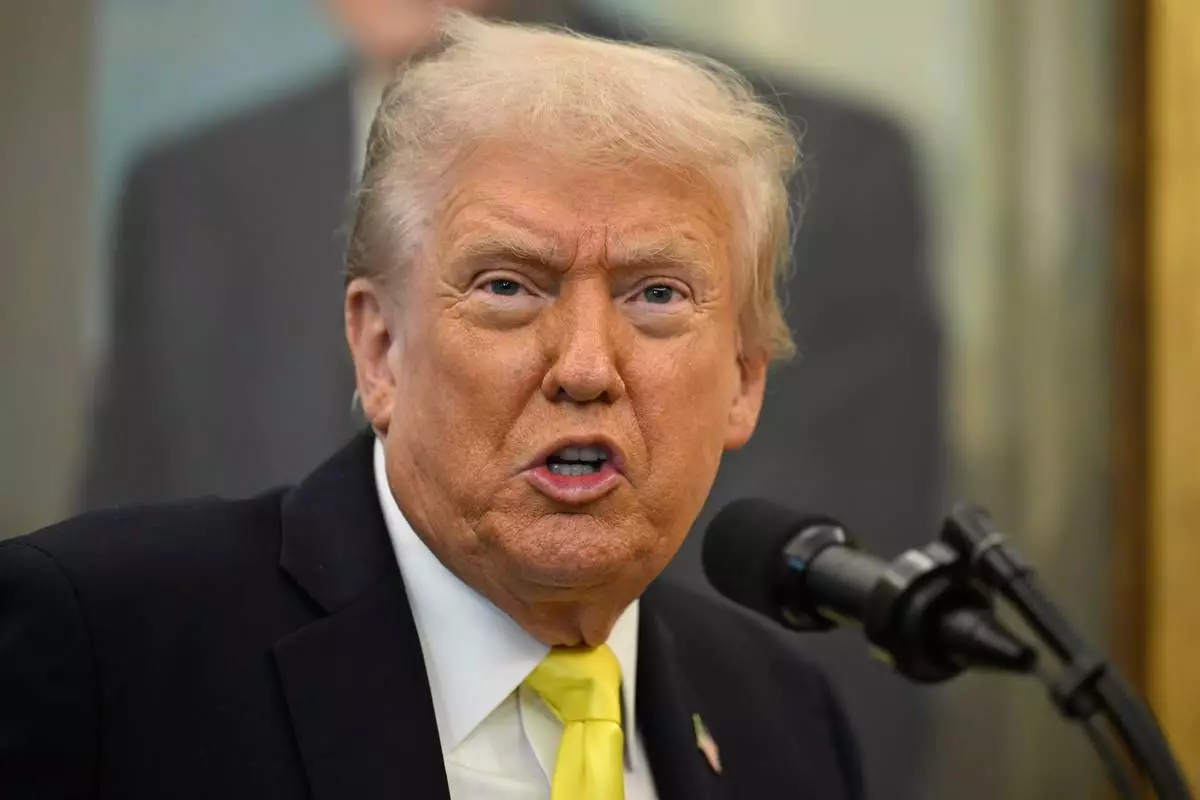
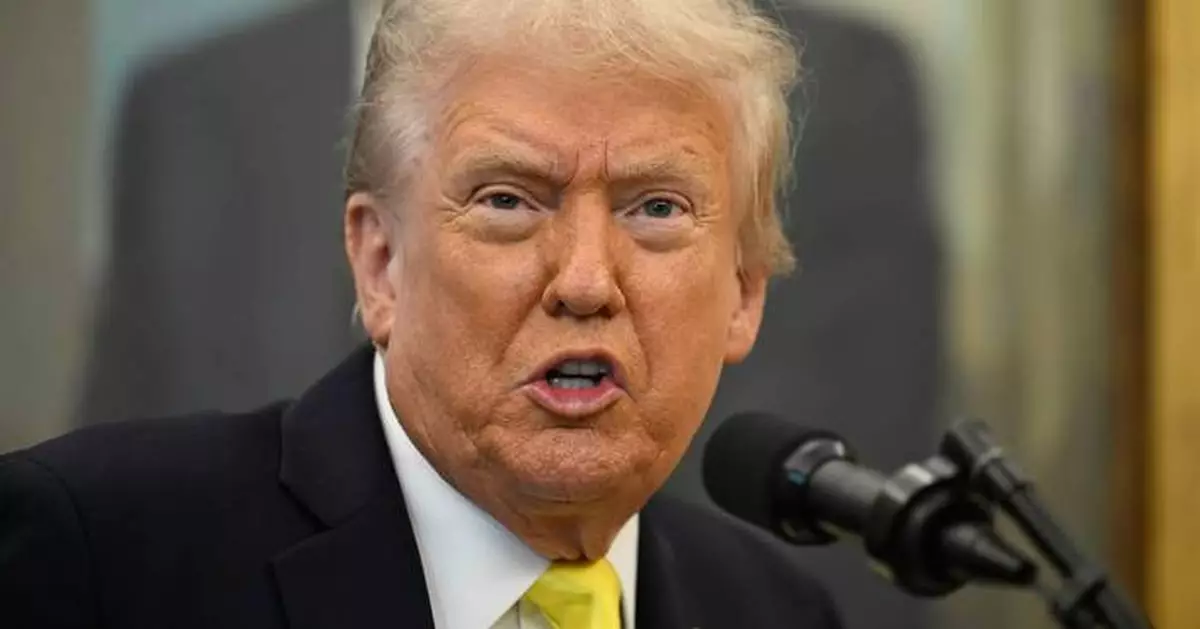
President Donald Trump speaks during an event in the Oval Office at the White House, Wednesday, Oct. 15, 2025, in Washington. (AP Photo/John McDonnell)
EDMONTON, Alberta (AP) — Canadian Prime Minister Mark Carney said Sunday that four service members were killed and dozens more seriously injured in a fire at a military base in Alberta, describing it as one of the worst peacetime tragedies for Canada’s military on domestic soil.
Fire crews scrambled late Saturday as fierce winds whipped flames beyond Canadian Forces Base Wainwright and into the surrounding rural area. The Canadian military said Sunday there were no indications that the incident was the result of terrorism, but the cause remained under investigation.
Speaking in a televised address, Carney said the families of those killed had been notified and that the situation was still evolving.
Carney said the service members killed and injured were participating in military training when the fire broke out Saturday.
Flags would fly at half-staff on federal buildings across the country in honor of those affected by the tragedy, he said.
Carney said those affected included reservists and soldiers from Princess Patricia’s Canadian Light Infantry, one of Canada’s most storied military regiments. The personnel had come from bases across the country to train at Wainwright.
It was not immediately clear exactly how many people had been injured. Carney said the wounded were being treated in Wainwright, Edmonton, Red Deer and Calgary.
Cathy Keane, a mayoral candidate in Ontario, said her eldest son was among the military personnel critically injured. “As a mother, right now I need to be with my son and family,” she wrote on Facebook, saying she was traveling to Alberta.
A doctor at a hospital in the city of Edmonton, 180 kilometers (112 miles) northwest, told Canada’s national broadcaster that patients were taken to hospitals across the city as healthcare facilities around the base became “completely overwhelmed” by the number of people needing care.
“This number of patients would overwhelm the city of Edmonton,” Dr. Warren Thirsk, an emergency department physician at the Royal Alexandra Hospital, told CBC News. “It is more patients than any of us want to count right now. It’s a disaster. It’s a one in every 15- to 25-year disaster.”
Acute Care Alberta said several hospitals across the province had activated a “Code Orange,” an emergency designation used when multiple severely injured patients require coordinated medical care. The agency said emergency medical resources were stretched so thin that extremely few ambulances were available in the Edmonton area. It urged people to avoid the University of Alberta Hospital emergency department if possible.
Wainwright Mayor Bruce Pugh said the town’s small hospital was not designed to handle a mass-casualty incident but praised the response of local medical personnel. He said helicopters and planes had been transporting patients to other facilities for treatment.
At least 10 ambulances were parked in and around the Wainwright health center late Saturday as paramedics and soldiers rushed about. One patient was seen being loaded into an ambulance.
The town of Wainwright, near the base, has about 7,000 residents.
Defense Minister David McGuinty said the Royal Canadian Mounted Police were involved in investigating the incident and described the situation as “very, very active and delicate.” He said authorities were still working to determine what happened and expected to provide further information.
McGuinty said Sunday he was traveling to Edmonton to be briefed on the latest developments. He said the military was working closely with Alberta’s government and local authorities.
The Canadian Armed Forces had said it would not release casualty figures until relatives were notified. Carney said Sunday that the families of the four service members killed had been informed.
The Royal Canadian Mounted Police said officers were called shortly after 4 p.m. Saturday following reports of a fire in a training area at the base.
Firefighters faced a volatile situation. Large areas of the province were hit during the day by a windstorm with gusts up to 100 kph (62 mph). The wind toppled some trees and sent signs flying and garbage cans rolling down streets.
By 11 p.m., the Municipal District of Wainwright said on social media the fire was being held and that property and critical infrastructure were protected. There was no evacuation order for residents.
McGuinty, speaking to reporters in Ottawa, confirmed the casualties but had no other details to share.
“I cannot recall such an incident in my short time for sure as a minister, but I cannot recall an incident like this in recent memory,” McGuinty said.
“We will have more to say in the coming hours and days,” he added.
He said Armed Forces members were at the scene and that RCMP were also involved. “This is an active and delicate situation and soon to be an active and delicate investigation.”
Saskatchewan Premier Scott Moe said his province was sending assistance to Alberta but did not specify what resources were being deployed.
Alberta Premier Danielle Smith described the fire as “significant and tragic” and said it was affecting many military personnel.
Carney praised emergency crews who battled the fire through the night and said STARS air ambulance helicopters had flown in from Edmonton and Saskatoon.
CFB Wainwright is one of Canada’s busiest military training bases, where soldiers prepare for combat operations. It is home to the Canadian Maneuver Training Center, which conducts realistic battlefield exercises, and the 3rd Canadian Division Training Centre, which provides military training.
Canadian Conservative opposition leader Pierre Poilievre said he had spoken with Carney and the defense minister to offer support to those affected by the fire.
“Pray for Wainwright, everyone,” Poilievre said in a social media post. He urged people in the area to follow emergency instructions and keep roads clear for first responders.
The fire also disrupted advance voting ahead of Monday’s referendum on whether Alberta should begin a process that could lead to independence from Canada. Elections Alberta said the advance polling location at Wainwright Communiplex closed early Saturday and ballots and election materials were transported securely. It identified polling locations in Lloydminster and Vermilion as alternative
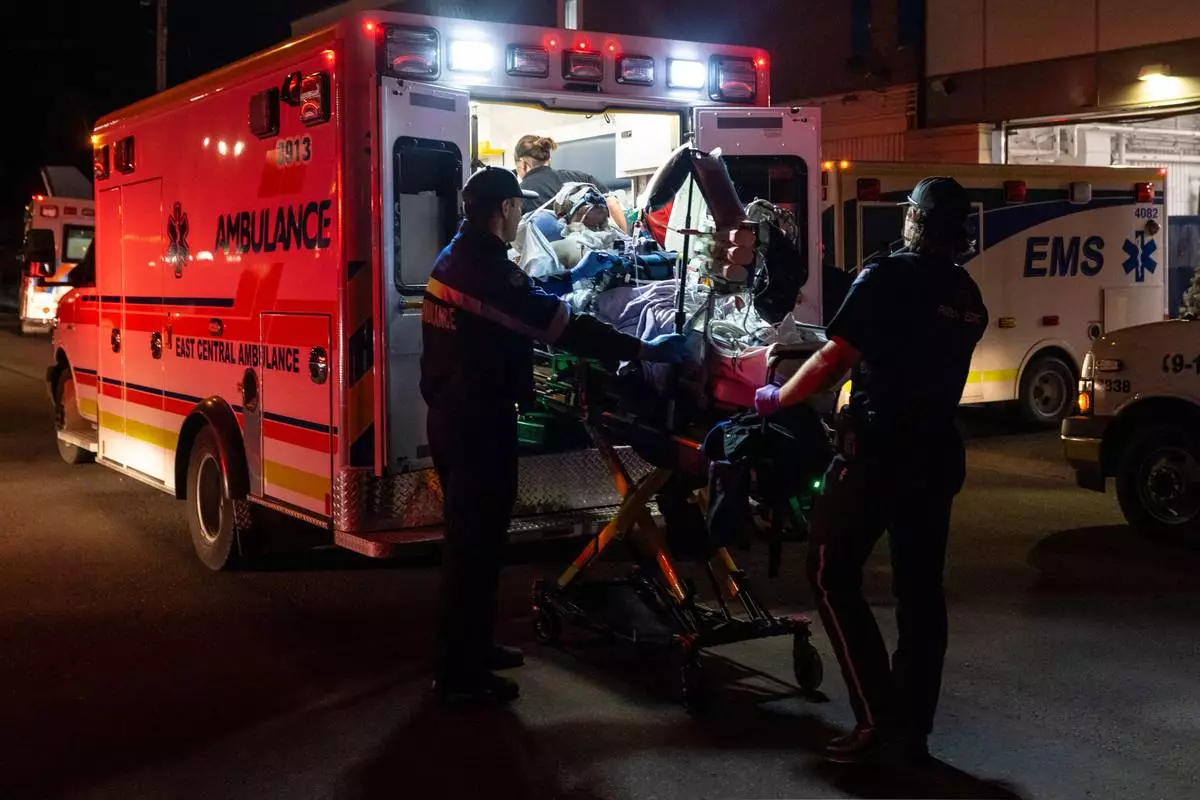
Paramedics load an injured person into an ambulance at the Wainwright Health Centre as injured military members are treated after a fire at Canadian Forces Base Wainwright, outside of Wainwright, Alberta Saturday, Oct. 17, 2026. (John Ulan/The Canadian Press via AP)
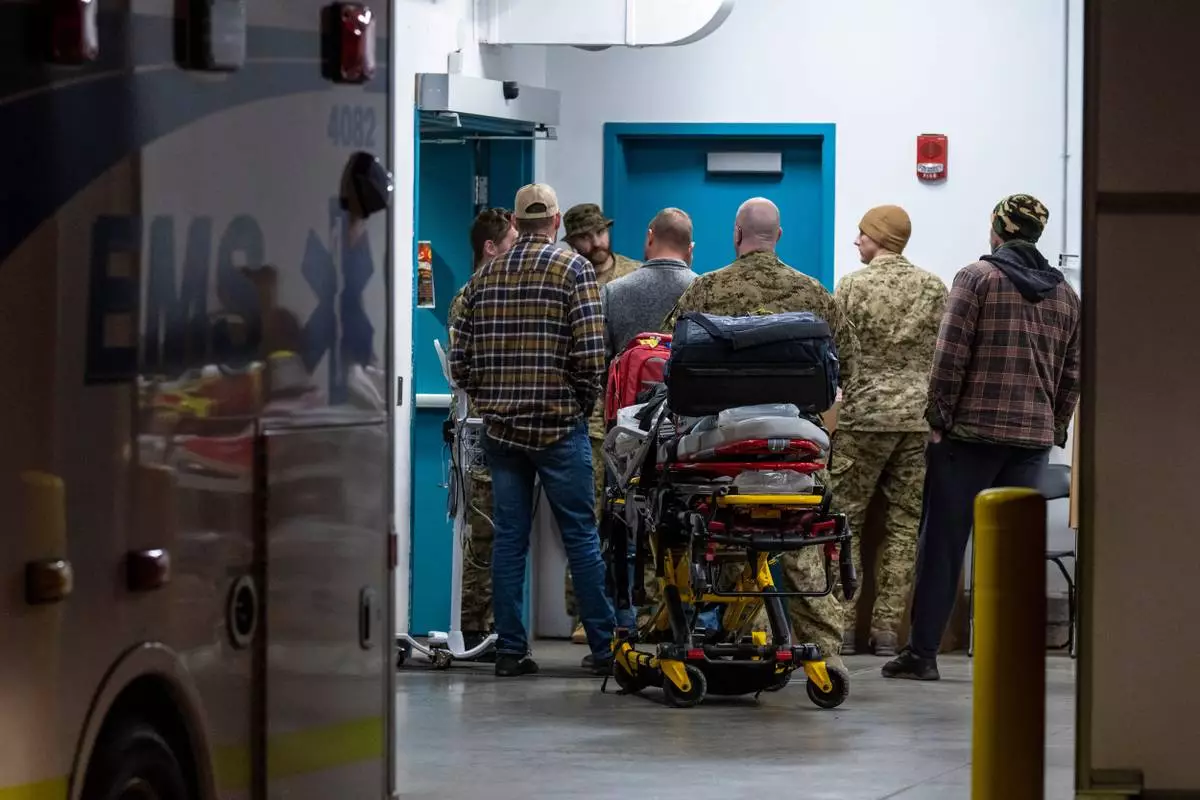
Emergency crews and military personnel are seen at the Wainwright Health Centre as injured military members are treated after a fire at Canadian Forces Base Wainwright, outside of Wainwright, Alberta Saturday, Oct. 17, 2026. (John Ulan/The Canadian Press via AP)
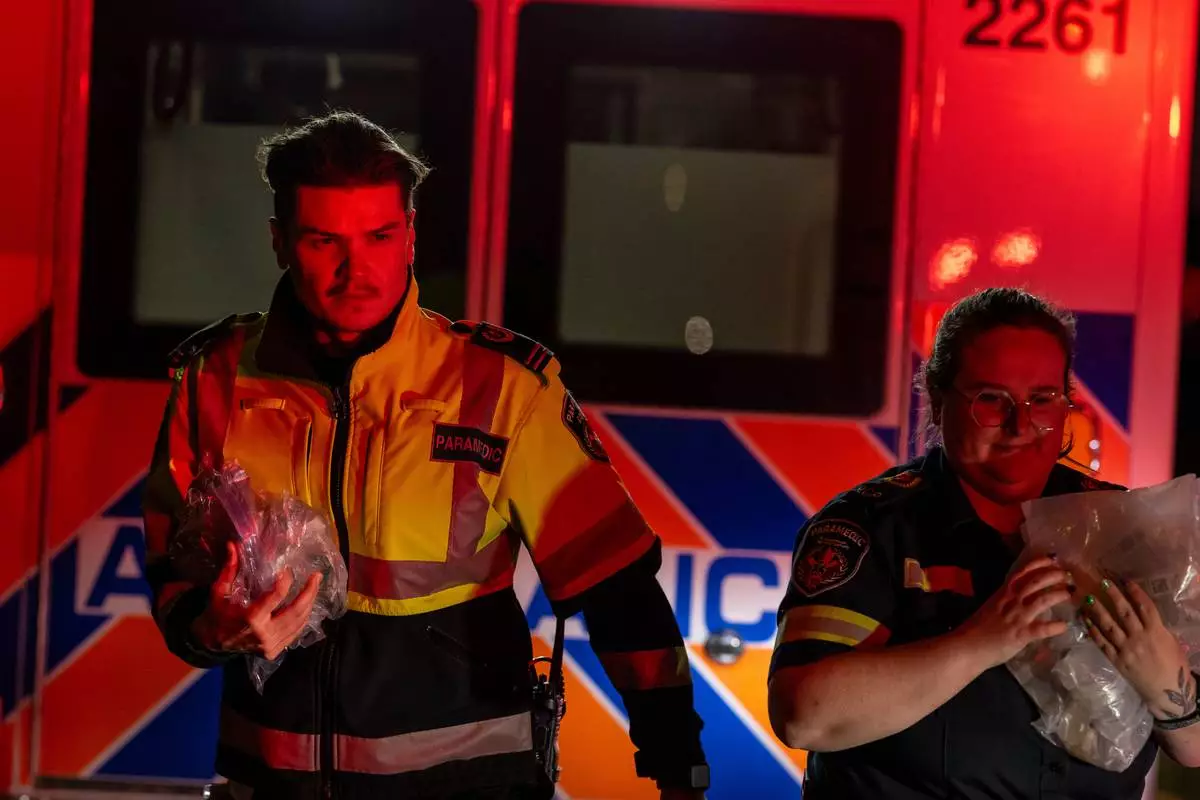
Paramedics work at the Wainwright Health Centre as injured military members are treated after a fire at Canadian Forces Base Wainwright, outside of Wainwright, Alberta Saturday, Oct. 17, 2026. (John Ulan/The Canadian Press via AP)
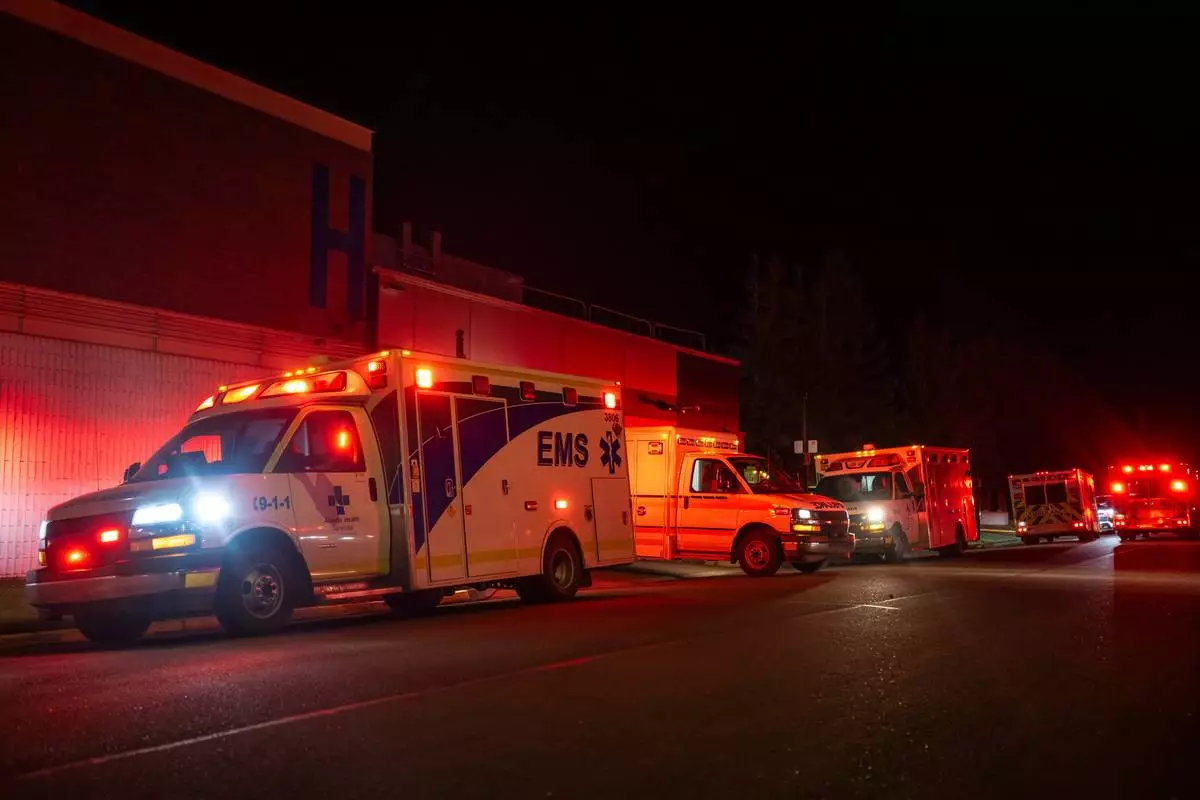
Emergency crews and military personnel gather at the Wainwright Health Centre as injured military members are treated after a fire at Canadian Forces Base Wainwright, outside of Wainwright, Alberta Saturday, Oct. 17, 2026. (John Ulan/The Canadian Press via AP)
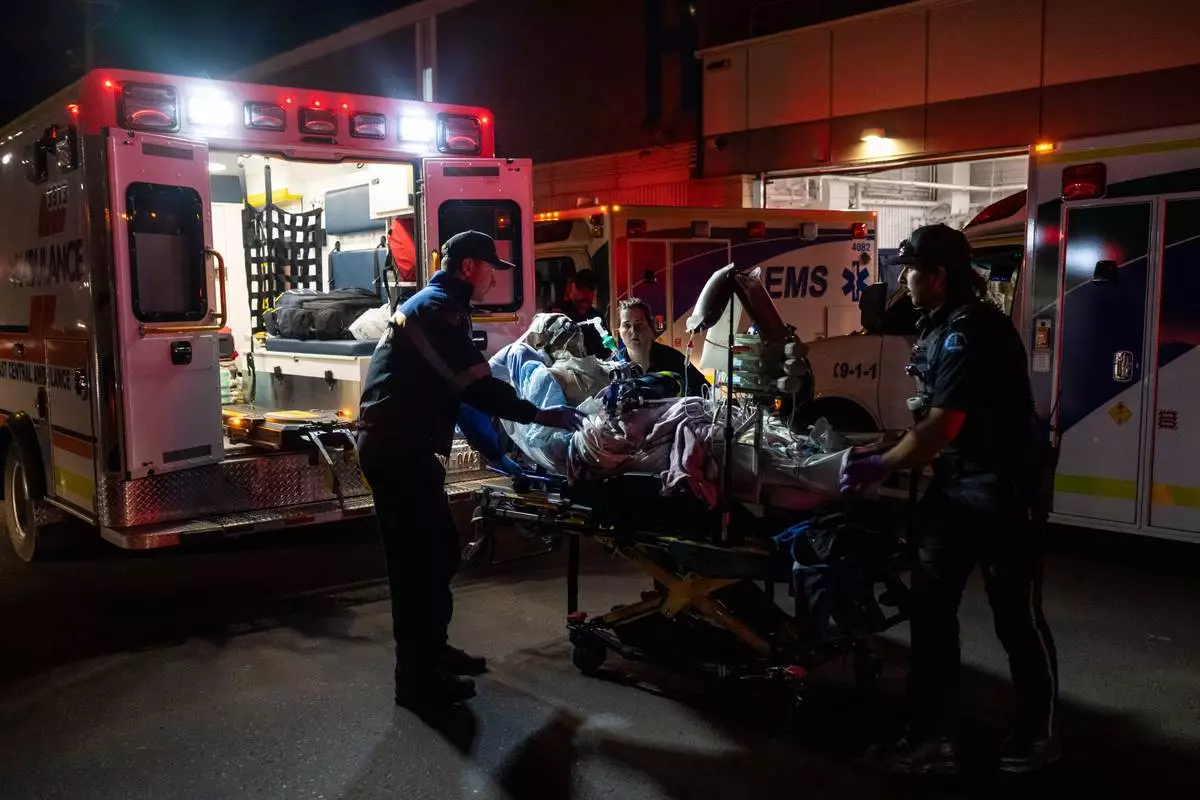
Paramedics load an injured person into an ambulance at the Wainwright Health center after a fire at Canadian Forces Base Wainwright, outside of Wainwright, Alberta Saturday, Oct. 17, 2026. (John Ulan/The Canadian Press via AP)