Through the newly-formed Singapore-Shanghai Medical Innovation Centre, clinicians from both hospitals partner to advance breakthroughs in cell and gene therapy and orthopaedics for a start SINGAPORE -
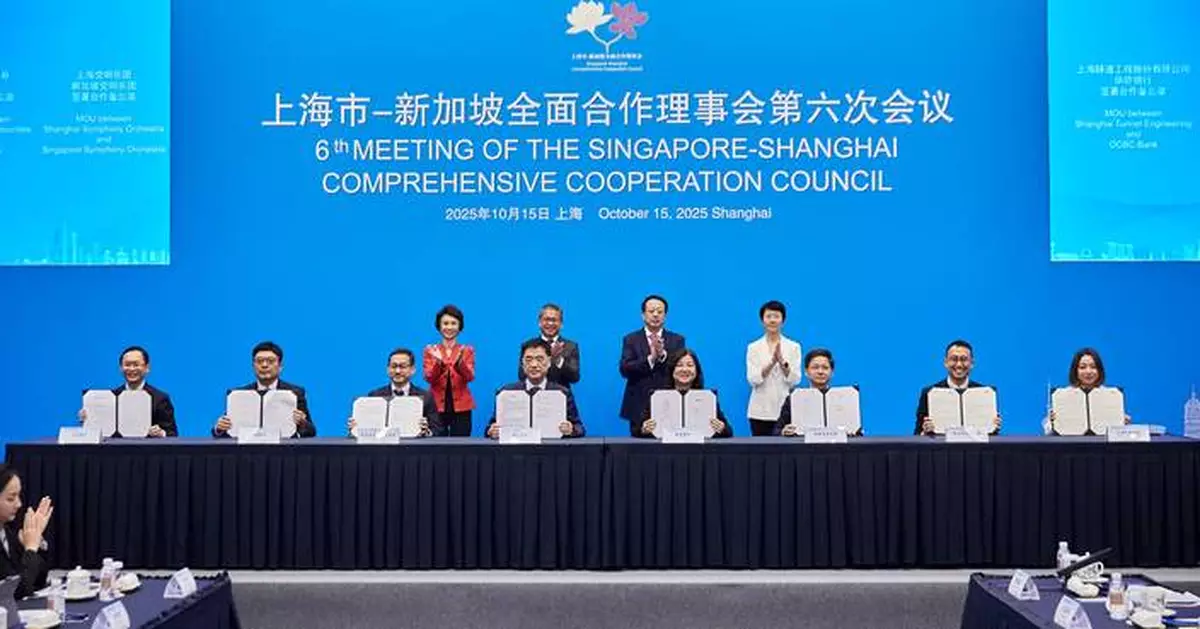
Media OutReach Newswire - 16 October 2025 - In a step towards charting a new chapter in patient-centred innovations, the National University Hospital (NUH) and the Ruijin Hospital, Shanghai Jiao Tong University School of Medicine (RJH) formally launched the Singapore-Shanghai Medical Innovation Centre (SSMIC) on 15 October at the 6th Singapore-Shanghai Comprehensive Cooperation Council (SSCCC) meeting in Shanghai, China.
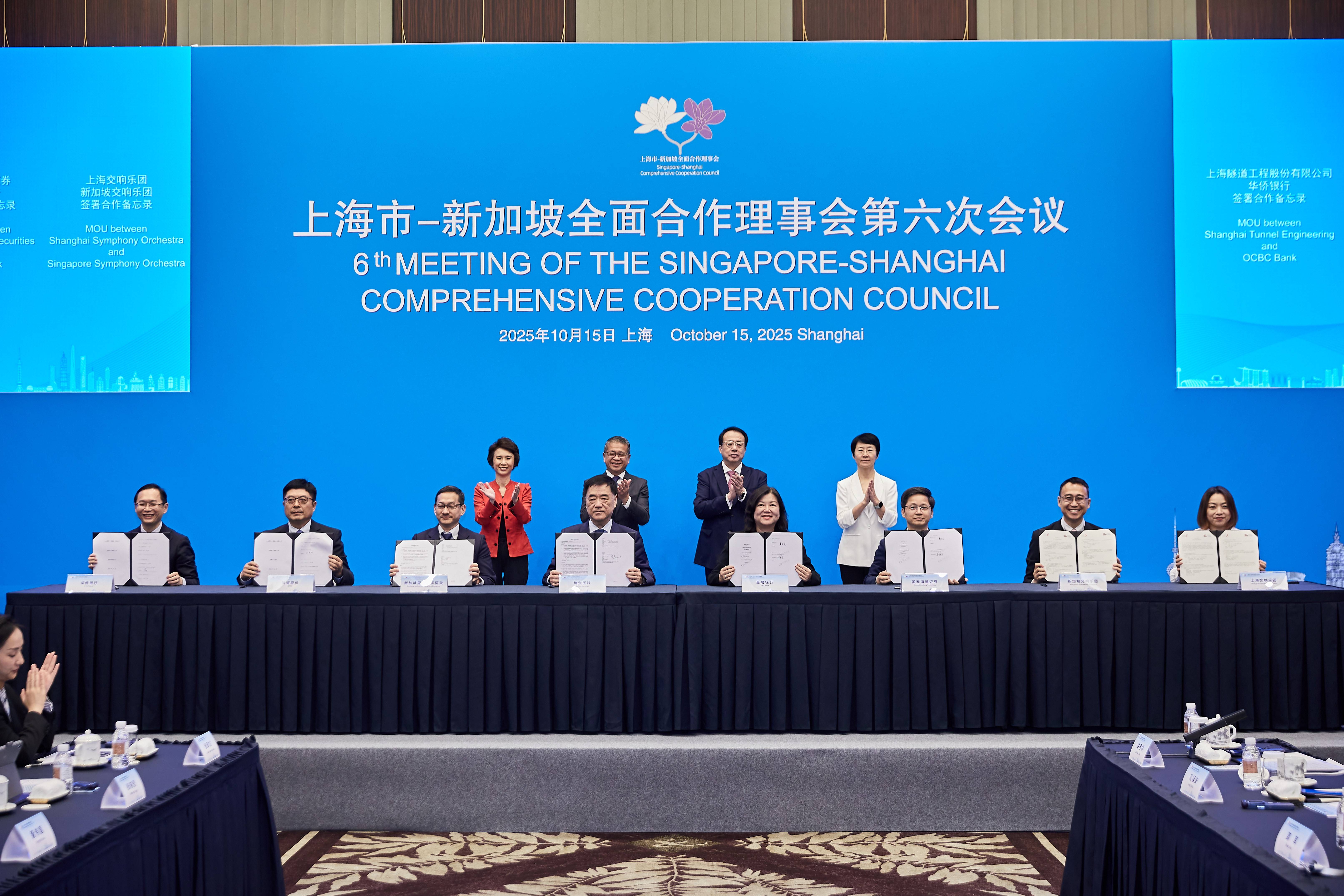 Adj Prof Mark Edward Puhaindran, Chairman, Medical Board, National University Hospital (seated, third from left) and Prof Ning Guang, President, Ruijin Hospital, Shanghai Jiao Tong University School of Medicine (seated, fourth from left), at the launch of the Singapore-Shanghai Medical Innovation Centre on 15 Oct 2025.
The SSMIC marks the first project arising from the Memorandum of Understanding (MOU) signed by both hospitals during the 5th SSCCC meeting in 2024 , to establish a framework for clinical cooperation through staff exchange programmes and other collaborative efforts.
Co-chaired by Professor Aymeric Lim, Chief Executive Officer of NUH, and Professor Ning Guang, President of RJH, the SSMIC will serve as a dynamic space dedicated to co-developing proof-of-concept methodologies and medical technologies, exchange of critical expertise and ideas, and conducting vital translational research.
Elevating the patient care landscape
To begin this collaborative journey, the SSMIC will focus its efforts on priority tracks that draw upon the strengths and expertise of both NUH and RJH. This focused approach aims to deliver tangible results and accelerate innovations that will directly benefit patients, beginning with:
- Cell and gene therapy
- 3D printing in orthopaedics
Under cell and gene therapy, cancer experts from both hospitals will jointly conduct clinical trials to validate a novel Chimeric Antigen Receptor (CAR) T-cell therapy. Using a patient’s own immunity system to fight the cancer, this therapy employs a highly personalised form of treatment to destroy the cancer cells with the specific biomarker on their surface. The objective of this collaboration is to translate the findings of the trials into a validated, effective treatment that can be made available to suitable cancer patients, especially those who have not found success with first-line cancer treatments.
In the field of orthopaedics, specialists from NUH and RJH will launch a collaborative clinical study focusing on 3D printing's transformative potential for musculoskeletal tumour resection and reconstruction of affected areas in patients’ bodies, to enhance surgical outcomes and improve patient recovery. This includes the design and implementation of patient-specific tumour prostheses, development of advanced 3D-printed bone-ingrowth segment scaffolds, and the use of bioprinted materials to address complex reconstructive needs arising from challenging cases such as after the removal of a large tumour.
While these initial projects represent a significant first step, they are just the beginning of what SSMIC sets out for patients. With the Centre designed to be a dynamic and sustained platform, NUH and RJH will actively explore opportunities for further collaborations and expand the Centre’s scope, ensuring a sustained pipeline of clinical breakthroughs.
“In the face of ever-evolving health challenges, it is paramount that we continuously innovate and push the boundaries of medical science” said Professor Aymeric Lim. “We are honoured to formalise this partnership with RJH as we build upon the foundation of collaboration established as founding members of the Asian University Hospital Alliance and as co-hosts at the 3rd Asian University Health Forum in December this year. Through the SSMIC, we look forward to partnering with RJH with a common mission to advance real-world change in healthcare, enriching the lives of individuals in both countries and beyond.”
"NUH shares the same value with Ruijin Hospital regardless of the geographic distance so our employees will do all we can to advance the clinical care and research to benefit more patients in more countries. Clinical excellence relies on long-term investment in people and lifelong reverence for the unknown. We as physicians and surgeons shall dedicate all we learn to the new cures; and mobilise the industry, the regulators, the basic scientists and other stakeholders to apply these cures to human at the fastest speed. This is also the call of SSMIC. With the support from Shanghai government and Singapore stakeholders, I have the faith that we will succeed.” said Professor NING Guang, President of Ruijin Hospital.
Hashtag: #NationalUniversityHospital
https://www.nuh.com.sg/
https://www.facebook.com/NationalUniversityHospital/
https://www.instagram.com/nuhig/
https://www.youtube.com/@nuh-sg
The issuer is solely responsible for the content of this announcement.
About the National University Hospital
The National University Hospital (NUH) is Singapore’s leading university hospital. While the hospital at Kent Ridge first received its patients on 24 June 1985, our legacy started from 1905, the date of the founding of what is today the NUS Yong Loo Lin School of Medicine. NUH is the principal teaching hospital of the medical school.
Our unique identity as a university hospital is a key attraction for healthcare professionals who aspire to do more than practise tertiary medical care. We offer an environment where research and teaching are an integral part of medicine, and continue to shape medicine and transform care for the community we care for.
We are an academic medical centre with over 1,200 beds, serving more than one million patients a year with over 50 medical, surgical and dental specialties. NUH is the only public and not-for-profit hospital in Singapore to provide trusted care for adults, women and children under one roof, including the only paediatric kidney and liver transplant programme in the country.
The NUH is a key member of the National University Health System (NUHS), one of three public healthcare clusters in Singapore.
About Ruijin Hospital, Shanghai Jiao Tong University School of Medicine
Ruijin Hospital was founded in 1907, formerly known as “Kuang-tse Hospital 廣慈醫院” and “Hôpital Sainte-Marie”, and is a public teaching hospital of Shanghai Jiao Tong University. The hospital boasts numerous medical experts with a high reputation both at home and abroad and runs full clinical specialties in Shanghai, Zhejiang, Jiangsu and Hainan Provinces. The headquarter is located in the city center of Shanghai City where the garden campus offers assuring mental and physical care for the people. Leading with solid research accomplishment and always curing the incurable, our faculty always meets the challenges in the no man's land of medical technology. By mastering the cutting-edge therapy and adopting the team approach, we unite our strengths for the multidisciplinary treatment on the patients.
Ruijin Hospital established the official collaboration in 2024 under the government framework between Shanghai and Singapore. This partnership marks the fruit of the long-lasting medical exchange in two cities. Aiming to tackle more unmet needs in clinical, Ruijin Hospital will join NUH for more advanced cure in Asia and beyond.
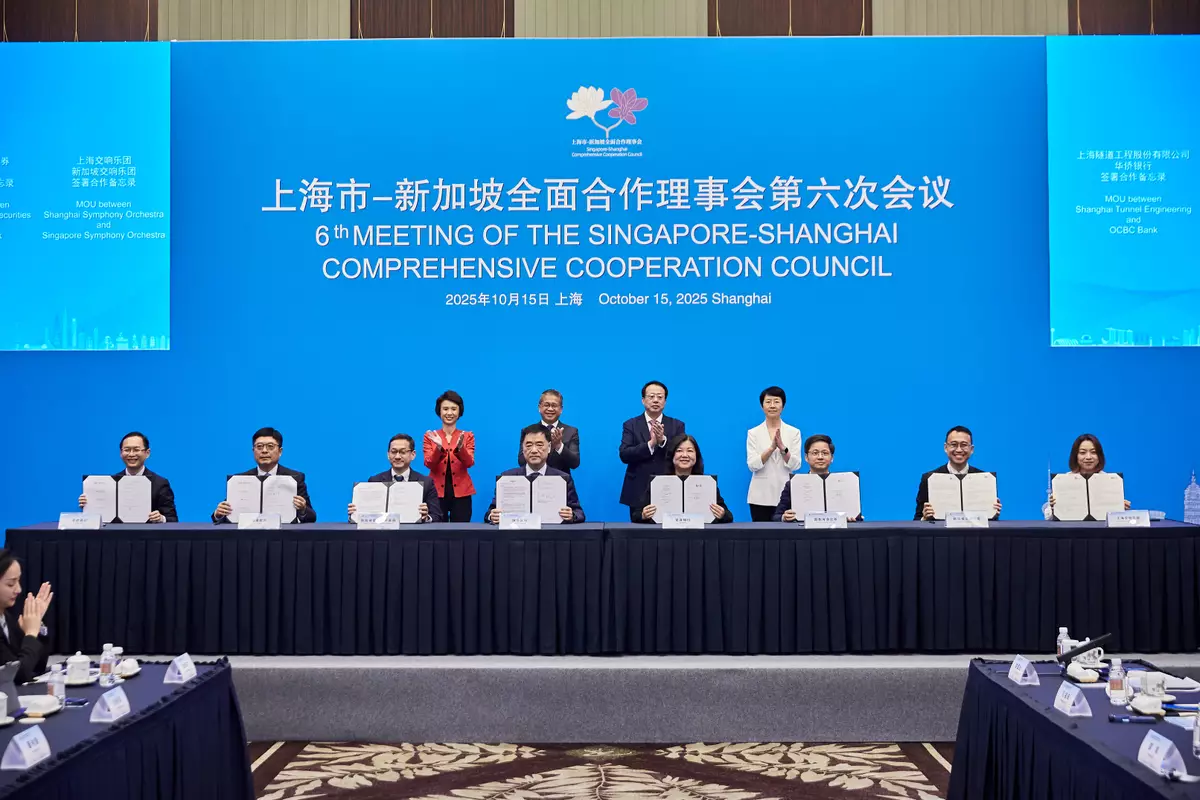
Adj Prof Mark Edward Puhaindran, Chairman, Medical Board, National University Hospital (seated, third from left) and Prof Ning Guang, President, Ruijin Hospital, Shanghai Jiao Tong University School of Medicine (seated, fourth from left), at the launch of the Singapore-Shanghai Medical Innovation Centre on 15 Oct 2025.
- Cell and gene therapy
- 3D printing in orthopaedics
Hashtag: #NationalUniversityHospital
https://www.nuh.com.sg/
https://www.facebook.com/NationalUniversityHospital/
https://www.instagram.com/nuhig/
https://www.youtube.com/@nuh-sg
The issuer is solely responsible for the content of this announcement.
About the National University Hospital
About Ruijin Hospital, Shanghai Jiao Tong University School of Medicine
** The press release content is from Media OutReach Newswire. Bastille Post is not involved in its creation. **
Over Half of Youth Feel Inferior Due to Parental Criticism: Accumulated Emotions Increase Risks of Depression
HONG KONG SAR - Media OutReach Newswire - 22 May 2026 - Save the Children Hong Kong today released its research report, "Hearing Children" – Child-led Research Report: How Family Interactions Affect Youth Mental Health (Full Report). Following the implementation of the Mandatory Reporting of Child Abuse Ordinance (the "Ordinance"), there has been ongoing public debate on how to enhance child wellbeing; however, unlike physical harm, psychological trauma is significantly more difficult to identify. According to the latest figures from the Social Welfare Department, a total of 1,354 child abuse cases were recorded in 2025. Of these, only 16 cases—a mere 1.2%—were classified as "psychological abuse".
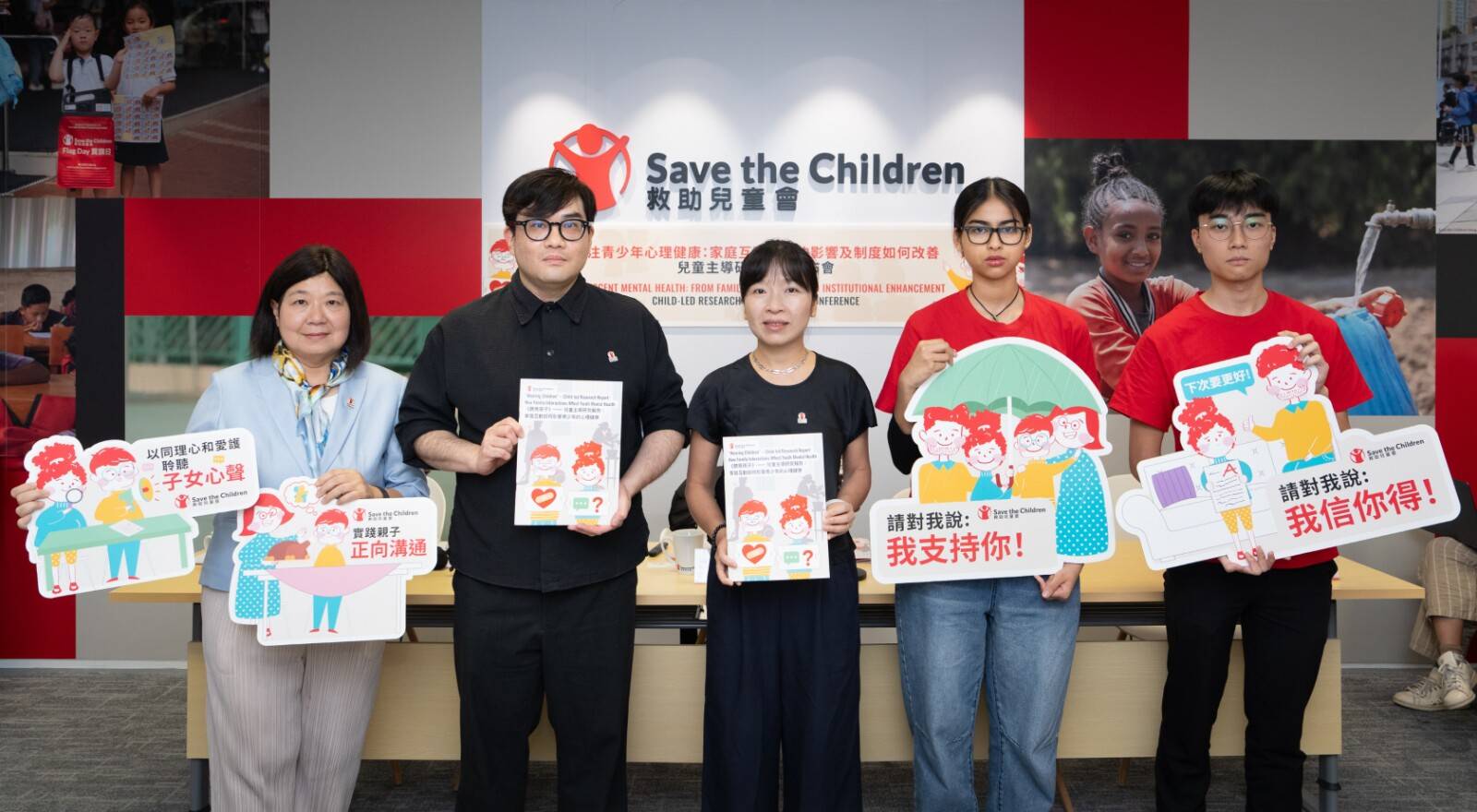 New study from Save the Children Hong Kong: Parental criticism leaves half of local youth feeling inferior and increases risks of mental health issues.
 The organisation believes that whilst the vast majority of parents care deeply for their children, they may inadvertently cause psychological trauma through their disciplinary methods, communication styles, and the way expectations are conveyed. Save the Children Hong Kong recommends that parents adopt "Positive Parenting" to strengthen parent-child non-violent communication, expressing their thoughts through mutual understanding and respect. Simultaneously, the Government should allocate additional resources to community and school settings to bolster mental health support for children and young people. Regarding the 25 categories of professionals specified under the Ordinance, training on identifying psychological abuse should be strengthened to support frontline practitioners in making clearer judgements on reporting thresholds and to facilitate timely intervention.
Over 80% of Youth Feel Pressure to be "Perfect": 40% Told to Improve Even When Praised
The study was designed by six youth researchers aged 14 to 17, under the guidance of Professor Gary Tang Kin Yat, Associate Professor of the Department of Social Science at The Hang Seng University of Hong Kong. It aimed to explore the psychological and emotional harm hidden behind parental "love and discipline". The study surveyed 408 children and adolescents aged 13 to 18, and found that 20.4% of respondents experience heavy pressure to "be perfect". Furthermore, 41.2% reported that even when parents praise their achievements, it is often accompanied by reminders of "how to do better next time". Over half of the respondents felt inferior to others due to parental disparagement, while more than 30% felt that no matter how hard they tried, they could never meet their parents' expectations.
Ms. Wong Shek Hung, Director of Hong Kong Programme of Save the Children Hong Kong, noted that while parents genuinely care for their children, yet when faced with their own stresses and anxieties, they may struggle to find the most appropriate way to express their care. Consequently, their love can inadvertently become a burden for the child. "This reflects the pivotal role parents play in their children's lives. Children place immense value on every word their parents say; as such, comments we may seem insignificant can directly impact how a child views themselves," she said.
The survey also explored parental behaviours that adolescents found most distressing. Respondents identified the most hurtful remarks as toxic comparisons (e.g., "Why can't you be more like them?"), invalidation of worth ("You are such a disappointment"), and dictatorial commands ("Because I said so"). The most resented behaviours included losing emotional control ("Losing their temper"), invading privacy ("Checking my phone"), and micromanagement ("Having to control everything").
Table: The True Voices of Youth – What We Want Parents to Know
| Most Hurtful Remarks (Top Five) | Most Resented Behaviours (Top Five) | Most Desired Encouragement (Top Five) |
| " Look at other people" | "(Parents) Losing their temper" | "You did a great job" |
| " You are so disappointing" | "Snooping on my phone" | "I support you" |
| "I said no means no" | "Having to make every decision" | "I believe you can do it" |
| "You aren't as good as others" | "Entering my room without knocking" | "Your happiness is what matters most" |
| "I'm only doing this for your own good" | "Moving or touching my belongings" | "I know you've done your best" |
Avoiding Adults: A Widening Gap in Mental Health Support for Children
Another alarming phenomenon is the significant gap emerging in Hong Kong's mental health safety net for children and adolescents. Unlike physical trauma, psychological distress is difficult to identify and often relies on the victims seeking help themselves. However, the study found that when children and young people feel distressed, their help-seeking behaviour tends to "avoid adults". A vast majority of respondents (86.3%) prioritise speaking to friends or venting on social media (78.7%). Conversely, the overwhelming majority "rarely or never" seek help from teachers (96.8%), social workers (97.5%), or parents (73.3%).
Nearly half of the respondents (49.6%) tend to internalise and handle their problems alone. Beyond the habit of self-reliance (47.3%), key reasons for this include a feeling that "no one truly understands or can help" (45.3%), a desire not to become a burden to others (29.9%), and a fear of being judged, misunderstood, or getting into trouble after seeking help (18.4%).
Ms. Wong Shek Hung expressed concern that current child protection systems—such as school-based social workers and helplines—may become ineffective if children actively avoid adult assistance, thereby limiting opportunities for timely intervention. She warned that if stress and emotions continue to accumulate without an outlet, the consequences could be severe.
Invisible Wounds: The Link Between Mental Stress and Psychosomatic Symptoms
Whilst psychological stress leaves no visible scars, its latent harm can be more enduring and profound. The study reveals that when adolescents are under mental pressure, their physical health is equally affected. When facing conflicts or difficulties at home, over a third of respondents (37.1%) reported "sometimes" experiencing insomnia, stomach aches, or headaches. Similarly, over a third (38.1%) indicated they "sometimes" experience acute anxiety reactions, such as nervous tension, trembling, or a racing heart.
Dr. Phyllis Chan Kwok-ling, Adviser of Save the Children Hong Kong and Psychiatrist, noted that psychological trauma is difficult to detect, which may lead to more severe cumulative consequences. "This is especially true if children and adolescents conceal their trauma or lack the self-awareness to address it. As trauma accumulates, it may become a root cause of emotional problems and increase the risk of developing conditions such as depression." Dr Chan explained. She also expressed concern that the study found neither parents nor teachers are seen as confidants. "When adolescents face difficulties, they need adults to listen and share experiences. If they turn only to social media or peers, the lack of adult guidance may amplify their distress. Furthermore, relying solely on peers carries the risk of an 'echo chamber' effect; mutual validation amongst friends may deepen their sense of hurt and intensify wariness or hostility towards parents."
Ms. Wong Shek Hung added that adolescents may not know how to articulate their inner needs, leading them to remain silent or cope in isolation. "In reality, as long as both parties are willing to take the first step towards better communication and empathy, a warm and intimate parent-child relationship can be maintained."
Strengthening Systemic Support and Empowering Children with Emotional Regulation Skills
Beyond the family unit, society bears a responsibility to provide support across schools, communities, and institutional levels. We must systematically foster emotional management skills in children and assist parents in adopting positive communication and parenting techniques. To this end, the organisation proposes the following recommendations:
- Mainstream "Social and Emotional Learning" (SEL): Integrate SEL into the regular school curriculum to strengthen students' ability to manage and articulate their emotions.
- Promote "Positive Parenting" through Home-School Cooperation: Implement comprehensive Positive Parenting initiatives to develop disciplinary communication skills and foster empathy within parent-child interactions.
- Enhance Mandatory Reporting Training: In relation to the Mandatory Reporting of Child Abuse Ordinance, training for professionals should be strengthened to include content on "identifying psychological abuse", supported by real-life case studies to help frontline staff clarify reporting criteria and enable timely intervention.
(For detailed information on these recommendations, please refer to the full report.)
Ms. Wong Shek Hung emphasised that family dynamics cannot be addressed with a "one-size-fits-all" legislative framework, nor is punishing parents an ideal way to manage family relationships. "The law provides only the most basic safety net. As previously mentioned, most parents care deeply for their children; the gap lies in communication and mutual understanding, as well as in adopting positive ways of interaction. Beyond legislation, we hope to improve parent-child relationships in the long term through support services and public education."
Hashtag: #SavetheChildrenHongKong #香港救助兒童會 #positiveparenting #正向管教 #mentalhealth #精神健康
https://savethechildren.org.hk/en/
https://www.linkedin.com/company/save-the-children-hong-kong
https://www.facebook.com/savethechildrenhk
https://www.instagram.com/savethechildrenhk/
YouTube: https://www.youtube.com/user/savehk
The issuer is solely responsible for the content of this announcement.
Save the Children Hong Kong
Save the Children believes every child deserves a future. In Hong Kong and around the world, we do whatever it takes – every day and in times of crisis – so children can fulfil their rights to a healthy start in life, the opportunity to learn and protection from harm. With over 100 years of expertise, we are the world's first and leading independent children's organisation – transforming lives and future.
Established in 2009, Save the Children Hong Kong is part of the global movement which operates in around 100 countries. We work with children, families, schools, communities and our supporters to deliver lasting change for children in Hong Kong and around the world.
HONG KONG SAR - Media OutReach Newswire - 22 May 2026 - Save the Children Hong Kong today released its research report, "Hearing Children" – Child-led Research Report: How Family Interactions Affect Youth Mental Health (Full Report). Following the implementation of the Mandatory Reporting of Child Abuse Ordinance (the "Ordinance"), there has been ongoing public debate on how to enhance child wellbeing; however, unlike physical harm, psychological trauma is significantly more difficult to identify. According to the latest figures from the Social Welfare Department, a total of 1,354 child abuse cases were recorded in 2025. Of these, only 16 cases—a mere 1.2%—were classified as "psychological abuse".
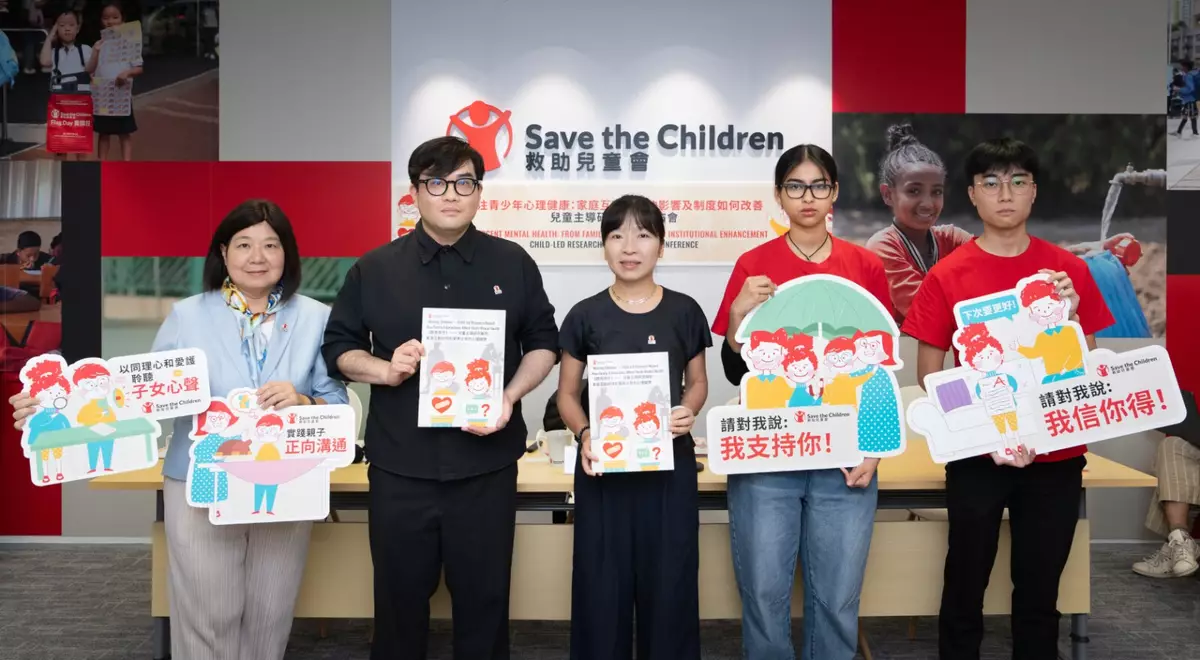
New study from Save the Children Hong Kong: Parental criticism leaves half of local youth feeling inferior and increases risks of mental health issues.
The organisation believes that whilst the vast majority of parents care deeply for their children, they may inadvertently cause psychological trauma through their disciplinary methods, communication styles, and the way expectations are conveyed. Save the Children Hong Kong recommends that parents adopt "Positive Parenting" to strengthen parent-child non-violent communication, expressing their thoughts through mutual understanding and respect. Simultaneously, the Government should allocate additional resources to community and school settings to bolster mental health support for children and young people. Regarding the 25 categories of professionals specified under the Ordinance, training on identifying psychological abuse should be strengthened to support frontline practitioners in making clearer judgements on reporting thresholds and to facilitate timely intervention.
Over 80% of Youth Feel Pressure to be "Perfect": 40% Told to Improve Even When Praised
The study was designed by six youth researchers aged 14 to 17, under the guidance of Professor Gary Tang Kin Yat, Associate Professor of the Department of Social Science at The Hang Seng University of Hong Kong. It aimed to explore the psychological and emotional harm hidden behind parental "love and discipline". The study surveyed 408 children and adolescents aged 13 to 18, and found that 20.4% of respondents experience heavy pressure to "be perfect". Furthermore, 41.2% reported that even when parents praise their achievements, it is often accompanied by reminders of "how to do better next time". Over half of the respondents felt inferior to others due to parental disparagement, while more than 30% felt that no matter how hard they tried, they could never meet their parents' expectations.
Ms. Wong Shek Hung, Director of Hong Kong Programme of Save the Children Hong Kong, noted that while parents genuinely care for their children, yet when faced with their own stresses and anxieties, they may struggle to find the most appropriate way to express their care. Consequently, their love can inadvertently become a burden for the child. "This reflects the pivotal role parents play in their children's lives. Children place immense value on every word their parents say; as such, comments we may seem insignificant can directly impact how a child views themselves," she said.
The survey also explored parental behaviours that adolescents found most distressing. Respondents identified the most hurtful remarks as toxic comparisons (e.g., "Why can't you be more like them?"), invalidation of worth ("You are such a disappointment"), and dictatorial commands ("Because I said so"). The most resented behaviours included losing emotional control ("Losing their temper"), invading privacy ("Checking my phone"), and micromanagement ("Having to control everything").
Table: The True Voices of Youth – What We Want Parents to Know
| Most Hurtful Remarks (Top Five) | Most Resented Behaviours (Top Five) | Most Desired Encouragement (Top Five) |
| " Look at other people" | "(Parents) Losing their temper" | "You did a great job" |
| " You are so disappointing" | "Snooping on my phone" | "I support you" |
| "I said no means no" | "Having to make every decision" | "I believe you can do it" |
| "You aren't as good as others" | "Entering my room without knocking" | "Your happiness is what matters most" |
| "I'm only doing this for your own good" | "Moving or touching my belongings" | "I know you've done your best" |
(Top Five)
(Top Five)
Avoiding Adults: A Widening Gap in Mental Health Support for Children
Another alarming phenomenon is the significant gap emerging in Hong Kong's mental health safety net for children and adolescents. Unlike physical trauma, psychological distress is difficult to identify and often relies on the victims seeking help themselves. However, the study found that when children and young people feel distressed, their help-seeking behaviour tends to "avoid adults". A vast majority of respondents (86.3%) prioritise speaking to friends or venting on social media (78.7%). Conversely, the overwhelming majority "rarely or never" seek help from teachers (96.8%), social workers (97.5%), or parents (73.3%).
Nearly half of the respondents (49.6%) tend to internalise and handle their problems alone. Beyond the habit of self-reliance (47.3%), key reasons for this include a feeling that "no one truly understands or can help" (45.3%), a desire not to become a burden to others (29.9%), and a fear of being judged, misunderstood, or getting into trouble after seeking help (18.4%).
Ms. Wong Shek Hung expressed concern that current child protection systems—such as school-based social workers and helplines—may become ineffective if children actively avoid adult assistance, thereby limiting opportunities for timely intervention. She warned that if stress and emotions continue to accumulate without an outlet, the consequences could be severe.
Invisible Wounds: The Link Between Mental Stress and Psychosomatic Symptoms
Whilst psychological stress leaves no visible scars, its latent harm can be more enduring and profound. The study reveals that when adolescents are under mental pressure, their physical health is equally affected. When facing conflicts or difficulties at home, over a third of respondents (37.1%) reported "sometimes" experiencing insomnia, stomach aches, or headaches. Similarly, over a third (38.1%) indicated they "sometimes" experience acute anxiety reactions, such as nervous tension, trembling, or a racing heart.
Dr. Phyllis Chan Kwok-ling, Adviser of Save the Children Hong Kong and Psychiatrist, noted that psychological trauma is difficult to detect, which may lead to more severe cumulative consequences. "This is especially true if children and adolescents conceal their trauma or lack the self-awareness to address it. As trauma accumulates, it may become a root cause of emotional problems and increase the risk of developing conditions such as depression." Dr Chan explained. She also expressed concern that the study found neither parents nor teachers are seen as confidants. "When adolescents face difficulties, they need adults to listen and share experiences. If they turn only to social media or peers, the lack of adult guidance may amplify their distress. Furthermore, relying solely on peers carries the risk of an 'echo chamber' effect; mutual validation amongst friends may deepen their sense of hurt and intensify wariness or hostility towards parents."
Ms. Wong Shek Hung added that adolescents may not know how to articulate their inner needs, leading them to remain silent or cope in isolation. "In reality, as long as both parties are willing to take the first step towards better communication and empathy, a warm and intimate parent-child relationship can be maintained."
Strengthening Systemic Support and Empowering Children with Emotional Regulation Skills
Beyond the family unit, society bears a responsibility to provide support across schools, communities, and institutional levels. We must systematically foster emotional management skills in children and assist parents in adopting positive communication and parenting techniques. To this end, the organisation proposes the following recommendations:
- Mainstream "Social and Emotional Learning" (SEL): Integrate SEL into the regular school curriculum to strengthen students' ability to manage and articulate their emotions.
- Promote "Positive Parenting" through Home-School Cooperation: Implement comprehensive Positive Parenting initiatives to develop disciplinary communication skills and foster empathy within parent-child interactions.
- Enhance Mandatory Reporting Training: In relation to the Mandatory Reporting of Child Abuse Ordinance, training for professionals should be strengthened to include content on "identifying psychological abuse", supported by real-life case studies to help frontline staff clarify reporting criteria and enable timely intervention.
(For detailed information on these recommendations, please refer to the full report.)
Ms. Wong Shek Hung emphasised that family dynamics cannot be addressed with a "one-size-fits-all" legislative framework, nor is punishing parents an ideal way to manage family relationships. "The law provides only the most basic safety net. As previously mentioned, most parents care deeply for their children; the gap lies in communication and mutual understanding, as well as in adopting positive ways of interaction. Beyond legislation, we hope to improve parent-child relationships in the long term through support services and public education."
Hashtag: #SavetheChildrenHongKong #香港救助兒童會 #positiveparenting #正向管教 #mentalhealth #精神健康
https://savethechildren.org.hk/en/
https://www.linkedin.com/company/save-the-children-hong-kong
https://www.facebook.com/savethechildrenhk
https://www.instagram.com/savethechildrenhk/
YouTube: https://www.youtube.com/user/savehk
The issuer is solely responsible for the content of this announcement.
Save the Children Hong Kong
Save the Children believes every child deserves a future. In Hong Kong and around the world, we do whatever it takes – every day and in times of crisis – so children can fulfil their rights to a healthy start in life, the opportunity to learn and protection from harm. With over 100 years of expertise, we are the world's first and leading independent children's organisation – transforming lives and future.
Established in 2009, Save the Children Hong Kong is part of the global movement which operates in around 100 countries. We work with children, families, schools, communities and our supporters to deliver lasting change for children in Hong Kong and around the world.
** This press release is distributed by Media OutReach Newswire through automated distribution system, for which the client assumes full responsibility. **