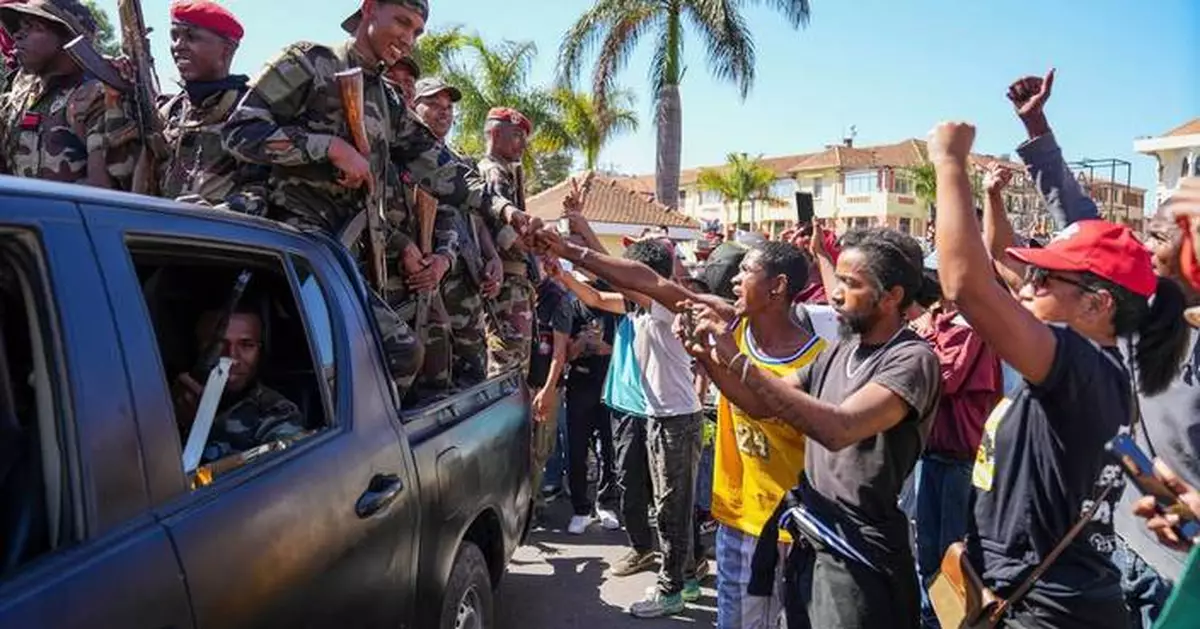
NEW DELHI (AP) — From the Andes to the Himalayas, a new wave of protests is unfolding across the world, driven by generational discontent against governments and anger among young people.
This week, Madagascar's President Andry Rajoelina was forced out of power and out of the country after a military mutiny, the culmination of weeks of demonstrations led by young protesters referring to themselves as “Gen Z Madagascar.”
The rage against the political establishment in the Indian Ocean island country mirrors other recent protests across the world, in countries like Nepal, the Philippines, Indonesia, Kenya, Peru and Morocco. These protests have been sparked by specific grievances but are driven by long-simmering issues like widening inequality, economic uncertainty, corruption, and nepotism of leaders.
But they have one thing in common: Mostly leaderless, they are made up primarily of young people who brand themselves as “Gen Z,” defined as those born roughly between 1996 and 2010 — the first generation to grow up entirely in the internet age.
“What connects these youth-led protests is a shared sense that traditional political systems aren’t responsive to their generation’s concerns, whether that’s corruption, climate change, or economic inequality. Protest then becomes the logical outlet when institutional channels feel blocked,” said Sam Nadel, director of Social Change Lab, a U.K.-based nonprofit that researches protests and social movements.
Though their specific demands differ, most of these protests have been sparked by government overreach or neglect. Some have also confronted harsh treatment by security forces and brutal repression.
In Morocco, a leaderless collective called Gen Z 212 — named after Morocco’s dialing code — has taken to the streets to demand better public services and increased spending on health and education. In Peru, protests over a pension law exploded into broader demands, including action to tackle rising insecurity and widespread corruption in the government. In Indonesia, deadly protests have erupted over lawmakers’ perks and the cost of living, forcing the president to replace key economic and security ministers.
The most widely recognized movement to be dubbed as a “Gen Z” protest was a deadly uprising in Nepal that culminated with the resignation of the prime minister in September. Protesters drew inspiration from successful anti-government movements elsewhere in South Asia — Sri Lanka in 2022 and Bangladesh in 2024 — which led to the ouster of incumbent regimes.
In Madagascar in turn, protesters say they were particularly inspired by the movements in Nepal and Sri Lanka.
The protests began against regular water and electricity cuts but quickly morphed into wider discontent, as demonstrators called for the president and other ministers to step down. On Wednesday, Madagascar’s military coup leader said he is “taking the position of president.”
Across multiple countries, a singular pop culture symbol has emerged: a black flag showing a grinning skull and crossbones wearing a straw hat. The flag comes from a cult Japanese manga and anime series called “One Piece,” which follows a crew of pirates as they take on corrupt governments.
In Nepal, protesters hung the same flag on the gates of the Singha Durbar, the seat of the Nepalese government, and on ministries, many of which were torched in protests. It was also hoisted by crowds in Indonesia, the Philippines, Morocco and Madagascar.
Last week in the Peruvian capital, Lima, 27-year-old electrician David Tafur stood with the same flag in San Martín Square, now the stage for weekly protests.
“We’re fighting the same battle — against corrupt officials who, in our case, are also killers,” he said, recalling that President Dina Boluarte’s government held on to power since December 2022 despite more than 500 protests and the deaths of 50 civilians.
“In my case, it’s outrage over abuse of power, corruption, the deaths,” Tafur said, referring to the sharp rise in murders and extortion plaguing the South American country since 2017, amid new laws that have weakened efforts to fight crime.
Boluarte had been under investigation for months over various allegations including bribery and involvement in a deadly crackdown on protesters in 2022. She was replaced last week by interim President José Jerí.
Tafur said that wasn’t enough.
“The president is an ally of Congress and has to go,” he said.
Many significant protests in the past, like Occupy Wall Street in 2011, the Arab Spring between 2010 and 2012, and the 2014 Umbrella Revolution in Hong Kong, have been led by younger people. While they also used the internet and social media for mass mobilization, the “Gen Z” protesters are taking it to another level.
“Digital platforms are powerful tools for information sharing and building connections, but the most effective movements often combine digital mobilization with traditional in-person organizing, as we’ve seen in these recent protests,” said Nadel from Social Change Lab.
Days before the deadly protests began in Nepal, the government announced a ban on most social media platforms for not complying with a registration deadline. Many young Nepalese viewed it as an attempt to silence them and began accessing social media sites through virtual private networks to evade detection.
Over the next few days, they used TikTok, Instagram and X to spotlight the lavish lifestyles of politicians’ children, highlighting disparities between Nepal’s rich and poor, and announce planned rallies and venues. Later, some of them also used the gaming chat platform Discord to suggest who to nominate as an interim leader for the country.
“Whatever movement happens, whether against corruption or injustice, it spreads through digital media. The same happened in Nepal. The changes that took place after the Gen Z protests in Nepal spread globally through digital platforms, influencing other countries as well,” said protester Yujan Rajbhandari.
He said the protests in Nepal awakened not only the youth but also other generations.
“We realized that we are global citizens and the digital space connects us all and plays a powerful role across the world,” Rajbhandari said.
———
Associated Press journalists Franklin Briceño in Lima, Peru, and Niranjan Shrestha in Kathmandu, Nepal, contributed to this report.

People take part in a youth-led protest against corruption and calling for education and healthcare reforms, in Rabat, Morocco, Thursday, Oct. 9, 2025. (AP Photo/Mosa'ab Elshamy)
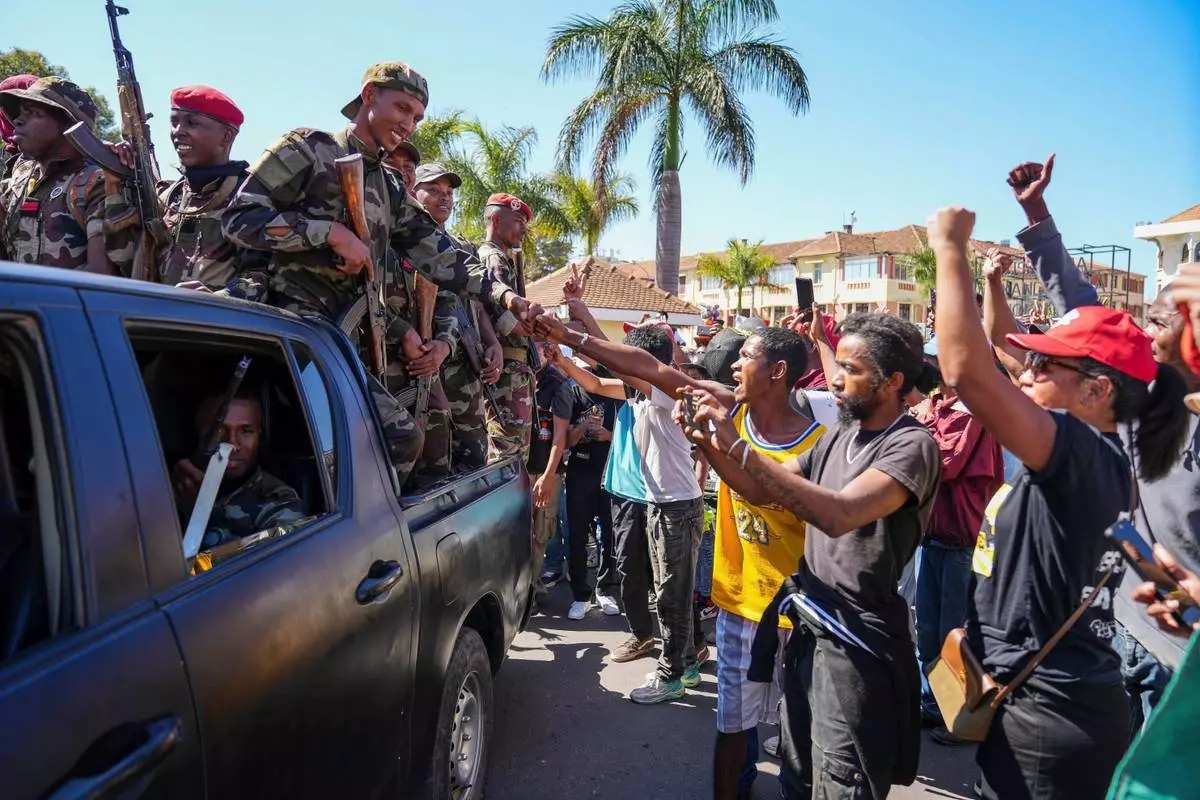
Soldiers are greeted by people gathering for a ceremony in tribute to demonstrators killed during recent anti-government protest in Antananarivo, Madagascar, Sunday, Oct. 12, 2025. (AP Photo/Mamyrael)
DUBAI, United Arab Emirates (AP) — Airstrikes targeting an air base in southeastern Iran killed at least 13 Iranian troops there, local media reported.
The semiofficial Tasnim news agency and the Hammihan daily newspaper reported the strike in Kerman, 800 kilometers (500 miles) southeast from Iran’s capital, Tehran.
The Kerman Air Base is known to house military helicopters.
THIS IS A BREAKING NEWS UPDATE. AP’s earlier story follows below.
DUBAI, United Arab Emirates (AP) — Iran struck the U.S. Embassy in Saudi Arabia’s capital with a drone early Tuesday as it kept hitting targets around the region, while the United States and Israel pounded Iran with airstrikes in what U.S. President Donald Trump suggested was just the start of a relentless campaign that could last more than a month.
The attack from two drones on the U.S. Embassy in Riyadh caused a “limited fire” and minor damage, according to Saudi Arabia’s Defense Ministry, and the embassy urged Americans to avoid the compound. It followed an attack on the U.S. Embassy in Kuwait, which announced Tuesday it had been closed until further notice. The U.S. State Department also ordered the evacuation of non-emergency personnel and family in Kuwait, as well as Bahrain, Iraq, Qatar and Jordan as a precaution.
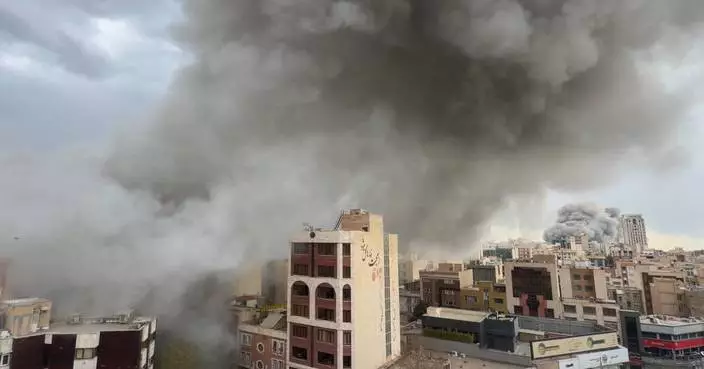
Across Iran’s capital, explosions rang out throughout the night into the early morning, with witnesses describing hearing aircraft overhead. It was not immediately clear what had been hit. And in Lebanon, Israel launched more strikes on Hezbollah, the Iran-backed militia group, and said its soldiers are “operating in southern Lebanon.” Explosions could be heard and smoke seen in a southern suburb of Beirut.
The expansion of Iranian retaliation across the Gulf and the intensity of the Israeli and American attacks, the killing of Iranian Supreme Leader Ayatollah Ali Khamenei and the lack of any apparent exit plan portend a possibly prolonged conflict with far-reaching consequences.
Many countries deemed safe havens in the Mideast have been hit by Iran in retaliation for the U.S. and Israeli strikes, with recent targets including two Amazon data centers in the United Arab Emirates and a drone impact near another in Bahrain that caused damage, the company said Tuesday. Iran has also hit energy facilities in Qatar and Saudi Arabia, and attacked several ships Strait of Hormuz, the narrow mouth of the Persian Gulf through which a fifth of all oil traded passes, sending global oil and natural gas prices soaring.
“The Strait of Hormuz is closed," declared Iranian Brig. Gen. Ebrahim Jabbari, an adviser to the paramilitary Revolutionary Guard, threatening to set fire to any ships attempting to transit. “Don’t come to this region.”
The U.S. State Department urged U.S. citizens to leave more than a dozen Middle Eastern countries due to safety risks, as have many other countries, though with much of the airspace closed many remain stranded.
Trump said operations are likely to last four to five weeks but that he was prepared “to go far longer than that.”
He later added on social media that the U.S. had a “virtually unlimited supply” of munitions and pre-positioned “high grade weaponry.”
“Wars can be fought ‘forever,’ and very successfully, using just these supplies,” he wrote.
The Iranian Red Crescent Society said the U.S.-Israeli operation has killed at least 555 people. In Israel, where several locations were hit by Iranian missiles, 11 people were killed. Israel’s retaliatory strikes against Hezbollah killed 52 people in Lebanon.
“Military escalation would force more families from their homes and hit civilians hard,” said Amy Pope, director general of the International Organization on Migration as she called Tuesday for the international community to press for de-escalation.
“Millions are already displaced in the region,” she said.
The U.S. military has confirmed six deaths of American service members. All six were Army soldiers in a logistics unit in Kuwait, according to a U.S. official who was not authorized to comment publicly and spoke on condition of anonymity.
Three people were killed in the United Arab Emirates, and one each in Kuwait and Bahrain.
The chaos of the conflict became apparent when the U.S. military said Kuwait had “mistakenly shot down” three American fighter jets while Iran was attacking it with aircraft, ballistic missiles and drones. U.S. Central Command said all six pilots ejected safely.
Iranian state TV said strikes caused two explosions early Tuesday at a broadcasting facility in Tehran, but said no one was injured.
Reza Najafi, Iran’s ambassador to the International Atomic Energy Agency, told reporters that airstrikes targeted the Natanz nuclear enrichment site on Sunday.
“Their justification that Iran wants to develop nuclear weapons is simply a big lie,” he said.
Israel and the U.S. have not acknowledged strikes at the site, which the U.S. bombed in the 12-day war between Iran and Israel in June. Israel has said it is targeting the “leadership and nuclear infrastructure.”
Trump said the military campaign’s objectives are to destroy Iran’s missile capabilities, wipe out its navy, prevent it from obtaining a nuclear weapon and ensure that it cannot continue to support allied groups like Lebanon’s Hezbollah, which fired missiles at Israel on Monday.
Iran has said it has not enriched uranium since June, though it has maintained its right to do so and says its nuclear program is peaceful.
Israeli Prime Minister Benjamin Netanyahu maintained, however, that Iran was rebuilding “new sites, new places” underground for making atomic bombs in an interview broadcast late Monday on Fox News Channel’s Hannity.
“We had to take the action now and we did,” said Netanyahu, who offered no evidence to support his claim.
Satellite photos analyzed by The Associated Press showed limited activity at two nuclear sites in Iran before the war. Analysts said Tehran was likely assessing damage from the 2025 U.S. strikes and possibly salvaging what remained.
The conflict has also spread to Lebanon, where the Iranian-supported militant group Hezbollah fired missiles at Israel on Monday, prompting Israel to retaliate.
At least 52 people have been killed and 154 wounded so far, according to Lebanese authorities.
Israel hit Beirut with more airstrikes early Tuesday morning, saying it was targeting “Hezbollah command centers and weapons storage facilities.”
Hezbollah also said it launched drones targeting an Israeli air base. The Israeli military said it downed two drones.
An Iranian-linked militant in Iraq has also claimed strikes on U.S. military facilities there. The Israeli military said its troops operating in southern Lebanon were positioned at several points near the border in what it described as a “forward defense posture.”
It said the deployment is part of a broader effort to increase security for residents in northern Israel near the border with Lebanon. It has also beefed up troops and air defenses in the area.
The army said there are no plans to evacuate Israeli residents of border areas.
Melanie Lidman in Tel Aviv, Israel, Hallie Golden in Seattle, Washington and Giovanna Dell'Orto in Miami contributed to this report. Rising reported from Bangkok and Magdy from Cairo.
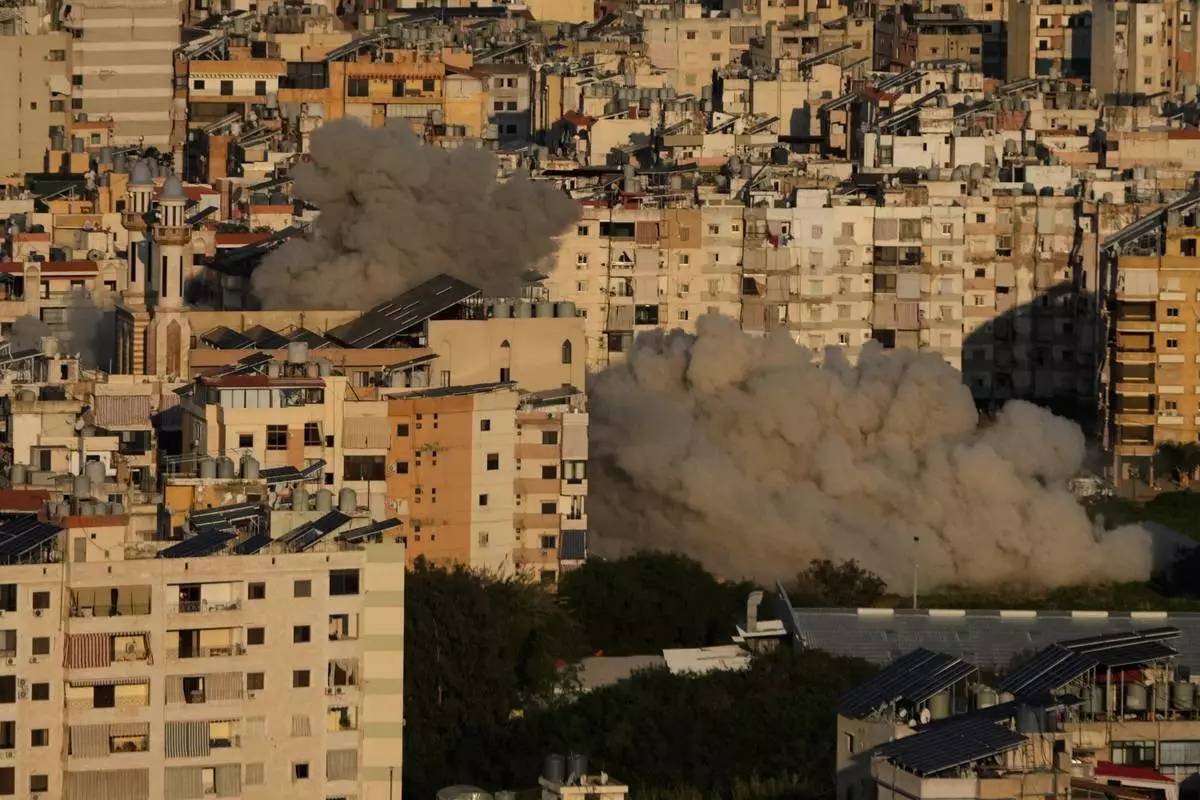
Smoke rises from Israeli airstrikes in Dahiyeh, a southern suburb of Beirut, Lebanon, Tuesday, March 3, 2026. (AP Photo/Hussein Malla)
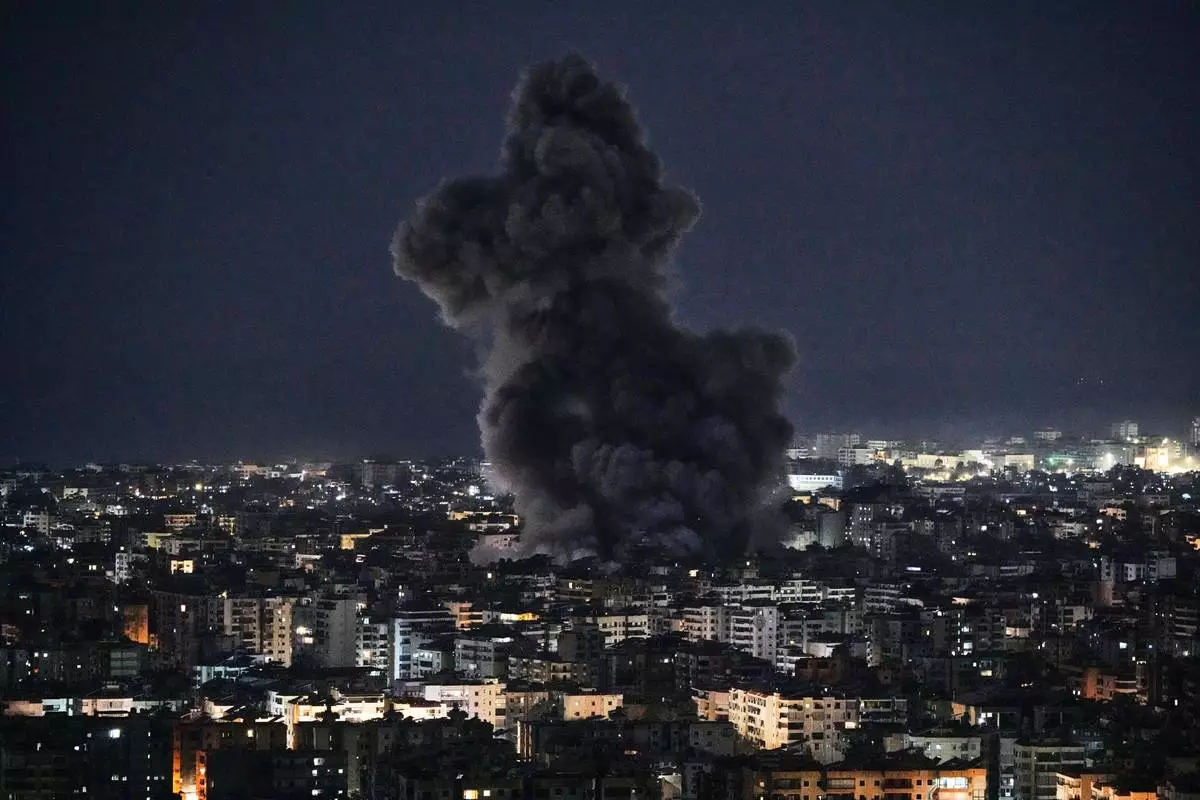
Smoke rises from Israeli airstrikes in Dahiyeh, a southern suburb of Beirut, Lebanon, early Tuesday, March 3, 2026. (AP Photo/Bilal Hussein)
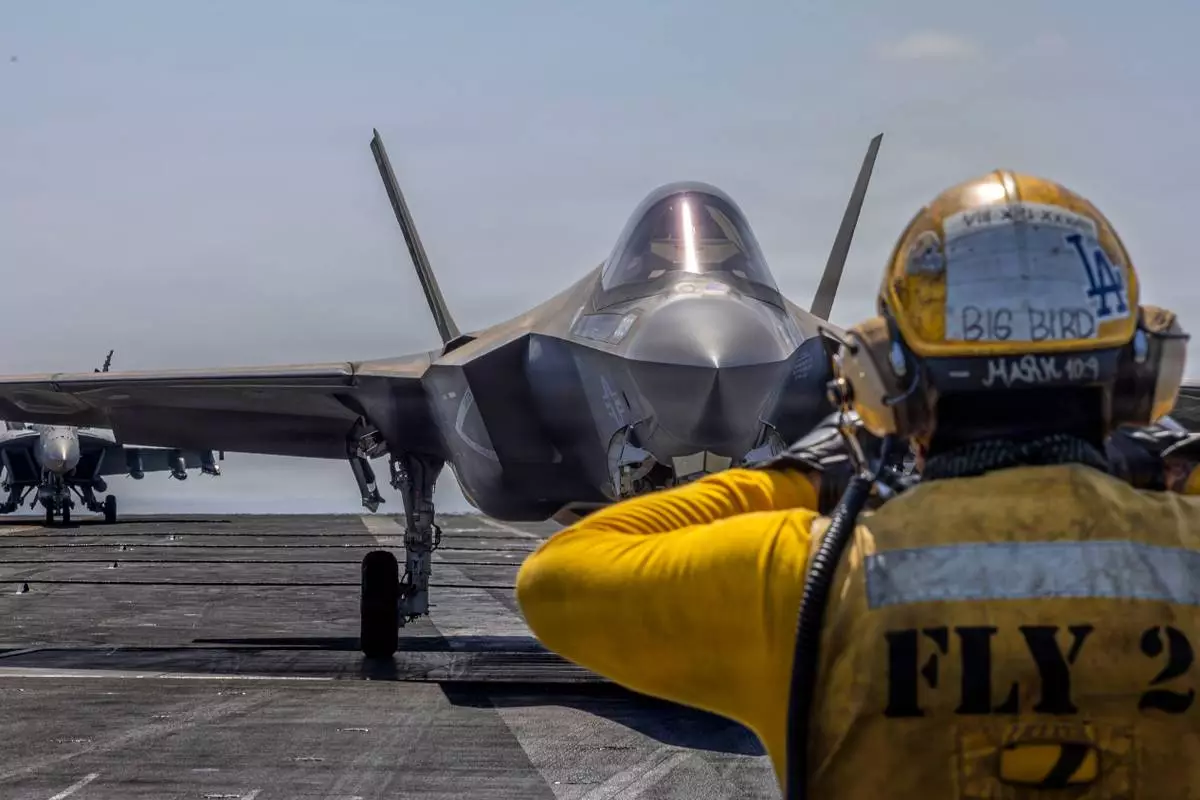
This image provided by U.S. Central Command shows a F-35C Lightning II preparing for launch on the flight deck of the USS Abraham Lincoln (CVN 72) in support of Operation Epic Fury on Monday, March 2, 2026. (U.S. Navy via AP)
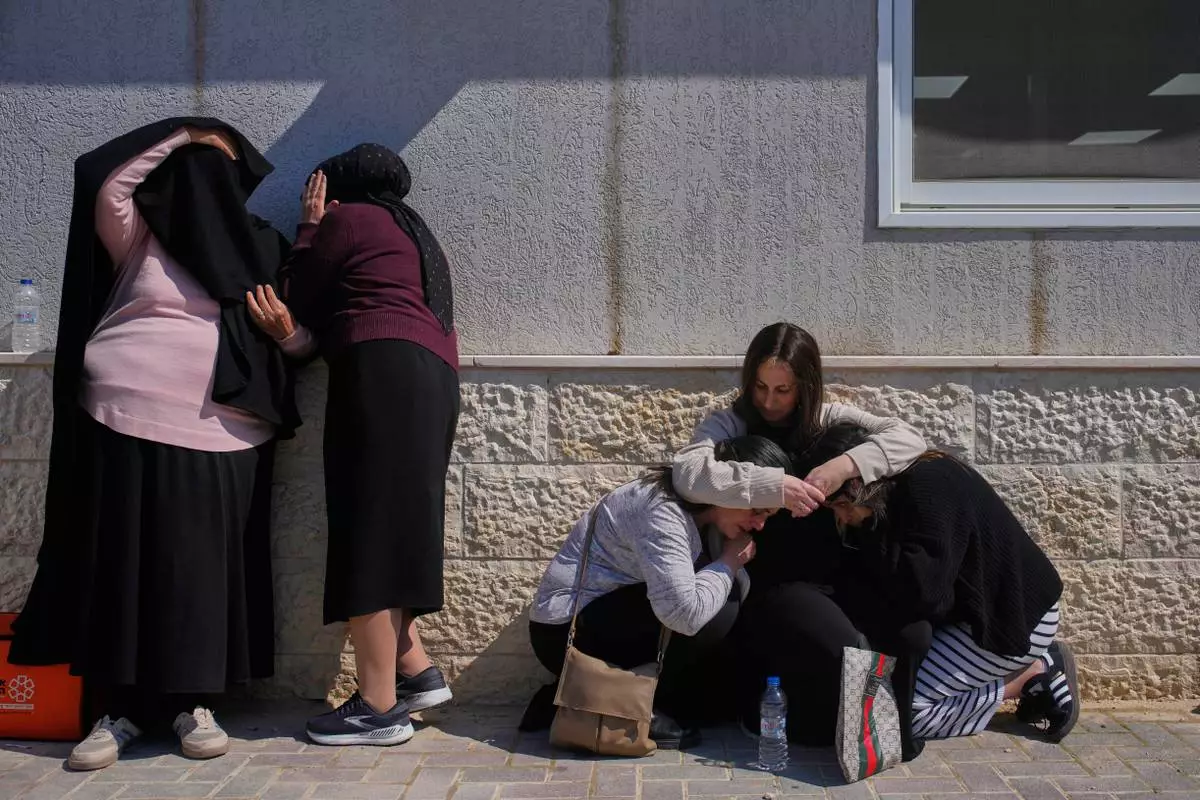
Mourners take cover while air-raid sirens warn of incoming missiles launched by Iran toward Israel during the funeral of Sarah Elimelech and her daughter Ronit who were killed in an Iranian missile attack, in Beit Shemesh, Israel, Monday, March 2, 2026. (AP Photo/Ohad Zwigenberg)
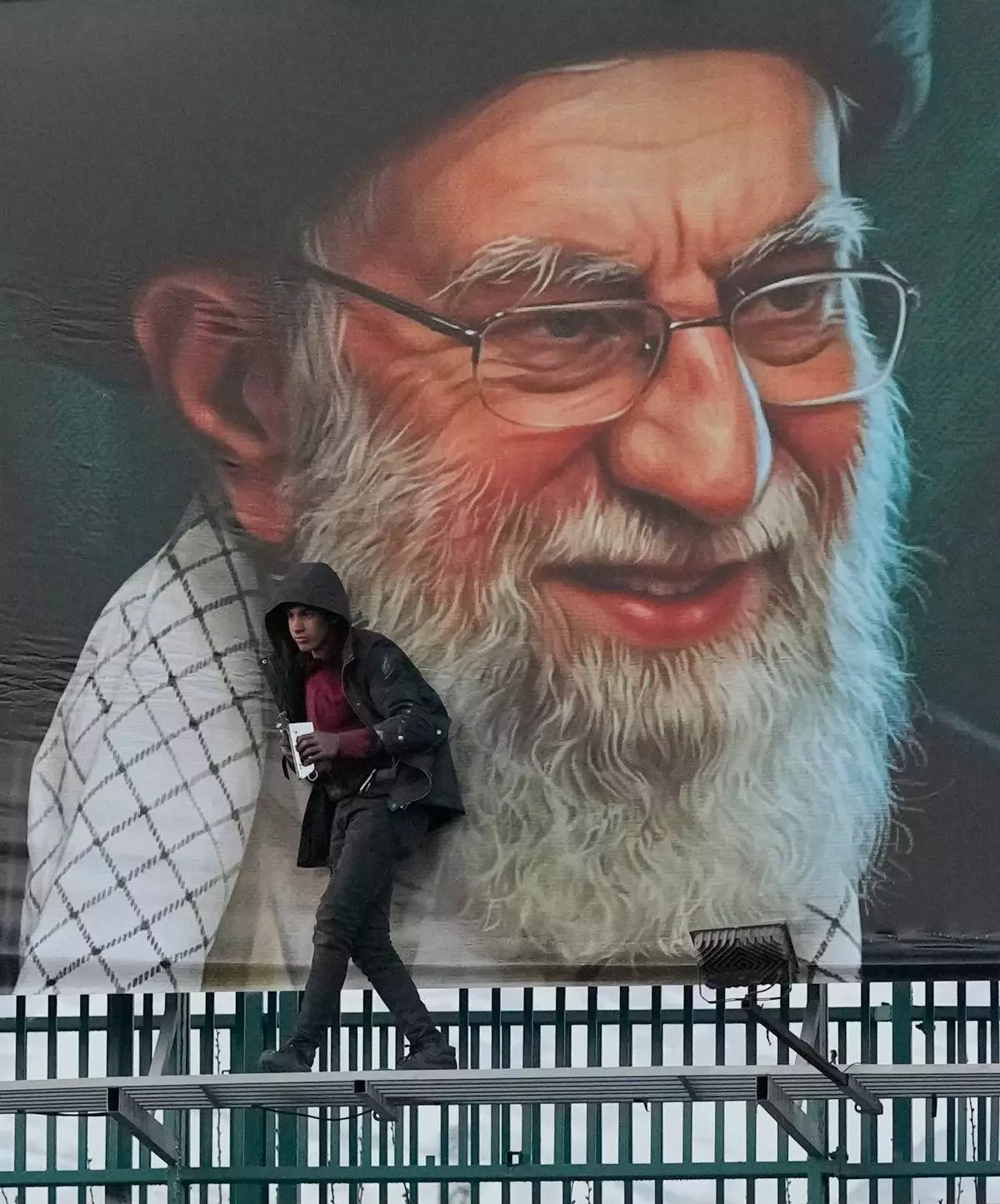
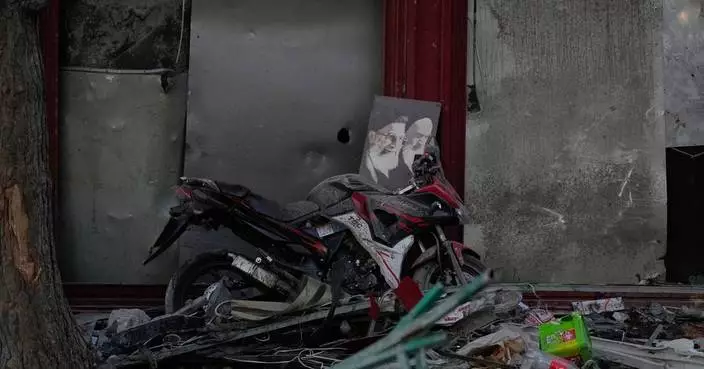
A worker instals a billboard on an overpass containing a portrait of the late Iranian Supreme Leader Ayatollah Ali Khamenei, who was killed during the ongoing joint U.S.-Israeli military campaign, in Tehran, Iran, Monday, March 2, 2026. (AP Photo/Vahid Salemi)
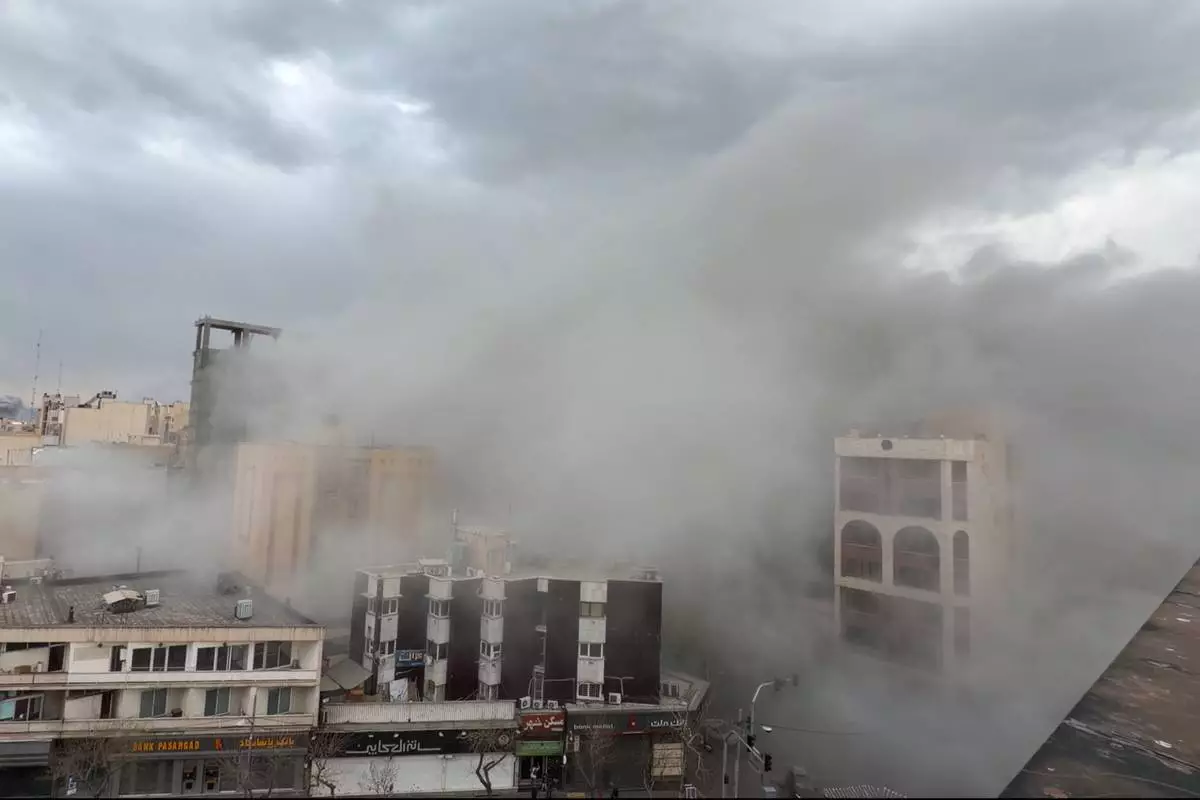
Smoke engulfs a street after a strike in Tehran, Iran, Monday, March 2, 2026. (AP Photo/Mohsen Ganji)