Some Chinese border towns have been increasingly popular among tourists from neighboring countries due to the adoption of visa-free policies and more convenient transportation and other services, according to immigration data in the first three quarters of the year.
The Heihe Port in northeast China's Heilongjiang Province welcomed a group of 174 Russian tourists on Wednesday, which marked exactly a month since China's trial visa-free policy for Russian citizens took effect.
After getting off a ferry from the Russian city of Blagoveshchensk, the travelers passed through customs clearance in just 20 minutes.
"Visa-free entry has become the preferred option for Russian travelers. More than 80 percent of them come to Heihe through this policy," said Dai Chen, an immigration inspection officer at the port.
A total of 46,000 Russian travelers entered Heilongjiang from September 15 to October 14, up 28.4 percent year on year, according to data from the Heilongjiang General Station of Exit and Entry Frontier Inspection.
Among them, 43,000 Russian travelers entered without a visa, the general station said, adding that all nine ports across Heilongjiang have processed such visa-free entries.
Dongxing in southwest China's Guangxi Zhuang Autonomous Region is China's only port city connected both by land and sea with Vietnam. It is renowned for its coastal tourism.
As of Thursday, the Dongxing Port has handled 7.63 million exits and entries this year, marking a 12 percent increase year on year.
During the period, more than 11,000 tour groups, or 129,000 tourists from Vietnam, have crossed the border to travel in China.
The average daily flow of inbound and outbound tourists remains above 20,000 people.
"I love Dongxing. I came with my friend for the coastal scenery and seafood here," said a Vietnamese tourist.
Vietnamese tourists also favor the Hekou Yao Autonomous County in southwest China's Yunnan Province, as it is the first stop in China for trains from Vietnam via the century-old Yunnan-Vietnam Railway.
On Wednesday, a group of 27 tourists from Vietnam arrived at the Hekou Port. Having completed the declaration online in advance, their customs clearance took less than 10 minutes in total.
This year, Hekou has made it easier for Vietnamese tourists to pay in China, allowing them to make mobile payments without downloading Chinese applications.
"Many Vietnamese tourists think it's very convenient. We estimate Vietnamese tourists will contribute 100,000 yuan in our turnover this year," said Jiang Mingzi, owner of an accessories store.
East China's Shandong Province has become a new destination for South Koreans to spend their weekends after the two countries offered visa-free entry to each other's citizens.
The Shidao Port in Rongcheng City of Shandong, as the closest Chinese port to South Korea, has become one of the most favored border crossings for them to enter China.
"We have streamlined inspection procedures and provided convenient services. In the third quarter, the total number of ferry passengers grew by 25 percent year on year at the port," said Ma Zhenhua, head of immigration inspection at the port.
From January to September this year, more than 404,000 South Korean tourists entered China through ports across Shandong, up 38.9 percent year on year, according to data from the Shandong General Station of Exit and Entry Frontier Inspection.
Of the tourists, 329,000 South Koreans crossed the border visa-free, accounting for 81.6 percent of the total number of foreign tourists exempted from visas.
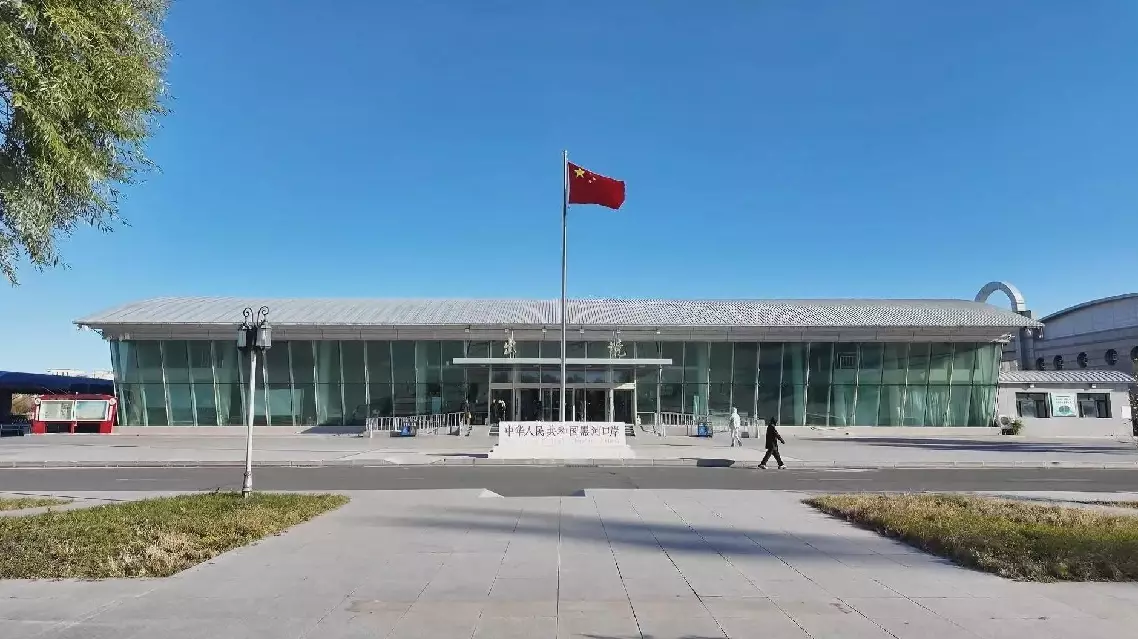
China's border towns popular among inbound tourists due to visa-free policy