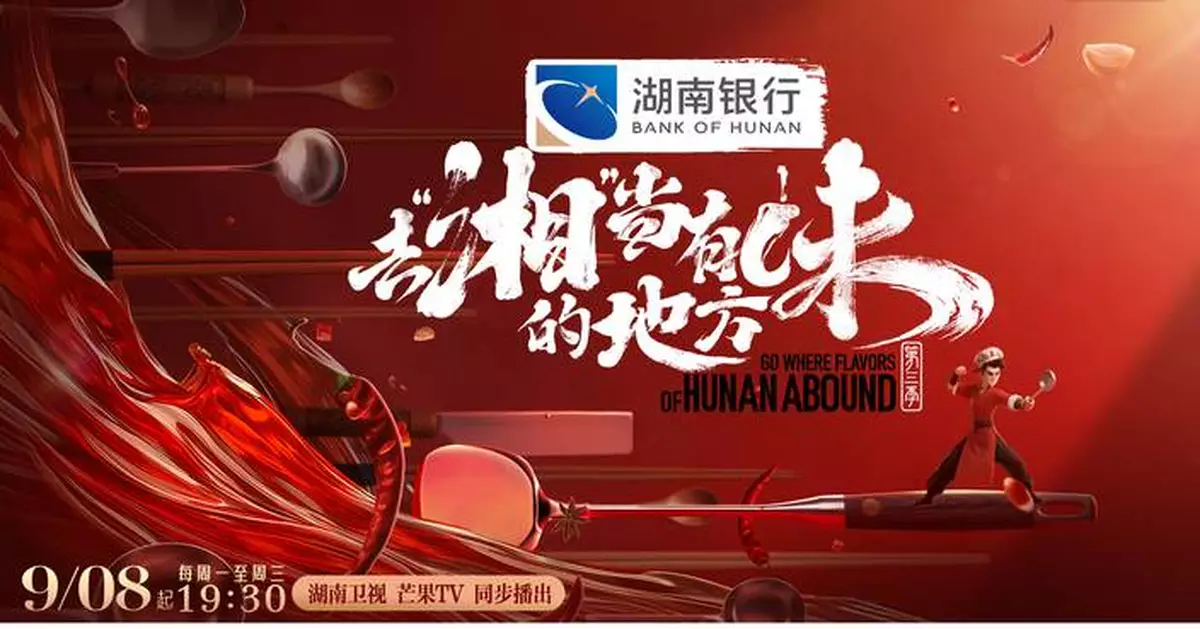
BANGKOK, THAILAND - Media OutReach Newswire - 16 October 2025 - As the spicy aroma of Hunan cuisine wafts through the streets of Bangkok, a cross-border culinary dialogue quietly begins. Recently, the third season of Hunan TV's Mango TV program "Go Where Flavors of Hunan Abound" concluded with the theme of "Hunan Cuisine Going Abroad." Five champion chefs from Hunan traveled to Thailand, not only completing a cultural exchange through food but also initiating a vibrant practice of international dissemination of Chinese culinary culture.
https://youtu.be/CJiBe4FJVZ8
This trip to Thailand was an exploration of flavors as well as a fusion of cultures. The program's carefully designed dual approach—guests visiting local Hunan restaurants and chefs delving into local markets—reflects two dimensions of cultural dissemination: the need to uphold authenticity while embracing innovation. In Bangkok's Hunan restaurants, we see dishes like stir-fried lotus root with pork and spicy abalone with pork presented together, retaining the authentic flavors of Hunan ingredients while incorporating local diners' preferences. This wisdom of "changing forms while keeping the essence" is the key to the success of Chinese cuisine in reaching the world.
The scenes of Hunan chefs exploring Thai markets are particularly moving. With their professional sensitivity, they seek a resonance with the soul of Hunan cuisine among exotic ingredients. In this moment, ingredients transform from mere cooking materials into mediums of cultural dialogue. The segments where Shen Mengchen and Zhang Yanqi creatively use body language to overcome communication barriers truly reflect the essence of cultural exchange—when language reaches its limits, a shared love for food becomes the most universal language.
The deeper significance of this "Hunan Cuisine Going Abroad" lies in its construction of a multi-layered cultural dissemination system. By inviting overseas restaurateurs, foreign diners, and expatriate Chinese to form a judging panel, the program creates a diverse dialogue space. In this space, each Hunan dish becomes more than just food; it serves as a vehicle for telling Hunan's stories and conveying the spirit of the region. The surprised expressions of foreign diners and the tearful moments of expatriates tasting familiar flavors weave together a vivid picture of cultural exchange.
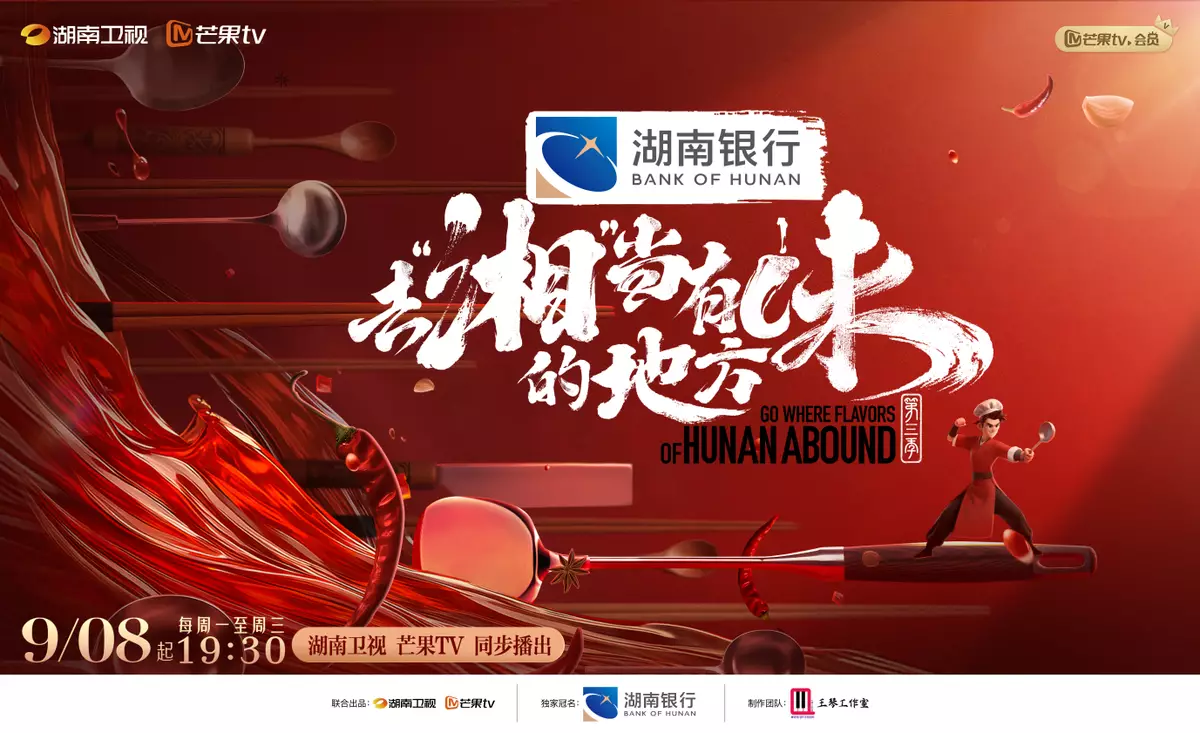
"Go Where Flavors of Hunan Abound": Hunan Cuisine Goes Abroad, Spreading Cultural New Chapters Through Food
Hunan cuisine's journey abroad is about more than just dishes; it's about spreading culture. The pioneering spirit of the Hunan people is embodied in the chefs' willingness to reinterpret traditional flavors with exotic ingredients; their tenacity is reflected in their pursuit of culinary excellence; and their broad-mindedness is shown in their open embrace of foreign cultures. This process of elevating taste experiences to cultural identity represents the highest realm of culinary cultural dissemination.
Notably, this Hunan cuisine venture coincides with the important moment of the 50th anniversary of friendly relations between China and Thailand. Using food as a bond to promote mutual understanding and writing new chapters of friendship through taste memories reflects both the program's ingenuity and the deeper meaning of cultural dissemination. When the sour and spicy flavors of Thailand perfectly blend with the fragrant and spicy tastes of Hunan, the two culinary cultures achieve a leap from mutual respect to appreciation.
From "Hunan flavors" to "aromas wafting across the seas," this is not only a new journey of the globalization of Hunan cuisine but also a vibrant practice of international dissemination of Chinese culture. The third season of "Go Where Flavors of Hunan Abound" tells us through this carefully planned venture: culinary boundaries do not exist, and culture resonates. Using food as a medium and flavor to convey emotions, Hunan cuisine is writing a new chapter in the global dissemination of Chinese culinary culture with its unique charm on the world stage.
Looking ahead, we have reason to believe that as more Chinese cuisines like Hunan cuisine go global, the rich connotations and contemporary values of Chinese culture will gain deeper understanding and recognition worldwide. This journey of flavors has only just begun.
Hashtag: #MGTV
The issuer is solely responsible for the content of this announcement.
** The press release content is from Media OutReach Newswire. Bastille Post is not involved in its creation. **
Code4Mzansi highlights the growing strength of South Africa’s developer ecosystem and the role of youth-led innovation in shaping the country’s digital future
JOHANNESBURG, SOUTH AFRICA - Media OutReach Newswire - 26 May 2026 - South Africa’s emerging developers are building close to the ground, with many of the strongest solutions at the inaugural Huawei Code4Mzansi finals focused on systems people use every day: township retail, healthcare, energy, agriculture, payments and the creative economy.
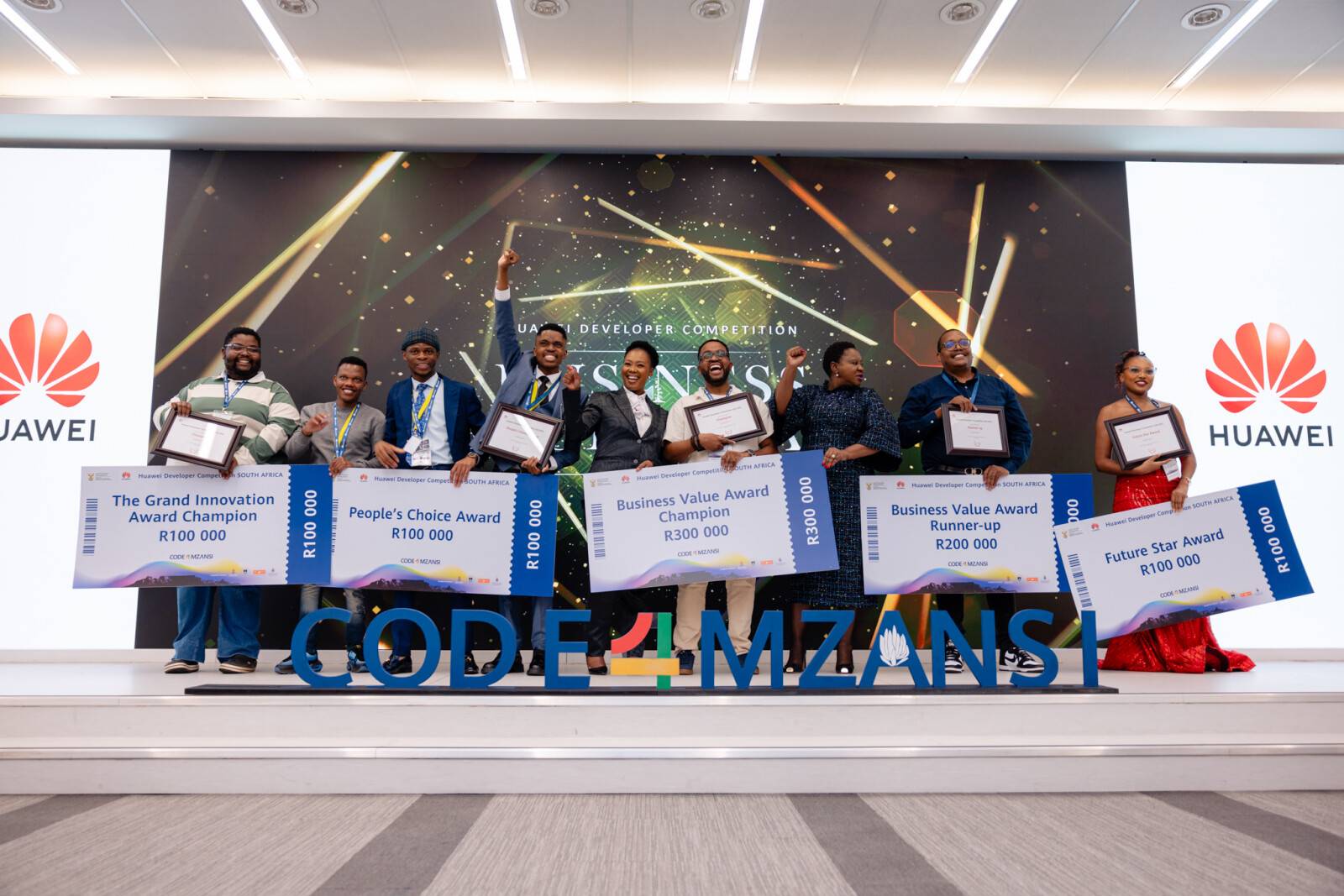 The winners at the Huawei Developer Competition, Code4Mzansi
 The competition was held in partnership with the Department of Small Business Development. "The Code4Mzansi competition is not just a celebration of achievement, it is a launchpad for the future," said Minister Stella Ndabeni, whose department co-hosted the event and delivered the closing address.
The finals revealed a clear shift from building abstract digital products to practical tools that help small businesses trade better, communities access services more easily, and local industries solve problems faster.
Four finalist teams focused directly on the township economy, with solutions covering food safety verification for spaza shops, offline point-of-sale systems built for load-shedding, WhatsApp-native marketplaces for informal retailers, and community credit systems for SASSA grant recipients.
Others addressed AI-driven healthcare access, electricity theft detection, smart agriculture, financial infrastructure for the creator economy, and AI-generated African music.
Held at Huawei Office Park in Woodmead, the finals brought together more than 100 attendees, including government representatives, academic partners, industry leaders and media.
"The quality of the finalist solutions demonstrated the potential of local innovation to respond to real market needs," said Steven Chen, Cloud CEO of Huawei Technologies South Africa.
Academic partners included the University of Pretoria, the University of Johannesburg, the University of the Witwatersrand and the University of Cape Town.
"Small businesses are the backbone of our economy, and technology is their greatest accelerator. The participants here today are future entrepreneurs who will drive South Africa's digital economy forward," said Professor Thokozani Shongwe, Vice Dean of Postgraduate Studies, Research and Internationalisation at the University of Johannesburg's Faculty of Engineering and the Built Environment.
Industry partner rain also attended. Leon Nortje, Principal and Senior Architect at rain, said the competition offered a strong view of the country’s emerging technology pipeline.
"It is always good to see new projects and new teams working on solutions that are valuable and industry-related. We will be looking out for potential new employees," said Nortje.
The winners
The finalists competed for a prize pool of R800,000. MAAT by SIMVAK was named the overall grand winner and received the Business Value Award, taking home R300,000. The platform addresses food safety and regulatory compliance in South Africa’s informal retail sector through AI agents, real-time product recall alerts, and counterfeit detection for the spaza shop ecosystem.
"The spaza network is the supply chain for most South African households," said SIMVAK founder Shingirayi Mandebvu.
HealthHive by FTCK received second prize in the Business Value Award category, taking home R200,000, for its AI telemedicine platform that matches patients with the right medical practitioners based on their symptoms.
Auraa received the Grand Innovation Award for its AI music engine built to generate authentic African sound. The platform has been associated with an album that has crossed one million streams.
The Future Star Award went to e-Khadi, a community credit and stokvel platform giving SASSA grant recipients access to essentials at their local spaza shops, supported by AI-assisted credit scoring and fraud detection.
The People’s Choice Award, voted by the public on Huawei’s social media channels, went to DevRift, a semi-finalist in the competition, who took home R100,000.
Minister Ndabeni delivered the closing address, positioning Code4Mzansi within the government’s agenda for youth entrepreneurship, small business development and digital inclusion.
"Our task is to ensure that innovation does not remain a moment of applause, but becomes a pathway to enterprise creation, digital inclusion, and sustainable growth," she said.
"Thank you to Huawei for being a perfect partner on the journey that we are travelling, and of course, those that matter most, the developers who dared to compete," she said.
Code4Mzansi forms part of the global Huawei Cloud Developer Competition. In its inaugural edition, South Africa attracted more participants than any other country: 1,041 across 353 teams, including 176 enterprise teams, resulting in the highest enterprise participation rate among all competing markets. Twenty semi-finalists were selected before the top nine advanced to the final.
For the finalists, the work is just beginning. As Minister Ndabeni said, "Go home today proud. But tomorrow, wake up, build again."
Hashtag: #Huawei #Code4Mzansi #SouthAfrica
https://www.huawei.com/za/
https://www.linkedin.com/company/Huawei
https://twitter.com/HuaweiSAR
https://www.facebook.com/HuaweiSAR
http://www.google.com/+Huawei
http://www.youtube.com/Huawei
The issuer is solely responsible for the content of this announcement.
About Huawei
Founded in 1987, Huawei is a leading global provider of information and communications technology (ICT) infrastructure and smart devices. With 213,000 employees operating in over 170 countries, we serve more than three billion people worldwide.
Huawei is committed to bringing digital to every person, home, and organisation for a fully connected, intelligent world. In 2025, Huawei generated CNY880.9 billion in revenue, reinvesting 21.8% (CNY192.3 billion) into R&D, with about 53.7% of its employees working in R&D. As a private company fully owned by its employees, Huawei focuses on customer-centric innovation and open collaboration to create lasting value and drive technological breakthroughs globally.
For more information, please visit Huawei online at www.huawei.com or follow us on:
http://www.huawei.com/za/
https://twitter.com/HuaweiSAR
https://www.facebook.com/HuaweiSAR
http://www.linkedin.com/company/Huawei
http://www.google.com/+Huawei
http://www.youtube.com/Huawei
JOHANNESBURG, SOUTH AFRICA - Media OutReach Newswire - 26 May 2026 - South Africa’s emerging developers are building close to the ground, with many of the strongest solutions at the inaugural Huawei Code4Mzansi finals focused on systems people use every day: township retail, healthcare, energy, agriculture, payments and the creative economy.
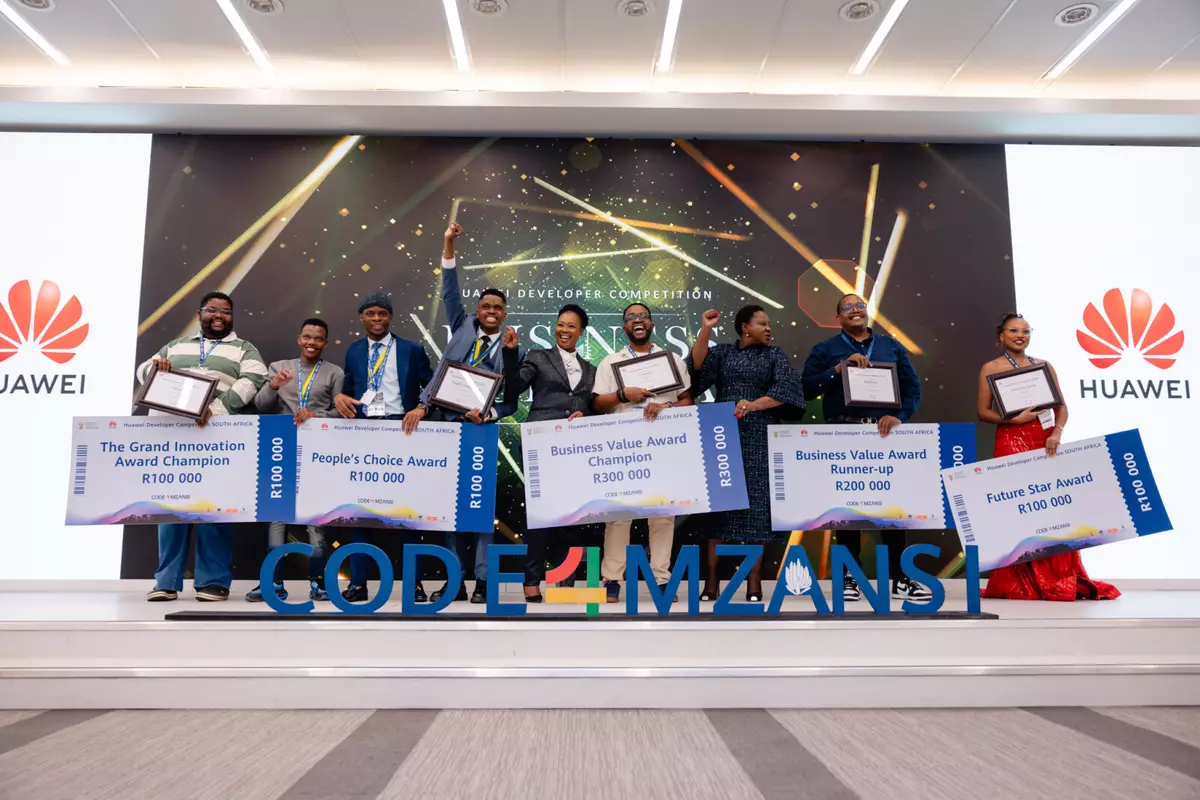
The winners at the Huawei Developer Competition, Code4Mzansi
The competition was held in partnership with the Department of Small Business Development. "The Code4Mzansi competition is not just a celebration of achievement, it is a launchpad for the future," said Minister Stella Ndabeni, whose department co-hosted the event and delivered the closing address.
The finals revealed a clear shift from building abstract digital products to practical tools that help small businesses trade better, communities access services more easily, and local industries solve problems faster.
Four finalist teams focused directly on the township economy, with solutions covering food safety verification for spaza shops, offline point-of-sale systems built for load-shedding, WhatsApp-native marketplaces for informal retailers, and community credit systems for SASSA grant recipients.
Others addressed AI-driven healthcare access, electricity theft detection, smart agriculture, financial infrastructure for the creator economy, and AI-generated African music.
Held at Huawei Office Park in Woodmead, the finals brought together more than 100 attendees, including government representatives, academic partners, industry leaders and media.
"The quality of the finalist solutions demonstrated the potential of local innovation to respond to real market needs," said Steven Chen, Cloud CEO of Huawei Technologies South Africa.
Academic partners included the University of Pretoria, the University of Johannesburg, the University of the Witwatersrand and the University of Cape Town.
"Small businesses are the backbone of our economy, and technology is their greatest accelerator. The participants here today are future entrepreneurs who will drive South Africa's digital economy forward," said Professor Thokozani Shongwe, Vice Dean of Postgraduate Studies, Research and Internationalisation at the University of Johannesburg's Faculty of Engineering and the Built Environment.
Industry partner rain also attended. Leon Nortje, Principal and Senior Architect at rain, said the competition offered a strong view of the country’s emerging technology pipeline.
"It is always good to see new projects and new teams working on solutions that are valuable and industry-related. We will be looking out for potential new employees," said Nortje.
The winners
The finalists competed for a prize pool of R800,000. MAAT by SIMVAK was named the overall grand winner and received the Business Value Award, taking home R300,000. The platform addresses food safety and regulatory compliance in South Africa’s informal retail sector through AI agents, real-time product recall alerts, and counterfeit detection for the spaza shop ecosystem.
"The spaza network is the supply chain for most South African households," said SIMVAK founder Shingirayi Mandebvu.
HealthHive by FTCK received second prize in the Business Value Award category, taking home R200,000, for its AI telemedicine platform that matches patients with the right medical practitioners based on their symptoms.
Auraa received the Grand Innovation Award for its AI music engine built to generate authentic African sound. The platform has been associated with an album that has crossed one million streams.
The Future Star Award went to e-Khadi, a community credit and stokvel platform giving SASSA grant recipients access to essentials at their local spaza shops, supported by AI-assisted credit scoring and fraud detection.
The People’s Choice Award, voted by the public on Huawei’s social media channels, went to DevRift, a semi-finalist in the competition, who took home R100,000.
Minister Ndabeni delivered the closing address, positioning Code4Mzansi within the government’s agenda for youth entrepreneurship, small business development and digital inclusion.
"Our task is to ensure that innovation does not remain a moment of applause, but becomes a pathway to enterprise creation, digital inclusion, and sustainable growth," she said.
"Thank you to Huawei for being a perfect partner on the journey that we are travelling, and of course, those that matter most, the developers who dared to compete," she said.
Code4Mzansi forms part of the global Huawei Cloud Developer Competition. In its inaugural edition, South Africa attracted more participants than any other country: 1,041 across 353 teams, including 176 enterprise teams, resulting in the highest enterprise participation rate among all competing markets. Twenty semi-finalists were selected before the top nine advanced to the final.
For the finalists, the work is just beginning. As Minister Ndabeni said, "Go home today proud. But tomorrow, wake up, build again."
Hashtag: #Huawei #Code4Mzansi #SouthAfrica
https://www.huawei.com/za/
https://www.linkedin.com/company/Huawei
https://twitter.com/HuaweiSAR
https://www.facebook.com/HuaweiSAR
http://www.google.com/+Huawei
http://www.youtube.com/Huawei
The issuer is solely responsible for the content of this announcement.
About Huawei
Founded in 1987, Huawei is a leading global provider of information and communications technology (ICT) infrastructure and smart devices. With 213,000 employees operating in over 170 countries, we serve more than three billion people worldwide.
Huawei is committed to bringing digital to every person, home, and organisation for a fully connected, intelligent world. In 2025, Huawei generated CNY880.9 billion in revenue, reinvesting 21.8% (CNY192.3 billion) into R&D, with about 53.7% of its employees working in R&D. As a private company fully owned by its employees, Huawei focuses on customer-centric innovation and open collaboration to create lasting value and drive technological breakthroughs globally.
For more information, please visit Huawei online at www.huawei.com or follow us on:
http://www.huawei.com/za/
https://twitter.com/HuaweiSAR
https://www.facebook.com/HuaweiSAR
http://www.linkedin.com/company/Huawei
http://www.google.com/+Huawei
http://www.youtube.com/Huawei
** This press release is distributed by Media OutReach Newswire through automated distribution system, for which the client assumes full responsibility. **