LAGOS, Nigeria (AP) — U.S. Sen. Ted Cruz has been trying to rally fellow evangelical Christians and urge Congress to designate Nigeria as a violator of religious freedom with unfounded claims of “Christian mass murder,” which the government of the West African nation has vehemently rejected as false.
Cruz, a Republican member of the Senate Foreign Relations Committee, wants Nigeria to be designated a country of particular concern as one with “severe violations” of religious freedom. Designated countries include Pakistan, Afghanistan and China. A designation could result in U.S. sanctions. The bill he introduced last month is awaiting action by the Senate and there is no certainty of it being approved.
Cruz' claims have been amplified by some celebrities and commentators in the U.S., without evidence, with some going as far as alleging a “Christian genocide." Cruz' office did not respond to questions, including about his motivation for the allegations.
Here's what to know.
Nigeria’s 220-million-strong population is split almost equally between Christians and Muslims. The country has long faced insecurity from various fronts including the Boko Haram extremist group, which seeks to establish its radical interpretation of Islamic law and has also targeted Muslims it deems not Muslim enough.
Attacks in Nigeria have varying motives. There are religiously motivated ones targeting both Christians and Muslims, clashes between farmers and herders over dwindling resources, communal rivalries, secessionist groups and ethnic clashes.
While Christians are among those targeted, analysts say the majority of victims of armed groups are Muslims in Nigeria's Muslim-majority north, where most attacks occur.
Both Muslim and Christian communities, and groups, have at various times alleged “genocide” during religiously motivated attacks against both sides. Such attacks are often in the north-central and northwestern regions struggling, among other forms of violence, with farmer-herder conflict that is between farming communities — predominantly Christians — and Fulani herders who are mainly Muslims.
Joseph Hayab, a former chairman of the Christian Association of Nigeria in Kaduna state, among the worst hit by the insecurity, disputed claims of “Christian genocide.”
While thousands of Christians have been killed over the years, “things have been better than what they were before," Hayab said, warning, however, that every single death is condemnable.
Nigeria's government rejected Cruz' claims, which have been discussed among Nigerians. “There is no systematic, intentional attempt either by the Nigerian government or by any serious group to target a particular religion," Information Minister Idris Muhammed told The Associated Press.
Nigeria was placed on the country of particular concern list by the U.S. for the first time in 2020 in what the State Department called “systematic violations of religious freedom.” The designation did not single out attacks on Christians. The designation was lifted in 2023 in what observers saw as a way to improve ties between the countries ahead of then-Secretary of State Antony Blinken's visit.
Responding to the latest claims from U.S. commentators, the Christian Association of Nigeria said it has worked to draw attention over the years to “the persecution of Christians in Nigeria.”
In its 2024 report, the U.S. Commission on International Religious Freedom highlighted attacks targeting both Christians and Muslims in what it called systematic religious freedom violations in Nigeria. "Violence affects large numbers of Christians and Muslims in several states across Nigeria,” the commission added.
Data collected by the U.S.-based Armed Conflict Location and Event Data program shows 20,409 deaths from 11,862 attacks against civilians in Nigeria between January 2020 and this September.
Of those, 385 attacks were “targeted events against Christians … where Christian identity of the victim was a reported factor,” resulting in 317 deaths, ACLED says.
In the same period, there were 417 deaths recorded among Muslims in 196 attacks.
While religion has been a factor in Nigeria's security crisis, its "large population and vast geographic differences make it impossible to speak of religious violence as motivating all (the) violence,” said Ladd Serwat, senior Africa analyst at ACLED.
Analysts say Nigeria’s complex security dynamics do not meet the legal definition of a genocide. The U.N. convention on preventing genocide calls it acts “committed with intent to destroy, in whole or in part, a national, ethnical, racial or religious group."
“If anything, what we are witnessing is mass killings, which are not targeted against a specific group," said Olajumoke Ayandele, an assistant professor at New York University’s Center for Global Affairs who specializes in conflict studies. “The drumming-up of genocide might worsen the situation because everyone is going to be on alert.”
Chidi Odinkalu, a professor at Tufts University’s Fletcher School of Law and Diplomacy and a former chairman of Nigeria’s National Human Rights Commission, said Nigerian authorities, however, need to address the rampant violence.
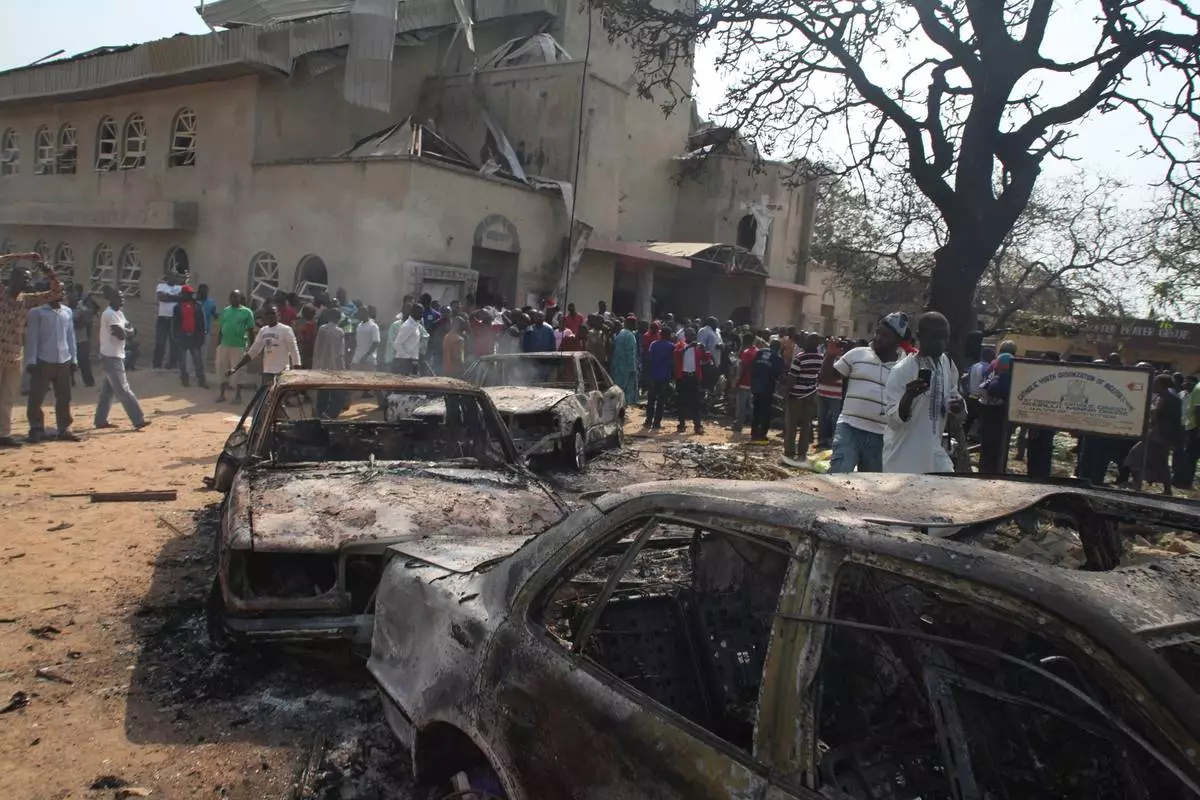
FILE- Onlookers gather around burnt out cars at the site of a bomb blast at St. Theresa Catholic Church in Madalla, Nigeria, Sunday, Dec. 25, 2011. (AP Photo/Sunday Aghaeze, File)
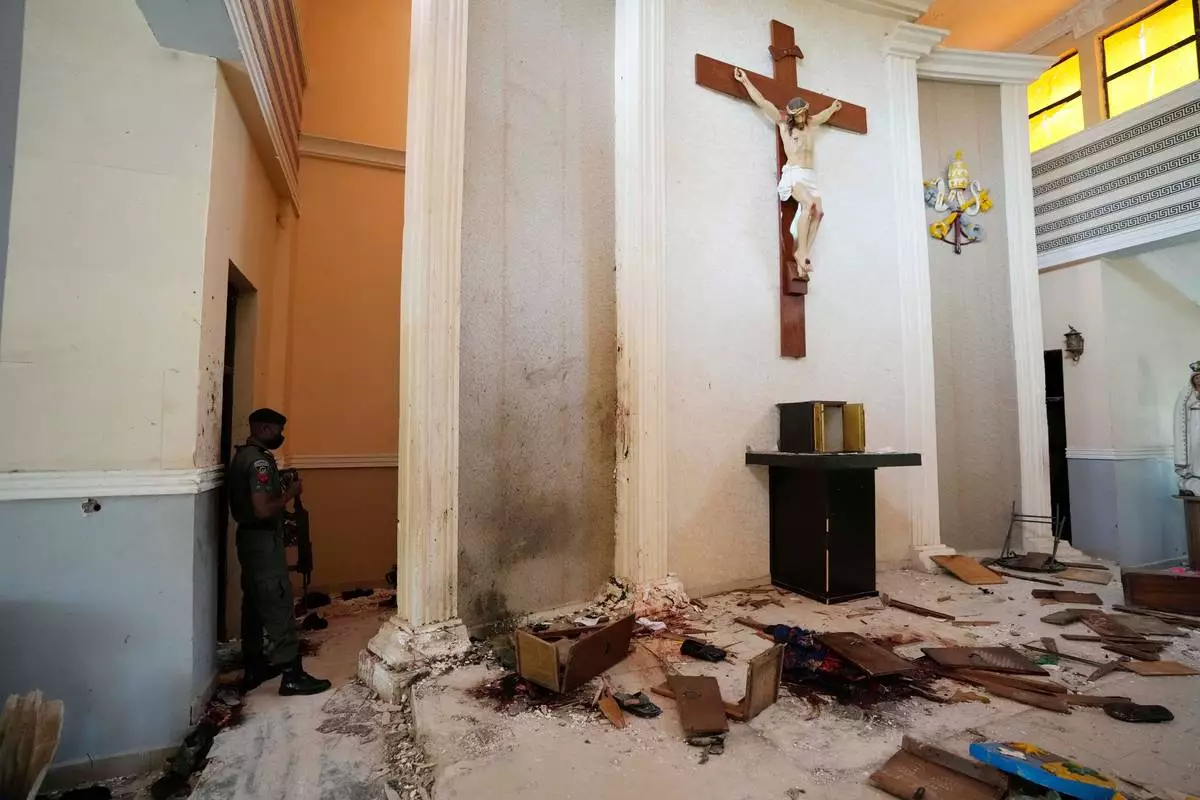
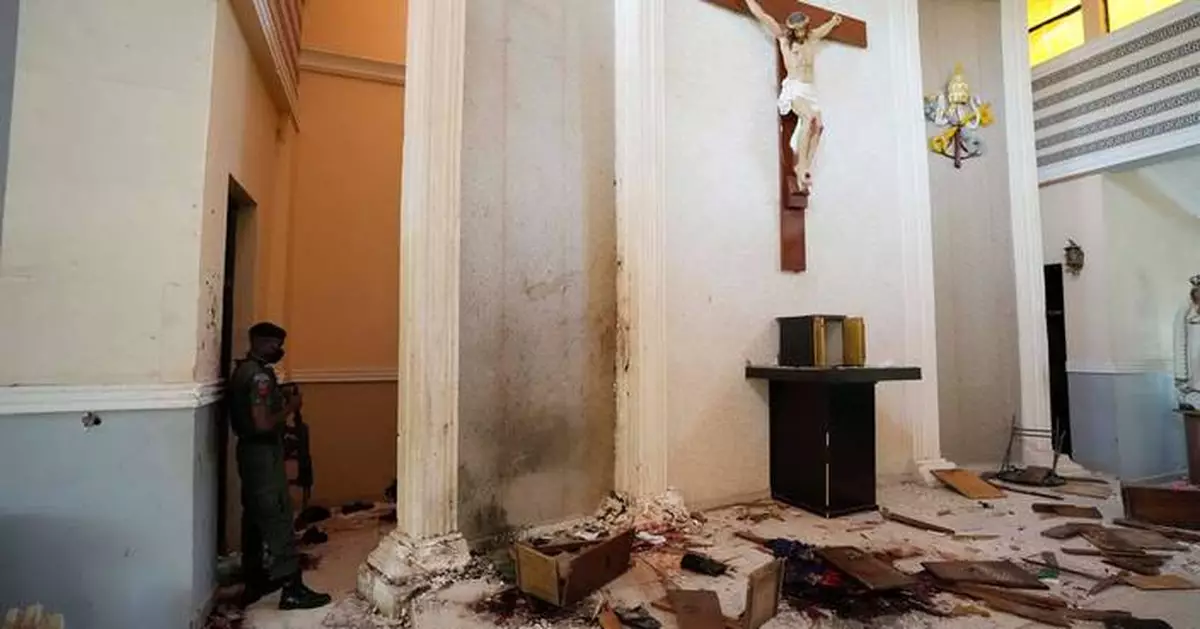
FILE - A police officer stands guard inside the St. Francis Catholic Church, a day after an attacked that targeted worshipers in Owo, Nigeria, June. 6, 2022. (AP Photo/Sunday Alamba, File)
CRANS-MONTANA, Switzerland (AP) — Dozens of people are presumed dead and about 100 injured, most of them seriously, following a fire at a Swiss Alps bar during a New Year’s celebration, police said Thursday.
“Several tens of people” were killed at the bar, Le Constellation, Valais Canton police commander Frédéric Gisler said.
Work is underway to identify the victims and inform their families but “that will take time and for the time being it is premature to give you a more precise figure," Gisler said.
Beatrice Pilloud, attorney general of the Valais Canton, said it was too early to determine the cause of the fire. Experts have not yet been able to go inside the wreckage.
“At no moment is there a question of any kind of attack,” Pilloud said.
Officials called the blaze an “embrasement généralisé,” a firefighting term describing how a blaze can trigger the release of combustible gases that can then ignite violently and cause what English-speaking firefighters would call a flashover or a backdraft.
“This evening should have been a moment of celebration and coming together, but it turned into a nightmare,” said Mathias Rénard, head of the regional government.
The injured were so numerous that the intensive care unit and operating theater at the regional hospital quickly hit full capacity, Rénard said.
Helicopters and ambulances rushed to the scene to assist victims, including some from different countries, officials said.
“We are devastated,” Frédéric Gisler, commander of the Valais Cantonal police, said during a news conference.
The injured were so numerous that the intensive care unit and operating theater at the regional hospital quickly hit full capacity, according to regional councilor Mathias Rénard.
The municipality had banned New Year’s Eve fireworks due to lack of rainfall in the past month, according to its website.
In a region busy with tourists skiing on the slopes, the authorities have called on the local population to show caution in the coming days to avoid any accidents that could require medical resources that are already overwhelmed.
The community is in the heart of the Swiss Alps, just 40 kilometers (25 miles) north of the Matterhorn, one of the most famous Alpine peaks, and 130 kilometers (81 miles) south of Zurich.
The highest point of Crans-Montana, with a population of 10,000 residents, sits at an elevation of nearly 3,000 meters (1.86 miles), according to the municipality’s website, which says officials are seeking to move away from a tourist culture and attract high-tech research and development.
The municipality was formed only nine years ago, on Jan. 1, 2017, when multiple towns merged. It extends over 590 hectares (2.3 square miles) from the Rhône Valley to the Plaine Morte glacier.
Crans-Montana is one of the top race venues on the World Cup circuit in Alpine skiing and will host the next world championships over two weeks in February 2027.
In four weeks’ time, the resort will host the best men’s and women’s downhill racers for their last events before going to the Milan Cortina Olympics, which open Feb. 6.
Crans-Montana also is a premium venue in international golf. The Crans-sur-Sierre club stages the European Masters each August on a picturesque course with stunning mountains views.

From left, Mathias Reynard, State Councillor and president of the Council of State of the Canton of Valais, Stephane Ganzer, State Councillor and head of the Department of Security, Institutions and Sport of the Canton of Valais, Frederic Gisler, Commander of the Valais Cantonal Police, Beatrice Pilloud, Attorney General of the Canton of Valais and Nicole Bonvin-Clivaz, Vice-President of the Municipal Council of Crans-Montana during a press conference in Lens, following a fire that broke out at the Le Constellation bar and lounge leaving people dead and injured, during New Year’s celebration, in Crans-Montana, Swiss Alps, Switzerland, Thursday, Jan. 1, 2026. (Alessandro della Valle/Keystone via AP)
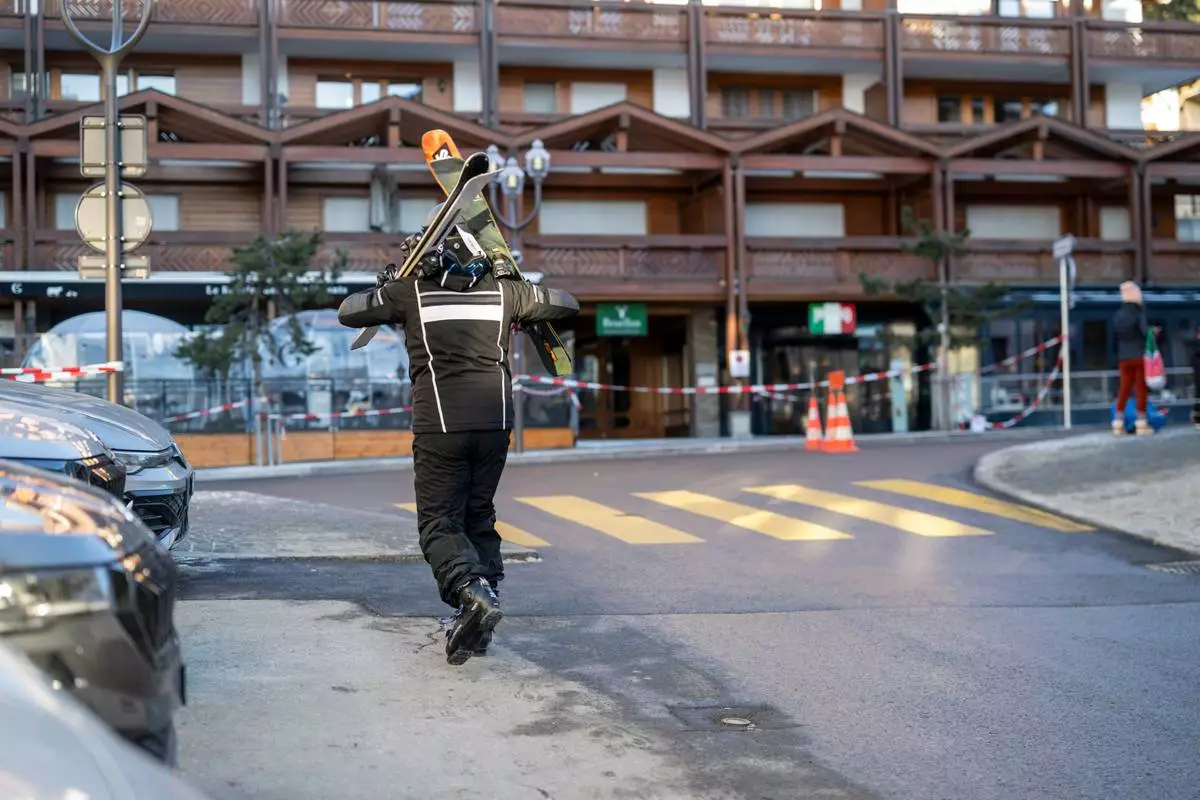
A skier walks in the area where a fire broke out at the Le Constellation bar and lounge leaving people dead and injured, during New Year’s celebration, in Crans-Montana, Swiss Alps, Switzerland, Thursday, Jan. 1, 2026. (Alessandro della Valle/Keystone via AP)
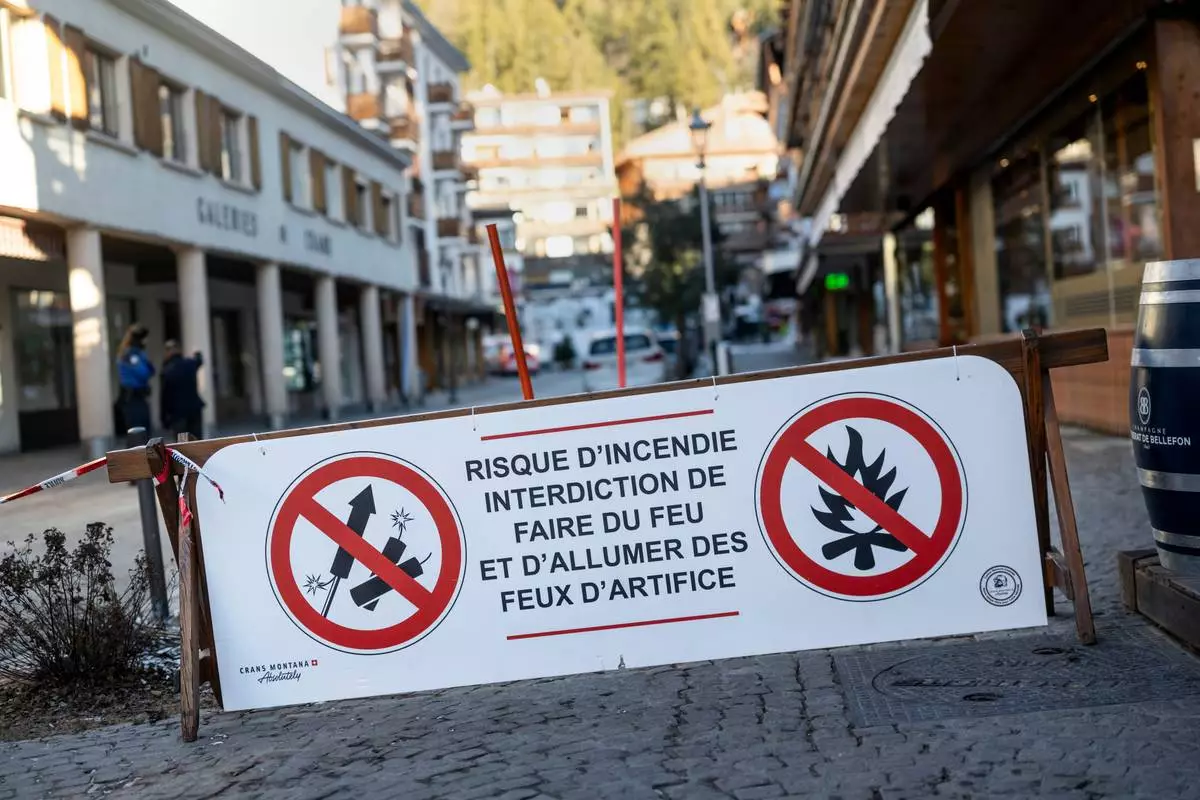
A banner stating that fireworks are prohibited due to the risk of fire is pictured near the area where a fire broke out at the Le Constellation bar and lounge leaving people dead and injured, during New Year’s celebration, in Crans-Montana, Swiss Alps, Switzerland, Thursday, Jan. 1, 2026. (Alessandro della Valle/Keystone via AP)
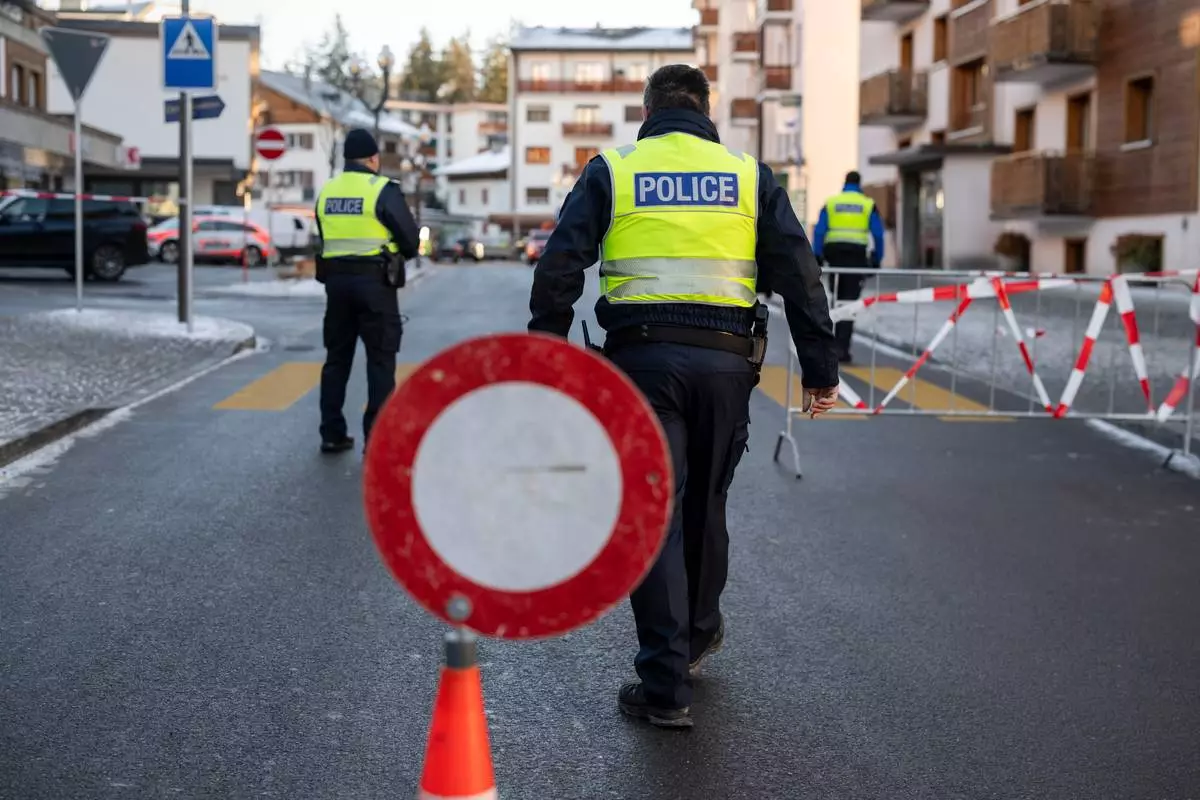
Police officers inspect the area where a fire broke out at the Le Constellation bar and lounge leaving people dead and injured, during New Year’s celebration, in Crans-Montana, Swiss Alps, Switzerland, Thursday, Jan. 1, 2026. (Alessandro della Valle/Keystone via AP)
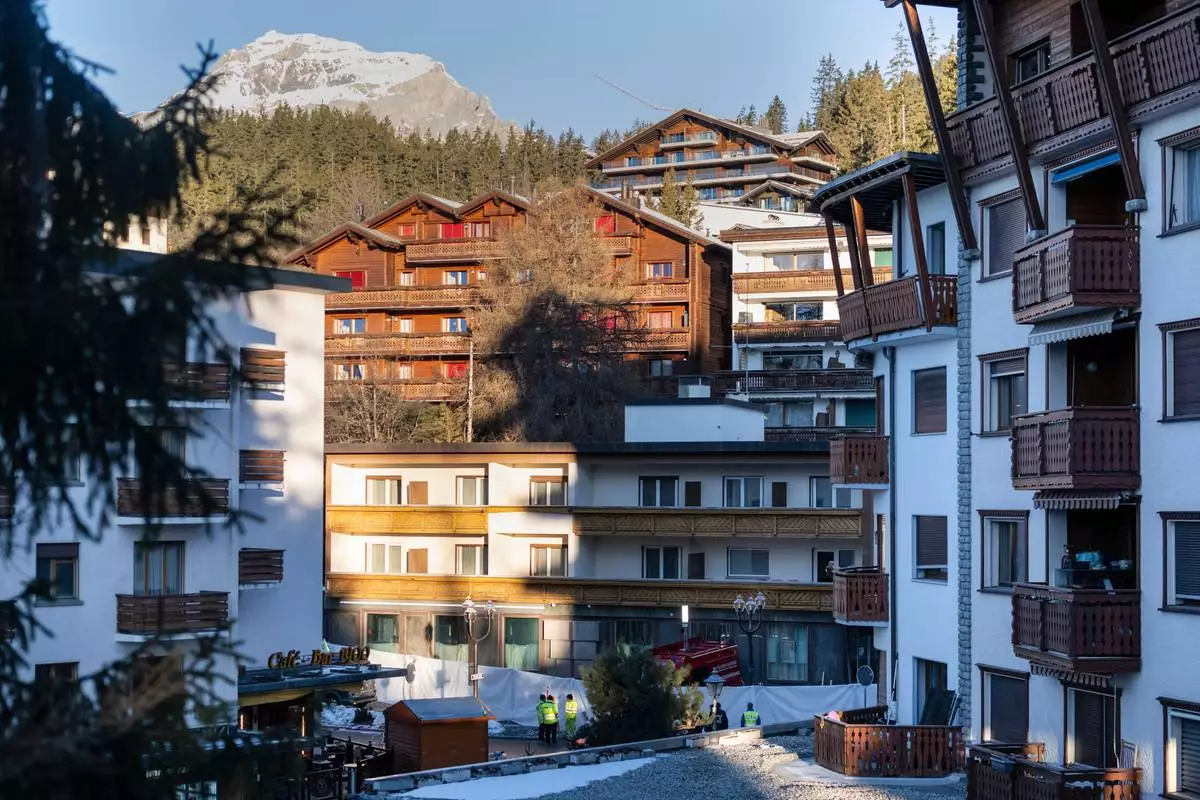
Police officers inspect the area where a fire broke out at the Le Constellation bar and lounge leaving people dead and injured, during New Year’s celebration, in Crans-Montana, Swiss Alps, Switzerland, Thursday, Jan. 1, 2026. (Alessandro della Valle/Keystone via AP)
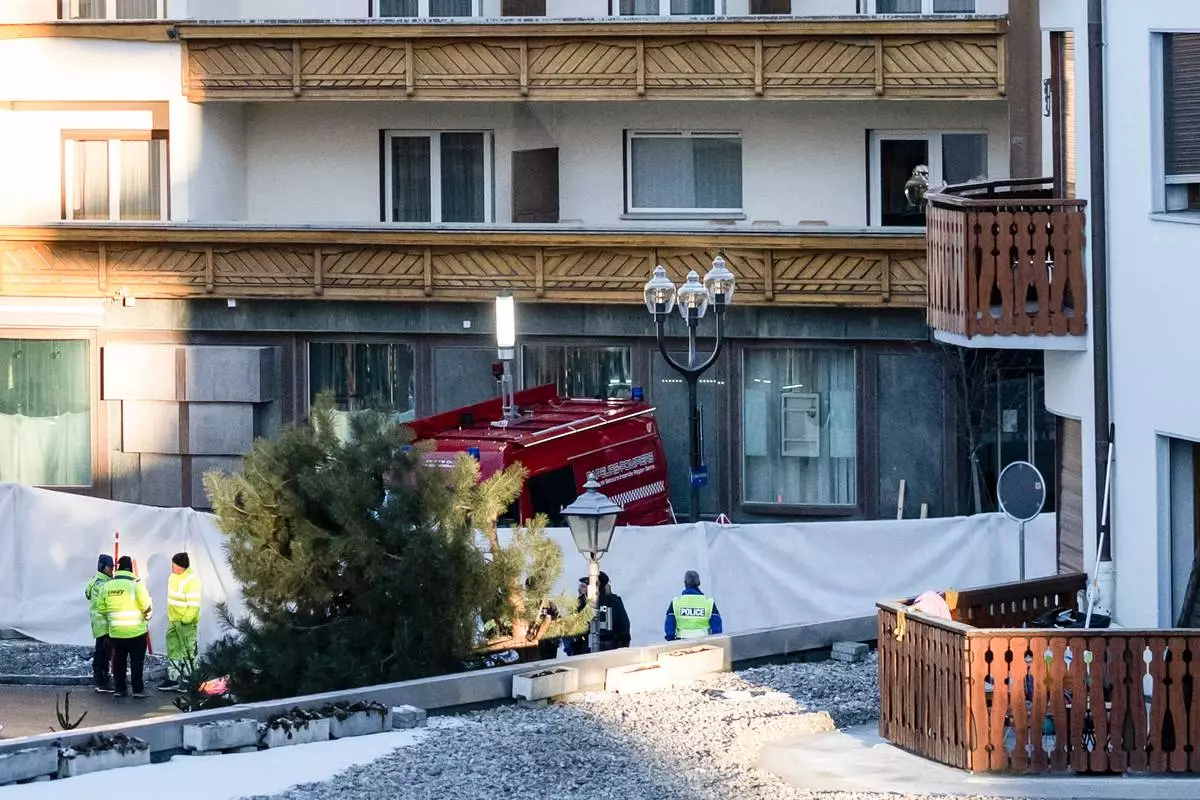
Police officers inspect the area where a fire broke out at the Le Constellation bar and lounge leaving people dead and injured, during New Year’s celebration, in Crans-Montana, Swiss Alps, Switzerland, Thursday, Jan. 1, 2026. (Alessandro della Valle/Keystone via AP)
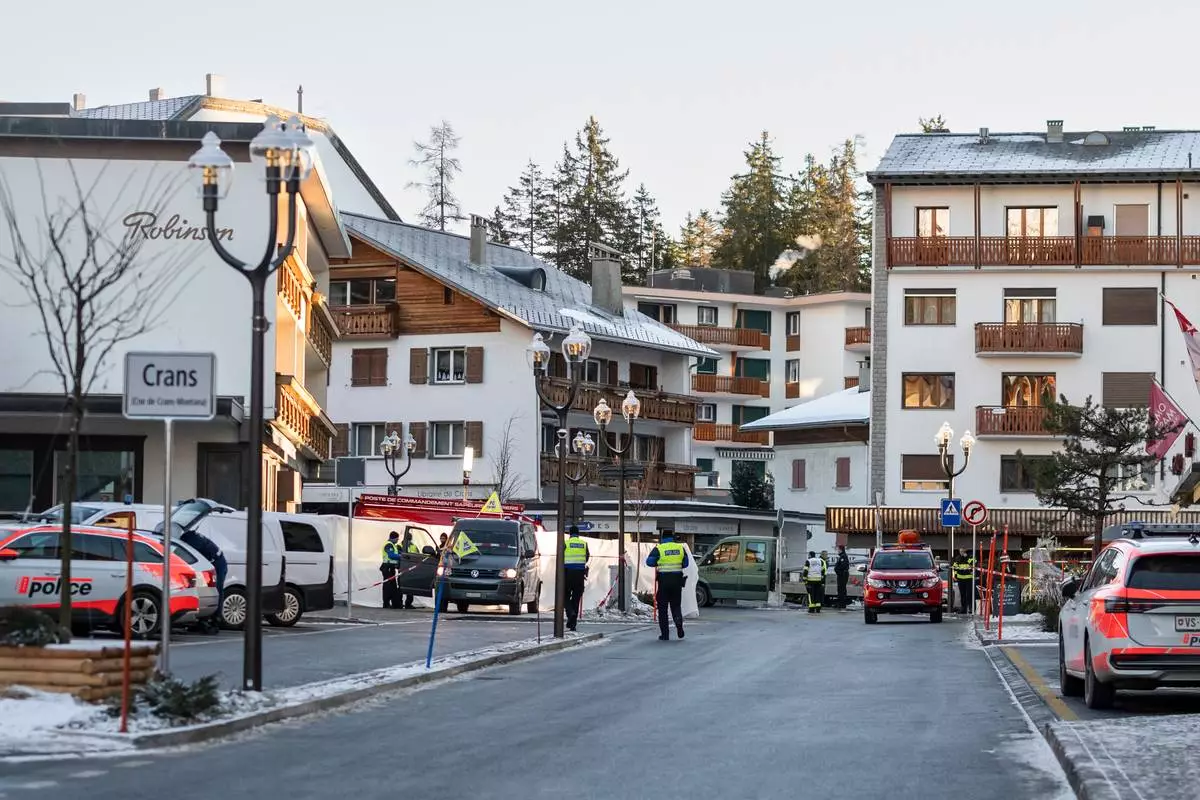
Police officers inspect the area where a fire broke out at the Le Constellation bar and lounge leaving people dead and injured, during New Year’s celebration, in Crans-Montana, Swiss Alps, Switzerland, Thursday, Jan. 1, 2026. (Alessandro della Valle/Keystone via AP)