MANCHESTER, England (AP) — Manchester City midfielder Rodri is expected to miss Saturday's Premier League match against Everton because of a hamstring injury.
The Spain international limped out of City's 1-0 win against Brentford at the start of the month and had to pull out of his country's World Cup qualifiers against Georgia and Bulgaria.
City manager Pep Guardiola said Rodri was “not ready” to return to action.
Rodri, who won the Ballon d'Or last year, missed the majority of last season with ACL damage. He has made nine appearances for club and country this season, but only lasted 22 minutes before having to be substituted against Brentford.
He looked forlorn as he walked off the field.
He had already missed the start of this season after picking up another injury, reportedly to his groin, at the Club World Cup and has complained of knee pain in recent weeks.
AP soccer: https://apnews.com/hub/soccer

Manchester City's Rodri on the floor, before being taken off as injured, during the English Premier League soccer match between Brentford and Manchester City at the Gtech Community Stadium, Brentford, England, Sunday Oct. 5, 2025. (Steven Paston/PA via AP)
LONDON (AP) — Large parts of western Europe were baking Wednesday as a “heat dome” brought extreme conditions that many forecasters warned could present a risk to life.
A day after France recorded its hottest-ever day, the U.K. was set to see its highest ever June temperature, prompting the national weather forecaster to issue a "red heat health” alert for much of central and southern England, as well as Wales.
This is only the second such warning ever issued by U.K. authorities following July 2022, when temperatures exceeded 40 degrees C (104 F) for the first time ever. The temperature is set to fall short of 40 degrees C on Wednesday but could breach that level — not long ago considered as unimaginable — on Thursday.
“Red warnings are reserved for the most severe events and we’re expecting severe and significant impacts from this heat wave, with health impacts likely for many, even beyond those who are normally more vulnerable to the heat,” said Mark Sidaway, deputy chief forecaster for the U.K. Met Office.
Authorities in France, Italy and Spain have also issued warnings about the risks of extreme heat for tens of millions of people.
Records are being broken across Europe, seemingly every year, and authorities are struggling to adapt their societies to the realities of the new heat environment. Many of the buildings, work places and transport networks just aren’t fit for purpose as human-caused climate change leads to increasingly extreme weather. U.N. climate agency projections say the next five years are likely to shatter more heat records.
“Heatwaves are becoming more frequent, longer and hotter with climate change, as a direct result of the fossil fuels we are releasing as a society,” said Hayley Fowler, a professor at the Centre for Climate and Environmental Resilience at Newcastle University in the northeast of England. “We can expect to have to cope with more and more of these types of events in the years to come.”
France has borne much of the brunt of the current heatwave. On Tuesday, the average of temperatures measured at 30 weather stations was 29.8 C (85.6 F), the latest in a series of never-before-registered highs heaped on Europe’s largest country.
Unsurprisingly, many of the country's major attractions, including the Eiffel Tower and the Louvre museum in Paris have restricted visiting hours while schools and transportation schedules were upended.
Some schools in England have also closed due to the heat and many train services have been canceled, with passengers urged to avoid nonessential travel in areas covered by the red warning.
Network Rail, which operates Britain’s railroad network, warned of “significant disruption” across England and Wales as it imposes speed restrictions to minimize the risk from heat-related issues such as buckled tracks and sagging overhead electric wires.
Eurostar, which connects the U.K. to continental Europe under the English Channel, said it canceled four trains planned between London and Paris on Wednesday and Thursday “due to expected adverse weather."
Italy’s Health Ministry issued “red alerts” for 16 cities on Wednesday with major cities such as Rome, Milan, Florence and Turin affected. The “bollino rosso” red alert signals emergency conditions that can affect not only vulnerable people but also healthy adults.
Temperatures could reach highs of 41 C (105 F) in Florence and 38 C (104 F) in Milan, while Rome and Naples are forecast to remain below 36 C (96.8 F).
Italy has been roasting in high temperatures for days. Fashion journalists sweated through runway shows in Milan’s fashion capital earlier this week. Many fashionistas who were on hand to see the menswear offerings for Spring-Summer 2027 snapped up battery operated fans with misters in subway kiosks.
One designer, Philipp Plein, had to change his venue just four hours before the show due to an air conditioning malfunction, while others provided hand-held fans, misters and even big umbrellas as protection against the sun and heat for outdoor shows.
Designers broadly agreed that a well-dressed man still wears a suit. The challenge was how to survive the heat. The response was ventilation, with dress shirts left unbuttoned or, in some cases, simply done away with.
Even the British decided it was too hot for unneeded layers of clothing. Male journalists covering the U.K.'s tradition-bound Parliament will be allowed to remove their jackets in the press gallery of the House of Commons on Wednesday.
Britain’s heat advisory remains in effect through Thursday, with overnight temperatures remaining well above average.
“If you think it’s hot already, well, we ain’t seen nothing yet,” Met Office meteorologist Alex Burkill said on Wednesday morning.
One remedy being touted comes via soccer's World Cup, which is currently taking place in the U.S., Canada and Mexico. The European Trade Union Confederation said employers should take inspiration from the cooling breaks used at the World Cup to grant all workers paid breaks and help keep them safe during heat waves.
“Builders, fruit pickers, or bus drivers need much longer than three minutes to recover, but it is a good example of how work can be adapted to a changing climate," said ETUC General Secretary Esther Lynch.
“Taking a break in high temperatures is a common-sense precaution, but too many employers are refusing to put these and other necessary measures in place or even discuss them with trade unions, leading to a rising number of avoidable deaths in European workplaces,” she added.
Jill Lawless in London, Colleen Barry in Milan, Samuel Petrequin in Paris and Giada Zampano in Rome contributed.
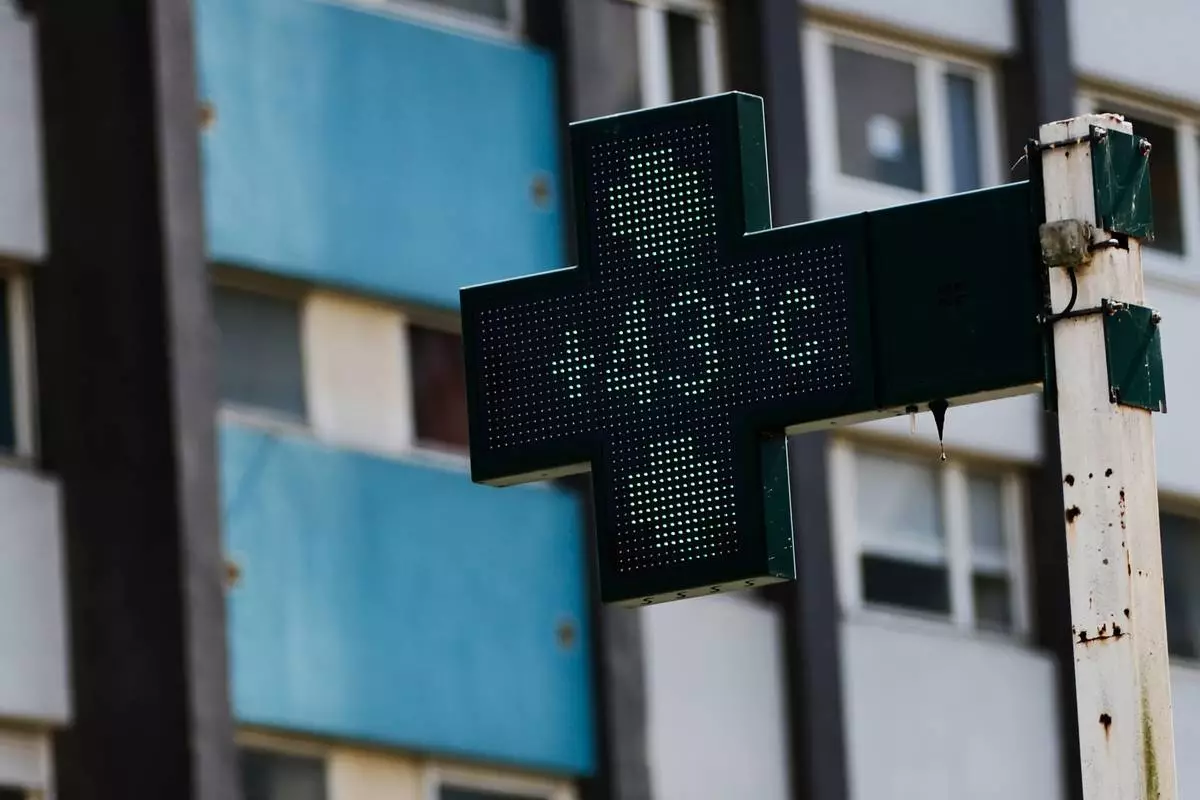
A drugstore sign shows the temperature 43 degrees Celsius (109,4 degrees Fahrenheit) in Rennes, western France, Monday, June 22, 2026. (AP Photo/Jeremias Gonzalez)
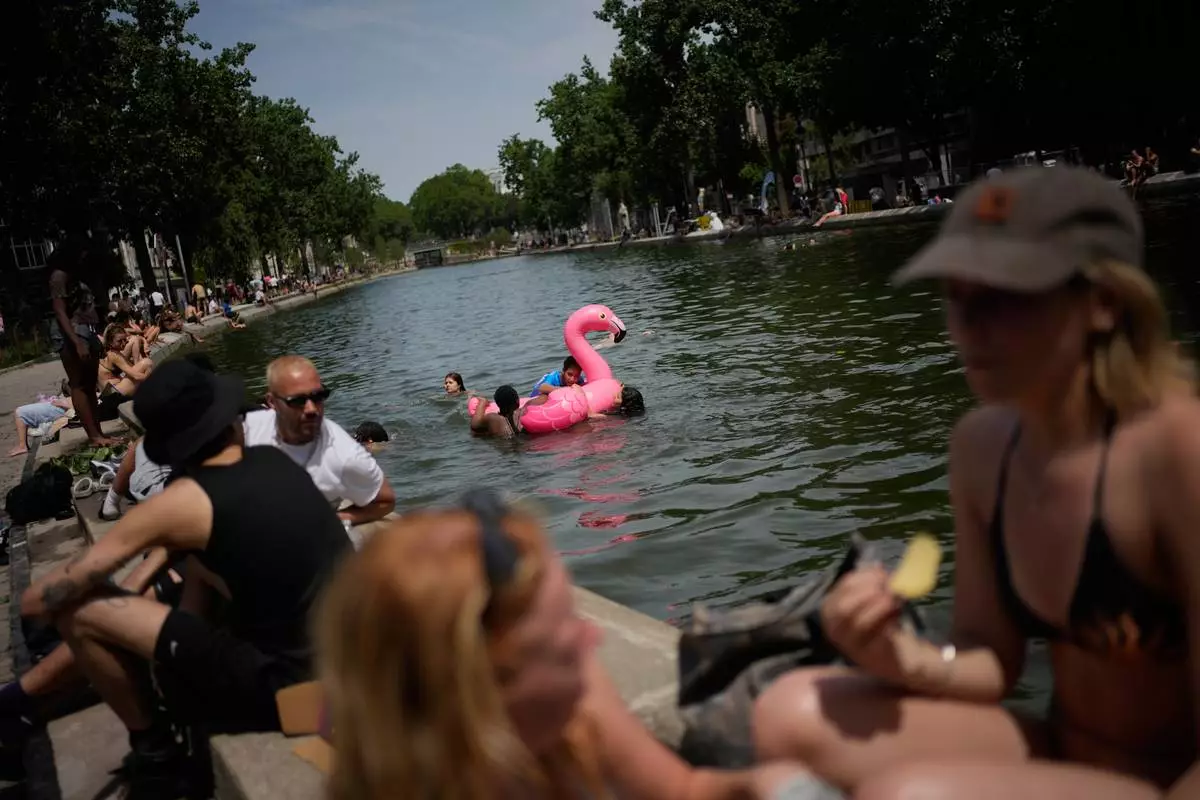
Parisians bath in the Canal Saint-Martin in Paris, as the national weather service, Meteo France, placed 54 departments, about half the country, under a red heat wave alert, Tuesday, June 23, 2026. (AP Photo/Christophe Ena )
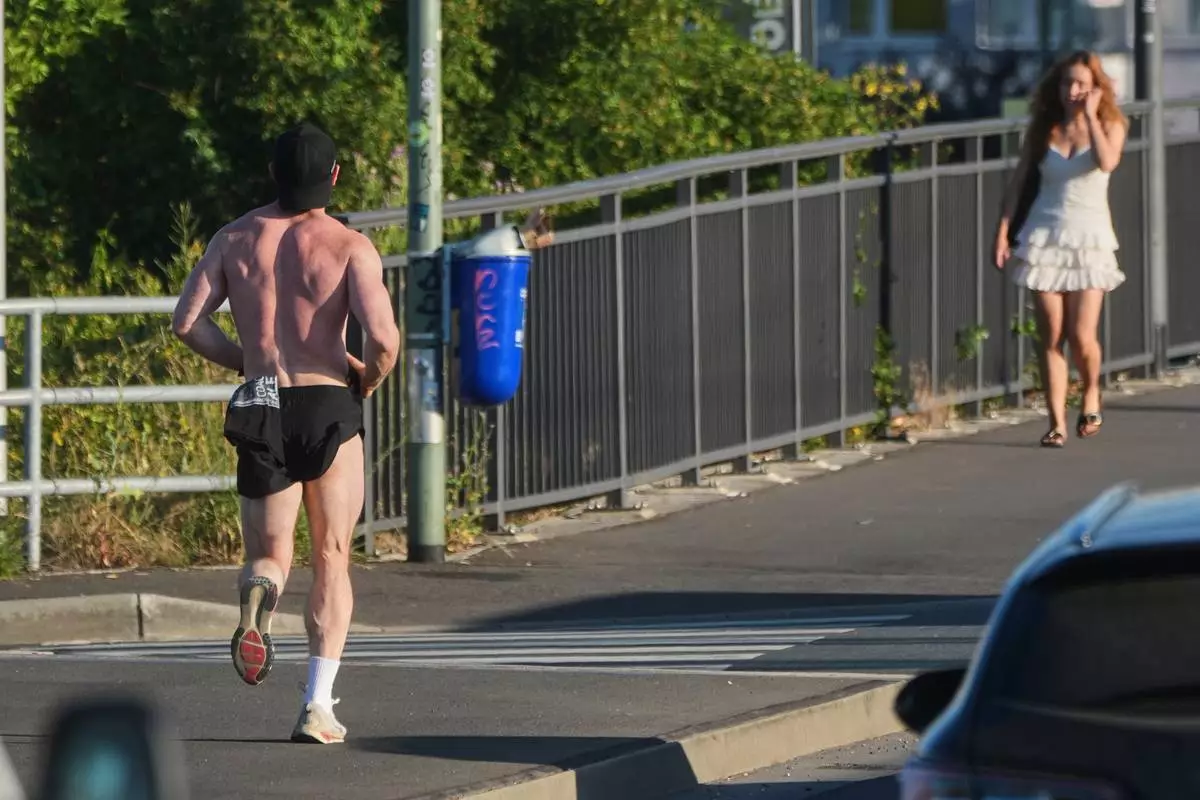
A man runs over a bridge in Frankfurt, Germany, Wednesday, June 24, 2026. (AP Photo/Michael Probst)

Faithful shelter for the hot sun as they wait for Pope Leo's XIV weekly general audience in St. Peter's Square at The Vatican, Wednesday, June 24, 2026. (AP Photo/Alessandra Tarantino)
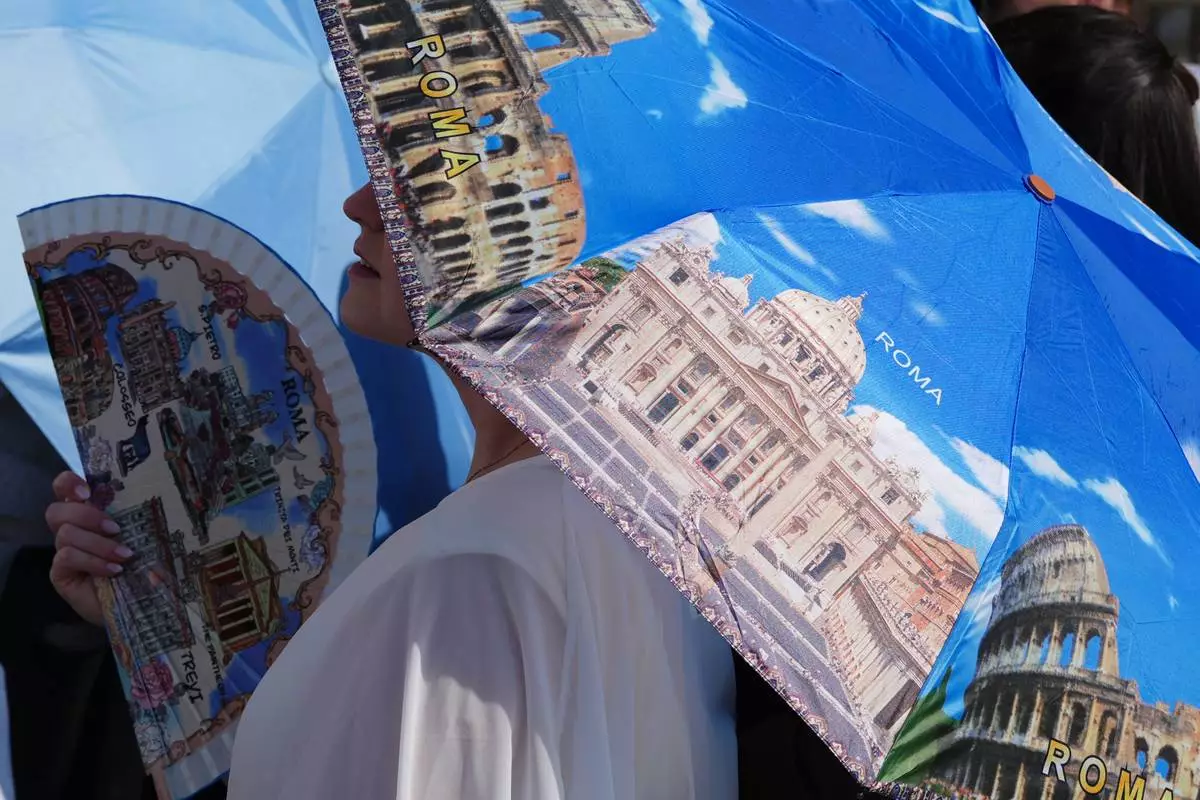
A faithful cools off as they wait for Pope Leo's XIV weekly general audience in St. Peter's Square at The Vatican, Wednesday, June 24, 2026. (AP Photo/Alessandra Tarantino)