The Federal Aviation Administration said Friday it will allow Boeing to produce more 737 Max airplanes by increasing the monthly limit that it imposed after a door plug blew off an Alaska Airlines jet that the company built.
Boeing can now produce 42 Max jets per month, up from 38, after safety inspectors conducted extensive reviews of the aerospace company's manufacturing lines to ensure an increase in production can be done safely, the FAA said.
The agency had set a cap on production shortly after the terrifying January 2024 incident involving the Alaska Airlines 737 Max jet. In practice, though, the production rate fell well below the ceiling last year as the company contended with investigations and a machinists’ strike that idled factories for almost eight weeks. But Boeing said over the summer that it had reached the monthly cap in the second quarter and would eventually seek the FAA's permission to start producing more of the planes.
A spokesperson for Boeing said Friday that the company followed a “disciplined process” to make sure it was ready to safely increase production, using safety guidelines and performance goals that it set with the FAA.
“We appreciate the work by our team, our suppliers and the FAA to ensure we are prepared to increase production with safety and quality at the forefront,” Boeing said in a statement.
The FAA also said Friday this won’t change the way it oversees Boeing production processes and its efforts to strengthen the company’s safety culture, adding that FAA inspectors at Boeing plants have continued to work through the federal government shutdown that began Oct. 1.
Just last month, the FAA also restored Boeing's ability to perform final safety inspections on 737 Max jetliners and certify them for flight. Boeing hadn't been allowed to do that for more than six years, after two crashes of the then-new model killed 346 people. The FAA took full control over 737 Max approvals in 2019, after the second of the two crashes that were later blamed on a new software system Boeing developed for the aircraft.
Earlier this year, Boeing CEO Kelly Ortberg faced questions from a Senate committee about the production rate of the 737 Max, with lawmakers seeking reassurance from Ortberg that the company was prioritizing quality and safety over meeting production targets for profit.
"Just to be very clear, we won’t ramp up production if the performance isn’t indicating a stable production system," Ortberg said at the April hearing. “We will continue to work on getting to a stable system.”
The incident involving the Alaska Airlines flight that prompted the production cap on Max jets was among a series of alleged safety violations by Boeing between September 2023 and February 2024 that led to the FAA seeking $3.1 million in fines from the company.
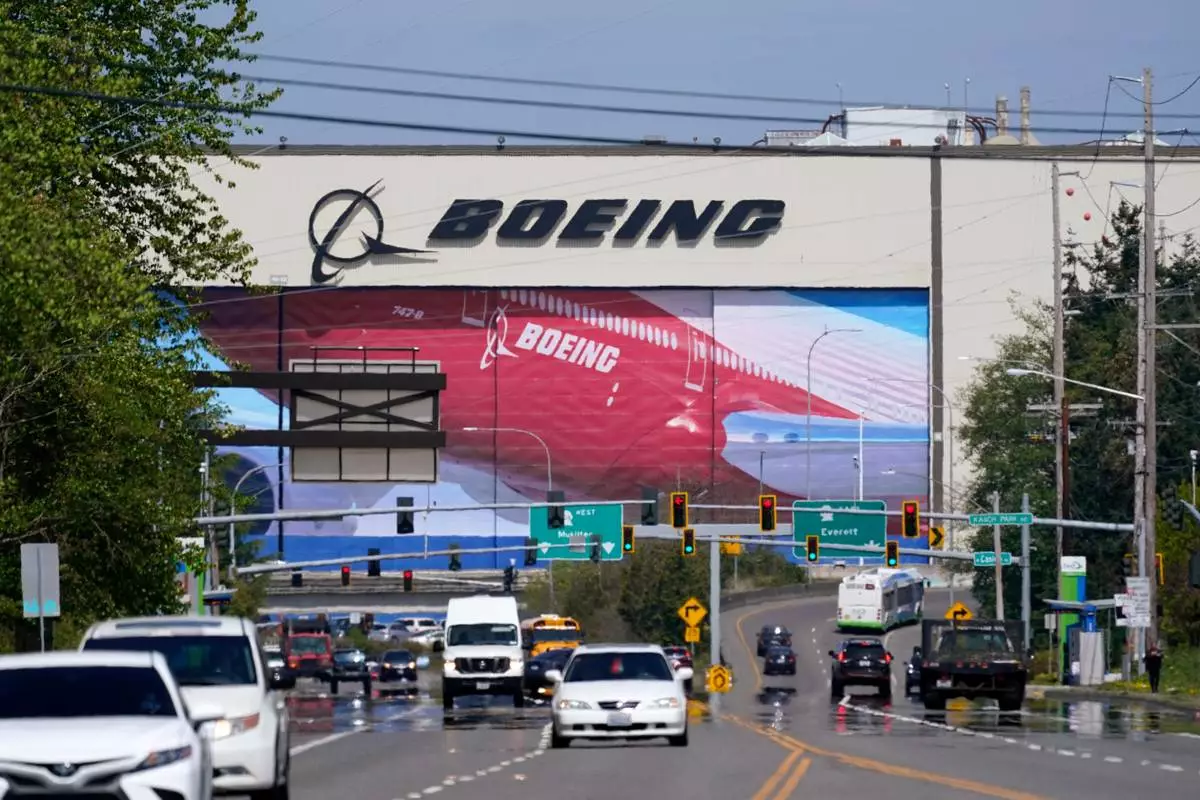
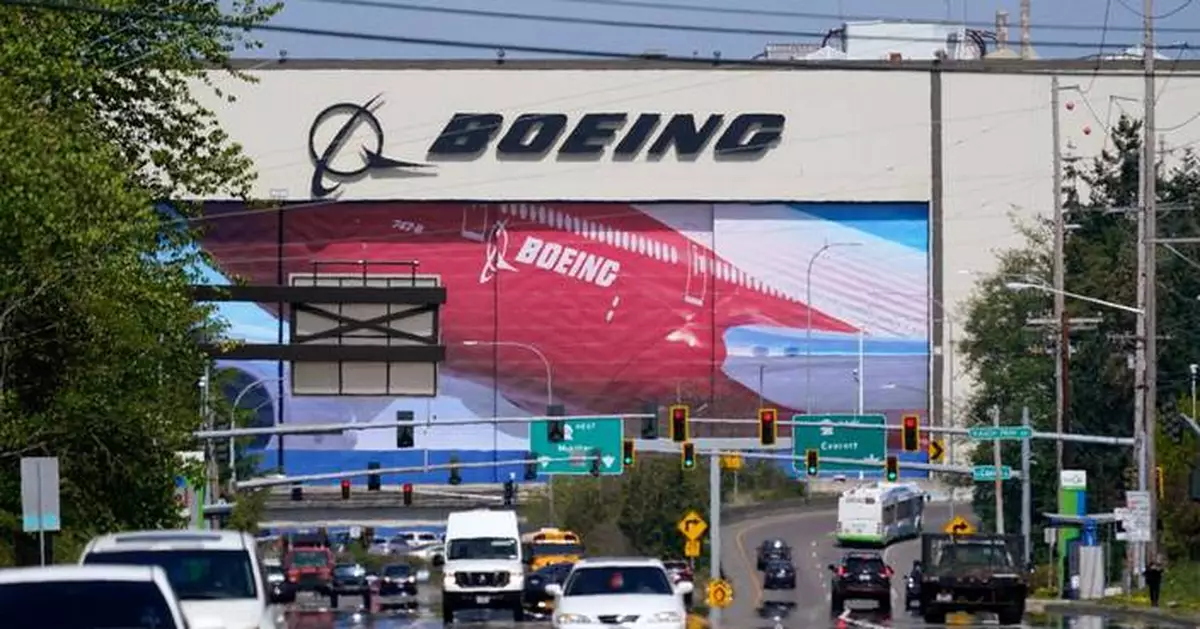
FILE - Traffic drives in view of a Boeing Co. production plant, where images of jets decorate the hangar doors on April 23, 2021, in Everett, Wash. (AP Photo/Elaine Thompson, File)
ANAHEIM, Calif. (AP) — Travis d'Arnaud hit a three-run homer, Walbert Ureña threw six innings of two-hit ball, and the Los Angeles Angels defeated the Chicago White Sox 8-2 on Wednesday.
Los Angeles won a series for the first time since April 10-12 at Cincinnati. The Angels are 2-7-2 in series this season.
D'Arnaud's 396-foot shot off Noah Schultz (2-2), the backup catcher's first homer of the season, kicked off a five-run second inning for the Halos. After Bryce Teodosio doubled on a ball that got past right fielder Jarred Kelenic, Zach Neto hit a stand-up RBI triple.
Mike Trout brought one more across with an infield popup that second baseman Chase Meidroth lost in the afternoon sun for a single.
Jorge Soler and Jo Adell were hit by back-to-back pitches from reliever Osvaldo Bido with the bases loaded to bring in two runs in the fourth.
In the seventh, Angels reliever Drew Pomeranz hit Sam Antonacci with a pitch with the bases loaded to force in the second White Sox run. It was the first game in at least the last 70 seasons in which three batters were hit by pitches with the bases full, according to the Elias Sports Bureau.
Ureña (1-3) allowed one run, struck out five and walked three in his second quality start of the season. Brent Suter, Pomeranz and Chase Silseth completed a four-hitter.
Meidroth had two hits for Chicago. Standout rookie Munetaka Murakami, who is tied for the major league lead with 14 home runs, struck out four times for the second time this season.
Schultz allowed seven hits and seven runs in 3 2/3 innings. He had allowed a total of six earned runs in four previous starts this year.
Chicago returns home to face Seattle starting Friday, when RHP Sean Burke (2-2, 2.72) is scheduled to start opposite Mariners RHP Emerson Hancock (2-1, 2.59).
Los Angeles begins a series at Toronto on Friday with LHP Reid Detmers (1-2, 4.28) facing Blue Jays RHP Dylan Cease (2-1, 3.05).
AP MLB: https://apnews.com/hub/mlb
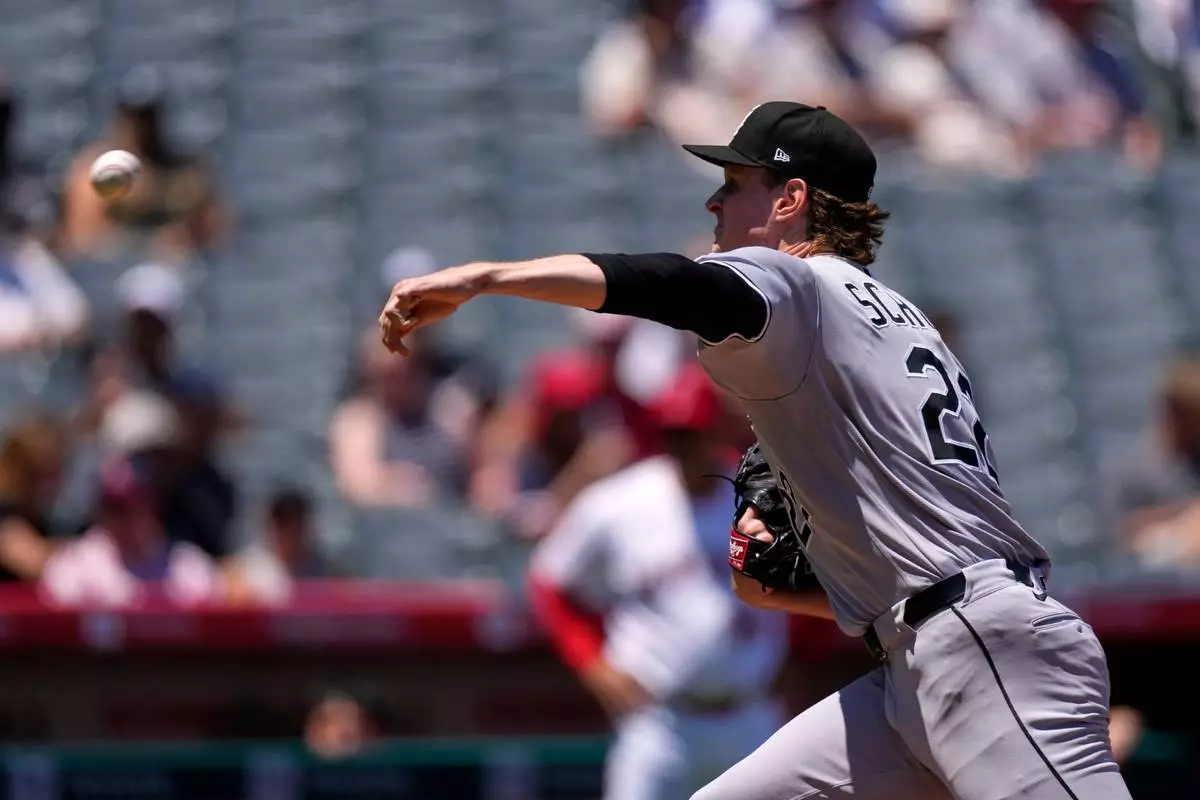
Chicago White Sox pitcher Noah Schultz throws to the plate during the first inning of a baseball game against the Los Angeles Angels, Wednesday, May 6, 2026, in Anaheim, Calif. (AP Photo/Mark J. Terrill)

Los Angeles Angels pitcher Walbert Ureña throws to the plate during the first inning of a baseball game against the Chicago White Sox, Wednesday, May 6, 2026, in Anaheim, Calif. (AP Photo/Mark J. Terrill)

Los Angeles Angels' Zach Neto, right, tries to steal second as Chicago White Sox second baseman Chase Meidroth waits for the ball before tagging him out during the first inning of a baseball game Wednesday, May 6, 2026, in Anaheim, Calif. (AP Photo/Mark J. Terrill)
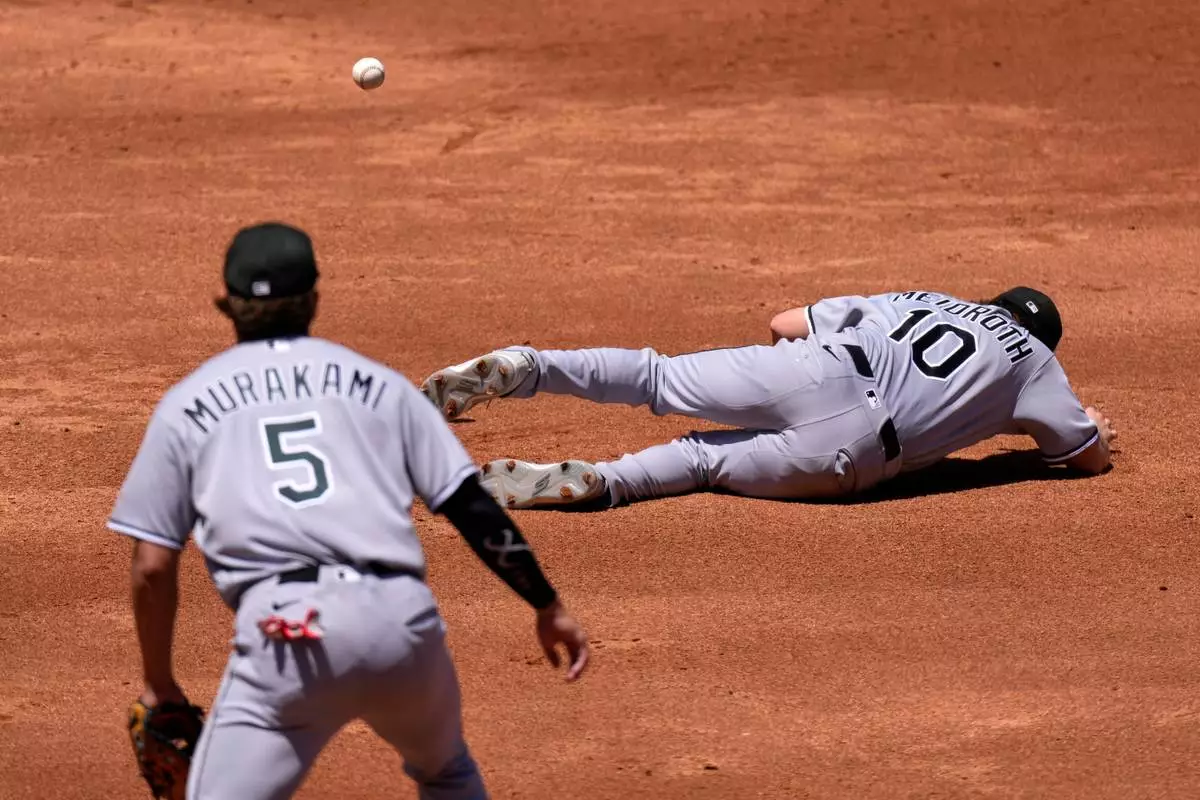
Chicago White Sox second baseman Chase Meidroth, right, falls while trying to catch a pop fly hit by Los Angeles Angels' Mike Trout as second baseman Vaughn Grissom watches during the second inning of a baseball game Wednesday, May 6, 2026, in Anaheim, Calif. (AP Photo/Mark J. Terrill)

Los Angeles Angels' Travis D'Arnaud, center, hits a three-run home run as Chicago White Sox catcher Drew Romo, right, and home plate umpire Andy Fletcher watch during the second inning of a baseball game Wednesday, May 6, 2026, in Anaheim, Calif. (AP Photo/Mark J. Terrill)