San Francisco (AP) — A Northern California aquarium has raised more than $2 million for sea otter conservation in just two days. All it took was Taylor Swift wearing a vintage T-shirt.
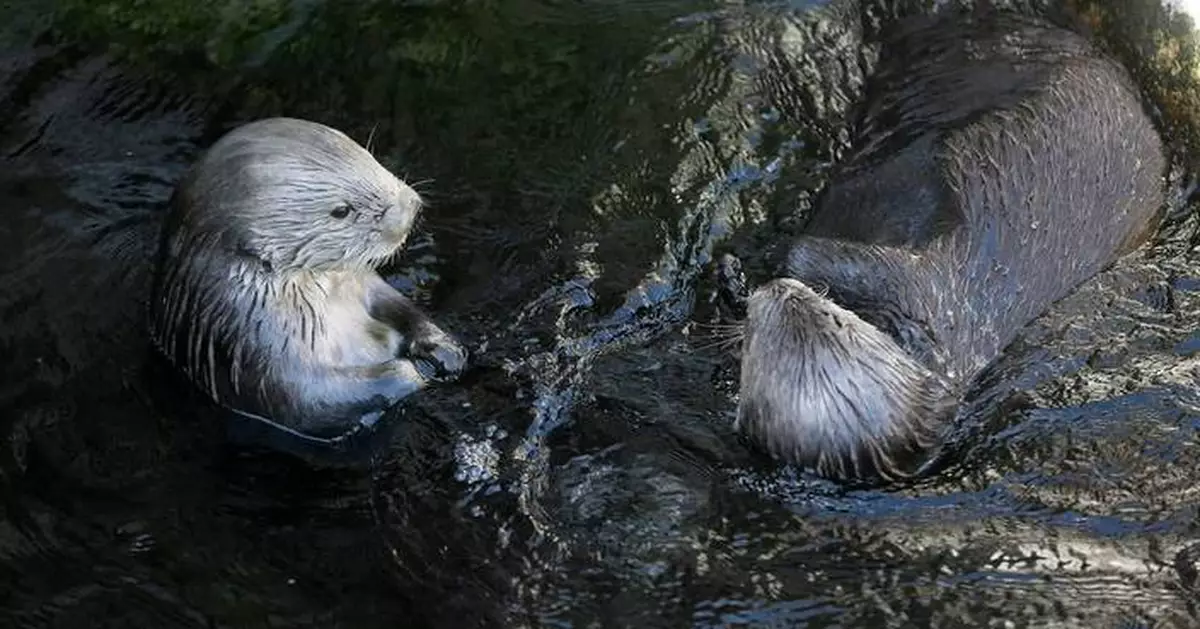
Swift wore a vintage Monterey Bay Aquarium otter conservation T-shirt in a release party movie for her new “The Life of a Showgirl” album, sending her ardent fans on a quest to buy the shirt last produced in the 1990s. After the aquarium was flooded with calls about buying the T-shirt showing two otters floating on their back, it decided to re-release the garment Thursday as part of a special campaign to raise $1.3 million, a nod to Swift’s favorite number, said Liz MacDonald, the aquarium’s director of content strategy.
The aquarium met and surpassed its goal to raise the funds for its sea otter conservation program in less than eight hours, averaging about $100,000 in sales every 15 minutes, MacDonald said. Donors who give at least $65.13 to its newest fundraising campaign to help injured and orphan otters will be mailed a T-shirt, MacDonald said.
“We definitely had a little Taylor Swift dance party in the office yesterday afternoon when we hit the goal,” she said.
The aquarium began accepting back-orders and by Friday afternoon it had raised more than $2 million, according to its website.
How Swift acquired the T-Shirt that was last produced more than 32 years ago — when she was just 3 years old — remains a mystery.
She and fiancé Travis Kelce have been documented visiting nearby Carmel, but MacDonald said the aquarium is not aware of the couple having been in their shop.
MacDonald said the staff has had fun speculating about Swift's interest in the T-shirt.
When Taylor announced the release of her new album on Kelce’s podcast "New Heights" a couple of weeks ago, the couple had a little banter about how he loves otters and loves sending her videos of the furry sea creatures.
“One of my favorite theories is that we have a sea otter on our exhibit whose name is Opal and she was named by the fans through an online poll, and I wonder if Taylor Swift may have been one of the people that voted for the name Opal,” MacDonald said, adding that opal is Kelce’s birthstone and that Opalite is the name of one of Swift’s songs.
Whatever the reason, the aquarium and Liberty Graphics, an employee-owned company printing the T-shirts, are reveling in the moment.
“They’re a company based in Maine who were as taken by surprise as us, but who are also as delighted to have this opportunity to be part of this amazing moment that does so much for sea otters and for ocean conservation,” MacDonald said.
Liberty Graphics will use 100% cotton in the T-shirts and water-based ink, which is more ocean-friendly and sustainable, she said.
“We’re also working to make sure that the packaging doesn’t use plastic," she added.
The company of 50 employees normally produces 1,500 shirts a day, said Matt Enos, a company manager.
Enos said that beginning Monday the company will probably have to focus most of its resources on fulfilling T-shirt orders from Swifties.
“We definitely didn’t envision something this big but it’s a pretty good problem to have,” he said.
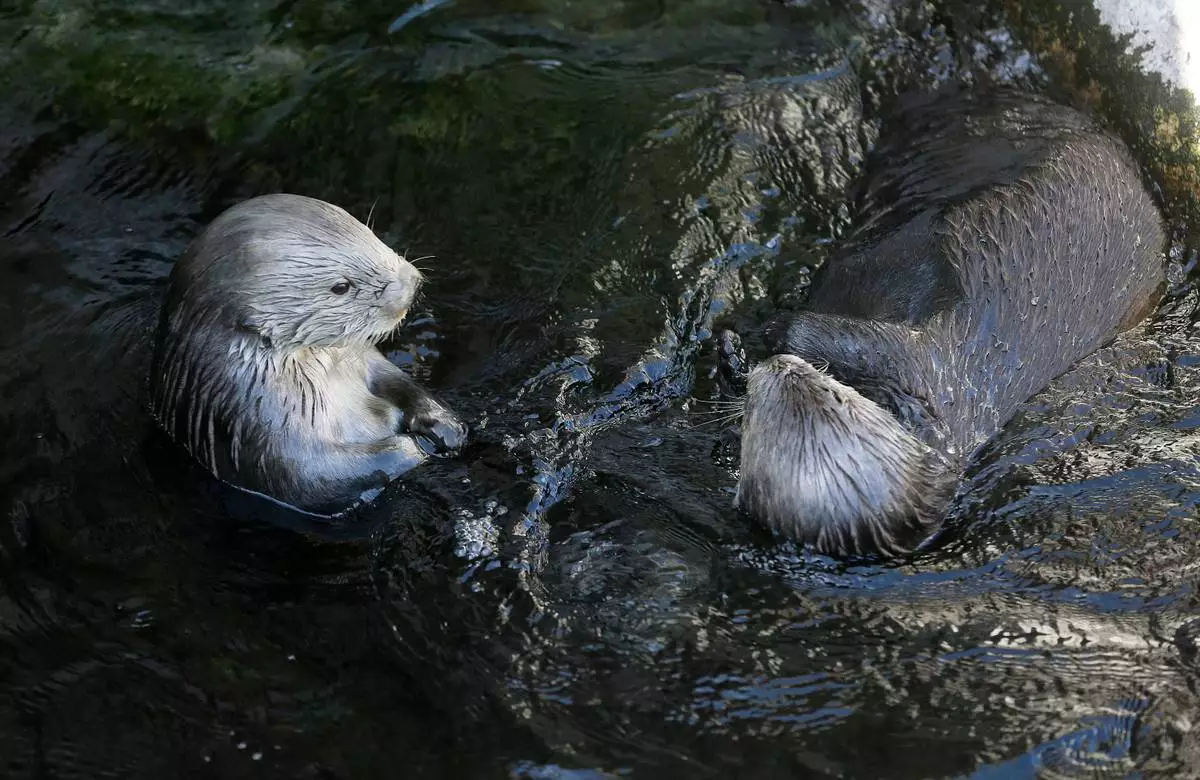
FILE - A pair of sea otters swim at the Monterey Bay Aquarium in Monterey, Calif., March 26, 2018. (AP Photo/Eric Risberg, File)
CAIRO (AP) — Yemen is moving closer to a return to civil war. The escalating events in the Arab world's poorest country are closely linked to the war in Iran and global efforts to ship oil out of the Gulf region.
Here’s a look at an emerging conflict involving an Iranian-backed rebel group's efforts to keep neighboring Saudi Arabia from using a crucial shipping alternative to the Strait of Hormuz, and how that could tear Yemen apart once more.
Yemen is home to over 40 million people who fear a return to the civil war that killed 150,000 and brought many others to the brink of famine in one of the world’s most sprawling humanitarian crises. A ceasefire with Yemen’s internationally recognized government and a wider coalition backed by the Saudis began in 2022.
Now that truce is buckling.
Yemen's troubles are in part because of its strategic location at the southern tip of the Arabian Peninsula and alongside the Bab el-Mandeb Strait at the southern end of the Red Sea. It's one of the busiest global shipping lanes and one that the world is turning to as Iran continues to target ships on the Strait of Hormuz.
The civil war left many Yemenis hungry and beyond the reach of aid. In what would be a significant advance, residents said Thursday the Houthis have now entered the key Red Sea port of Mokha, which has been held by Yemen’s internationally recognized government. If confirmed, that endangers another crucial entry point for food and other assistance.
If the Houthis take Mokha, that’s also one more step toward the Bab el-Mandeb, creating further complications for shipping on the Red Sea — and not only for the Saudis. The United States has shown signs of wanting to wrap up the Iran war and get oil-laden vessels on the move everywhere, not broaden the fight.
The ceasefire’s fragile calm held until weeks ago, when the Houthis tested a Saudi-led blockade of rebel-held areas. The Saudis struck the international airport in the rebel-held capital, Sanaa, which the Houthis called an attempt to prevent a plane carrying Houthi leaders from returning home after attending the funeral of Iran’s late supreme leader Ayatollah Ali Khamenei.
The Houthis already objected to the Saudis' backing of Yemeni government forces, who the rebels say have been pounding them this week with dozens of airstrikes after the rebels attacked several oil facilities and utilities in Saudi Arabia, wounding dozens of people.
Now, with the Iran war choking the Strait of Hormuz, the Houthis have a new way to inflict pain on their neighbor by declaring a blockade against Saudi Arabia and targeting its efforts to ship its oil via the Red Sea.
The Houthis' backer, Tehran, doesn’t object to causing the U.S.-allied Saudis pain as it tries to limit oil shipments from the Gulf in service of its war aims.
Among Iran’s armed proxies in the region, the Houthis have had a lower profile than Hezbollah in Lebanon and Hamas in Gaza. That, as well as their relative distance, has helped shield them from Israeli attack in the nearly three years since the war in Gaza began.
But the Houthis were quickly targeted with U.S. airstrikes when they tried to insert themselves into the regional conflict by targeting what they called Israeli-linked shipping on the Red Sea off Yemen’s west coast. Those attacks soon faded.
Now, the Houthis are back with a different target, aiming at ships and other assets of Saudi Arabia as it seeks to get its oil out to the world via the Red Sea and the Bab el-Mandeb strait. That Red Sea corridor usually sees $1 trillion of goods move through it per year.
The Houthis are “no longer just positioned on the northern part of the western coast; they now control a much larger stretch of the coastline, bringing them closer to the areas around Bab al-Mandeb,” said Ahmed Nagi, a senior analyst on Yemen at the International Crisis Group.
For global oil consumers already worried about Iran’s attacks on vessels trying to transit the Strait of Hormuz, the threat to yet another global shipping lane is a flashing danger sign, especially with the price of crude oil again trading above $100 a barrel.
Anna reported from Jerusalem. Ahmed Haj in Aden, Yemen, contributed.

FILE - Members of the Yemeni al-Houthi Shiite rebel group burn an effigy of a U.S. aircraft and a Saudi flag during a demonstration against U.S. and Saudi interference in Yemen, after Friday prayer in Sanaa, Yemen, on April 12, 2013. (AP Photo/Hani Mohammed), File