Skip to Content Facebook Feature Image

Iran has a 2-day plan to reopen strait, resume nuclear talks with US, and other Mideast news

News

Iran has a 2-day plan to reopen strait, resume nuclear talks with US, and other Mideast news
News

News

Iran has a 2-day plan to reopen strait, resume nuclear talks with US, and other Mideast news

2026-11-03 00:10 Last Updated At:00:20

Iran said Monday it had a two-day plan to reopen the Strait of Hormuz and resume nuclear talks with the United States, shortening a process originally expected to take seven days.

The U.N. migration agency said more than 300,000 people in Yemen had fled renewed fighting. Israel's military said it was wrapping up a sweeping operation that began after a shooting in Hebron killed two soldiers.

China, meanwhile, is sending a special envoy to Iran, Saudi Arabia and Oman.

Here is the latest news from the Middle East on Monday. Read our full coverage here.

Iran said it had a two-day plan to reopen the Strait of Hormuz and resume nuclear talks with the U.S. if Washington meets its demands.

The announcement came as the region braces for possible renewed fighting, even as Iran’s top diplomat said Sunday that he hoped the U.S. would choose “diplomacy over other paths.”

Iran previously said the plan could be implemented within a week if the U.S. met seven conditions, including lifting its blockade of Iranian ports. Iran now says ships passing through the reopened strait would have to follow a route agreed upon by Iran and Oman and travel under Iranian supervision. Separately, Iranian officials have said the U.S. must lift sanctions on Iranian oil sales and agree to a ceasefire that would include Lebanon.

Iranian Foreign Ministry spokesperson Esmail Baghaei said the plan remained the basis for negotiations with Washington through mediators, despite the shorter implementation timeline. “This once again demonstrates Iran’s good-faith approach,” he added.

Baghaei gave no indication that Tehran had changed its demands or that Washington had accepted its proposal.

President Donald Trump has alternated between pursuing diplomacy and threatening heavy bombing of Iran in his public comments.

The Houthi-run health ministry said Monday that explosives hit a bustling market in southwestern Yemen, killing two children and one other person as fighting between the Iran-backed rebel group and Saudi-backed government forces continued.

Ministry spokesperson Anees al-Asbahi on X blamed Saudi Arabia for the attack in Taiz province that he said injured eight others. The Associated Press couldn’t independently verify these claims.

The latest attacks are part of the Houthis’ ongoing battles with the Yemeni military forces and their allies, which have broken a four-year truce and exacerbated an already dire humanitarian situation in the country.

The U.N. migration agency said more than 300,000 Yemenis have fled the fighting as people are struggling to find shelter and life essentials. Aid groups say they face limited access to those in need.

Taiz province, in southwestern Yemen, continues to take in displaced families, but many are fleeing south to Aden, according to the International Organization for Migration.

“After years of conflict, families in Yemen are being forced to flee yet again, often with little more than the clothes on their backs,” said Abdusattor Esoev, head of the IOM's mission in Yemen.

China said Monday it plans to send a special envoy to Iran, Oman and Saudi Arabia in early to mid-November. Foreign Ministry spokesperson Mao Ning told reporters the envoy would focus on easing tensions and promoting regional stability.

The Gulf region “should not become an arena for great-power rivalry and geopolitical conflict,” Chinese President Xi Jinping told Oman’s Sultan Haitham bin Tariq Al Said on Monday, according to a readout of their meeting.

The move comes as China seeks to expand its influence in the rapidly changing region, which it depends on for a large share of its oil.

The Israeli military said Monday that it had concluded an operation in Hebron in the occupied West Bank that began last month after two Palestinian gunmen killed two Israeli soldiers. It said it demolished the gunmen’s residences and confiscated weapons and illegal vehicles.

The operation, focused on the area where the shooting took place, displaced hundreds of Palestinians. They began returning home Monday as some Israeli forces withdrew from one of the most tense cities in the territory.

In Deir Bahha, the suspected gunmen’s neighborhood, explosives experts checked for any unexploded devices left behind by soldiers. Some residents found their homes were damaged in military raids. “I came back expecting everything to be normal, but I was shocked to find the door broken and the glass shattered,” said one resident, Wael Shawar.

Another returning resident said she feared bringing her children home. “We are afraid," said Tamara Obei. “We don’t know what’s happening or whether there are explosives or anything else in the house. The children are already psychologically exhausted.”

Two Israeli airstrikes killed two men in southern Gaza early Monday, according to Nasser Hospital, where their bodies were taken. One strike killed a man in his home; the other killed a man in a tent.

The Israeli military did not respond to a request for comment.

Major fighting between Israel and Hamas largely halted under the October 2025 ceasefire. Israel continues to launch near-daily strikes on Gaza that it says target militants, though the strikes regularly kill or injure women and children. Israel says Hamas uses civilians as human shields.

About 1,580 Palestinians have been killed since the ceasefire began, bringing the overall death toll to more than 74,500, according to Gaza’s Health Ministry. The ministry, part of the Hamas-run government, does not distinguish between civilians and militants.

This report will be updated throughout the day as new developments emerge.
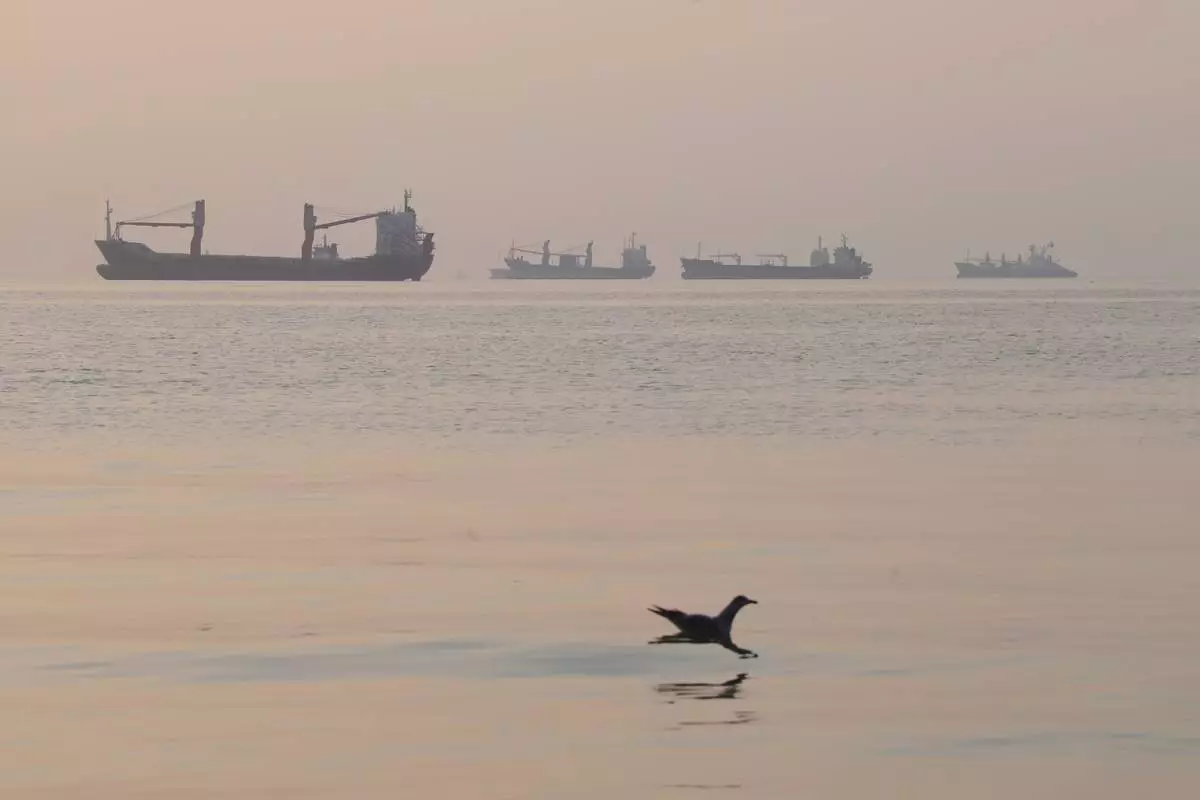
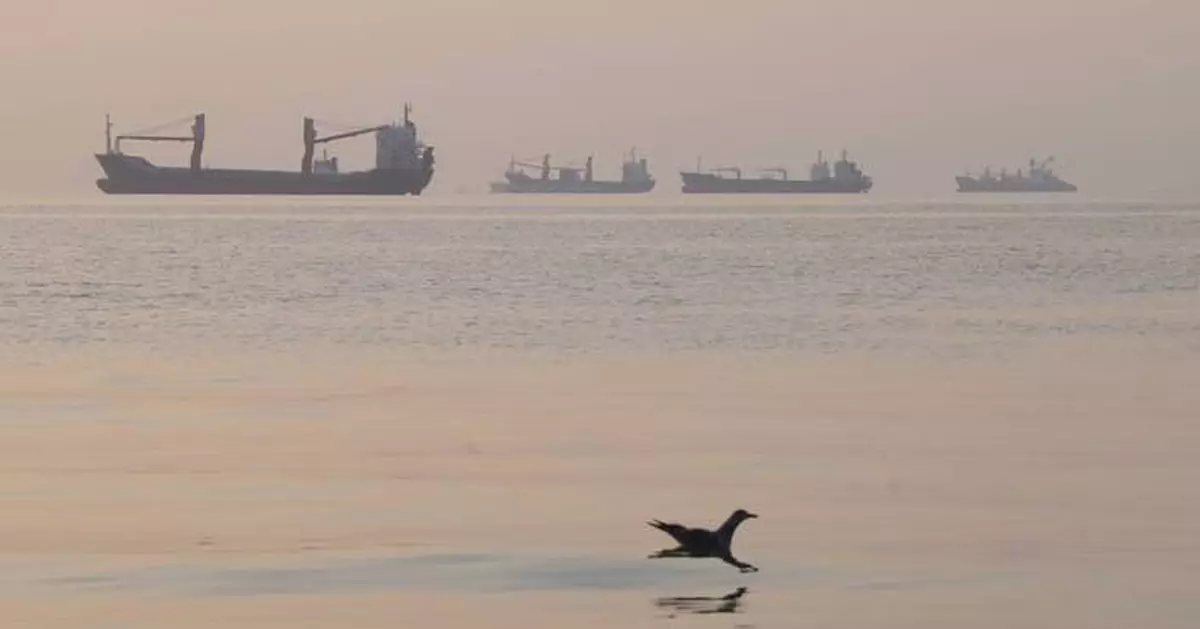
A bird flies low over the water as cargo ships lie at anchor in the Strait of Hormuz off Bandar Abbas, Iran, early Saturday, Oct. 24, 2026. (Amirhosein Khorgooi/ISNA via AP)

A bird flies low over the water as cargo ships lie at anchor in the Strait of Hormuz off Bandar Abbas, Iran, early Saturday, Oct. 24, 2026. (Amirhosein Khorgooi/ISNA via AP)
NEW YORK (AP) — The U.S. stock market is rising Monday and recovering some of last week's sell-off that was led by the tech and AI industries.

The S&P 500 climbed 0.8%, coming off its third straight losing week, and pulled within 2.3% of its all-time high. The Dow Jones Industrial Average was up 547 points, or 1.1%, as of 10:15 a.m. Eastern time, and the Nasdaq composite was 1% higher.

Stocks got a lift from easing prices for oil, which headed back down in their latest yo-yo move on uncertainty about when the war with Iran will allow the global industry to return to normal. The price for a barrel of Brent crude, the international standard, fell 6.7% to $105.87.

Iran said Monday it had a two-day plan to reopen the Strait of Hormuz, which would help the global energy industry, and resume nuclear talks with the United States. Over the weekend, Iran’s top diplomat said he hoped for “rationality” on the U.S. side as diplomatic efforts seek to avert a return to all-out war.

The price for the most actively traded contract in the Brent market has been veering between roughly $70 and $120 since just before the war began, and it’s been quick to reverse direction.

So have stocks in the artificial-intelligence industry, which have been shaky for months amid criticism that they surged too high and are in a bubble. Worries are growing that all the hundreds of billions of dollars Big Tech companies are pouring into AI data centers won’t produce enough productivity and profit to make the investments worth it.

The latest profit reports from Alphabet and other Big Tech companies also showed how AI may be dragging on their own businesses. Not only did Google’s parent company burn through more cash during the latest quarter, as measured by something called free cash flow, it also reported slower-than-expected growth in its search business, which raised worries about AI cannibalizing its cash cow.

Alphabet rose 2.4% Monday, recovering some of its drop of more than 12% from Thursday, which was its worst in history.

Other tech giants also held steadier. Nvidia rose 1.9% after its 4.2% slide on Friday forced it to cede the title as Wall Street’s most valuable stock to Apple.

Outside of AI and tech, several stocks climbed after reporting better profits for the summer than analysts expected.

Marriott International rallied 4.3%, for example, after reporting strength for its hotels around the world. Even in the Middle East, where the war has affected its business, CEO Anthony Capuano said that “trends improved meaningfully” from the spring.

Idexx Laboratories leaped 16.3% after likewise delivering stronger profit and revenue than analysts expected. The company, which sells diagnostic equipment and other products to veterinarians, also raised its forecasts for revenue and profit for the full year of 2026.

Expectations are high for all kinds of companies to continue to deliver big gains in profits as the U.S. economy keeps chugging along, even with high inflation and interest rates. A report on Monday said that growth for U.S. manufacturing was better than economists expected. Perhaps just as importantly, a measure of inflation in the survey by the Institute for Supply Management showed prices were rising at a slower pace.

Monday's drop in oil prices, meanwhile, helped lift stocks of companies with big fuel bills. United Airlines flew 6.5% higher, Southwest Airlines climbed 4.2% and cruise operator Carnival rose 4.6%.

They helped offset a 6% drop for Marvell Technology after it announced a deal to buy Lumentum, which sells lasers and other products that power the networks and infrastructure behind AI and cloud computing.

Marvell said it will give 4.5 of its shares for each Lumentum share, valuing it at roughly $115 billion. Lumentum’s shares dropped 10.6%.

In stock markets abroad, indexes were mixed in Europe amid mostly modest moves.

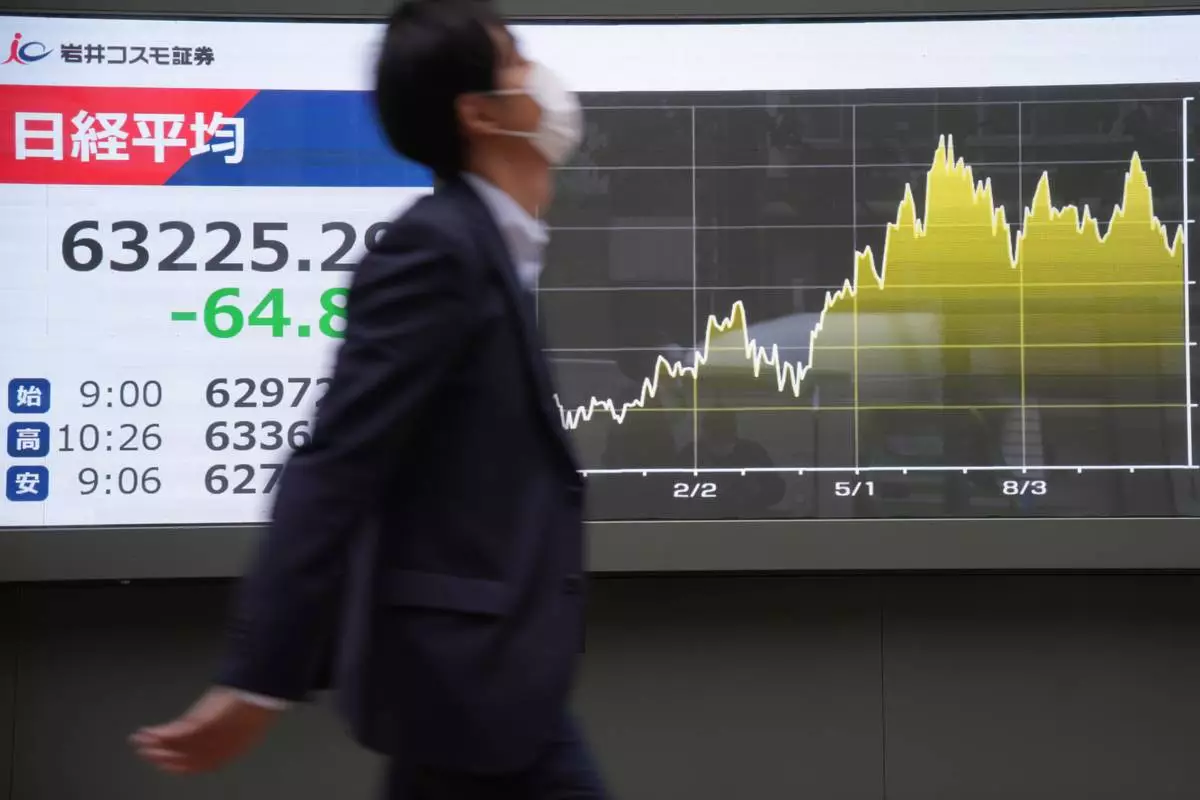
The swings were larger in Asia, where South Korea’s Kospi jumped 2.2% on renewed strength for the tech giants that dominate its market.

In China, indexes rose 1.1% in Shanghai and 0.4% in Hong Kong to recover some of their steep recent losses. Stocks in Shanghai finished October more than 15% below a peak reached in May.

AP Business Writers Chan Ho-him and Michelle Chapman contributed to this report.

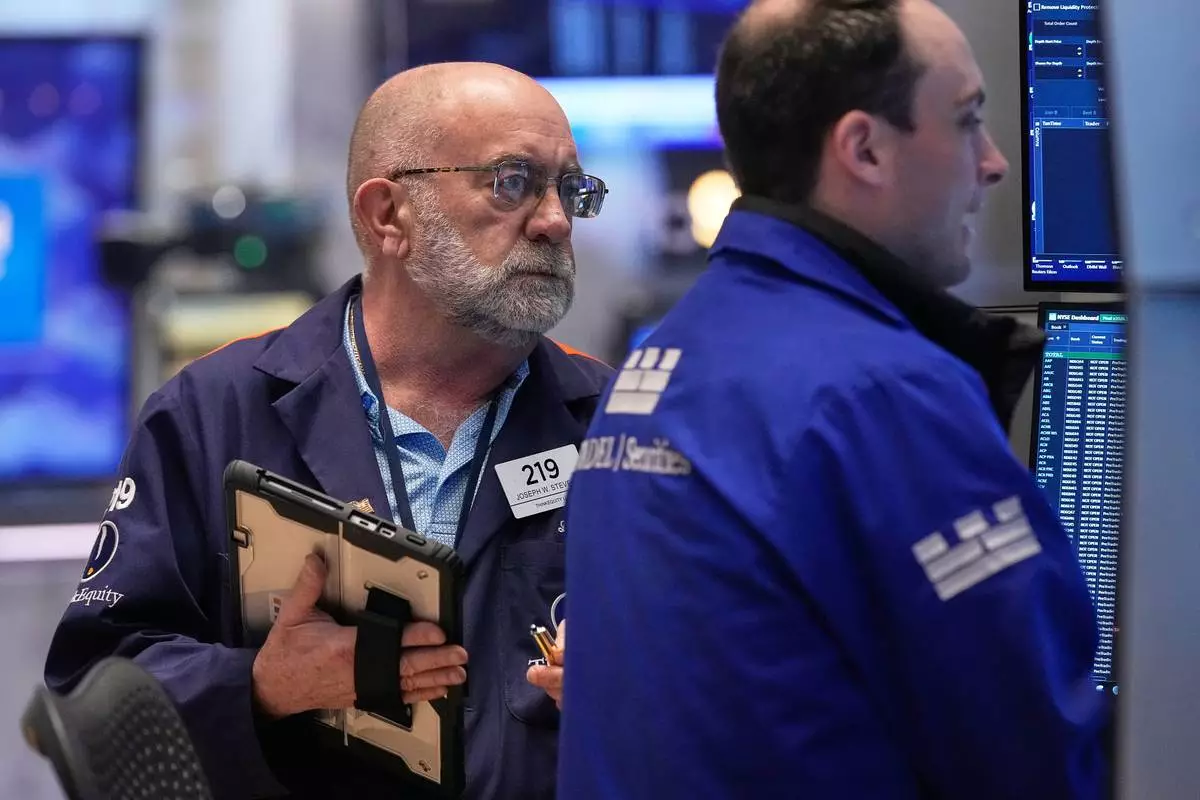
FILE - Trader Joseph Stevens, left, works on the floor of the New York Stock Exchange, on May 5, 2026. (AP Photo/Richard Drew)

FILE - Trader Joseph Stevens, left, works on the floor of the New York Stock Exchange, on May 5, 2026. (AP Photo/Richard Drew)

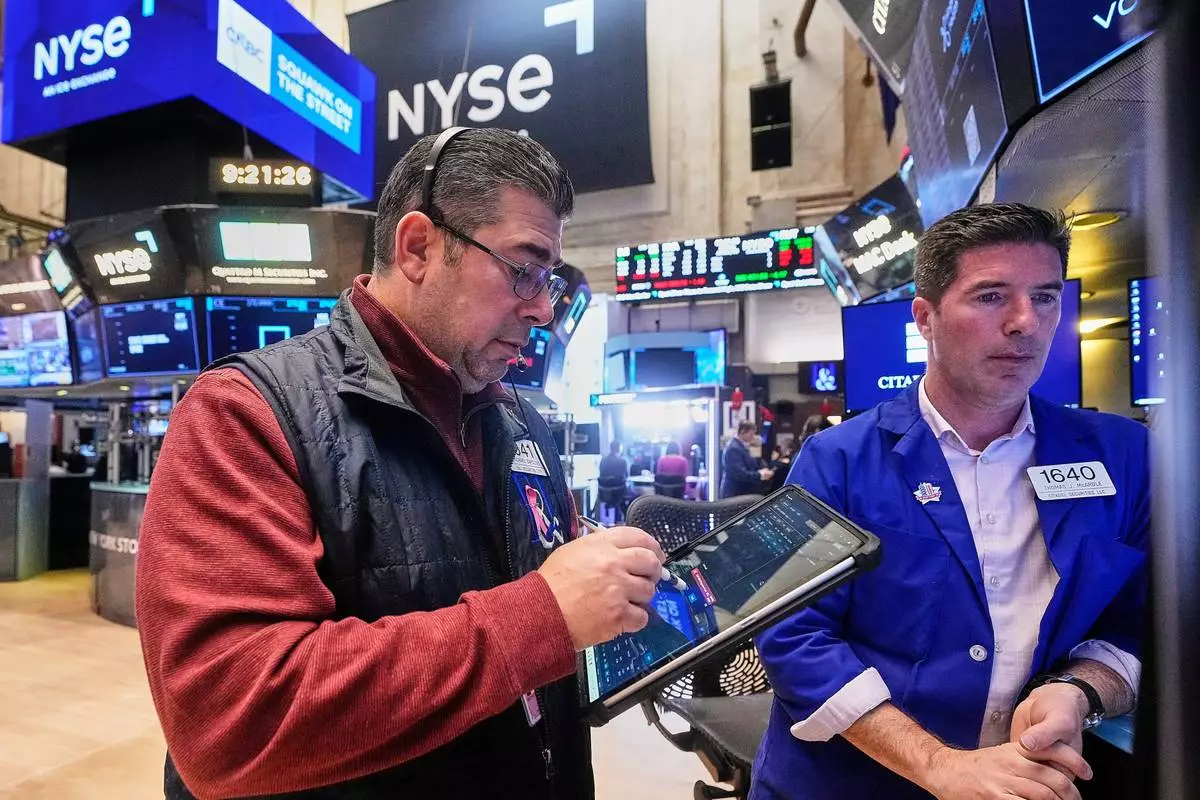
FILE - Trader Michael Capolino, left, and Specialist Thomas McArdle work on the floor of the New York Stock Exchange, Monday, Jan. 26, 2026. (AP Photo/Richard Drew, file)

FILE - Trader Michael Capolino, left, and Specialist Thomas McArdle work on the floor of the New York Stock Exchange, Monday, Jan. 26, 2026. (AP Photo/Richard Drew, file)

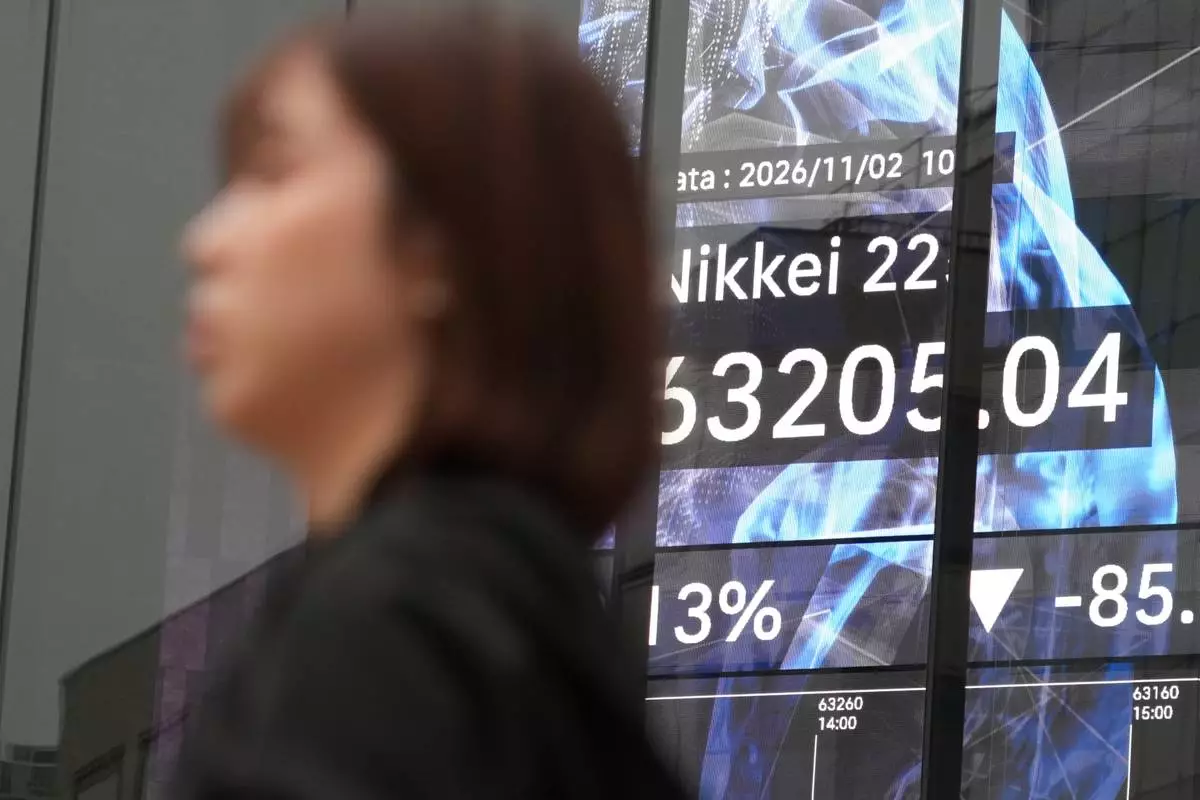
A person walks in front of an electronic stock board showing Japan's Nikkei index at a securities firm, Monday, Nov. 2, 2026, in Tokyo. (AP Photo/Eugene Hoshiko)

A person walks in front of an electronic stock board showing Japan's Nikkei index at a securities firm, Monday, Nov. 2, 2026, in Tokyo. (AP Photo/Eugene Hoshiko)

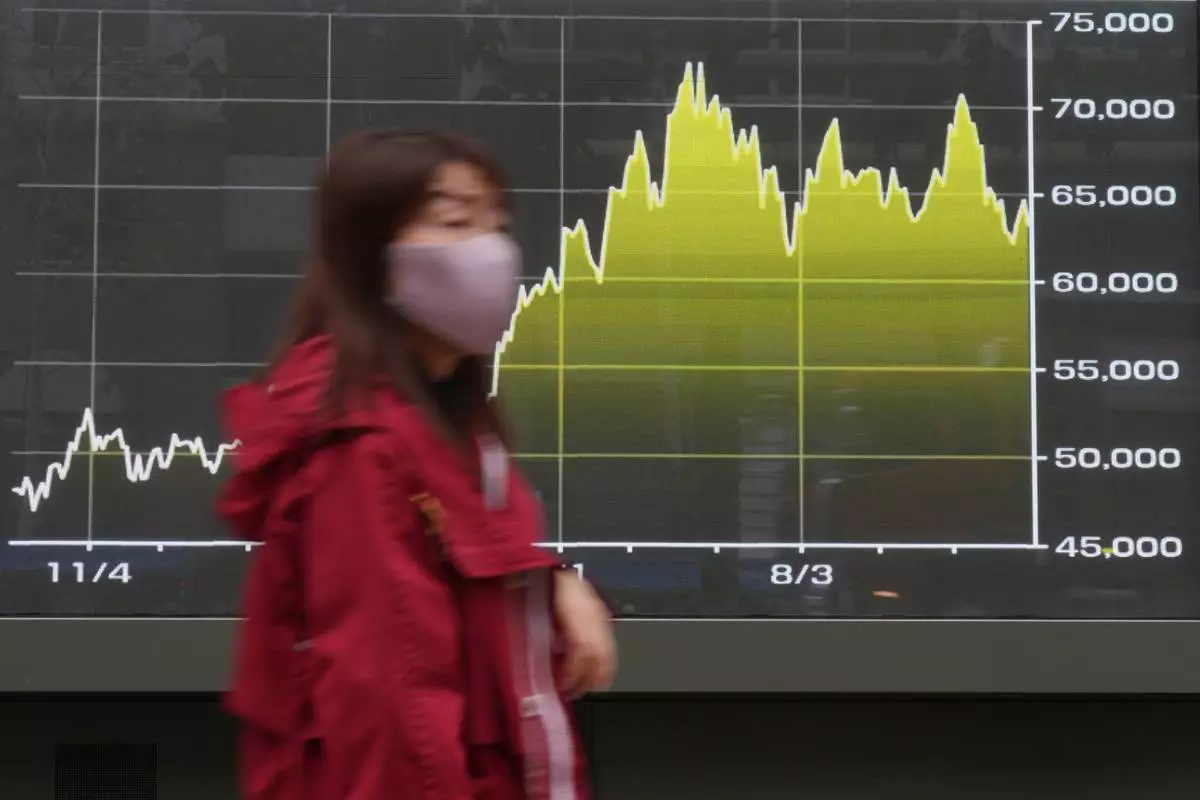
A person walks in front of an electronic stock board showing Japan's Nikkei index at a securities firm, Monday, Nov. 2, 2026, in Tokyo. (AP Photo/Eugene Hoshiko)

A person walks in front of an electronic stock board showing Japan's Nikkei index at a securities firm, Monday, Nov. 2, 2026, in Tokyo. (AP Photo/Eugene Hoshiko)

A person walks in front of an electronic stock board showing Japan's Nikkei index at a securities firm, Monday, Nov. 2, 2026, in Tokyo. (AP Photo/Eugene Hoshiko)

A person walks in front of an electronic stock board showing Japan's Nikkei index at a securities firm, Monday, Nov. 2, 2026, in Tokyo. (AP Photo/Eugene Hoshiko)

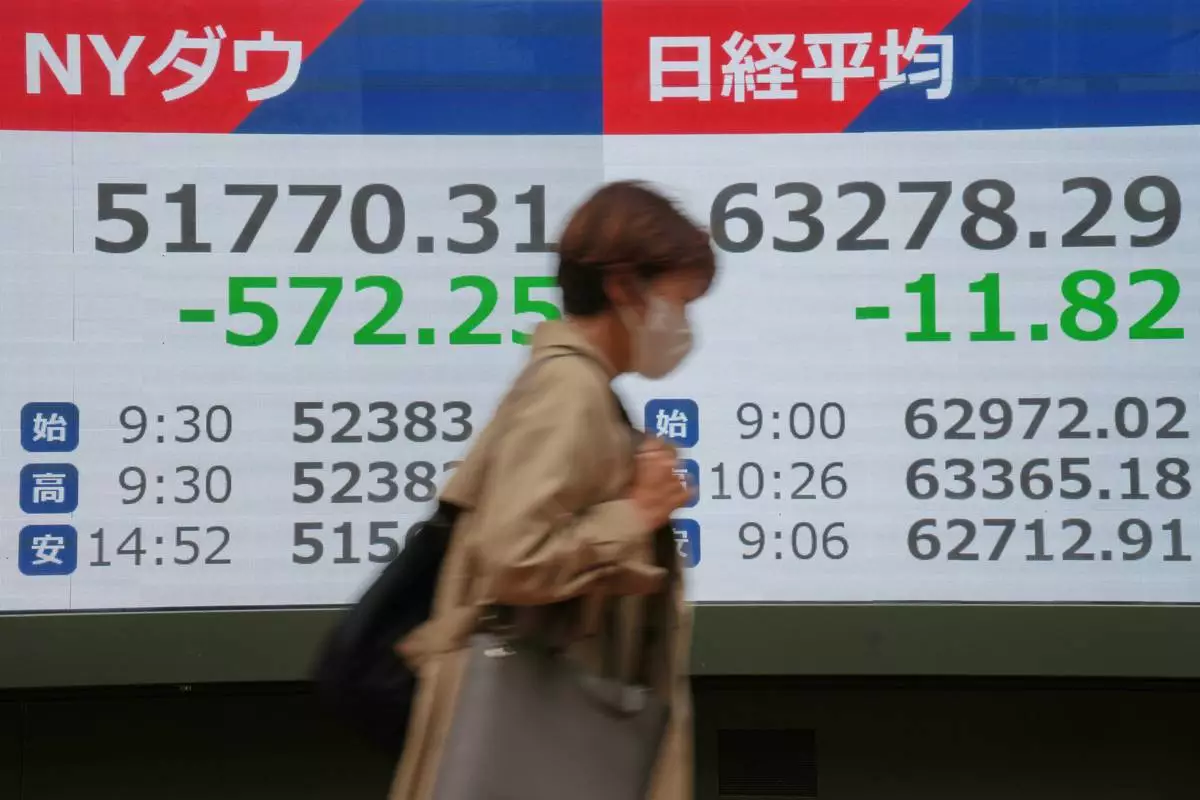
A person walks in front of an electronic stock board showing Japan's Nikkei and New York Dow indexes at a securities firm, Monday, Nov. 2, 2026, in Tokyo. (AP Photo/Eugene Hoshiko)

A person walks in front of an electronic stock board showing Japan's Nikkei and New York Dow indexes at a securities firm, Monday, Nov. 2, 2026, in Tokyo. (AP Photo/Eugene Hoshiko)

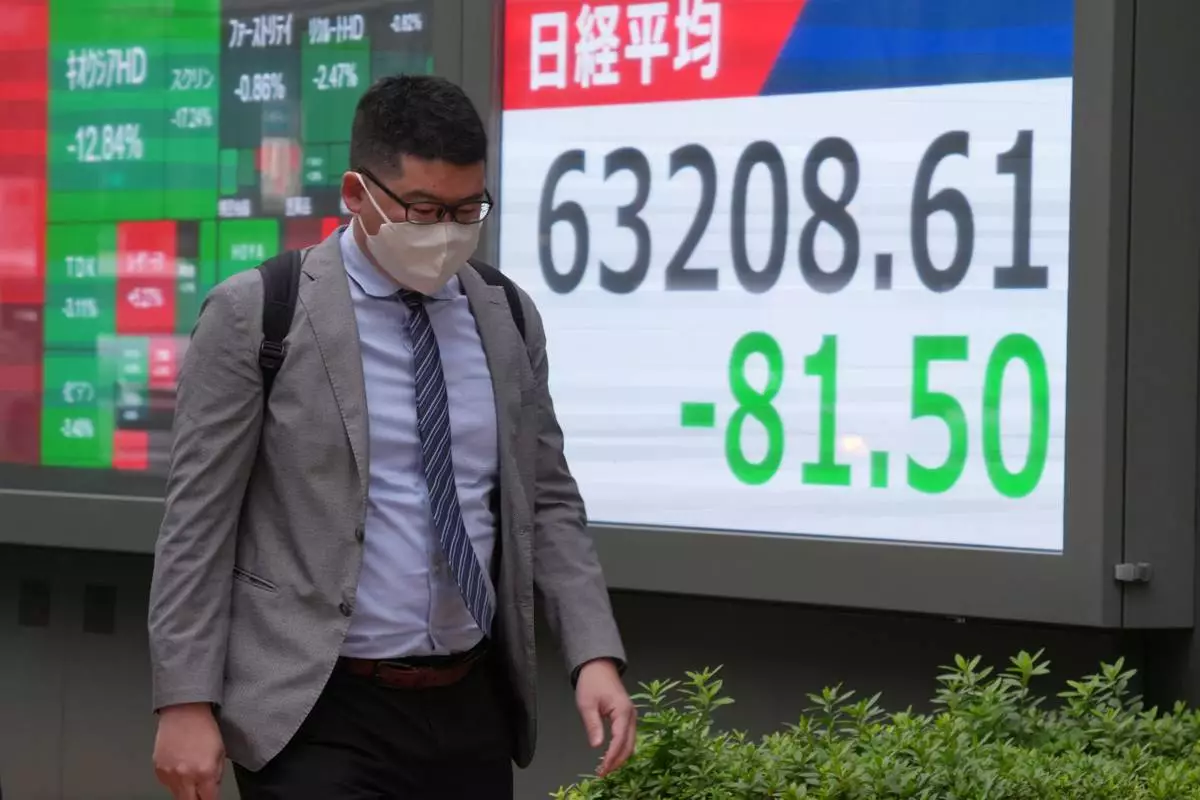
A person walks in front of an electronic stock board showing Japan's Nikkei index at a securities firm, Monday, Nov. 2, 2026, in Tokyo. (AP Photo/Eugene Hoshiko)

A person walks in front of an electronic stock board showing Japan's Nikkei index at a securities firm, Monday, Nov. 2, 2026, in Tokyo. (AP Photo/Eugene Hoshiko)

Recommended Articles