Skip to Content Facebook Feature Image

How Americans are feeling about their chances on the job market, according to an AP-NORC poll

News

How Americans are feeling about their chances on the job market, according to an AP-NORC poll
News

News

How Americans are feeling about their chances on the job market, according to an AP-NORC poll

2025-10-20 01:44 Last Updated At:01:50

WASHINGTON (AP) — Americans are growing increasingly concerned about their ability to find a good job under President Donald Trump, an Associated Press-NORC Center for Public Affairs Research poll finds, in what is a potential warning sign for Republicans as a promised economic boom has given way to hiring freezes and elevated inflation.

High prices for groceries, housing and health care persist as a fear for many households, while rising electricity bills and the cost of gas at the pump are also sources of anxiety, according to the survey.

Some 47% of U.S. adults are “not very" or “not at all confident” they could find a good job if they wanted to, an increase from 37% when the question was last asked in October 2023.

Electricity bills are a “major” source of stress for 36% of U.S. adults at a time when the expected build-out of data centers for artificial intelligence could further tax the power grid. Just more than one-half said the cost of groceries are a “major” source of financial stress, about 4 in 10 said the cost of housing and health care were a serious strain and about one-third said they were feeling high stress about gasoline prices.

The survey suggests an ongoing vulnerability for Trump, who returned to the White House in January with claims he could quickly tame the inflation that surged after the pandemic during Democratic President Joe Biden's term. Instead, Trump's popularity on the economy has remained low amid a mix of tariffs, federal worker layoffs and partisan sniping that has culminated in a government shutdown.

Linda Weavil, 76, voted for Trump last year because he “seems like a smart businessman.” But she said in an interview that the Republican's tariffs have worsened inflation, citing the chocolate-covered pecans sold for her church group fundraiser that now cost more.

“I think he’s doing a great job on a lot of things, but I’m afraid our coffee and chocolate prices have gone up because of tariffs,” the retiree from Greensboro, North Carolina, said. “That’s a kick in the back of the American people.”

The poll found that 36% of U.S. adults approve of how Trump is handling the economy, a figure that has held steady this year after he imposed tariffs that caused broad economic uncertainty. Among Republicans, 71% feel positive about his economic leadership. Yet that approval within Trump's own party is relatively low in ways that could be problematic for Republicans in next month's races for governor in New Jersey and Virginia, and perhaps even in the 2026 midterm elections.

At roughly the same point in Biden’s term, in October 2021, an AP-NORC poll found that 41% of U.S. adults approved of how he was handling the economy, including about 73% of Democrats. That overall number was a little higher than Trump's, primarily because of independents — 29% approved of how Biden was handling the economy, compared with the 18% who currently support Trump’s approach.

The job market was meaningfully stronger in terms of hiring during Biden's presidency as the United States was recovering from pandemic-related lockdowns. But hiring has slowed sharply under Trump with monthly job gains averaging less than 27,000 after the April tariff announcements.

People see that difference.

Four years ago, 36% of those in the survey were “extremely” or “very” confident in their ability to get a good job, but that has fallen to 21% now.

Biden's approval on the economy steadily deteriorated through the middle of 2022 when inflation hit a four-decade high, creating an opening for Trump's political comeback.

In some ways, Trump has made the inflation problems harder by choosing to cancel funding for renewable energy projects and imposing tariffs on the equipment needed for factories and power plants. Those added costs are coming before the anticipated construction of data centers for AI that could further push up prices without more construction.

Even though 36% see electricity as a major concern, there are some who have yet to feel a serious financial squeeze. In the survey, 40% identified electricity costs as a “minor” stress, while 23% said their utility bills are “not a source” of stress.

Kevin Halsey, 58, of Normal, Illinois, said his monthly electricity bills used to be $90 during the summer because he had solar panels, but have since jumped to $300. Halsey, who works in telecommunications, voted Democratic in last year's presidential election and described the economy right now as “crap.”

"I’ve got to be pessimistic,” he said. “I don’t see this as getting better.”

At a fundamental level, Trump finds himself in the same economic dilemma that bedeviled Biden. There are signs the economy remains relatively solid with a low unemployment rate, stock market gains and decent economic growth, yet the public continues to be skeptical about the economy's health.

Some 68% of U.S. adults describe the U.S. economy these days as “poor,” while 32% say it’s “good.” That’s largely consistent with assessments of the economy over the past year.

In addition, 59%, say their family finances are “holding steady.” But only 12% say they’re “getting ahead,” and 28% say they are “falling behind.”

The sense of economic precarity is coming from many different directions, with indications that many think middle-class stability is falling out of reach.

The vast majority of U.S. adults feel at least “minor” stress about the cost of groceries, health care, housing, the amount they pay in taxes, what they are paid at work and the cost of gas for their cars.

In the survey, 47%, say they are “not very” or “not at all” confident they could pay an unexpected medical expense while 52% have low confidence they will have enough saved for their retirement. Also, 63%, are “not very” or “not at all” confident they could buy a new home if they wanted to.

Young adults are much less confident about their ability to buy a house, though confidence is not especially high across the board. About 8 in 10 U.S. adults under age 30 say they are “not very confident” or “not at all confident” they would be able to buy a house, compared with about 6 in 10 adults 60 and older.

For 54% of U.S. adults, the cost of groceries is a “major source” of stress in their life right now.

Unique Hopkins, 36, of Youngstown, Ohio, said she is now working two jobs after her teenage daughter had a baby, leaving Hopkins with a sense that she can barely tread water as part of the “working poor.” She voted for Trump in 2016, only to switch to Democrats after she felt his ego kept him from uniting the country and solving problems.

“It’s his way or no way," she said. “Nobody is going to unite with Trump if it’s all about you, you, you.”

The AP-NORC poll of 1,289 adults was conducted Oct. 9-13, using a sample drawn from NORC’s probability-based AmeriSpeak Panel, which is designed to be representative of the U.S. population. The margin of sampling error for adults overall is plus or minus 3.8 percentage points.

This story has been corrected to reflect that the name of the NORC Center is NORC Center for Public Research, not Public Affairs.
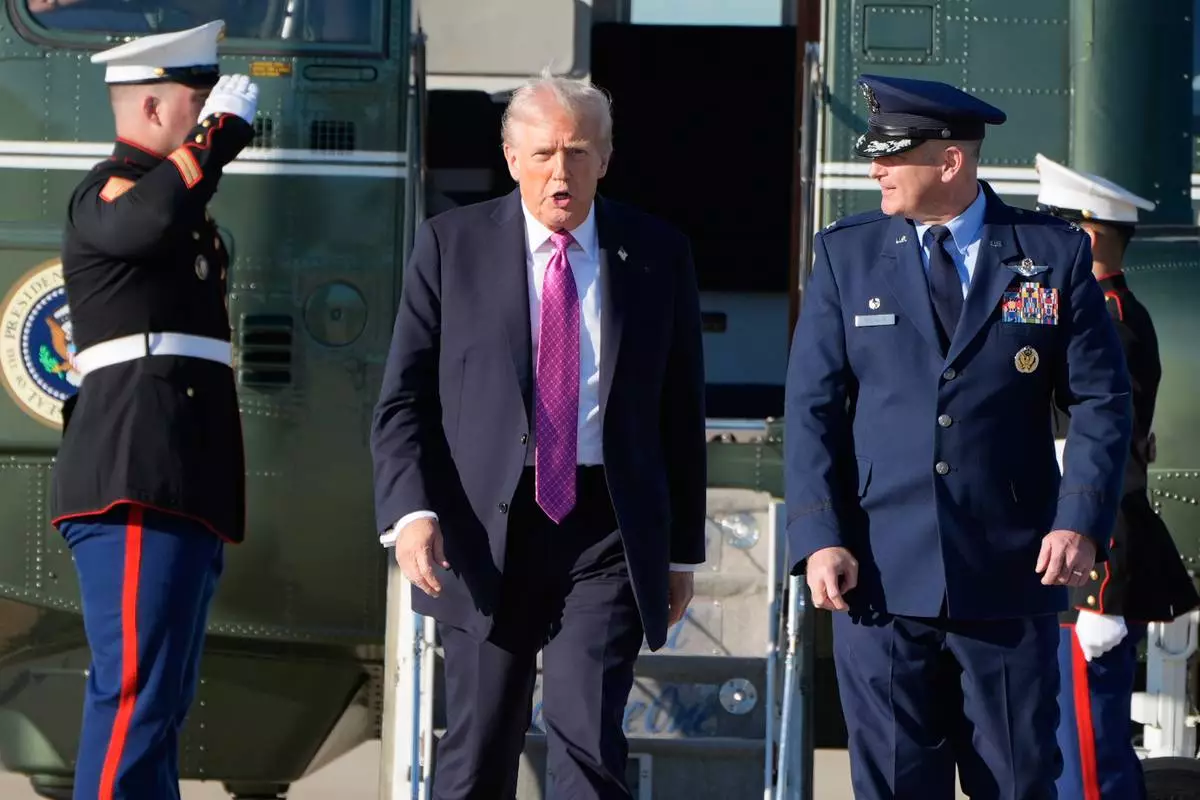
President Donald Trump walks with Air Force Col. Christopher M. Robinson, Commander of the 89th Airlift Wing, from Marine One to board Air Force One, Friday, Oct. 17, 2025, at Joint Base Andrews, Md., for a trip to Florida. (AP Photo/Mark Schiefelbein)
President Donald Trump walks with Air Force Col. Christopher M. Robinson, Commander of the 89th Airlift Wing, from Marine One to board Air Force One, Friday, Oct. 17, 2025, at Joint Base Andrews, Md., for a trip to Florida. (AP Photo/Mark Schiefelbein)

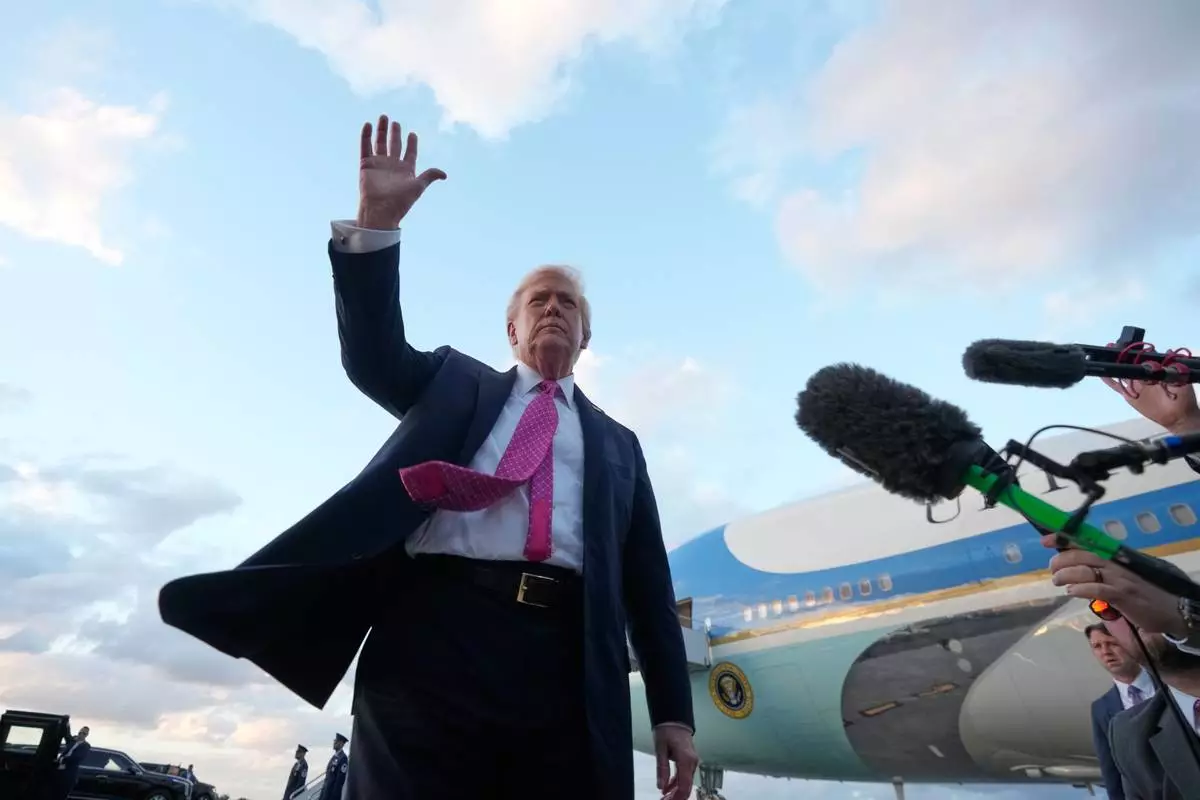
President Donald Trump waves after arriving on Air Force One, Friday, Oct. 17, 2025, at Palm Beach International Airport in West Palm Beach, Fla. (AP Photo/Mark Schiefelbein)
President Donald Trump waves after arriving on Air Force One, Friday, Oct. 17, 2025, at Palm Beach International Airport in West Palm Beach, Fla. (AP Photo/Mark Schiefelbein)

MOGADISHU, Somalia (AP) — Tens of thousands of Somalis gathered across the country Tuesday to protest Israel’s recognition of the breakaway region of Somaliland, a move condemned by more than 20 countries as an attack on the East African nation's sovereignty.

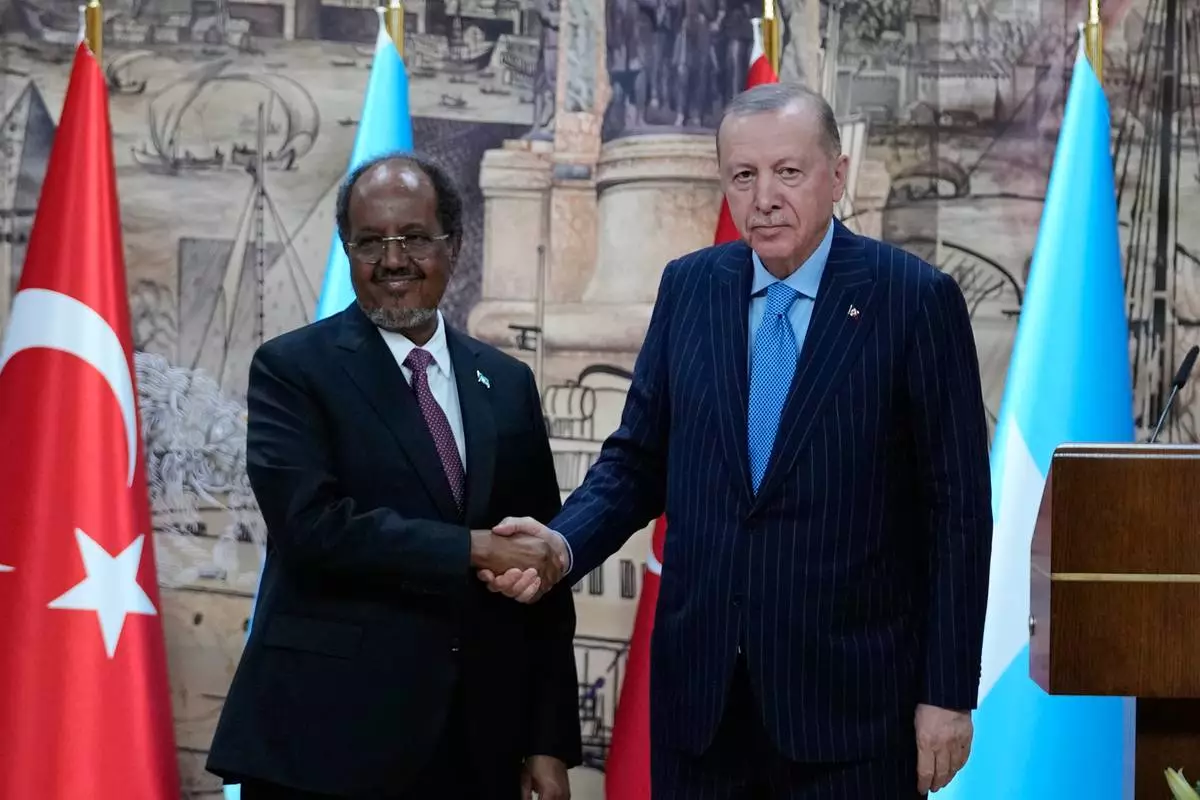
Meanwhile, Somalia’s President Hassan Sheikh Mohamud arrived in Turkey on Tuesday for talks with President Recep Tayyip Erdogan, following Israel’s announcement.

At a U.N. Security Council emergency meeting Monday, Somalia protested the recognition saying it poses regional security issues. The Israeli representative decried those comments as a double standard because other nations have recognized Palestine as a state. The U.S. special representative said the country’s position on Somalia remains unchanged.

Last week, Israel became the first country to recognize Somaliland, drawing strong condemnation from Turkey — already at odds with Israel over the war in Gaza — as well as from Somalia and other nations.

Somaliland, a territory of more than 3 million people in the Horn of Africa, declared independence from Somalia in 1991 during a period of conflict that left the country fragile. Despite having its own government and currency, Somaliland had never been recognized by any nation until Friday.

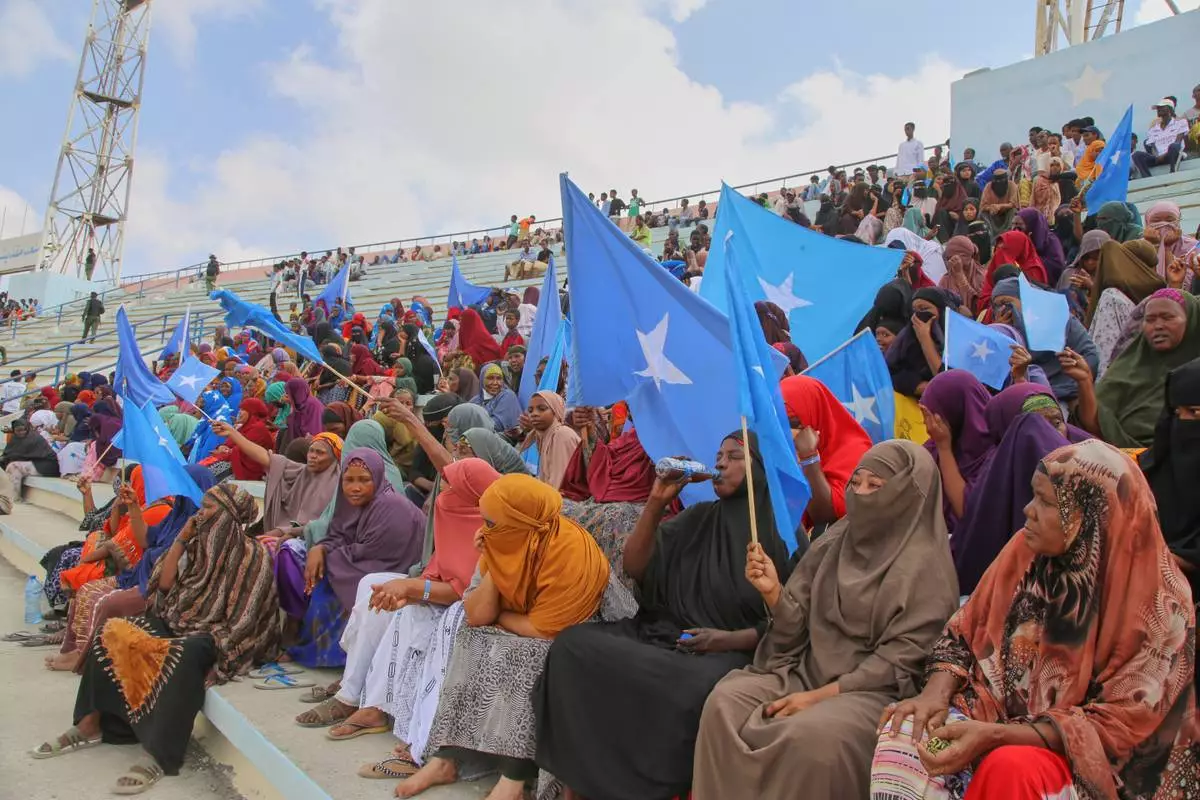
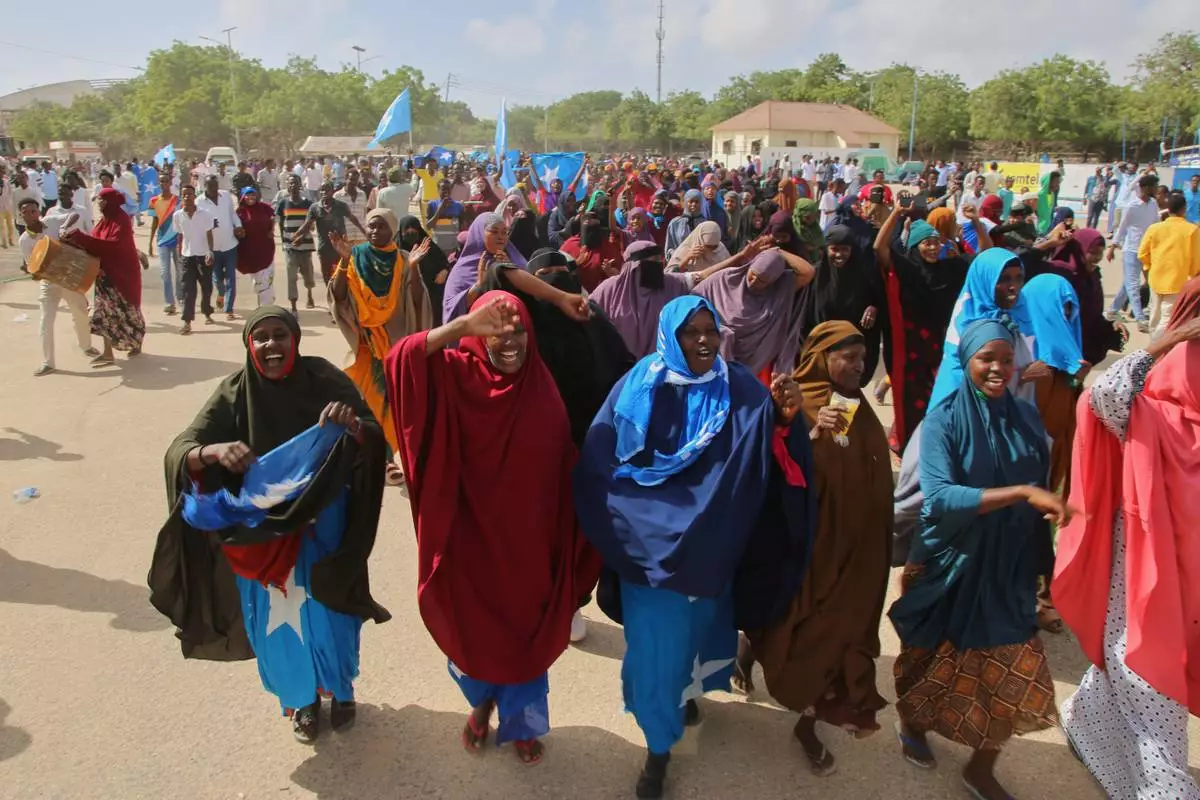
In the Somali capital, Mogadishu, crowds gathered at the main stadium for a rally led by prominent religious figures who condemned Israel’s recognition and called for unity in defense of Somalia’s territorial integrity.

Similar protests were reported in Baidoa in the southwest, Guriel and Dhusamareeb in central Somalia, and Lasanod and Buhoodle in the northeast. Protesters in those towns chanted slogans rejecting the recognition and waved Somali flags, according to residents and video footage shared online.

The combined protests marked the largest turnout of protesters since Israel’s declaration.

At the Mogadishu rally, traditional leader Mohamed Hassan Haad called on Somalis to oppose the recognition and warned against any attempts to claim Somali territory, urging people in Somaliland to reject the move.

Religious scholar Sheikh Mohamud Sheikh Abulbari also condemned Israel’s decision, describing it as unacceptable and saying it was wrong to welcome Israel into any part of Somalia, citing Israel’s actions toward Palestinians and Muslims at Jerusalem’s Al-Aqsa Mosque.

Somalia’s permanent representative to the United Nations, Abukar Dahir Osman protested the recognition at the Security Council meeting Monday. “Israel’s action not only sets a dangerous precedent but also poses a serious threat to regional and international peace and security,” he told the council.

In Istanbul on Tuesday, Mohamud expressed gratitude to regional and international institutions that opposed Israel’s recognition of Somaliland, describing it as a violation of international law, the United Nations Charter, the African Union’s principles, and established diplomatic norms.

“This sets a dangerous precedent that is contrary to the principle of sovereignty and territorial integrity, and non-interference that underpins in all international systems,” Mohamud said, standing alongside Erdogan.

“Such actions are creating conditions that embolden violent extremist groups who thrive on narratives of external interference,” Mohamud said. “The result is cascading insecurity for Somalia and the wider region of the Horn of Africa already strained by armed violent, humanitarian pressures and political fragility”

Erdogan expressed strong support for Somalia’s unity and integrity and condemned Israel’s decision to recognize Somaliland as “illegitimate and unacceptable.”

“The preservation of Somalia’s unity and integrity under all circumstances is a priority for us,” Erdogan said, accusing Israel of attempting to drag the Horn of Africa into instability.

Turkey has become one of Somalia’s closest allies over the past decade, providing military training and supporting infrastructure projects. It operates a military base in Mogadishu, where Somali forces are trained, and has dispatched a seismic research vessel — escorted by naval ships — to survey Somalia’s coast for potential oil and gas reserves. Erdogan said Turkey plans to begin drilling operations in Somalia in 2026.

Ankara has called Israel's move unlawful and warned it could destabilize the fragile balance in the Horn of Africa. The reasons behind Israel’s declaration remain unclear.

Earlier in 2025, Turkey hosted talks between Ethiopia and Somalia to address tensions sparked by a deal between Ethiopia and Somaliland.

In January 2024, Ethiopia signed a memorandum of understanding with Somaliland to lease land along its coastline for a naval base. In return, Ethiopia pledged to recognize Somaliland’s independence — a step Somalia says violates its sovereignty and territorial integrity.

Amiri reported from New York. Associated Press writer Suzan Fraser in Ankara, Turkey, contributed.

Hundreds of Somalis protest Israel's recognition of Somalia's breakaway region of Somaliland as an independent nation, the first by any country in more than 30 years, in Mogadishu, Somalia, Tuesday, Dec. 30, 2025. (AP photo/Farah Abdi Warsameh)

Hundreds of Somalis protest Israel's recognition of Somalia's breakaway region of Somaliland as an independent nation, the first by any country in more than 30 years, in Mogadishu, Somalia, Tuesday, Dec. 30, 2025. (AP photo/Farah Abdi Warsameh)

Somalia's President Hassan Sheikh Mohamud, left, shakes hands with Turkey's President Recep Tayyip Erdogan following a news conference in Istanbul, Turkey, Tuesday, Dec. 30, 2025. (AP Photo/Khalil Hamra)

Somalia's President Hassan Sheikh Mohamud, left, shakes hands with Turkey's President Recep Tayyip Erdogan following a news conference in Istanbul, Turkey, Tuesday, Dec. 30, 2025. (AP Photo/Khalil Hamra)

People raise Somalia's flag as they protest Israel's recognition of Somalia's breakaway region of Somaliland as an independent nation, in Mogadishu, Somalia, Tuesday, Dec. 30, 2025. (AP photo/Farah Abdi Warsameh)

People raise Somalia's flag as they protest Israel's recognition of Somalia's breakaway region of Somaliland as an independent nation, in Mogadishu, Somalia, Tuesday, Dec. 30, 2025. (AP photo/Farah Abdi Warsameh)

Hundreds of Somalis gather at the Mogadishu stadium as they protest Israel's recognition of Somalia's breakaway region of Somaliland as an independent nation, in Mogadishu, Somalia, Tuesday, Dec. 30, 2025. (AP photo/Farah Abdi Warsameh)

Hundreds of Somalis gather at the Mogadishu stadium as they protest Israel's recognition of Somalia's breakaway region of Somaliland as an independent nation, in Mogadishu, Somalia, Tuesday, Dec. 30, 2025. (AP photo/Farah Abdi Warsameh)

A man holds the flag of Somalia as people gather at the Mogadishu stadium while they protest Israel's recognition of Somalia's breakaway region of Somaliland as an independent nation, in Mogadishu, Somalia, Tuesday, Dec. 30, 2025. (AP photo/Farah Abdi Warsameh)

A man holds the flag of Somalia as people gather at the Mogadishu stadium while they protest Israel's recognition of Somalia's breakaway region of Somaliland as an independent nation, in Mogadishu, Somalia, Tuesday, Dec. 30, 2025. (AP photo/Farah Abdi Warsameh)

Recommended Articles