The U.S. Senate is scheduled to reconvene at 15:00 local time Monday following a three-day recess, with a vote to end the 20-day government shutdown that has now become one of the longest in modern history.
The Senate has voted 10 times on a Republican measure that has already passed in the House to fund the government through November 21, and each time the bill has failed.
On the other side of the Capitol, the House of Representatives went on recess before the shutdown began, and Republican leaders canceled all votes on the matter through the coming week.
Speaker Mike Johnson accused Democrats of playing politics and stated that Republicans will not engage in other legislative work until the government is reopened. He emphasized using all available leverage to force Democrats to "do the right thing."
Minority Leader Hakeem Jeffries countered that Democrats will not support the Republican spending bill, which he labeled as a partisan proposal, if it contains cuts to healthcare for the American people.
That means little is being done to end the funding lapse and reopen the government, as neither side appears open to compromise.
Most federal government employees will likely receive backpay after the government reopens but have received only partial paychecks for the previous pay period and are set to receive no pay for the next period.
Senate Republican plan to introduce a measure that would pay the military and government employees required to show up during the shutdown. But that measure will also require Democratic votes and is unlikely to pass.
Republicans hope to ramp up political pressure on Democrats by forcing them to vote on the record against paying these employees.
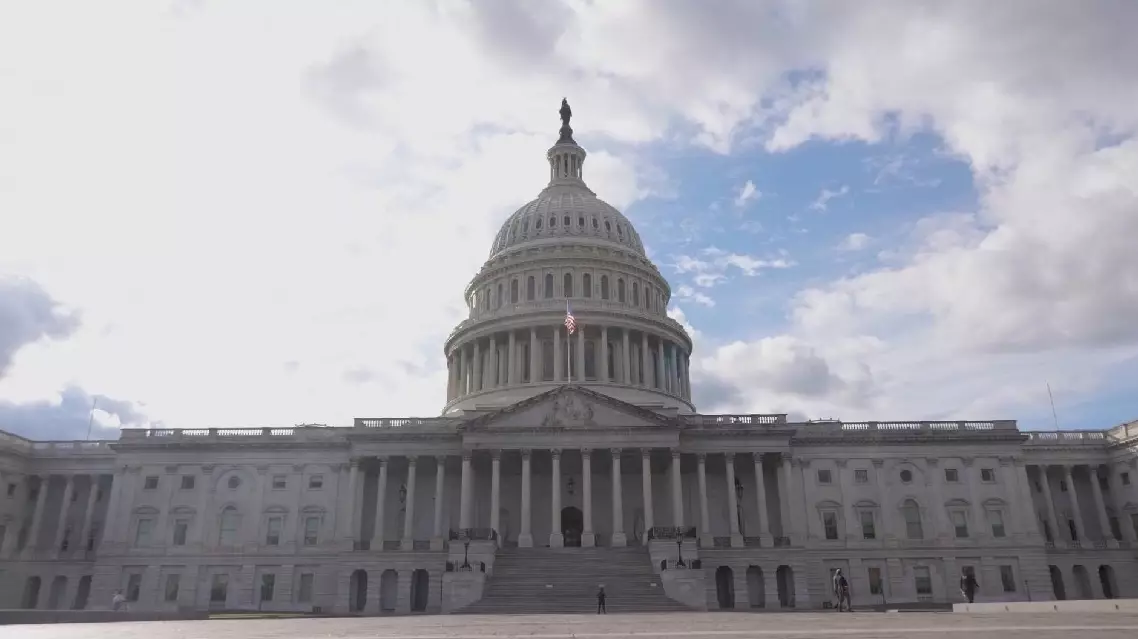
U.S. gov't shutdown nears third week as political gridlock continues
Nicaragua's co-foreign minister Valdrack Jaentschke has warned that militarism must never be allowed to rise again, as Japan's recent moves to lift its arms export ban and revise the pacifist Constitution continue to draw international concern.
This year marks the 80th anniversary of the opening of the Tokyo Trials, where Japan's Class-A war criminals from World War II were brought to justice.
In an interview with China Global Television Network (CGTN), Valdrack Jaentschke voiced his concern that today's world order is being undermined by interventionism and other challenges.
"It is necessary for us to remember that after the end of World War II, countries worked hard to build a new international order based on international law. However, regrettably, more than 80 years later, we are seeing that this once explored and attempted order is being challenged by interventionism, a confrontational mindset, and tendencies like 'might makes right.' These are precisely the conditions that gave rise to fascism and militarism in the past, which ultimately led to the tragedy of World War II," he said.
He said the international community has a responsibility to pursue a new international order -- one fundamentally grounded in peace.
"Looking back at the history more than eight decades ago and comparing it with today's reality, it is our responsibility to recognize that the world should, and must, build a new international order that is more just, fairer, rooted in international law, based on a logic of mutual benefit and shared success, and fundamentally grounded in peace," said the minister.
"Today, as we revisit the Tokyo Trials, it is meant to remind the world that such a tragedy must never be repeated -- and that we must do everything in our power to prevent it from happening again. We must stop that dark world -- born from militarism, interventionism, and fascism -- from ever returning," he said.

Nicaraguan FM warns of militarism revival