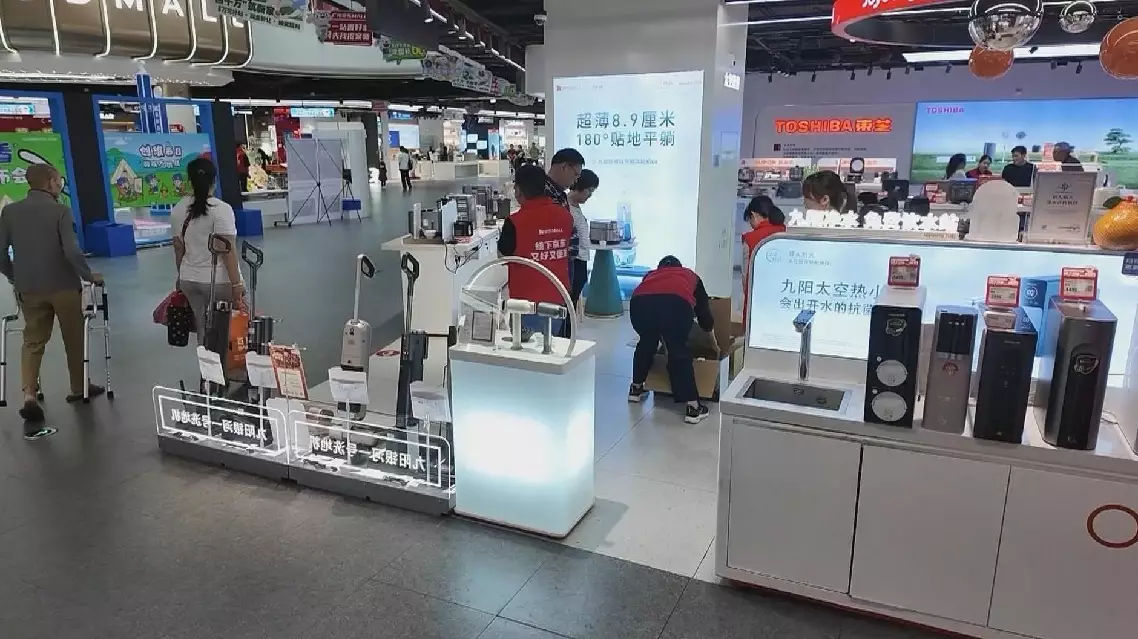
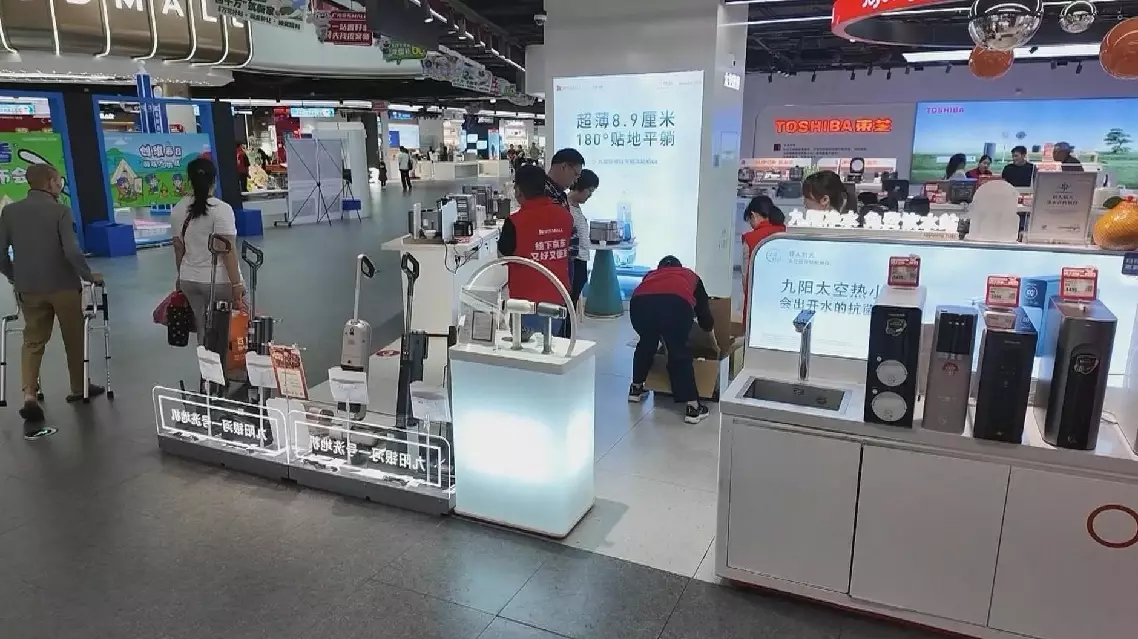
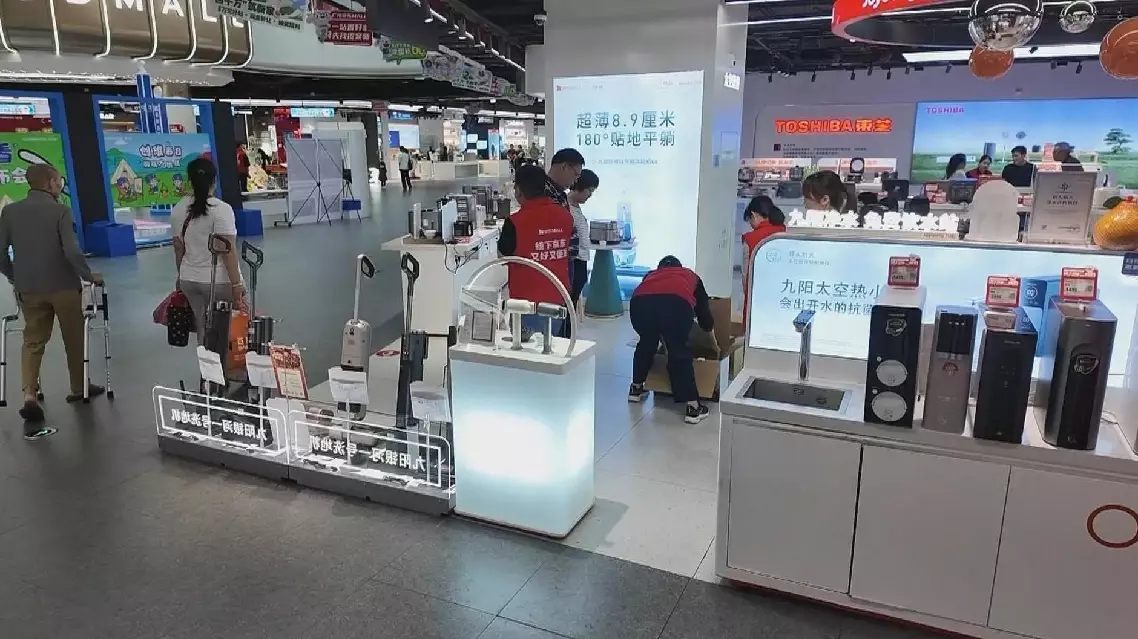
Final consumption contributed 53.5 percent to China's economic growth in the first three quarters of this year, remaining as a main engine driving expansion of the world's second-largest economy, the National Bureau of Statistics (NBS) said Monday.
The figure was 9 percentage points higher than that recorded in the full year of 2024.
The National Development and Reform Commission, together with the Ministry of Finance, have allocated 300 billion yuan(about 42.1 billion U.S. dollars)in ultra-long special-purpose government bonds to local governments in four batches this year, to support the consumer goods trade-in program.
The trade-in policy has driven the retail sales of home appliances, audio-visual equipment, cultural and office supplies, furniture, and other related categories by above-quota units to maintain double-digit growth.
As of September 10, nationwide applications for the vehicle trade-in program had exceeded 8.3 million, averaging over 30,000 applications per day.
Retail sales of high-efficiency and smart home appliances also continued to experience rapid growth in the first three quarters.
Driven by a series of policies and measures, demand for service consumption was further unleashed, strongly boosting consumer market growth.
In the first nine months, service retail sales increased by 5.2 percent year on year, 0.6 percentage points higher than the growth of goods retail sales during the same period. Double-digit growth was recorded in cultural and sports leisure services, communication and information services, tourism consulting and rental services, and transportation services.
"We will keep expanding domestic demand and strengthening the domestic circulation to energize the market, boost development expectations, and build stronger internal momentum for sustained and sound economic growth," said Fu Linghui, a spokesman for the NBS.
Consumer spending contributes 53.5 pct to China's economic growth in first 3 quarters: NBS
Consumer spending contributes 53.5 pct to China's economic growth in first 3 quarters: NBS
Consumer spending contributes 53.5 pct to China's economic growth in first 3 quarters: NBS
Colombians are heading to the polls on Sunday to elect their next president. The country's constitution prevents the current President, Gustavo Petro, from running for a second term.
Yet, many see this election as a referendum on the policies of Gustavo Petro, Colombia's first leftist president.
There are 14 candidates on Sunday's ballot, but the polls show it will likely be a tight three-way race.
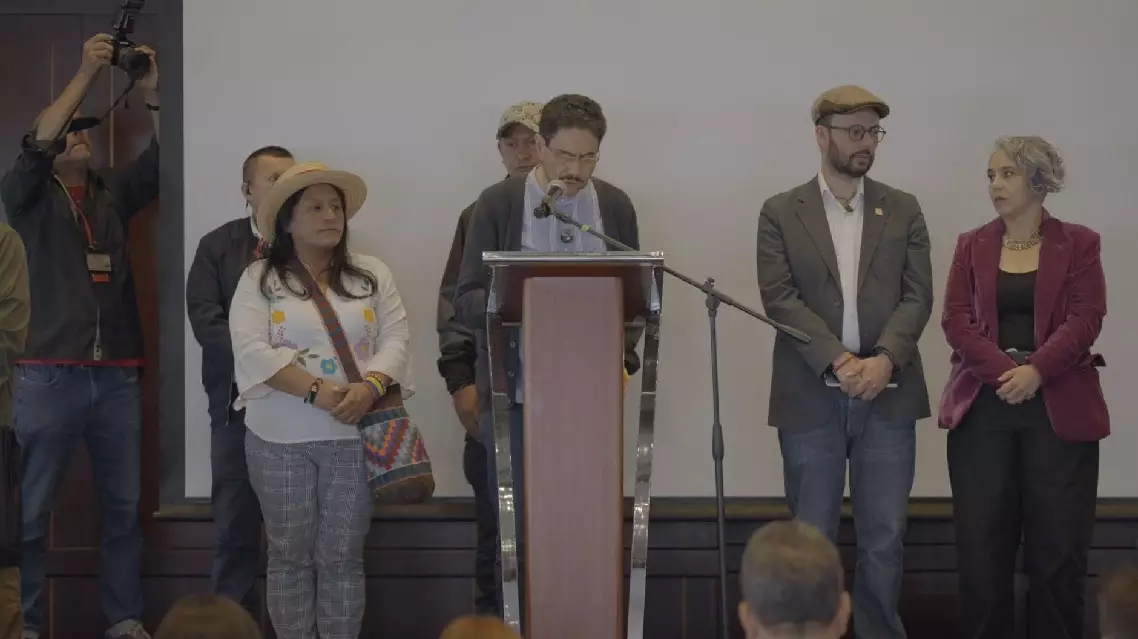
The frontrunner is Ivan Cepeda, a 63-year-old three-term senator, representing President Gustavo Petro's party, the Historic Pact coalition. Cepeda has vowed to defend and deepen Petro's progressive reforms and social justice policies to reduce inequality. He also promises to continue the government's controversial "Total Peace" strategy to negotiate the disarmament of remaining guerrilla groups and criminal gangs.
"True prosperity comes from equality, from access to rights, and from transforming the peripheral and excluded territories of the rural world," Cepeda said at a campaign rally.
Running as a political outsider and independent is Abelardo de la Espriella, a 47-year-old lawyer, nicknamed "The Tiger." He has presented himself as the "authority and order" candidate who will reduce state spending by up to 40 percent in the next four years.
"(First,) we must fight insecurity. Colombia is suffering today from a pandemic of insecurity. Crime is out of control: extortion, cattle theft, smuggling, drug trafficking," he said to his supporters at an election event.
According to polls, the third candidate with strong support is Paloma Valencia. The 48-year-old senator represents the Democratic Center party led by popular former President Alvaro Uribe Velez. Her candidacy is backed by politicians and economists who are concerned with growing levels of public debt. They want to see a return to more conservative fiscal policies.
"I don't want to be a president who governs alone, locked away in glass offices. I want to be a president who stands with citizens, who embraces them, who reaches out to them, who has a team, and who governs to transform Colombia," the candidate said at the campaign event
According to polls earlier in the year, many voters are expressing concerns about unemployment, rising living costs, corruption, and, above all, public security.
The election comes after a turbulent year that the International Committee of the Red Cross has called "the worst humanitarian consequences of armed conflict over the past decade."
"(We arrive at this election in a tense atmosphere - tense) because of the economic situation, because of the security situation, and because of the narratives that have been built around the country's main problems. On top of that, emotions, ideas and social media have all helped raise (the tone,)" said Eduardo Velosa, associate professor from International Studies Javeriana University.
If no candidate receives 50 percent of the vote, a runoff election will be held between the top two finishers on June 21st.
Colombians prepare to choose their next president