Foreign officials and scholars have shared their expectations for China's latest five-year plan which is being reviewed this week at the fourth plenary session of the 20th Communist Party of China (CPC) Central Committee, which started in Beijing on Monday morning.
The session will review the CPC Central Committee's draft proposals for the 15th Five-Year Plan for national economic and social development.
As an overarching blueprint to guide national development, five-year plans outline the country's targets, strategies, priorities and policy orientations in various fields.
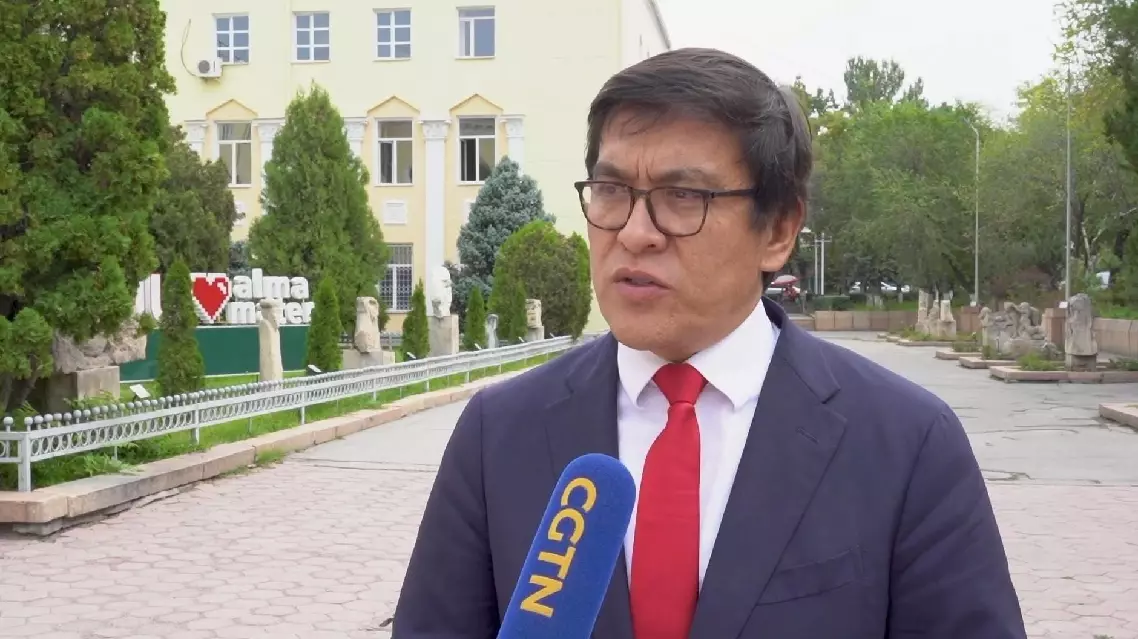
Edil Baisalov, deputy chairman of the Cabinet of Ministers of Kyrgyzstan, said the Kyrgyz government admired China's implementation of the 14th Five-Year Plan (2021-2025) despite many challenges.
"As members of the Kyrgyz government leadership, we have always closely followed China's policies on national governance, the Communist Party of China, and the people. The period of the 14th Five-Year Plan was an extremely difficult five years. We deeply admire China's ability to overcome difficulties, effectively respond to external challenges, and achieve economic growth against the odds. Today's China is the engine and locomotive of the world economy. So we sincerely feel joy and pride for our friendly neighbor in achieving the goals of the 14th Five-Year Plan' goals," he said.
Sizo Nkala, research fellow at the Center for Africa-China Studies under the University of Johannesburg, shared his expectations for China's next development phase.
"My expectations of the 15th five-year development plan is that it's going to be a continuation or a re-emphasis of the priorities that we identified in the 14th Five-Year Plan. So these include the new quality productive forces like innovation, talent identification, research and development, which are at the center of the new economic model that prioritizes high-quality development, and the development of high technology or high-end industries," he said.
Samo Tosatti, head of International Relations of the State of Sao Paulo in Brazil, highlighted the potential for expanded ties with China.
"China and Brazil are strategic partners. So we not only have huge opportunities to expand and strengthen the already very solid cooperation relations between the two sides in various fields, but also have huge opportunities to continue to collaborate in international affairs in a coordinated and united manner, for example, through the BRICS mechanism. Therefore, we have very high expectations for this [the fourth plenary session of the 20th CPC Central Committee]. We hope to draw up guidelines from it, which would guide relations between Brazil and China, especially between China and Sao Paulo," he said.
Foreign observers look forward to China’s new 5-year plan