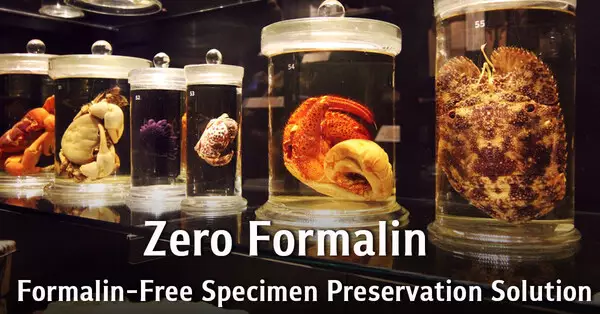
BANGKOK, Oct. 21, 2025 /PRNewswire/ -- Anatomy instructors at the Faculty of Veterinary Science, Chulalongkorn University, have developed Zero Formalin (ZF)—a formalin-free animal specimen preservation solution—to create safer classrooms and reduce health risks for students and staff. The solution is now used for all animal bodies in anatomy classes.
In order to become veterinarians, students at the Faculty of Veterinary Science must spend a long period studying anatomy. They examine animal cadavers that have been preserved using formalin—a clear, highly toxic chemical with a strong, pungent odor.
'We found that students experienced respiratory irritation from formalin, and staff members also faced related health issues, with some problems persisting even after retirement,' said Assoc. Prof. Dr. Kongkiat Srisuwattanasakul, Faculty of Veterinary Science, Chulalongkorn University.
The health issues experienced by students and staff motivated the administration of the Faculty of Veterinary Science, Chulalongkorn University, to establish a policy to "reduce the use of formalin in anatomy education." This initiative led to the development of ZF (Zero Formalin), a formalin-free animal specimen preservation solution, which has been used for all anatomical teaching specimens since 2024.
From Formalin to Zero Formalin
The use of formalin in preserving animal cadavers not only affects the health of anatomy students and staff preparing specimens but may also impact other personnel working within the same building.
"Previously, we used a 10% concentration of formalin, injecting it through the blood vessels or using the dip method—immersing the entire animal body or specific organs in the solution. The effects were not limited to the anatomy classroom alone, as the building's ventilation and structural connections allowed the fumes to spread to other floors, impacting staff in other areas as well."
In the past, the Faculty of Veterinary Science, Chulalongkorn University, had experimented with preservation solutions designed for clinical practice training. However, when applied to anatomy teaching, internal organs such as the liver did not retain their structure well, making anatomy study difficult.
"That's why we needed to develop our own formula," stated Assoc. Prof. Dr. Kongkiat. "Our ZF solution is made up primarily of alcohol, 2-3 types of disinfectants, a moisturizing agent, and a deodorizing agent."
To develop the current ZF formula, Assoc. Prof. Dr. Kongkiat explained, "We began by reviewing existing research papers to see how different formulas had been developed. Then, through trial and error, we started testing on small animals such as frogs, or small organs like cat and dog lungs. We immersed them in the solution and compared characteristics such as color and preservation quality. That's how the ZF formula was eventually created."
Today, ZF (Zero Formalin)—a formalin-free animal specimen preservation solution—has been patented and officially registered as the property of Chulalongkorn University.
The Process of Preserving Animal Specimens with the ZF Formula
Animal specimen preservation using ZF begins by collecting donated animal bodies from the Small Animal Hospital. The fresher the specimen, the better its preservation quality. Once the body is received, the amount of solution needed is calculated based on the animal's weight. Assoc. Prof. Dr. Kongkiat had studied preservation techniques used in human cadavers and adapted them to animal anatomy. After determining the formula, the ZF solution is injected into the animal's arteries—similar to the formalin injection process.
"At present, the injection is done manually, but we have developed a prototype pump designed to inject the ZF solution automatically. The team is now refining it for use in small animals such as cats, since high pressure could damage or rupture their blood vessels."
The ZF solution is used to preserve both whole animal bodies and individual organs for anatomy study, such as horse organs.
"When we receive a specimen, we must immediately extract and soak the internal organs in ZF. Otherwise, within one or two days, the organs will decompose and have to be discarded. In a recent trial with a horse cadaver, we preserved its large intestine in ZF, and several months later, it remains in excellent condition for educational use."
Assoc. Prof. Dr. Kongkiat added that ZF has been tested on small animals such as frogs and on organs like lungs, intestines, and uteruses—all of which have met the required standards for educational use.
The ZF solution has also been successfully applied to preserve entire bodies of animals, including dogs, cats, and goats, which have already been used in anatomy classes throughout the past semester.
Long-Lasting Preservation, Free from Mold
The ZF solution can preserve animal bodies for a duration comparable to that of formalin. Assoc. Prof. Dr. Kongkiat explained, "If the ZF solution is properly injected into all the blood vessels, it can preserve the specimen for six months to over a year. For internal organs, which contain a high amount of microorganisms, they must be removed and soaked in the solution. From our trials, organs stored in ZF have lasted for more than a year. For example, last year we preserved a dog's lung by soaking it in ZF for less than a month and then refrigerating it; it has now remained in good condition for over a year and a half."
"Formalin can also preserve specimens for years, but when kept at room temperature instead of in a refrigerator, mold problems often occur. With ZF, we have not encountered any mold issues. We have tested the solution's disinfecting efficacy, and research confirms that ZF effectively kills various bacteria strains."
In addition to being non-toxic, ZF also offers a cost advantage over formalin.
"Although the production costs of ZF and formalin are similar, the disposal of formalin incurs additional expenses, as it cannot be poured into drainage systems and requires special waste management. Therefore, the overall cost of using formalin for specimen preservation is higher," Assoc. Prof. Dr. Kongkiat explained.
Formula Development and Dissemination
At present, Assoc. Prof. Dr. Kongkiat is refining the ZF formula to make it more suitable for broader use.
"The only organ we cannot yet preserve effectively with ZF is the brain. Brain tissue is very different from other organs—both ZF and formalin cause it to shrink. We are now researching ways to enhance the formula to maintain brain stability. We have also sought collaboration with professors from the Department of Chemistry, Faculty of Science, Chulalongkorn University, to explore incorporating other disinfectant compounds into our solution in the future," he explained.
Currently, the Faculty of Veterinary Science, Chulalongkorn University, has shared the ZF solution with several veterinary institutions, including Rajamangala University of Technology Tawan-ok, Rajamangala University of Technology Srivijaya, Mahanakorn University of Technology, Mahidol University, Mahasarakham University, and Khon Kaen University, all of which have requested to observe ZF-preserved specimens.
"We also have scientists who train personnel from other universities to ensure that the injection and preservation process with ZF achieves the best possible results," added Assoc. Prof. Dr. Kongkiat.
Proven Excellence Through International Recognition
The Faculty of Veterinary Science, Chulalongkorn University, has showcased ZF (Zero Formalin), a formalin-free animal specimen preservation solution, at several academic conferences, including the 46th International Conference on Veterinary Science (ICVS 2024), held from November 28-29, 2024, and the 24th Chulalongkorn University Veterinary Conference (CUVC 2025), held from May 29–30, 2025.
ZF has been recognized with the NRCT Special Award for Outstanding Invention and Innovation, granted by the National Research Council of Thailand (NRCT). It was also selected as one of 31 award-winning projects out of 120 Thai entries presented at the 50th Geneva International Exhibition of Inventions 2025.
ZF was one of three projects from Chulalongkorn University showcased at the event, which is the world's largest platform for inventions and new technologies, held from April 9 to 13, 2025. There, Assoc. Prof. Dr. Kongkiat and his team earned a Silver Medal for their innovative achievement.
Fresh, Formalin-Free Classrooms
According to Assoc. Prof. Dr. Kongkiat, in the past, anatomy classes using formalin had to be conducted in rooms with open windows and fans to dispel the strong odor and improve ventilation. Now, with the adoption of ZF, veterinary students can study anatomy comfortably in air-conditioned classrooms.
"Students are very satisfied with using ZF in anatomy classes, and we have not encountered any cases of irritation or allergic reactions," he noted.
He added that the department monitors air quality before, during, and after classes, with samples analyzed by the Center for Safety, Occupational Health, and Environment, Chulalongkorn University. Tests measured levels of volatile organic compounds, namely isopropyl alcohol and formaldehyde gases, all of which were well below the limits set by the American Conference of Governmental Industrial Hygienists (ACGIH).
Additionally, the Faculty tested ZF's antibacterial efficacy at the Center for Foodborne Pathogen Antimicrobial Resistance Surveillance, Faculty of Veterinary Science, Chulalongkorn University, following AOAC Official Methods of Analysis (2022) standards. The results indicated that ZF eliminated 100% of tested bacteria, confirming its effectiveness and safety.
At the Department of Anatomy at the Faculty of Veterinary Science at Chulalongkorn University, we not only provide students with anatomical knowledge but are also committed to developing anatomical models for instructors and other teaching materials so that students can learn comprehensively, safely, and without formaldehyde.
Read the full article and view photos at: https://www.chula.ac.th/en/highlight/265528/
About Chulalongkorn University
Chulalongkorn University has made the world's top 50 university list for employment outcomes, which reflects both the high employment rate and work ability of Chula graduates. The university is also listed as the best in Thailand for the 15th Consecutive Year (since 2009), according to the newly released QS World University Rankings 2024, putting Chula at 211th in the world, up from 244th last year.
Social Media:
Facebook: https://www.facebook.com/ChulalongkornUniversity
Youtube: https://www.youtube.com/chulauniversity
Linkedin: https://www.linkedin.com/school/15101896/
** The press release content is from PR Newswire. Bastille Post is not involved in its creation. **
Zero Formalin Specimen Preservation Solution for Formalin-Free Classrooms