PEORIA, Ill. (AP) — The Illinois sheriff's deputy who killed Sonya Massey in her Springfield home last year eschewed his training and the principles of policing when he shot the Black woman who had called 911 for help, a prosecutor said Wednesday in Sean Grayson's murder trial.
Grayson, who is white, faces three counts of first-degree murder for shooting the 36-year-old single mother on July 6, 2024, during a confrontation over her handling of a pot of hot water she removed from her stove.
Click to Gallery
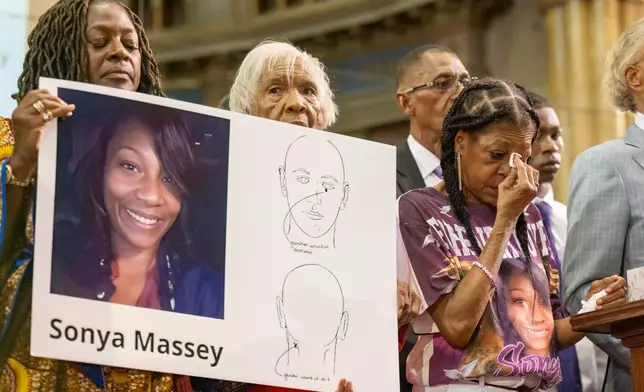
FILE - Donna Massey, center right, wipes tears from her face as she listens to Rev. Al Sharpton, right, speak during a press conference over the shooting death of her daughter Sonya, who was killed by Illinois sheriff's deputy Sean Grayson, at New Mount Pilgrim Church in the Garfield Park neighborhood in Chicago, Tuesday, July 30, 2024. (Tyler Pasciak LaRiviere/Chicago Sun-Times via AP, file)
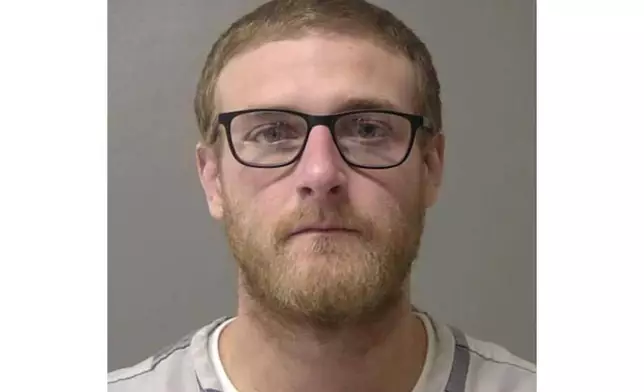
FILE - This January 2025 booking photo provided by the Macon County jail shows Sean Grayson, a former Sangamon County Sheriff's deputy who is charged with first-degree murder in the shooting death of Sonya Massey in Springfield, Ill. (Macon County Jail via AP,File)
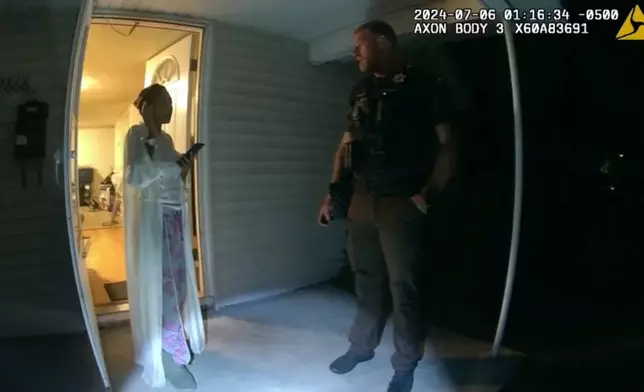
FILE - In this image taken from body camera video released by Illinois State Police, Sonya Massey, left, talks with former Sangamon County Sheriff's Deputy Sean Grayson outside her home in Springfield, Ill., July 6, 2024. (Illinois State Police via AP, File)
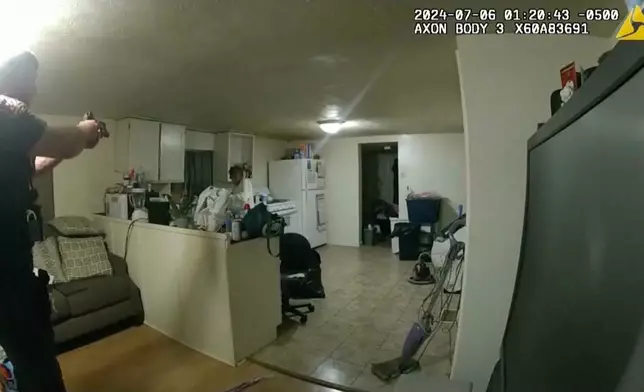
FILE - In this image taken from body camera video released by Illinois State Police on Monday, July 22, 2024, former Sangamon County Sheriff's Deputy Sean Grayson, left, points his gun at Sonya Massey, who called 911 for help, before shooting and killing her inside her home in Springfield, Ill., July 6, 2024. (Illinois State Police via AP, file)
The jury watched unedited body camera video of the encounter, prompting some jurors to recoil and cover their mouths while Grayson looked down for much of it. Massey's mother left the courtroom in tears.
Earlier, Sangamon County State’s Attorney John Milhiser told the jury that the video would show Massey posed no threat when Grayson and fellow Sangamon County Sheriff’s Deputy Dawson Farley entered her home. Massey, who had mental health problems, had called 911 about a suspected prowler.
“She’s a little scattered, but she’s nice and kind and talking to him and you’ll see that interaction,” Milhiser said during opening statements. “You will see what happens when the defendant gets mad at a woman who is in her kitchen and has called for help. He gets mad and shoots and kills her without lawful justification.”
“He did not follow his training. He did not follow police principles.”
Grayson’s attorney, Daniel Fultz, told the jury that when Massey approached with the pot of water, Grayson repeatedly demanded she put it down before “making a decision no police officer wants to make.”
“Ms. Massey lifted the pot of water above her head and the evidence will show that the use of force was reasonable under the circumstances without the benefit of 20/20 hindsight,” Fultz said. “What happened to Ms. Massey was a tragedy, but it was not a crime.”
The killing has prompted continued questions about U.S. law enforcement shootings of Black people in their homes and generated a change in Illinois law requiring fuller transparency on the background of candidates for law enforcement jobs.
Grayson, 31, has pleaded not guilty. If convicted of murder, he faces 45 years to life in prison. Prosecutors dismissed single counts of aggravated battery with a firearm and official misconduct.
Grayson and Farley had entered Massey's home to report they had found no suspicious activity when Grayson noticed the pot on the stove and ordered it removed.
The body camera video shows Grayson and Massey joking about how the deputy backed away as she moved the pot before Massey said, “I rebuke you in the name of Jesus.” Grayson later told sheriff's investigators he thought Massey's statement meant she intended to kill him. He yelled at her to drop the pot. In the subsequent commotion, he fired three shots, striking her just below the eye.
Farley testified that he drew his weapon after Grayson did because department policy calls for a deputy to do so when a partner does.
“She just never did or said anything that made me think she was a threat,” Farley said. “Looking across the room and seeing my partner draw his gun — it was the defendant's actions that made me have a heightened sense of awareness.”
Under Fultz's questioning, Farley acknowledged that his initial report days after the shooting claimed he feared for his safety from the hot water and that Massey held the pot chest high. Farley said that after Grayson was indicted he sought to amend his statement to the Illinois State Police to “clarify” that it was Grayson’s response, not the hot water, that rattled him and that it was an oven mitt, not the pot, that Massey held chest-high.
At the time, Farley was serving a one-year probationary period and subject to firing for any reason. He said his union representative advised against further state police contact.
Earlier, Illinois State Police Lt. Eric Weston, a crime scene investigator, told defense attorney Mark Wykoff that he collected two shell casings from Grayson's 9 mm pistol at Massey's home the morning of the shooting. The third casing was picked up days later, when he learned three shots had been fired. But the pot sat untouched in the house for weeks.
“You knew an hour after the event occurred that the pot was basically employed as a weapon, but you didn’t collect it then,” Wykoff said. “You didn’t collect it during the second search when the third cartridge was collected. You collected it about two weeks later.”
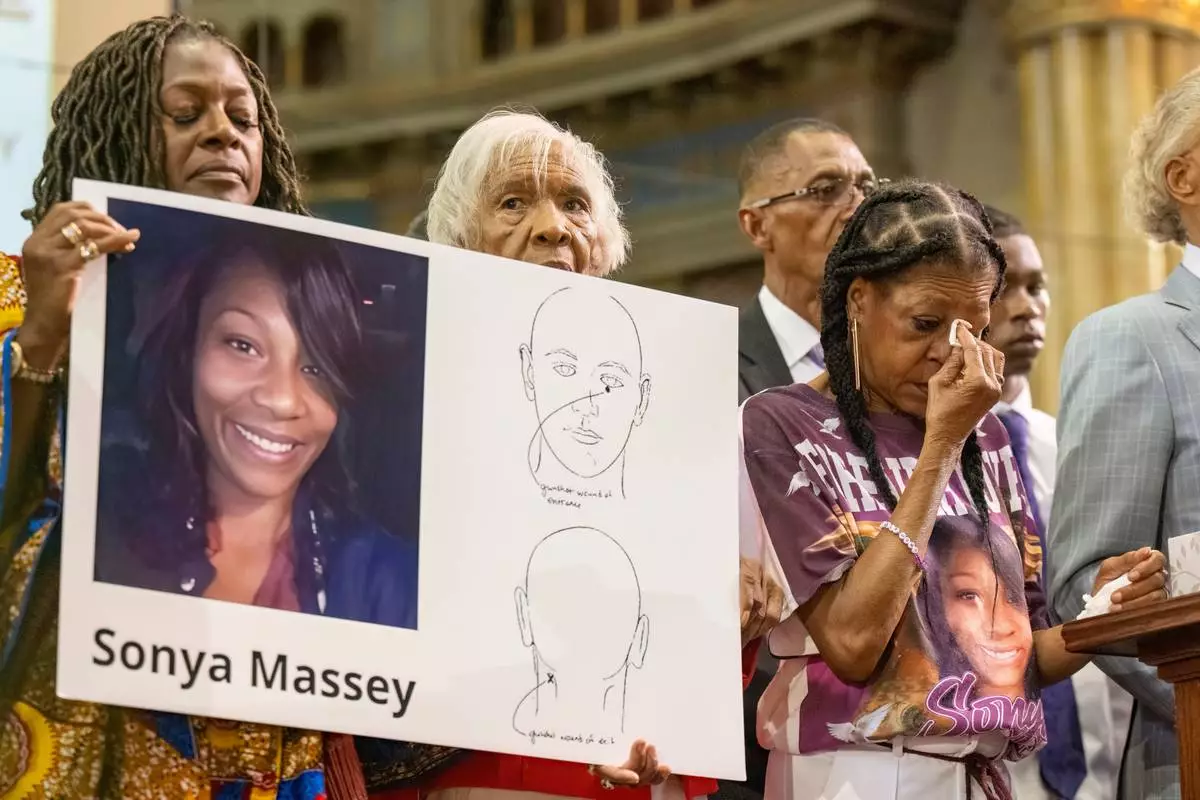
FILE - Donna Massey, center right, wipes tears from her face as she listens to Rev. Al Sharpton, right, speak during a press conference over the shooting death of her daughter Sonya, who was killed by Illinois sheriff's deputy Sean Grayson, at New Mount Pilgrim Church in the Garfield Park neighborhood in Chicago, Tuesday, July 30, 2024. (Tyler Pasciak LaRiviere/Chicago Sun-Times via AP, file)
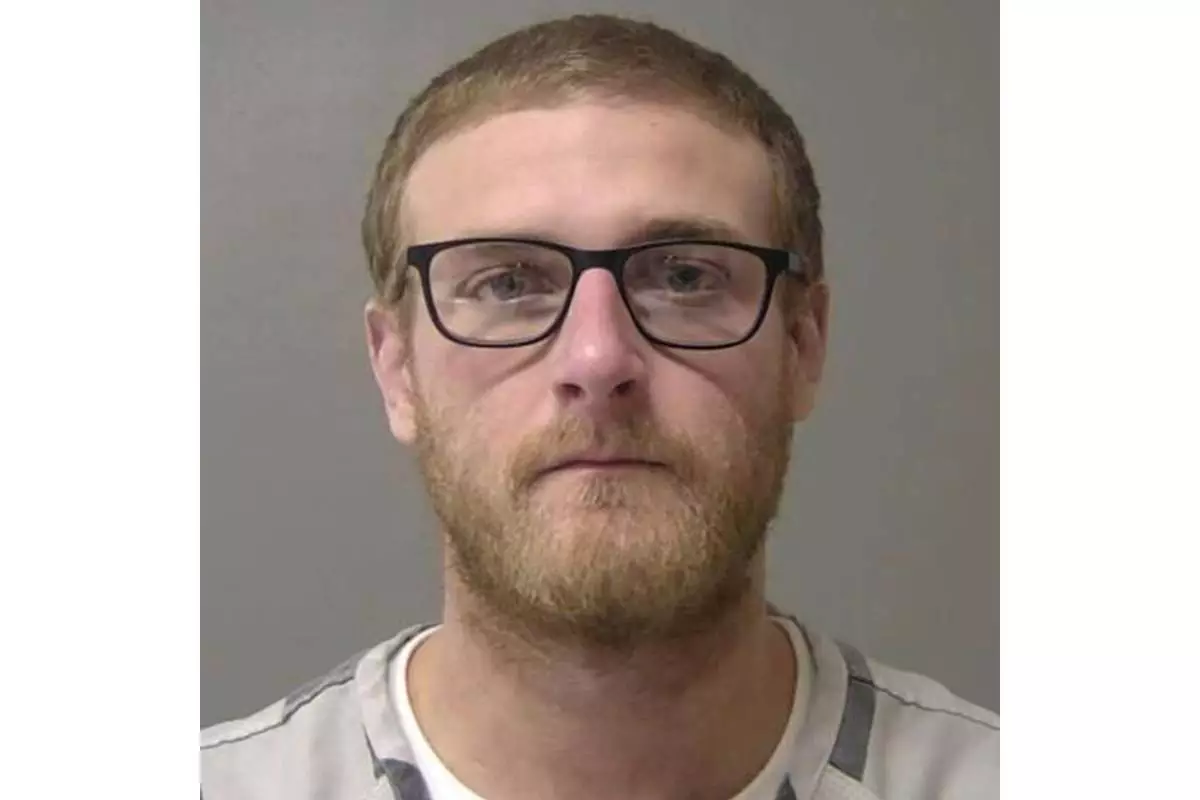
FILE - This January 2025 booking photo provided by the Macon County jail shows Sean Grayson, a former Sangamon County Sheriff's deputy who is charged with first-degree murder in the shooting death of Sonya Massey in Springfield, Ill. (Macon County Jail via AP,File)

FILE - In this image taken from body camera video released by Illinois State Police, Sonya Massey, left, talks with former Sangamon County Sheriff's Deputy Sean Grayson outside her home in Springfield, Ill., July 6, 2024. (Illinois State Police via AP, File)
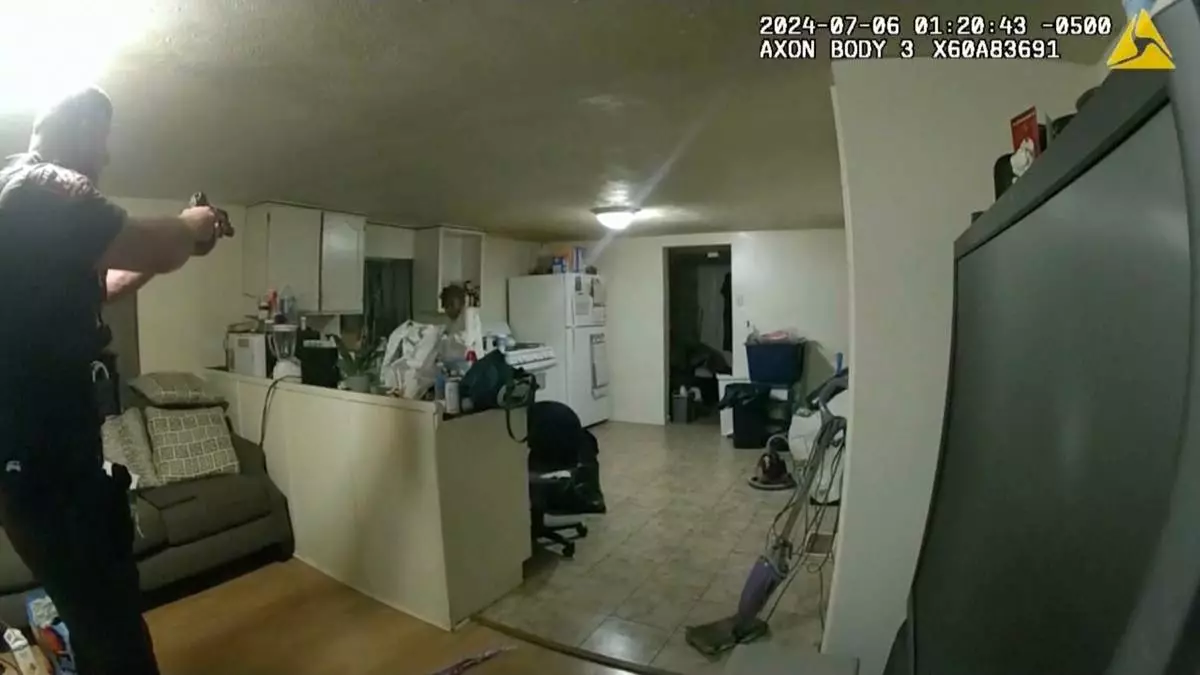
FILE - In this image taken from body camera video released by Illinois State Police on Monday, July 22, 2024, former Sangamon County Sheriff's Deputy Sean Grayson, left, points his gun at Sonya Massey, who called 911 for help, before shooting and killing her inside her home in Springfield, Ill., July 6, 2024. (Illinois State Police via AP, file)