China has discovered a 100-million-tonne shale oil reserve in its Chongqing Municipality, as a testing on Thursday showed that its high-yield shale oil and gas flow can reach a daily production of 38.64 cubic meters of shale oil and 10,000 cubic meters of natural gas. The test was carried out at the newly built Qiluye-1 oil well, which is located more than 2,000 meters underground in southwestern China's Sichuan Basin.
"The Qiluye-1 oil well boasts shallow burial depth of shale oil and high-quality crude, thus having relatively great economic potential for development. This breakthrough has basically confirmed that we had obtained what we have expected for a large-scale integrated shale oil reserve of more than 100 million tonnes," said Wang Liangjun, a representative of Sinopec Exploration Company.
Shale oil is an unconventional oil resource found in shale formations and has broad prospect for exploration.
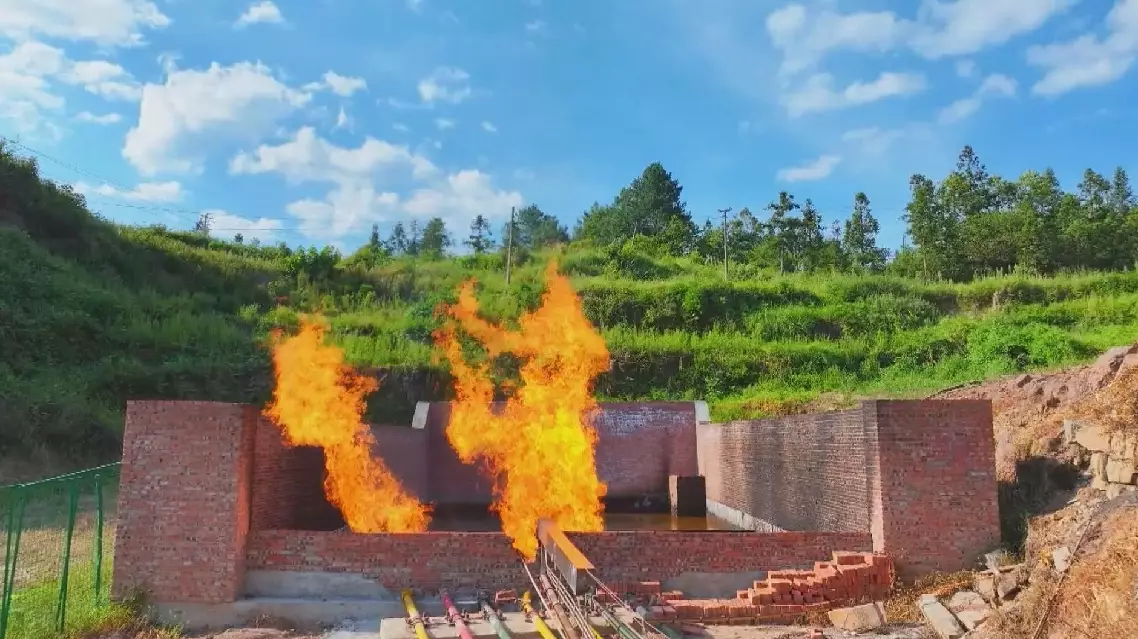
China confirms discovering 100-mln-tonne shale oil reserve
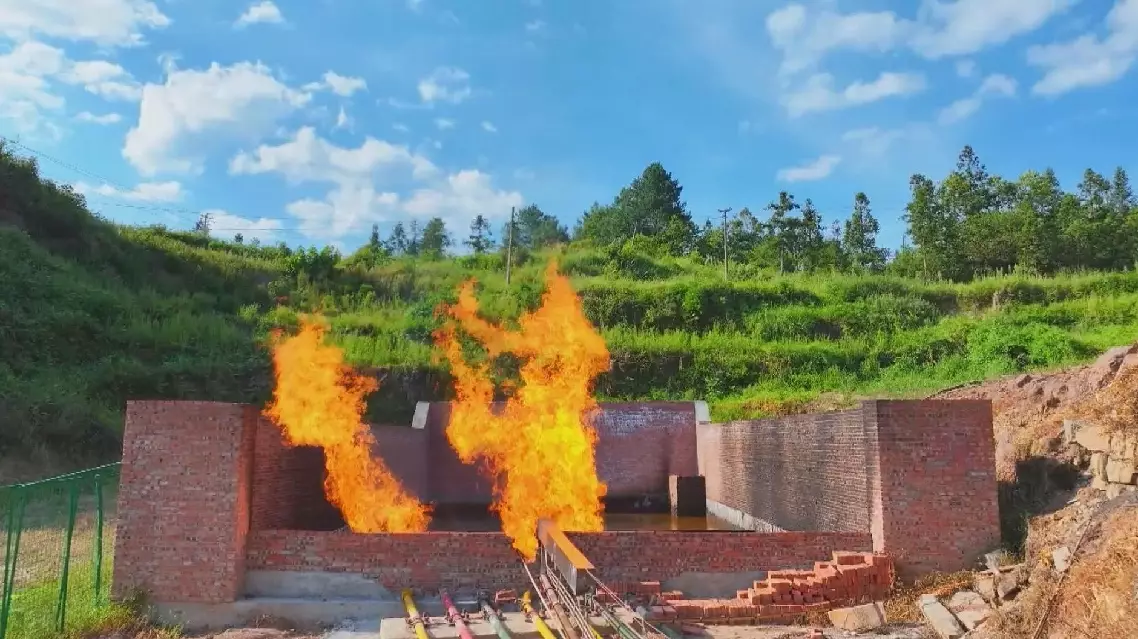
China confirms discovering 100-mln-tonne shale oil reserve
A pair of playful panda cubs have been captured on camera showing off their nimble tree-climbing skills before engaging in an acrobatic joust halfway up the tree branch as they battled for the bragging rights in their enclosure.
The footage filmed last month at the Chengdu Research Base of Giant Panda Breeding in southwest China's Sichuan Province shows the pandas enjoying their playtime at the base's Star Giant Panda Nursery House.
The video shows the young pandas demonstrating remarkable flexibility and agility as they clambered up and around a tree branch. One was seen bravely hanging upside down in an acrobatic pose, while the other was able to balance steadily on a single paw, turning the small tree into their very own playground.
Panda keepers are keen to encourage the young cubs to engage with one another as a form of social enrichment, a key animal welfare measure that fosters interaction between individuals and promotes the development of diverse natural behaviors.
This enrichment practice adheres to science-backed care strategies which are designed to improve the national treasure's welfare, meet their physical and psychological needs, and encourage them to exhibit more of their innate wild behaviors.
The Chengdu base is a world-renowned facility for ex-situ conservation, scientific research and breeding, public education and eco-tourism. It is globally recognized for protecting and breeding endangered Chinese wildlife species such as giant pandas and red pandas.
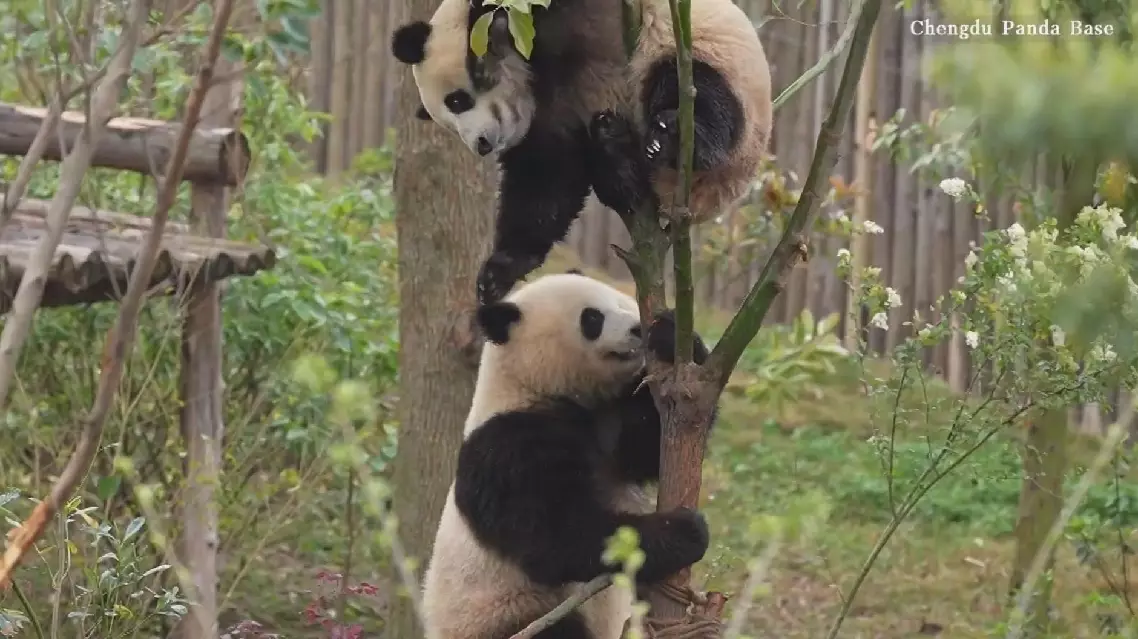
Panda cubs show off tree-climbing skills, engage in acrobatic mid-air play-fight