WASHINGTON (AP) — As the United States rapidly builds massive data centers for the development of artificial intelligence, many Americans are concerned about the environmental impact.
Worries about how AI will affect the environment surpass concerns about other industries that worsen climate change, according to a new poll from The Associated Press-NORC Center for Public Affairs Research and the Energy Policy Institute at the University of Chicago.
Click to Gallery
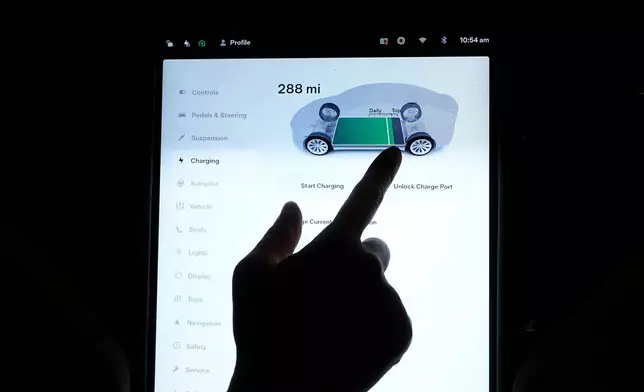
FILE - The charging status screen is shown on a Tesla car at a home in San Francisco, Aug. 25, 2022. (AP Photo/Jeff Chiu, File)
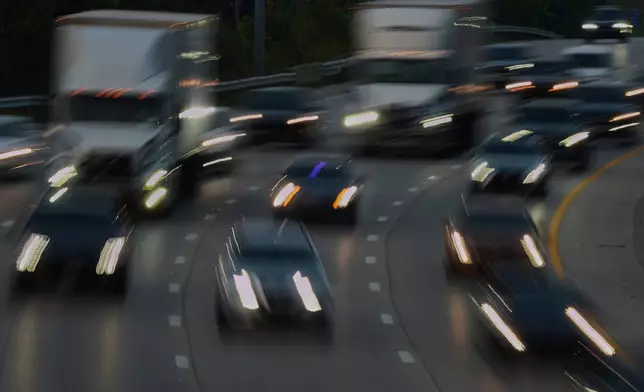
FILE - Vehicles drive along a highway July 30, 2025, in Cincinnati. (AP Photo/Joshua A. Bickel, File)
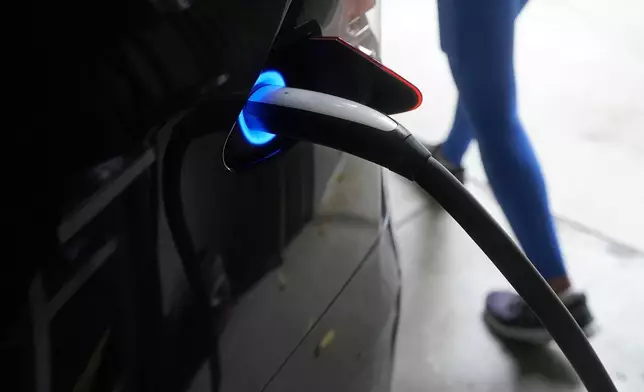
FILE - A Tesla car charges at a home in San Francisco, Aug. 25, 2022. (AP Photo/Jeff Chiu, File)
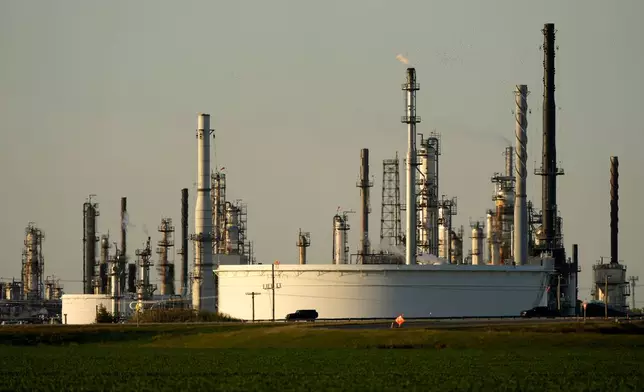
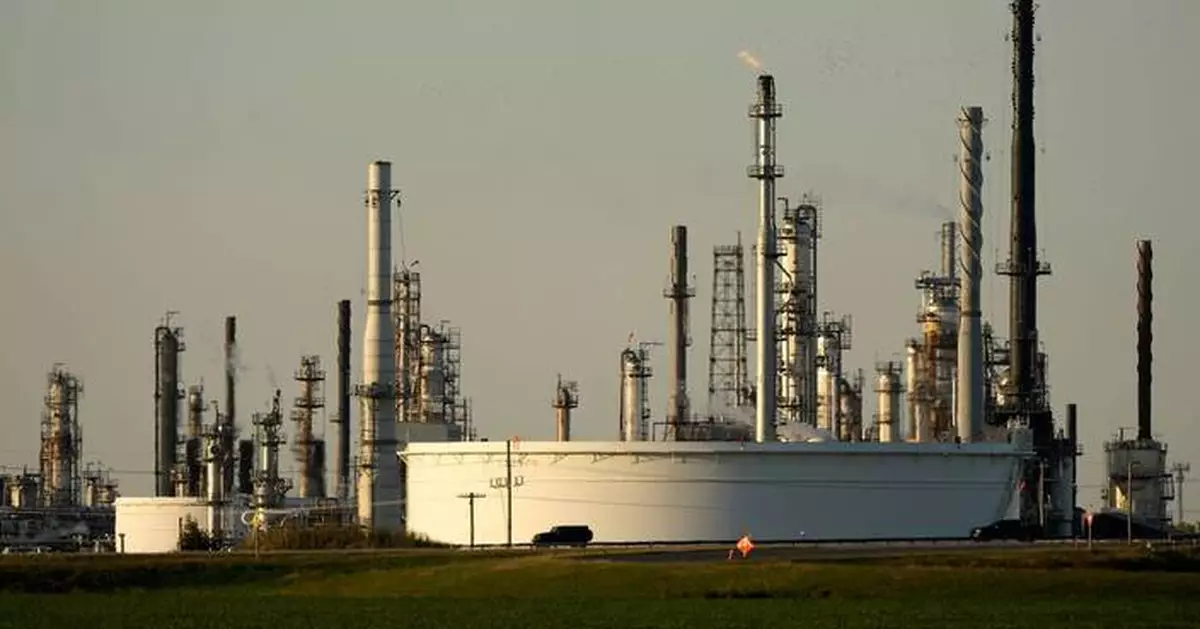
FILE - A motorist drives past the CHS oil refinery Sept. 28, 2024, in McPherson, Kan. (AP Photo/Charlie Riedel, File)
The results of the poll, conducted in September, suggest that as AI reshapes work, communication and culture, it’s also sparking anxieties about how the growing energy demands could further harm the environment.
It takes massive amounts of electricity to power AI. Electricity consumption from data centers is set to more than double globally by 2030, according to the International Energy Agency. The United States accounts for by far the largest share of the projected increase, followed by China. In many places, the electricity for data centers will come from power plants that burn coal, oil and natural gas. Burning these fossil fuels for electricity emits carbon dioxide, trapping heat in the atmosphere and warming the planet.
The energy needs are so large that major technology companies are investing in next-generation nuclear technology, which can produce electricity without emissions, and quietly scaling back their own goals to cut carbon pollution.
Aidan Collins, a 26-year-old Democrat in New York, said in his view, AI uses an “absurd amount” of energy.
“Using all this energy and contributing to climate change in a bad way, it all just seems very awful to me,” he said.
President Donald Trump unveiled a plan this summer for America’s “global dominance” in artificial intelligence, which included cutting back environmental regulations to speed up the construction of AI supercomputers. The U.S. Department of Energy has identified federal sites where tech companies could build data centers to power AI. Trump, a Republican, has made sweeping strides to prioritize fossil fuels for electricity generation and hinder renewable energy projects.
About 4 in 10 U.S. adults say they are “extremely” or “very” concerned about the environmental impacts of AI. That’s higher than the share of Americans who are highly concerned about the environmental impact of the cryptocurrency, meat production and air travel industries, all of which contribute to climate change and cause environmental harm. Bitcoin mining uses enormous amounts of electricity. Livestock produce methane, a powerful greenhouse gas. And when airplanes burn jet fuel, it releases carbon dioxide.
Like Collins, several Americans said in follow-up interviews that they are worried about the energy and water required to power AI. Data centers need a tremendous amount of water to keep cool. Some communities strongly oppose data centers because they demand so much energy and water.
Aaron Gunnoe, a 29-year-old independent in Ohio, said he's very concerned about the increasing electricity demand, when much of it is supplied by fossil fuels.
“They haven’t done anything in the way of offsetting it cleanly," he said. “They just keep building more and more.”
Democrats are particularly likely to be concerned about the environmental impacts of AI.
“I feel like it’s going to be a greater and greater burden,” said Amy Fennewald, a 61-year-old Democrat in Minnesota.
But while about half of Democrats are “extremely” or “very” concerned, so are about one-third of independents and Republicans. Raymond Suarez, a 60-year-old living in Florida, considers himself a “strong” Republican. He fears data centers will be built on land that should be preserved or used for other things, such as farming, and he worries AI is becoming too pervasive.
“For them to uptick it and for them to think it’s a great thing, no, it’s not,” he said.
On the other hand, James Horner said he’s not at all concerned about the environmental impacts. The 52-year-old Republican living in South Carolina said he thinks artificial intelligence will be the solution to its own energy problem — it will show how clean energy can be built in an efficient, profitable way, and clean energy will be used to power AI.
“It’s going to help everybody,” he said. “I think it’s going to be able to figure out these processes happening in our body that scientists, as smart as they are, haven’t figured out yet. With supercomputers taking all that data, I think it will help everything, health care, the environment. If it’s used correctly, it will do good.”
Americans are more likely to think that over the next decade, artificial intelligence will do more to hurt than help the environment, the economy and society as a whole.
Doug Bowen, a 79-year-old moderate Republican living in Kansas, said he thinks artificial intelligence will do more to hurt. The demand on the planet's resources will be greater as AI and the number of companies involved in the field grow, he said.
Americans are divided on whether AI will do more to help or hurt them personally. About one-quarter say AI will do more to help them, and about the same share say it will do more to hurt them. About half say that it won’t make a difference in their lives or that they are unsure.
Amanda Hernandez, a 24-year-old Democrat in California, said she grew concerned after watching TikTok videos about the immense energy and water demands. Hernandez said she thinks she will be personally hurt by AI because she works as a cashier at a fast food restaurant.
“I’m more concerned, as AI continues to grow and advance, that we’re just not going to need any cashiers or customer service people altogether,” she said.
Fennewald, in Minnesota, said she doesn't know whether she will be personally helped or hurt by AI in the future.
“I think it’s a black box. I don’t know how we can know,” she said. “We really have no idea what's ahead.”
McDermott reported from Providence, R.I.
The AP-NORC poll of 3,154 adults was conducted Sept. 2-18, 2025, using a combined sample of interviews from NORC’s probability-based AmeriSpeak Panel, which is designed to be representative of the U.S. population, and interviews from opt-in online panels. The margin of sampling error for all respondents is plus or minus 2.4 percentage points. The AmeriSpeak panel is recruited randomly using address-based sampling methods, and respondents later were interviewed online or by phone. To incorporate the nonprobability sample, NORC used TrueNorth calibration, an innovative hybrid calibration approach developed at NORC to explicitly account for potential bias associated with the nonprobability sample.
The Associated Press’ climate and environmental coverage receives financial support from multiple private foundations. The AP is solely responsible for all content. Find the AP’s standards for working with philanthropies, a list of supporters and funded coverage areas at AP.org.
Follow the AP's coverage of artificial intelligence at https://apnews.com/hub/artificial-intelligence.
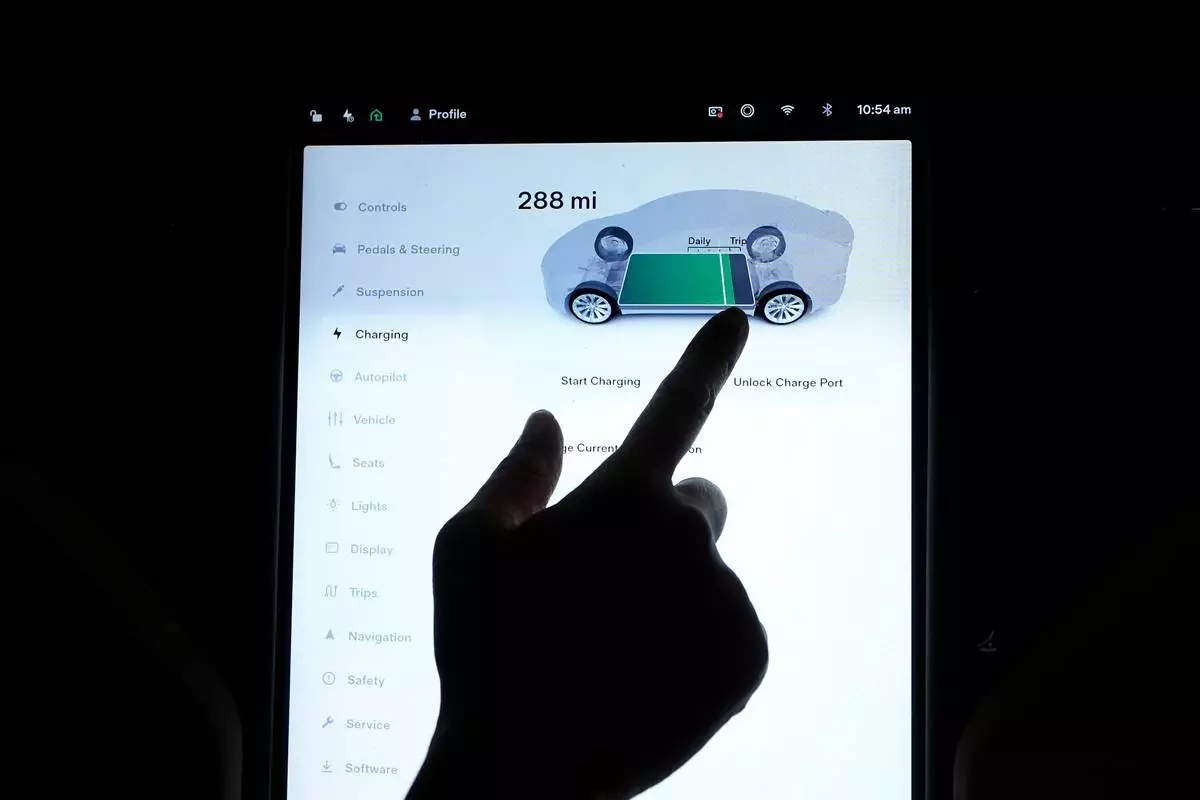
FILE - The charging status screen is shown on a Tesla car at a home in San Francisco, Aug. 25, 2022. (AP Photo/Jeff Chiu, File)
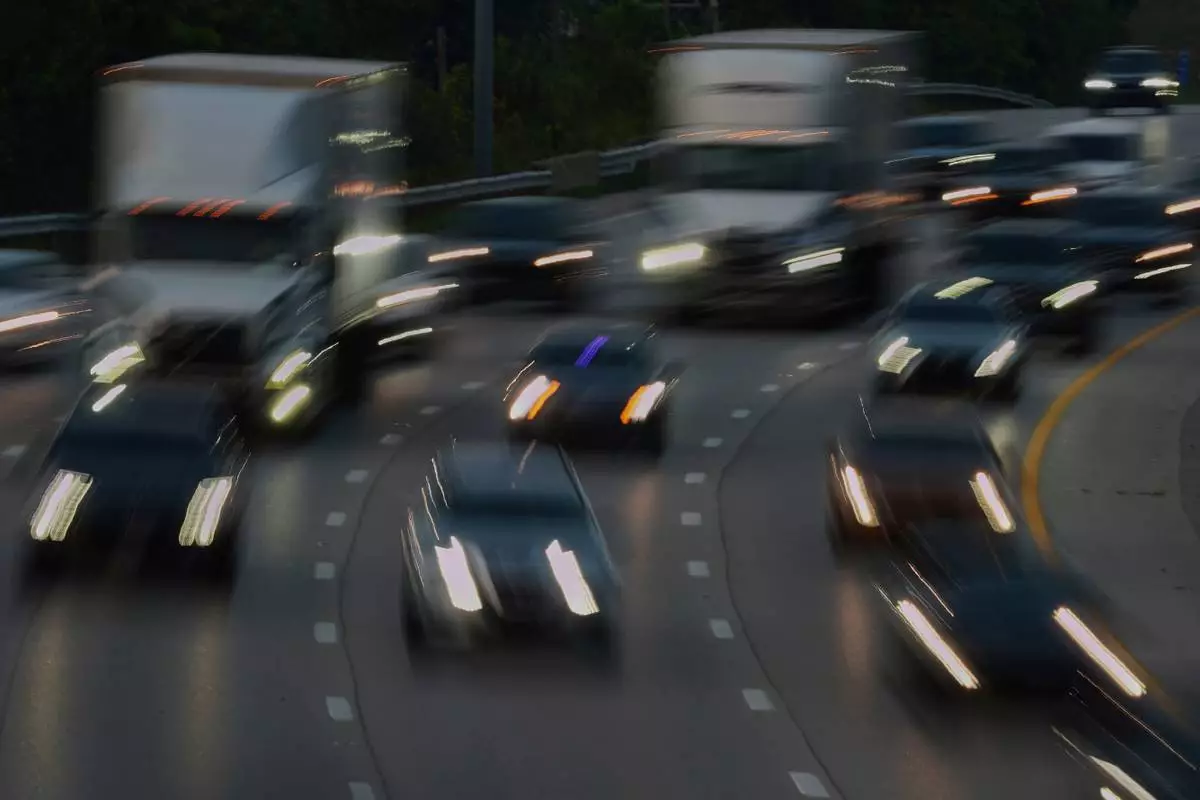
FILE - Vehicles drive along a highway July 30, 2025, in Cincinnati. (AP Photo/Joshua A. Bickel, File)
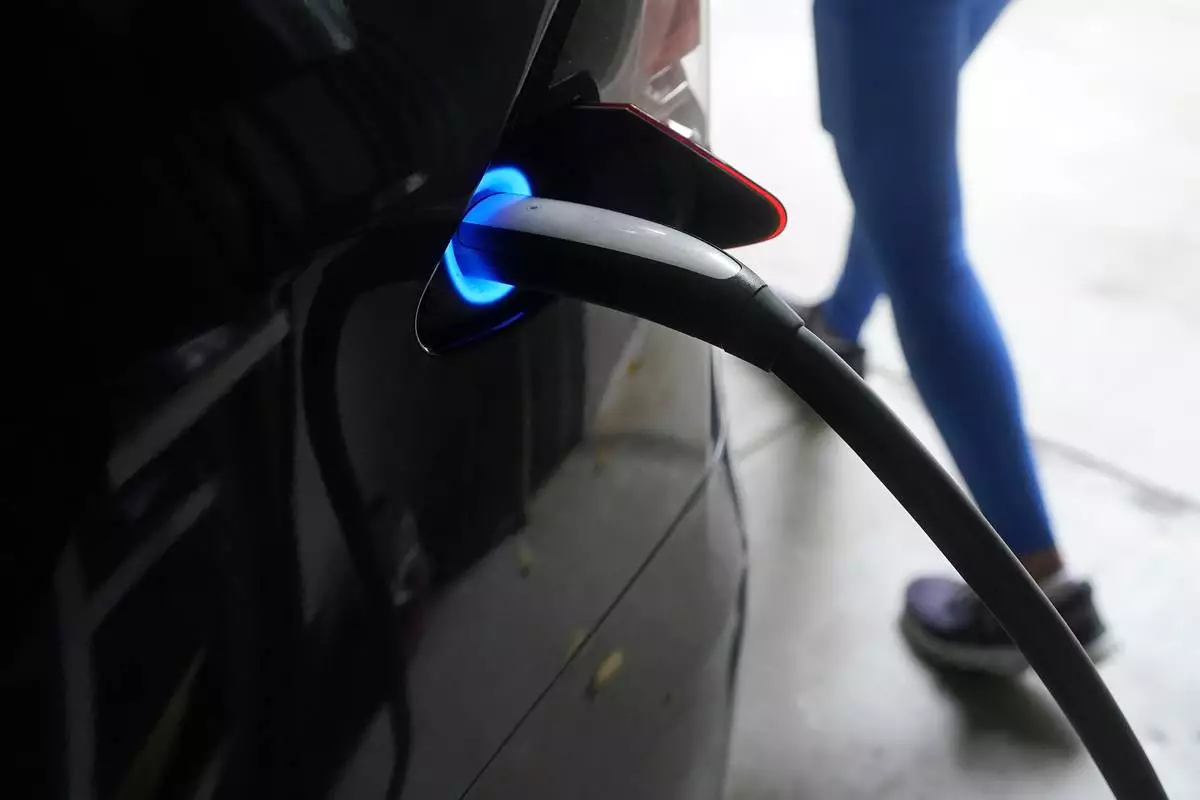
FILE - A Tesla car charges at a home in San Francisco, Aug. 25, 2022. (AP Photo/Jeff Chiu, File)
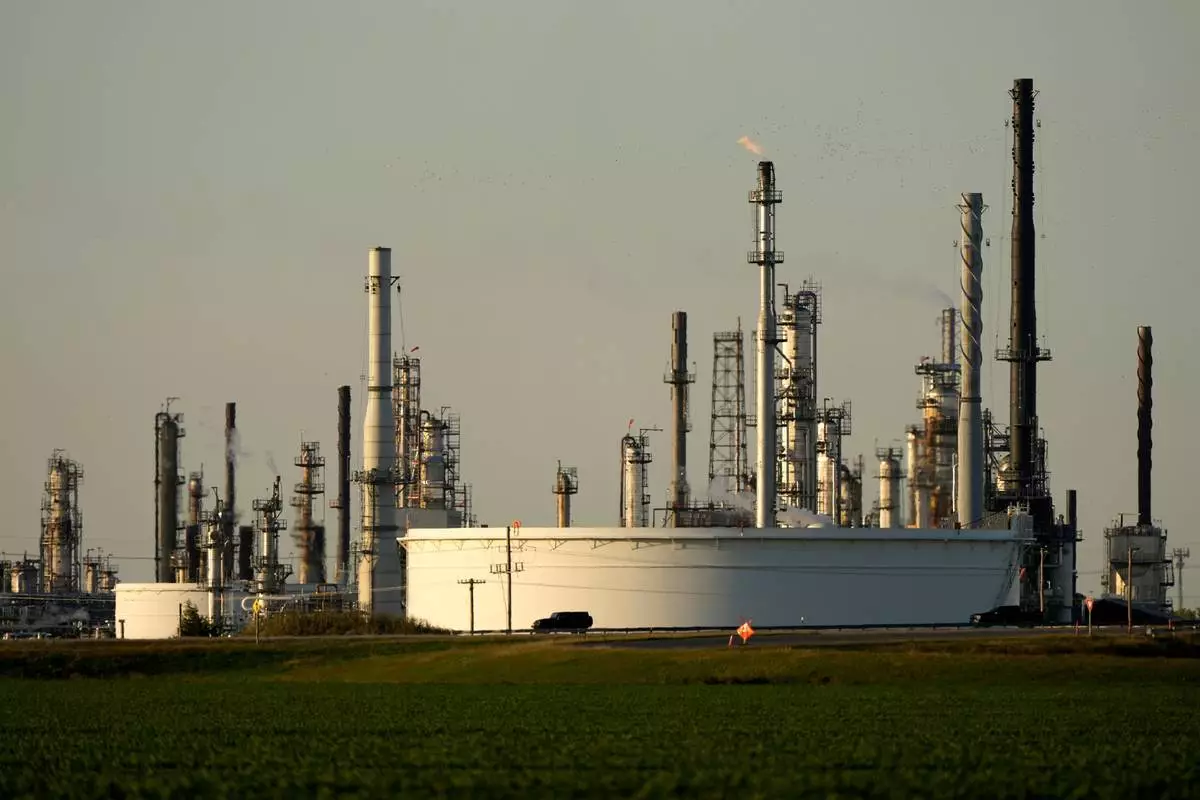
FILE - A motorist drives past the CHS oil refinery Sept. 28, 2024, in McPherson, Kan. (AP Photo/Charlie Riedel, File)
MINNEAPOLIS (AP) — A federal officer shot a person in the leg in Minneapolis after being attacked with a shovel during an arrest Wednesday, a person familiar with the matter told The Associated Press.
The person cautioned the information was still preliminary, and the investigation was in its early stages. The person could not discuss details of the investigation publicly and spoke to AP on condition of anonymity.
The shooting took place about 4.5 miles (7.2 kilometers) north of where an immigration agent fatally shot Renee Good in the head on Jan. 7 as she drove away.
A large group of federal agents and Minneapolis Police wearing gas masks fired tear gas into a crowd gathered at a north Minneapolis intersection near where Wednesday's shooting took place.
The city of Minneapolis said on the social media platform X that, “We are aware of reports of a shooting involving federal law enforcement in North Minneapolis. We are working to confirm additional details.”
Earlier Wednesday, a judge gave the Trump administration time to respond to a request to suspend its immigration crackdown in Minnesota, while the Pentagon looked for military lawyers to join what has become a chaotic law enforcement effort in the state.
Plumes of tear gas, bursts of chemical irritants and the screech of protest whistles have become common on the streets of Minneapolis, especially since Good's shooting.
Agents have yanked people from cars and homes and been confronted by angry bystanders who are demanding that officers pack up and leave.
“What we need most of all right now is a pause. The temperature needs to be lowered," state Assistant Attorney General Brian Carter said during the first hearing in a lawsuit filed by Minnesota and the cities of Minneapolis and St. Paul.
Local leaders say the government is violating free speech and other constitutional rights with the surge of law enforcement. U.S. District Judge Katherine Menendez promised to keep the case “on the front burner” and gave the U.S. Justice Department until Monday to file a response to a request for a restraining order.
The judge said these are "grave and important matters,” and that there are few legal precedents to apply to some of the key points in the case.
Justice Department attorney Andrew Warden suggested the approach set by Menendez was appropriate.
The judge is also handling a separate lawsuit challenging the tactics used by Immigration and Customs Enforcement and other federal officers when they encounter protesters and observers. A decision could be released this week.
During a televised speech Wednesday evening, Gov. Tim Walz described Minnesota as being in chaos, saying what's happening in the state “defies belief.”
“Let’s be very, very clear, this long ago stopped being a matter of immigration enforcement," he said. "Instead, it’s a campaign of organized brutality against the people of Minnesota by our own federal government.”
Walz added that “accountability” will be coming through the courts.
The Department of Homeland Security says it has made more than 2,000 arrests in the state since early December and is vowing to not back down. The Pentagon is preparing to send military lawyers to Minneapolis to assist.
CNN, citing an email circulating in the military, says Defense Secretary Pete Hegseth is asking the branches to identify 40 lawyers known as judge advocate general officers or JAGs, and 25 of them will serve as special assistant U.S. attorneys in Minneapolis.
Pentagon spokesperson Kingsley Wilson appeared to confirm the CNN report by posting it on X with a comment that the military “is proud to support” the Justice Department.
The Pentagon did not immediately respond to emails from The Associated Press seeking more details.
It’s the latest step by the Trump administration to dispatch military and civilian attorneys to areas where federal immigration operations are taking place. The Pentagon last week sent 20 lawyers to Memphis, U.S. Attorney D. Michael Dunavant said.
Mark Nevitt, an associate professor at Emory University School of Law and a former Navy JAG, said there's concern that the assignments are taking lawyers away from the military justice system.
“There are not many JAGs but there are over one million members of the military, and they all need legal support,” he said.
Jonathan Ross, the Immigration and Customs Enforcement officer who killed Good, suffered internal bleeding to his torso during the encounter, a Homeland Security official told The Associated Press.
The official spoke to AP on condition of anonymity in order to discuss Ross’ medical condition. The official did not provide details about the severity of the injuries, and the agency did not respond to questions about the extent of the bleeding, exactly how he suffered the injury, when it was diagnosed or his medical treatment.
There are many causes of internal bleeding, and they vary in severity from bruising to significant blood loss. Video from the scene showed Ross and other officers walking without obvious difficulty after Good was shot and her Honda Pilot crashed into other vehicles.
She was killed after three ICE officers surrounded her SUV on a snowy street a few blocks from her home.
Bystander video shows one officer ordering Good to open the door and grabbing the handle. As the vehicle begins to move forward, Ross, standing in front, raises his weapon and fires at least three shots at close range. He steps back as the SUV advances and turns.
Homeland Security Secretary Kristi Noem has said Ross was struck by the vehicle and that Good was using her SUV as a weapon — a self-defense claim that has been deeply criticized by Minnesota officials.
Chris Madel, an attorney for Ross, declined to comment on any injuries.
Good’s family, meanwhile, has hired a law firm, Romanucci & Blandin, that represented George Floyd’s family in a $27 million settlement with Minneapolis. Floyd, who was Black, died after a white police officer pinned his neck to the ground in the street in May 2020.
The firm said Good was following orders to move her car when she was shot. It said it would conduct its own investigation and publicly share what it learns.
“They do not want her used as a political pawn,” the firm said, referring to Good and her family, “but rather as an agent of peace for all.”
Waving signs reading “Love Melts ICE” and “DE-ICE MN,” hundreds of teenagers left school in St. Paul and marched in freezing temperatures to the state Capitol for a protest and rally.
The University of Minnesota, meanwhile, informed its 50,000-plus students that there could be online options for some classes when the new term starts next week. President Rebecca Cunningham noted that “violence and protests have come to our doorstep.” The campus sits next to the main Somali neighborhood in Minneapolis.
Associated Press reporters Julie Watson in San Diego, California; Rebecca Santana in Washington, D.C.; Ed White in Detroit; Giovanna Dell’Orto in Minneapolis; Graham Lee Brewer in Oklahoma City, Oklahoma; and Hallie Golden in Seattle contributed.
Federal immigration officers at the scene of a reported shooting Wednesday, Jan. 14, 2026, in Minneapolis. (AP Photo/John Locher)
A woman confronts a federal immigration officer at the scene of a reported shooting Wednesday, Jan. 14, 2026, in Minneapolis. (AP Photo/John Locher)
People react after a firework was set off near the scene of a reported shooting Wednesday, Jan. 14, 2026, in Minneapolis. (AP Photo/Abbie Parr)
Federal immigration officers shoot pepper balls as tear gas is deployed at the scene of a reported shooting Wednesday, Jan. 14, 2026, in Minneapolis. (AP Photo/John Locher)
Law enforcement officers stand amid tear gas at the scene of a reported shooting Wednesday, Jan. 14, 2026, in Minneapolis. (AP Photo/Adam Gray)
Federal immigration officers are seen Wednesday, Jan. 14, 2026, in Minneapolis. (AP Photo/Abbie Parr)
Hundreds of protesters gather in front of the Minnesota State Capitol in response to the death of Renee Good, who was fatally shot by an ICE officer last week, Wednesday, Jan. 14, 2026, in St. Paul, Minn. (AP Photo/John Locher)
Protesters gather in front of the Minnesota State Capitol in response to the death of Renee Good, who was fatally shot by an ICE officer last week, Wednesday, Jan. 14, 2026, in St. Paul, Minn. (AP Photo/John Locher)
Federal officers stand guard after detaining people outside of Bishop Henry Whipple Federal Building, Tuesday, Jan. 13, 2026, in Minneapolis. (AP Photo/Adam Gray)
People visits a makeshift memorial for Renee Good, who was fatally shot by an ICE officer last week, Tuesday, Jan. 13, 2026, in Minneapolis. (AP Photo/John Locher)
A person is detained by federal agents near the scene where Renee Good was fatally shot by an ICE officer last week, Tuesday, Jan. 13, 2026, in Minneapolis. (AP Photo/Adam Gray)