TOKYO--(BUSINESS WIRE)--Oct 23, 2025--
Asahi Kasei has announced the official approval of new facilities at its Kawasaki Works to manufacture electrolysis system components for both alkaline water electrolysis and chlor-alkali electrolysis. Alkaline water electrolysis systems in particular are expected to enjoy significant demand growth as production of clean hydrogen becomes widespread. Through strategic allocation of resources for expansion, the company expects that hydrogen-related business will become a growing part of its Material sector over the coming years.
This press release features multimedia. View the full release here: https://www.businesswire.com/news/home/20251023051552/en/
Configuration of Asahi Kasei's alkaline water electrolyzer
The new facilities will manufacture electrolysis cell frames and membranes to support two strategic business areas: alkaline water electrolysis systems used in the production of clean hydrogen, and ion-exchange membrane chlor-alkali electrolysis to produce chlorine and caustic soda. This investment strengthens vertical integration across key materials for hydrogen and chlor-alkali markets, enhancing stable supply to meet future market growth.
Initiated on December 18 th, 2024, the project has been selected for financial support under the Japanese Ministry of Economy, Trade, and Industry’s “GX Supply Chain Development Program.” The new facilities enable the company to increase production and deliver cutting-edge solutions to the hydrogen, chlorine, and caustic soda markets.
Under its medium-term management plan, Asahi Kasei has positioned its alkaline water electrolysis and chlor-alkali electrolysis business under the “Growth Potential” category, viewing it as a key driver of future growth. This is part of a broader initiative to refine the Material sector through investment in revenue drivers and advancing business portfolio transformation.
In May 2025, Asahi Kasei announced the discontinuation of its MMA, CHMA, PMMA resin, and SB latex businesses, located at the Kawasaki Works. Asahi Kasei has stated that Kawasaki Works will be a key site for managing its “Energy & Infrastructure” businesses going forward.
“These new facilities integrate our long-standing expertise in chlor-alkali electrolysis with our growing capabilities in alkaline water electrolysis, enabling us to respond robustly and flexibly to both the clean hydrogen and basic chemical markets,” said Kenji Takeda, Executive Officer of Asahi Kasei for Ion-Exchange Membranes, Microza & Water Processing, and Green Solution Project Business Development. “We will continue to maximize efficiencies between these key businesses, striving to become a core player in the GX supply chain through stable supply, technological innovation, and long-term strategic growth.”
To learn more, visit https://chlor-alkali.asahi-kasei.co.jp/en/
About Asahi Kasei
The Asahi Kasei Group contributes to life and living for people around the world. Since its foundation in 1922 with ammonia and cellulose fiber businesses, Asahi Kasei has consistently grown through the proactive transformation of its business portfolio to meet the evolving needs of every age. With more than 50,000 employees worldwide, the company contributes to a sustainable society by providing solutions to the world's challenges through its three business sectors of Healthcare, Homes, and Material. For more information, visit www.asahi-kasei.com.
Asahi Kasei is also dedicated to sustainability initiatives and is contributing to reaching a carbon neutral society by 2050. To learn more, visit https://www.asahi-kasei.com/sustainability/.
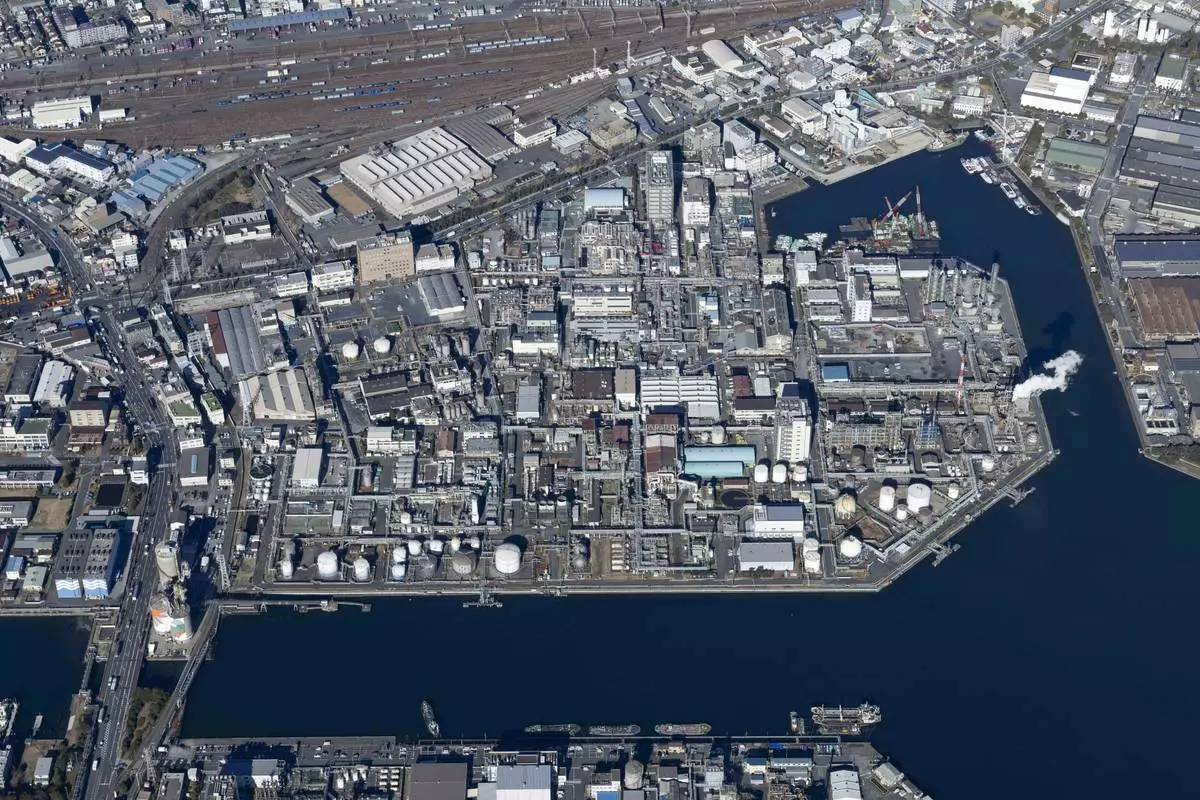
Aerial view of the Kawasaki Works
NAKHON RATCHASIMA, Thailand (AP) — A construction crane collapsed onto an elevated road near Bangkok, killing two people on Thursday, a day after another crane fell on a moving passenger train in northeastern Thailand and killed 32 people.
The work on an extension of the Rama 2 Road expressway — a major artery leading from Bangkok — has become notorious for construction accidents, some of them fatal.
The crane collapsed at part of the road project in Samut Sakhon province, trapping two vehicles in the wreckage, according to the government’s Public Relations Department.
Transport Minister Phiphat Ratchakitprakarn said on Thai TV Channel 7 that two people had died. It was unclear if anyone else had been trapped in the wreckage.
There was uncertainty about the number of victims because the site is still considered too dangerous for search teams to enter, said Suchart Tongteng, a rescue worker with the Ruamkatanyu Foundation.
“At this moment, we still can’t say whether another collapse could happen,” he said, citing dangling steel plates. “That’s why there are no rescue personnel inside the scene, only teams conducting on-site safety assessments.”
At the site of Wednesday's train derailment, the search for survivors ended, Nakhon Ratchasima Gov. Anuphong Suksomnit said. Three passengers listed as missing were presumed to have gotten off the train earlier, but that was still being investigated.
Officials believed 171 people had been aboard the train’s three carriages, which were being removed from the scene Thursday.
The crane that fell, crushing part of the train, was a launching gantry crane, a mobile piece of equipment often used in building elevated roadways.
Police were still collecting evidence and interviewing witnesses and have not pressed charges, provincial Police Chief Narongsak Promta told reporters.
South Korea's Foreign Ministry reported a South Korean man in his late 30s, was among the dead.
The high-speed rail project where the accident occurred is associated with the plan to connect China with Southeast Asia under Beijing’s Belt and Road Initiative.
In August 2024, a railway tunnel on the planned route, also in Nakhon Ratchasima, collapsed, killing three workers.
Anan Phonimdaeng, acting governor of the State Railway of Thailand, said the project’s contractor is Italian-Thai Development, with a Chinese company responsible for design and construction supervision.
A statement posted on the website of the company, also known as Italthai, expressed condolences to the victims and said the company would pay compensation to the families of the dead and hospitalization expenses for the injured.
Transport Minister Phiphat said Italthai was also the lead contractor on the highway project where Thursday's accident took place, though several other companies are also involved.
The rail accident had already sparked outrage because Italthai was also the co-lead contractor for the State Audit Building in Bangkok that collapsed during construction last March during a major earthquake centered in Myanmar. The building's collapse was the worst quake damage in Thailand and about 100 people were killed.
Twenty-three individuals and companies have been indicted, including Italthai's president and the local director for the company China Railway No. 10, the project’s joint venture partner. The charges in the case include professional negligence and document forgery, and Thailand's Department of Special Investigation has recommended more indictments.
The involvement of Chinese companies in both projects has also drawn attention, as has Italthai and Chinese companies’ involvement in the construction of several expressway extensions in and around Bangkok where several accidents, some fatal, have occurred.
In Beijing, Chinese Foreign Ministry spokesperson Mao Ning said Wednesday the government was aware of the rail accident and had expressed condolences.
Associated Press writers Wasamon Audjarint in Bangkok and Hyung-jin Kim in Seoul, South Korea, contributed to this report.
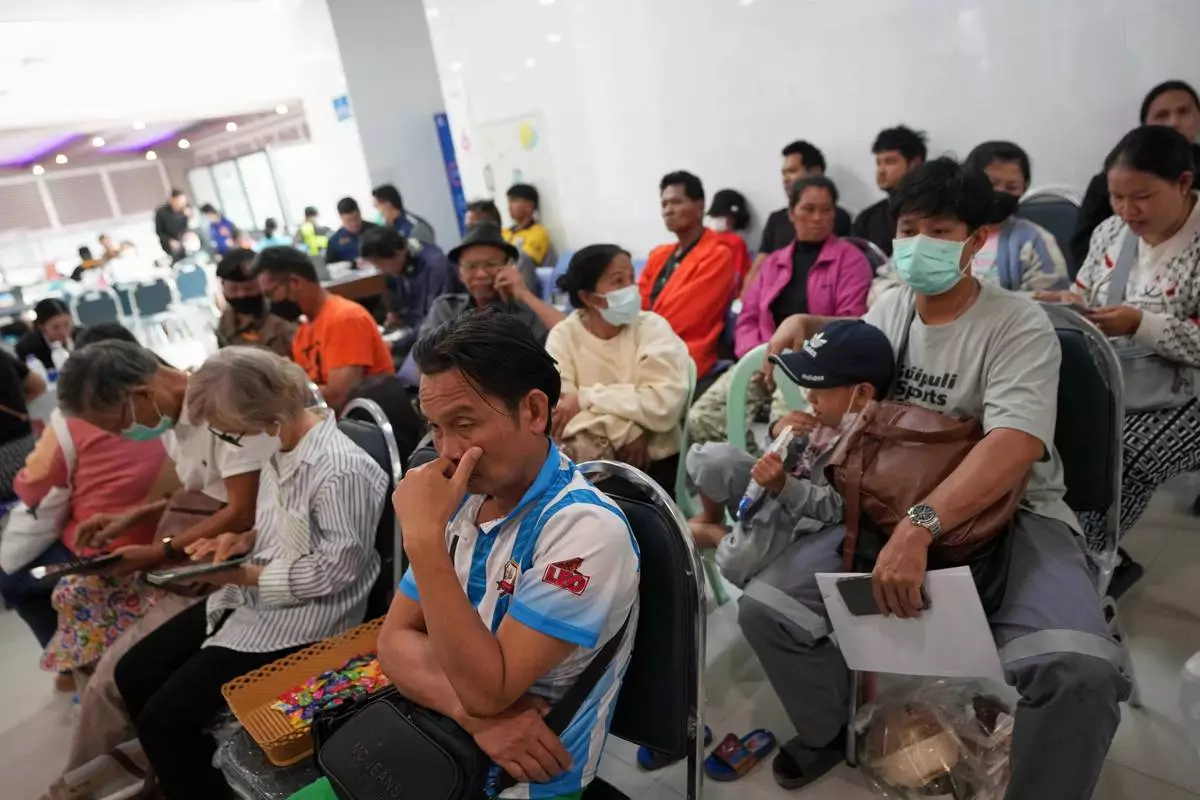
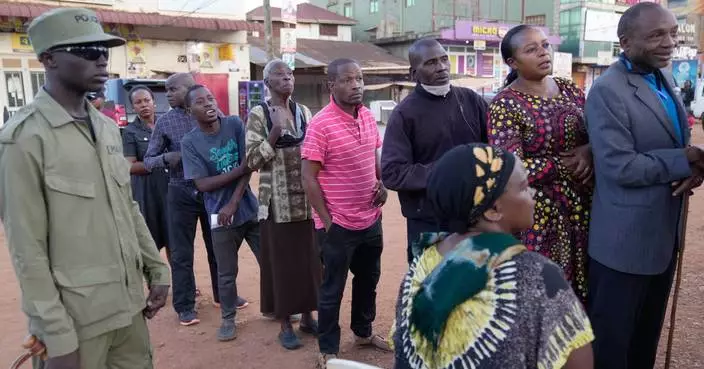
Relatives of victims and others wait at a hospital, a day after a construction crane fell into a passenger train in Nakhon Ratchasima province, Thailand, Thursday, Jan. 15, 2026. (AP Photo/Sakchai Lalit)
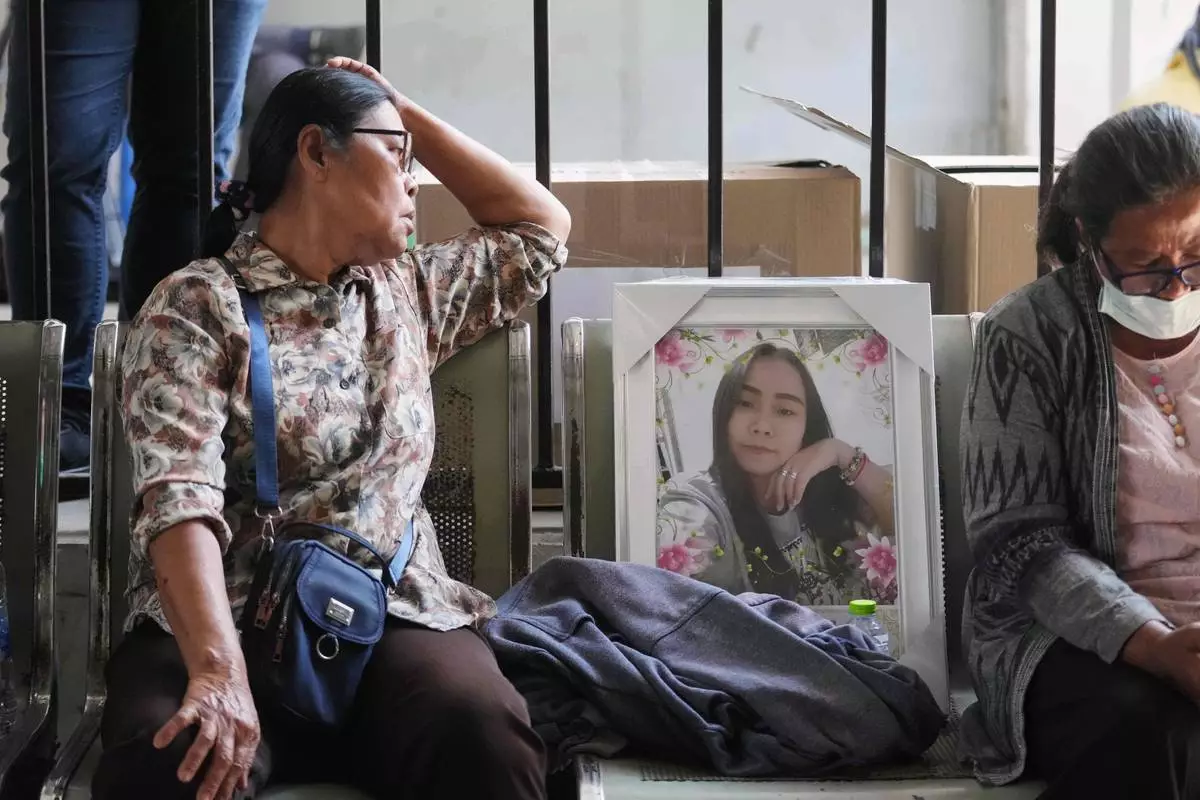
Relatives wait at a hospital to receive bodies of victims, a day after a construction crane fell into a passenger train in Nakhon Ratchasima province, Thailand, Thursday, Jan.15, 2026. (AP Photo/Sakchai Lalit)
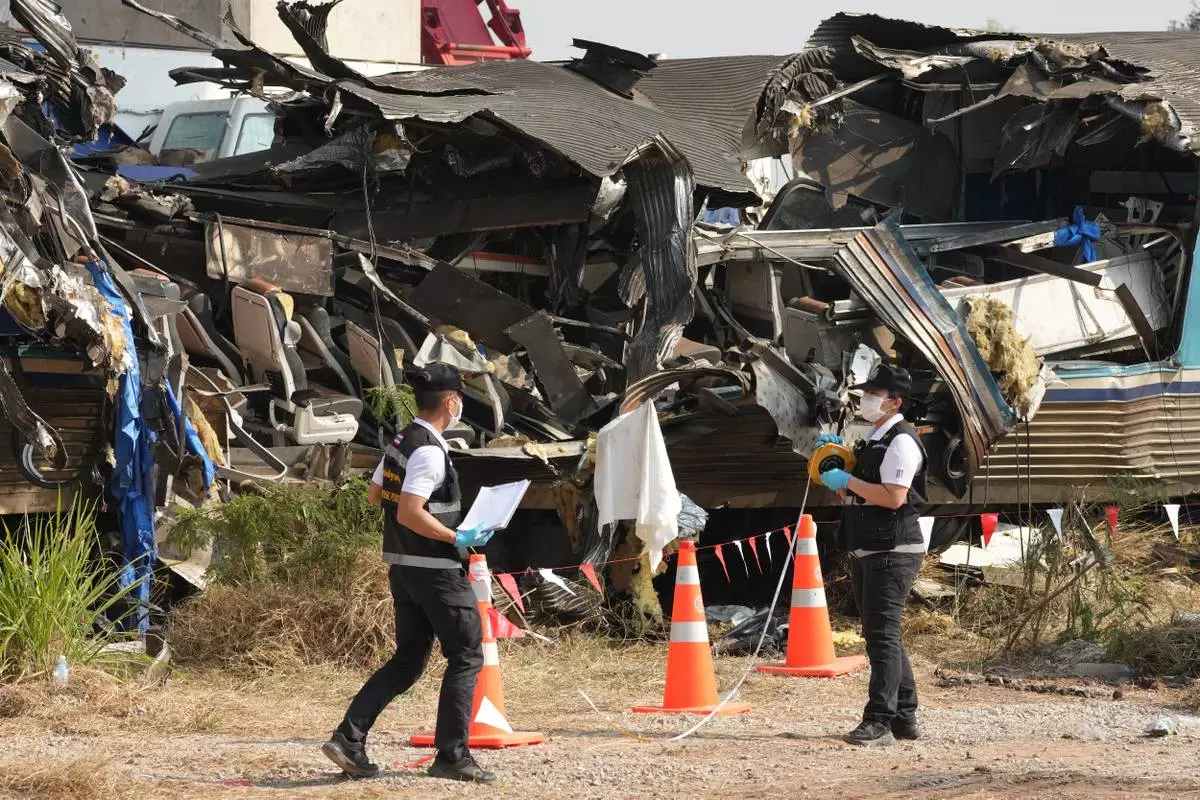
Forensic workers inspect the site of a train accident, a day after a construction crane fell into a passenger train in Nakhon Ratchasima province, Thailand, Thursday, Jan. 15, 2026. (AP Photo/Sakchai Lalit)
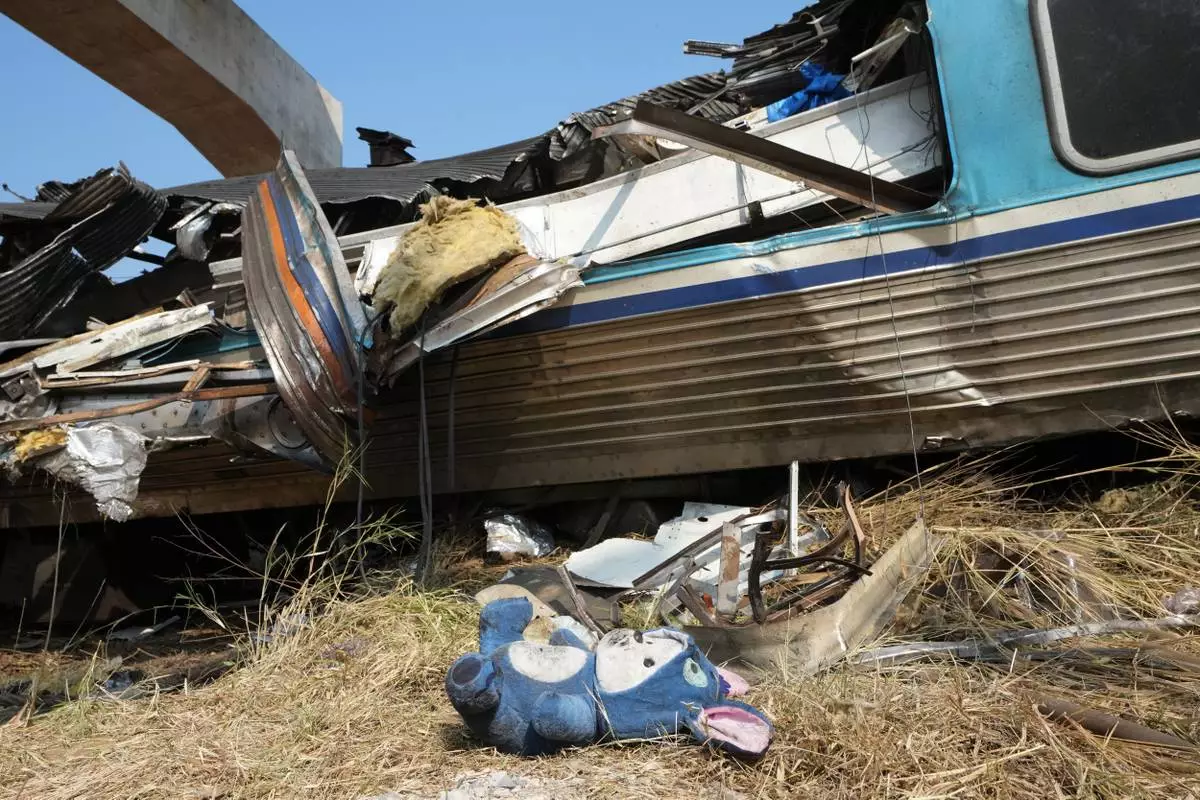
A cuddly toy lies on the ground at the site of a train accident, a day after a construction crane fell into a passenger train in Nakhon Ratchasima province, Thailand, Thursday, Jan. 15, 2026. (AP Photo/Sakchai Lalit)
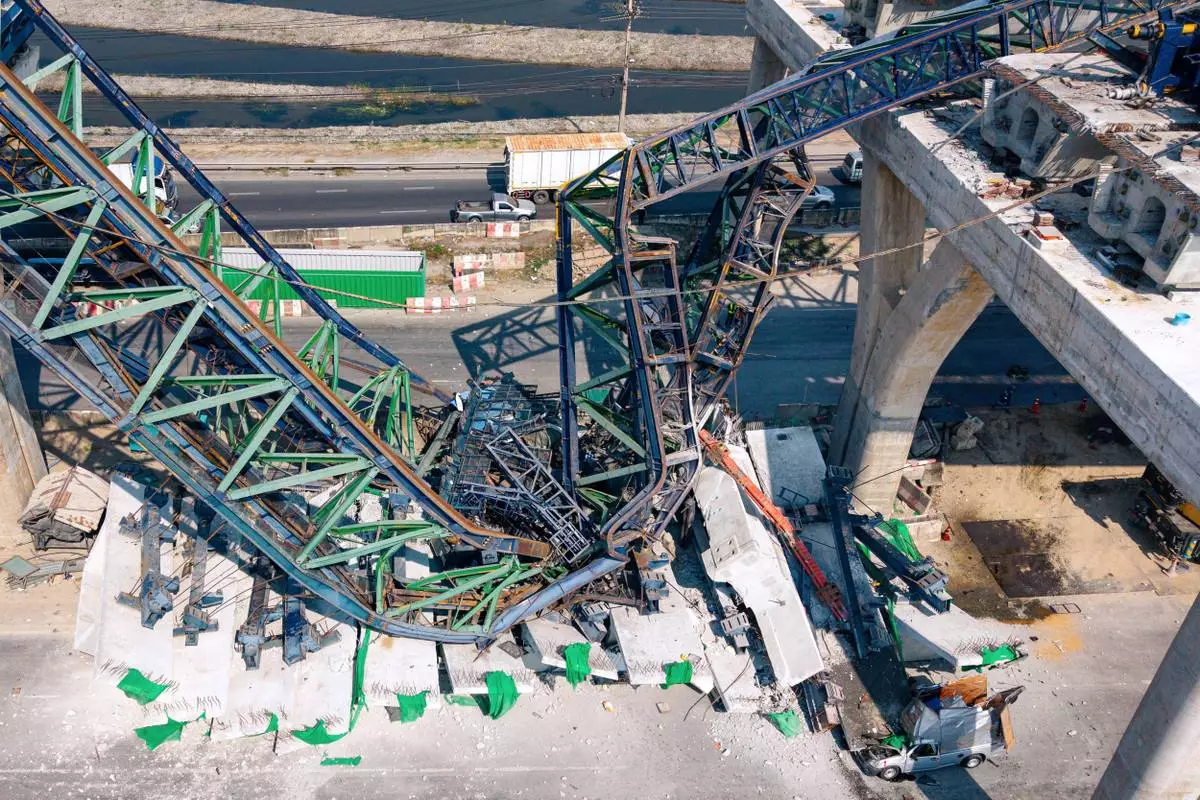
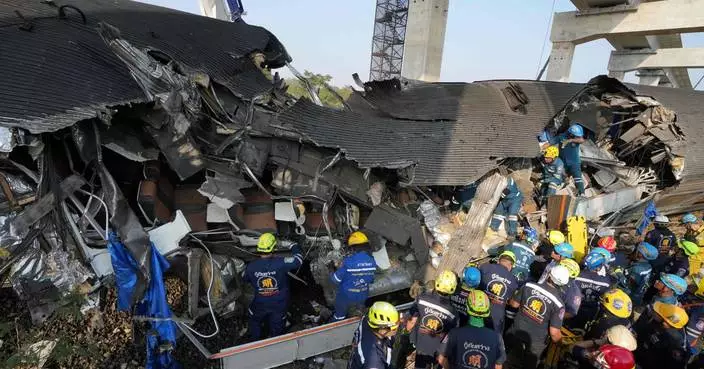
A construction crane that collapsed on the Rama 2 Road elevated expressway in Samut Sakhon province, Thailand on Thursday, Jan. 15, 2026. (AP Photo/Arnun Chonmahatrakool)
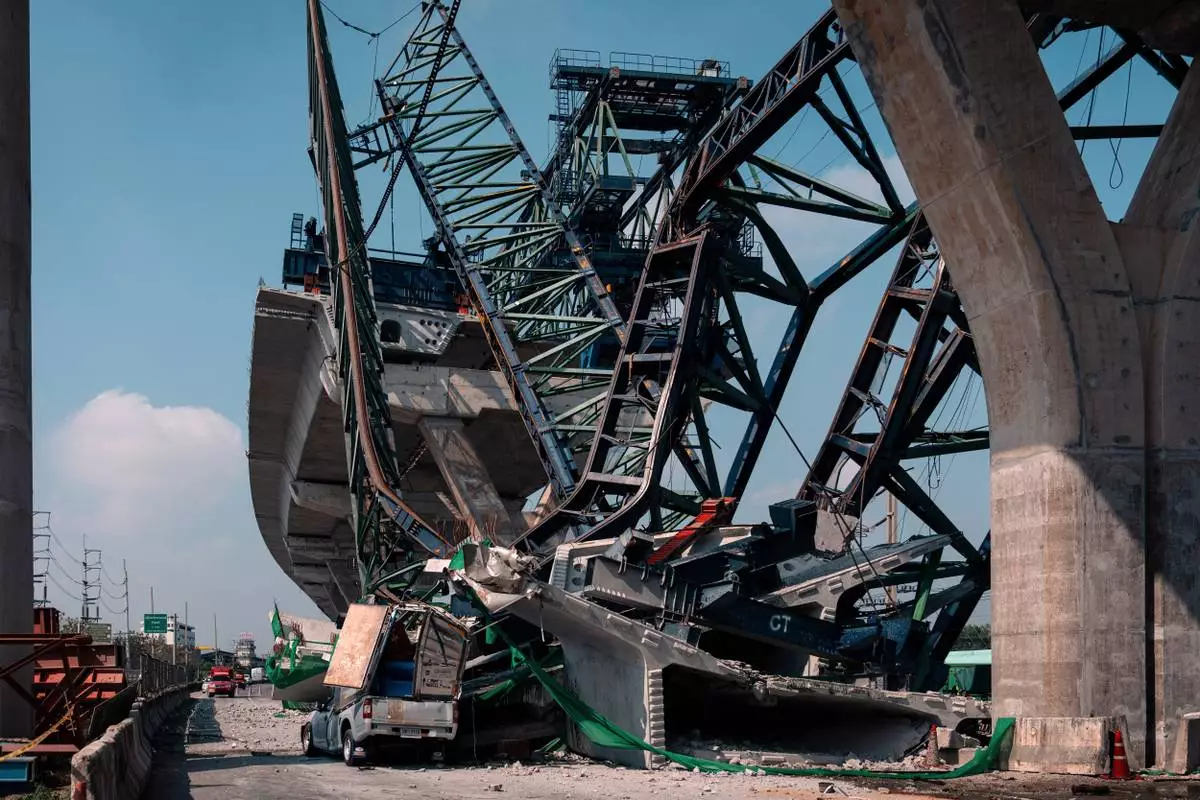
A construction crane that collapsed on the Rama 2 Road elevated expressway in Samut Sakhon province, Thailand on Thursday, Jan. 15, 2026. (AP Photo/Arnun Chonmahatrakool)
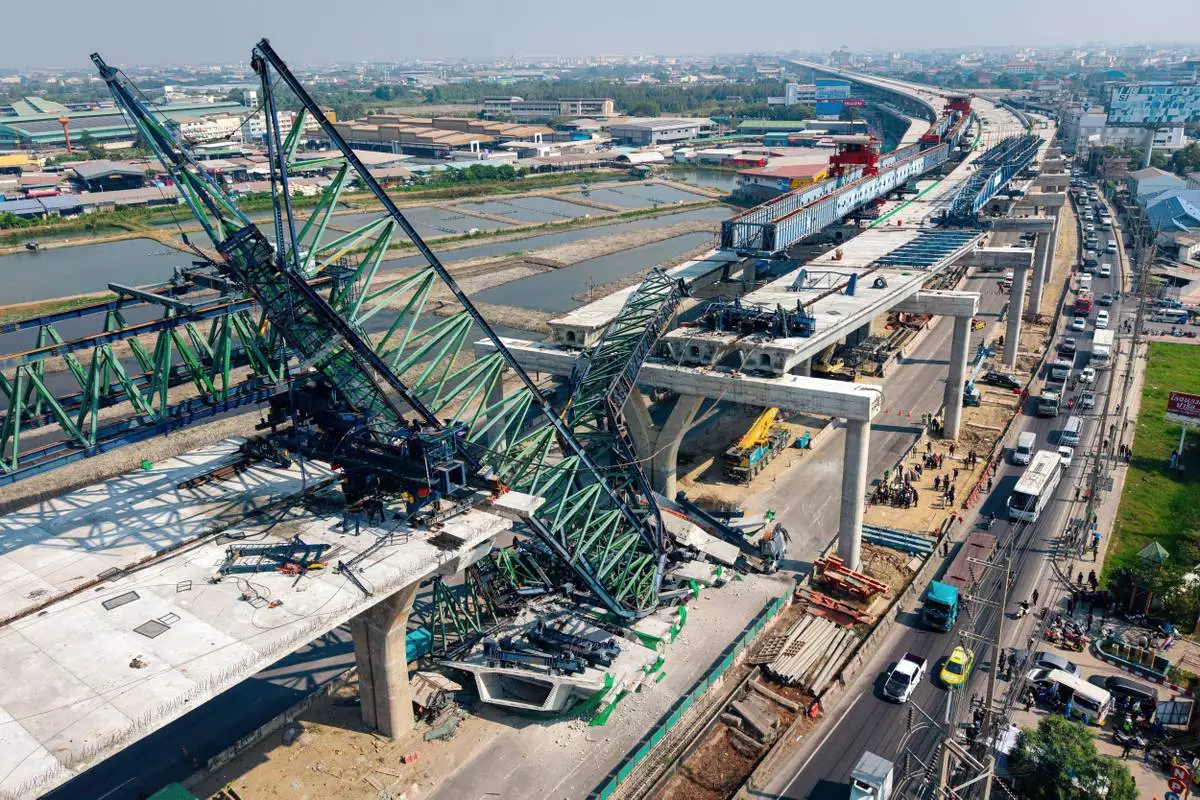
A construction crane that collapsed on the Rama 2 Road elevated expressway in Samut Sakhon province, Thailand on Thursday, Jan. 15, 2026. (AP Photo/Arnun Chonmahatrakool)