SEATTLE (AP) — Alaska Airlines said its operations have resumed Friday after it had to ground its planes for hours because of an information technology outage.
The airline said in a statement that 229 flights were canceled because of the outage and that more flight disruptions were expected as it worked to “reposition aircraft and crews.”
Alaska Airlines said it is working on getting travelers affected by the disruption to their destinations.
It asked that passengers check their flight status before heading to the airport.
The grounding Thursday affected Alaska Air and Horizon Air flights.
Hawaiian Airlines, which was bought by Alaska Air Group last year, said its flights were operating as scheduled.
In July, Alaska grounded all of its flights for about three hours after the failure of a critical piece of hardware at a data center.
There has been a history of computer problems disrupting flights in the industry, though most of the time the disruptions are only temporary.
The story has been updated to correct the time element of operations resuming to Friday, from Thursday, and the day of the grounding to Thursday, from Wednesday.
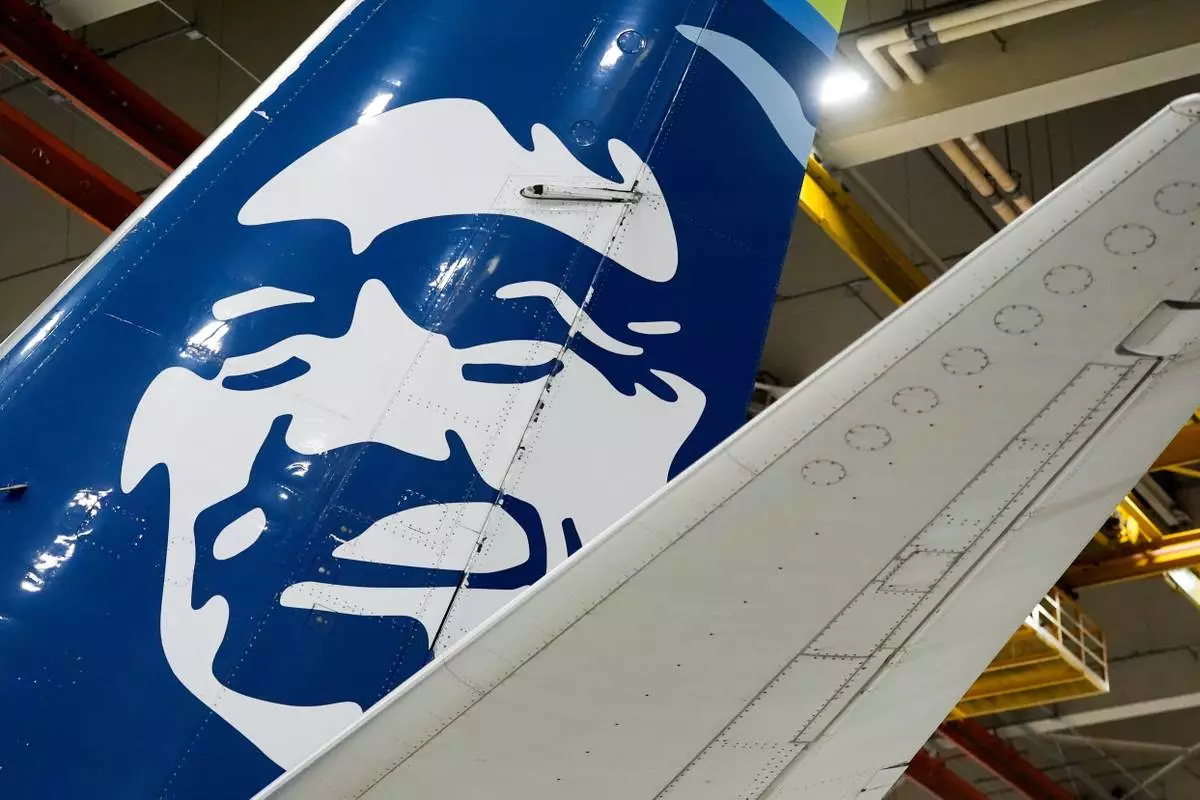
FILE - An Alaska Airlines aircraft sits in the airline's hangar at Seattle-Tacoma International Airport, Jan. 10, 2024, in SeaTac, Wash. (AP Photo/Lindsey Wasson, File)
CAPE CANAVERAL, Fla. (AP) — NASA fueled its moon rocket Wednesday for humanity’s first lunar trip in more than half a century, aiming for an evening liftoff with four astronauts.
Tensions were high as hydrogen fuel started flowing into the rocket hours ahead of the planned launch. Dangerous hydrogen leaks erupted during a countdown test earlier this year, forcing a lengthy flight delay.
But no significant leaks occurred by the time Wednesday's fueling wrapped up. The launch team loaded more than 700,000 gallons of fuel (2.6 million liters) into the 32-story Space Launch System rocket on the pad, setting the stage for the Artemis II crew to board.
“It is time to fly,” commander Reid Wiseman said on the eve of launch via X. Favorable weather was forecast.
Three Americans and one Canadian will fly around the moon without stopping or even orbiting — then head straight back for a Pacific splashdown. They will set a new distance record for the farthest humans have traveled from Earth as they zoom some 4,000 miles (6,400 kilometers) beyond the moon and then hang a U-turn.
Astronauts last flew to the moon during Apollo 17 in 1972.
Artemis II is the opening shot of NASA's grand plans for a permanent moon base. The space program is aiming for a moon landing near the lunar south pole in 2028.
“The next era of exploration begins,” NASA Administrator Jared Isaacman posted on X.
Best wishes already have started to pour in, including from England's King Charles III to Canadian Space Agency astronaut Jeremy Hansen.
Hansen will become the first non-U. S. citizen to launch to the moon. The crew also includes Christina Koch and Victor Glover, the first woman and first Black astronaut, respectively, destined for the moon.
“In this historic moment, you stand as a bridge between nations and generations,” the king wrote in a letter to Hansen, “and I commend you for your courage, discipline and vision that have brought you to this threshold.”
The Associated Press Health and Science Department receives support from the Howard Hughes Medical Institute’s Department of Science Education and the Robert Wood Johnson Foundation. The AP is solely responsible for all content.
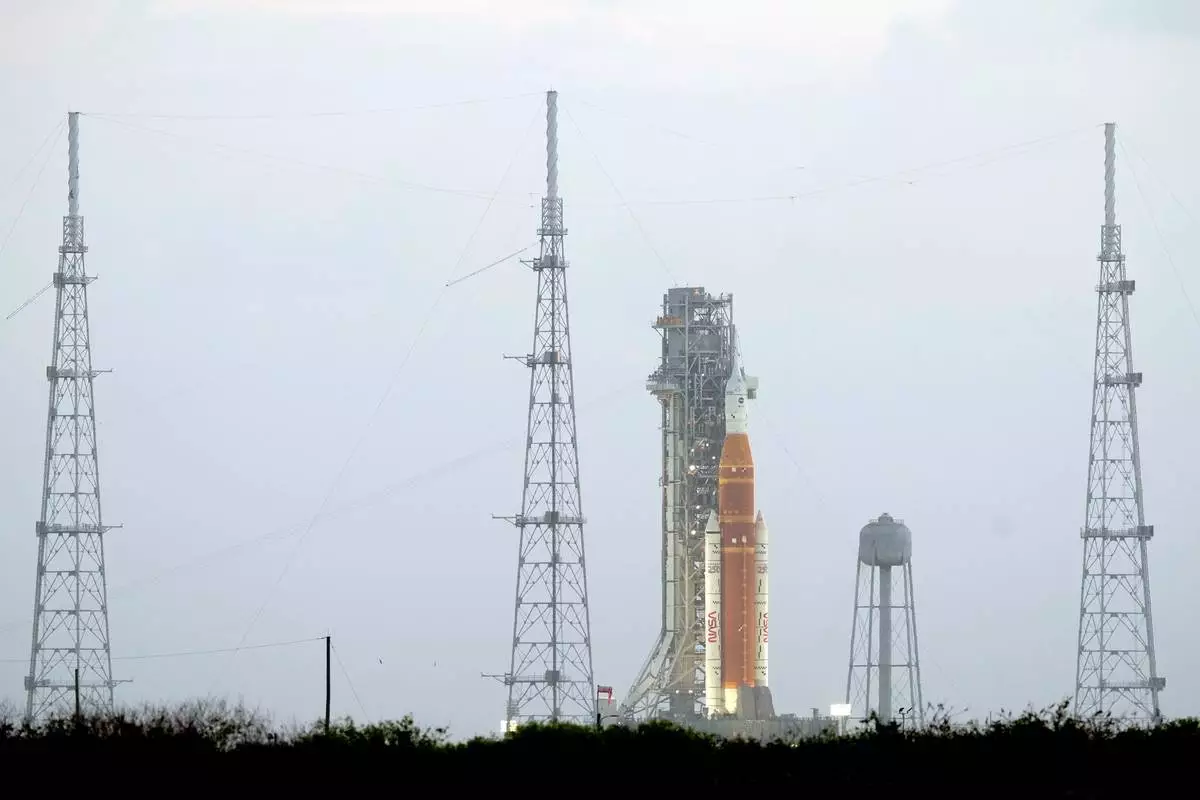
NASA's Artermis II moon rocket sits on Launch Pad 39-B at the Kennedy Space Center hours ahead of a planned launch attempt Wednesday, April 1, 2026, in Cape Canaveral, Fla. (AP Photo/Chris O'Meara)
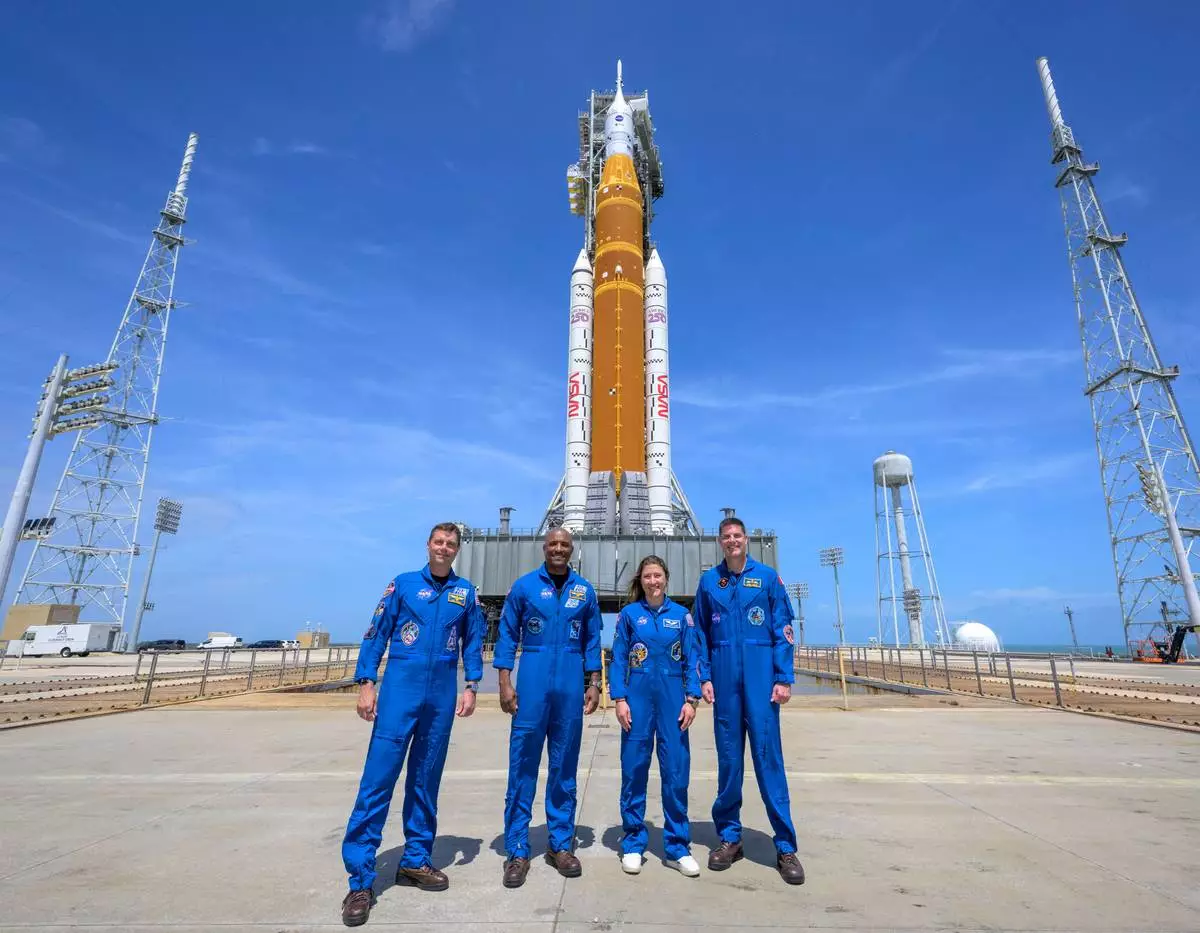
This photo provided by NASA shows NASA astronauts Reid Wiseman, Artemis II commander, from left, Victor Glover, Artemis II pilot, Christina Koch, Artemis II mission specialist, and CSA (Canadian Space Agency) astronaut Jeremy Hansen, Artemis II mission specialist, right, in a group photograph as they visit NASA's Artemis II SLS (Space Launch System) rocket and Orion spacecraft, Monday, March 30, 2026, at Launch Complex 39B of NASA's Kennedy Space Center, in Cape Canaveral, Fla. (Bill Ingalls/NASA via AP)
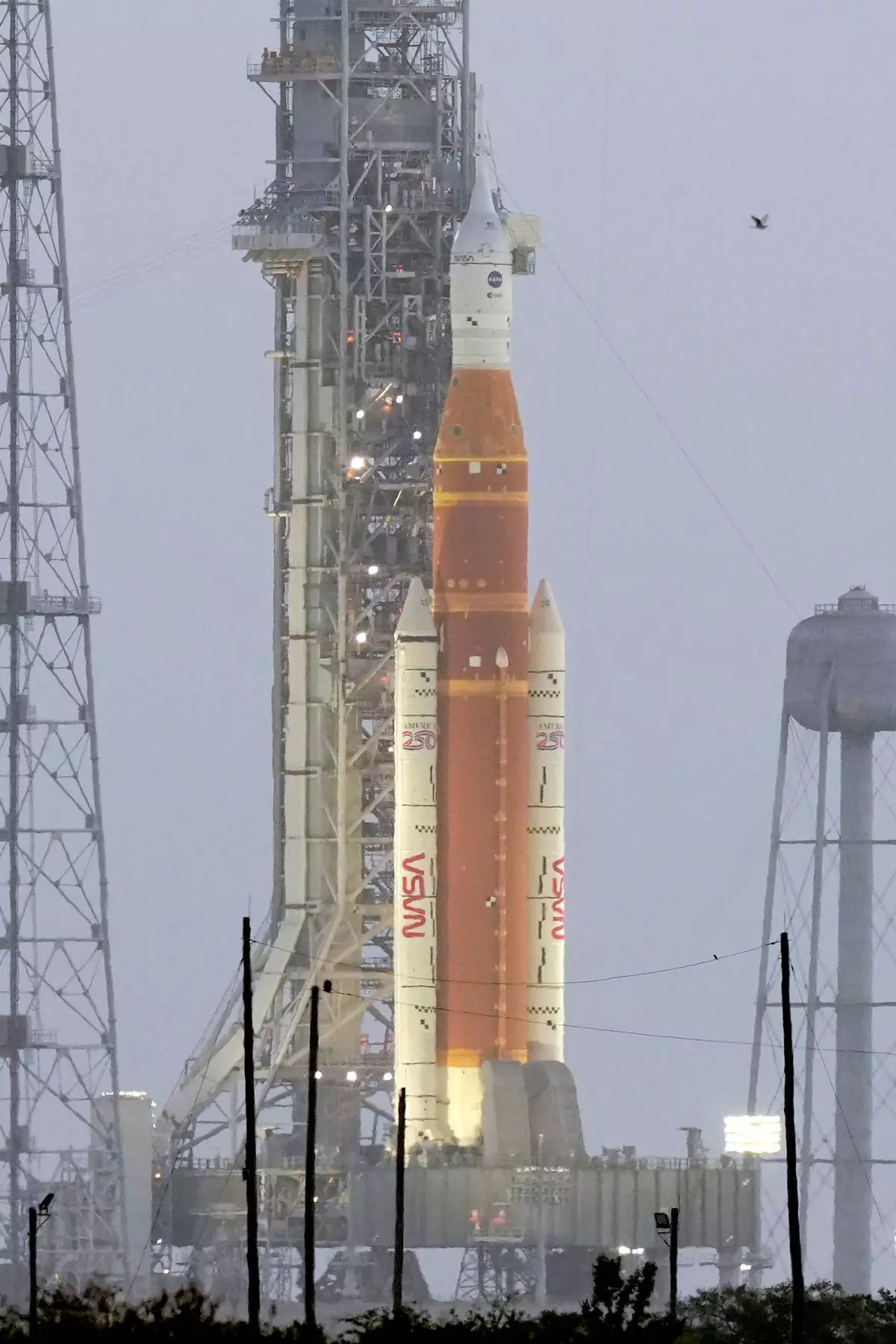
NASA's Artermis II moon rocket sits on Launch Pad 39-B at the Kennedy Space Center hours ahead of planned liftoff Wednesday, April 1, 2026, in Cape Canaveral, Fla. (AP Photo/Chris O'Meara)