SAN FRANCISCO (AP) — President Donald Trump was geared up for a show of federal force in San Francisco, a city he’s blasted as everything wrong with liberal governance. Then conversations with some of the Bay Area’s most prominent tech leaders and the mayor changed his mind.
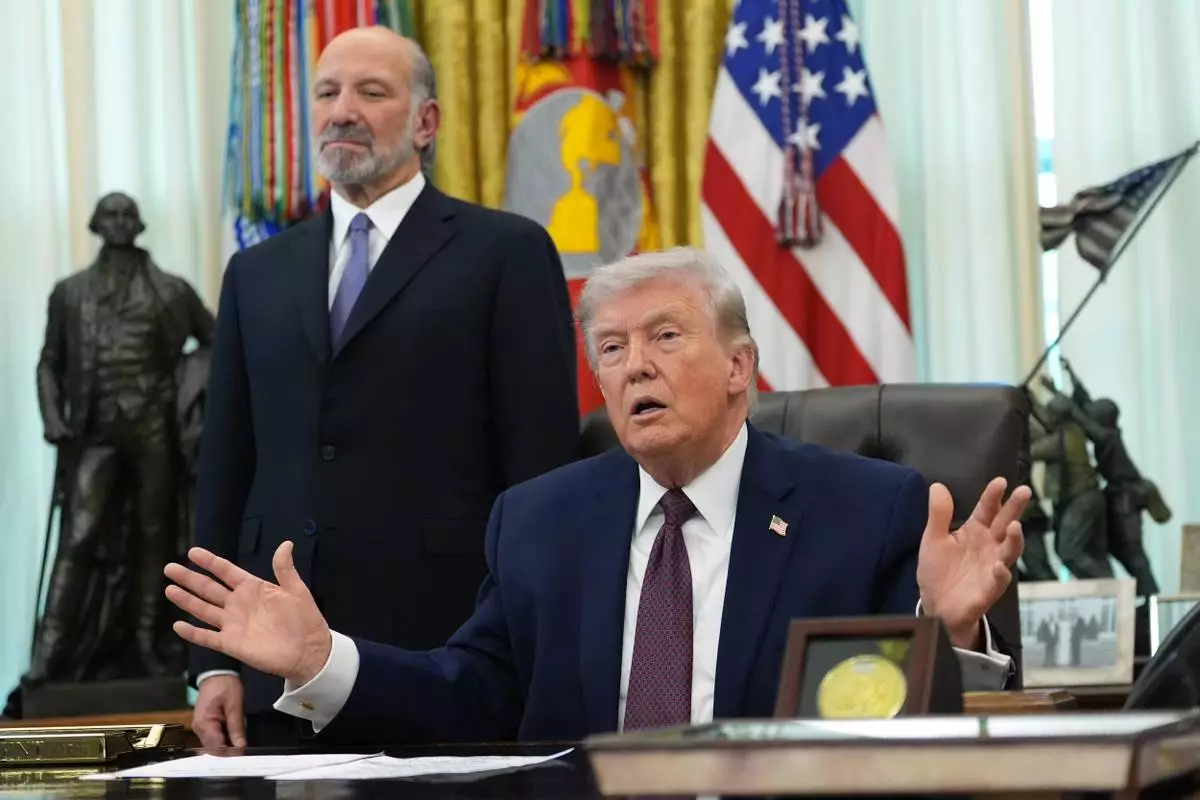
“I got a great call from some incredible people, some friends of mine, very successful people,” Trump told reporters Thursday at the White House, specifically referencing Jensen Huang, the CEO of Nvidia, one of the world’s most valuable tech companies, and Marc Benioff, CEO of software company Salesforce.
Click to Gallery
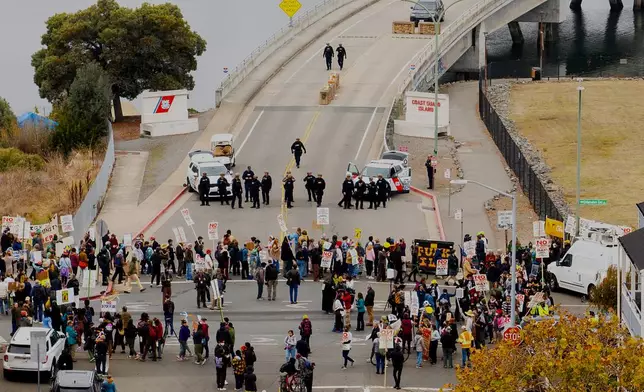
EDS NOTE: OBSCENITY - Protesters block the entrance to Coast Guard Base Alameda shortly after a caravan of U.S. Customs and Border Protection personnel arrived on Thursday, Oct. 23, 2025, in Oakland, Calif. (AP Photo/Noah Berger)
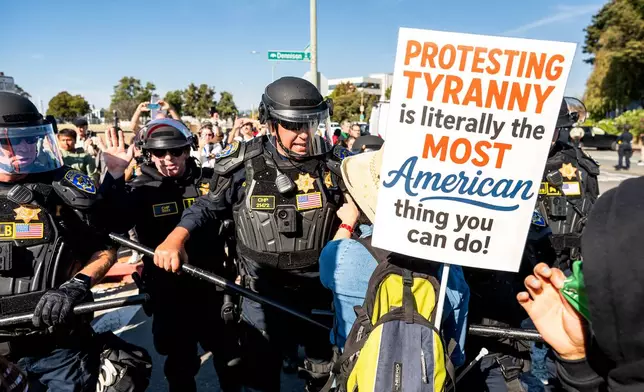
California Highway Patrol officers move back protesters who were blocking the entrance to Coast Guard Base Alameda on Thursday, Oct. 23, 2025, in Oakland, Calif. (AP Photo/Noah Berger)
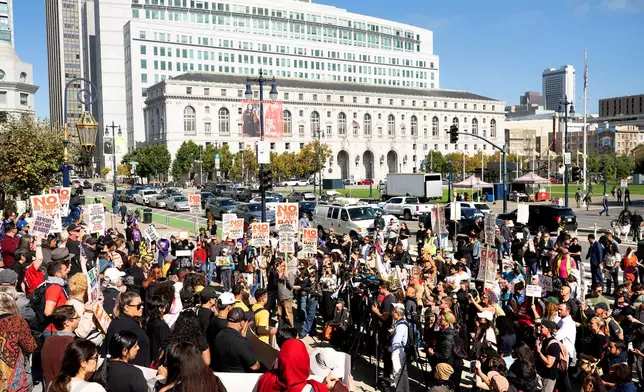
Protesters against U.S. Immigration and Customs Enforcement rally outside city hall on Thursday, Oct. 23, 2025, in San Francisco. (AP Photo/Noah Berger)
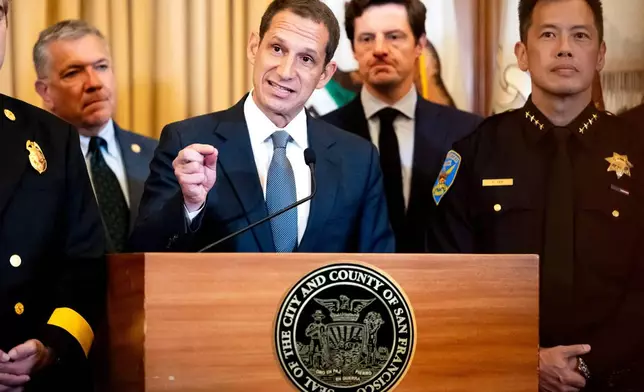
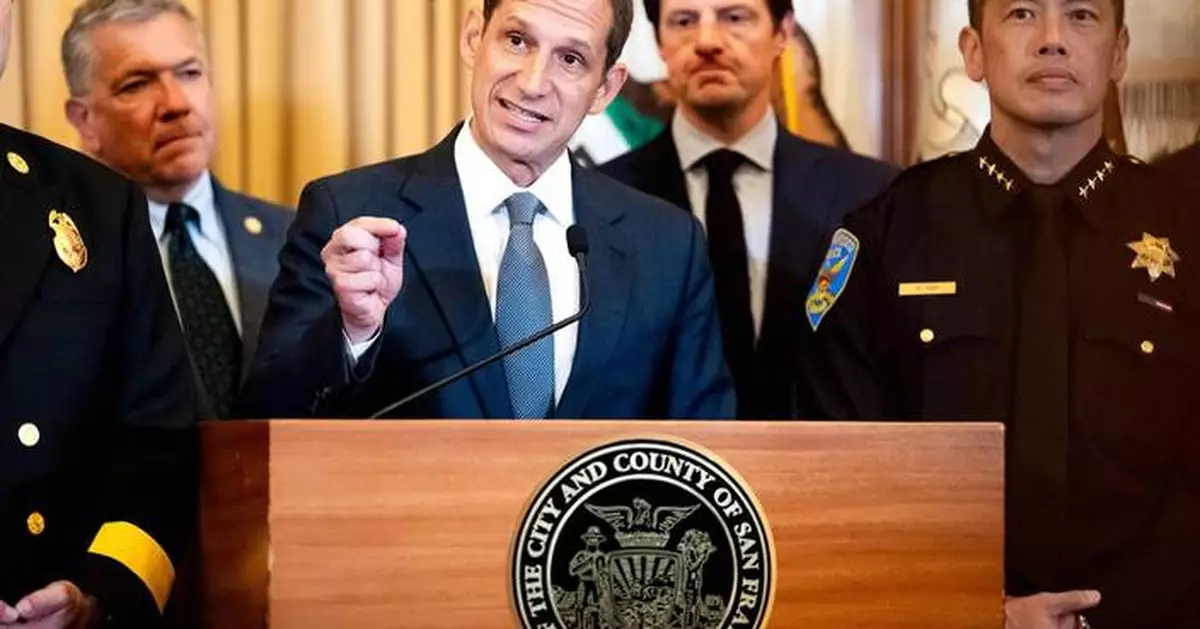
Flanked by city leaders, San Francisco Mayor Daniel Lurie discusses President Donald Trump's comments that he has called off a surge of federal law enforcement in San Francisco on Thursday, Oct. 23, 2025, in San Francisco. (AP Photo/Noah Berger)
He said they told him San Francisco was working hard to reduce crime. “So we are holding off that surge, everybody. And we’re going to let them see if they can do it,” Trump said. He said he could change his mind if it “doesn't work out.”
Homeland Security Secretary Kristi Noem said
Trump said the increased federal force had been planned for Saturday. He didn’t specify whether he was just referring to National Guard troops, which he had threatened to send in, or if he would also halt a potential ramp up of immigration enforcement. U.S. Customs and Border Protection agents arrived at a U.S. Coast Guard base near the city on Thursday morning, drawing protesters.
U.S. Immigration and Customs Enforcement informed Alameda County Sheriff Yesenia Sanchez that the operation had been called off for the entire Bay Area, a nine-county region of about 8 million people, Sgt. Roberto Morales, a spokesman for the sheriff, said Friday.
Outreach from billionaire CEOs clearly had a hand in the rare reprieve Trump handed a Democrat-led city. But Trump also credited Mayor Daniel Lurie, who has worked to avoid direct confrontation with the Republican president since both took office in January. Lurie has governed as an earnest and relentless cheerleader of San Francisco, and repeatedly refused to weigh in on national politics or to mention Trump’s name.
Instead, he's focused on local issues — public safety, luring back business and reversing the city's pandemic-fueled decline. When Trump said repeatedly earlier this week that he'd send the National Guard into San Francisco to quell crime, Lurie noted overall crime is down 26% compared to last year and car break-ins are at a 22-year low.
“I told the mayor, I love what you’re doing, I respect it, and I respect the people that are doing it,” Trump said, referencing a phone call the two had Wednesday.
An heir to the Levi Strauss fortune and anti-poverty philanthropist, Lurie is a centrist Democrat who had never held office until he ousted then-Mayor London Breed in last November's election. He has stated no other political aspirations than to improve the city and has said that he will work with anyone who wants to do the same.
Lurie said he told Trump that he welcomes the city’s “continued partnership” with the Drug Enforcement Agency and other federal authorities to get illegal narcotics off the streets and contribute to San Francisco’s falling crime rates. Fentanyl has been a major scourge on the city's streets.
“But having the military and militarized immigration enforcement in our city will hinder our recovery,” Lurie said.
Secretary of Homeland Security Kristi Noem said Friday that her department won’t tolerate violence like the truck that rammed into a Coast Guard station in the San Francisco Bay Area on Thursday night. She said during a news conference in Minneapolis that she had discussed the incident with Trump and suggested the president could change his mind about holding off a federal enforcement surge if more violence occurs.
If they “don’t figure out how to protect our law enforcement officers and protect our Coast Guard members, that we would be forced to come in and protect those individuals," she said.
Former U.S. House Speaker Nancy Pelosi, a San Francisco Democrat, praised Lurie on social media, saying that he “has demonstrated exceptional leadership." Steve Kerr, Golden State Warriors head coach, called him an “absolute superstar” responsible for the good things happening in San Francisco.
The office of California Gov. Gavin Newsom, a former San Francisco mayor, said on X that, “Trump, has finally, for once, listened to reason.” Newsom, for his part, has repeatedly sparred with Trump, particularly after Trump deployed the California National Guard to Los Angeles against Newsom's wishes.
But others are skeptical that Trump will keep his word. Indeed, Trump said he was giving Lurie “a chance" to turn things around and said the federal government could “take criminals out” much faster.
“We cannot trust Trump," said San Francisco Supervisor Connie Chan, a progressive who runs politically left of Lurie but has a good working relationship with the mayor.
San Francisco Supervisor Jackie Fielder, who is also more politically liberal than Lurie, said in a statement that she disagrees with Lurie's desire to coordinate more with federal law enforcement, saying that “is a dangerous invitation to a fascist administration.”
Trump said he received “four or five calls” from business leaders urging him not to send federal force and to let city leaders continue to work on reducing crime.
“They’re the biggest people in the world, a lot of the high tech,” he said at the White House. “They want to do it. And I said, ‘I am so honored to let you do it. And if it doesn’t work out, we’ll do it for you very quickly.'”
Benioff of Salesforce, who also owns Time magazine, told the New York Times earlier this month that he’d welcome Guard troops to help quell crime ahead of his major annual business conference. He quickly face backlash and then apologized, saying the troops weren't needed. He confirmed to The Associated Press that he spoke to Trump but did not provide more details. Nvidia declined to comment.
In announcing his decision to back off a surge, Trump did not mention other cities in the Bay Area, including Oakland, where he has also threatened to send in federal troops.
Some other Democrats who have also taken a less combative approach to Trump have avoided his focus as he deploys Guard troops around the country. He has not, for example, focused on Detroit despite criticism of the city. Michigan Gov. Gretchen Whitmer has tried to engage with Trump including with White House visits.
Associated Press journalists Mike Liedtke and Olga R. Rodriguez in San Francisco contributed.
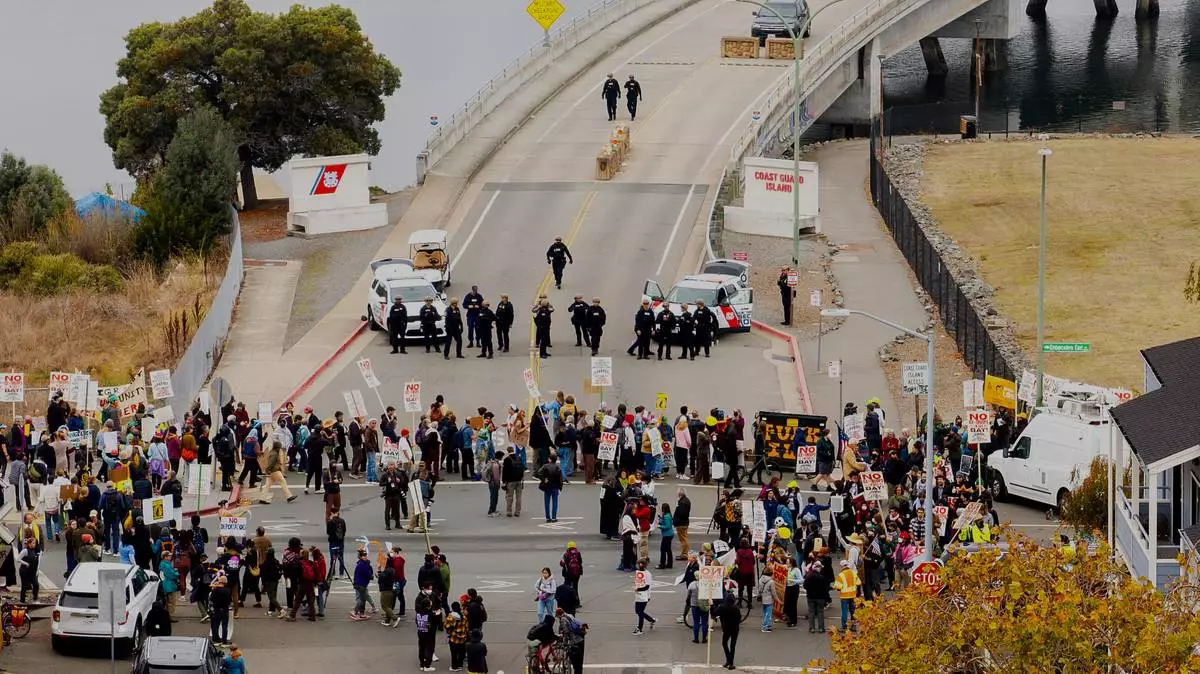
EDS NOTE: OBSCENITY - Protesters block the entrance to Coast Guard Base Alameda shortly after a caravan of U.S. Customs and Border Protection personnel arrived on Thursday, Oct. 23, 2025, in Oakland, Calif. (AP Photo/Noah Berger)
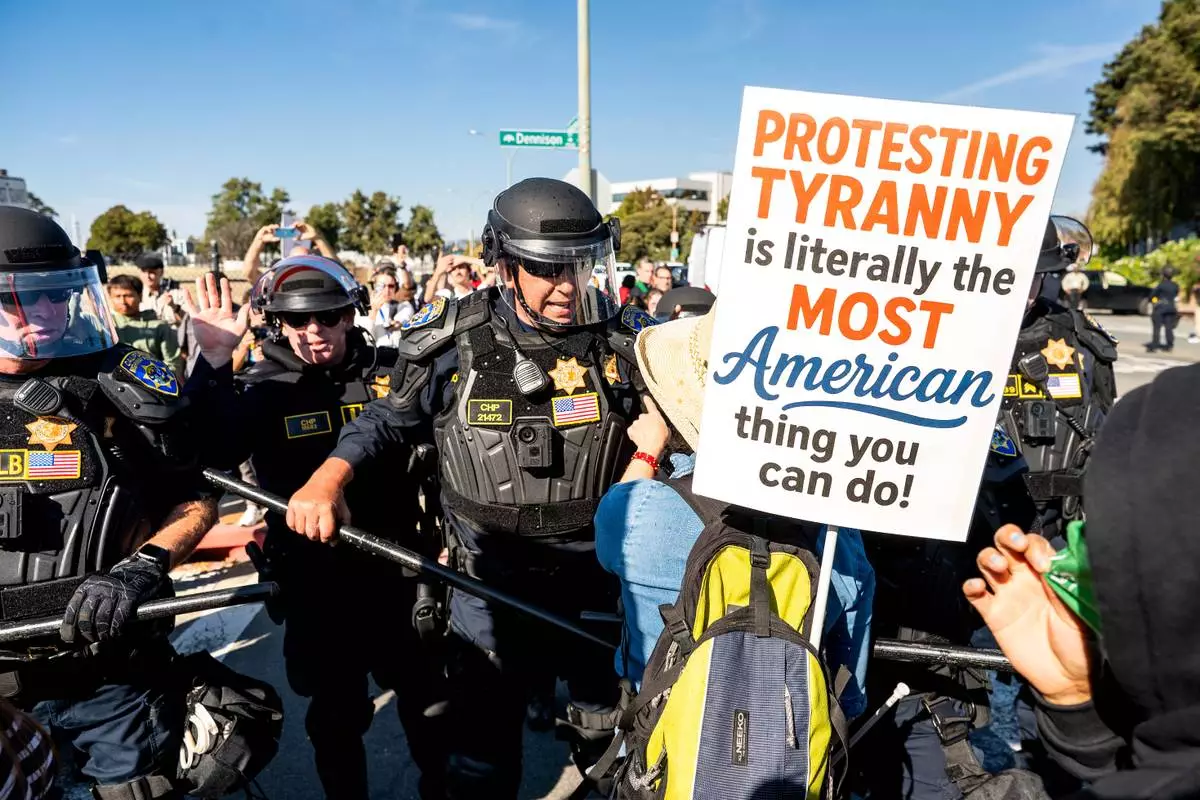
California Highway Patrol officers move back protesters who were blocking the entrance to Coast Guard Base Alameda on Thursday, Oct. 23, 2025, in Oakland, Calif. (AP Photo/Noah Berger)
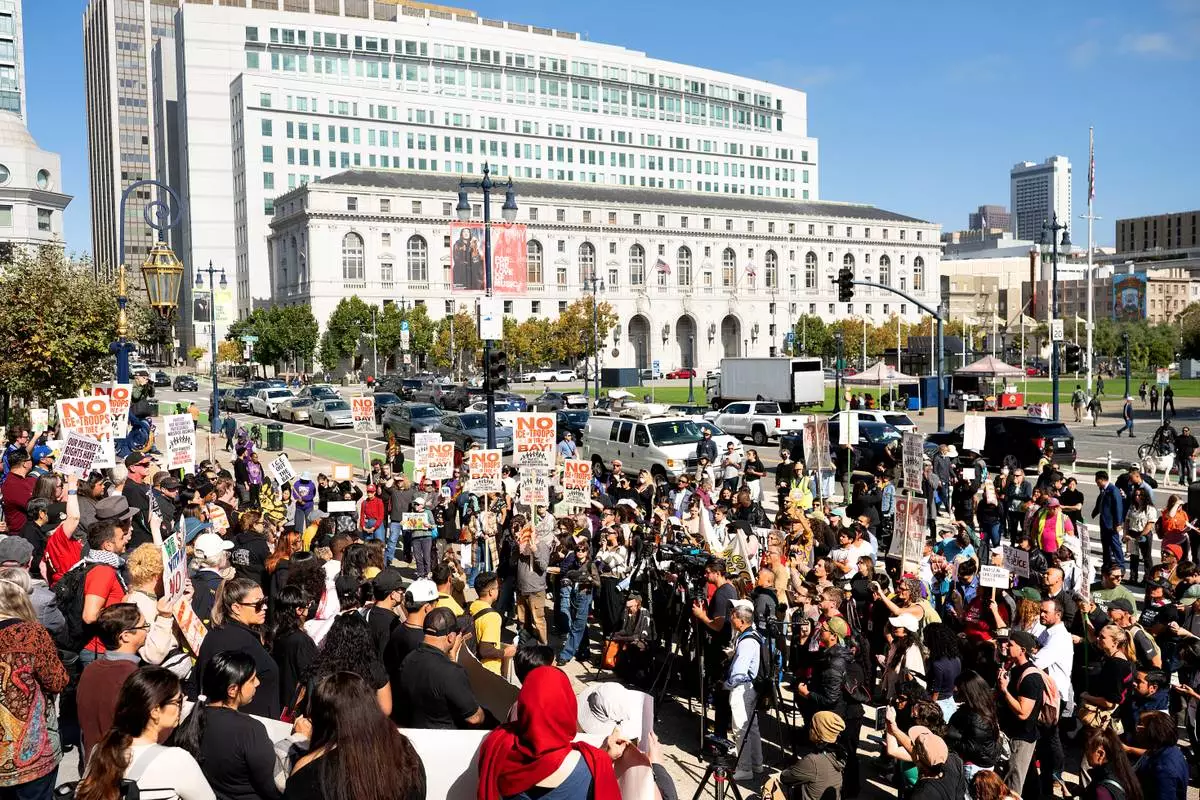
Protesters against U.S. Immigration and Customs Enforcement rally outside city hall on Thursday, Oct. 23, 2025, in San Francisco. (AP Photo/Noah Berger)
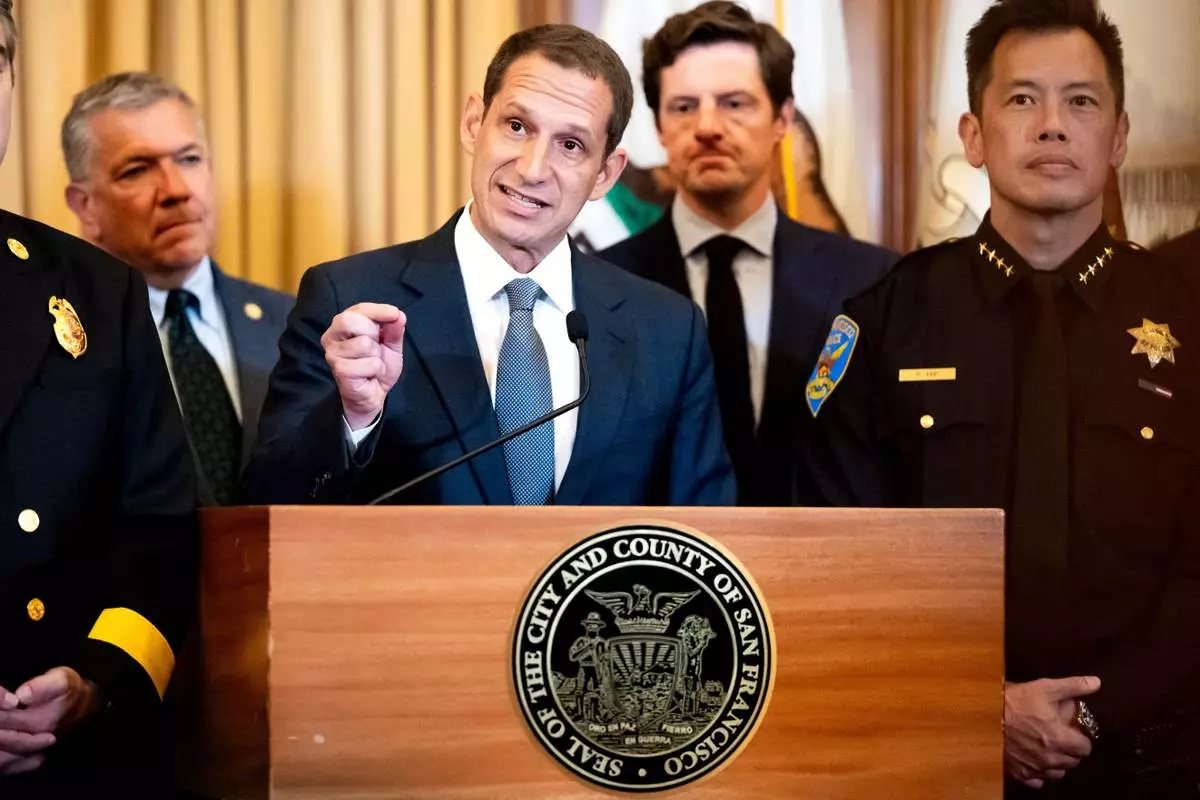
Flanked by city leaders, San Francisco Mayor Daniel Lurie discusses President Donald Trump's comments that he has called off a surge of federal law enforcement in San Francisco on Thursday, Oct. 23, 2025, in San Francisco. (AP Photo/Noah Berger)