Skip to Content Facebook Feature Image

In a California farming region, researchers are mapping rural heat to protect farmworkers

News

In a California farming region, researchers are mapping rural heat to protect farmworkers
News

News

In a California farming region, researchers are mapping rural heat to protect farmworkers

2025-10-24 20:03 Last Updated At:20:21

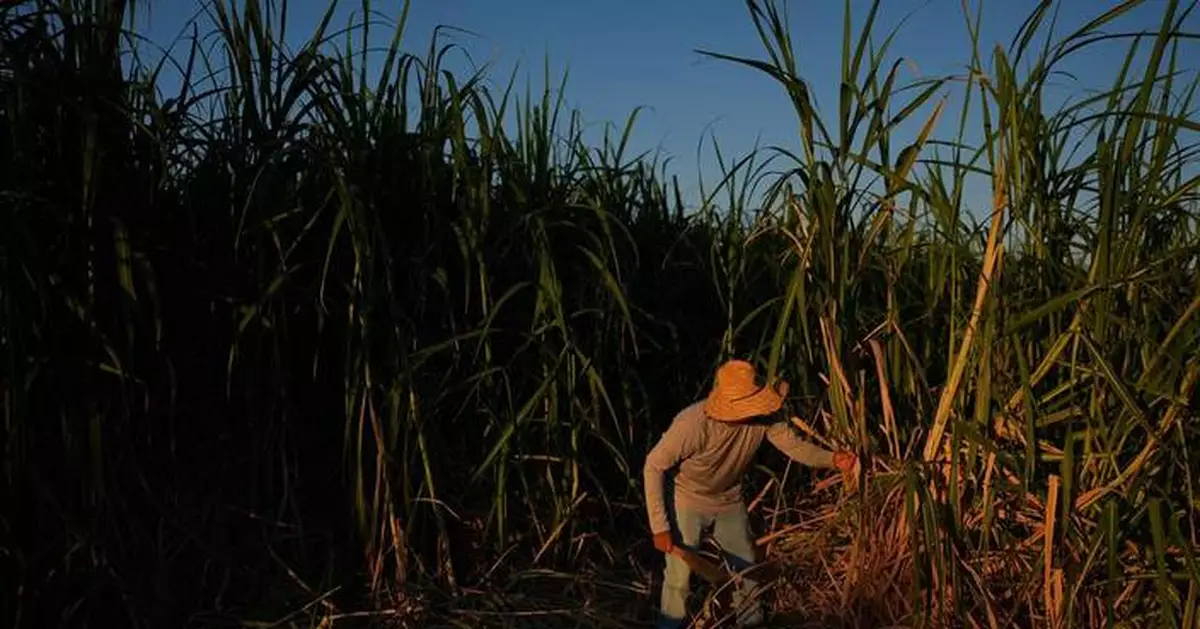
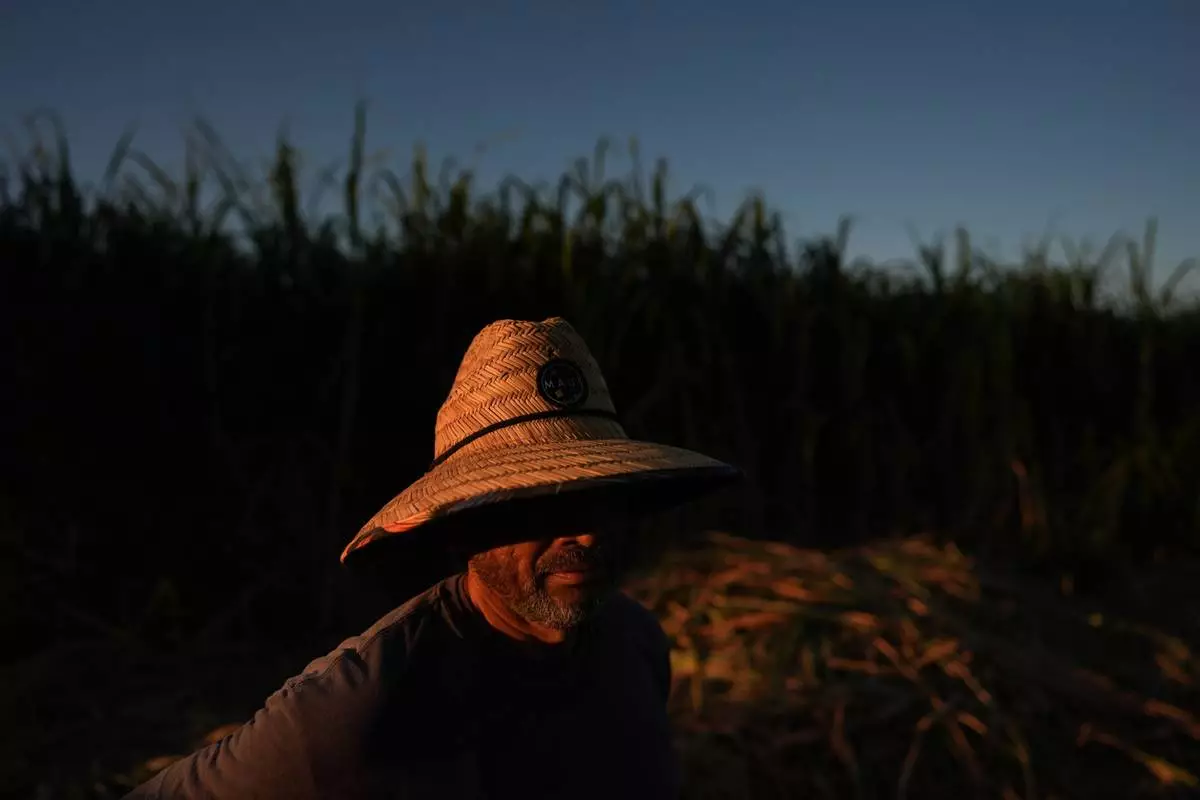
In the summers, the sky is jet black when Raul Cruz arrives at this Imperial Valley sugarcane field to start his day. He chops, cleans and bundles the crop, taking heed as the sun rises. It's hard work, but so is starting at 4 a.m., even though he knows it's the safest thing when temperatures in this California desert frequently soar into the triple digits.

“We just have to because we need to beat the heat," said Cruz, who’s worked here for 15 years. They finish work by 9 or 10 a.m. to avoid the risk of heat stroke, he added, but when heat starts creeping up around 8 a.m., "mentally, it's stressful."

More Images
Researchers arrive at a sugarcane field at dawn to collect environmental data in Niland, Calif., Thursday, Sept. 11, 2025. (AP Photo/Jae C. Hong)
Researchers arrive at a sugarcane field at dawn to collect environmental data in Niland, Calif., Thursday, Sept. 11, 2025. (AP Photo/Jae C. Hong)

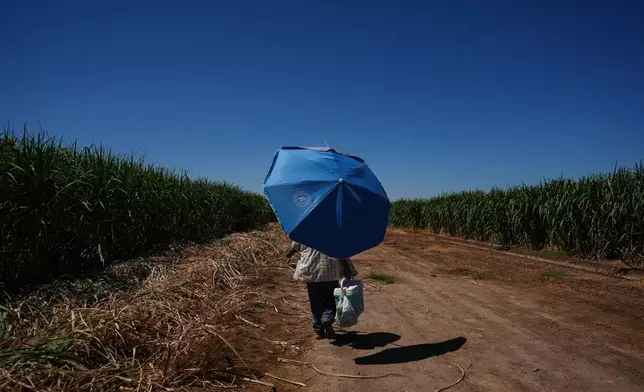
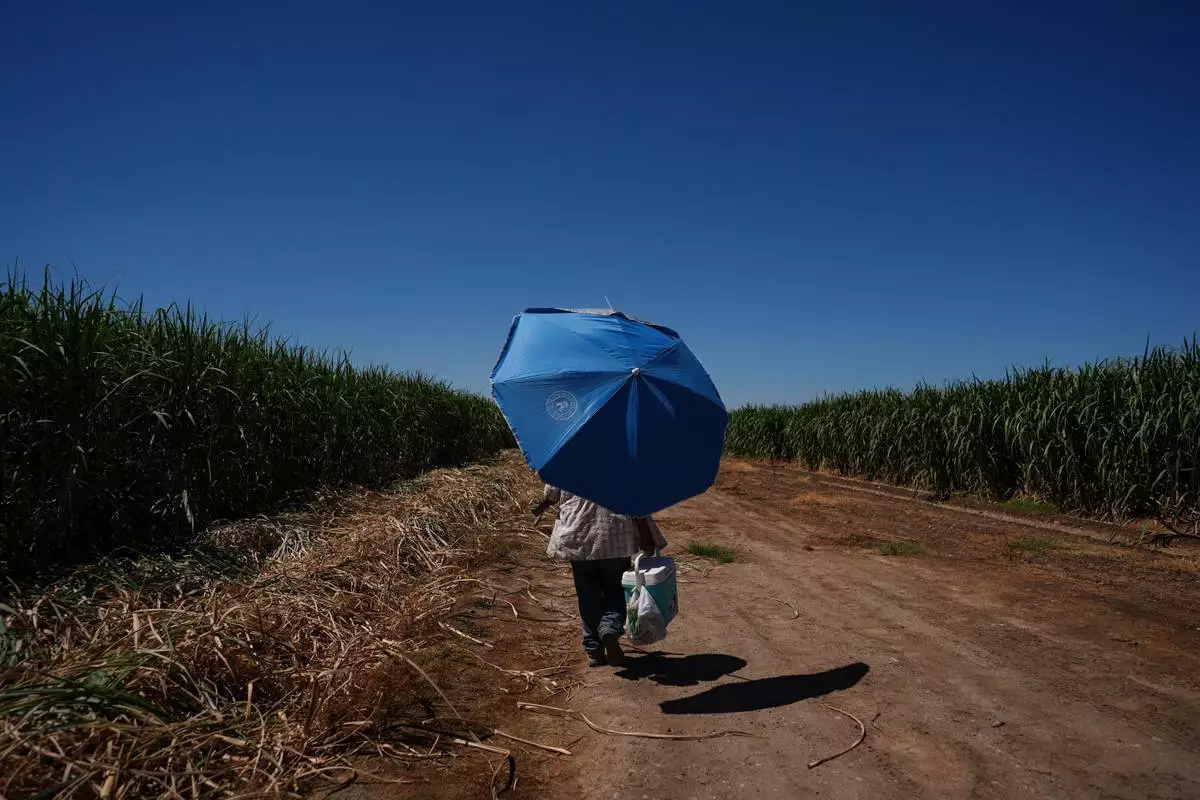
Manuel Gallegos carries a cooler and a large umbrella while leaving a sugarcane field in Niland, Calif., Thursday, Sept. 11, 2025. (AP Photo/Jae C. Hong)
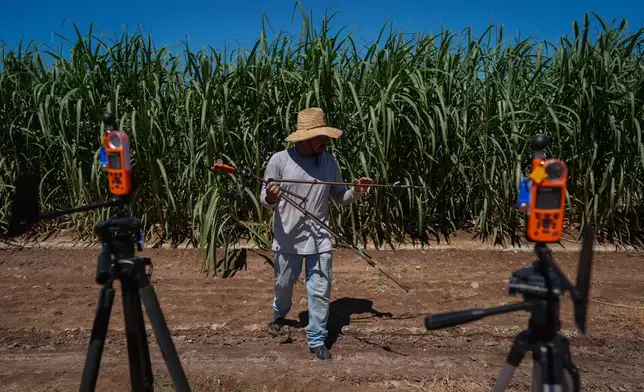
Manuel Gallegos carries a cooler and a large umbrella while leaving a sugarcane field in Niland, Calif., Thursday, Sept. 11, 2025. (AP Photo/Jae C. Hong)

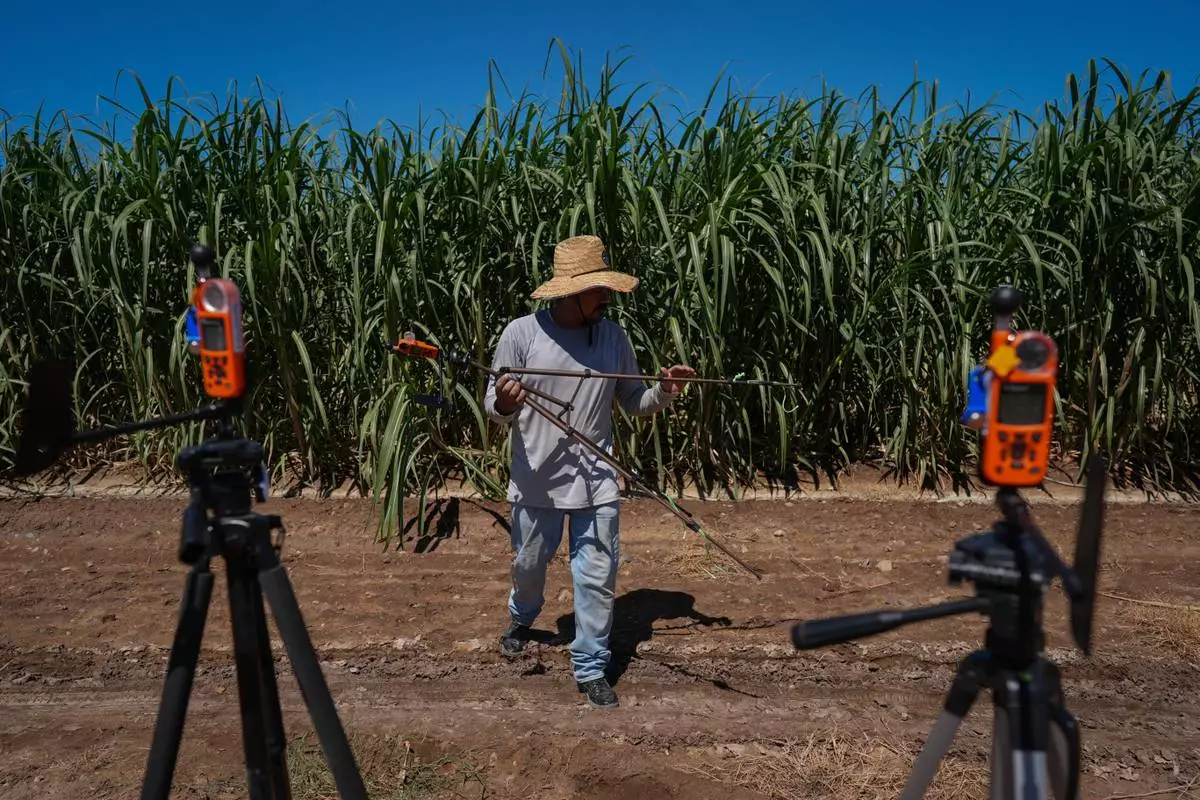
Farmworker Raul Cruz collects environmental monitors at the end of the day in a sugarcane field in Niland, Calif., Thursday, Sept. 11, 2025. (AP Photo/Jae C. Hong)
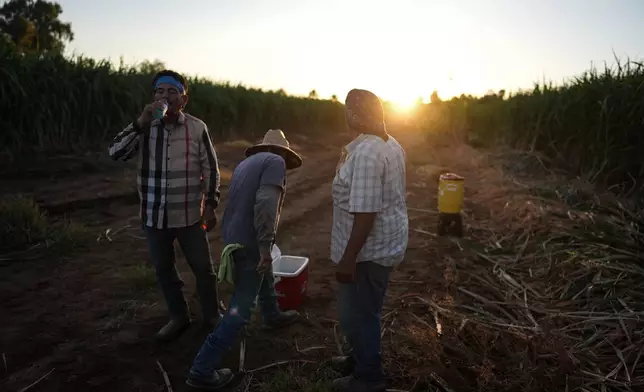
Farmworker Raul Cruz collects environmental monitors at the end of the day in a sugarcane field in Niland, Calif., Thursday, Sept. 11, 2025. (AP Photo/Jae C. Hong)

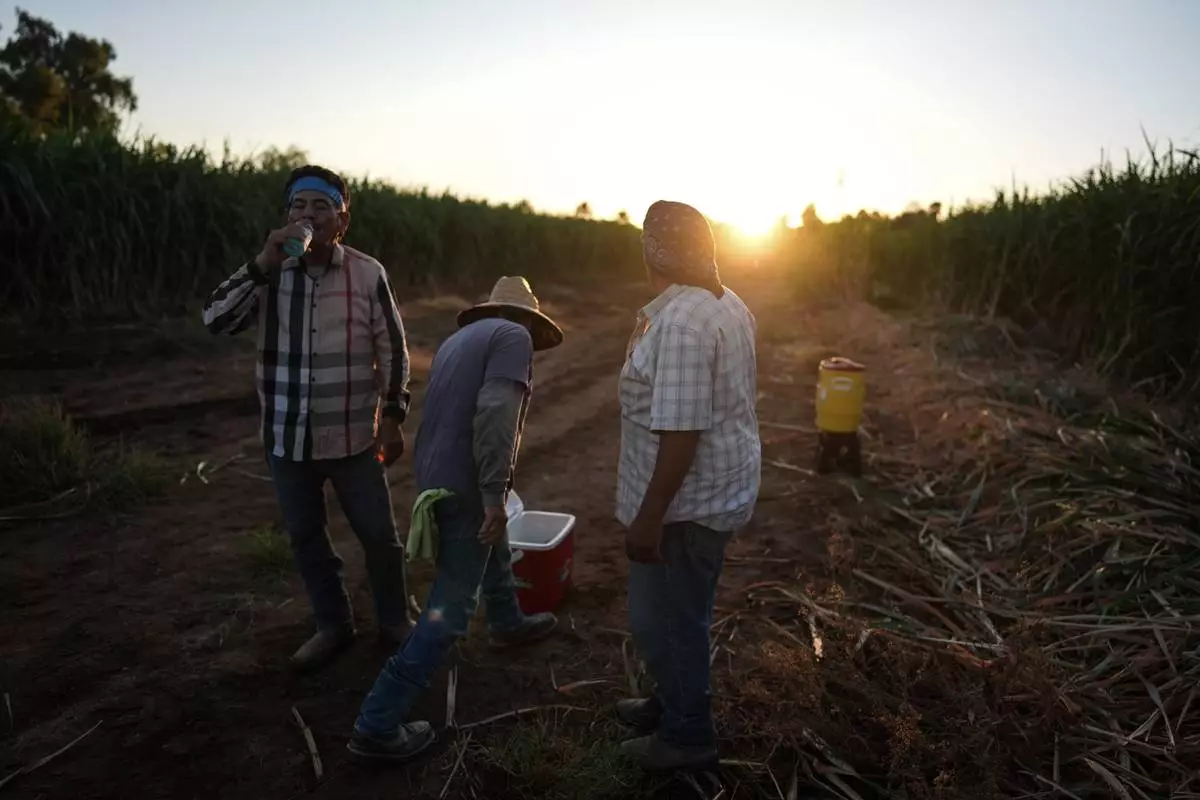
Farmworkers Hipolito Hernandez, from left, Leonardo Hernandez and Manuel Gallegos hydrate at sunrise before starting their day in a sugarcane field in Niland, Calif., Thursday, Sept. 11, 2025. (AP Photo/Jae C. Hong)
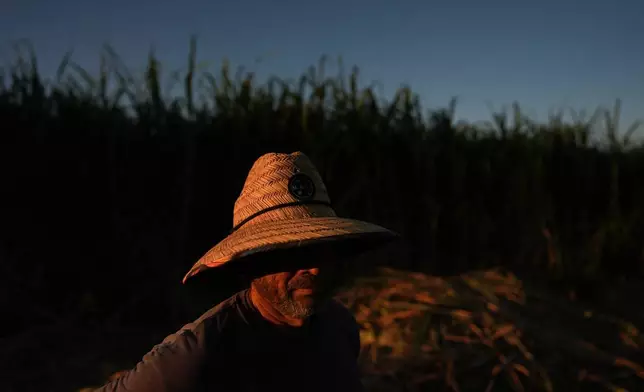
Farmworkers Hipolito Hernandez, from left, Leonardo Hernandez and Manuel Gallegos hydrate at sunrise before starting their day in a sugarcane field in Niland, Calif., Thursday, Sept. 11, 2025. (AP Photo/Jae C. Hong)

Farmworker Leonardo Hernandez pauses under the sun while chopping sugarcane in Niland, Calif., Thursday, Sept. 11, 2025. (AP Photo/Jae C. Hong)
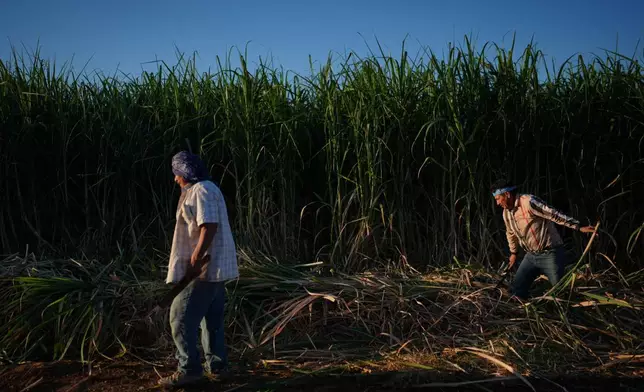
Farmworker Leonardo Hernandez pauses under the sun while chopping sugarcane in Niland, Calif., Thursday, Sept. 11, 2025. (AP Photo/Jae C. Hong)

Manuel Gallegos, left, Hipolito Hernandez work in a sugarcane field in Niland, Calif., Thursday, Sept. 11, 2025. (AP Photo/Jae C. Hong)
Manuel Gallegos, left, Hipolito Hernandez work in a sugarcane field in Niland, Calif., Thursday, Sept. 11, 2025. (AP Photo/Jae C. Hong)

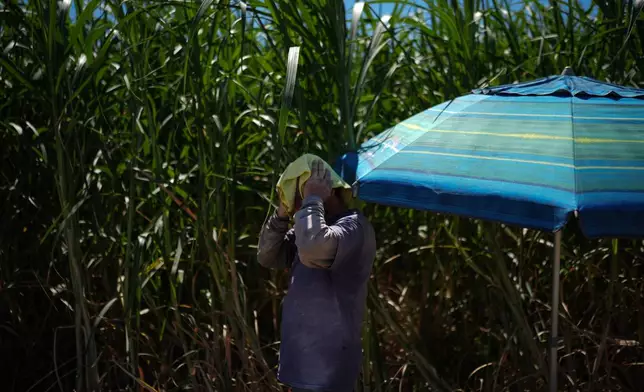
Leonardo Hernandez wipes sweat from his face in the shade while working in a sugarcane field in Niland, Calif., Thursday, Sept. 11, 2025. (AP Photo/Jae C. Hong)
Leonardo Hernandez wipes sweat from his face in the shade while working in a sugarcane field in Niland, Calif., Thursday, Sept. 11, 2025. (AP Photo/Jae C. Hong)

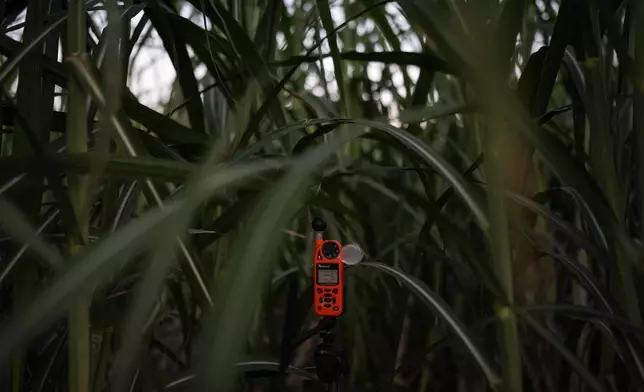
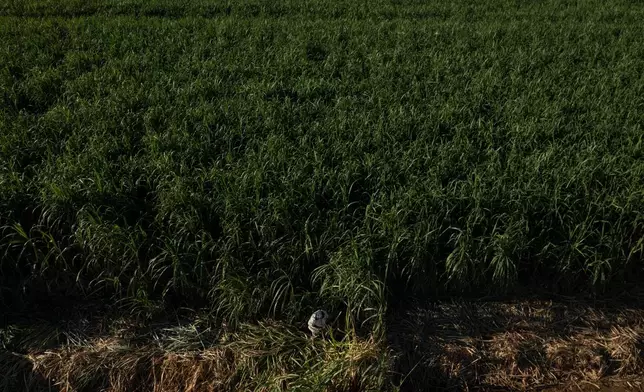
An environmental monitor is placed in a sugarcane field to collect environmental data in Niland, Calif., Thursday, Sept. 11, 2025. (AP Photo/Jae C. Hong)
An environmental monitor is placed in a sugarcane field to collect environmental data in Niland, Calif., Thursday, Sept. 11, 2025. (AP Photo/Jae C. Hong)

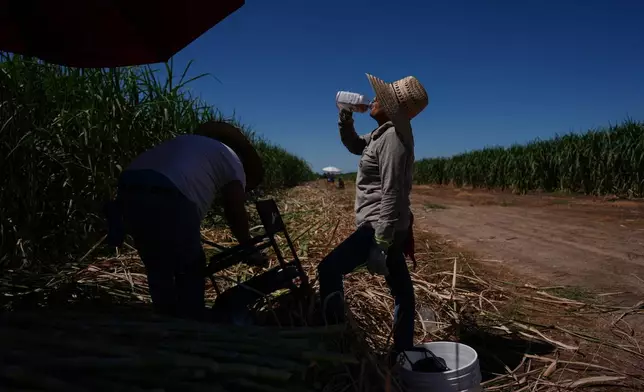
Petrona Romero, right, drinks an electrolyte beverage while working alongside her husband, Cristino, in a sugarcane field in Niland, Calif., Thursday, Sept. 11, 2025. (AP Photo/Jae C. Hong)
Petrona Romero, right, drinks an electrolyte beverage while working alongside her husband, Cristino, in a sugarcane field in Niland, Calif., Thursday, Sept. 11, 2025. (AP Photo/Jae C. Hong)

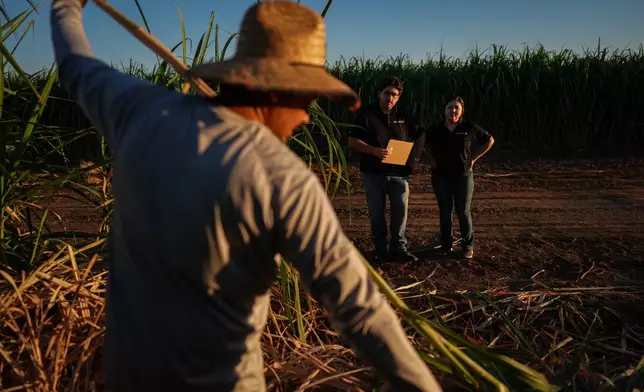
Research assistants Brandon Toji, right, and Michelle Solorio watch as Raul Cruz, foreground, chops sugarcane in Niland, Calif., Thursday, Sept. 11, 2025. (AP Photo/Jae C. Hong)
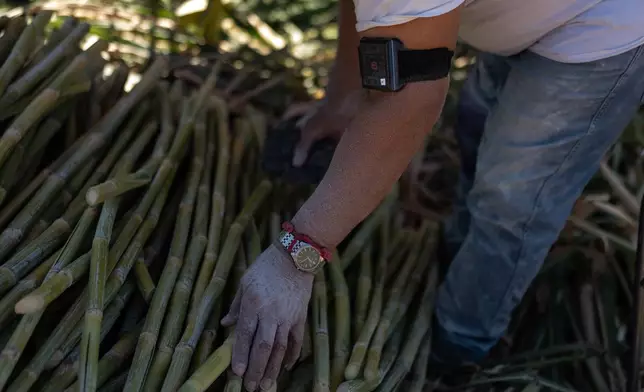
Research assistants Brandon Toji, right, and Michelle Solorio watch as Raul Cruz, foreground, chops sugarcane in Niland, Calif., Thursday, Sept. 11, 2025. (AP Photo/Jae C. Hong)

With a wearable heat-stress monitor strapped to his arm, farmworker Cristino Romero bundles sugarcane in Niland, Calif., Thursday, Sept. 11, 2025. (AP Photo/Jae C. Hong)
With a wearable heat-stress monitor strapped to his arm, farmworker Cristino Romero bundles sugarcane in Niland, Calif., Thursday, Sept. 11, 2025. (AP Photo/Jae C. Hong)

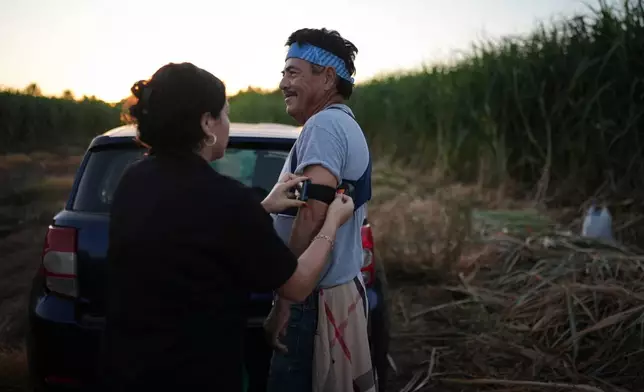
Research assistant Briana Toji straps a wearable heat-stress monitor on farmworker Hipolito Hernandez in a sugarcane field in Niland, Calif., Thursday, Sept. 11, 2025. (AP Photo/Jae C. Hong)
Research assistant Briana Toji straps a wearable heat-stress monitor on farmworker Hipolito Hernandez in a sugarcane field in Niland, Calif., Thursday, Sept. 11, 2025. (AP Photo/Jae C. Hong)

Manuel Gallegos works in a sugarcane field in Niland, Calif., Thursday, Sept. 11, 2025. (AP Photo/Jae C. Hong)
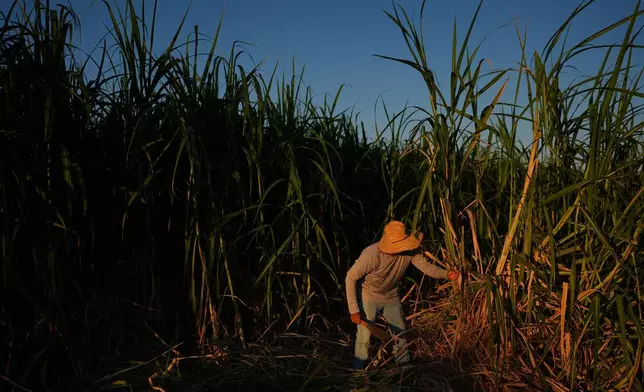
Manuel Gallegos works in a sugarcane field in Niland, Calif., Thursday, Sept. 11, 2025. (AP Photo/Jae C. Hong)

Farmworker Raul Cruz chops sugarcane in Niland, Calif., Thursday, Sept. 11, 2025. (AP Photo/Jae C. Hong)

Farmworker Raul Cruz chops sugarcane in Niland, Calif., Thursday, Sept. 11, 2025. (AP Photo/Jae C. Hong)

The hot climate that makes this Southern California region a farming powerhouse is also what makes it dangerous for farmworkers, who are increasingly vulnerable to rising temperatures due to greenhouse gas emissions from burning coal, oil and natural gas. Researchers from San Diego State University are working to understand the health consequences of heat stress on farmworkers and where heat is most extreme in this rural landscape. They hope their findings can lead to a better understanding of rural heat islands, identify gaps in research and help develop interventions that better protect them in the face of climate change.

“Workers could potentially be dying or having some serious issues," said project leader Nicolas Lopez-Galvez, assistant professor in the School of Public Health at SDSU. “It’s better to start acting sooner."

Since the start of the 20th century, California temperatures have increased almost 3 F (about 1.7 C), according to state and federal data. Warming has accelerated, and seven of the state’s last eight years through 2024 were the warmest on record. While all areas of the state have warmed, Southern California is heating up about twice as fast as Northern California.

Ana Solorio, an organizer with the farmworker advocacy group Líderes Campesinas that is working with researchers, remembered feeling “suffocated” in the Coachella Valley summer heat when she was a farmworker. "With the humidity, it felt awful," said Solorio, who's lived in the Imperial Valley for more than 30 years. The heat was so intense she didn’t return for another season, preferring instead the cooler winter harvesting months of lettuce in the Imperial Valley.

“This (heat) can cause a lot of harm to their health," she said.

Researchers are trying to understand how farmworkers' heat stress might vary depending on the crops, the season and the number of breaks they take.

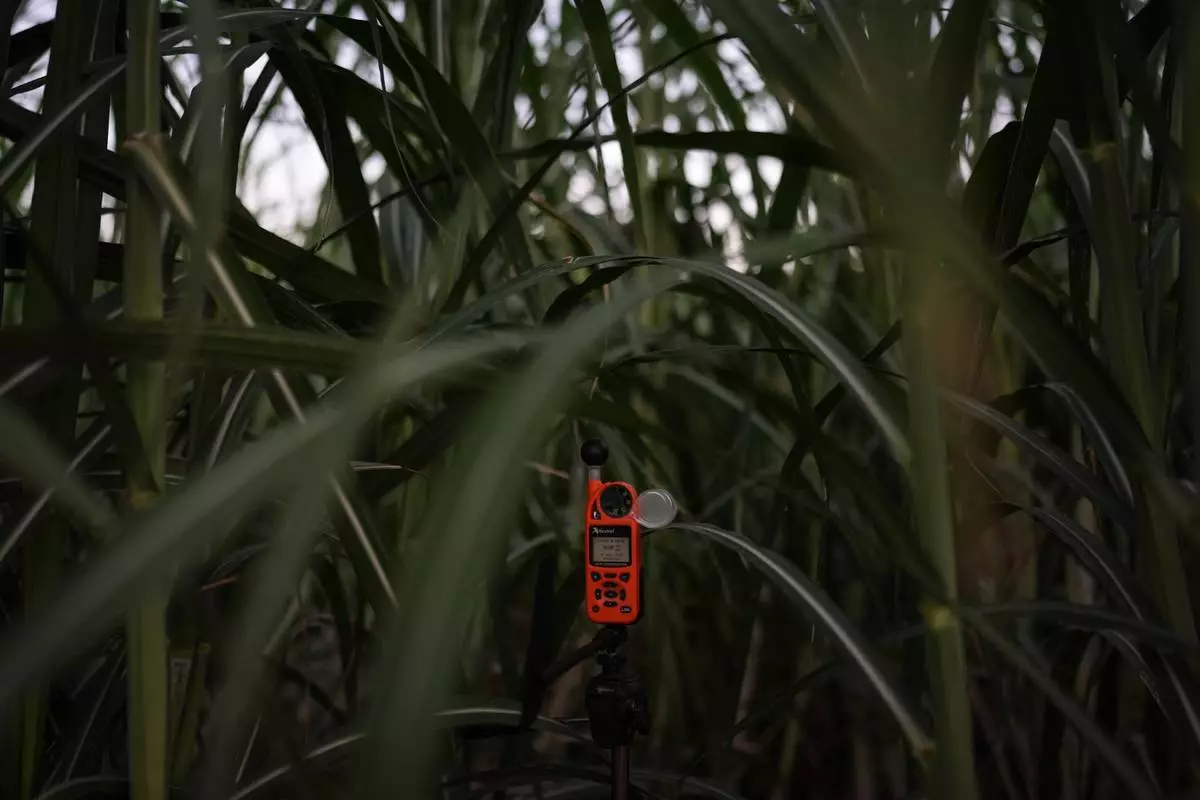
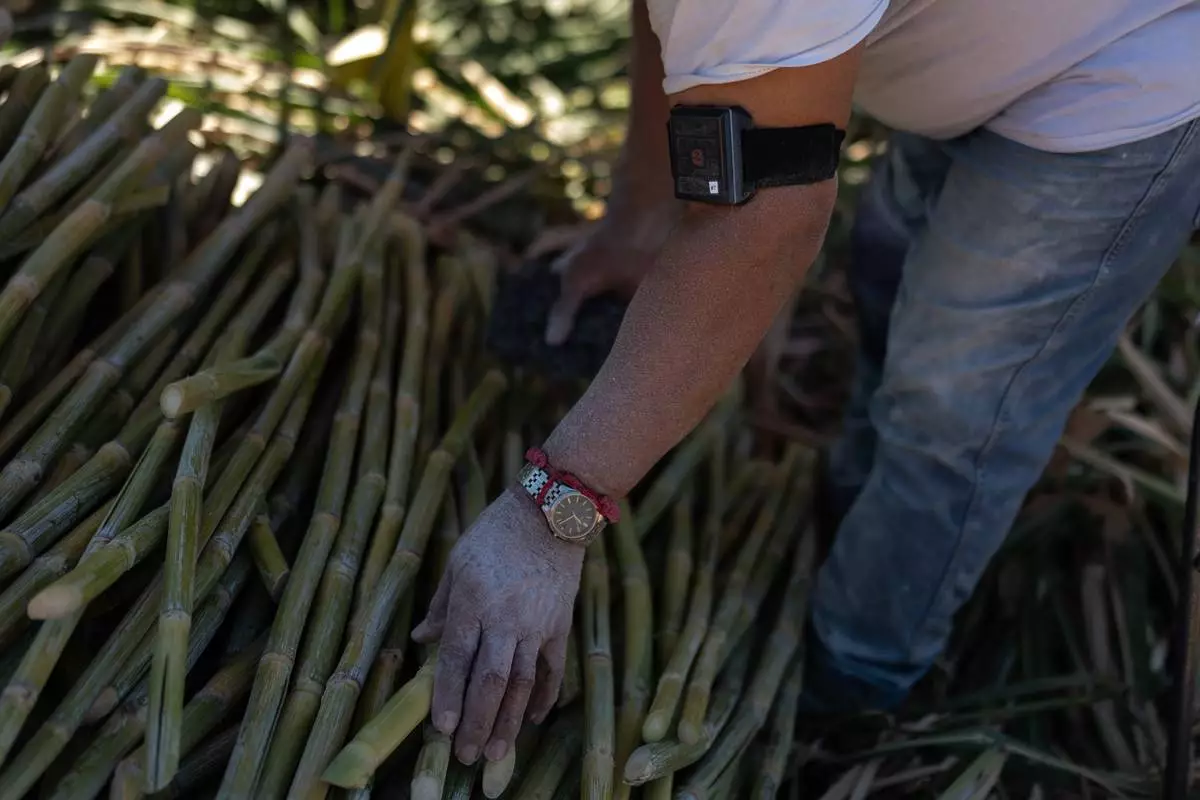
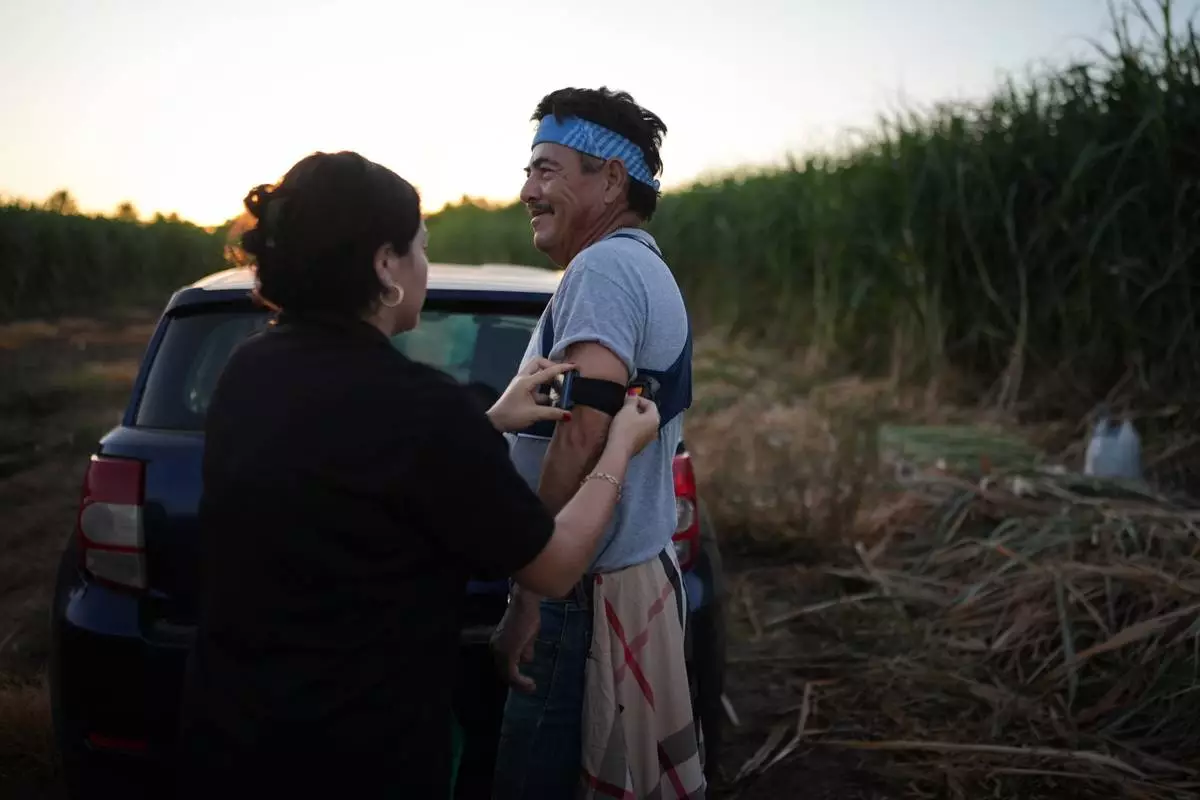
Over the past two years, they've collected year-round data from some 300 farmworkers. Body sensors measure things like core body temperature and heart rate while they work. Elsewhere in the fields, environmental monitors measure the day's temperature, humidity, wind speed, sun angle and cloud cover, also known as the wet-bulb globe temperature, considered the best metric to understanding heat stress. Using satellite imagery along with historical and current wet-bulb globe temperature data, researchers are mapping areas of extreme heat, particularly in the Imperial and Coachella valleys.

Researchers are learning that ground level crops can expose workers to higher heat levels compared to tree crops, for example, but it also depends on their harvesting months. In the summers, farmworkers who prepare fields for planting or help maintain irrigation systems are also more exposed.

Rural heat can vary based on things like tree cover, proximity to a body of water and empty fields, which may be hotter. “It creates this island where people might be living or working that are higher in terms of heat stress compared to other places,” said Lopez-Galvez.

Bordered by the Colorado River to the east, the Salton Sea to the northwest and Mexico to the south, the Imperial Valley is home to hundreds of thousands of acres of farmland and produces billions of dollars in agricultural production. It grows two-thirds of winter vegetables consumed nationally and provides thousands of jobs. From 2023 to 2024 alone, about 17,579 migrant and seasonal farmworkers were employed in Imperial County, according to the state.

It's also extremely hot. In a given year, there are about 123 days with temperatures over 95 F (35 C), often exceeding 110 F (43 C) in August and early September, according to calculations by Sagar Parajuli, research scientist and adjunct faculty with SDSU's geography department. The county has one of the largest Latino populations and the highest number of heat-related illnesses among workers than anywhere else in the state.

Some of their data analysis has already been published.

One study found that irrigating crop fields in the Imperial Valley reduced the wet-bulb globe temperature on summer days, thanks to the cooling effect of evaporating water. But on summer nights, the opposite occurred: irrigation increased the wet-bulb globe temperature as humidity spiked. Irrigation also heightened heat in nearby urban and fallow areas adjacent to crop fields due to moisture transport.

“It is a concern because an elevated nighttime temperature restricts the ability of farmworkers to cool down,” said Parajuli, the study's lead author. “So they can’t recover from the heat stress they could be accumulating from the daytime."

Through this research, the authors were able to recommend how frequently farmworkers should take rest breaks to protect themselves from heat stress, based on how often wet-bulb globe temperatures exceed safety thresholds across seasons and work shifts. While California has heat rules, they're not strictly enforced, he added.

“We realized that farmworkers are not getting enough rest breaks, and also there are no clear policy guidelines in terms of heat-related rest breaks," he said.

Lopez-Galvez said they plan to continue their research in California's Central Valley and hope to expand it into Yuma, Ariz. and other parts of the Southwest.

The Associated Press receives support from the Walton Family Foundation for coverage of water and environmental policy. The AP is solely responsible for all content. For all of AP’s environmental coverage, visit https://apnews.com/hub/climate-and-environment
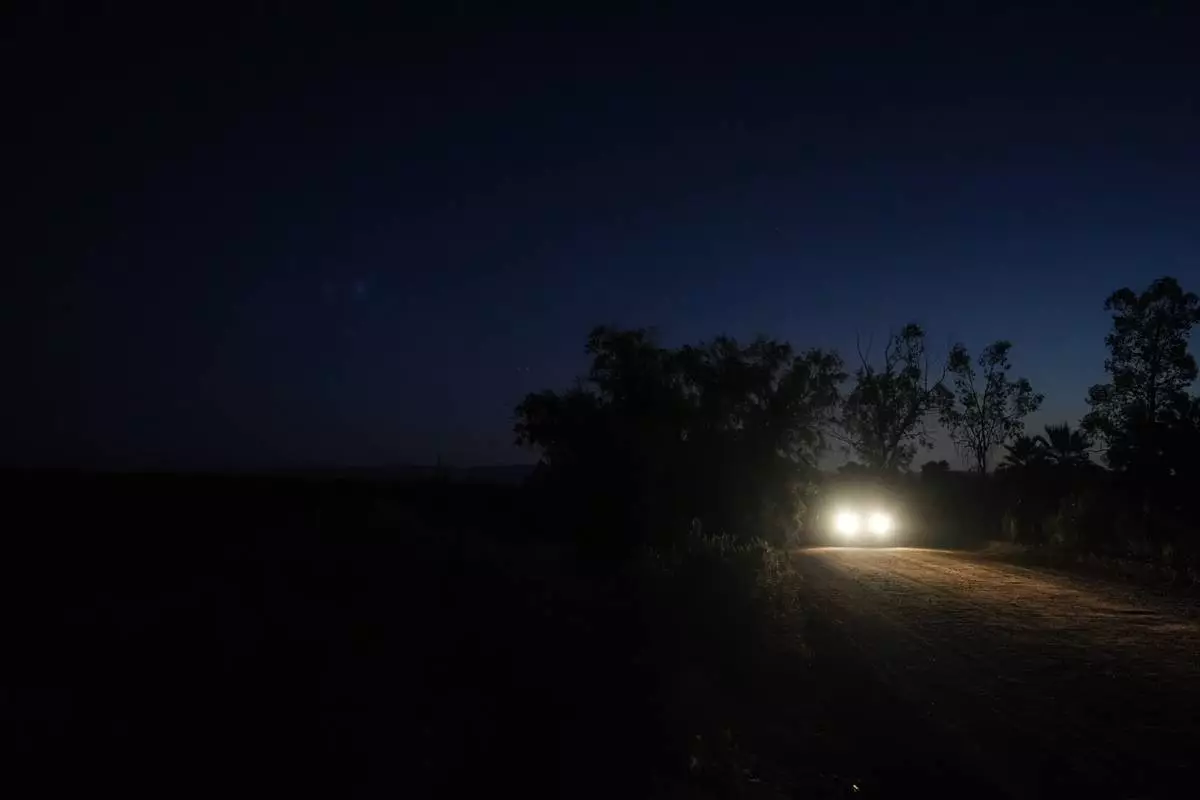
Researchers arrive at a sugarcane field at dawn to collect environmental data in Niland, Calif., Thursday, Sept. 11, 2025. (AP Photo/Jae C. Hong)
Researchers arrive at a sugarcane field at dawn to collect environmental data in Niland, Calif., Thursday, Sept. 11, 2025. (AP Photo/Jae C. Hong)

Manuel Gallegos carries a cooler and a large umbrella while leaving a sugarcane field in Niland, Calif., Thursday, Sept. 11, 2025. (AP Photo/Jae C. Hong)
Manuel Gallegos carries a cooler and a large umbrella while leaving a sugarcane field in Niland, Calif., Thursday, Sept. 11, 2025. (AP Photo/Jae C. Hong)

Farmworker Raul Cruz collects environmental monitors at the end of the day in a sugarcane field in Niland, Calif., Thursday, Sept. 11, 2025. (AP Photo/Jae C. Hong)
Farmworker Raul Cruz collects environmental monitors at the end of the day in a sugarcane field in Niland, Calif., Thursday, Sept. 11, 2025. (AP Photo/Jae C. Hong)

Farmworkers Hipolito Hernandez, from left, Leonardo Hernandez and Manuel Gallegos hydrate at sunrise before starting their day in a sugarcane field in Niland, Calif., Thursday, Sept. 11, 2025. (AP Photo/Jae C. Hong)
Farmworkers Hipolito Hernandez, from left, Leonardo Hernandez and Manuel Gallegos hydrate at sunrise before starting their day in a sugarcane field in Niland, Calif., Thursday, Sept. 11, 2025. (AP Photo/Jae C. Hong)

Farmworker Leonardo Hernandez pauses under the sun while chopping sugarcane in Niland, Calif., Thursday, Sept. 11, 2025. (AP Photo/Jae C. Hong)
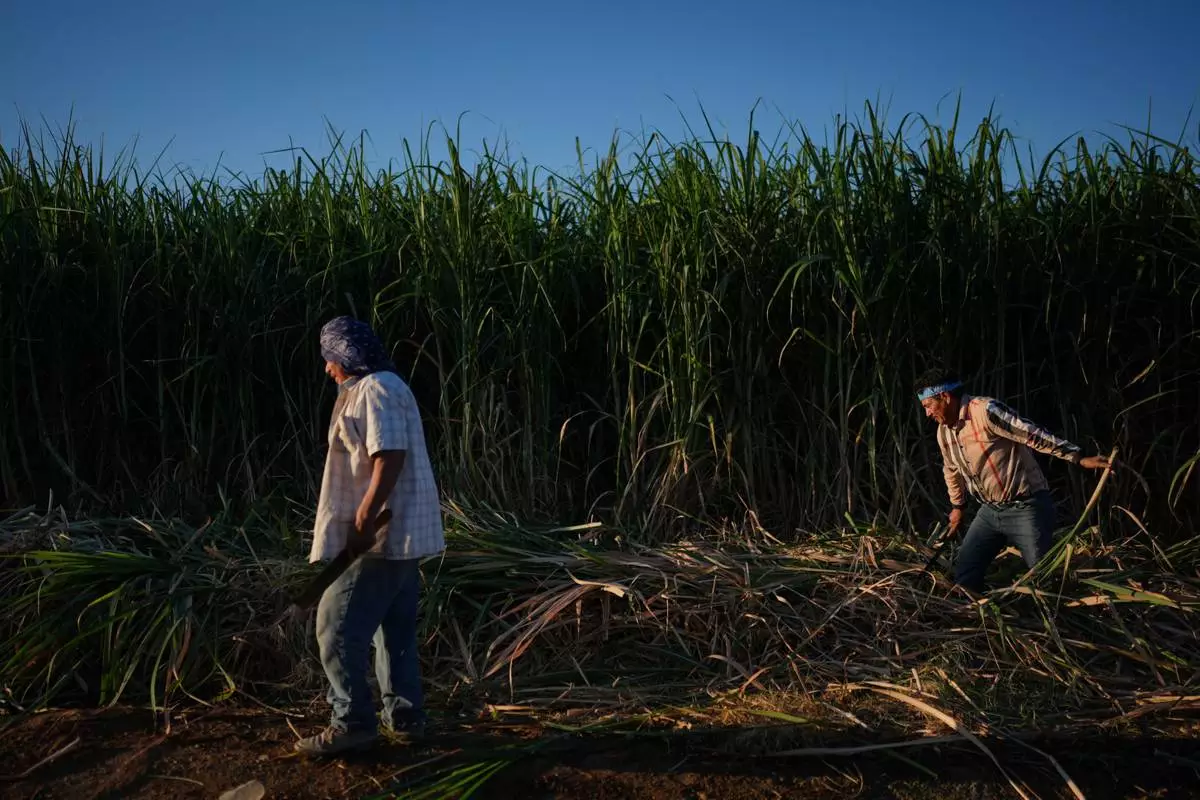
Farmworker Leonardo Hernandez pauses under the sun while chopping sugarcane in Niland, Calif., Thursday, Sept. 11, 2025. (AP Photo/Jae C. Hong)

Manuel Gallegos, left, Hipolito Hernandez work in a sugarcane field in Niland, Calif., Thursday, Sept. 11, 2025. (AP Photo/Jae C. Hong)
Manuel Gallegos, left, Hipolito Hernandez work in a sugarcane field in Niland, Calif., Thursday, Sept. 11, 2025. (AP Photo/Jae C. Hong)

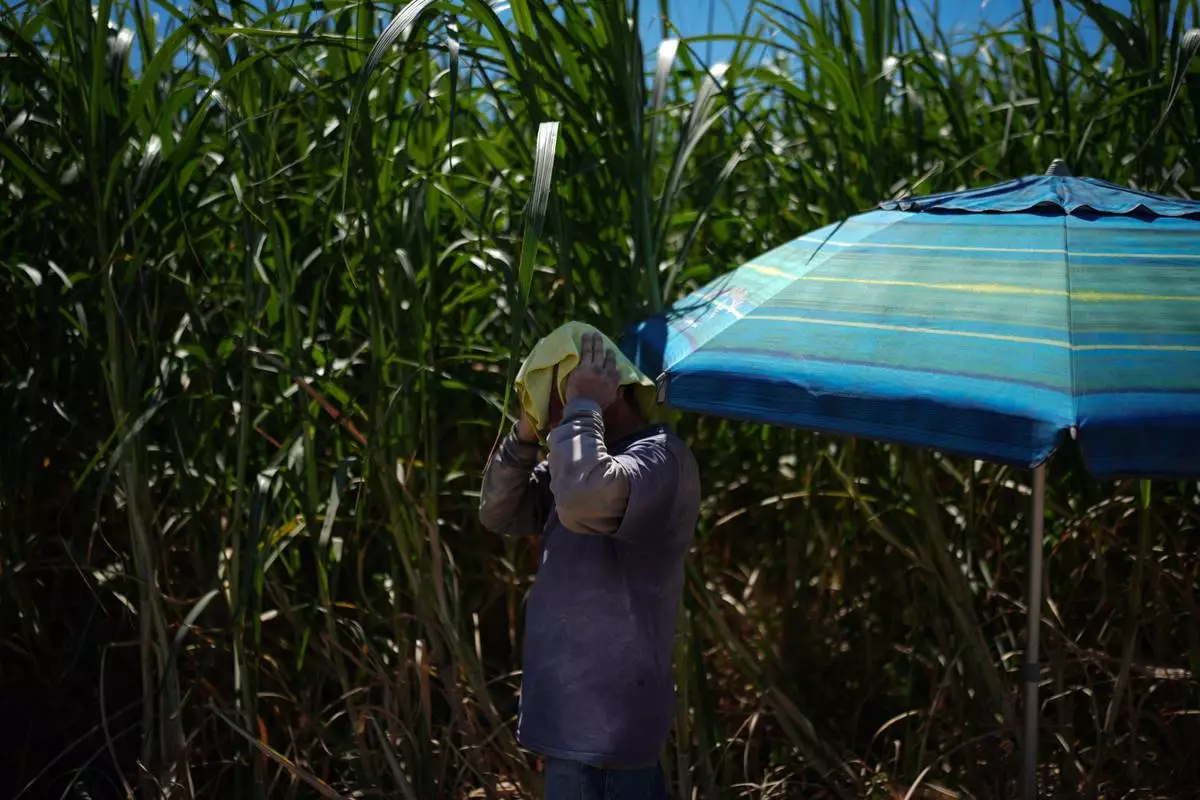
Leonardo Hernandez wipes sweat from his face in the shade while working in a sugarcane field in Niland, Calif., Thursday, Sept. 11, 2025. (AP Photo/Jae C. Hong)
Leonardo Hernandez wipes sweat from his face in the shade while working in a sugarcane field in Niland, Calif., Thursday, Sept. 11, 2025. (AP Photo/Jae C. Hong)

An environmental monitor is placed in a sugarcane field to collect environmental data in Niland, Calif., Thursday, Sept. 11, 2025. (AP Photo/Jae C. Hong)
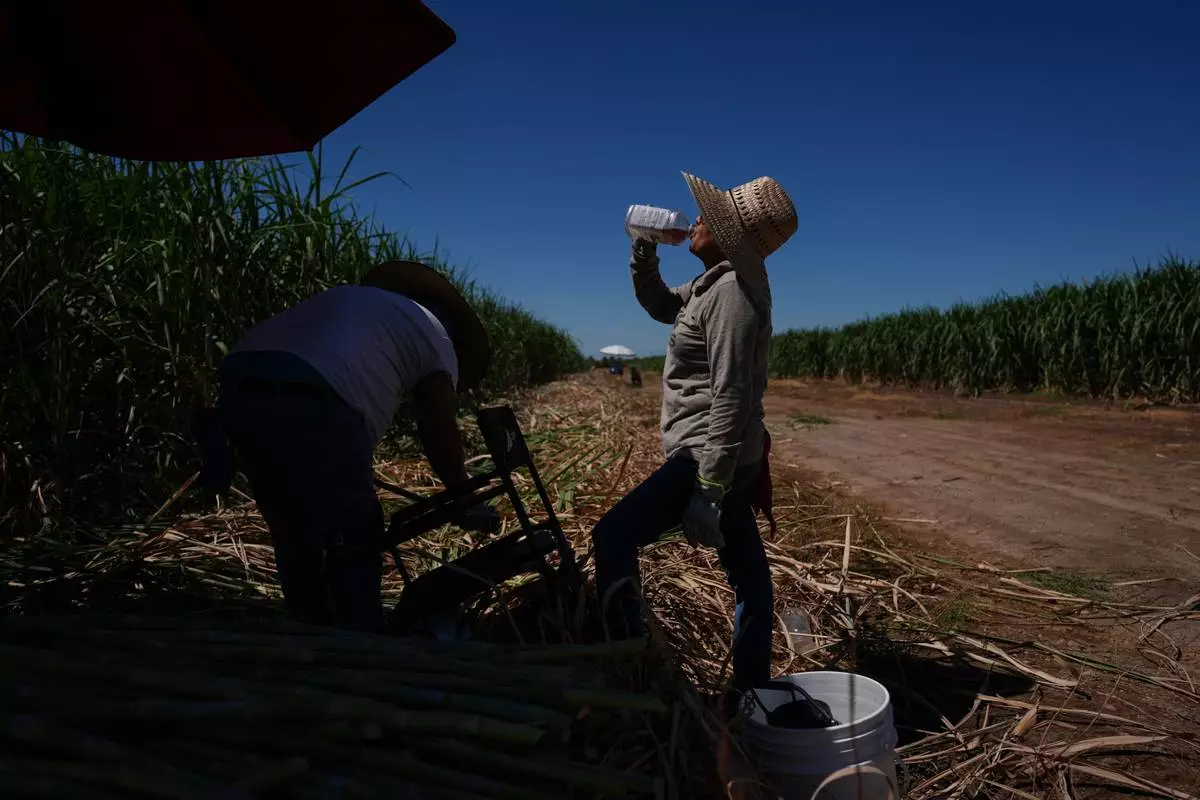
An environmental monitor is placed in a sugarcane field to collect environmental data in Niland, Calif., Thursday, Sept. 11, 2025. (AP Photo/Jae C. Hong)

Petrona Romero, right, drinks an electrolyte beverage while working alongside her husband, Cristino, in a sugarcane field in Niland, Calif., Thursday, Sept. 11, 2025. (AP Photo/Jae C. Hong)
Petrona Romero, right, drinks an electrolyte beverage while working alongside her husband, Cristino, in a sugarcane field in Niland, Calif., Thursday, Sept. 11, 2025. (AP Photo/Jae C. Hong)

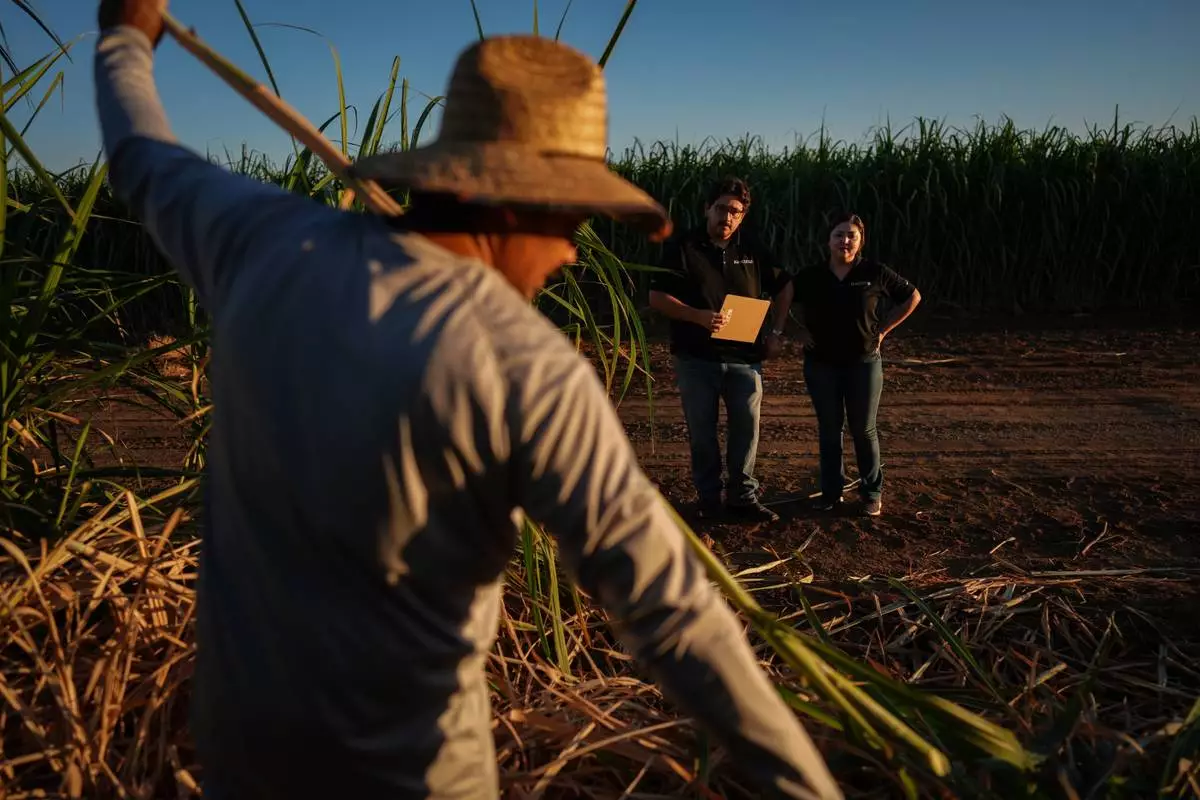
Research assistants Brandon Toji, right, and Michelle Solorio watch as Raul Cruz, foreground, chops sugarcane in Niland, Calif., Thursday, Sept. 11, 2025. (AP Photo/Jae C. Hong)
Research assistants Brandon Toji, right, and Michelle Solorio watch as Raul Cruz, foreground, chops sugarcane in Niland, Calif., Thursday, Sept. 11, 2025. (AP Photo/Jae C. Hong)

With a wearable heat-stress monitor strapped to his arm, farmworker Cristino Romero bundles sugarcane in Niland, Calif., Thursday, Sept. 11, 2025. (AP Photo/Jae C. Hong)
With a wearable heat-stress monitor strapped to his arm, farmworker Cristino Romero bundles sugarcane in Niland, Calif., Thursday, Sept. 11, 2025. (AP Photo/Jae C. Hong)

Research assistant Briana Toji straps a wearable heat-stress monitor on farmworker Hipolito Hernandez in a sugarcane field in Niland, Calif., Thursday, Sept. 11, 2025. (AP Photo/Jae C. Hong)
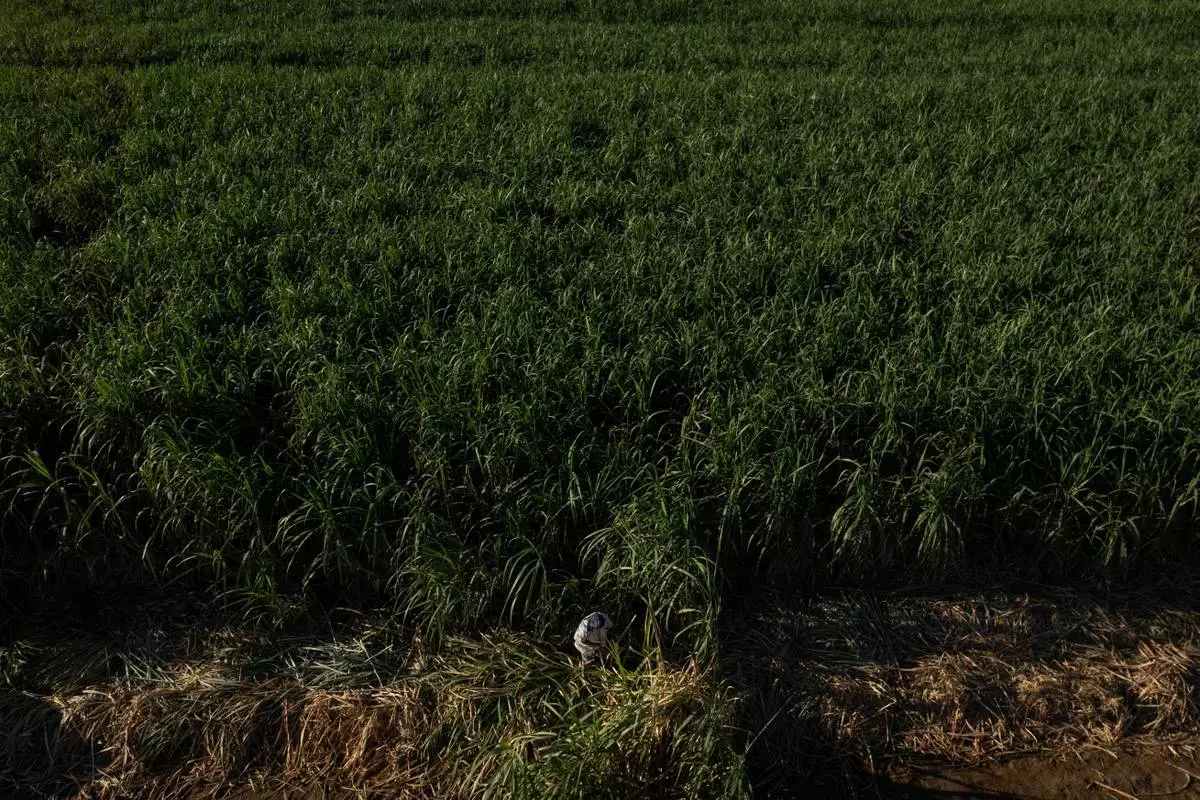
Research assistant Briana Toji straps a wearable heat-stress monitor on farmworker Hipolito Hernandez in a sugarcane field in Niland, Calif., Thursday, Sept. 11, 2025. (AP Photo/Jae C. Hong)

Manuel Gallegos works in a sugarcane field in Niland, Calif., Thursday, Sept. 11, 2025. (AP Photo/Jae C. Hong)
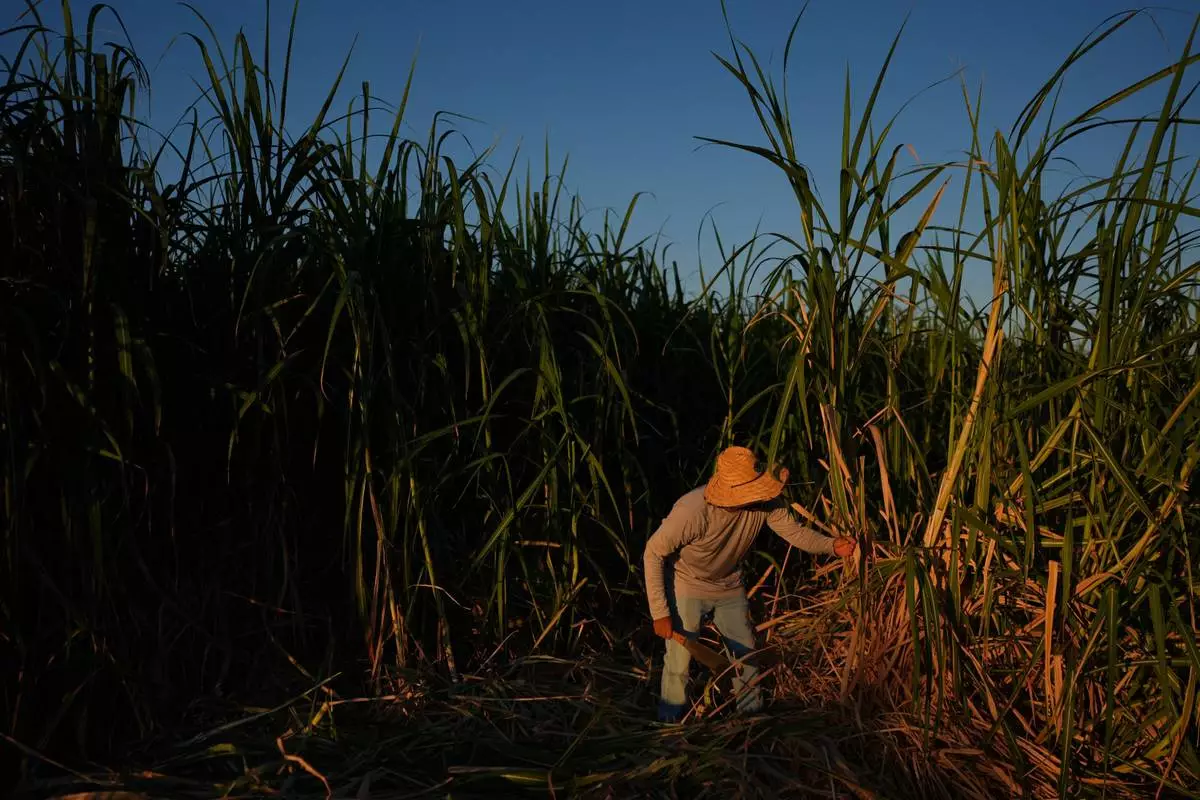
Manuel Gallegos works in a sugarcane field in Niland, Calif., Thursday, Sept. 11, 2025. (AP Photo/Jae C. Hong)

Farmworker Raul Cruz chops sugarcane in Niland, Calif., Thursday, Sept. 11, 2025. (AP Photo/Jae C. Hong)
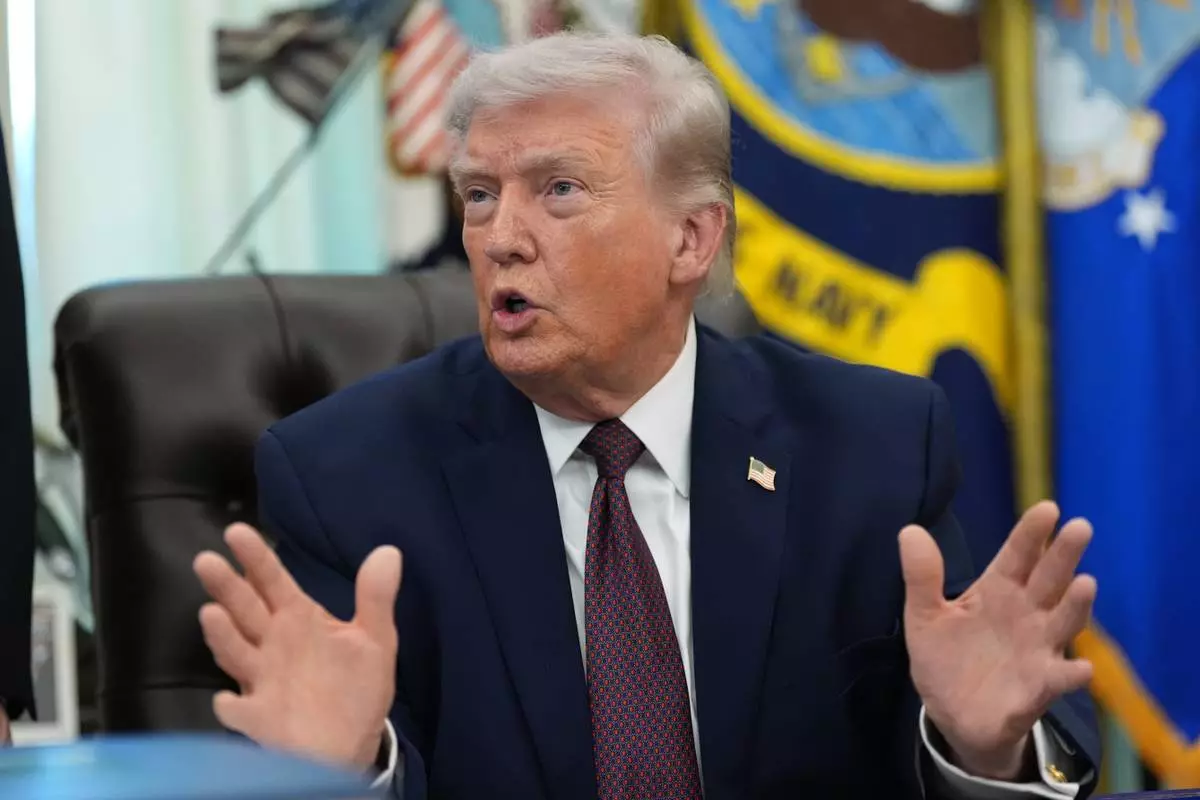

Farmworker Raul Cruz chops sugarcane in Niland, Calif., Thursday, Sept. 11, 2025. (AP Photo/Jae C. Hong)
LONDON (AP) — U.S. President Donald Trump says he's strongly considering pulling the United States out of NATO, ratcheting up his criticism of European allies and exposing a wider rift in the trans-Atlantic alliance — this time over the Iran war.

While Trump's talk of a possible NATO pullout dates back years, the comments to The Telegraph newspaper in the U.K., published Wednesday, were among the clearest and most disparaging yet — suggesting that the fracture has deepened perhaps to a point of no return.

Asked whether he would reconsider U.S. membership in the alliance after the conflict in the Middle East ends, Trump replied: “Oh yes, I would say (it’s) beyond reconsideration."

NATO didn't provide immediate comment when contacted by The Associated Press.

U.K. Prime Minister Keir Starmer said that his government was “fully committed to NATO” and called it “the single most effective military alliance the world has ever seen.”

Many European leaders have felt political pressure over the war, which faces opposition in their countries and has sent petroleum prices soaring as Iran has effectively shut the Strait of Hormuz, the narrow waterway between Iran and Oman through which about one-fifth of the world’s oil passes.

“Whatever the pressure on me and others, whatever the noise, I am going to act in the British national interest in all the decisions I make,” Starmer said Wednesday.

The U.K. is working on plans that could help assuage Trump, and Starmer said military planners will work on a postwar security plan for the Strait.

On Thursday, British Foreign Secretary Yvette Cooper will host a virtual meeting of 35 countries that have signed up to help ensure security for shipping in the Strait — after the fighting ends.

Iulia-Sabina Joja, a senior fellow at the Middle East Institute, alluded to Trump's exhortation on Tuesday for allies to “go get your own oil” — in a social media post insisting it wasn't America's job to secure the Strait.

“The Europeans are not keen to go into an active warfare situation, to so-called ‘get’ their energy out of the Strait,” said Joba, a former deputy project manager at NATO Allied Command Transformation in Virginia.

Long-simmering tensions within the alliance have bubbled up again over the war.

As energy prices have spiked, Trump has been desperate to get countries to send their ships to the Strait of Hormuz. He has called NATO allies “cowards."

Even since his first term, Trump has urged the allies to assume greater responsibility for their own security and spend more on defense. He has argued that the U.S. has done more for them than the other way around.

A U.S. pullout would essentially spell the end of NATO, which flourished for decades under American leadership.

Speaking Tuesday on Fox News, U.S. Secretary of State Marco Rubio said: “I do think, unfortunately, we are going to have to reexamine whether or not this alliance that has served this country well for a while is still serving that purpose.”

Rubio raised questions with interviewer Sean Hannity about whether NATO has “become a one-way street where America is simply in a position to defend Europe — but when we need the help of our allies, they’re going to deny us basing rights and they’re going to deny us overflight.”

The criticism from Rubio could raise concerns in the alliance about whether the U.S. under Trump may no longer consider NATO as worth the time, money and personnel that Washington has invested in it.

The very mention of a pullout could weaken the alliance’s deterrence, particularly with Russia: It relies on ensuring that Russian President Vladimir Putin believes NATO will retaliate if he decides to one day expand Moscow's war in Ukraine.

NATO is built on Article 5 of its founding treaty, which pledges that an attack on any one member will be met with a response from them all.

As the Iran war has spread, missiles and drones have been fired toward NATO member Turkey and a British military base on Cyprus, fueling speculation about what might prompt NATO to trigger its collective security guarantee and come to their rescue.

The alliance hasn't intervened or signaled any plan to. NATO Secretary-General Mark Rutte — who has voiced support for Trump and Washington's role in the alliance — has been focusing mostly on the Russia-Ukraine war since Ukraine borders four NATO countries.

NATO operates uniquely by consensus. All 32 countries must agree for it to take decisions, so political priorities play a role. Even invoking Article 5 requires agreement among the allies. Turkey or the U.K. can't trigger it alone.

The U.S. can’t just simply walk away all that easy.

A Defense Act passed under U.S. President Joe Biden in 2024 prevents an American president from withdrawing from NATO without support of two-thirds of the Senate or under another act by Congress. It is unclear whether the Trump administration, which during his first term claimed broader authority on the matter, would challenge that law.

European leaders have called for the Middle East conflict to stop and want the U.S. and Iran to return to negotiations over Tehran's nuclear program, which Washington and Israel see as a threat.

The vocal opposition in Europe to Trump's war against Iran has started to turn into action.

Spain has closed its airspace to U.S. planes involved in the war.

Early last month, France agreed to let the U.S. Air Force use a base in southern France after receiving a “full guarantee” from the United States that planes not involved in carrying out strikes against Iran would land there.

The government of Italian Premier Giorgia Meloni, long seen as one of the European Union leaders with the best personal ties with Trump, denied permission for U.S. bombers to land at the Sigonella air base in Sicily for one mission related to the Middle East.

Franco Pavoncello, a professor of political science at Rome’s John Cabot University, said that decision might cost Meloni a lot of her political capital in Washington.

But he said: “The Italian government could not be seen by the European allies as too submissive to American interests, as it would have very negative repercussions both at home and in the EU.”

U.S. relations with Europe had already soured in recent months over Trump's call for Greenland — a semiautonomous territory of stalwart NATO ally Denmark — to become part of the United States, prompting many EU countries to rally behind Copenhagen.

Jamey Keaten reported from Geneva. Lorne Cook in Brussels, Giada Zampano in Rome, Sam McNeil in Dubai, United Arab Emirates, and Matthew Lee in Washington, contributed to this report.

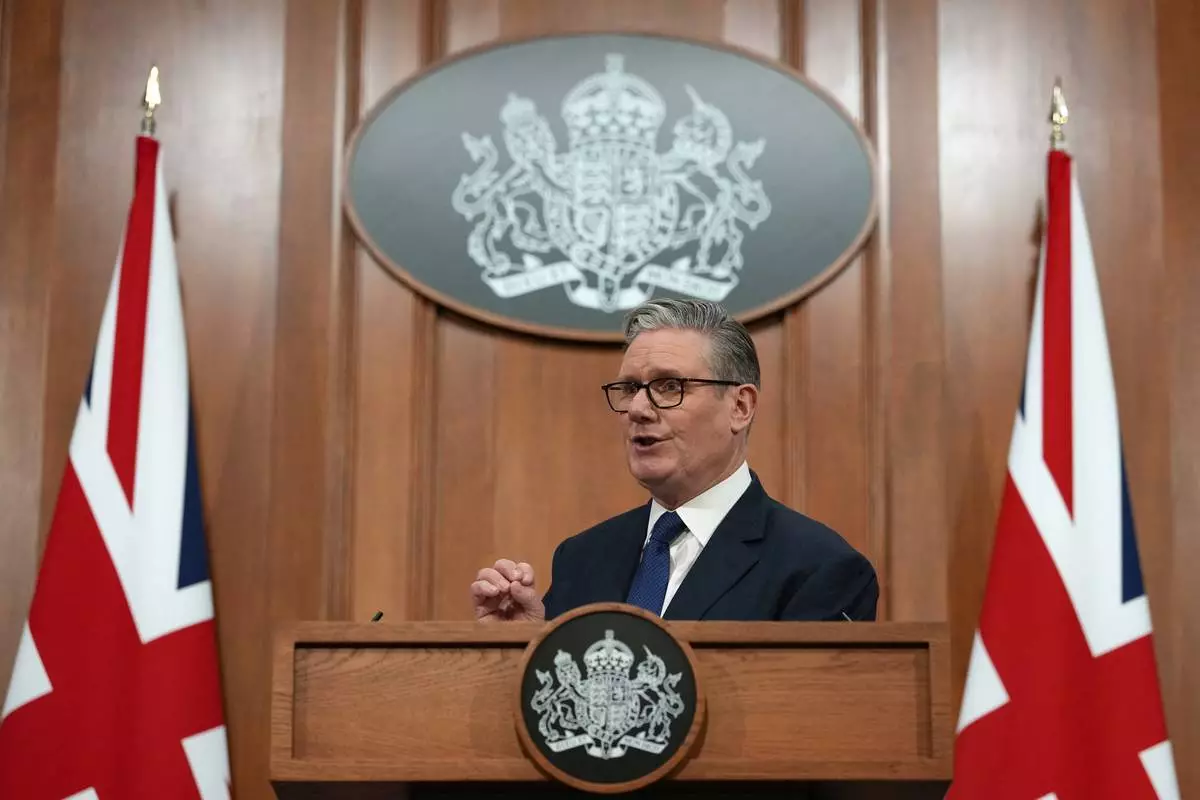
President Donald Trump answers questions from reporters after signing an executive order in the Oval Office of the White House Tuesday, March 31, 2026, in Washington. (AP Photo/Alex Brandon)

President Donald Trump answers questions from reporters after signing an executive order in the Oval Office of the White House Tuesday, March 31, 2026, in Washington. (AP Photo/Alex Brandon)

Britain's Prime Minister Keir Starmer speaks during a press conference at Downing Street in London, Wednesday, April 1, 2026. (AP Photo/Frank Augstein, Pool)

Britain's Prime Minister Keir Starmer speaks during a press conference at Downing Street in London, Wednesday, April 1, 2026. (AP Photo/Frank Augstein, Pool)

Britain's Prime Minister Keir Starmer speaks during a press conference at Downing Street in London, Wednesday, April 1, 2026. (AP Photo/Frank Augstein, Pool)

Britain's Prime Minister Keir Starmer speaks during a press conference at Downing Street in London, Wednesday, April 1, 2026. (AP Photo/Frank Augstein, Pool)

Britain's Prime Minister Keir Starmer speaks during a press conference at Downing Street in London, Wednesday, April 1, 2026. (AP Photo/Frank Augstein, Pool)

Britain's Prime Minister Keir Starmer speaks during a press conference at Downing Street in London, Wednesday, April 1, 2026. (AP Photo/Frank Augstein, Pool)

Recommended Articles