NEW YORK (AP) — A judge on Wednesday granted Luigi Mangione only a slight delay of his federal trial in the killing of UnitedHealthcare CEO Brian Thompson, moving it from September to October instead of next year, as his lawyers had wanted.
U.S. District Judge Margaret Garnett tied her decision to the schedule of Mangione’s state murder trial, which is set to begin June 8 and take four to six weeks. She rejected a defense request to postpone the federal case until January or February 2027 so that it could then seek to delay the state case until September.
Mangione’s lawyers had argued that back-to-back trials on a compressed timeline would violate his constitutional rights. However, Garnett said their proposal to push the federal case into 2027 and slot the state case in its place doesn’t "solve any of these problems because it shifts the very same problems from the summer to the fall.”
Jury selection in the federal case will begin on Oct. 5 instead of Sept. 8, followed by opening statements and testimony on Oct. 26 instead of Oct. 13, Garnett said. The schedule could change again if the state trial is delayed, she said.
Mangione, 27, has pleaded not guilty. He wore leg shackles as he entered the packed courtroom Wednesday and spoke only to confirm that he had agreed to let his lawyers speak to the judge about trial strategy and attorney-client matters in her robing room without him present. He faces the possibility of life in prison if he’s convicted in either case, which are set to occur two blocks apart in lower Manhattan.
“There really is no way around taking into account the events in the state case,” Garnett told lawyers at a hearing in Manhattan federal court. “Whether we like it or not, we’re at the mercy of the state case.”
However, Garnett said, “I am skeptical of moving the (federal) trial wholesale into 2027 when the state trial has not been adjourned. It is a little bit of a tail wagging the dog.”
Along with the new trial date, Garnett compressed preparations for jury selection in the federal case so that they don't overlap with the state trial, giving Mangione more time to review questionnaires filled out by hundreds of potential jurors. The original schedule had been set when the death penalty was still on the table.
Federal prosecutors opposed a trial delay, arguing that witnesses are harder to locate and memories fade with the passage of time. At least one witness will be traveling from abroad, Assistant U.S. Attorney Dominic Gentile said.
“The public has a right to a speedy trial as well, especially in a case as significant as this," Gentile said, noting that Mangione’s lawyers have had more than a year to prepare and that both cases involve the same allegations and witnesses.
The state trial judge, Gregory Carro, previously raised the possibility of moving the state trial to September — but only if federal prosecutors appealed Garnett’s decision barring them from seeking the death penalty. They declined to do so.
Garnett’s ruling on Wednesday leaves Carro little room to delay the state trial, and pushing it until after the federal trial could raise double jeopardy concerns.
The state’s double jeopardy protections kick in if a jury has been sworn in in a prior prosecution, such as a federal case, or if that prosecution ends in a guilty plea. The cases involve different charges but the same alleged course of conduct.
At a hearing in February, Mangione spoke out against the prospect of two trials, telling the judge: “It’s the same trial twice. One plus one is two. Double jeopardy by any commonsense definition.”
Thompson, 50, was killed on Dec. 4, 2024, as he walked to a Manhattan hotel for UnitedHealth Group’s annual investor conference. Surveillance video showed a masked gunman shooting him from behind.
Police say the words “delay,” “deny” and “depose” were written on the ammunition, mimicking a phrase used by critics to describe how insurers avoid paying claims.
Mangione, an Ivy League graduate from a wealthy Maryland family, was arrested five days later at a McDonald’s in Altoona, Pennsylvania, about 230 miles (370 kilometers) west of Manhattan.
His lawyers have argued that authorities prejudiced him by turning his arrest into a “Marvel movie” spectacle with armed officers parading him up a pier after he was flown to New York and by publicly declaring their desire to seek the death penalty before he was indicted.
In January, Garnett dismissed a federal murder charge — murder through use of a firearm — that had enabled prosecutors to seek capital punishment, finding it legally flawed.
The judge, a former Manhattan federal prosecutor appointed to the bench by President Joe Biden, also threw out a gun charge but left in place stalking charges that carry a maximum punishment of life in prison.
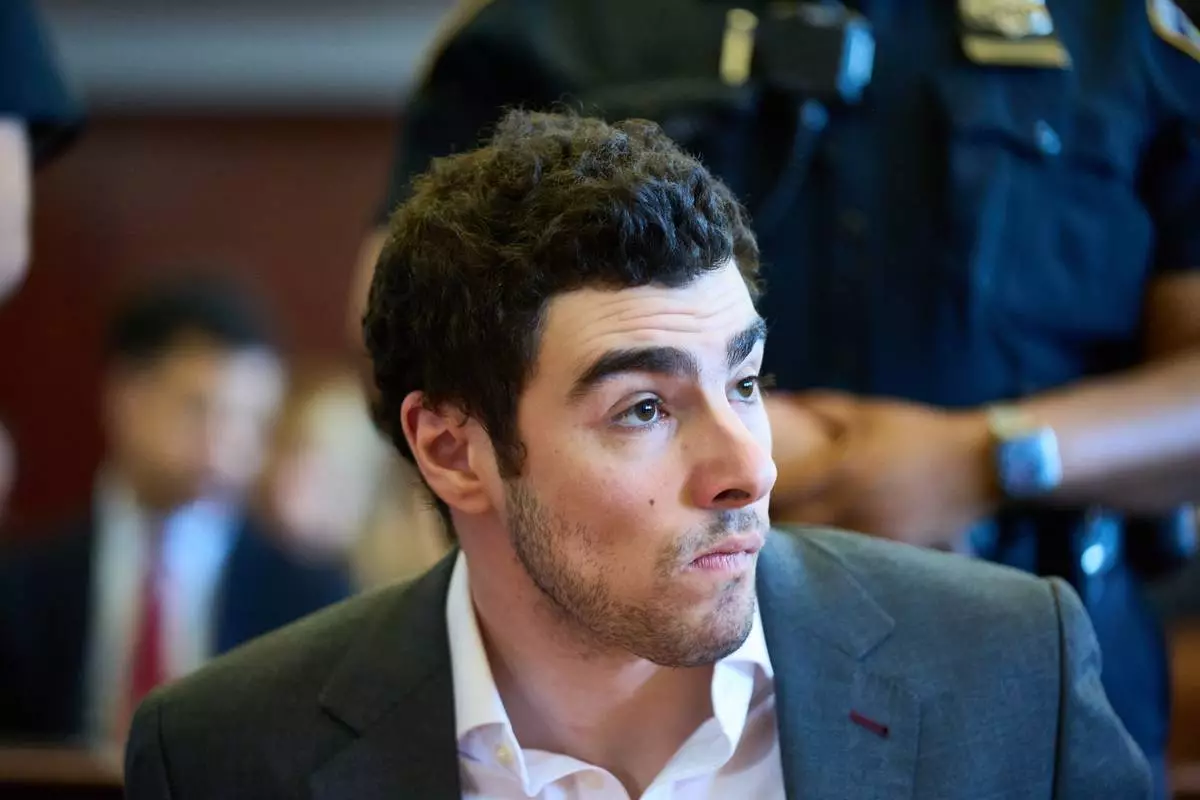
FILE - Luigi Mangione appears in Manhattan Criminal Court in New York, Dec. 16, 2025. (Curtis Means/Pool Photo via AP File)
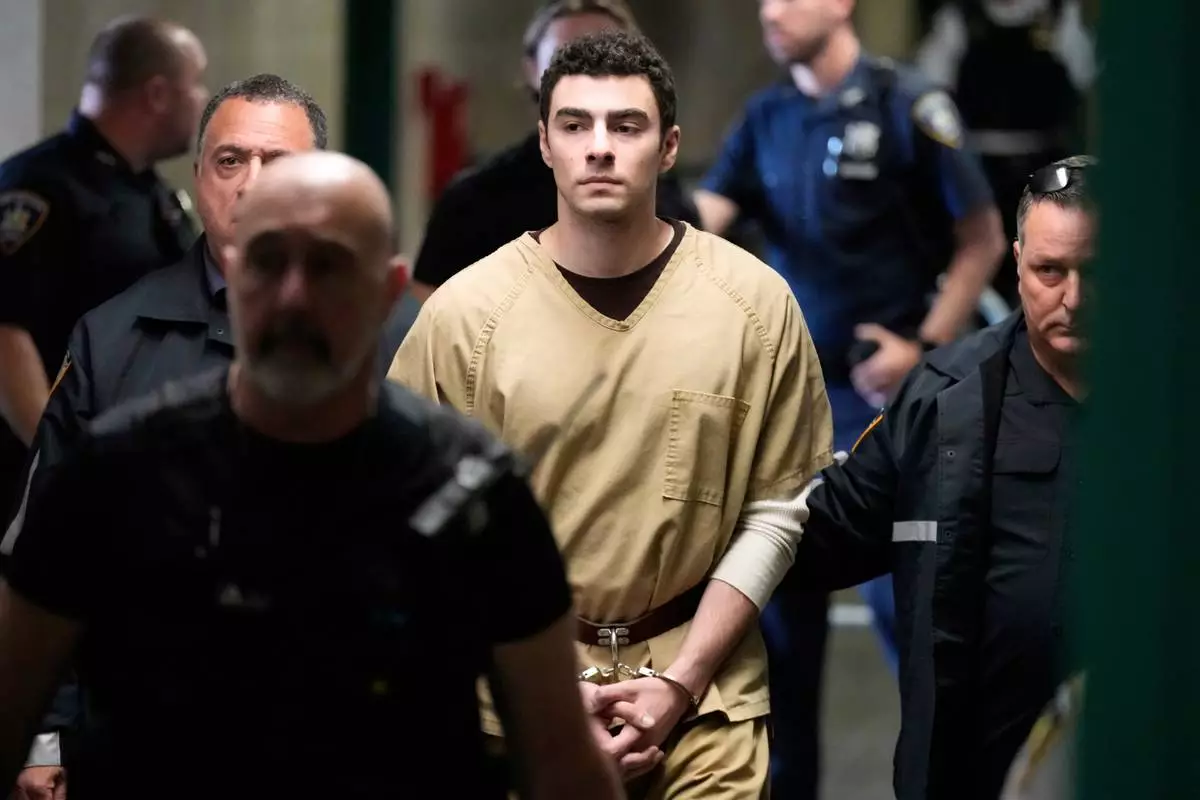
FILE - Luigi Mangione is escorted into Manhattan state court in New York, Sept. 16, 2025. (AP Photo/Seth Wenig, File)
NEW YORK (AP) — Stocks are rushing higher worldwide, and oil prices are easing Wednesday as hopes build that the war with Iran could end soon. That's even though some of the signals investors saw as hopeful are already under dispute, and several prior bouts of optimism in financial markets quickly got undercut by continued, fierce fighting in the war.
The S&P 500 rallied 0.9% and added to its leap from the day before, which was its best since last spring. That followed even bigger gains for stock markets across Europe and Asia, including an 8.4% surge in South Korea, which were catching up to Wall Street’s rally from Tuesday.
The Dow Jones Industrial Average was up 294 points, or 0.6%, as of 2:08 p.m. Eastern time, and the Nasdaq composite was 1.3% higher.
Oil prices also fell back toward $100 per barrel after President Donald Trump said late Tuesday that the U.S. military could end its offensive in two to three weeks.
That added to optimism following a couple tenuous signals of hope from earlier Tuesday that Wall Street latched onto, including a news report quoting Iran’s president as saying that it has “the necessary will to end the war” as long as certain requirements are met, including “guarantees to prevent a recurrence of aggression.”
The worry on Wall Street has been that the war may last a long time and keep oil and natural gas from the Persian Gulf out of global markets, which could create a brutal blast of inflation.
But hope has been quick to reverse to doubt on Wall Street, triggering manic swings back and forth for financial markets since the war with Iran began. Trump has also made statements that lifted markets, only to see the gains quickly disappear after increasing his military threats.
Shortly before Wall Street began trading on Wednesday, Trump claimed in a post on his social media network that Iran “has just asked the United States of America for a CEASEFIRE!”
“We will consider when Hormuz Strait is open, free, and clear. Until then, we are blasting Iran into oblivion or, as they say, back to the Stone Ages!!!”
But Iran’s Foreign Ministry spokesman, Esmail Baghaei, quickly called that claim “false and baseless,” according to a report on Iranian state television.
Oil prices also remain high, even if they’ve eased recently. The price for a barrel of Brent crude oil, the international standard, was sitting at $101.51 following its declines, which is still up from roughly $70 before the war began.
U.S. gasoline prices rose again overnight to a national average of $4.06 per gallon, according to the auto club AAA.
Iran, meanwhile, hit an oil tanker off the coast of Qatar and Kuwait’s airport on Wednesday while airstrikes battered Tehran as the fighting continued. Iran also continues to hold a grip on the Strait of Hormuz, where a fifth of the world’s traded oil passes during peacetime.
“De-escalation hopes have given markets a lift, but we think the effects of the war would, in many cases, persist even if the war did end soon,” Thomas Mathews, head of markets, Asia Pacific at Capital Economics, said in a research note Wednesday.
“It’s worth thinking through how markets might fare if the war were to end ‘very soon,’” he wrote. “Do markets have further to recover if sentiment continues to improve? The answer is almost certainly yes.”
The White House said Trump will deliver a public address Wednesday evening on the Iran war.
On Wall Street, most stocks rose as Big Tech powered the move higher. Gains of 3.8% for Alphabet and 0.8% for Nvidia were two of the strongest forces lifting the S&P 500.
Eli Lilly climbed 5.1% after U.S. regulators approved its GLP-1 pill for weight loss.
Such gains have pulled the S&P 500, which sits at the heart of many 401(k) accounts, back to within 5.6% of its all-time high set early this year. Just on Monday, the index briefly neared a 10% drop from its record, a steep-enough fall that professional investors have a name for it: a “correction.”
Nike sank 14.5% even though it reported a stronger profit for the latest quarter than expected. Analysts said it gave some lackluster financial forecasts.
Hasbro fell 4.8% after the toy company found someone had gained unauthorized access to its computer network and is working to assess the full impact.
Energy companies fell broadly as oil prices eased. Exxon Mobil slumped 5% and Chevron fell 4.9%.
In stock markets abroad, indexes leaped more than 2% in France and Germany. Asian markets had even bigger gains.
Tokyo’s Nikkei 225 jumped 5.2% after a survey showed business sentiment for major Japanese manufacturers improved despite worries about the Iran war.
In the bond market, Treasury yields held relatively steady after a report said U.S. retailers made more money in February than economists expected. A separate report said U.S. manufacturing growth last month was slightly faster than economists expected.
The 10-year Treasury yield rose to 4.32% from 4.30% late Tuesday.
AP Business Writers Chan Ho-him and Matt Ott contributed.
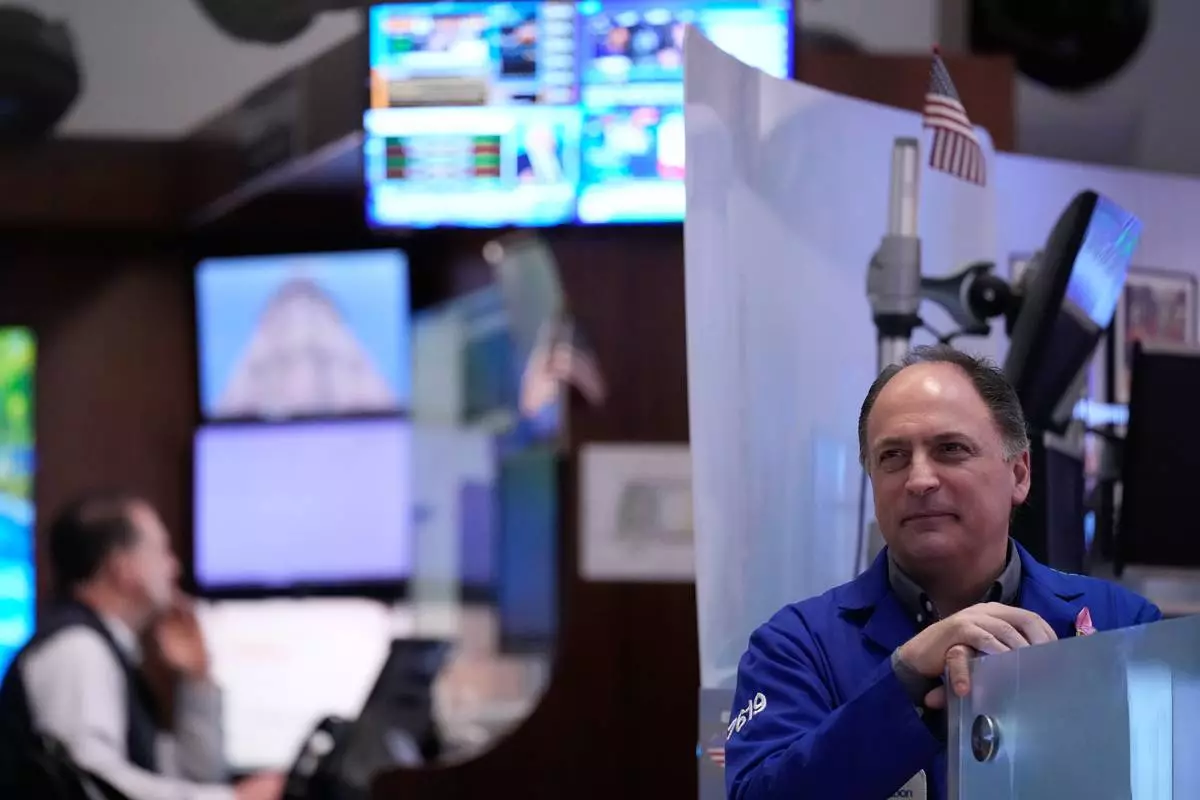
James Conti works on the floor at the New York Stock Exchange in New York, Tuesday, March 31, 2026. (AP Photo/Seth Wenig)
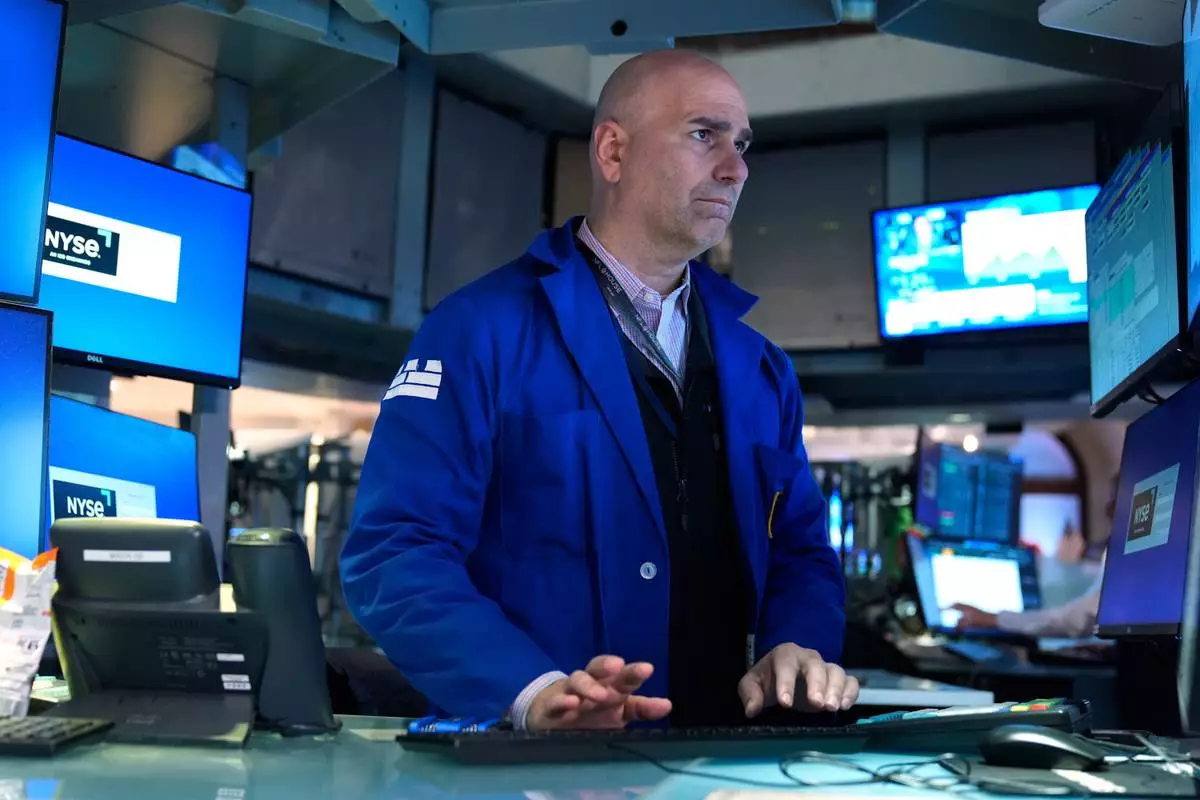
Philip Finale works on the floor at the New York Stock Exchange in New York, Tuesday, March 31, 2026. (AP Photo/Seth Wenig)
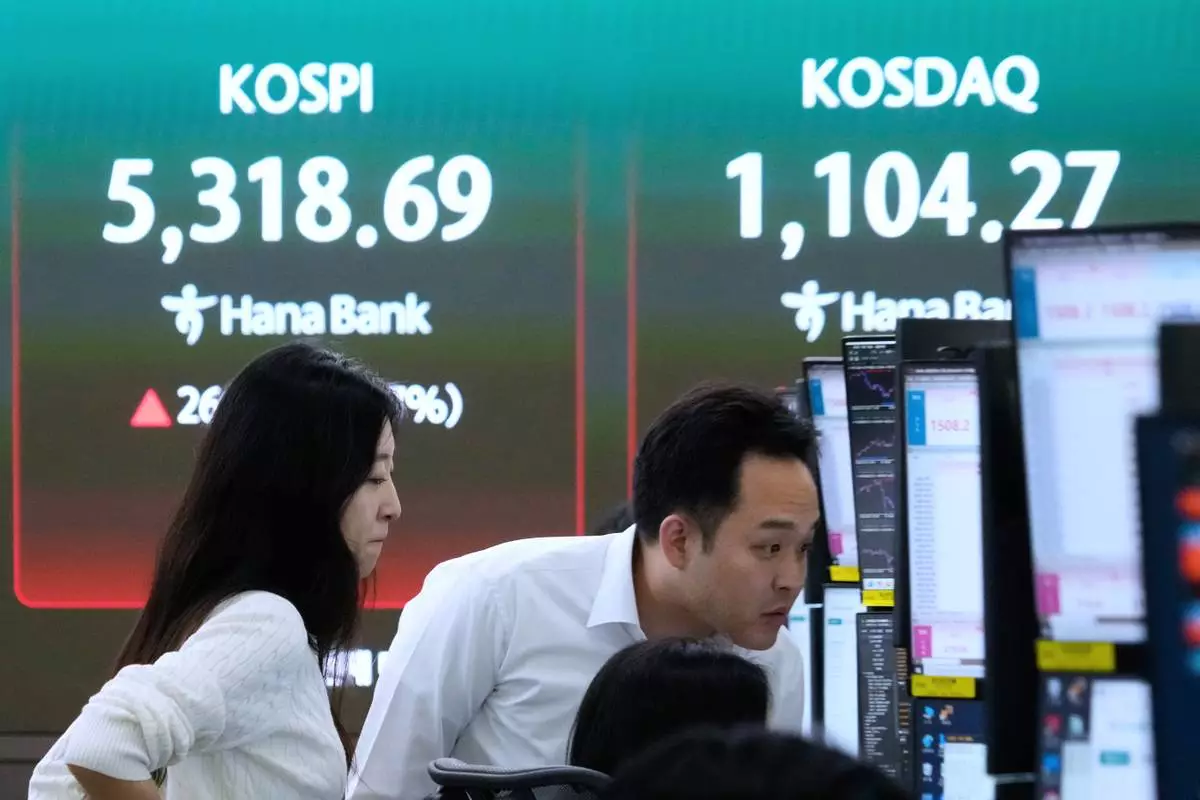
Currency traders watch monitors near a screen showing the Korea Composite Stock Price Index (KOSPI), left, at the foreign exchange dealing room of the Hana Bank headquarters in Seoul, South Korea, Wednesday, April 1, 2026. (AP Photo/Ahn Young-joon)
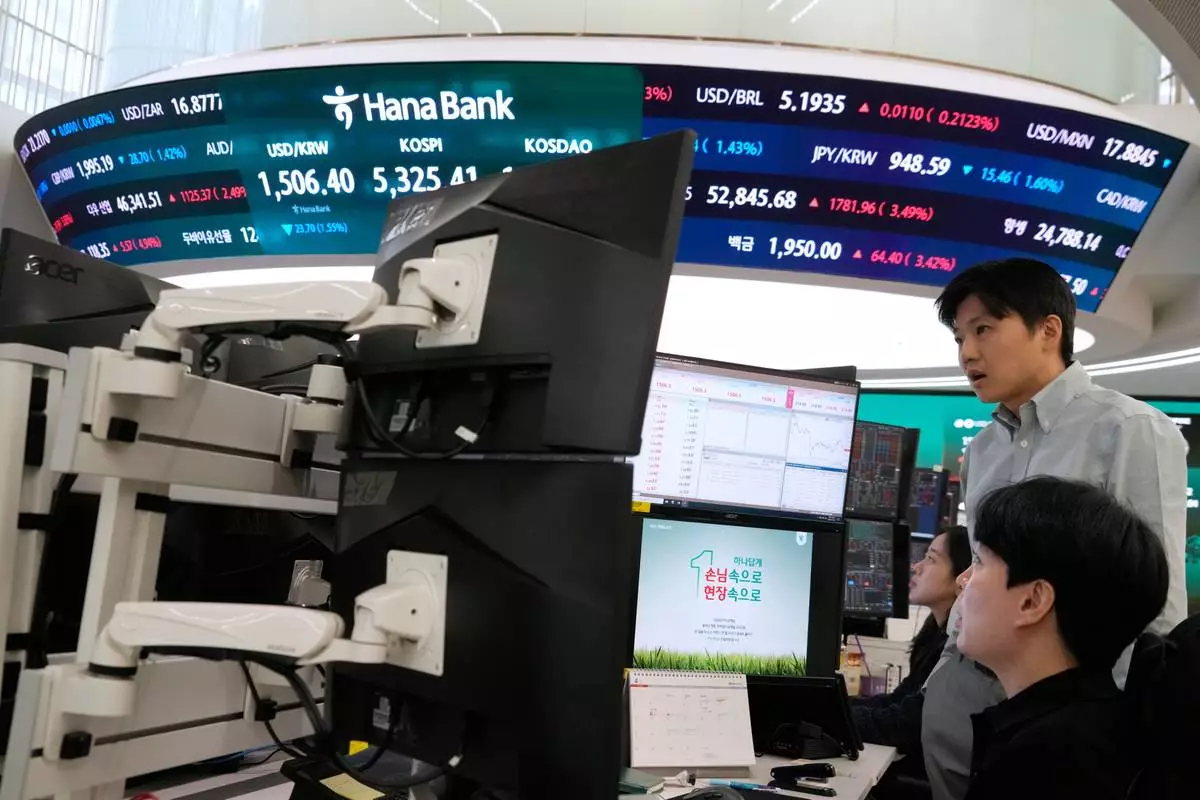
Currency traders watch monitors near a screen showing the Korea Composite Stock Price Index (KOSPI), top center, and the foreign exchange rate between U.S. dollar and South Korean won, top center left, at the foreign exchange dealing room of the Hana Bank headquarters in Seoul, South Korea, Wednesday, April 1, 2026. (AP Photo/Ahn Young-joon)
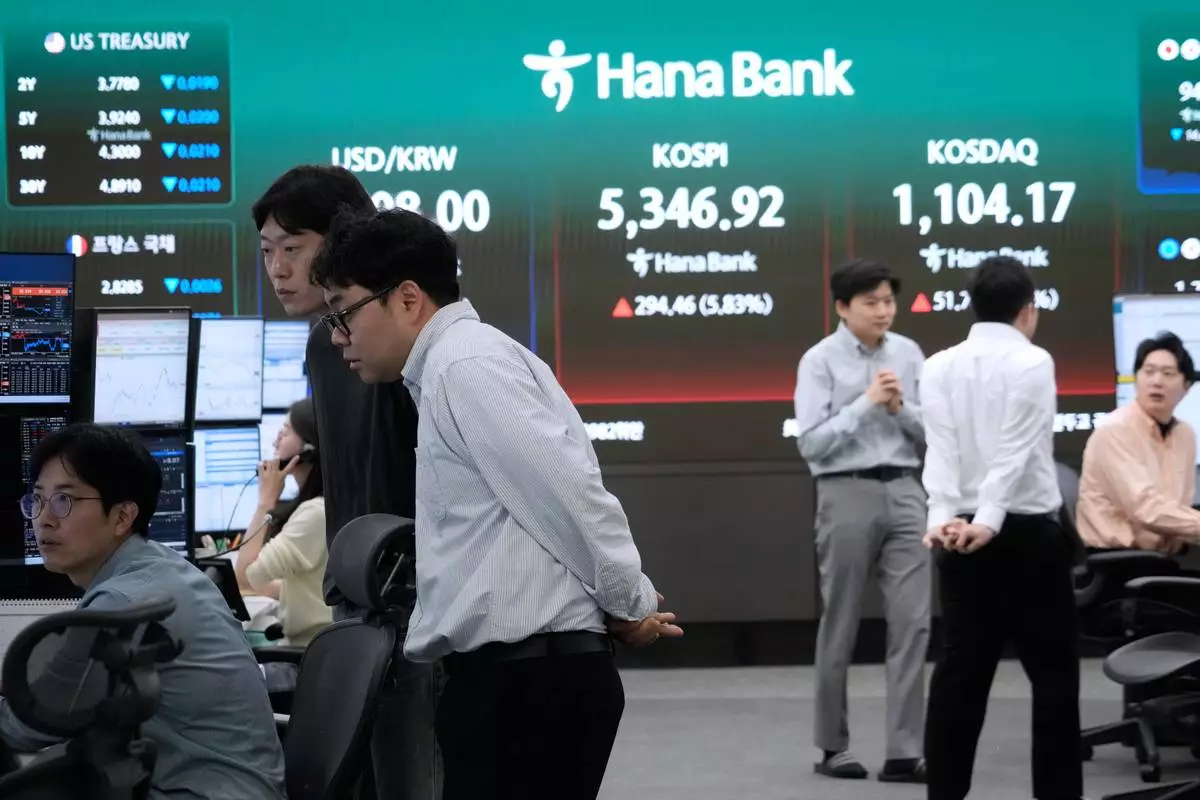
Currency traders work at the foreign exchange dealing room of the Hana Bank headquarters in Seoul, South Korea, Wednesday, April 1, 2026. (AP Photo/Ahn Young-joon)
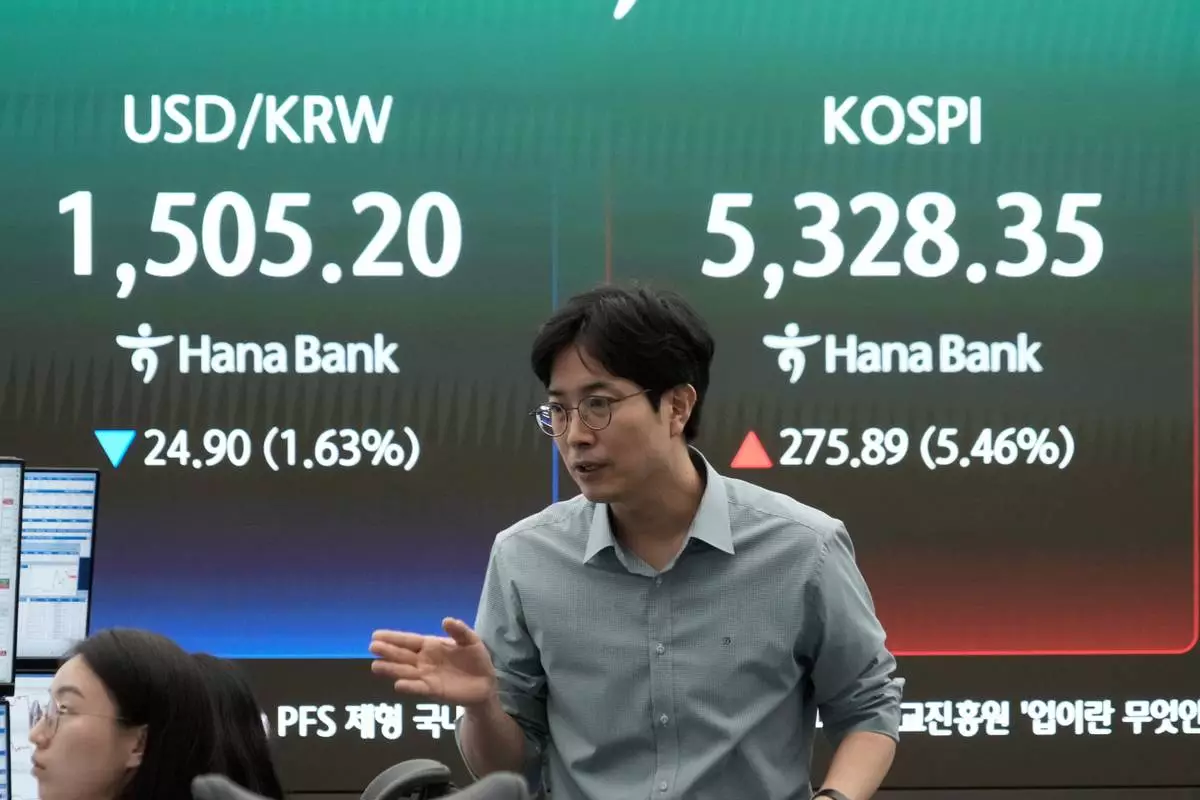
A currency trader reacts near a screen showing the Korea Composite Stock Price Index (KOSPI), right, and the foreign exchange rate between U.S. dollar and South Korean won at the foreign exchange dealing room of the Hana Bank headquarters in Seoul, South Korea, Wednesday, April 1, 2026. (AP Photo/Ahn Young-joon)
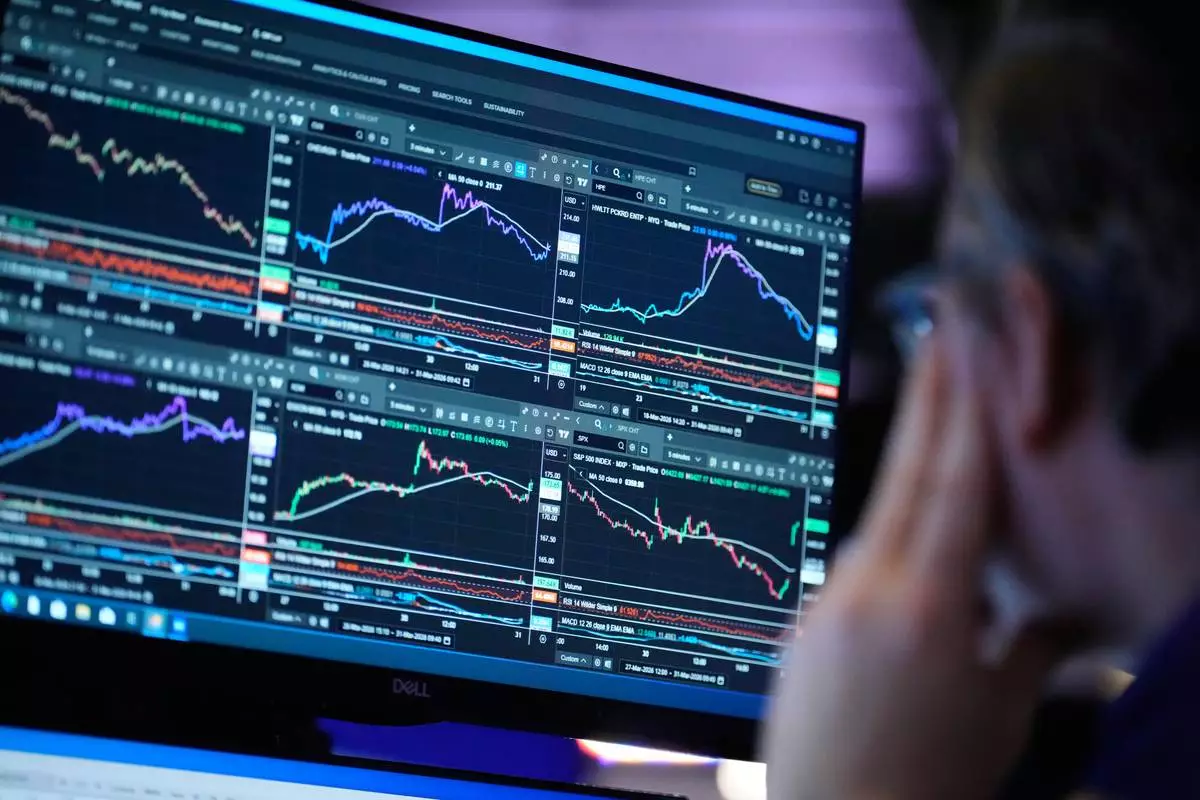
A screen displays financial information on the floor at the New York Stock Exchange in New York, Tuesday, March 31, 2026. (AP Photo/Seth Wenig)