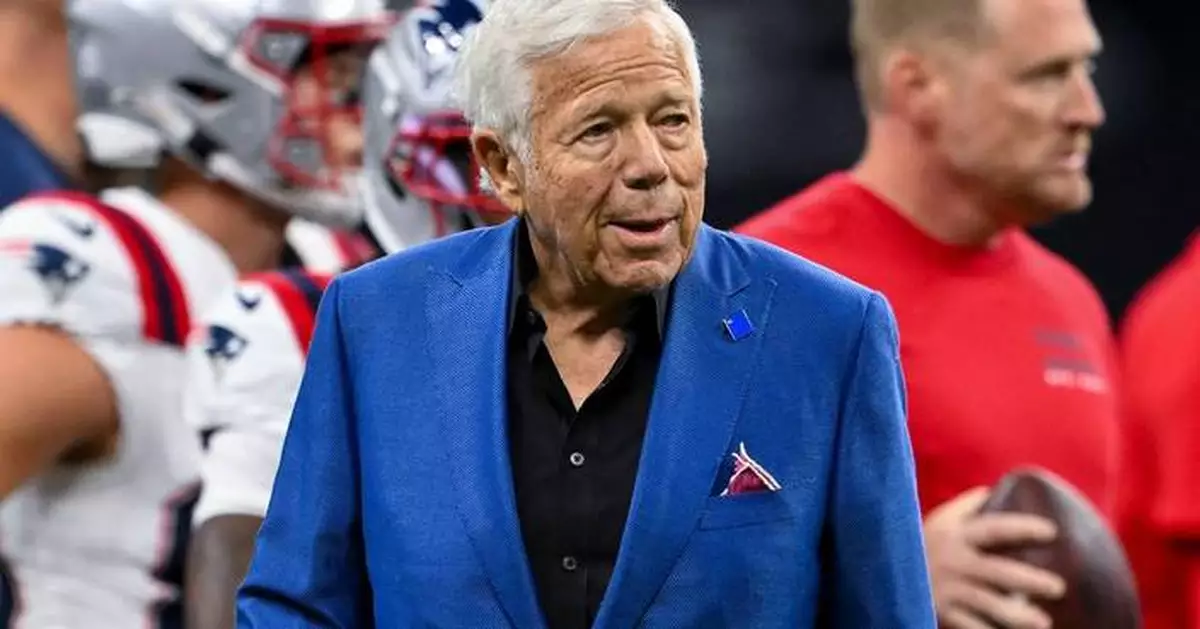
Six-time Super Bowl-winning owner Robert Kraft and NFL founder Ralph Hay are among the 21 contributors who advanced to the next stage for the Pro Football Hall of Fame’s Class of 2026.
A blue-ribbon committee reduced the candidates from an initial list of 32 nominees in voting released on Friday. The committee next will cut down the list to nine semifinalists and one finalist who will advance to voting conducted by the full selection committee early next year.
There also will be 15 modern-era finalists, three seniors and one coach for the Class of 2026. Between four and eight new members will be elected in the second year of this current format.
Kraft bought the New England Patriots in 1994 and quickly turned them into one of the most successful franchises in the NFL. He hired Bill Belichick as coach in 2000 and oversaw the franchise winning six Super Bowl titles from the 2001-2018 seasons.
Hay owned the Canton Bulldogs from 1918-22 and hosted the meeting that led to the formation of the NFL.
There are several other owners or members of ownership families who are in the final 21, including Bud Adams, founder of the Houston Oilers and a key figure in the AFL, who eventually moved his franchise to Tennessee; Virginia McCaskey, who owned the Bears from 1983 until her death earlier this year at age 102; Clint Murchison, founder and owner of the Dallas Cowboys; and Art Rooney Jr., a member of the family that owns the Steelers.
Among the other candidates are John Wooten, a longtime scout and executive who later became chairman of the Fritz Pollard Alliance that helped push the NFL to hire more minority head coaches; former Raiders CEO Amy Trask, who was the first woman to hold that position with a team; former Kansas City scout Lloyd Wells, who was the first full-time Black scout in the NFL; and former league executive Buddy Young, who was the first Black executive in any major U.S. sports league when he was hired in 1964.
Two key people behind the success of “Monday Night Football” also made the cut: Roone Arledge, the ABC executive who produced the games that helped broaden the NFL’s popularity in the 1970s, and announcer Howard Cosell.
John Facenda, the voice behind many of the most memorable NFL Films productions, also advanced.
One of the more innovative people in NFL history also advanced. Clark Shaughnessy was is considered the “father of the T formation” and three-receiver set during his long career that included a stint as an adviser to Bears coach George Halas for a 73-0 title-game win over Washington in 1940, two years as head coach of the Rams and a stint as defensive coordinator for Halas in Chicago.
The others include longtime executives Frank “Bucko” Kilroy, Don Klosterman and John McVay; Seymour Siwoff, former owner and president of the Elias Sports Bureau; and former scouts Jack Vainisi, Eddie Kotal and Mike Giddings.
AP NFL: https://apnews.com/hub/NFL
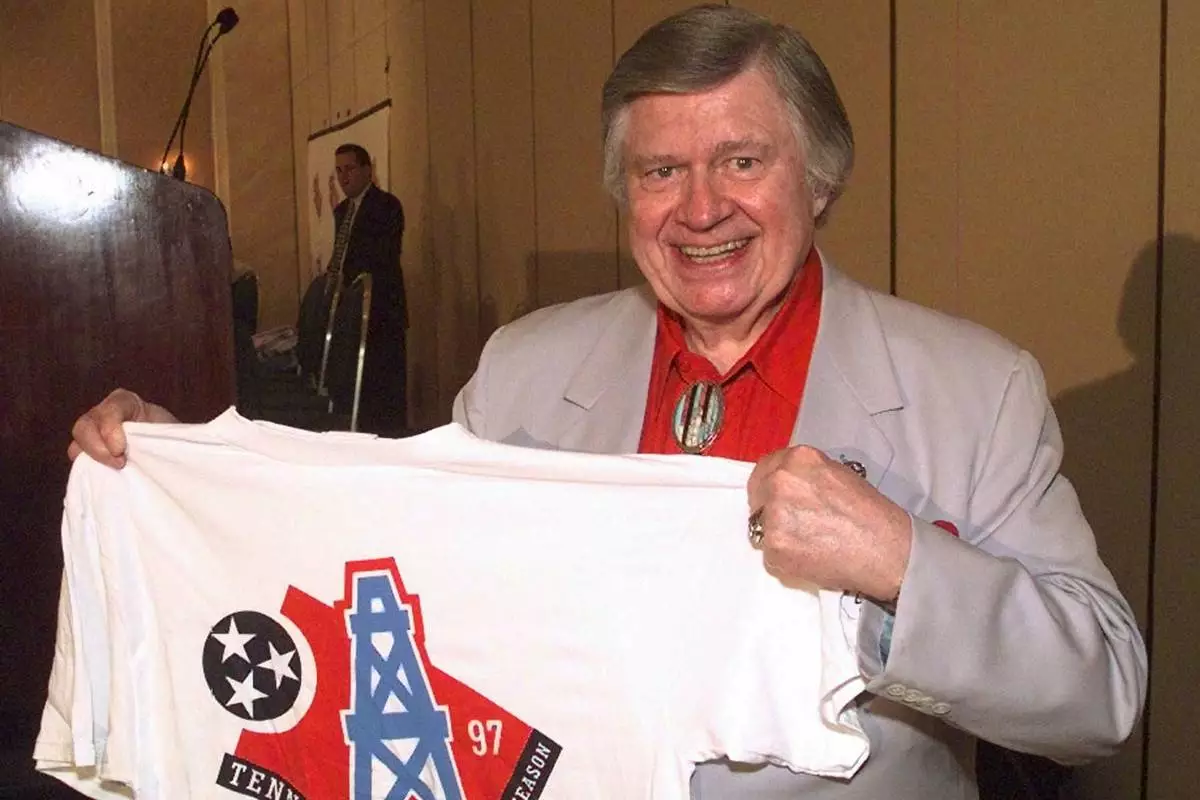
FILE - Houston Oilers owner Bud Adams shows off a T-shirt with the new logo the team will use when it moves to Tennessee during a news conference, June 12, 1997, in Nashville, Tenn. (AP Photo/Mark Humphrey, File)
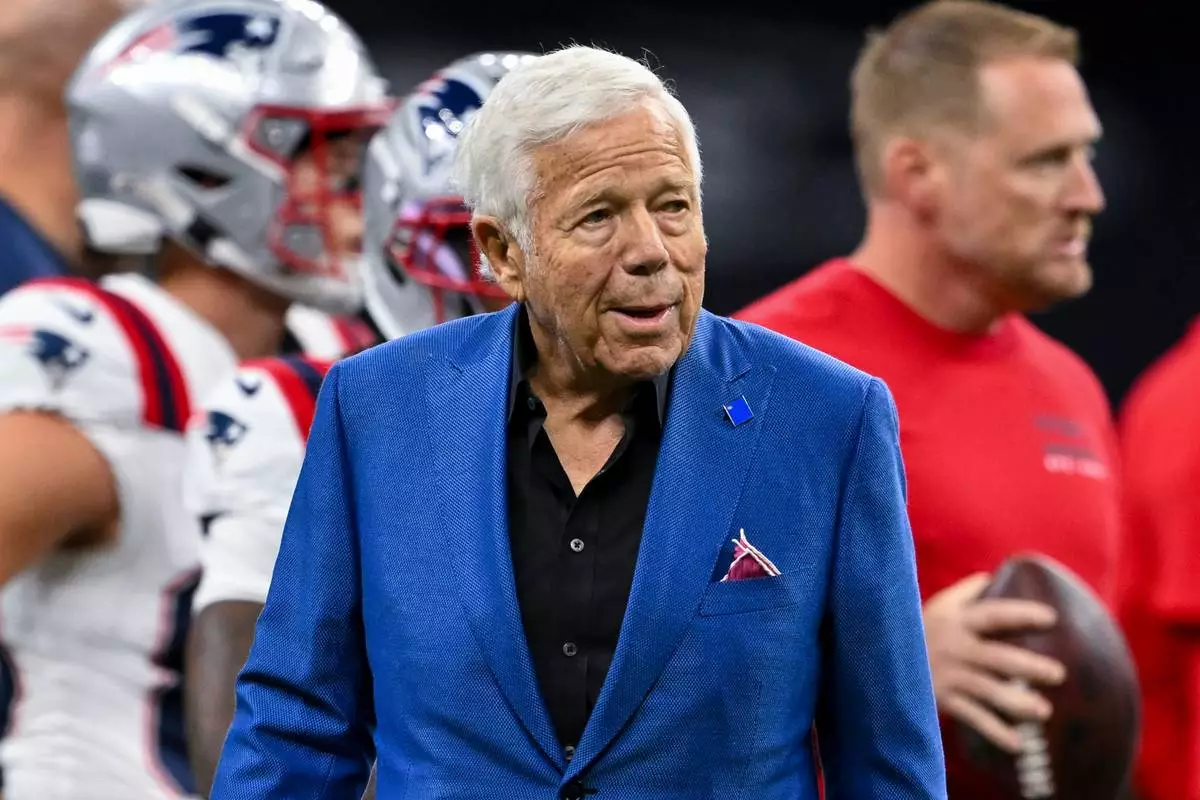
FILE - New England Patriots Chairman and CEO Robert Kraft walks on the field prior to an NFL football game against the New Orleans Saints, Sunday, Oct. 12, 2025, in New Orleans. (AP Photo/Maria Lysaker, File)
KAMPALA, Uganda (AP) — Uganda’s presidential election was plagued by widespread delays Thursday in addition to a days-long internet shutdown that has been criticized as an anti-democratic tactic in a country where the president has held office since 1986.
Some polling stations remained closed for up to four hours after the scheduled 7 a.m. start time due to “technical challenges," according to the nation's electoral commission, which asked polling officers to use paper registration records to ensure the difficulties did not “disenfranchise any voter.”
President Yoweri Museveni, 81, faces seven other candidates, including Robert Kyagulanyi, a musician-turned-politician best known as Bobi Wine, who is calling for political change.
The East African country of roughly 45 million people has 21.6 million registered voters. Polls were expected to close at 4 p.m., but voting was extended one hour until 5 p.m. local time. Results are constitutionally required to be announced in 48 hours.
In the morning, impatient crowds gathered outside polling stations expressing concerns over the delays. Umaru Mutyaba, a polling agent for a parliamentary candidate, said it was “frustrating” to be waiting outside a station in the capital Kampala.
“We can’t be standing here waiting to vote as if we have nothing else to do," he said.
Wine, the candidate, alleged electoral fraud, noting that biometric voter identification machines were not working at polling places and claiming that there was “ballot stuffing.”
Wine wrote in a post on X that his party's leaders had been arrested. “Many of our polling agents and supervisors abducted, and others chased off polling stations,” the post said.
Museveni told journalists he was notified that biometric machines weren't working at some stations and that he supported the electoral body's decision to revert to paper registration records. He did not comment on allegations of fraud.
Ssemujju Nganda, a prominent opposition figure and lawmaker seeking reelection in Kira municipality, told The Associated Press he had been waiting in line to vote for three hours.
Nganda said the delays likely would lead to apathy and low turnout in urban areas where the opposition has substantial support. "It’s going to be chaos,” he said.
Nicholas Sengoba, an independent analyst and newspaper columnist, said delays to the start of voting in urban, opposition areas favored the ruling party.
Emmanuel Tusiime, a young man who was among dozens prevented from entering a polling station in Kampala past closing time said the officials had prevented him from participating.
“My vote has not been counted, and, as you can see, I am not alone," he said he was left feeling “very disappointed.”
Uganda has not witnessed a peaceful transfer of presidential power since independence from British colonial rule six decades ago.
Museveni has served the third-longest term of any African leader and is seeking to extend his rule into a fifth decade. The aging president’s authority has become increasingly dependent on the military led by his son, Muhoozi Kainerugaba.
Museveni and Wine are reprising their rivalry from the previous election in 2021, when Wine appealed to mostly young people in urban areas. With voter turnout of 59%, Wine secured 35% of the ballots against Museveni’s 58%, the president’s smallest vote share since his first electoral campaign three decades ago.
The lead-up to Thursday's election produced concerns about transparency, the possibility of hereditary rule, military interference and possible vote tampering.
Uganda's internet was shut down Tuesday by the government communications agency, which cited misinformation, electoral fraud and incitement of violence. The shutdown has affected the public and disrupted critical sectors such as banking.
There has been heavy security leading up to voting, including military units deployed on the streets this week.
Amnesty International said security forces are engaging in a “brutal campaign of repression,” citing a Nov. 28 opposition rally in eastern Uganda where the military blocked exits and opened fire on supporters, killing one person.
Museveni urged voters to come out in large numbers during his final rally Tuesday.
“You go and vote, anybody who tries to interfere with your freedom will be crushed. I am telling you this. We are ready to put an end to this indiscipline,” he said.
The national electoral commission chairperson, Simon Byabakama, urged tolerance among Ugandans as they vote.
“Let us keep the peace that we have,” Byabakama said late Wednesday. “Let us be civil. Let us be courteous. Let’s be tolerant. Even if you know that this person does not support (your) candidate, please give him or her room or opportunity to go and exercise his or her constitutional right."
Authorities also suspended the activities of several civic groups during the campaign season. That Group, a prominent media watchdog, closed its office Wednesday after the interior ministry alleged in a letter that the group was involved in activities “prejudicial to the security and laws of Uganda.”
Veteran opposition figure Kizza Besigye, a four-time presidential candidate, remains in prison after he was charged with treason in February 2025.
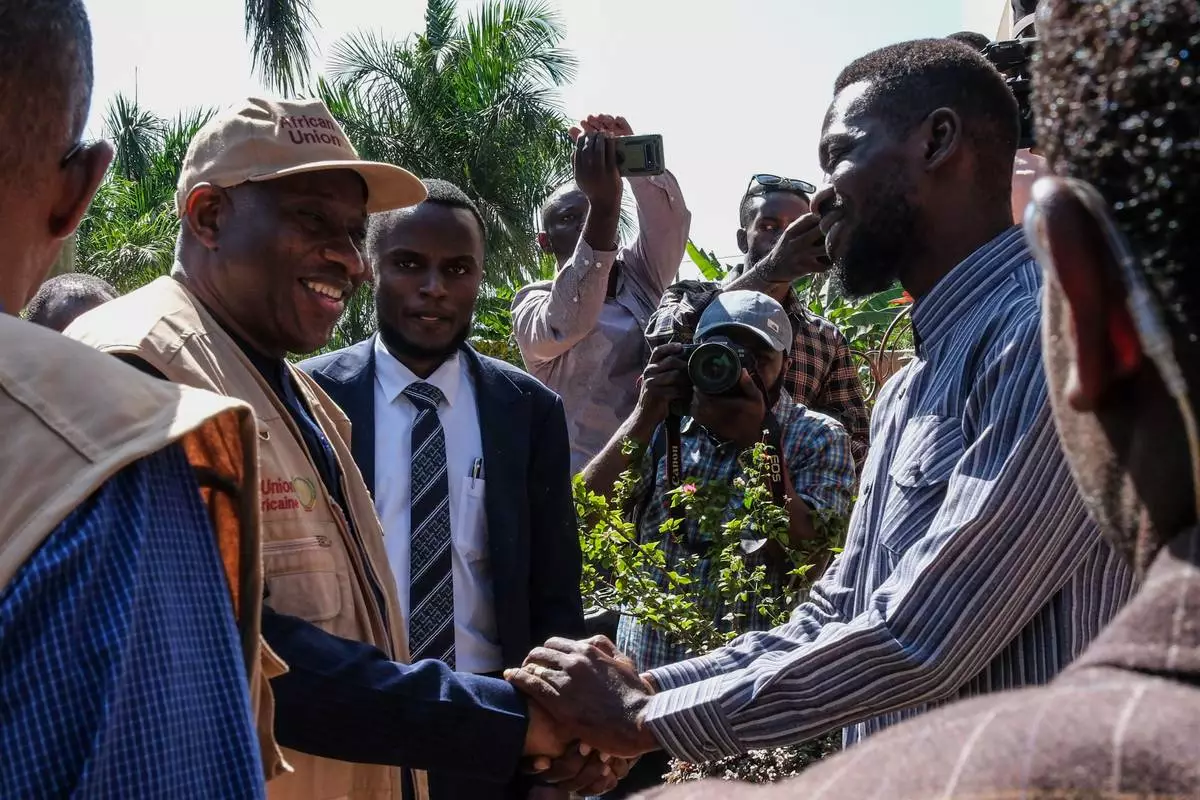
Uganda opposition presidential candidate Robert Kyagulanyi Ssentamu, known as Bobi Wine, right, greets election observers, including former Nigerian President Goodluck Jonathan, at his home in Magere village on the outskirts of Kampala, Uganda, Wednesday, Jan. 14, 2026. (AP Photo/Hajarah Nalwadda)
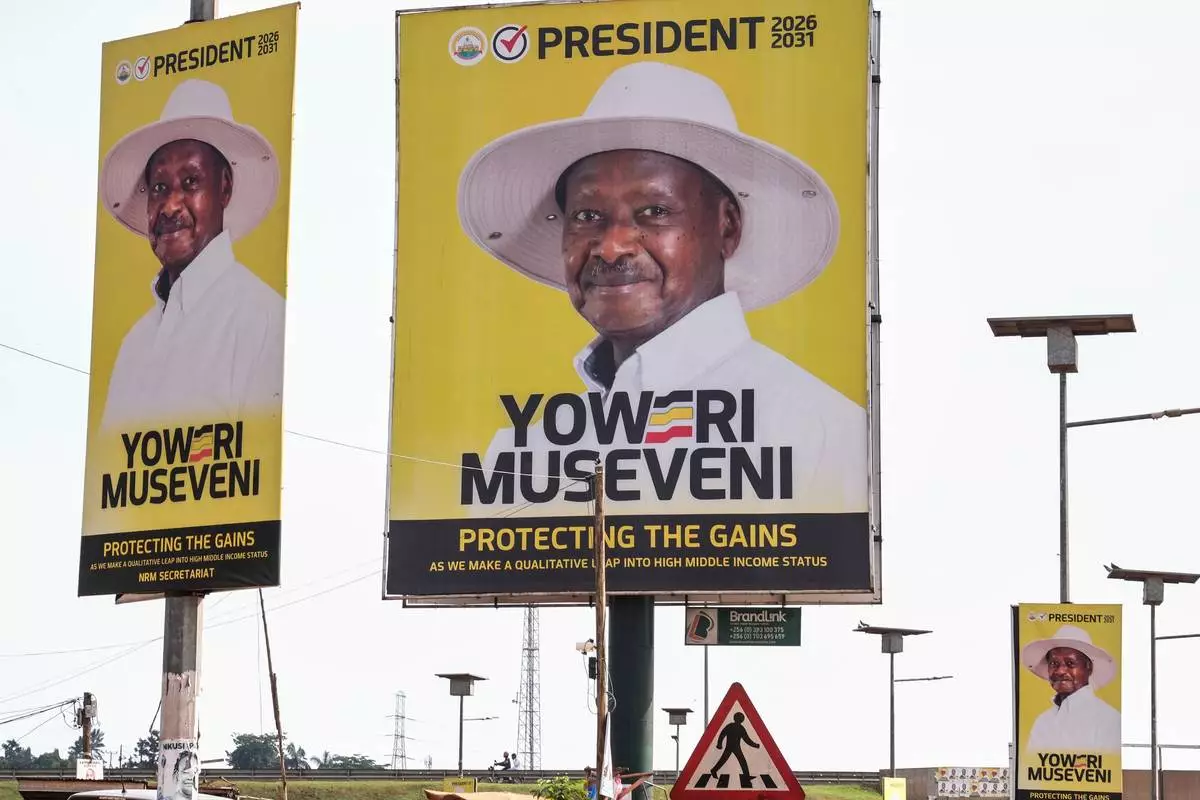
Billboards of Uganda President and National Resistance Movement (NRM) presidential candidate Yoweri Museveni are seen in Kampala, Uganda, Tuesday, Jan. 13, 2026. (AP Photo/Samson Otieno)
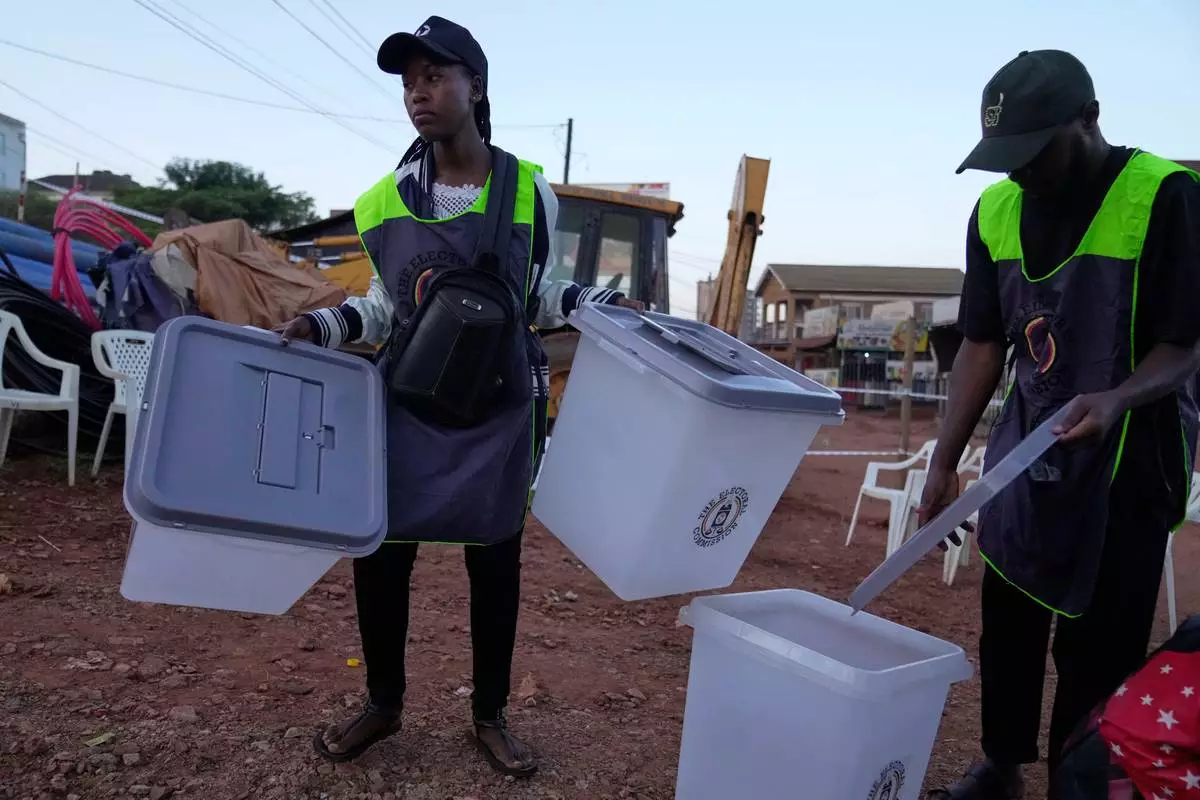
Electoral workers deliver ballot boxes to a polling station during presidential election in Kampala, Uganda, Thursday, Jan. 15, 2026. (AP Photo/Brian Inganga)
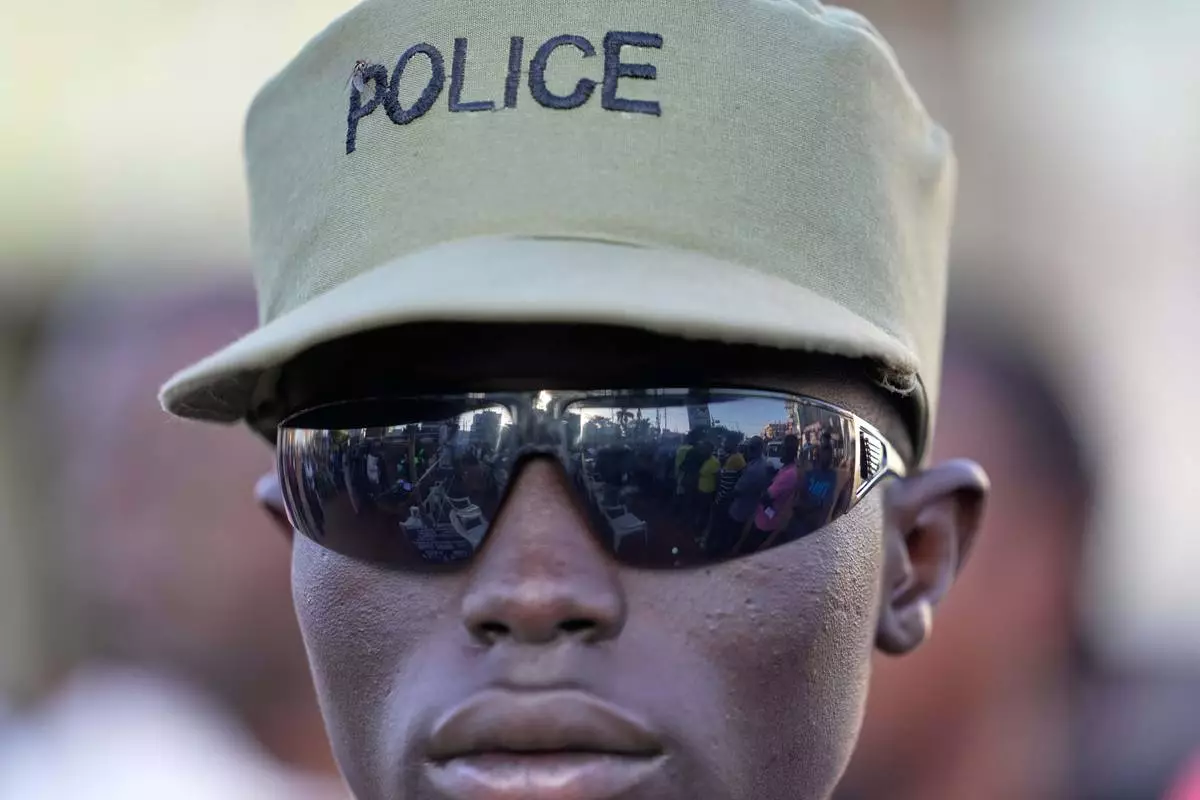
Voters are reflected in a police officer's sunglasses as they wait in line after voting failed to start on time due to system failures during presidential election in Kampala, Uganda, Thursday, Jan. 15, 2026. (AP Photo/Brian Inganga)
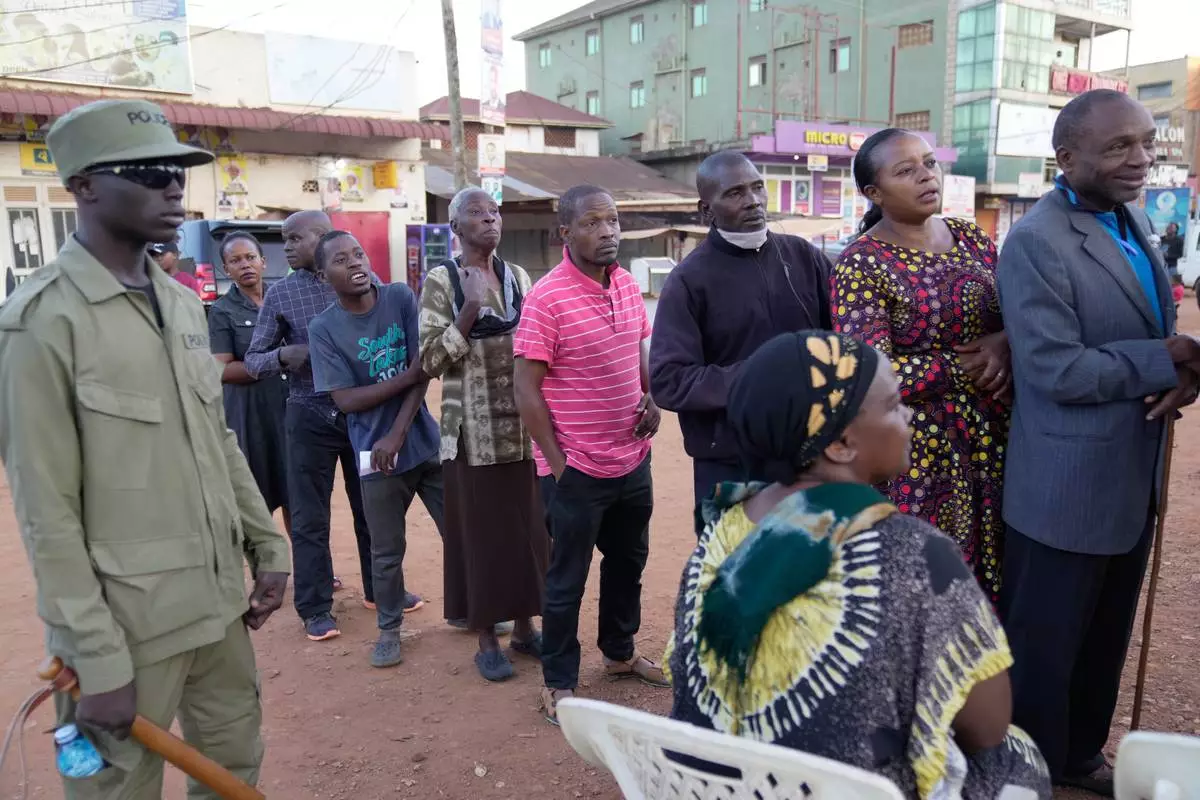
Voters wait to cast their ballots during the presidential election in Kampala, Uganda, Thursday, Jan. 15, 2026. (AP Photo/Brian Inganga)