ALBUQUERQUE, N.M. (AP) — It's a name many people have trouble pronouncing, but these synthetic chemicals have been used in everything from fast-food packaging to nonstick cookware, clothing, household cleaning products and even firefighting foam.
PFAS — or perfluoroalkyl and polyfluoroalkyl substances — resist breaking down and as a result have found their way into drinking water, soil, air and the bloodstreams of 99% of Americans.
This is certainly true for people who live or work near a plume of contamination that has seeped beyond the boundaries of Cannon Air Force Base, where PFAS-laden firefighting foam was used for years.
New Mexico health and environmental officials conducted a $1.2 million testing project, drawing blood from nearly 630 people. They shared the results Thursday night during a public meeting.
The research shows 99.7% of participants had one or more PFAS in their blood, with the most common being associated with firefighting foams.
While the percentage isn't surprising given the overall prevalence of so-called forever chemicals in the environment, officials said some residents living in the plume area showed dramatically higher concentrations than the broader testing group. About one-quarter of them had levels reaching the highest concentration tier used in national guidelines.
The findings suggest a correlation with groundwater contamination migrating from the base, state officials said.
New Mexico Environment Secretary James Kenney said during the meeting that his agency will help the community in any way that it can but that the state is still locked in litigation with the U.S. Defense Department over the damage caused by the contamination.
At Cannon Air Force Base, state officials have reported that PFAS has been detected in groundwater at concentrations of 26,200 parts per trillion, exceeding state and federal drinking water standards by over 650,000%.
Cannon reported earlier this year that it has spent more than $73 million so far on investigating the problem and installing pilot projects to treat contaminated groundwater.
Kenney said it's time for the federal government to move ahead with cleanup outside the base.
“We need the whole of New Mexico to stand up and say we’ve had it,” he said.
Exposure to PFAS has been linked to increased cholesterol levels, small decreases in birth weight, kidney and testicular cancer and changes in liver enzymes.
State officials in a report published in August said some of the chemicals can linger in the blood for several years after exposure. Research by the U.S. Environmental Protection Agency has also found it can take weeks to years for levels of many PFAS to decrease by half in human blood, assuming exposure isn't ongoing.
It's not easy to draw a bright line between exposure and health effects, said Tasha Stoiber, a senior scientist with the Washington, D.C.-based Environmental Working Group.
“There are so many different factors that affect individual health outcomes and also affect what levels you will see in your blood,” she said, explaining that a person's age, where they live, what they eat and drink and where they work can all play a role.
According to slides shared with the audience, the tests in Curry County showed PFAS levels tend to increase with age, that males had higher levels, and those who had military or aviation careers had higher concentrations — all things consistent with national data.
The state on Friday announced a $12 million effort to connect about 100 private well users in rural Curry County to a drinking water system that meets state and federal standards.
Watchdog groups that track PFAS nationwide say contamination is more widespread than previously thought. They're using data released by the EPA and states to compile maps showing spots across the country where drinking water systems report levels above what's recommended. Contamination has also been confirmed at hundreds of military bases around the country.
That includes a base in southern New Mexico, where state officials are embarking on another health survey to gauge exposure at a nearby lake where scientists documented some of the highest PFAS levels in wildlife and plants worldwide.
In Clovis, Thursday's audience was sparse but outspoken. They voiced frustrations that properties have been devalued and rural livelihoods threatened due to the contamination.
New Mexico is among hundreds of plaintiffs that are part of multi-district litigation in a South Carolina federal court that aims to hold producers and users of PFAS-laden firefighting foam accountable for contamination at sites across the country.
Separate from the legal front, some states have adopted their own PFAS rules while the focus of federal regulations has been narrowed. New Mexico just this week held a webinar on a new state law that calls for phasing out and ultimately prohibiting the sale of products containing intentionally added PFAS.

FILE - A water researcher tests a sample of water for PFAS at the U.S. Environmental Protection Agency Center For Environmental Solutions and Emergency Response in Cincinnati, on Tuesday, Feb. 14, 2023. (AP Photo/Joshua A. Bickel, File)
LOS ANGELES--(BUSINESS WIRE)--Sep 19, 2026--
Faraday Future Intelligent Electric Inc. (NASDAQ: FFAI) (“Faraday Future,” “FF” or the “Company”), a California-based global Embodied AI (EAI) ecosystem company, today held its 919 FF EAI Robotics “Four-Core Full-Stack AI” Ecosystem New Product Series Launch. FF unveiled 9 new EAI Device configurations across five models which included its FF All-New Futurist, FF Master Mini, FX Aegis Hyper, FX Aegis Mega and FX Aegis Classic Ultra-W. FF also launched 4 Industry Productivity Solutions for K-12 Education, Research, Security and Inspection. FF’s “Four-Core Full-Stack AI” open ecosystem comprises the EAI Brain and Developer Platform, EAI Devices, Industry Productivity Solutions and the EAI Data Factory. The event highlighted the latest product and application developments across the EAI Devices and Industry Productivity Solutions cores.
This press release features multimedia. View the full release here: https://www.businesswire.com/news/home/20260919657129/en/
A video of the event can be viewed here:https://youtu.be/0KZGgyrsUcU
“FF is not building a single robot form that attempts to do everything, we are building a robotics ecosystem in which a generalized and adaptable EAI Brain supports multiple robot forms,” said YT Jia, Founder and Global CEO of FF. “Our approach aligns with renowned AI scientist and Stanford professor Dr. Fei-Fei Li’s view that multiple robot forms will coexist within one ecosystem. These robot forms not only address a wider range of tasks but also generate real-world data from diverse scenarios and interactions. Through the EAI Data Factory, that data supports EAI Brain training, Skills development and EAI Device iteration, enabling robot forms and capabilities to evolve together.”
Five Models and Nine New EAI Devices Complete FF’s EAI Robot World 2.0
The nine new EAI Device configurations span two robot forms, humanoid and quadruped, and three product series.
FF All-New Futurist is positioned as a flagship, full-size professional EAI humanoid robot and an “All-in-One Professional Expert.” It has 51 active degrees of freedom, increasing to 71 with an advanced dexterous-hand upgrade. Its 1,152-watt-hour dual-battery system supports approximately eight hours of operation under standard working conditions, along with autonomous charging. The Ultra version is powered by NVIDIA Jetson Thor and delivers 700 TOPS of computing power. Combined with VLA, world models, and task planning, it can move beyond executing individual commands to complete entire tasks. The product is designed for university research, embodied AI development, enterprise services, sports competition, and industrial applications. The FF All-New Futurist Standard is priced at $89,900 and includes a Skills Package valued at $10,000. The FF All-New Futurist Ultra is priced at $129,900 and includes a Skills Package valued at $15,000.
The FF Master Mini including three configurations, Master Mini, Master Mini Pro, and Master Mini Ultra, is positioned as an EAI humanoid robot for education, sports and robotics competition, serving as an all-rounder “from classroom to competition.” It stands approximately 95 centimeters tall and weighs approximately 19.5 kilograms. Its three configurations provide 48, 117, and 200 TOPS of computing power, respectively. Open motion, perception and application interfaces support programming education, open development, entertainment performances, and robot soccer competitions. The Master Mini series starts at $9,990 and includes a Skills Package valued at $1,000. The Pro version is priced at $12,990 and includes a Skills Package valued at $1,500. The Ultra version is priced at $17,990 and includes a Skills Package valued at $2,000.
FX Aegis Hyper is a large industrial-grade EAI quadruped designed for extreme environments, heavy-duty tasks and high-risk autonomous operations, with support for professional payloads including thermal imaging, gas detection, 3D scanning and communications relay equipment. The Aegis Hyper starts at $137,900 and includes a Skills Package valued at $15,000.
FX Aegis Mega, available in two configurations, is mid-sized industrial-grade wheel-legged EAI robots with a maximum payload capacity of 50 kilograms. They can continuously climb 25-centimeter stairs and clear single obstacles up to 80 centimeters, while hot-swappable dual batteries provide at least five hours of unloaded runtime. The Aegis Mega starts at $74,990, including an $8,000 Skills Package.
FX Aegis Classic Ultra-W is a lightweight professional wheel-legged EAI robot for security and companionship. Its approximately 22-kilogram body combines wheeled mobility, legged obstacle-clearing capability, low-noise operation and open development, with support for secondary development, simulation training, multi-robot coordination and professional payload expansion. The Aegis Classic Ultra-W is priced at $12,990, including a $3,000 Skills Package.
With the launch of these nine new configurations, FF EAI Robot World has officially been upgraded to Version 2.0. The portfolio now covers three robot forms, humanoid, quadruped and mobile manipulator; five product series, Futurist, Master, Aegis, Navi and Faber; 11 models; and 24 products.
Four Industry Productivity Solutions and FF EAI Robotics Education & Research Ecosystem 1.0
FF launched four EAI Robotics Industry Productivity Solutions for K-12 Education, Research, Security and Inspection. The K-12 Education and Research Solutions together form the FF EAI Robotics Education & Research Ecosystem 1.0. The Security and Inspection Solutions address communities, buildings, industrial parks, energy, electric power, manufacturing, mining, tunnels and large facilities. With the four Industry Productivity Solutions, FF aims to offer solution pricing designed with the highest ROI in the industry, further lowering deployment and adoption barriers for customers.
The FF EAI Robotics K-12 Education Solution is an integrated Physical AI teaching and competition growth platform for K-12 students. Centered on Master Mini, the solution brings together Navi, Aegis, Master and All-New Futurist to support different stages, from early learning through advanced high-school education and university research. The platform provides a three-tier curriculum in Blockly, Python and ROS, together with a supporting competition system covering early interest, programming, AI practice, robot competition and the progression to research and higher education. The solution also includes robots and development kits, grade-specific courses, teaching and learning platforms, a developer platform, teacher training, classroom and competition projects, device and classroom management, learning assessment, data security and technical support. It provides modular support for K-12 private schools, public schools and school districts, and training institutions.
The FF EAI Robotics Research Solution is a Physical AI teaching and embodied AI research platform for universities that spans multiple robot forms. Led by All-New Futurist, it brings together Master, Master Mini, Aegis Classic, Aegis Mega and Faber. The platform provides a unified SDK, ROS interfaces, simulation and digital twins, data collection, model training and Skill management. It supports research in motion control, embodied foundation models, Sim-to-Real and swarm intelligence, enabling research teams to complete algorithm development, simulation validation, physical robot deployment and cross-device migration within a unified tool chain.
The FF EAI Robotics Security Solution uses a tiered, multi-model deployment approach. The Aegis Classic handles indoor and building patrols, while Aegis Mega handles large outdoor and high-risk tasks. Professional payloads can include thermal imaging, 360-degree cameras and LiDAR. The platform supports multi-robot management, autonomous patrols, multimodal sensing, AI event recognition, alarm integration, remote operation and evidence archiving across communities, campuses, industrial parks, warehouses and critical infrastructure.
The FF EAI Robotics Inspection Solution is designed for energy, electric power, manufacturing, mining, tunnels and large facilities. Aegis Mega handles high-frequency inspections at large industrial parks and power stations, Aegis Hyper operates in extreme and high-risk areas, and Faber performs precision indoor operations. The system supports PTZ cameras, thermal imaging, gas detection, 3D scanning and robotic-arm end effectors. The FF Smart Inspection Platform provides autonomous mapping, meter OCR, anomaly and leak detection, report generation, alerts and work-order management.
Within the “Four-Core Full-Stack AI” open ecosystem, partners can connect with EAI Devices across different robot forms and contribute professional payloads, algorithms, Skills, data and scenario capabilities to jointly develop Industry Productivity Solutions for different sectors.
Sales and Delivery Begin Today; FF Establishes a Unique “6+1” Direct Sales and Robot-Sharing Rental Network
FF offers three product packages: a standard EAI Device, an EAI Device + Skills Package, and an EAI Device + Complete Solution. The Company has also established its “6+1” FF EAI Robotics Direct Sales and Robot-Sharing Rental Network, which means it offers six different routes to market including B2B, FF Par, E-commerce, Marcom & Video Sales, Community and Mcube. Each one covers different customers and sales touchpoints and connects with FF’s unified systems for orders, delivery, pricing and after-sales support. RoboShare, a robot-sharing and operations platform operated by AIxC, which is majority-owned by FF, provides on-demand robot rentals and asset onboarding for eligible devices, further connecting product sales, channel partnerships, asset operations and real-world deployment.
All products are now available for sale and delivery. Customers can place orders through FF.com, Amazon, and RobotShop. Additional product details, including compliance information, are available on FF.com.
ABOUT FARADAY FUTURE
Founded in 2014, Faraday Future (FF) is a U.S.-based Physical AI ecosystem company dedicated to reshaping the future of robotics and mobility solutions through AI innovation and technologies. FF focuses on two major product strategies within the Embodied AI (EAI) robotics business: EAI humanoid and bionic robots, and EAI automotive-focused robots. By building a “Four-Core Full-Stack AI” ecosystem comprising the EAI Brain and Developer Platform, EAI Devices, Industry Productivity Solutions and the EAI Data Factory, FF aims to create an evolutionary flywheel: scaled device delivery, data collection and training, continuous evolution of the EAI Brain, stronger product capabilities, and even larger-scale delivery and deployment. Through this flywheel, FF seeks to maximize its commercial value and advance the development of Physical AI.
For more information, please visit Faraday Future’s official website: https://www.ff.com/
FORWARD LOOKING STATEMENTS
This press release includes “forward looking statements” within the meaning of the safe harbor provisions of the United States Private Securities Litigation Reform Act of 1995. When used in this press release, the words “estimates,” “projected,” “expects,” “anticipates,” “forecasts,” “plans,” “intends,” “believes,” “seeks,” “may,” “will,” “should,” “future,” “propose” and variations of these words or similar expressions (or the negative versions of such words or expressions) are intended to identify forward-looking statements. These forward-looking statements, which include statements regarding Faraday Future Intelligent Electric Inc.’s (the “Company’s”) “Bridge Strategy,” the Company’s growth strategy, fundraising activities and prospects, the development of markets in which the Company operates or seeks to operate, the production and delivery of the FF 91, the Faraday X (FX) brand, and future compliance with Nasdaq listing requirements, are not guarantees of future performance, conditions or results, and involve a number of known and unknown risks, uncertainties, assumptions and other important factors, many of which are outside the Company’s control, that could cause actual results or outcomes to differ materially from those discussed in the forward-looking statements. These forward-looking statements speak only as of the date of this press release, and the Company expressly disclaims any obligation or undertaking to disseminate any updates or revisions to any forward-looking statement contained herein to reflect any change in the Company’s expectations with regard thereto or any change in events, conditions or circumstances on which any such statement is based.
Important factors that may affect actual results or outcomes include, among others: the Company’s ability to continue as a going concern and improve its liquidity and financial position; the Company’s ability to pay its outstanding obligations, which it currently lacks; the availability of sufficient share capital to meet its current obligations and execute on its strategy; the willingness of convertible debt investors to fund the Company; demand for the Company’s robotics products; the ability of B2B preorder companies to locate customers to purchase our robotics products, on which their nonbinding preorders substantially depend; competition in the robotics industry, which includes companies with far superior experience, funding and name recognition; the ability of the Company to build an EAI education ecosystem that serves both the B2C consumer market and the B2B institutional education market; the acceptance by teachers and students of the Company’s robotics products in the education market; the ability of the Company to expand into additional markets for its robotics products; the Company’s reliance on a single OEM for most of its robotics products; the Company’s reliance on Chinese OEMs for all of its robotics products; the possibility of the federal government banning imports of Chinese robotics products; the Company’s ability to get the planned robotics products to comply with all applicable U.S. rules and regulations; the ability of the robotics OEM to timely supply robotics to the Company; tariff uncertainty for imported products, particularly from China; demand from automobile dealers for robotics products; the Company’s ability to homologate FX vehicles for sale; the Company’s ability to secure the necessary funding to execute on the FX strategy, which is substantial; the Company’s ability to secure an occupancy certificate covering all of its Hanford facility; the Company’s ability to remediate its material weaknesses in internal control over financial reporting and the risks related to the restatement of previously issued consolidated financial statements; the Company’s limited operating history and the significant barriers to growth it faces; the Company’s history of substantial losses and expectation of continued losses; the success of the Company’s payroll expense reduction plan; the Company’s ability to execute on its plans to develop and market its vehicles and the timing of these development programs; the Company’s estimates of the size of the markets for its vehicles and cost to bring those vehicles to market; the rate and degree of market acceptance of the Company’s vehicles; the Company’s ability to cover future warranty claims; the success of other competing manufacturers; the performance and security of the Company’s vehicles; current and potential litigation involving the Company; the Company’s ability to receive funds from, satisfy the conditions precedent of and close on the various financings described elsewhere by the Company; the result of future financing efforts, the failure of any of which could result in the Company seeking protection under the Bankruptcy Code; the Company’s indebtedness; the Company’s ability to use its “at-the-market” program; insurance coverage; general economic and market conditions impacting demand for the Company’s products; potential negative impacts of a reverse stock split; potential cost, headcount and salary reduction actions may not be sufficient or may not achieve their expected results; circumstances outside of the Company’s control, such as natural disasters, climate change, health epidemics and pandemics, terrorist attacks, and civil unrest; risks related to the Company’s operations in China; the success of the Company’s remedial measures taken in response to the Special Committee findings; the Company’s dependence on its suppliers and contract manufacturer; the Company’s ability to develop and protect its technologies; the Company’s ability to protect against cybersecurity risks; the Company’s ability to attract and retain employees; any adverse developments in existing legal proceedings or the initiation of new legal proceedings; and volatility of the Company’s stock price.
You should carefully consider the foregoing factors and the other risks and uncertainties described in the “Risk Factors” section of the Company’s Form 10-Q for the quarter ended June 30, 2026, filed with the SEC on August 13, 2026; the Company’s Form 10-Q for the quarter ended March 31, 2026, filed with the SEC on May 14, 2026; the Company’s Form 10-K filed with the SEC on March 31, 2026; and other documents filed by the Company from time to time with the SEC.

Faraday Future Launches Four Industry Productivity Solutions, Nine New EAI Devices at Its 919 Event, Building Its “One-Brain Multi-Form Multi-Capability” FF EAI Robot World 2.0; All-New Futurist Now on Sale and Master Mini Starts at $9,990 - (FF Master Mini Shown)
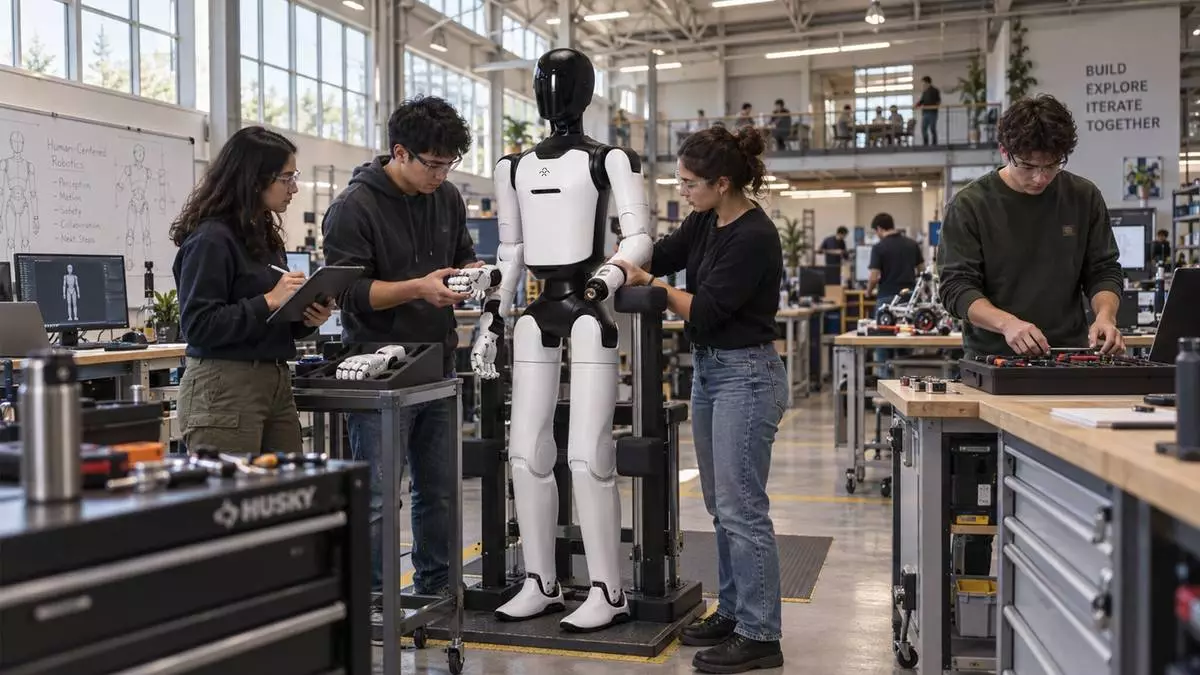
Faraday Future Launches Four Industry Productivity Solutions, Nine New EAI Devices at Its 919 Event, Building Its “One-Brain Multi-Form Multi-Capability” FF EAI Robot World 2.0; All-New Futurist Now on Sale and Master Mini Starts at $9,990 - (FF All-New Futurist Shown)
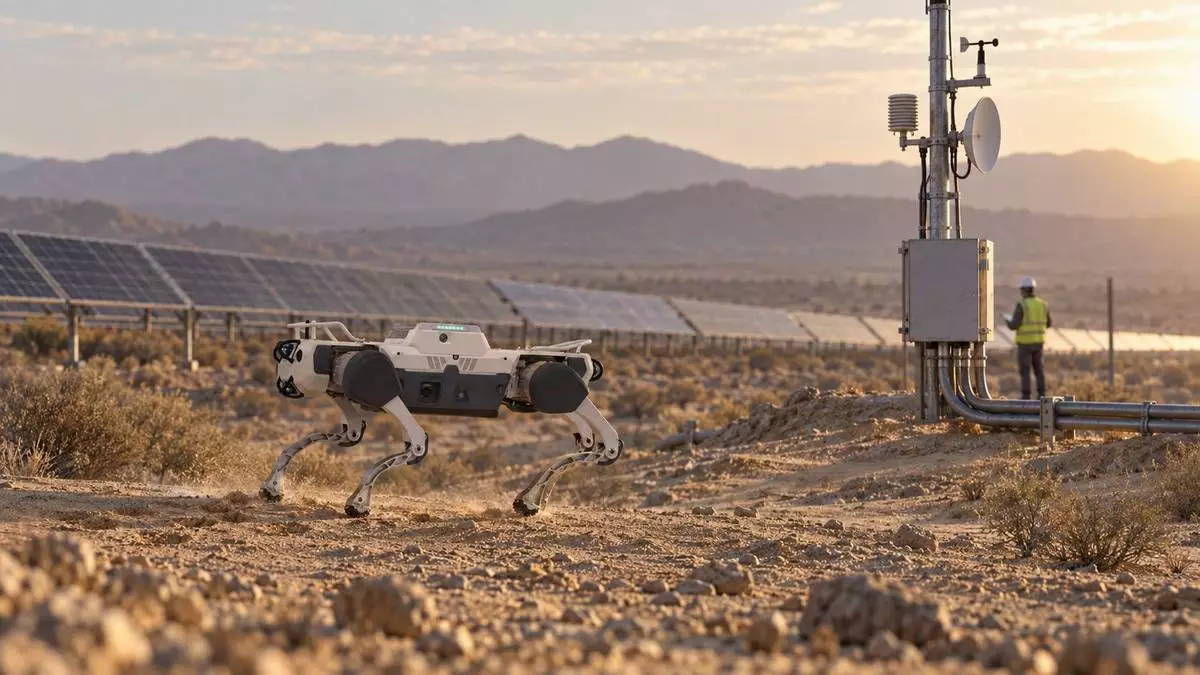
Faraday Future Launches Four Industry Productivity Solutions, Nine New EAI Devices at Its 919 Event, Building Its “One-Brain Multi-Form Multi-Capability” FF EAI Robot World 2.0; All-New Futurist Now on Sale and Master Mini Starts at $9,990 - (FX Aegis Hyper Shown)
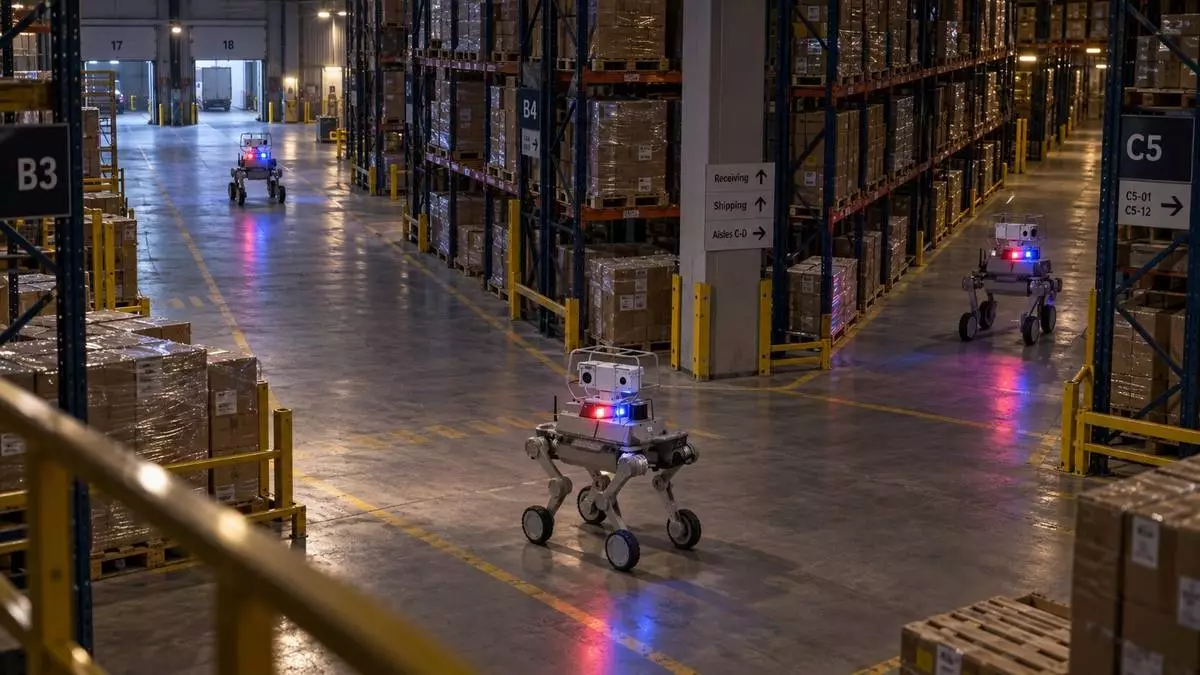
Faraday Future Launches Four Industry Productivity Solutions, Nine New EAI Devices at Its 919 Event, Building Its “One-Brain Multi-Form Multi-Capability” FF EAI Robot World 2.0; All-New Futurist Now on Sale and Master Mini Starts at $9,990 - (FX Aegis Mega Shown)

Faraday Future Launches Four Industry Productivity Solutions, Nine New EAI Devices at Its 919 Event, Building Its “One-Brain Multi-Form Multi-Capability” FF EAI Robot World 2.0; All-New Futurist Now on Sale and Master Mini Starts at $9,990 - (FX Aegis Classic Ultra-W Shown)
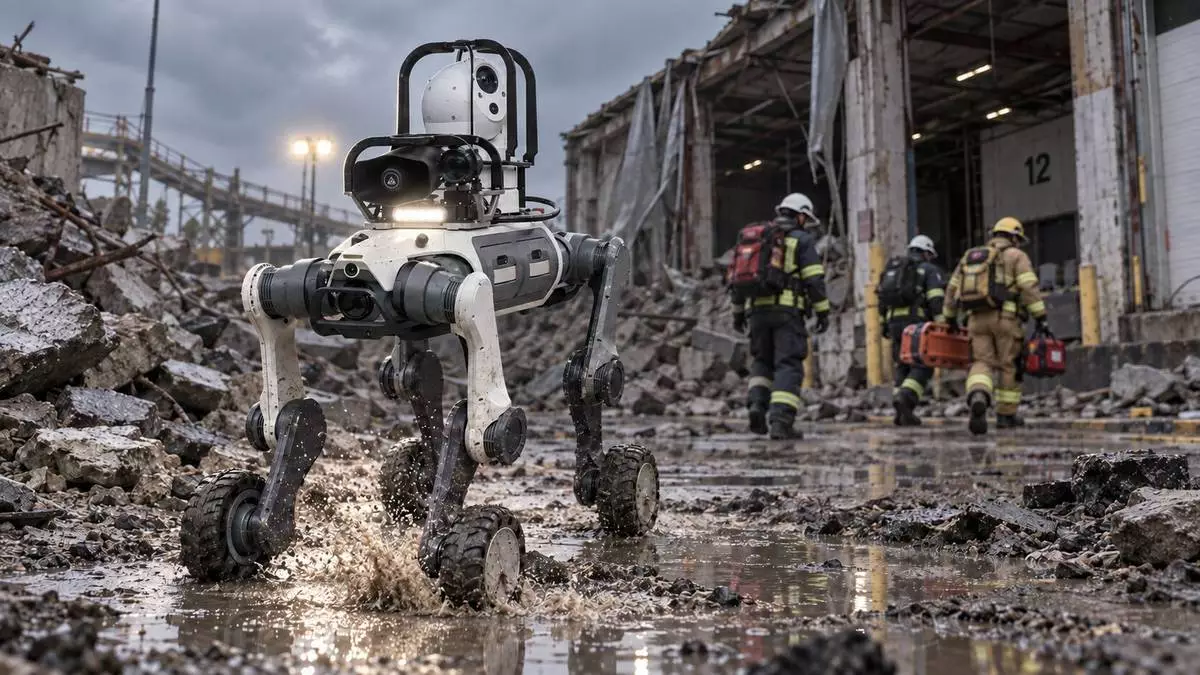
Faraday Future Launches Four Industry Productivity Solutions, Nine New EAI Devices at Its 919 Event, Building Its “One-Brain Multi-Form Multi-Capability” FF EAI Robot World 2.0; All-New Futurist Now on Sale and Master Mini Starts at $9,990 - (FX Aegis Mega Shown)
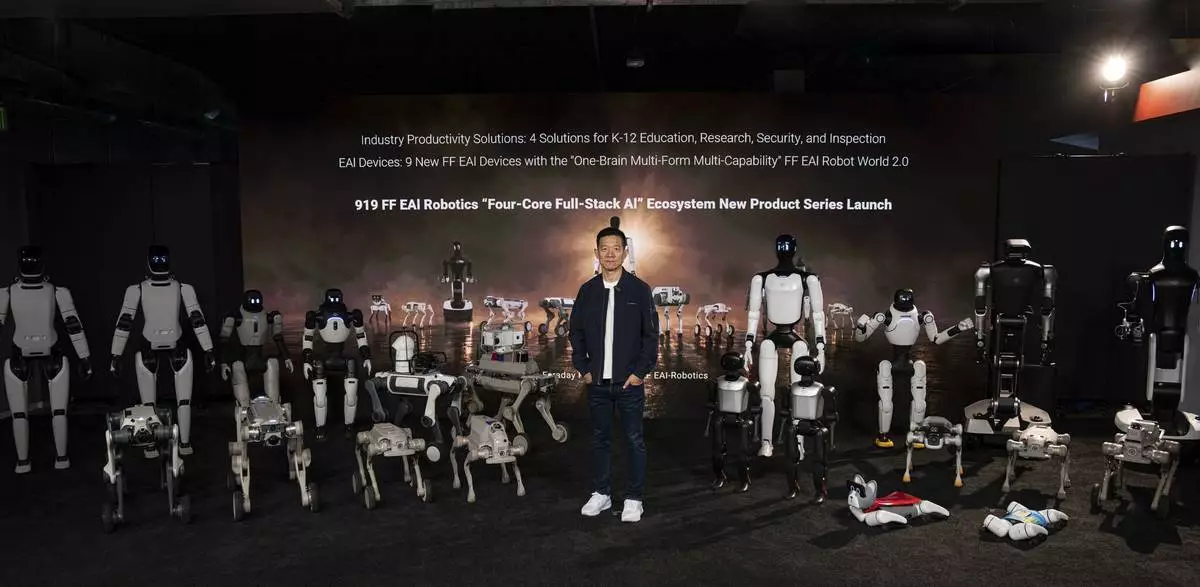
Faraday Future Launches Four Industry Productivity Solutions, Nine New EAI Devices at Its 919 Event, Building Its “One-Brain Multi-Form Multi-Capability” FF EAI Robot World 2.0; All-New Futurist Now on Sale and Master Mini Starts at $9,990

Faraday Future Launches Four Industry Productivity Solutions, Nine New EAI Devices at Its 919 Event, Building Its “One-Brain Multi-Form Multi-Capability” FF EAI Robot World 2.0; All-New Futurist Now on Sale and Master Mini Starts at $9,990