BANGKOK (AP) — Thailand’s Queen Mother Sirikit, who supervised royal projects to help the rural poor, preserve traditional craft-making and protect the environment, died on Friday. She was 93.
The Royal Household Bureau said she died in a hospital in Bangkok, adding that she began suffering from a blood infection on Oct. 17 and despite her medical team’s efforts, her condition did not improve. She suffered a stroke in 2012 and was afterwards largely absent from public life due to declining health. Her husband, King Bhumibol Adulyadej, died in October 2016.
Click to Gallery
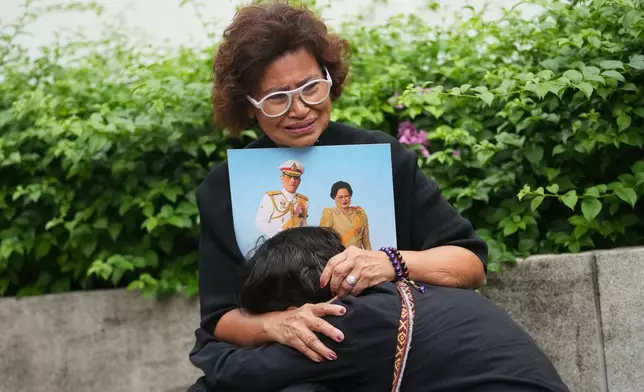
Thai people mourning as they hold the portrait of Thailand Queen Mother Sirikit in Bangkok, Thailand, Saturday, Oct. 25, 2025. (AP Photo/Sakchai Lalit)
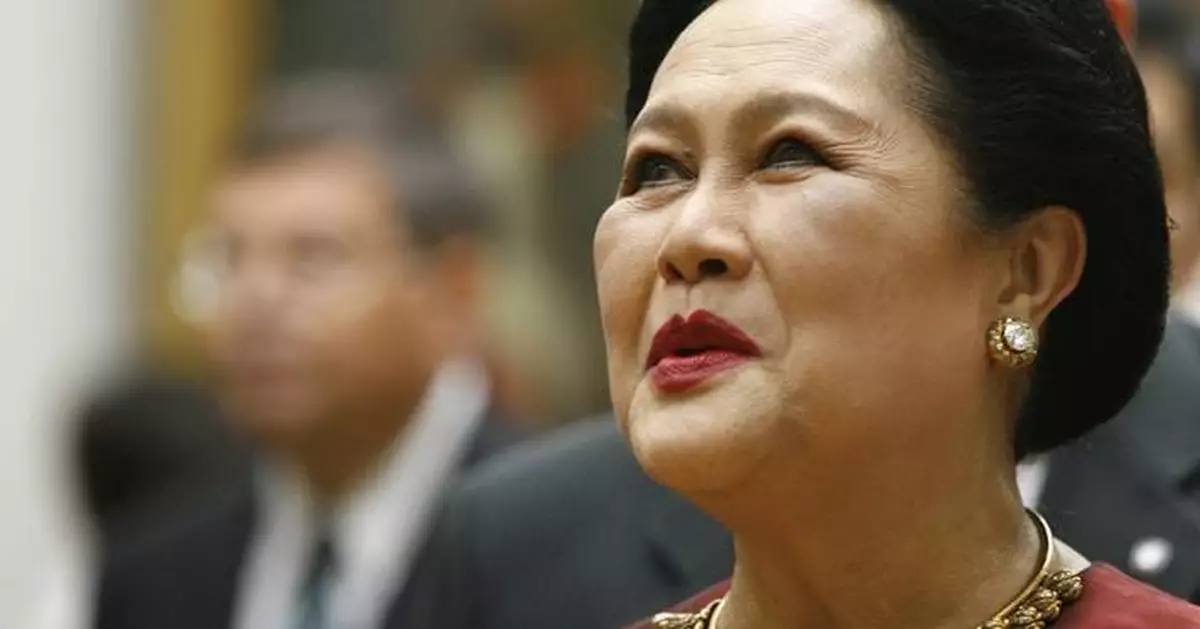
FILE - French President Jacques Chirac, right, speaks with Queen Sirikit of Thailand, at the start of a gala dinner given at the Royal Palace on the first day of his three-day official visit in Bangkok, Thailand, Friday Feb. 17, 2006. (AP Photo/Remy de la Mauviniere, Pool, File)
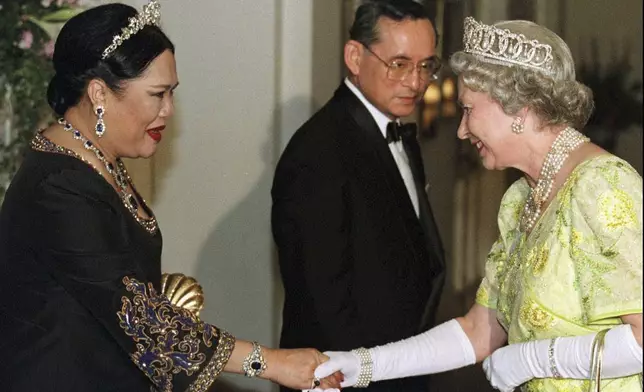
FILE - British Queen Elizabeth II, right, smiles as she greets Thai Queen Sirikit, left, with Thai King Bhumibol Adulyadej looking on at a reception at the British Ambassador's residence in central Bangkok, Oct. 30, 1996. (AP Photo/Pool, File)
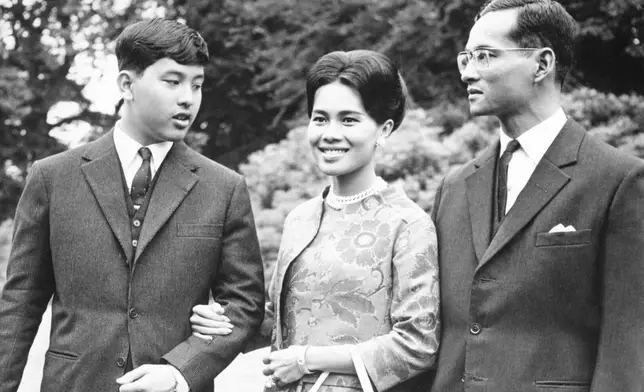
FILE - King Bhumibol of Thailand, right, walks with his wife Queen Sirikit, center, and their 13-year-old son Crown Prince Vajiralongkorn through the gardens of their residence at Sunninghill, Berkshire, July 27, 1966, where they are staying during their private visit to Britain. (AP Photo/Harris, File)
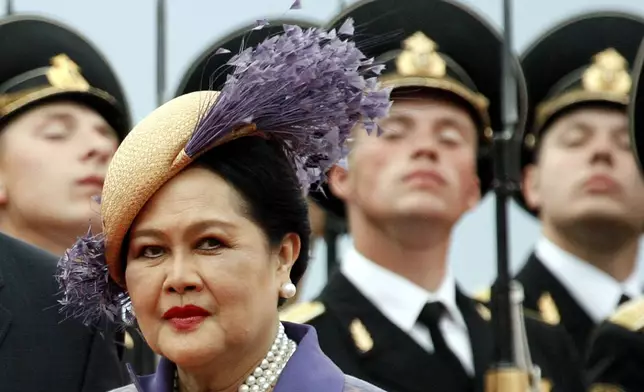
FILE - Queen Mother Sirikit passes by Russian honor guards while arriving in Moscow Vnukovo airport, July 2, 2007. (AP Photo/Misha Japaridze, File)
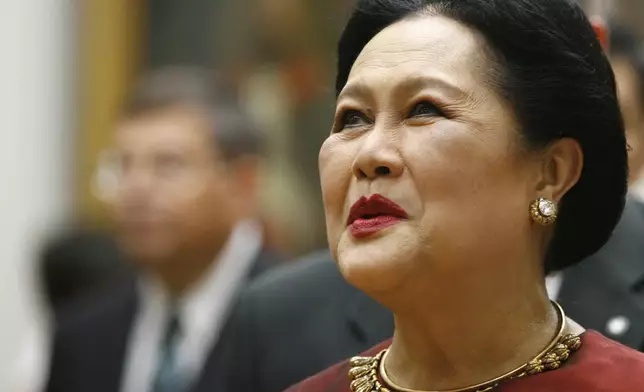
FILE -Thailand's Queen Sirikit tours the State Tretyakov Gallery in Moscow, July 4, 2007. Sirikit Kitiyakara, who supervised royal projects to help the rural poor, preserve traditional craft-making and protect the environment, died on Friday, Oct. 24, 2025. She was 93. (AP Photo/Misha Japaridze, File)
The bureau's statement said King Maha Vajiralongkorn had directed that she be given a funeral with the highest honors, and that he had instructed members of the royal family and royal servants to observe mourning for one year.
Mourners gathered outside Chulalongkorn Hospital on Saturday morning after hearing the news.
“It is yet again another great loss for the whole nation. I heard about it at 4 a.m. I felt like fainting. The whole world seemed like it had stopped," said 67-year-old Maneerat Laowalert.
Prime Minister Anutin Charnvirakul said Saturday that Sirikit's passing was “a great loss for the country.” He said the national flag will fly half-staff at all government agencies for 30 days, and civil servants will observe mourning for one year.
Although overshadowed by her late husband and her son, the current king, Sirikit was beloved and influential in her own right. Her portrait was displayed in homes, offices and public spaces across Thailand and her Aug. 12 birthday was celebrated as Mother’s Day. Her activities ranged from helping Cambodian refugees to saving some of the country's once-lush forests from destruction.
The Thai monarchy traditionally has avoided playing an open role in politics, but in recent decades of political upheaval, marked by two military takeovers and several rounds of bloody street protests, speculation grew about Sirikit’s views and her behind the scenes influence. When she publicly attended the 2008 funeral of a protester killed during a clash with police, many saw it as her taking a side in the political schism.
Sirikit Kitiyakara was born into a rich, aristocratic family in Bangkok on Aug. 12, 1932, the year absolute monarchy was replaced by a constitutional system. Both of her parents were related to earlier kings of the current Chakri dynasty.
She attended schools in wartime Bangkok, the target of Allied air raids, and after World War II moved with her diplomat father to France where he served as ambassador.
At 16, she met Thailand’s newly crowned king in Paris, where she was studying music and languages. Their friendship blossomed after Bhumibol suffered a near-fatal car accident and she moved to Switzerland, where he was studying, to help care for him. The king courted her with poetry and composed a waltz titled, "I Dream of You."
The pair married in 1950, and at a coronation ceremony later the same year both vowed to "reign with righteousness for the benefit and happiness of the Siamese (Thai) people."
The couple had four children: current King Maha Vajiralongkorn, and princesses Ubolratana, Sirindhorn and Chulabhorn.
During their early married life, the Thai royals crisscrossed the world as goodwill ambassadors and forged personal ties with world leaders.
But by the early 1970s, the king and queen turned most of their energies to Thailand's domestic problems, including rural poverty, opium addiction in hill tribes and a communist insurgency.
The queen, an impeccable dresser and avid shopper, also relished climbing hills and visiting simple villages where older women would call her "daughter."
Thousands raised their problems to her, ranging from marital squabbles to serious diseases, and the queen and her assistants took up many personally.
While some in Bangkok gossiped about her involvement in palace intrigues and her lavish lifestyle, her popularity in the countryside endured.
"Misunderstandings arise between people in rural areas and the rich, so-called civilized people in Bangkok. People in rural Thailand say they are neglected, and we try to fill that gap by staying with them in remote areas," she said in an interview with The Associated Press in 1979.
Royal development projects were set up across Thailand, some of them initiated and directly supervised by the queen.
In 1976, the queen launched a foundation to promote Thai traditional handcrafts. The SUPPORT foundation has trained thousands of villagers in crafts including silk-weaving, jewelry-making, painting and ceramics.
She also set up wildlife breeding centers, "open zoos," and hatcheries to save endangered sea turtles. Her Forest Loves Water and Little House in the Forest projects sought to demonstrate the economic gains of preserving forest cover and water sources.
While royalty elsewhere had only ceremonial or symbolic roles, Queen Sirikit believed the monarchy was a vital institution in Thailand.
"There are some in the universities who think the monarchy is obsolete. But I think Thailand needs an understanding monarch," she said in the 1979 interview. "At the call, ‘The king is coming,’ thousands will gather.
“The mere word king has something magic in it. It is wonderful."
Associated Press journalist David Rising in Kuala Lumpur, Malaysia contributed to this report. Denis D. Gray served as longtime Bangkok bureau chief before his retirement.
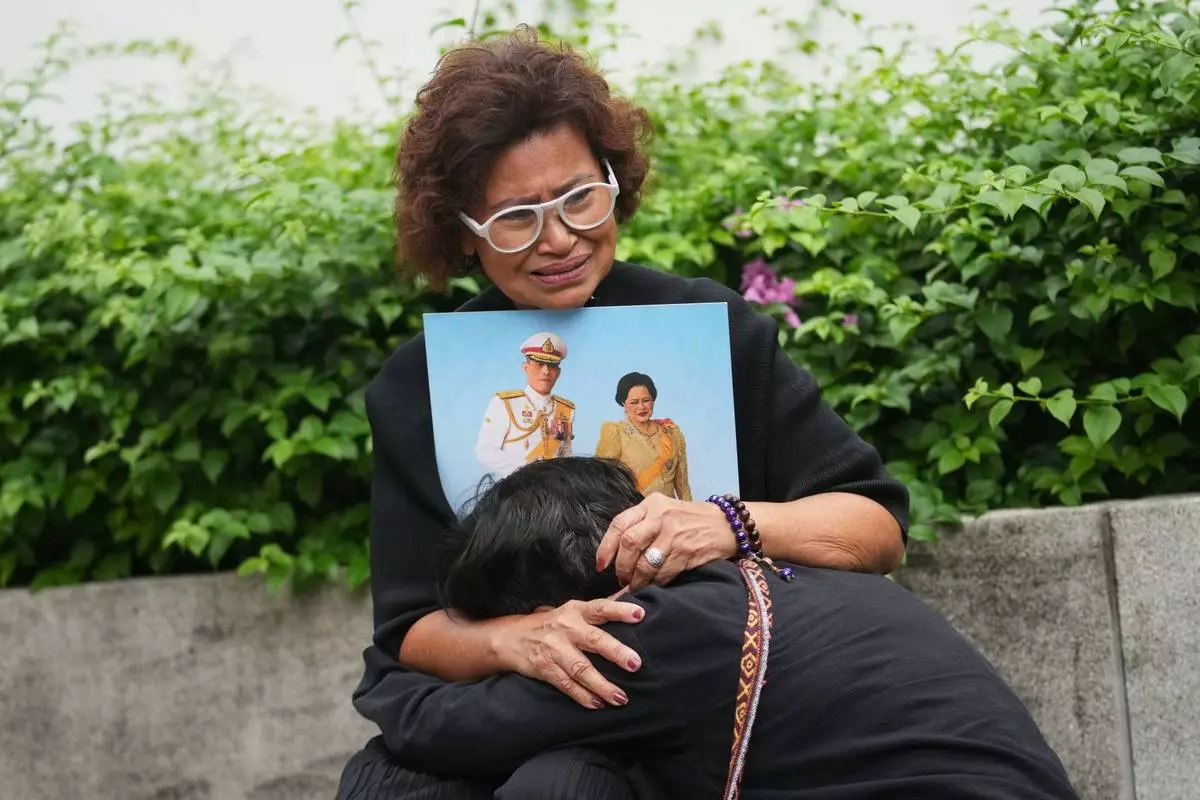
Thai people mourning as they hold the portrait of Thailand Queen Mother Sirikit in Bangkok, Thailand, Saturday, Oct. 25, 2025. (AP Photo/Sakchai Lalit)
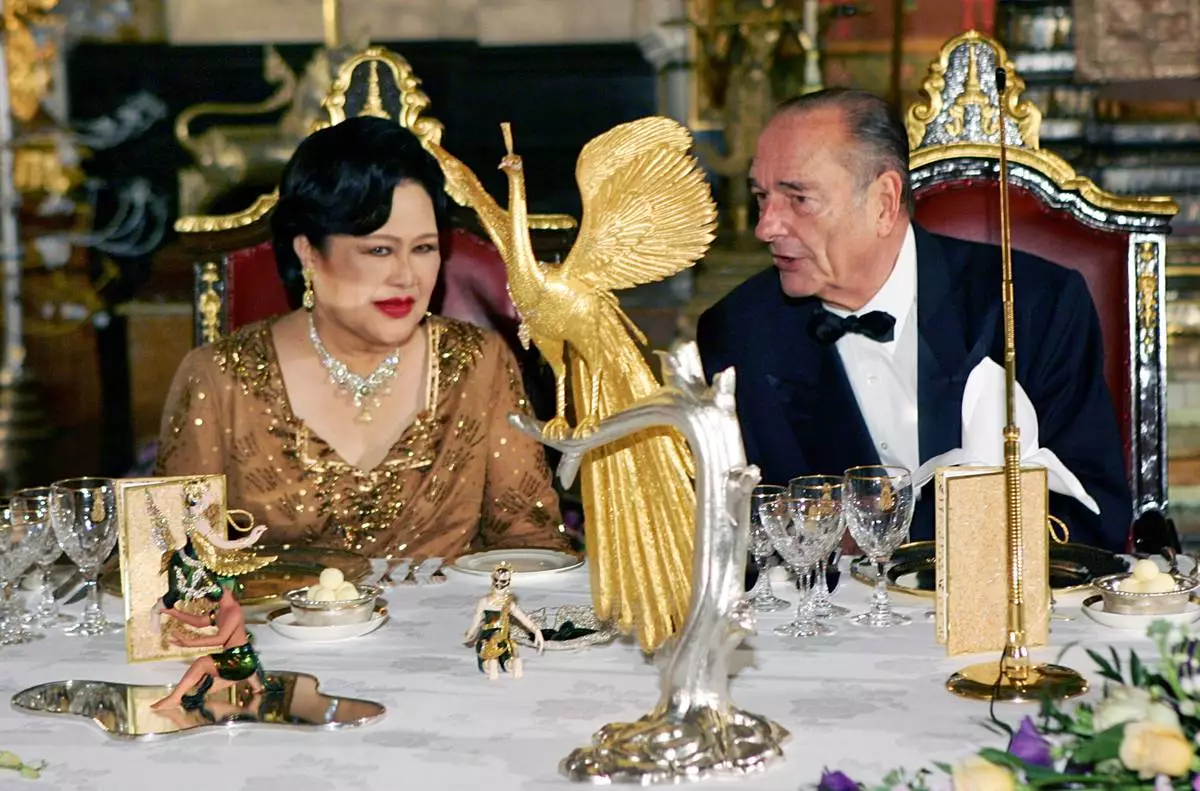
FILE - French President Jacques Chirac, right, speaks with Queen Sirikit of Thailand, at the start of a gala dinner given at the Royal Palace on the first day of his three-day official visit in Bangkok, Thailand, Friday Feb. 17, 2006. (AP Photo/Remy de la Mauviniere, Pool, File)
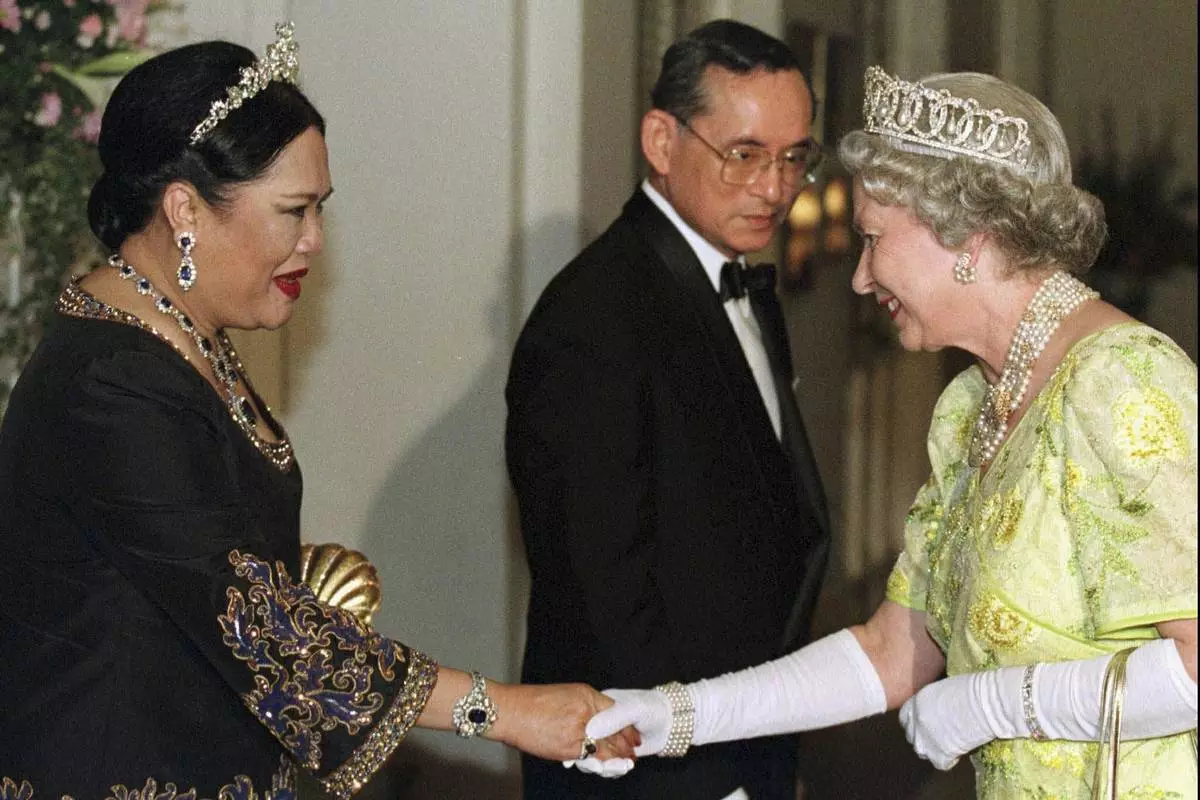
FILE - British Queen Elizabeth II, right, smiles as she greets Thai Queen Sirikit, left, with Thai King Bhumibol Adulyadej looking on at a reception at the British Ambassador's residence in central Bangkok, Oct. 30, 1996. (AP Photo/Pool, File)
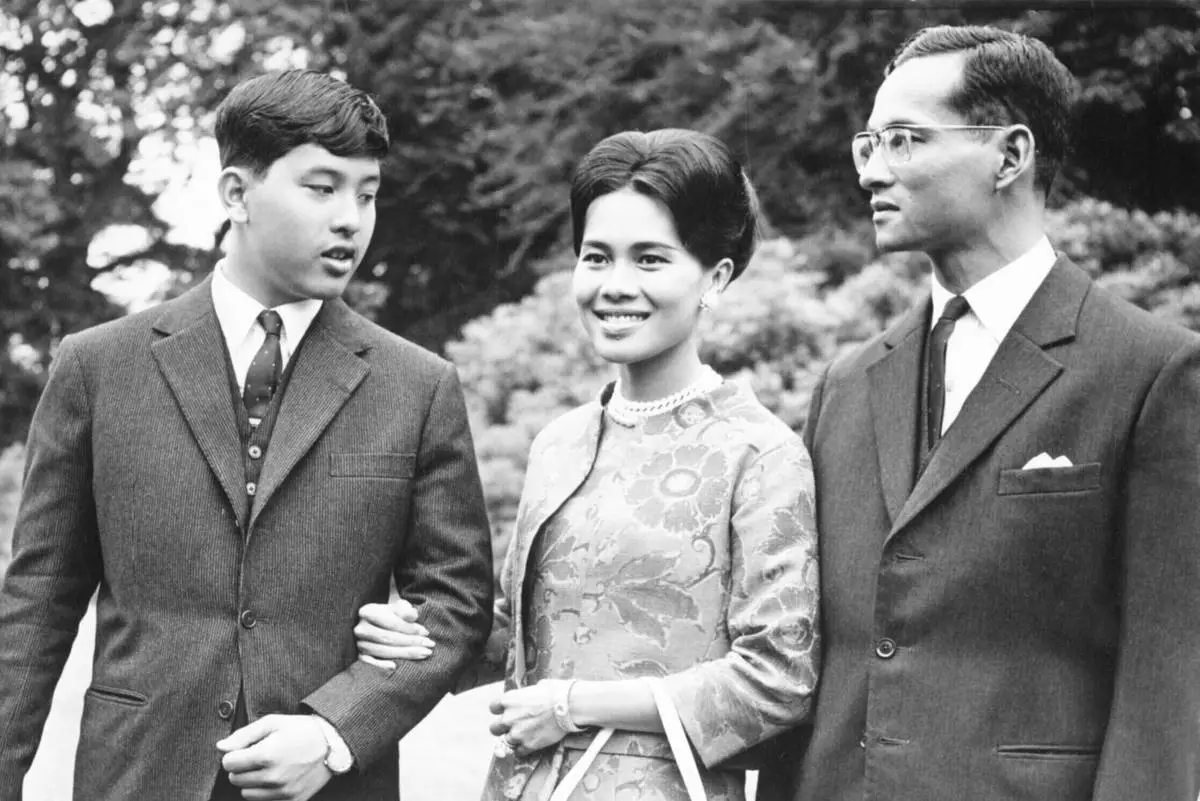
FILE - King Bhumibol of Thailand, right, walks with his wife Queen Sirikit, center, and their 13-year-old son Crown Prince Vajiralongkorn through the gardens of their residence at Sunninghill, Berkshire, July 27, 1966, where they are staying during their private visit to Britain. (AP Photo/Harris, File)
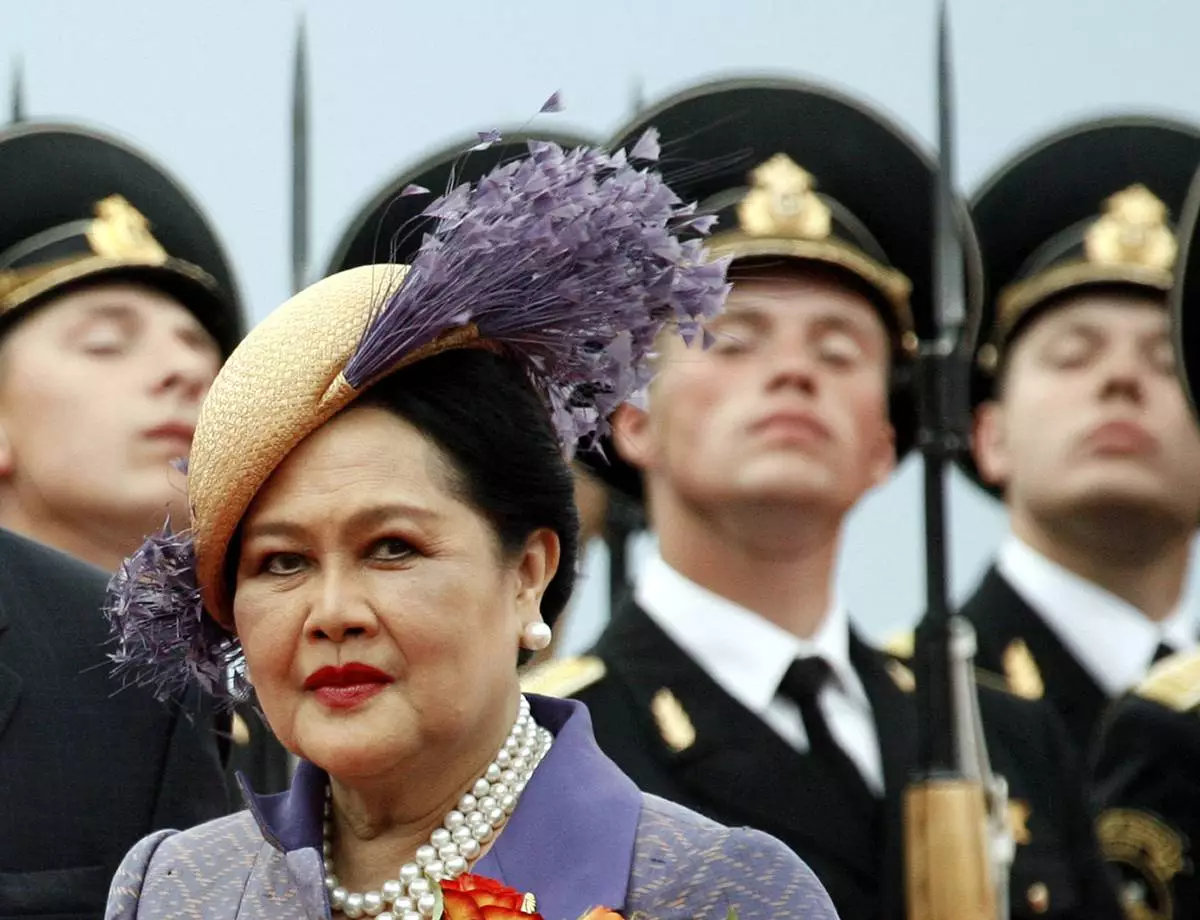
FILE - Queen Mother Sirikit passes by Russian honor guards while arriving in Moscow Vnukovo airport, July 2, 2007. (AP Photo/Misha Japaridze, File)
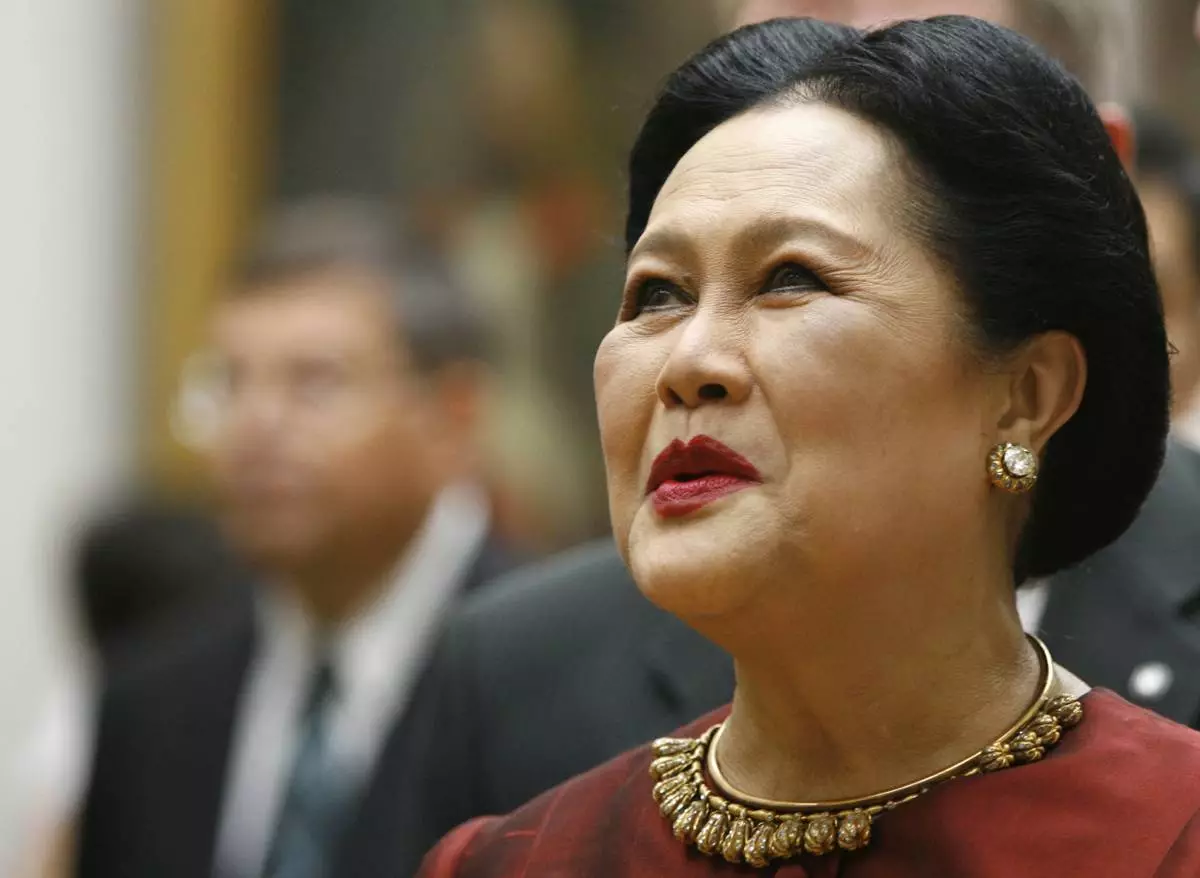
FILE -Thailand's Queen Sirikit tours the State Tretyakov Gallery in Moscow, July 4, 2007. Sirikit Kitiyakara, who supervised royal projects to help the rural poor, preserve traditional craft-making and protect the environment, died on Friday, Oct. 24, 2025. She was 93. (AP Photo/Misha Japaridze, File)
BEIRUT (AP) — When the Israel- Hezbollah war broke out in early March, Hussein Shuman fled the heavy bombardment of the southern suburbs of Beirut, but he didn’t bother trying to rent an apartment elsewhere.
In areas deemed “safe” because the Lebanese militant group has no presence, he feels that Shiite Muslims like him are not welcome. Residents regard them with suspicion as potential Hezbollah members, and landlords charge exorbitant prices to rent to displaced families.
Instead, the 35-year-old, who works at a perfume company, headed to central Beirut where he set up a small tent where he has been staying, along with his wife, 7-year-old son and 5-year-old daughter.
Shuman even rejected an offer from a friend who invited him to bring his family to the Christian mountain town of Zgharta. He preferred to remain in his tent, even though it has flooded twice in the past two weeks.
“By staying here I have my dignity and respect,” Shuman said, sitting on a chair near his tent as a barber gave him an open-air hair cut. “We will not stay in a place where we are going to be humiliated.”
In a country full of suspicion, the more than 1 million people — most of them Shiite — displaced as a result of Israel’s evacuation orders and airstrikes have limited options.
Some landlords in Christian areas refuse to rent to Shiites. Others demand inflated rents and deposits that few can afford. Fatima Zahra, 42, from Beirut’s southern suburbs, said she and her sister sold their finest jewelry to pay the $5,000 the landlord charged up front for two months’ rent.
In some Beirut neighborhoods, displaced people who can afford to pay high rents are only allowed to take the apartment after landlords inform the security agencies to check on whether the family has any links to Hezbollah.
Sectarian tensions are a sensitive issue in Lebanon because the country fought a 15-year civil war ending in 1990 that largely broke down along sectarian lines.
Social frictions have worsened since Israel’s targeted airstrikes killed Hezbollah officials or members of Iran’s paramilitary Revolutionary Guard in predominantly Christian, Sunni and Druze areas, raising fears among the hosts that Hezbollah members are mingling within the civilian population.
The Lebanese are deeply divided over Hezbollah’s wars with Israel, with many in the small nation blaming the Iran-backed group for dragging the country into a deadly conflict that has so far left more than 1,300 people dead and over 4,000 wounded. Hezbollah fired missiles into Israel two days after the U.S. and Israel attacked Iran on Feb. 28, triggering the ongoing Middle East war.
The renewed war has caused widespread destruction and paralyzed the economy at a time when Lebanon is still in the throes of a historic economic crisis that broke out in late 2019. The country has not yet recovered from the last Israel-Hezbollah war in 2024.
In mid-March, an Israeli airstrike on an apartment in the town of Aramoun killed three people, prompting some local residents to call for the displaced to leave the area.
Days later, an airstrike on the nearby town of Bchamoun also killed three people, including a four-year-old girl, who were displaced from Beirut’s southern suburbs, where Hezbollah has a strong presence.
In neither case did Israel announce the intended target of the strikes, but neighbors assumed that someone in the targeted apartments was a Hezbollah member.
“Had we known that they were linked to Hezbollah, we would have kicked them out,” an angry man who owns an apartment in the building in Bchamoun said at the scene.
In late March, a missile exploded over the predominantly Christian Keserwan region north of Beirut, with debris falling on different areas. Although the Lebanese army later said that it was an Iranian missile passing over Lebanon that fell, many initially assumed that it was an Israeli airstrike targeting displaced people.
No one was was hurt by the missile debris, but a group of young men attacked displaced Shiites in the district of Haret Sakher near the coastal city of Jounieh, calling for their eviction, before local officials intervened.
“We don’t want them here,” shouted a Haret Sakher resident shortly after the strike. He said that some of the displaced refer to their hosts as “Zionists,” accusing them of being aligned with Israel because they criticize Hezbollah for dragging the country into the conflict. He added: “We don’t want national coexistence.”
George Saadeh, a member of Jounieh’s municipal council, told The Associated Press that he had called on Haret Sakher residents to avoid any reaction “so that we can preserve civil peace.”
In a predominantly Christian area just north of Beirut, plans to house displaced people in an abandoned warehouse near the port were suspended last week after drawing backlash from lawmakers and residents.
“The Israeli targeting campaign has created a lot of paranoia,” said Maha Yahya, director of the Beirut-based Carnegie Middle East Center. “If you see a displaced person, maybe you wonder, ‘What if this person is a target?’”
Fearing the tension could slip out of control, the army has beefed up its presence on the streets.
Last week, army commander Gen. Rudolphe Haikal toured Beirut and the southern city of Sidon and told troops that they should be “firm in the face of any attempt to undermine internal stability,” the army said in a statement.
Police forces, including a SWAT unit, were deployed at major intersections in the capital to preserve peace and prevent any friction between the displaced and locals. Police patrols pass through the tent city by Beirut’s coast where Shuman and his family are staying.
An official at the municipality of the predominantly Sunni town of Naameh, just south of Beirut, said that they have received thousands of people displaced from southern Lebanon.
The official said that in order to avoid tensions, they opened a school in one district for displaced Shiites and another in a different neighborhood for people displaced from Sunni border villages.
“There are concerns among people,” that conflict could break out said the official who spoke on condition of anonymity because he was not authorized to speak to the media.
With the Israeli airstrikes and ground invasion mainly targeting Shiite areas, U.S. ambassador to Lebanon Michel Issa, a Lebanese-American, was criticized for stoking sectarianism. He told reporters in late March that the U.S. had asked Israel for a commitment that Christian villages in southern Lebanon will not be attacked.
“We have asked the Israelis to leave Christian villages in the south alone and they told us that they will not touch Christian villages,” Issa said. However, he added, “They (Israelis) said that they cannot guarantee” that the villages would be left alone “if there is infiltration into these villages” by Hezbollah members.
Several Christian villages in southern Lebanon have asked displaced Shiites who were sheltering there to leave, fearing that their presence might trigger Israeli attacks.
Legislator Taymour Joumblatt who is the leader of the Progressive Socialist Party, the largest Druze-led political group in the country, said that the biggest concern in the country now is “strife.”
“The most important thing is to reduce sectarian pressures on the ground,” Joumblatt said. “Our Shiites brothers are part of this country and our humanitarian duty is to help them.”
———
Associated Press writer Isabel DeBre contributed to this report from Beirut.
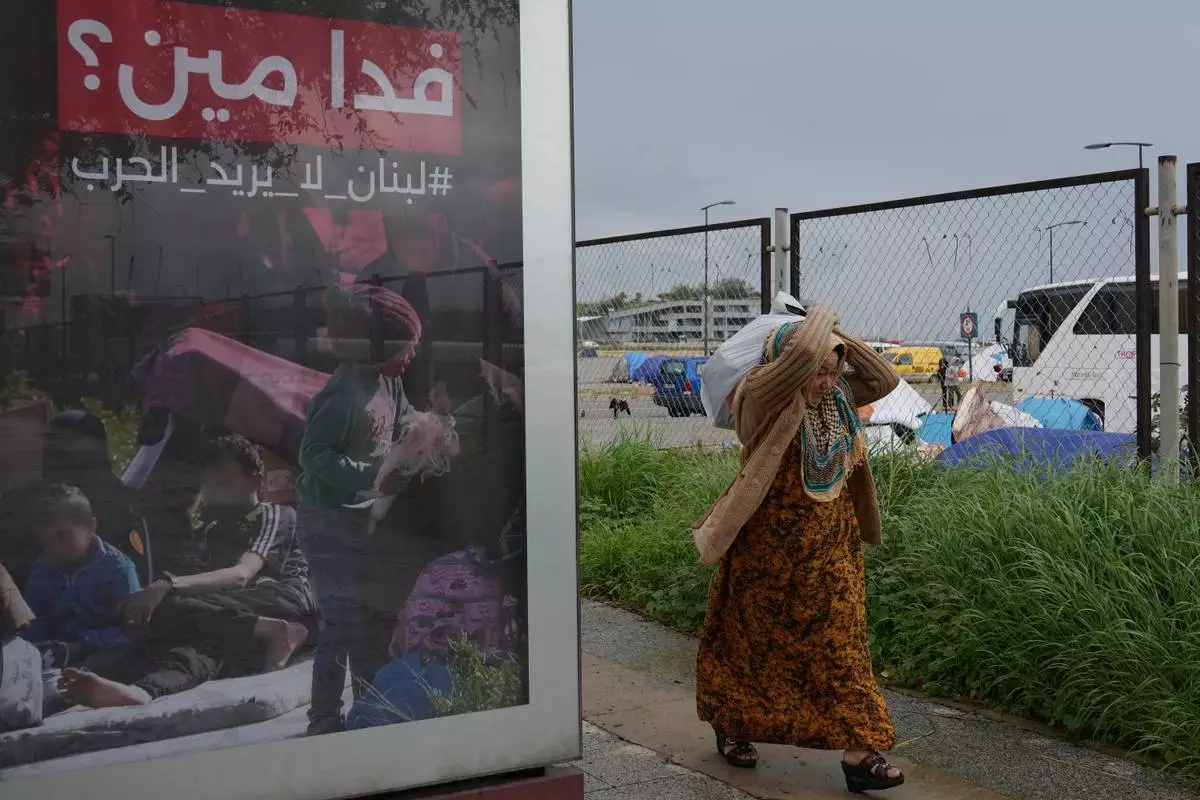
FILE — A displaced woman who fled Israeli airstrikes in southern Lebanon, carries her belonging as she moves to a better spot to shelter from the rain, past an Arabic anti-war poster that reads, "Sacrificing for whom? Lebanon does not need war," in Beirut, Saturday, March 21, 2026. (AP Photo/Hussein Malla, File)

Special forces police officers deployed amid tensions between people displaced by Israeli strikes and local residents in Beirut neighborhoods, Lebanon, Wednesday, April 1, 2026. (AP Photo/Hussein Malla)
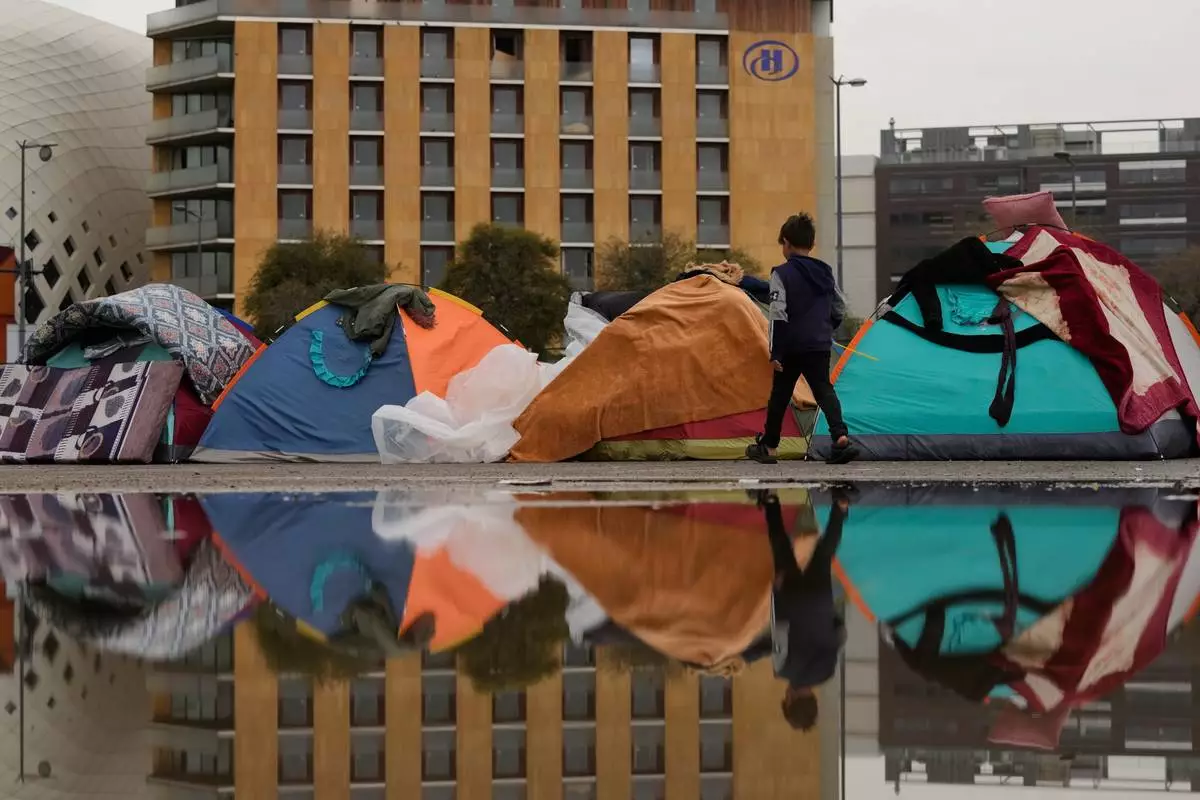
FILE — A child walks past tents sheltering people displaced by Israeli airstrikes in southern Lebanon and Dahiyeh, Beirut's southern suburbs, along the Beirut waterfront in Beirut, Lebanon, Saturday, March 14, 2026. (AP Photo/Hassan Ammar, File)
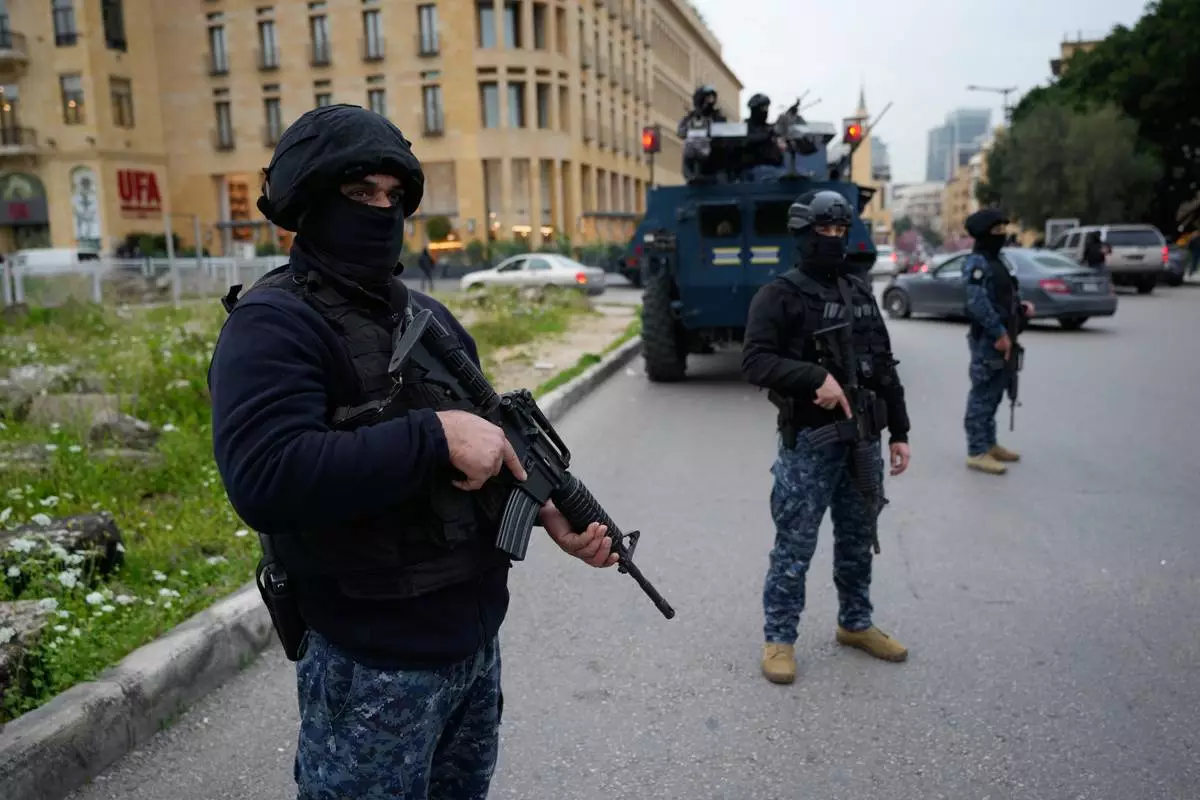
Special forces police officers deployed amid tensions between people displaced by Israeli strikes and local residents in Beirut neighborhoods, Lebanon, Wednesday, April 1, 2026. (AP Photo/Hussein Malla)
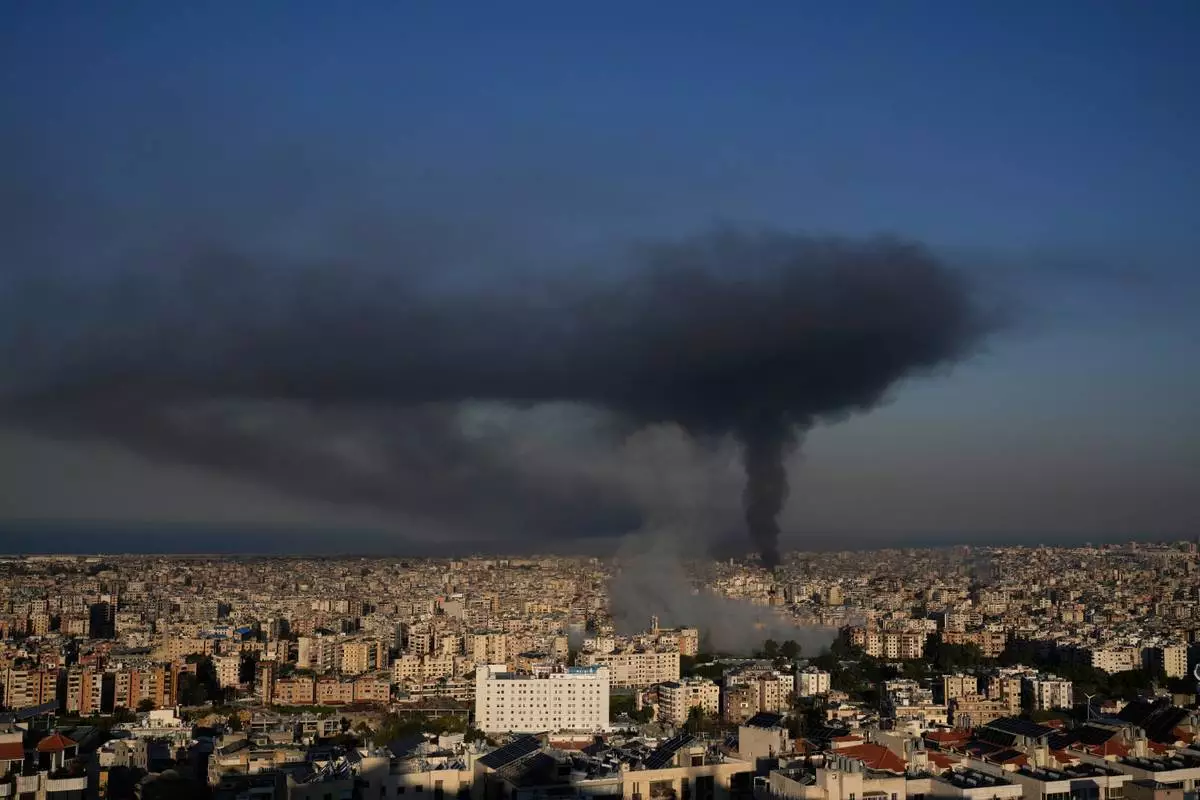
File — Smoke rises from Israeli airstrikes in Dahiyeh, a southern suburb of Beirut, Lebanon, Tuesday, March 3, 2026. (AP Photo/Hussein Malla, File)