Russian said on Friday that its forces had downed one Su-27 fighter jet from Ukraine and seized 10 more settlements over the past week, while Ukraine, on the same day, reported 82 battles in the frontlines.
The Russian Ministry of Defense said in its weekly report that Russian forces took control of 10 settlements from Ukraine in multiple areas.
The Russian forces conducted massive strikes against key Ukrainian military and infrastructure targets, including Ukrainian defense industry enterprises, transportation and energy infrastructure used by the Ukrainian military, and sites for the assembly, production, storage, and launch of long-range unmanned aerial vehicles (UAVs), the ministry said.
The Russian air defense successfully intercepted and destructed the high volume of Ukrainian assets, including one Su-27 fighter jet, four cruise missiles, 18 aerial bombs, 15 HIMARS rockets and 1,441 UAVs, the ministry said.
Meanwhile, the General Staff of the Armed Forces of Ukraine reported on Friday afternoon that 82 combat engagements had taken place across the frontlines that day.
The Ukrainian side said the Russian forces remained most active in the Pokrovsk direction.
In a separate report by the Ukrainian National News Agency (Ukrinform), the Ukrainian forces gained control of one settlement in the Krasny Liman direction.
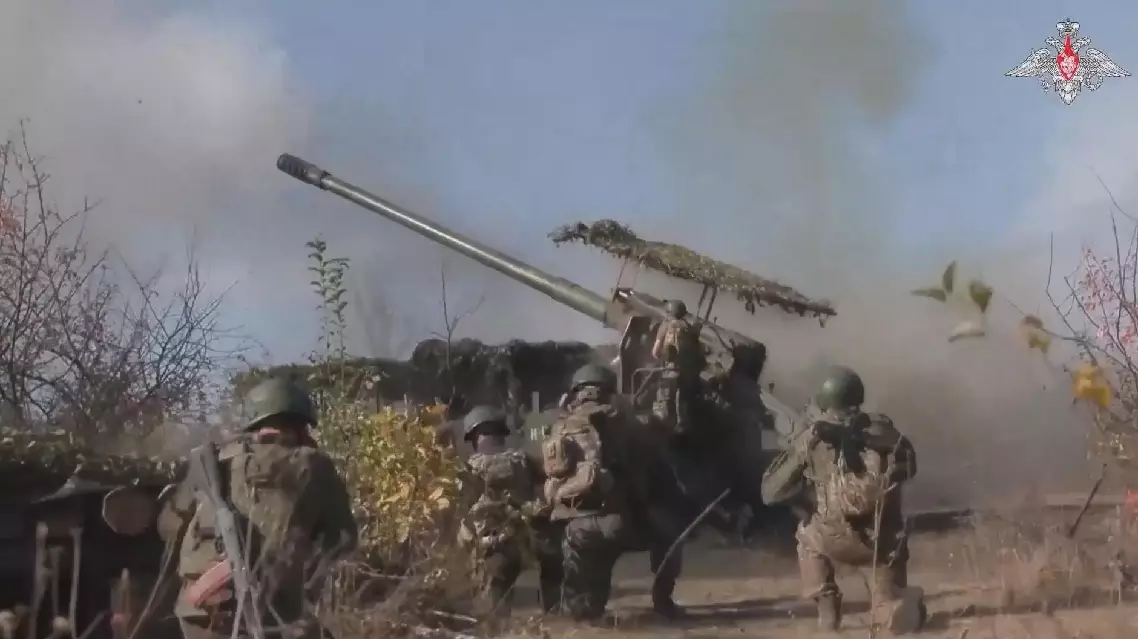
Russia downs Ukrainian fighter jet, seizes 10 more settlements, Ukraine reports 82 battles in frontlines
Geoeconomic confrontation is the leading short-term global threat in 2026, the World Economic Forum (WEF) warned in its Global Risks Report 2026 released on Wednesday ahead of its annual meeting in Davos, Switzerland.
The report ranks geoeconomic confrontation as the top risk for 2026, followed by interstate conflict, extreme weather, societal polarization, and misinformation and disinformation. It also identifies geoeconomic confrontation as the most severe risk over the next two years.
"I think if there is to be one key takeaway from the report, it's that we are entering an age of competition and this new competitive order is then shaping current global risks, but it is also shaping and to some extent hindering our ability to actually cope with them. That's really the key takeaway. If we take a look at, the number one risk both for 2026 and two years out, it's dual economic confrontation. But then if we look at the risks 10 years out. It's really the climate and environment related risks. All of these things require global cooperation and that's where we're seeing a big backsliding in this new age of competition," said Saadia Zahidi, managing director of the WEF.
Economic risks showed the largest increase in the two-year outlook, with concerns over economic downturns, inflation, rising debt and potential asset bubbles intensifying amid geoeconomic tensions, the report said.
Environmental risks remain the most severe overall, led by extreme weather, biodiversity loss and critical changes to Earth systems. The report noted that three-quarters of respondents expect a turbulent environmental outlook.
Risks related to adverse outcomes of artificial intelligence rose sharply, climbing from 30th in the two-year horizon to fifth in the 10-year outlook, reflecting concerns over impacts on labor markets, society and security.
The 21st edition of the report draws on views from more than 1,300 experts, policymakers and industry leaders.
The WEF's annual meeting will be held in Davos from Jan 19 to 23 and draw nearly 3,000 guests from more than 130 countries and regions to participate.
"So overall, we are starting to see this shift away from what have traditionally been the ways in which people have been able to cooperate. Now, that is not to say that any of this is a foregone conclusion. And I think that's a really important message around the risks report. None of this is set in stone. All of this is in the hands of leaders. Whether they choose to cooperate and invest in resilience or whether they do not. So that's really what we'll be focused on next week in Davos bringing leaders together under this overall theme of 'a spirit of dialogue' and trying to reestablish relationships, cooperation and trust. That's the fundamental," said Zahidi.
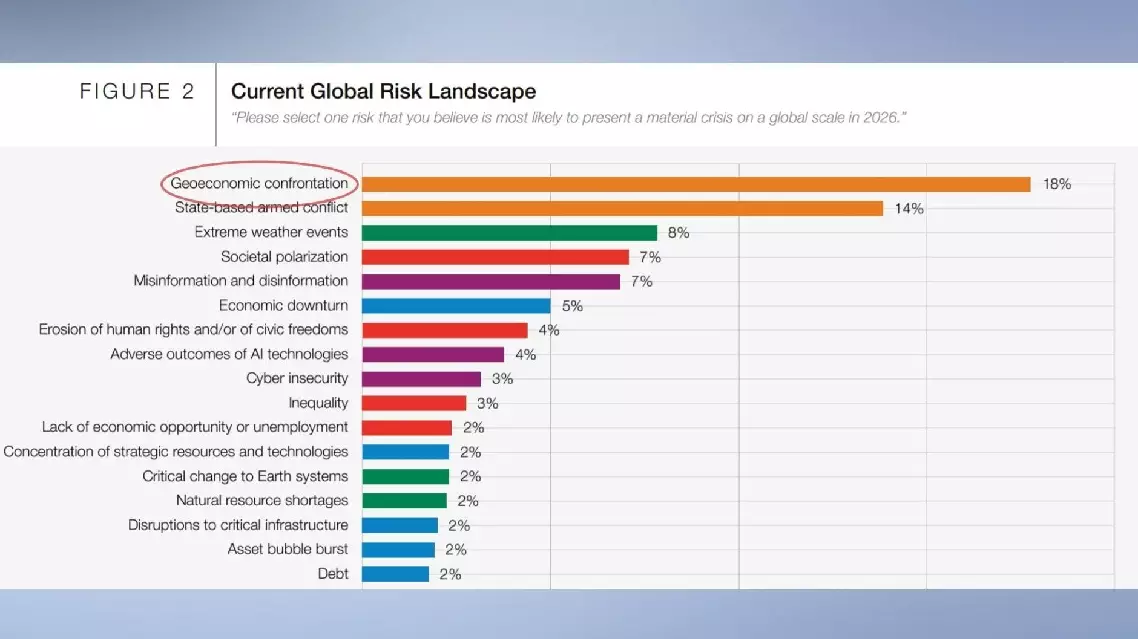
WEF warns of rising geoeconomic risks in 2026