U.S. stocks ended higher on Friday after the release of slightly cooler-than-expected September inflation data.
The Dow Jones Industrial Average rose 472.51 points, or 1.01 percent, to 47,207.12, marking its first-ever close above 47,000. The S and P 500 added 53.25 points, or 0.79 percent, to 6,791.69. The Nasdaq Composite Index increased 263.07 points, or 1.15 percent, to 23,204.87. All three major averages finished at record highs.
Six of the 11 primary S and P 500 sectors advanced, with technology and communication services leading the gainers by rising 1.58 percent and 1.27 percent, respectively. Energy and materials led the laggards by declining 1.01 percent and 0.61 percent, respectively.
The September consumer price index (CPI) report, which was delayed due to U.S. federal government shutdown, rose 0.3 percent on the month, bringing the annual inflation rate to 3 percent, according to the Bureau of Labor Statistics.
Both readings came in slightly below economists' expectations of 0.4 percent monthly and 3.1 percent annually, based on a Dow Jones survey. Excluding food and energy, core CPI rose 0.2 percent last month and 3 percent over the past 12 months, also lighter than forecasts of 0.3 percent and 3.1 percent.
Following the CPI release, traders increased their bets that the Federal Reserve will cut interest rates at both of its remaining meetings this year. The probability of a December cut jumped to 98.5 percent from about 91 percent before the data, according to the CME FedWatch tool. Odds for a cut next week remained above 95 percent.
"There was little in today's benign CPI report to 'spook' the Fed and we continue to expect further easing at next week's Fed meeting," said Lindsay Rosner, head of multi-sector fixed income investing at Goldman Sachs Asset Management. "A December rate cut also remains likely with the current data drought providing the Fed with little reason to deviate from the path set out in the dot plot."
In corporate news, Intel shares rose 0.31 percent after the chipmaker reported third-quarter revenue that exceeded Wall Street estimates. "We believe we are well-positioned to play a more significant role in AI," said John Pitzer, Intel's head of investor relations.

U.S. stocks close higher after cooling inflation data
A new round of trade-in subsidy program is energizing China's consumer market these days, with provinces across the country seeing a surge in demand for cars, home appliances and digital devices.
In north China's Shanxi Province, the new trade-in subsidy program, which started on January 9, has further helped boost sales in home appliances and digital devices which are covered by the new round of subsidies.
To enjoy the subsidies, six types of home appliances, including refrigerators and washing machines, must meet national Level 1 energy-efficiency or water-efficiency standards. Digital and smart products include four types, such as mobile phones and tablets, with a sales price cap of 6,000 yuan (about 800 U.S. dollars) per item.
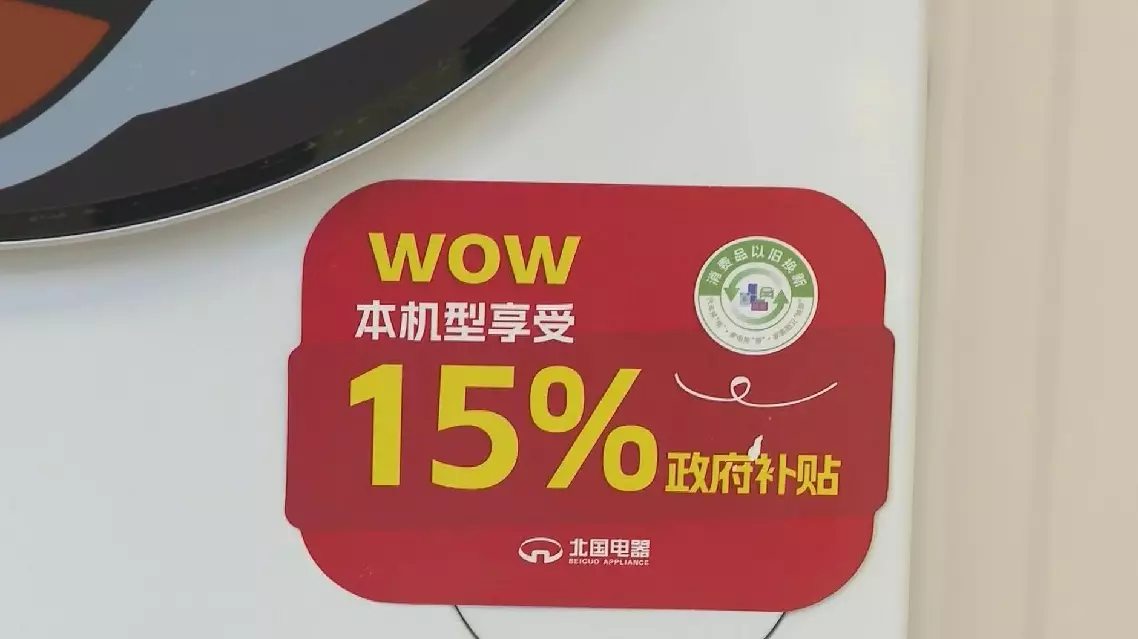
In both categories, subsidies are set at 15 percent of the final transaction price. For home appliances, the maximum subsidy is 1,500 yuan per item. For digital products, the cap is 500 yuan per item. Each consumer can receive a subsidy for one unit in each category.
Neighboring Shanxi, Hebei Province kicked off the year of 2026 with the new round of trade-in subsidy program starting on January 1.
The subsidies cover automobiles, home appliances, and digital products. Individual consumers who purchase designated Level 1 energy-efficiency appliances or eligible digital products priced at no more than 6,000 yuan can receive subsidies equal to 15 percent of the transaction price. The maximum subsidy is 1,500 yuan per appliance and 500 yuan per digital or smart device, with each person limited to one subsidized item in each category.
Data showed that from Jan 1 to 9, Hebei's home appliance trade-in program alone disbursed more than 130 million yuan in subsidies, driving sales of over 920 million yuan.
In east China's Jiangsu Province, the new trade-in subsidy program, taking effect for two weeks, has brought the province a boom in trade-in.
At a local 4S store in Jiangsu's Suqian City, showroom traffic has spiked as salespeople walked customers through the new benefits from the trade-in subsidy program.
"Under the scrappage-and-replacement scheme, customers who buy a new energy vehicle (NEV) can receive a subsidy worth 12 percent of the vehicle price, capped at 20,000 yuan (about 2,860 U.S. dollars). For combustion-engine cars, the subsidy is 10 percent, with an upper limit of 15,000 yuan. For trade-ins, NEVs are able to receive a subsidy worth 8 percent of the vehicle price, up to 15,000 yuan, while combustion-engine cars will receive a 6-percent subsidy, with a cap of 13,000 yuan," said Sun Yue, a saleswoman at the store.
In the home appliance sector, Jiangsu's policy this year stipulates that only products that meet China's Level 1 energy-efficiency standard are eligible for subsidies. The scheme covers six major categories, including refrigerators and washing machines.
Consumers who purchase qualifying appliances can receive a subsidy equal to 15 percent of the final retail price, up to a maximum of 1,500 yuan per item. Each person is limited to one subsidized unit per product category.
Four types of digital and smart products, such as mobile phones and tablets, are eligible for a 15-percent subsidy capped at 500 yuan per unit, with a retail price no more than 6,000 yuan.
"With the national subsidy policy back in place this year, I went to the store to check what discounts I could get. It knocked 500 yuan off the price. [The discounted price is] very reasonable," said Wang Kang, a resident of Jiangsu's Xuzhou Province.
To enhance the shopping experience for consumers, many retailers are pairing subsidies with "one-stop" services that combine the delivery of new products with on-site collection of old ones.
"After consumers place an order for new home appliances, our staff will schedule a time to pick up the old units. Recycling the old appliance can also further offset the purchase price of the new one," said Yang Jie, a sales supervisor at a major home appliance company.
China's new trade-in program sparks consumption boom