Tech enhanced home products, including stone walls with built-in displays and automated storage systems, are drawing widespread attention at the 138th China Import and Export Fair, also known as the Canton Fair, as Chinese manufacturers pivot toward intelligent living solutions.
Among the standout innovations is a wall that looks like ordinary stone at first glance, but it's hiding a high-tech secret. Winner of the fair's design innovation gold award, the wall transforms into a high-definition display when activated via mobile app.
Made from natural porous stone and embedded with inorganic nano-material, its UV-resistant surface offers greater durability than traditional LED screens, according to exhibitor Ma Xinjing.
"We have been participating in the Canton Fair for over ten consecutive years. For us, it serves as an excellent international platform for showcasing our products. The global market's perception of 'Made in China' has now reached a new level, one where Chinese manufacturing not only controls costs effectively but also delivers high-quality products," Ma said.
In the furniture section, a "Ferris wheel" shoe cabinet equipped with an electric lift system also attracted interest. The unit rotates automatically when touched, pausing via infrared sensors when a hand is detected, allowing for easy access to stored items. Zheng Bikui, another exhibitor at the fair, underscored how smart technology is reshaping the furniture hardware industry.
"In the early days, we mainly sold traditional hardware accessories for furniture. But with the introduction of our integrated smart modules, the share of our products in a full furniture set has increased significantly, from just 2-3 percent in the past to 30-50 percent today," he said.
These innovations reflect the Chinese home furnishing industry's broader upgrade, combining material research and smart technology to demonstrate a clear path toward higher-value manufacturing at the global stage.
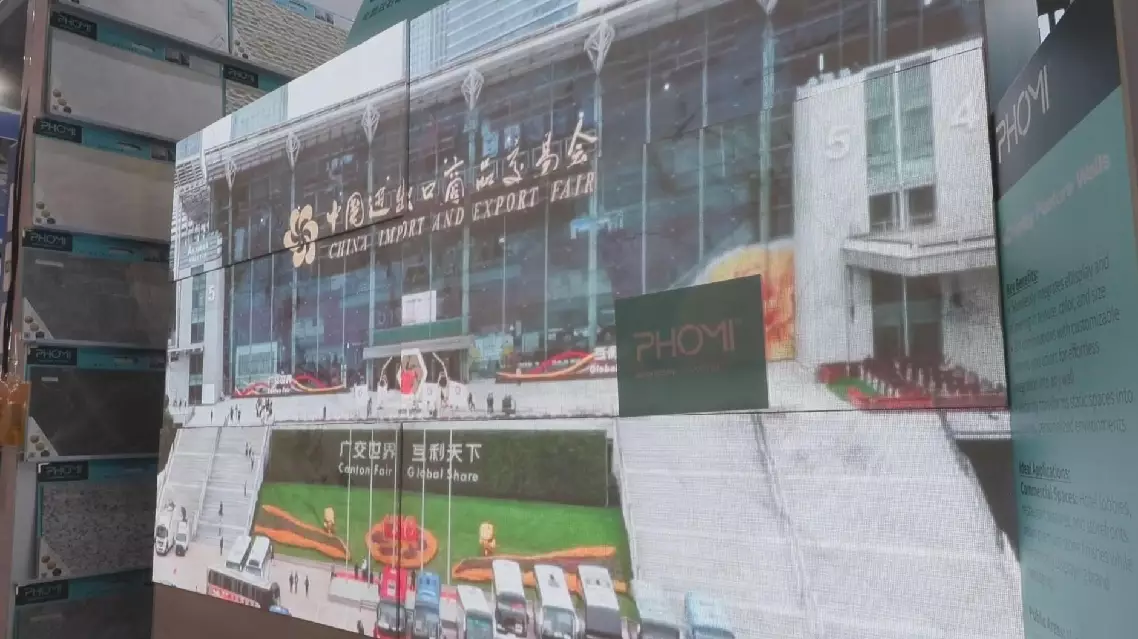
Smart living takes center stage at Canton Fair as Chinese home brands unveil tech-driven upgrades
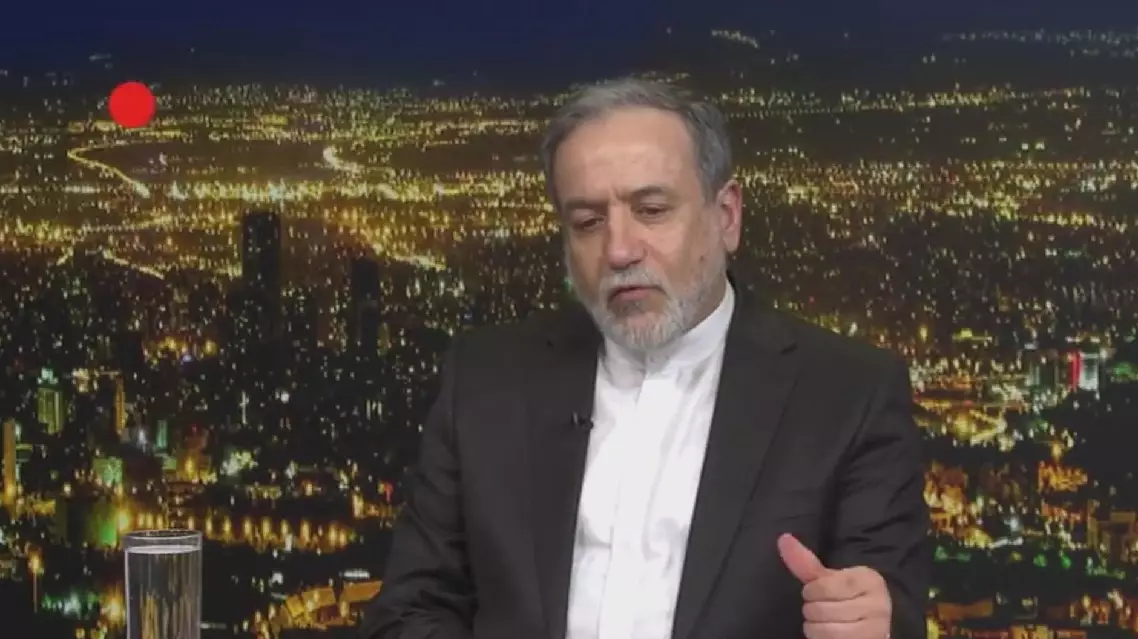
The three astronauts of China's recently-returned Shenzhou-20 mission on Friday shared the experiences of their dramatic 204-day space mission, including detailing the emergency procedures which were implemented to bring them safely home after their return capsule was struck by space debris.
The trio -- Chen Dong, Chen Zhongrui, and Wang Jie -- met with the press in Beijing on Friday afternoon, marking their first public appearance since returning to Earth in November.
When detailing the emergency response mechanisms which were enacted prior to their scheduled return, the astronauts explained that upon discovering a triangular crack on the spacecraft's viewport window, they immediately took photos for documentation and transmitted them to the ground team, who swiftly activated an emergency plan to get the trio home safely.
Experienced mission commander Chen Dong explained how the crew had complete faith in their colleagues on the ground to find a solution to these unforeseen circumstances which led to their return being delayed.
"First, we must trust the ground team, who would anticipate everything and develop the safest return plan for us. Second, we must believe in ourselves; as well-trained astronauts, we have the ability to manage various unexpected failures. I believe that with the collaboration of astronauts and researchers on the ground, our space home will surely go farther, more steadily, and for a longer time," he said.
Following their extended stay in space as a result of the debris incident, the Shenzhou-20 crew spent a total 204 days in orbit, setting a new record for the longest duration by a single group of Chinese astronauts.
During their mission, they completed multiple payload operations, conducted extensive scientific experiments, and carried out four extravehicular activities.
"Our crew worked together with the ground team in unity and coordination, completing four extravehicular activities, several payload entry and exit tasks, and a large number of scientific experiments. It was a fulfilling yet challenging mission. The path to exploring the heavens is long and arduous, but I firmly believe that China's space missions will succeed," said Chen Zhongrui, a former air force pilot who was making his first spaceflight during the mission.
"From the ground to space, from learning to application, I have deeply felt the solid progress of Chinese space endeavors and the quiet dedication of countless personnel behind the scenes. In the future, I will accomplish each mission with full commitment, living up to the trust of the motherland and the people," said fellow astronaut Wang Jie, who was also making his debut spaceflight.
After returning to Earth on Nov 14, the trio successfully completed their isolation recovery and rehabilitation and will now resume normal training following health assessments.
The crew's return, originally scheduled for Nov 5, was postponed due to safety concerns, with the astronauts later using the return capsule belonging to their successor crew of the Shenzhou-21 mission to get back to Earth. China later launched the unmanned Shenzhou-22 spacecraft which will serve the future return of the crew now aboard the Tiangong Space Station.
Shenzhou-20 astronauts share experiences after safely returning from debris incident