TOKYO (AP) — President Donald Trump opened his visit to Japan on Monday with greetings from the emperor a day before he meets new Prime Minister Sanae Takaichi, who is banking on building a friendly personal relationship with the U.S. leader to ease trade tensions.
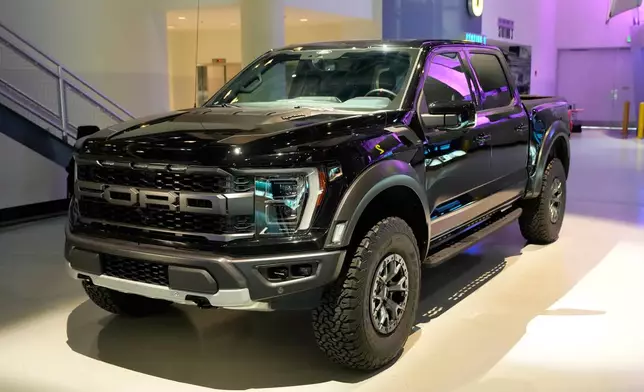
One key to this strategy might lie in an idea floated by Japan’s government to buy a fleet of Ford F-150 trucks, a meaningful gesture that may also be impractical given the narrow streets in Tokyo and other Japanese cities.
Click to Gallery
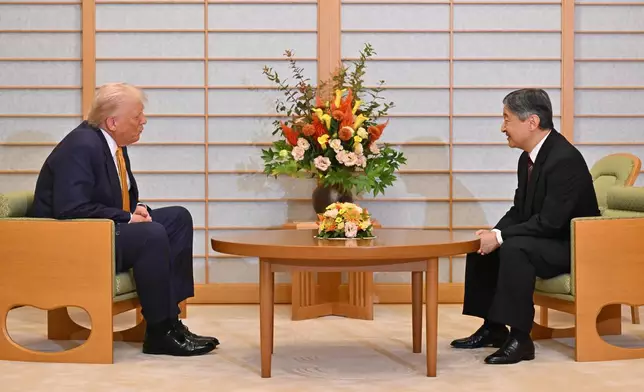
President Donald Trump, left, and Japan's Emperor Naruhito talk during their meeting at the Imperial Palace in Tokyo, Oct. 27, 2025. (Kazuhiro Nogi/Pool Photo via AP)
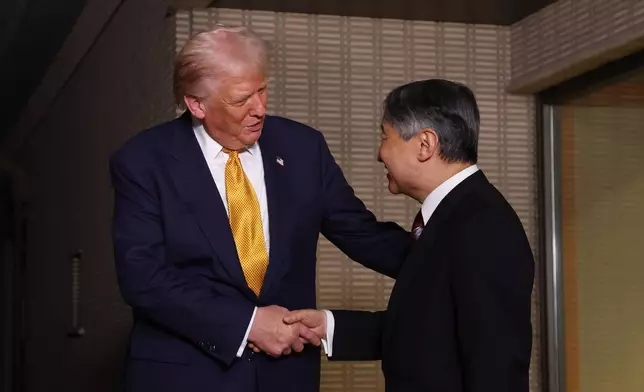
President Donald Trump, left, and Japan's Emperor Naruhito shake hands during their meeting at the Imperial Palace in Tokyo, Oct. 27, 2025. (Issei Kato/Pool Photo via AP)
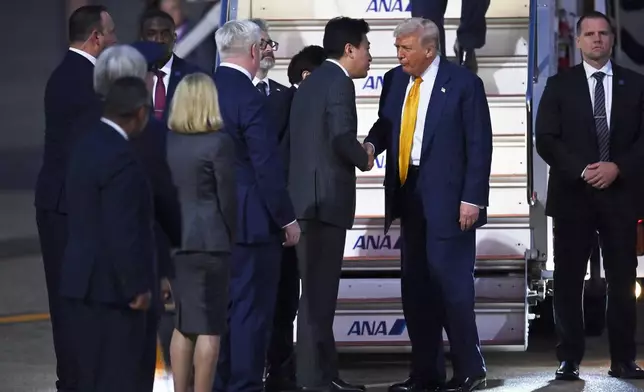
President Donald Trump is welcomed by Japan's newly appointed Chief Cabinet Secretary Minoru Kihara upon arrival at Haneda Tokyo International Airport in Tokyo, Japan, Monday, Oct. 27, 2025, (David Mareuil/Pool Photo via AP)
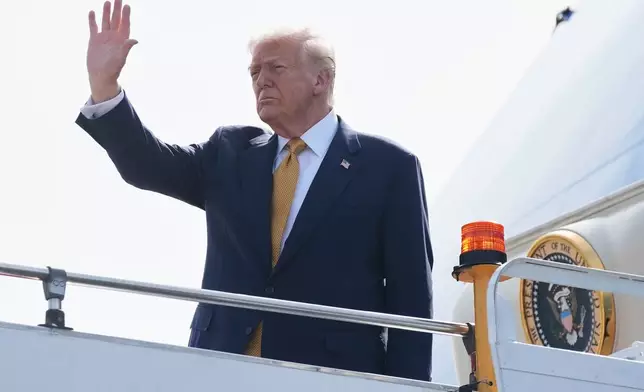
President Donald Trump waves as he boards Air Force One at Kuala Lumpur International Airport in Sepang, Malaysia, as he departs for Japan, Monday, Oct. 27, 2025. (AP Photo/Mark Schiefelbein)
FILE - A Ford F-150 truck is displayed at the Dearborn Truck Plant, April 11, 2024, in Dearborn, Mich. (AP Photo/Carlos Osorio, File)
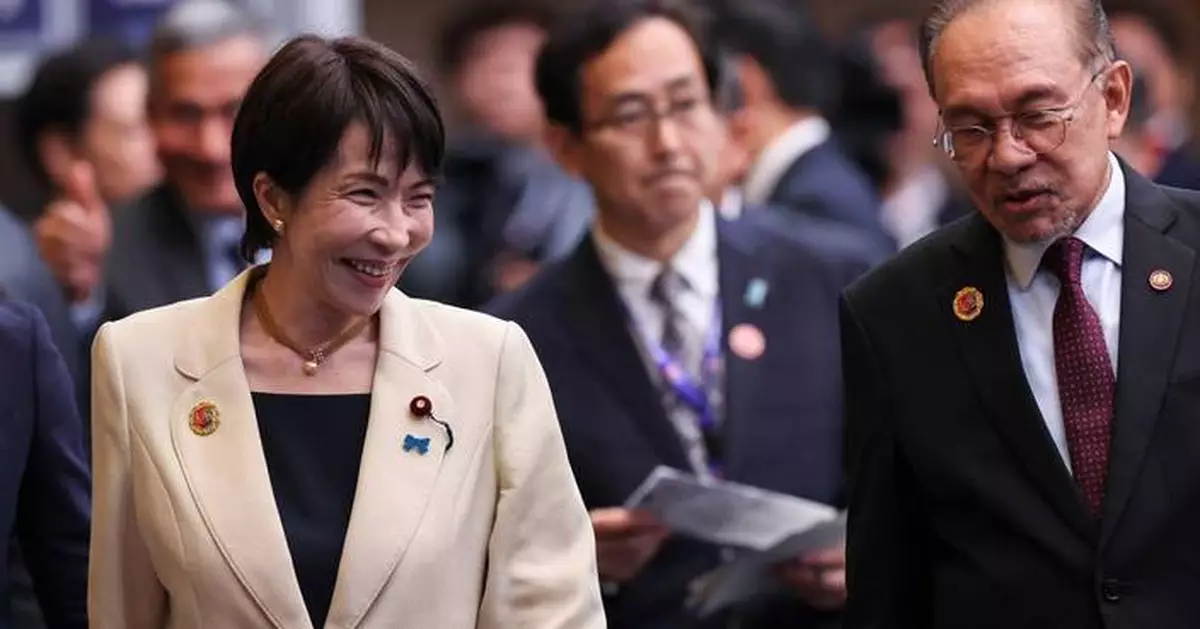
Malaysia's Prime Minister Anwar Ibrahim, right, and Japan's Prime Minister Sanae Takaichi walk during the 28th ASEAN Japan Summit, in Kuala Lumpur, Malaysia, Oct. 26, 2025. (Chalinee Thirasupa/Pool Photo via AP)
It's an early diplomatic test for Takaichi, the first woman to lead Japan. She took office only last week, and has a tenuous coalition backing her.
Trump instantly bought into the idea of Ford trucks as he flew to Asia aboard Air Force One.
“She has good taste,” Trump told reporters. “That’s a hot truck.”
Japanese Emperor Naruhito welcome Trump at the Imperial Palace after the president’s arrival and the two spoke for about 30 minutes. Trump straightened his jacket as he stood next to Naruhito for photos before sat across a round table, with flowers in the middle, for their talks.
“A great man!” he said twice while pointing to the emperor. Trump last saw the emperor in 2019, soon after Naruhito ascended the Chrysanthemum Throne, becoming the first foreign dignitary invited to the palace.
Trump and Takaichi spoke over the phone while the president was mid-flight on Saturday. Takaichi stressed her status as a protege of the late Prime Minister Shinzo Abe, a favorite of Trump's from his first term, and said she praised him for brokering the Gaza ceasefire that led to the return of hostages held by Hamas.
“I thought (Trump) is a very cheerful and fun person,” she said. “He well recognizes me and said he remembers me as a politician whom (former) Prime Minister Abe really cared about,” she said. “And I told the president that I extremely look forward to welcoming him in Tokyo.”
Trump spent Sunday in Malaysia, where he participated in a regional summit, and departed Monday morning for Japan. While on Air Force One on Monday, he said he planned to talk in Tokyo about the “great friendship” between the U.S. and Japan.
Beneath the hospitality is the search for a strategy to navigate the increasingly complex trade relationship that Trump shook up earlier this year with tariffs.
Trump wants allies to buy more American goods and also make financial commitments to build factories and energy infrastructure in the U.S.
The meetings in Japan come before Trump's sit-down with Chinese leader Xi Jinping on Thursday in South Korea.
Both the U.S. and Japan have sought to limit China's manufacturing ambitions, as the emergence of Chinese electric vehicles, artificial intelligence and advanced computer chips could undermine the American and Japanese economies.
“In light of the planned meeting between Trump and Xi Jinping shortly afterward, Trump may also be considering how he might strengthen his hand by demonstrating the robustness of the U.S.-Japan relationship,” said Kristi Govella, Japan chair at the Center for Strategic and International Studies, a Washington think tank.
Japan's previous administration agreed in September to invest $550 billion in the U.S., which led Trump to trim a threatened 25% tariff on Japanese goods to 15%. But Japan wants the investments to favor Japanese vendors and contractors.
Japan’s economy and trade minister, Ryosei Akazawa, has said his ministry is compiling a list of projects in computer chips and energy to try to meet the investment target.
“As far as I know, I’m hearing that there are a number of Japanese companies that are showing interest,” he told reporters Friday, though he did not give further details.
Japanese officials are looking at the possibility of buying more American soybeans, liquefied natural gas and autos. The U.S.-China trade conflict has shut American soybeans out of the Chinese market, leading China to seek more Brazilian supply. China reported no U.S. soybean imports in September, a first since November 2018.
For Trump, the prospect of Ford trucks in the skyscrapered streets of Tokyo would be a win. The administration has long complained that American vehicles were being shut out of a market that is the home of Toyota, Honda, Nissan, Isuzu, Mitsubishi and Subaru. In a September interview on CNBC, Commerce Secretary Howard Lutnick said Japan wouldn’t buy U.S.-branded vehicles because “Chevys” were popular with Japanese gangsters.
Takaichi may arrange for Ford F-150 trucks to be showcased in a place Trump gets to see them, Japan's Nikkei newspaper reported. The government is considering importing the trucks for its transport ministry to use for inspecting roads and infrastructure, though there are concerns that the F-150 could cause congestion on narrow Japanese streets.
“We appreciate President Trump’s advocating for American made products," Ford spokesperson Dave Tovar said. "We would be excited to introduce America’s best-selling truck to work and government customers in Japan."
Japanese media have reported that Toyota Motor Corp. Chairman Akio Toyoda could announce plans to import his company’s American-made cars back to Japan during a dinner with Trump and other business leaders on Wednesday.
The gestures — combined with Takaichi's connection to Abe — should help her deal with Trump, who seems predisposed to like her.
“I think she’s going to be great,” Trump said aboard Air Force One. “She’s a great friend of Mr. Abe, who was a great man."
In 2016, Abe gave Trump a high-end golf club to celebrate his first election, and the leaders bonded over their love of golf. Trump often expresses sadness about Abe's 2022 assassination.
But there are risks for Takaichi in emphasizing her ties to Abe, said Rintaro Nishimura, who specializes in Japan at the advisory firm The Asia Group.
“Because it’s Takaichi’s first diplomatic engagement I think she wants to start with sort of a bang,” Nishimura said. “Succeeding the Abe-line rhetoric is definitely going to be part of this engagement, although some also suggest that leaning too heavily on the Abe line might not exactly be good for her for creating her own kind of portfolio, her status as Japan’s leader.”
Following his meeting with Takaichi on Tuesday, Trump will give a speech aboard the USS George Washington aircraft carrier anchored in Japan, then hold a dinner with business leaders. Trump plans to leave for South Korea on Wednesday.
But aboard Air Force One on Monday, he told reporters that he was also ready to meet with North Korean leader Kim Jong Un, should that be an option.
“If he wants to meet, I’ll be in South Korea,” Trump said.
AP reporter Chris Megerian contributed from Kuala Lumpur, Malaysia.
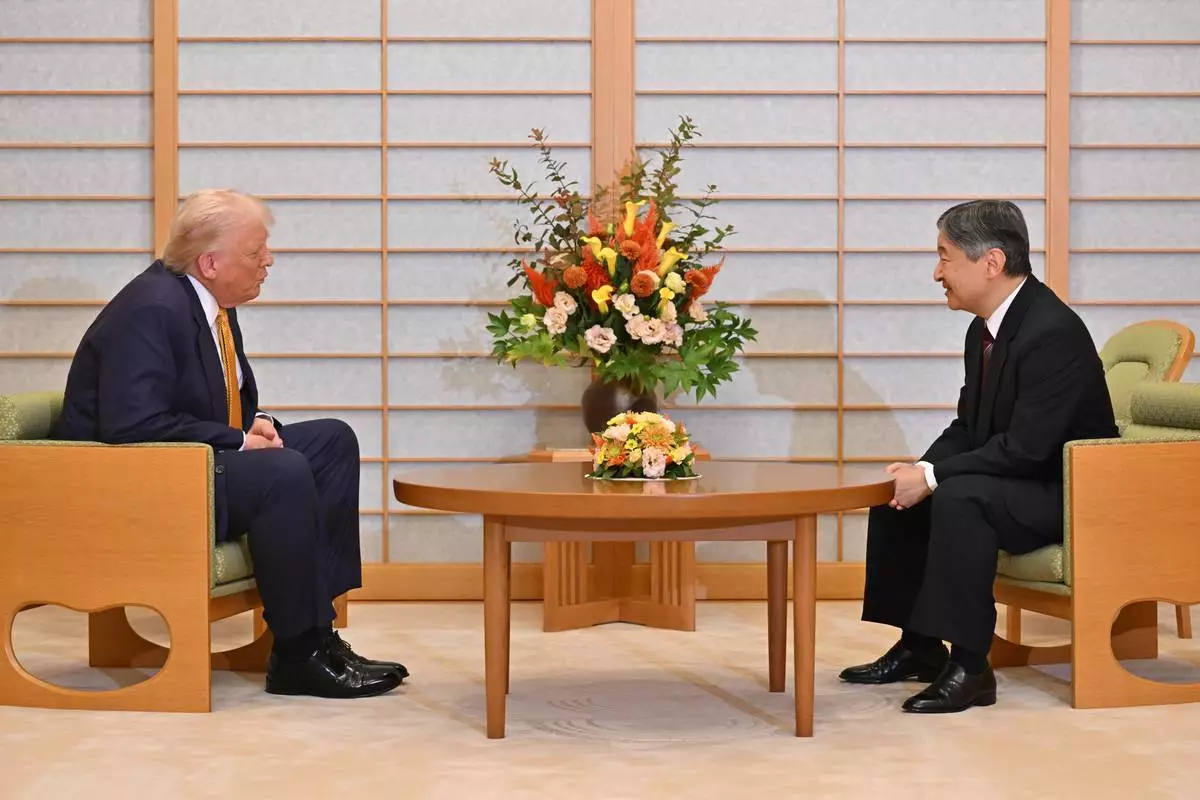
President Donald Trump, left, and Japan's Emperor Naruhito talk during their meeting at the Imperial Palace in Tokyo, Oct. 27, 2025. (Kazuhiro Nogi/Pool Photo via AP)
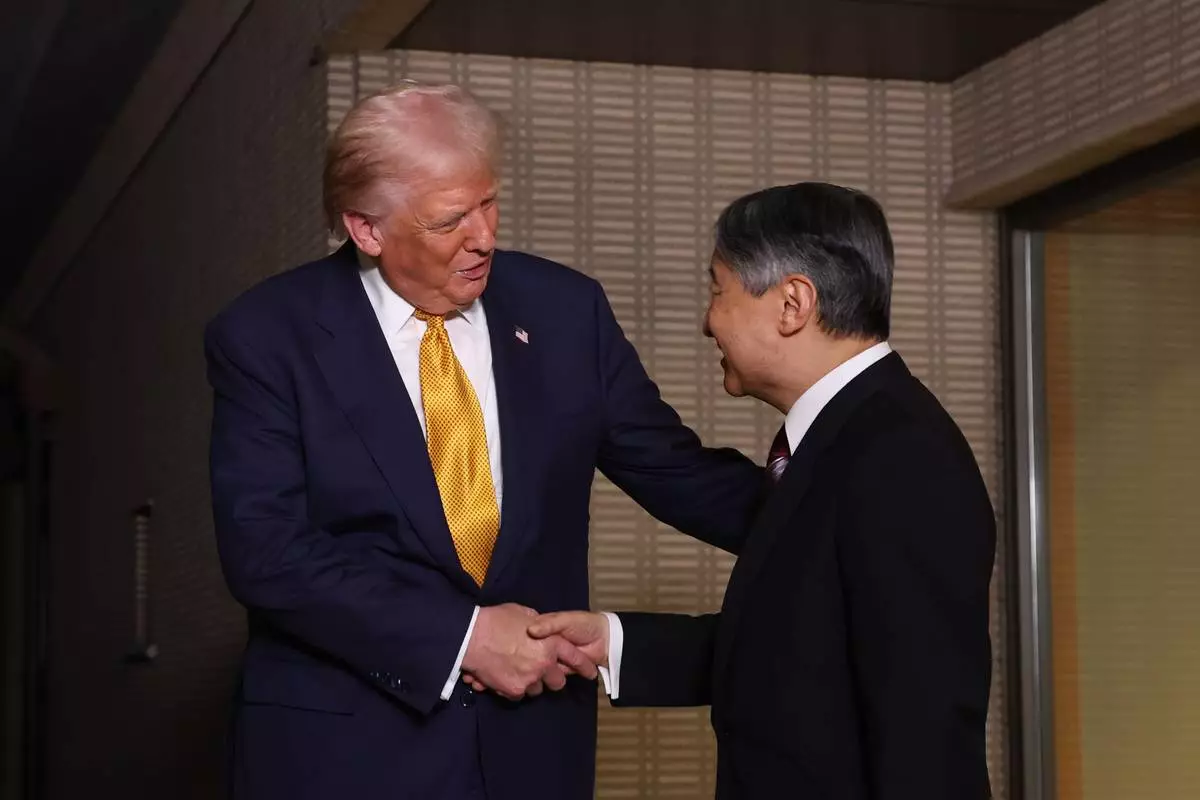
President Donald Trump, left, and Japan's Emperor Naruhito shake hands during their meeting at the Imperial Palace in Tokyo, Oct. 27, 2025. (Issei Kato/Pool Photo via AP)
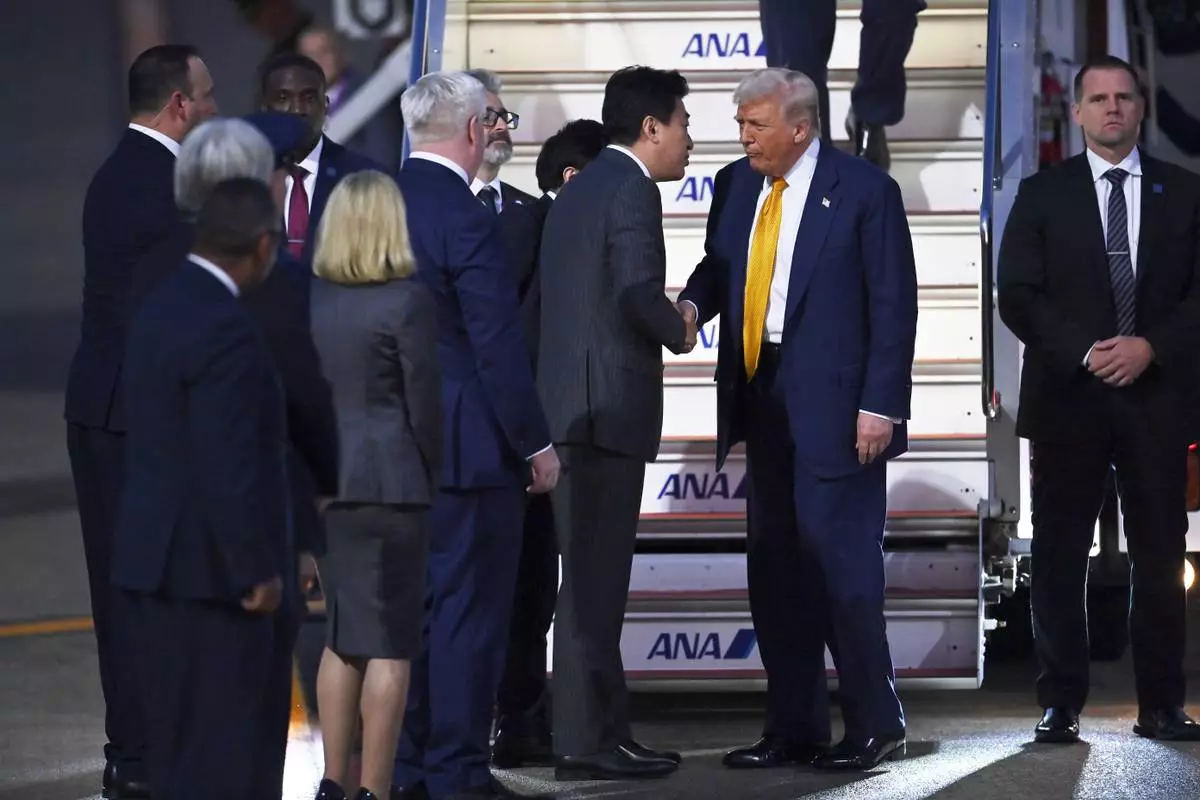
President Donald Trump is welcomed by Japan's newly appointed Chief Cabinet Secretary Minoru Kihara upon arrival at Haneda Tokyo International Airport in Tokyo, Japan, Monday, Oct. 27, 2025, (David Mareuil/Pool Photo via AP)
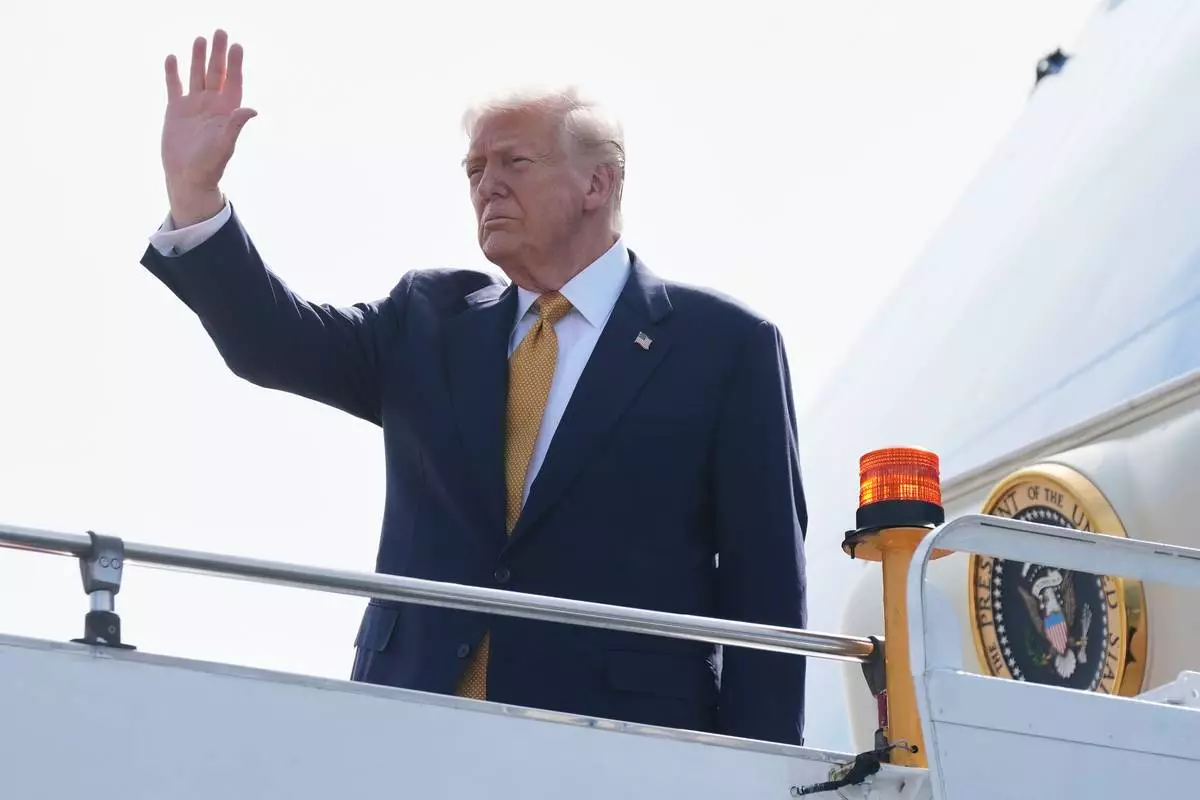
President Donald Trump waves as he boards Air Force One at Kuala Lumpur International Airport in Sepang, Malaysia, as he departs for Japan, Monday, Oct. 27, 2025. (AP Photo/Mark Schiefelbein)
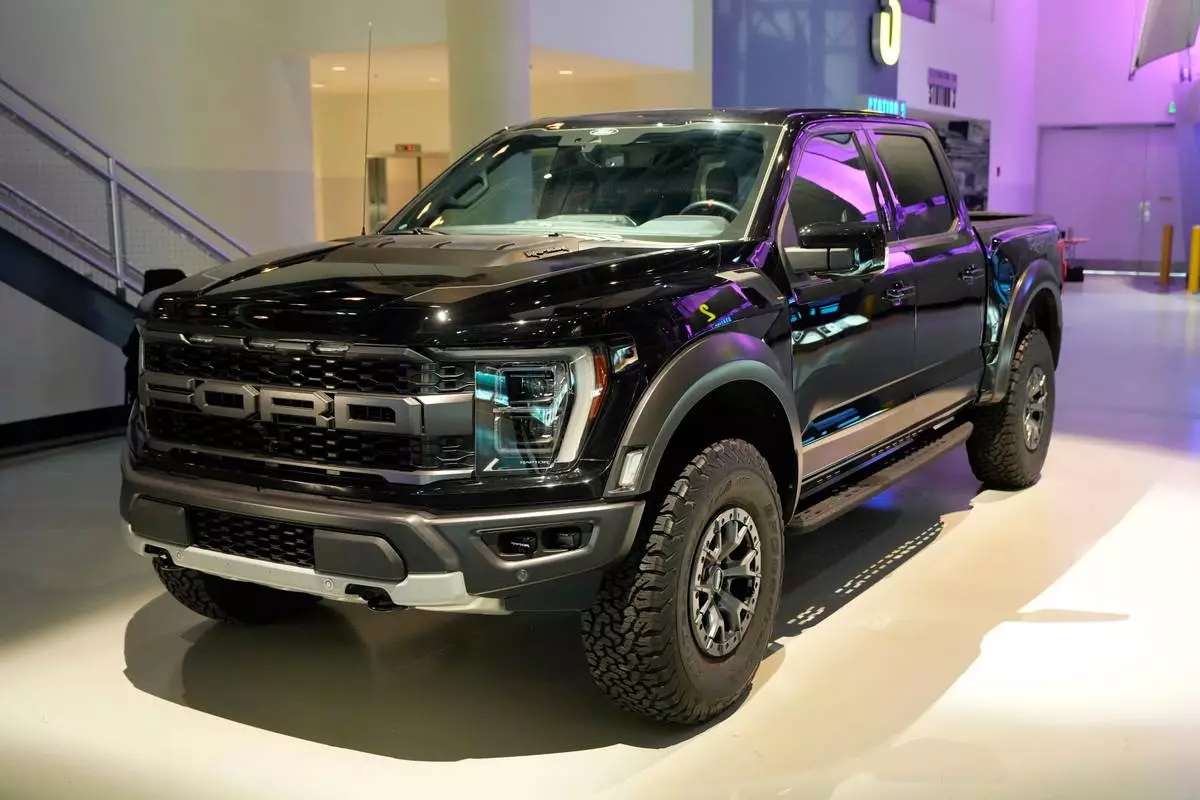
FILE - A Ford F-150 truck is displayed at the Dearborn Truck Plant, April 11, 2024, in Dearborn, Mich. (AP Photo/Carlos Osorio, File)
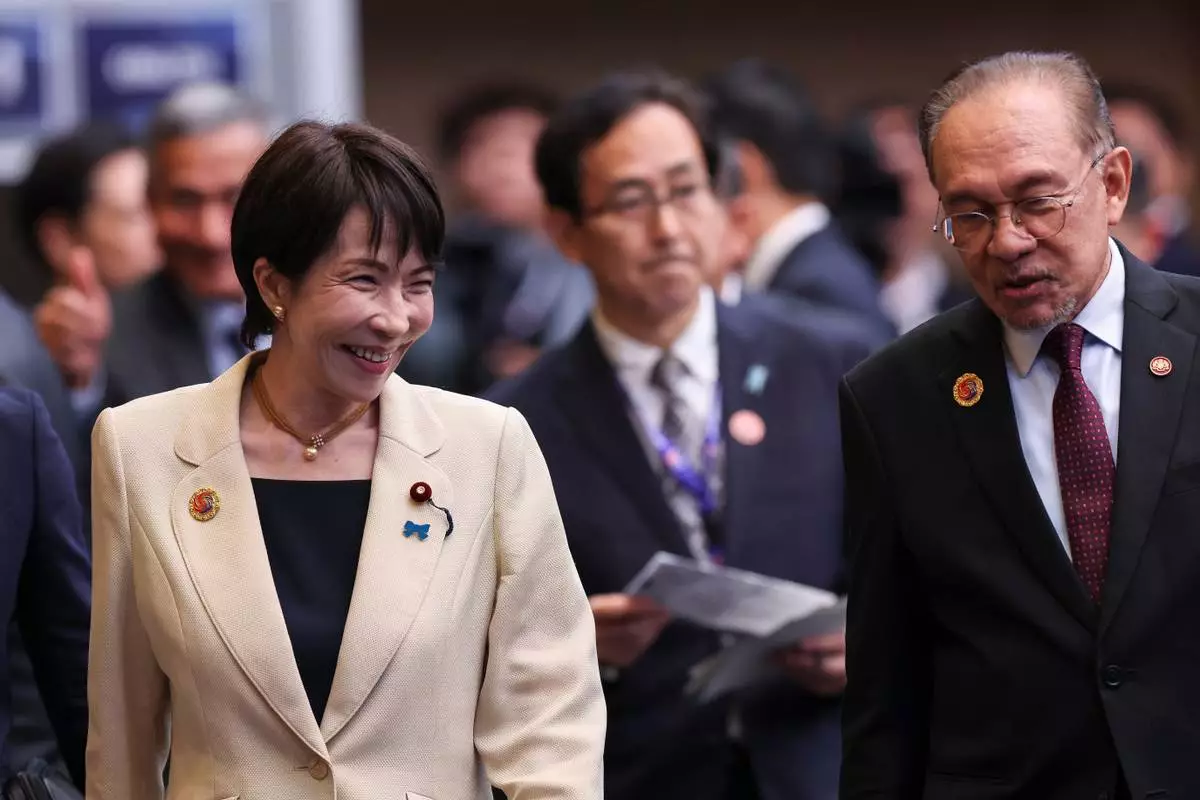
Malaysia's Prime Minister Anwar Ibrahim, right, and Japan's Prime Minister Sanae Takaichi walk during the 28th ASEAN Japan Summit, in Kuala Lumpur, Malaysia, Oct. 26, 2025. (Chalinee Thirasupa/Pool Photo via AP)
MINNEAPOLIS (AP) — A federal officer shot a man in the leg in Minneapolis after being attacked with a shovel and broom handle while trying to make an arrest Wednesday, officials said.
Smoke filled the street near the site of the shooting as federal officers and protesters squared off. A group of officers wearing gas masks and helmets fired tear gas and grenades into a small crowd while protesters threw snowballs and chanted, “Our streets.”
Such scenes have become common on the streets of Minneapolis since an immigration agent fatally shot Renee Good on Jan. 7. Agents have yanked people from cars and homes and been confronted by angry bystanders who bare demanding that officers pack up and leave.
The Department of Homeland Security said in a statement on the social media platform X that federal law enforcement officers stopped a person from Venezuela who was in the U.S. illegally. The person drove away and crashed into a parked car before taking off on foot, DHS said.
After officers reached the person, two other people arrived from a nearby apartment and all three started attacking the officer, according to DHS.
“Fearing for his life and safety as he was being ambushed by three individuals, the officer fired a defensive shot to defend his life,” DHS said.
The two people who came out of the apartment are in custody, it said.
The city of Minneapolis said on X that the man shot was in the hospital with non-life-threatening injuries.
“We understand there is anger,” it said. "We ask the public to remain calm.”
The shooting took place about 4.5 miles (7.2 kilometers) north of where Good was killed.
Earlier Wednesday, a judge gave the Trump administration time to respond to a request to suspend its immigration crackdown in Minnesota, while the Pentagon looked for military lawyers to join what has become a chaotic law enforcement effort in the state.
“What we need most of all right now is a pause. The temperature needs to be lowered," state Assistant Attorney General Brian Carter said during the first hearing in a lawsuit filed by Minnesota and the cities of Minneapolis and St. Paul.
Local leaders say the government is violating free speech and other constitutional rights with the surge of law enforcement. U.S. District Judge Katherine Menendez promised to keep the case “on the front burner” and gave the U.S. Justice Department until Monday to file a response to a request for a restraining order.
The judge said these are "grave and important matters,” and that there are few legal precedents to apply to some of the key points in the case.
Justice Department attorney Andrew Warden suggested the approach set by Menendez was appropriate.
The judge is also handling a separate lawsuit challenging the tactics used by Immigration and Customs Enforcement and other federal officers when they encounter protesters and observers. A decision could be released this week.
During a televised speech Wednesday evening, Gov. Tim Walz described Minnesota as being in chaos, saying what's happening in the state “defies belief.”
“Let’s be very, very clear, this long ago stopped being a matter of immigration enforcement," he said. "Instead, it’s a campaign of organized brutality against the people of Minnesota by our own federal government.”
Walz added that “accountability” will be coming through the courts.
The Department of Homeland Security says it has made more than 2,000 arrests in the state since early December and is vowing to not back down. The Pentagon is preparing to send military lawyers to Minneapolis to assist.
CNN, citing an email circulating in the military, says Defense Secretary Pete Hegseth is asking the branches to identify 40 lawyers known as judge advocate general officers or JAGs, and 25 of them will serve as special assistant U.S. attorneys in Minneapolis.
Pentagon spokesperson Kingsley Wilson appeared to confirm the CNN report by posting it on X with a comment that the military “is proud to support” the Justice Department.
The Pentagon did not immediately respond to emails from The Associated Press seeking more details.
It’s the latest step by the Trump administration to dispatch military and civilian attorneys to areas where federal immigration operations are taking place. The Pentagon last week sent 20 lawyers to Memphis, U.S. Attorney D. Michael Dunavant said.
Mark Nevitt, an associate professor at Emory University School of Law and a former Navy JAG, said there's concern that the assignments are taking lawyers away from the military justice system.
“There are not many JAGs but there are over one million members of the military, and they all need legal support,” he said.
Jonathan Ross, the Immigration and Customs Enforcement officer who killed Good, suffered internal bleeding to his torso during the encounter, a Homeland Security official told The Associated Press.
The official spoke to AP on condition of anonymity in order to discuss Ross’ medical condition. The official did not provide details about the severity of the injuries, and the agency did not respond to questions about the extent of the bleeding, exactly how he suffered the injury, when it was diagnosed or his medical treatment.
There are many causes of internal bleeding, and they vary in severity from bruising to significant blood loss. Video from the scene showed Ross and other officers walking without obvious difficulty after Good was shot and her Honda Pilot crashed into other vehicles.
She was killed after three ICE officers surrounded her SUV on a snowy street a few blocks from her home.
Bystander video shows one officer ordering Good to open the door and grabbing the handle. As the vehicle begins to move forward, Ross, standing in front, raises his weapon and fires at least three shots at close range. He steps back as the SUV advances and turns.
Homeland Security Secretary Kristi Noem has said Ross was struck by the vehicle and that Good was using her SUV as a weapon — a self-defense claim that has been deeply criticized by Minnesota officials.
Chris Madel, an attorney for Ross, declined to comment on any injuries.
Good’s family, meanwhile, has hired a law firm, Romanucci & Blandin, that represented George Floyd’s family in a $27 million settlement with Minneapolis. Floyd, who was Black, died after a white police officer pinned his neck to the ground in the street in May 2020.
The firm said Good was following orders to move her car when she was shot. It said it would conduct its own investigation and publicly share what it learns.
“They do not want her used as a political pawn,” the firm said, referring to Good and her family, “but rather as an agent of peace for all.”
Waving signs reading “Love Melts ICE” and “DE-ICE MN,” hundreds of teenagers left school in St. Paul and marched in freezing temperatures to the state Capitol for a protest and rally.
The University of Minnesota, meanwhile, informed its 50,000-plus students that there could be online options for some classes when the new term starts next week. President Rebecca Cunningham noted that “violence and protests have come to our doorstep.” The campus sits next to the main Somali neighborhood in Minneapolis.
Associated Press reporters Julie Watson in San Diego, California; Rebecca Santana in Washington, D.C.; Ed White in Detroit; Giovanna Dell’Orto in Minneapolis; Graham Lee Brewer in Oklahoma City, Oklahoma; and Hallie Golden in Seattle contributed.
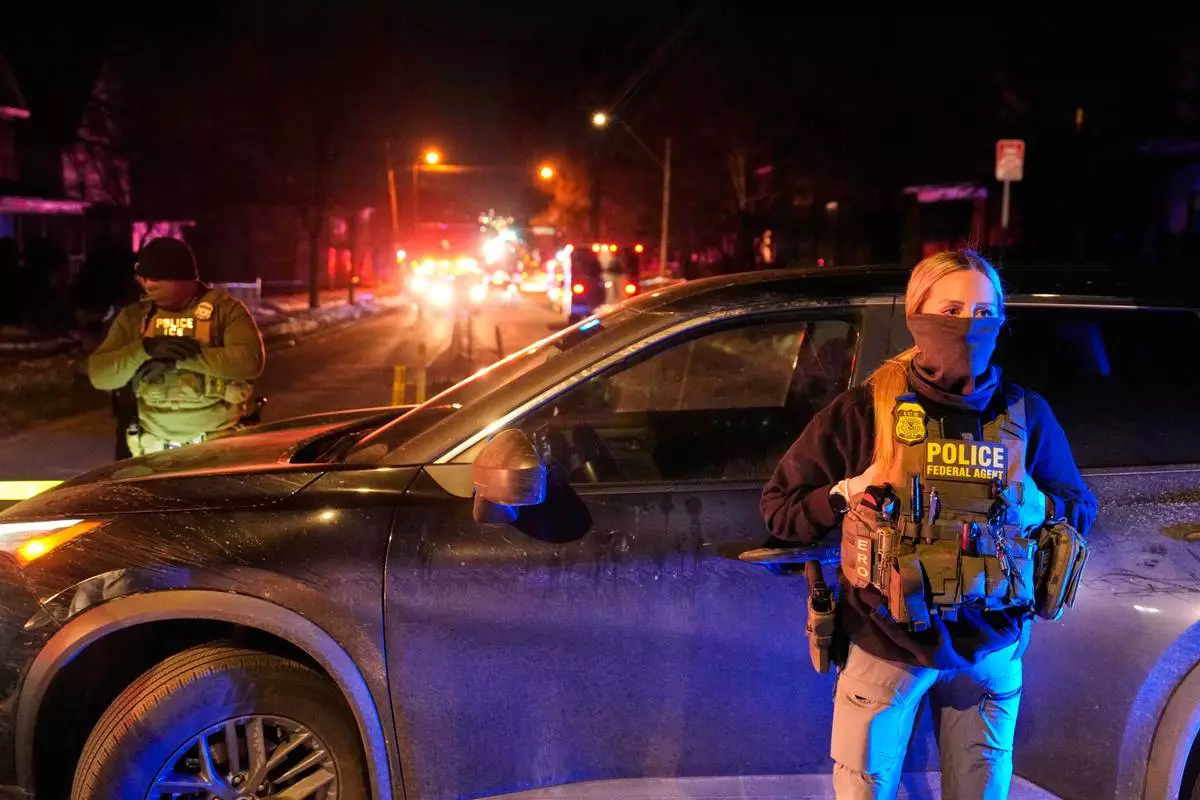
Federal immigration officers at the scene of a reported shooting Wednesday, Jan. 14, 2026, in Minneapolis. (AP Photo/John Locher)
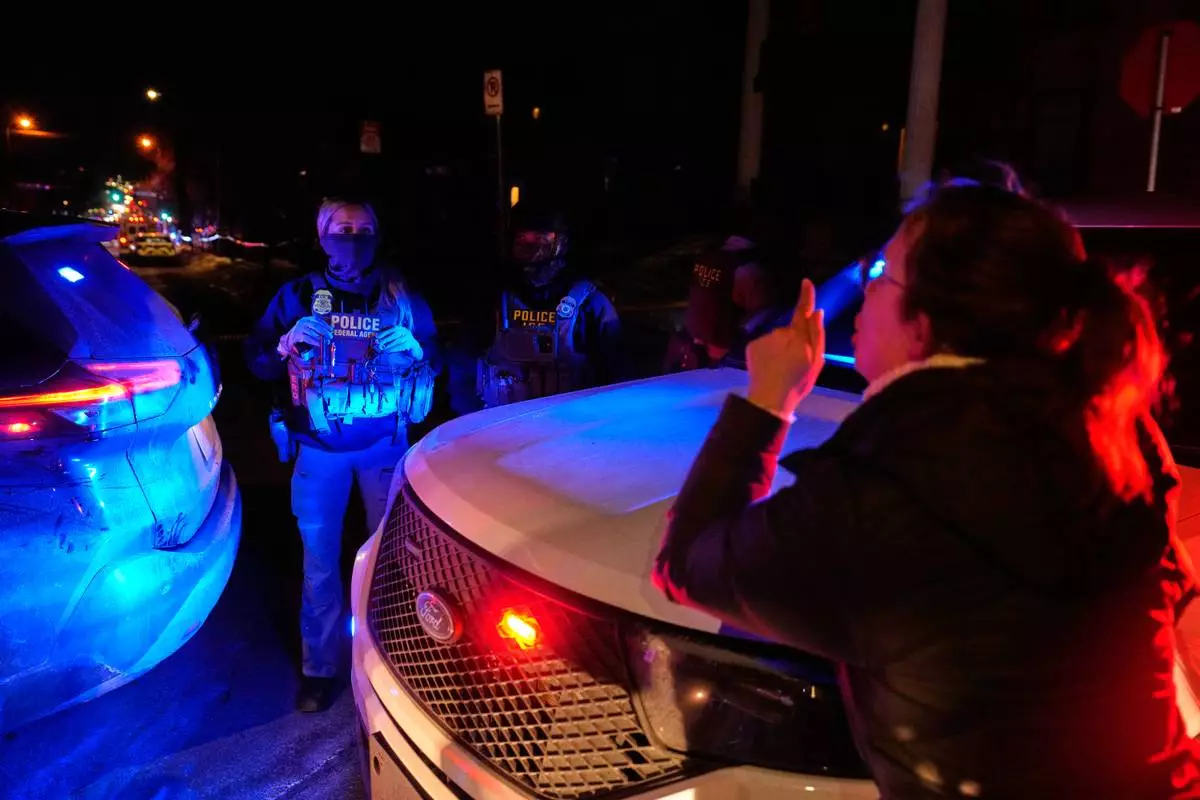
A woman confronts a federal immigration officer at the scene of a reported shooting Wednesday, Jan. 14, 2026, in Minneapolis. (AP Photo/John Locher)
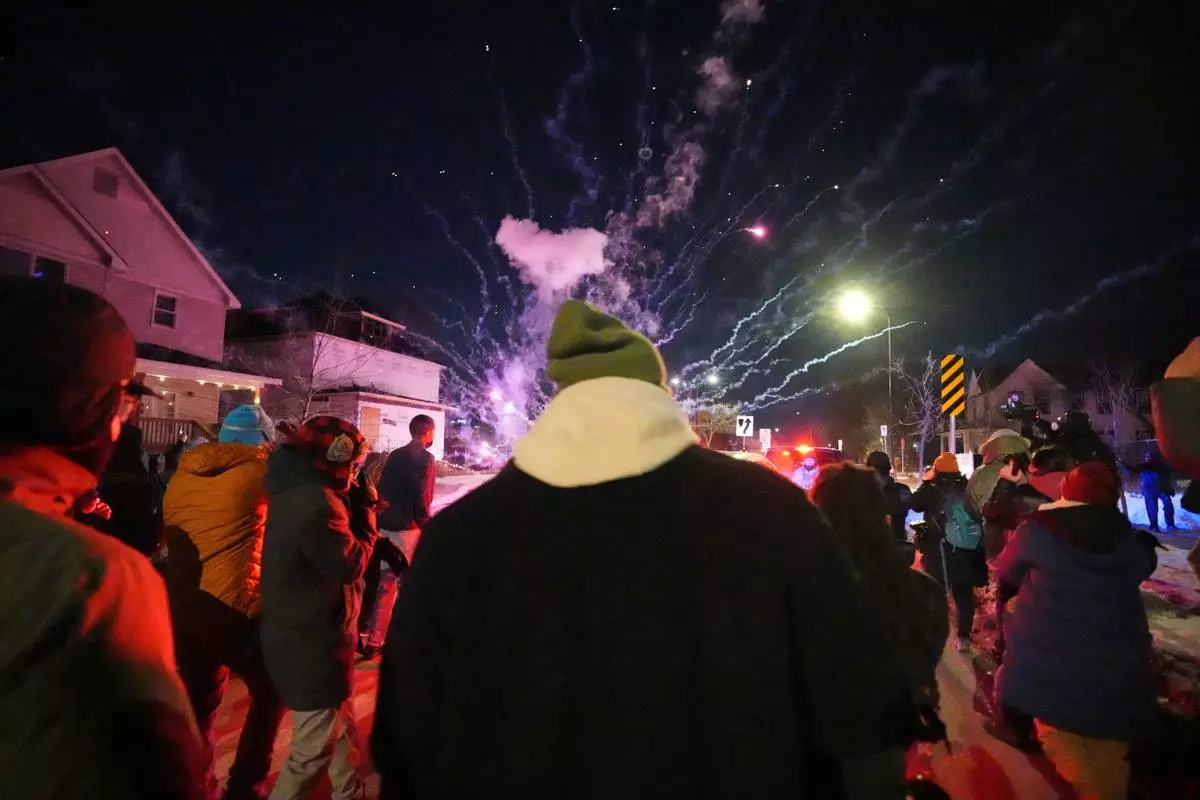
People react after a firework was set off near the scene of a reported shooting Wednesday, Jan. 14, 2026, in Minneapolis. (AP Photo/Abbie Parr)
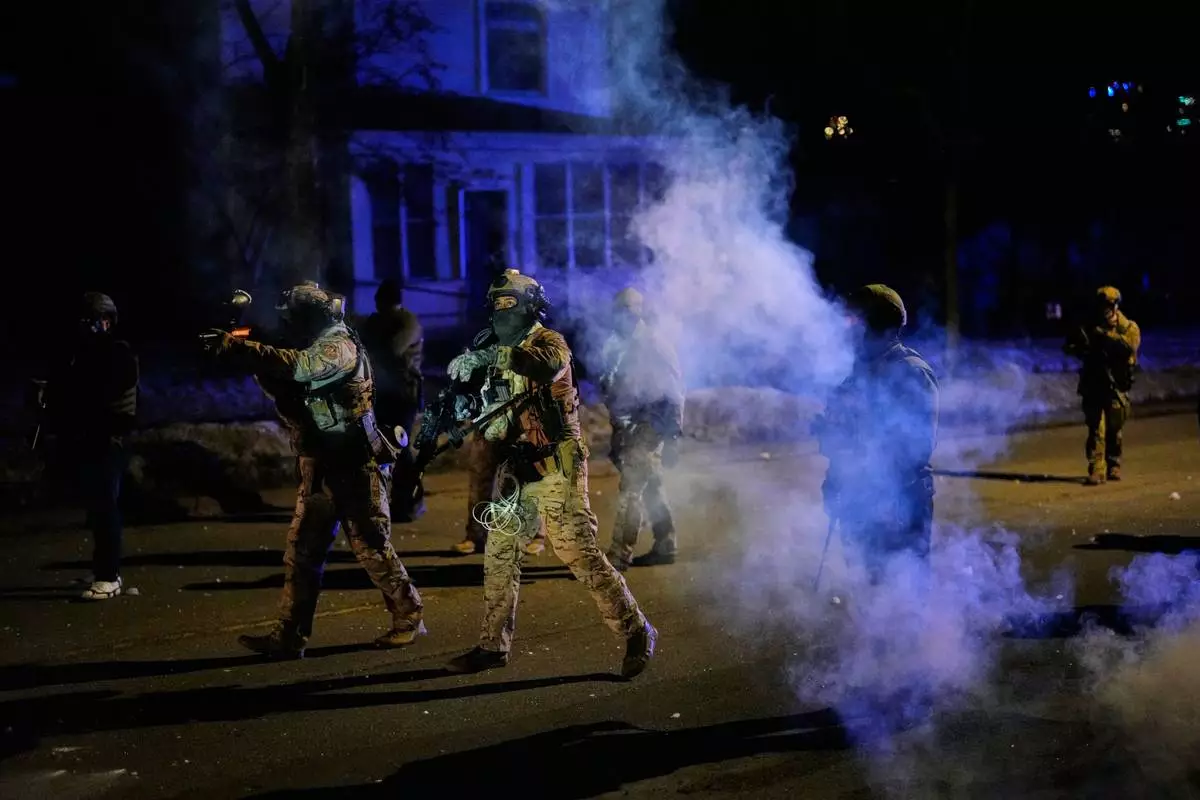
Federal immigration officers shoot pepper balls as tear gas is deployed at the scene of a reported shooting Wednesday, Jan. 14, 2026, in Minneapolis. (AP Photo/John Locher)
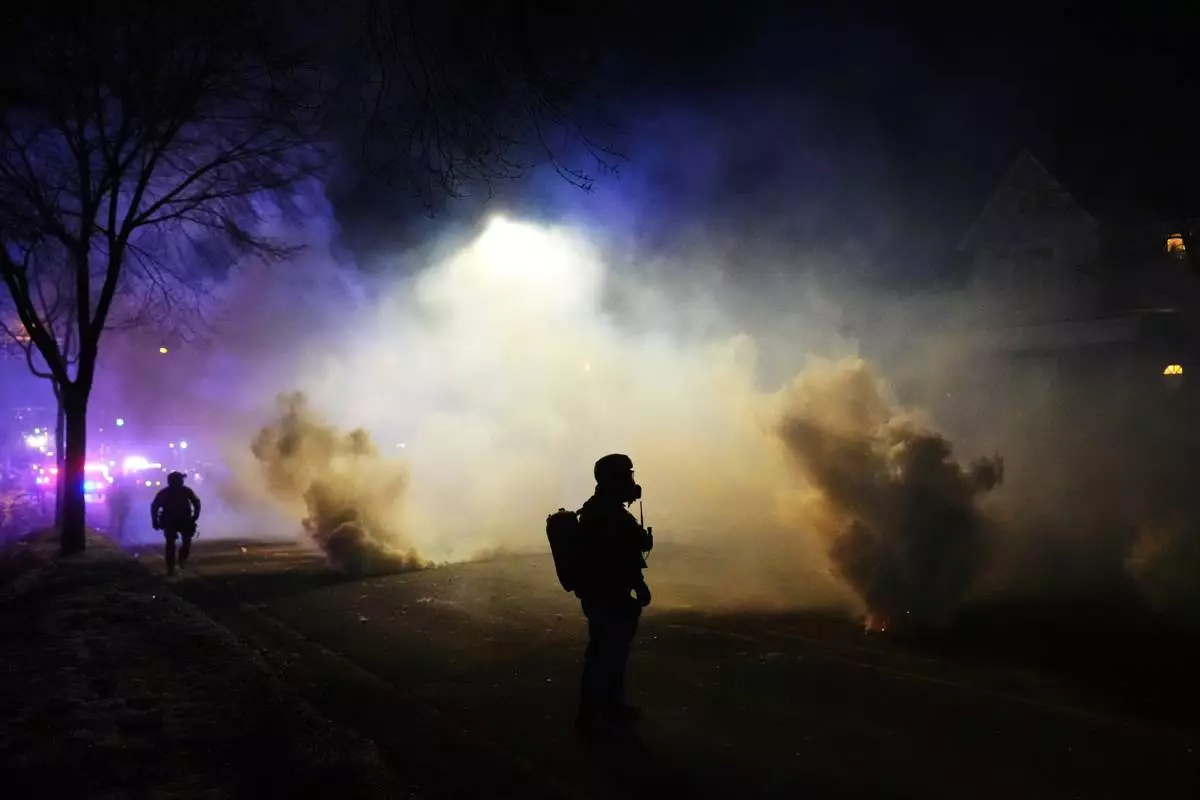
Law enforcement officers stand amid tear gas at the scene of a reported shooting Wednesday, Jan. 14, 2026, in Minneapolis. (AP Photo/Adam Gray)
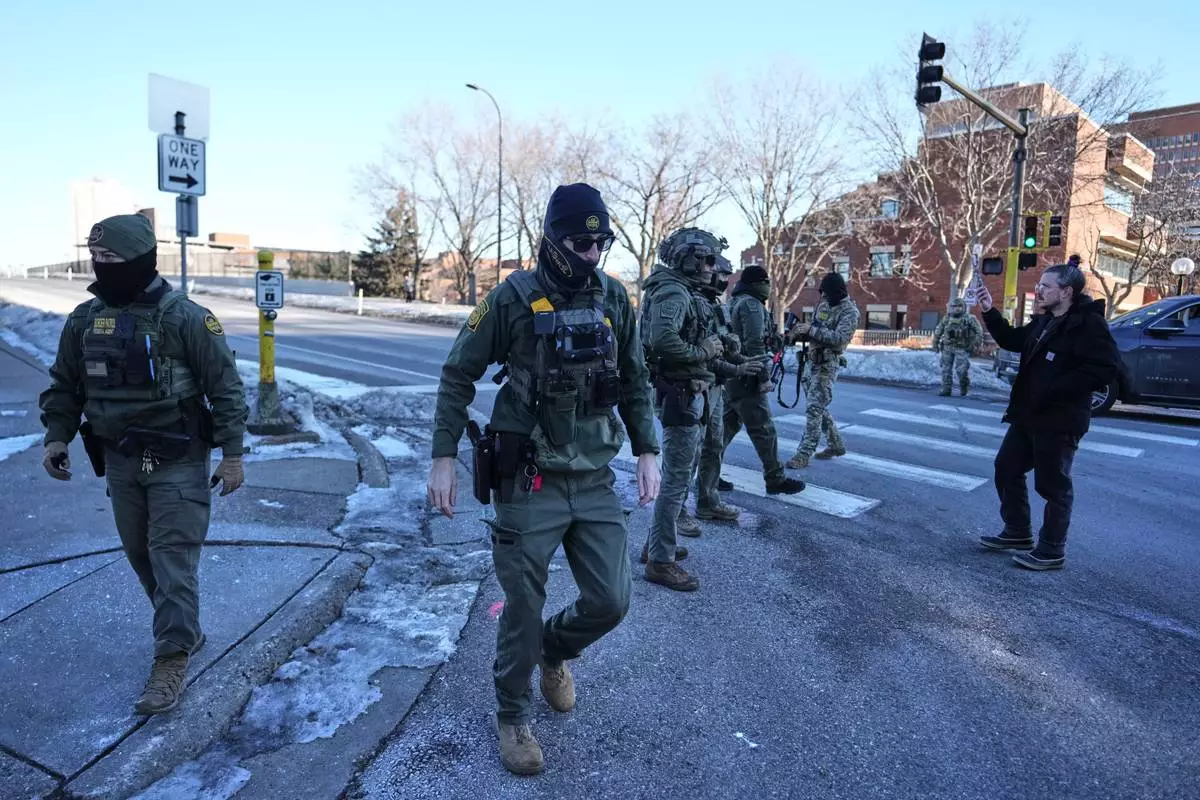
Federal immigration officers are seen Wednesday, Jan. 14, 2026, in Minneapolis. (AP Photo/Abbie Parr)
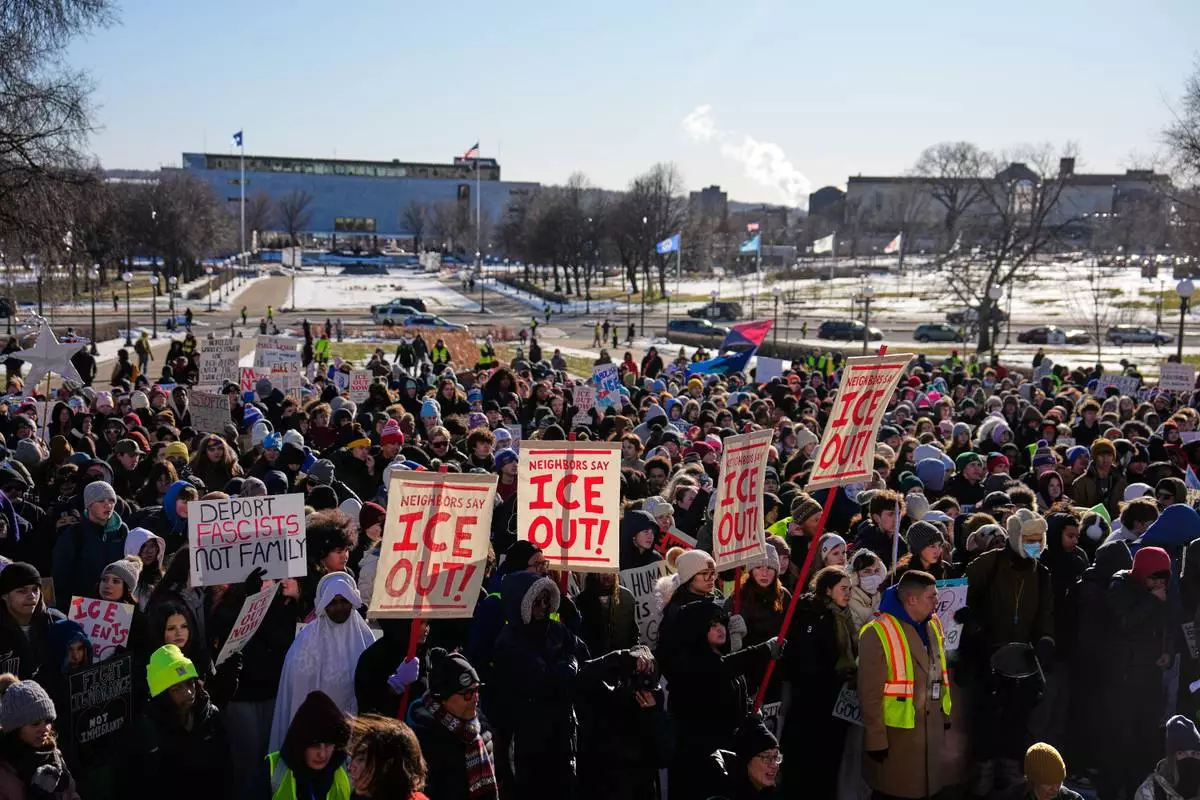
Hundreds of protesters gather in front of the Minnesota State Capitol in response to the death of Renee Good, who was fatally shot by an ICE officer last week, Wednesday, Jan. 14, 2026, in St. Paul, Minn. (AP Photo/John Locher)
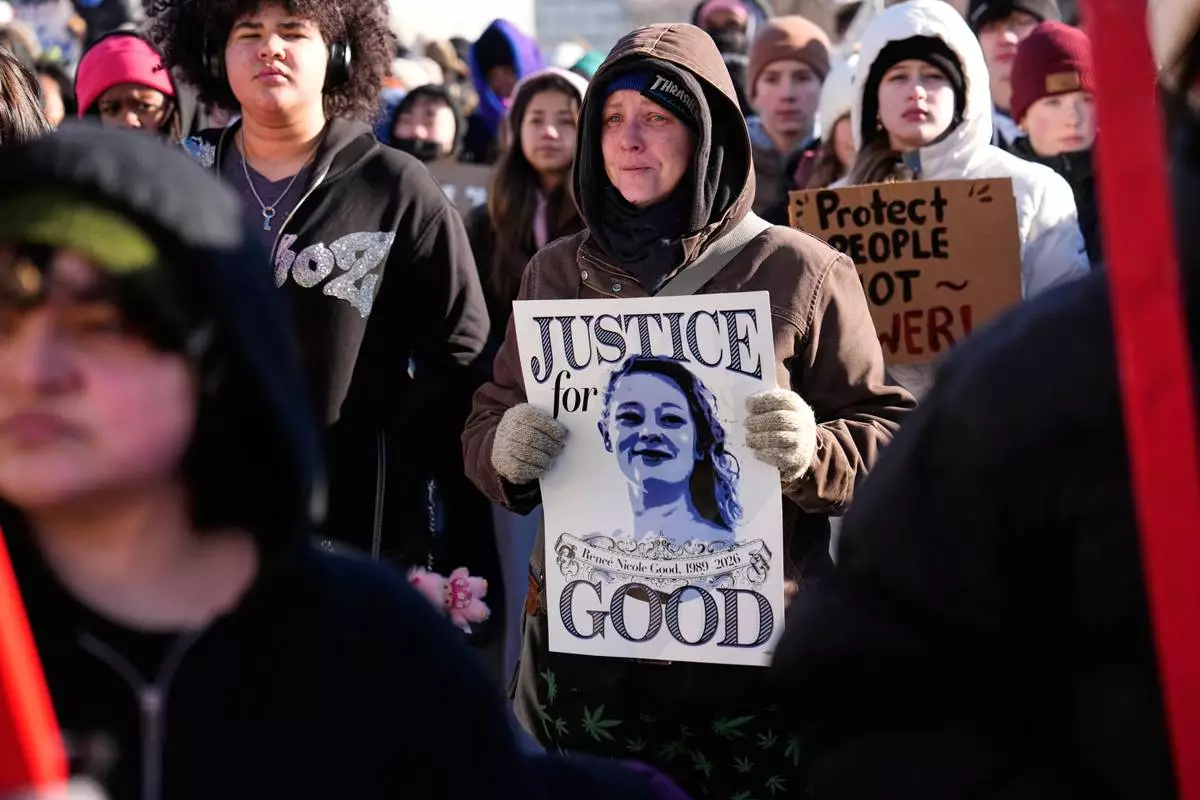
Protesters gather in front of the Minnesota State Capitol in response to the death of Renee Good, who was fatally shot by an ICE officer last week, Wednesday, Jan. 14, 2026, in St. Paul, Minn. (AP Photo/John Locher)
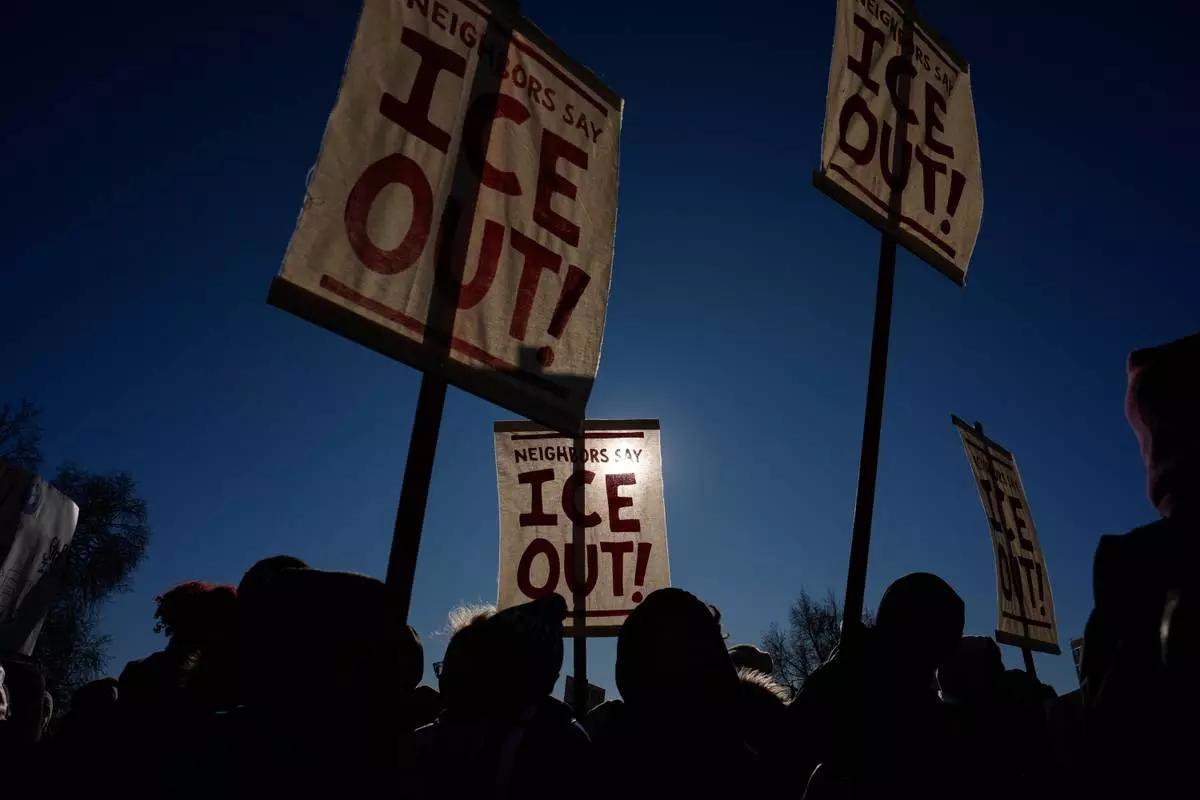
Protesters gather in front of the Minnesota State Capitol in response to the death of Renee Good, who was fatally shot by an ICE officer last week, Wednesday, Jan. 14, 2026, in St. Paul, Minn. (AP Photo/John Locher)
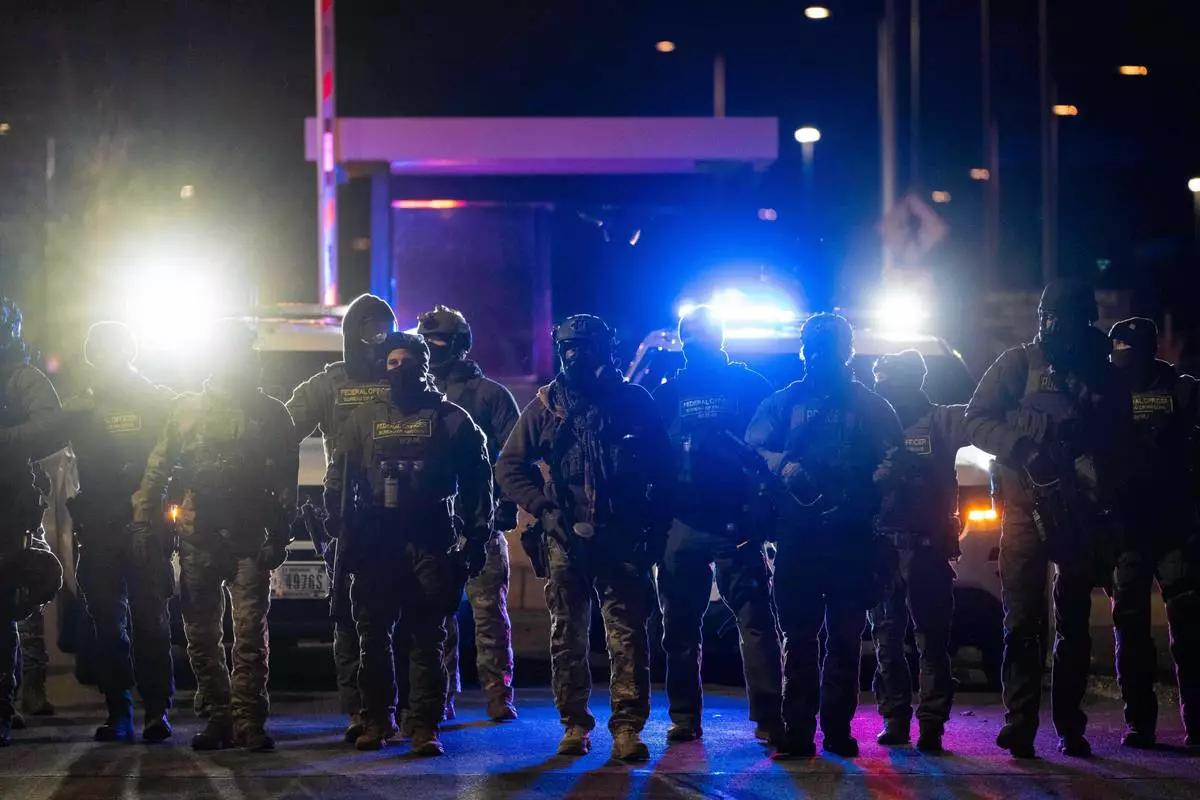
Federal officers stand guard after detaining people outside of Bishop Henry Whipple Federal Building, Tuesday, Jan. 13, 2026, in Minneapolis. (AP Photo/Adam Gray)
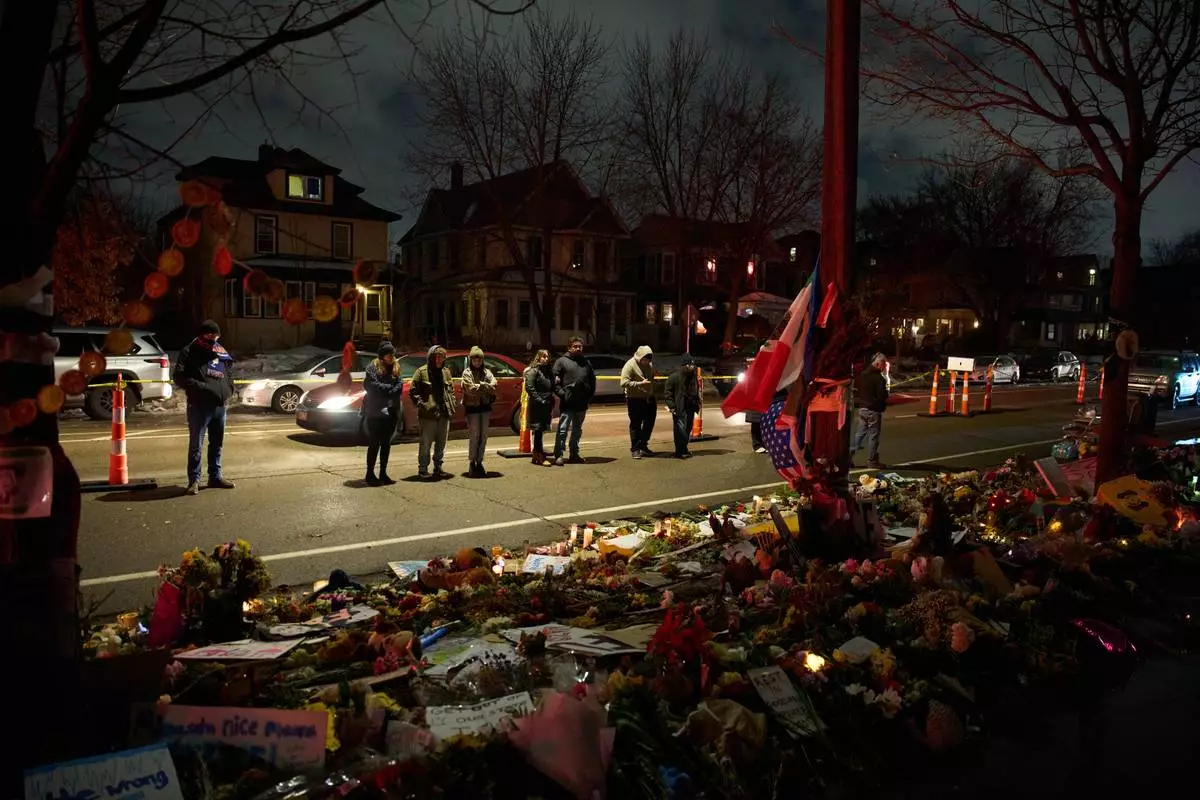
People visits a makeshift memorial for Renee Good, who was fatally shot by an ICE officer last week, Tuesday, Jan. 13, 2026, in Minneapolis. (AP Photo/John Locher)
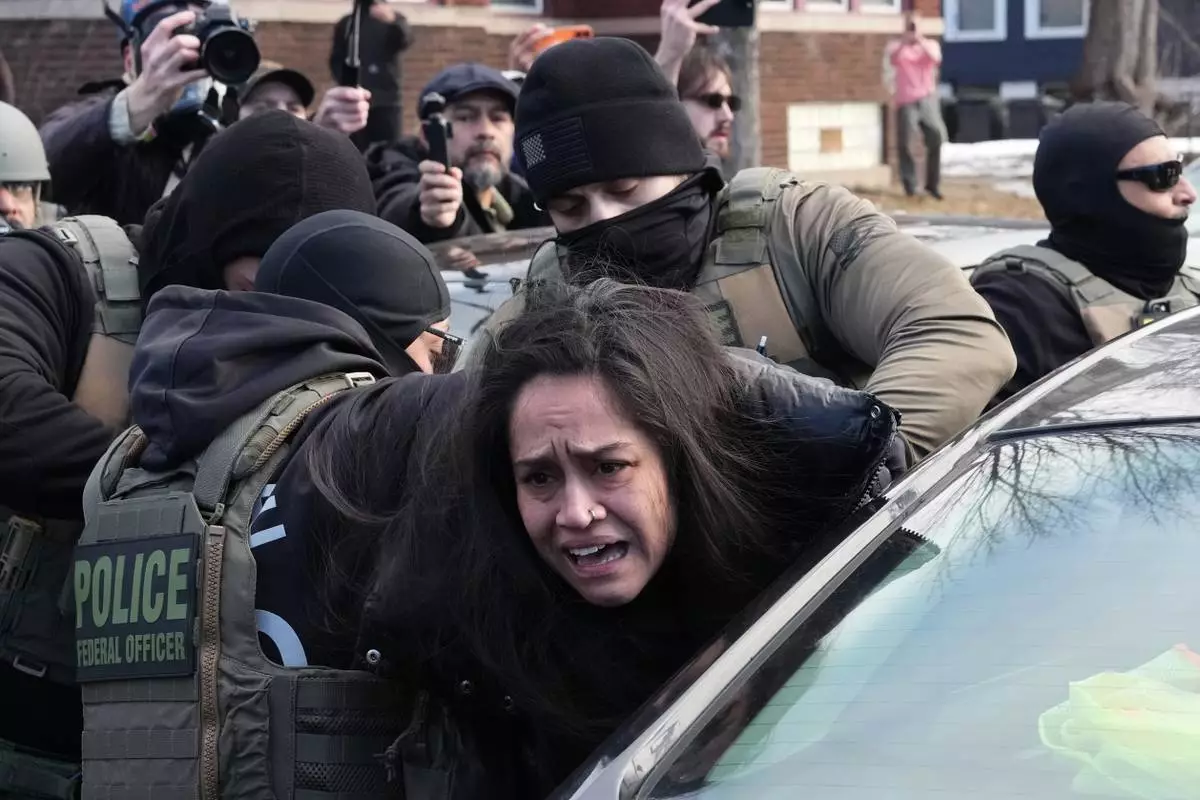
A person is detained by federal agents near the scene where Renee Good was fatally shot by an ICE officer last week, Tuesday, Jan. 13, 2026, in Minneapolis. (AP Photo/Adam Gray)