Skip to Content Facebook Feature Image

Analysis: Scale of protests and violence in Iran echoes chaos around its 1979 Islamic Revolution

News

Analysis: Scale of protests and violence in Iran echoes chaos around its 1979 Islamic Revolution
News

News

Analysis: Scale of protests and violence in Iran echoes chaos around its 1979 Islamic Revolution

2026-01-15 11:55 Last Updated At:17:16

DUBAI, United Arab Emirates (AP) — In a matter of days, nationwide protests challenging Iran's theocracy exploded into a crackdown and bloodshed that blew past reported casualty figures of decades of past demonstrations in the country.

This new level of mayhem summons the chaotic days surrounding the birth of the Islamic Republic in 1979. That poses perhaps the greatest risk to Iran's theocracy in the time since that revolution: It now faces a populace increasingly willing to defy a government long willing to use violence to suppress dissent.

In the run-up to revolution in 1978, Iran witnessed running street battles between forces loyal to the U.S.-backed Shah Mohammad Reza Pahlavi and demonstrators. Also part of that movement: attacks that targeted cinemas, nightclubs, U.S. interests, Iranian officials and minorities. Each fresh mourning for slain protesters expanded into a cycle of demonstrations. That ultimately ballooned to millions on the streets and pushed the monarch, fatally ill with cancer, to flee.

Ayatollah Ruhollah Khomeini, in exile in France, returned to Iran and soon seized all levers of power under his vision of “Velayat-e Faqih,” or the “Guardianship of the Jurist.” Many fully didn't grasp what would come next.

The execution of thousands of former government and military officials, writers, activists and others followed. So did a bloody eight-year war launched by Iraq. The imposition of the mandatory hijab, or headscarf, for women took effect. Soon came decades of tension with the United States — particularly after the 1979 seizure of the U.S. Embassy in Tehran and the 444-day hostage crisis that helped impact the outcome of an American presidential election.

Iran's theocracy remembers those chaotic days after the revolution. And it's well aware of their potency today.

In recent days, state television has aired archival footage of the early 1980s unrest. That was when fighters allied to militants called the Mujahedeen-e-Khalq, or MEK, broke with Khomeini and were blamed for a series of major bombings and killings.

Authorities also have recycled another phrase from the era when talking about those detained after the current protests, which began Dec. 28. Iran's attorney general and others call those being held “mohareb" — “enemies of God.”

That charge carries the death penalty. It had been used along with others to carry out mass executions in 1988 that reportedly killed at least 5,000 people. Pro-government demonstrators have shouted: “Marg bar monafegh!” or “Death to the Hypocrites!” That's another phrase from the 1980s long applied to the MEK.

These references to the past signal something noteworthy: the concern Iran's government has for what's happening — and its efforts to try to change its description of the protests, which began with traders angry over the rial falling to 1.4 million to $1. By comparison, the rial traded around 70 to $1 when the 1979 revolution took place.

Initially, Iran's reformist president, Masoud Pezeshkian, seemed willing to negotiate with demonstrators. The government drastically changed a subsidized currency exchange system that had been plagued by allegations of corruption. And it offered the heads of households the equivalent of $7 a month to cover skyrocketing food prices.

But as soon as mass demonstrations swelled last week, Iran's theocracy reverted to a familiar playbook. It cut off access to the internet. It severed telephone lines abroad. Security forces engaged in what appears to be a bloody crackdown using live fire and other weapons to suppress the demonstrations, based on online videos and testimonies collected by activists.

It remains unclear why exactly the bloodshed this time was so much greater than previous rounds of unrest, such as the 2022 Mahsa Amini demonstrations or the 2009 “Green Movement” protests.

The Associated Press' ability to independently assess the scope of the demonstrations and the violence that followed has been limited along with much of the rest of the world's by Iran's longtime restrictions on journalists and government communication blockages.

But one factor may be that the protests touched on economic issues, something that cuts across the political, ethnic and religious divisions among Iran's 85 million people. Hard-liners may still be angry over the 12-day war, in which nuclear sites, missile arsenals and top military officials were targeted.

Another possible reason: the size and scope of the protests themselves — particularly given that fact that authorities repeatedly warned the gatherings were illegal and signaled willingness to use force.

Before the shah fell, for example, millions of protesters made it to the streets across the country during the holy Shiite mourning commemoration of Ashoura in December 1978. The monarch didn't restrict the processions, which included demonstrators screaming: “Death to the shah!” That day ended without security forces shooting into the marches. The shah returned tanks and troops to the streets afterward, but it shook his resolve.

This time around, Iran's government hasn't acknowledged the size of the demonstrations. But it did organize its own pro-government rally Monday that brought tens of thousands into the street.

The theocracy also increased rhetoric against anti-government protesters, calling them “terrorists” and alleging Israel and the United States organized them, without offering evidence. The shah also famously accused “Islamic Marxists," Communists and others for his woes — once going as far as saying: "If you lift up Khomeini’s beard, you will find 'Made in England' written under his chin.”

There are, of course, noteworthy differences between then and now. At the White House, U.S. President Donald Trump has signaled willingness to potentially use force to intervene. Western nations have condemned Iran, which remains choked by sanctions over its nuclear program and other issues.

But if the years around 1979 offer a cue for January's demonstrations, they portend more troubles ahead for Iran — even if its theocracy believes it has put down the demonstrations successfully before they reach a point of no return.

EDITOR’S NOTE — Jon Gambrell, news director for the Gulf and Iran for The Associated Press, has reported from each of the Gulf Cooperation Council countries, Iran and other locations across the Mideast and the wider world since joining AP in 2006.

People hold posters of the Iranian Supreme Leader Ayatollah Ali Khamenei during a funeral ceremony for a group of security forces, who were killed during anti-government protests, in Tehran, Iran, Wednesday, Jan. 14, 2026. (AP Photo/Vahid Salemi)
People hold posters of the Iranian Supreme Leader Ayatollah Ali Khamenei during a funeral ceremony for a group of security forces, who were killed during anti-government protests, in Tehran, Iran, Wednesday, Jan. 14, 2026. (AP Photo/Vahid Salemi)

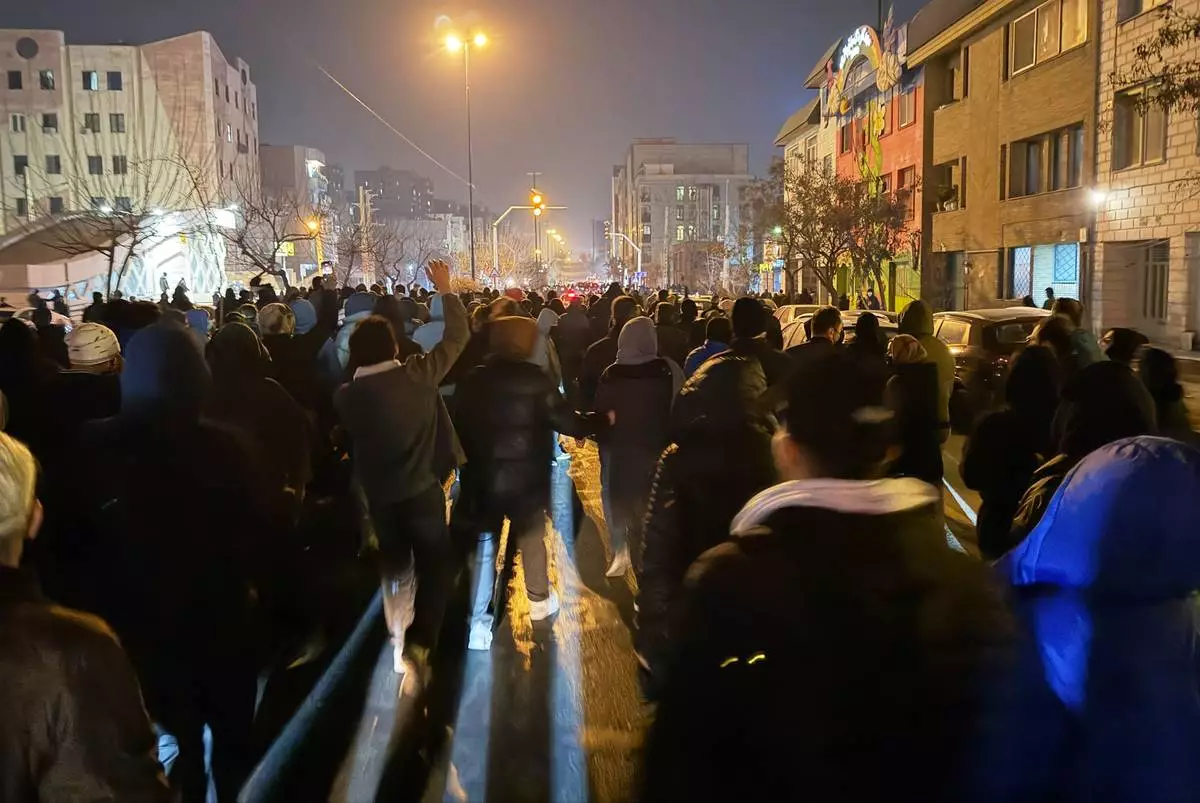
In this photo obtained by The Associated Press, Iranians attend an anti-government protest in Tehran, Iran, Thursday, Jan. 8, 2026. (UGC via AP)
In this photo obtained by The Associated Press, Iranians attend an anti-government protest in Tehran, Iran, Thursday, Jan. 8, 2026. (UGC via AP)

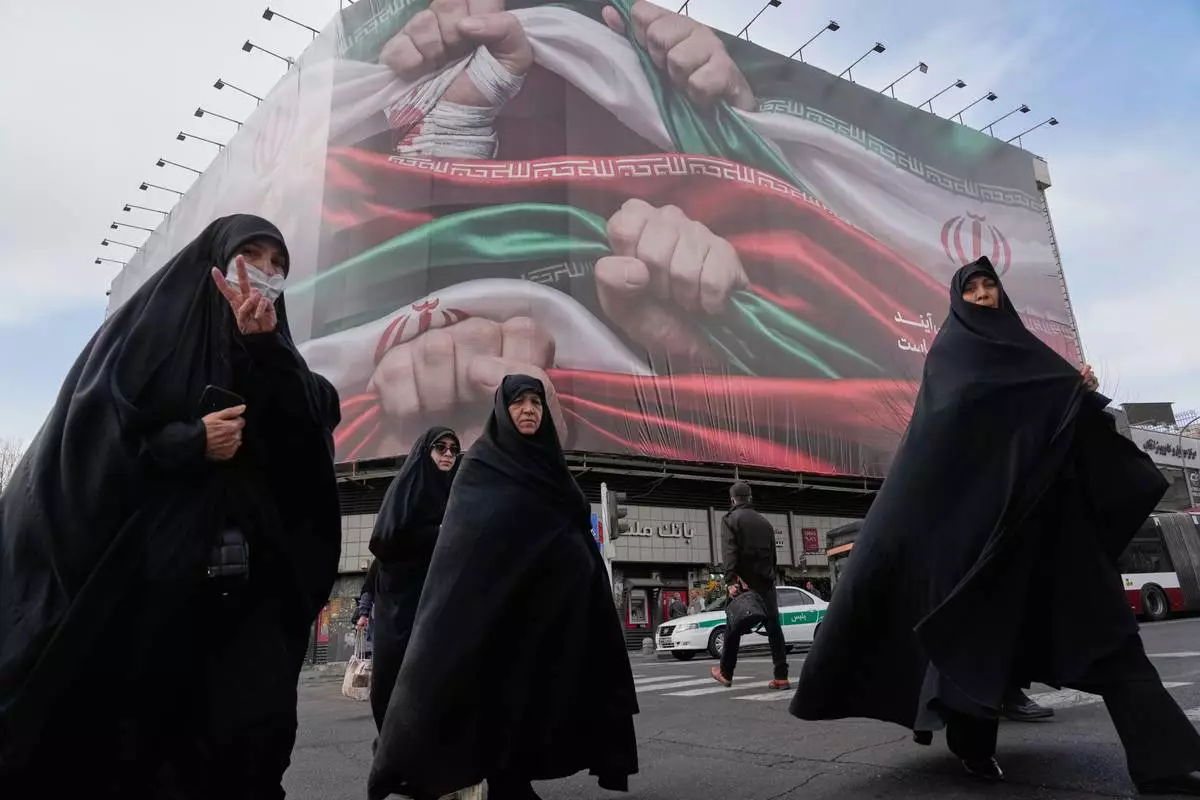
Women cross a street under a huge banner showing hands firmly holding Iranian flags as a sign of patriotism, as one of them flashes the victory sign, in Tehran, Iran, Wednesday, Jan. 14, 2026. (AP Photo/Vahid Salemi)
Women cross a street under a huge banner showing hands firmly holding Iranian flags as a sign of patriotism, as one of them flashes the victory sign, in Tehran, Iran, Wednesday, Jan. 14, 2026. (AP Photo/Vahid Salemi)
MIAMI GARDENS, Fla. (AP) — Cape Verde's magical start to its first World Cup isn't over. It might just be getting started.

The tiny island nation that stunned tournament favorite Spain last week did it again against Uruguay — a two-time World Cup champion — on Sunday, coming from behind for a 2-2 draw.

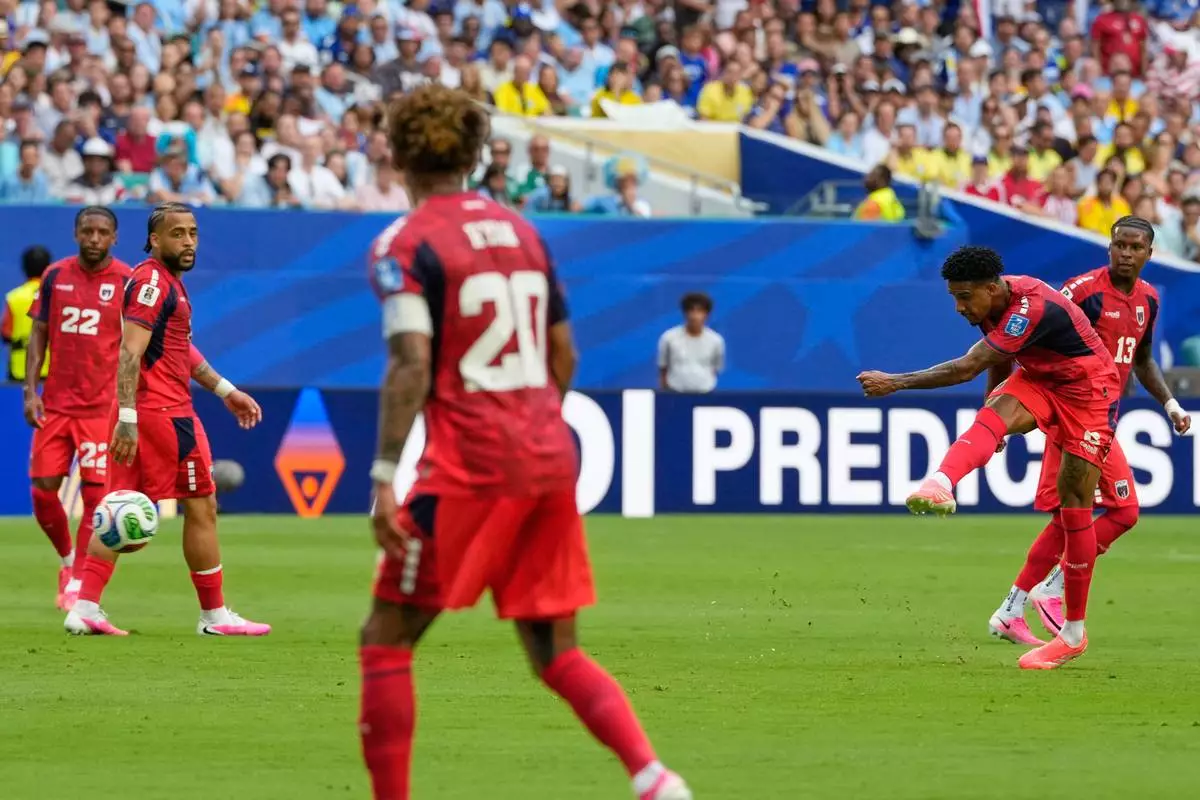
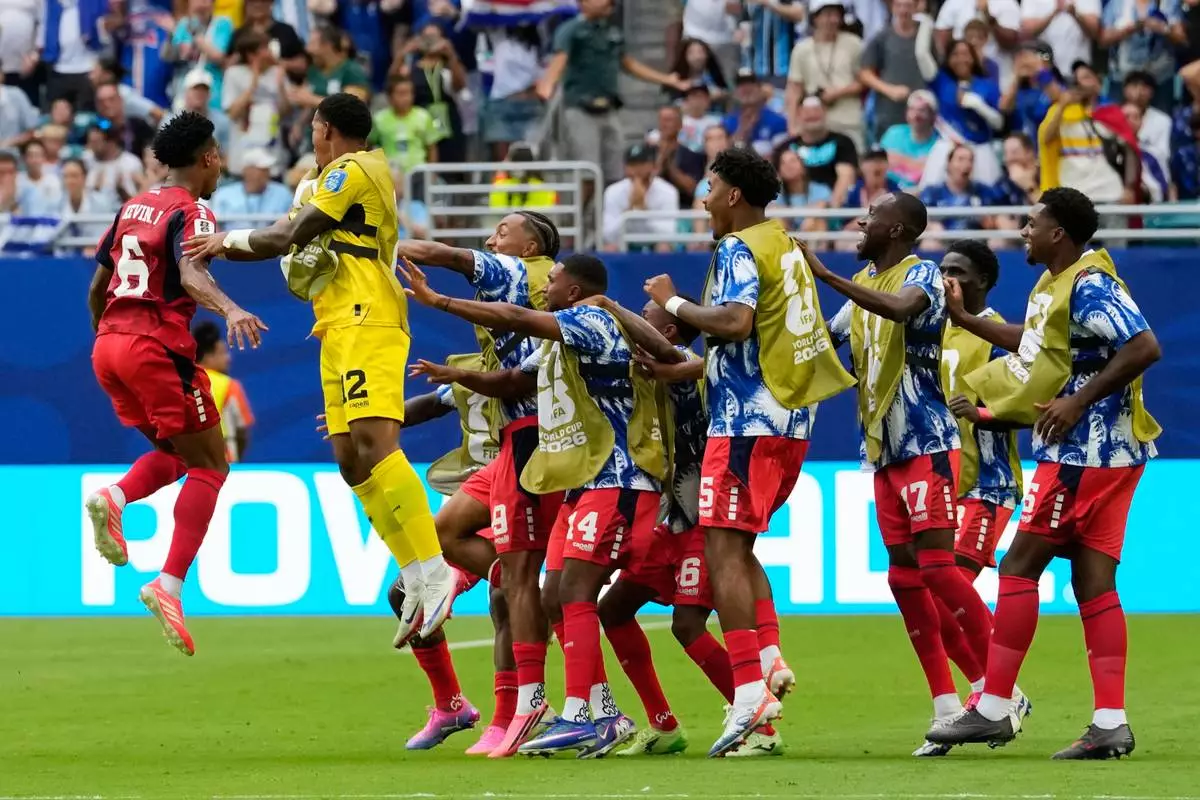
Kevin Pina scored on a free kick for Cape Verde's first-ever goal in the World Cup, and Helio Varela scored the equalizer for what has become one of the most surprising teams of the expanded 48-team tournament — a club now with a legitimate chance of getting into the knockout stage.

“This is something we owe to other smaller national teams,” Cape Verde coach Pedro Leitão Brito said through an interpreter. “Teams that struggled to qualify for a world tournament. We’re also here to show that a country may be small, may struggle financially, but if they are resilient, if they can endure struggle, they can also stand shoulder to shoulder with other major teams and with players who are on another level.”

The group of islands off Africa’s West coast have about 4,000 square meters (about 2.5 miles) of landmass and approximately a half million inhabitants, making Cape Verde the third-smallest nation by population to qualify for the World Cup.

Even as a large number of fans at Miami Stadium chanted for Uruguay throughout Sunday's match, Cape Verdean players seemed undaunted.

“Once you’re on the pitch, a lot of things become equal,” Leitão Brito said.

Cape Verdean fans who watched their squad pull off one of the stunners of the tournament last week by holding Spain to a scoreless draw continued their celebrations when Pina split Uruguay's wall and blasted a strike past diving goalie Fernando Muslera for a 1-0 lead in the 21st.

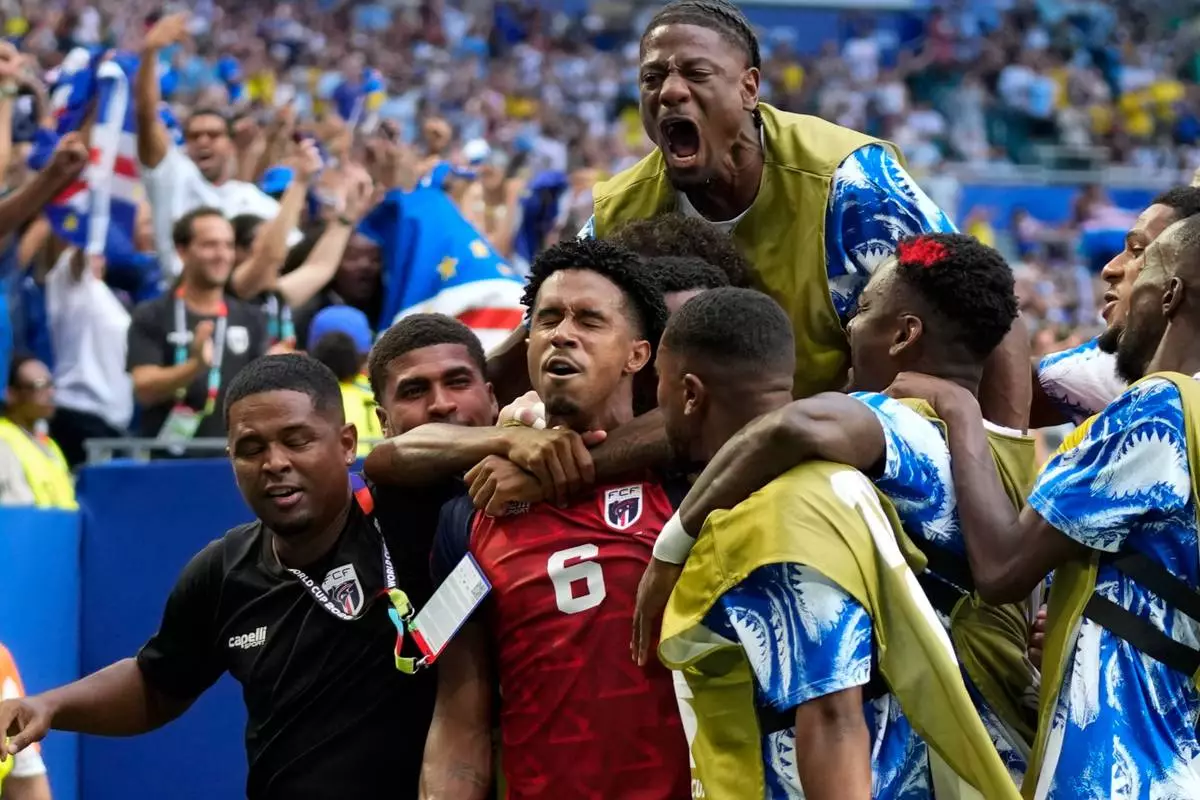
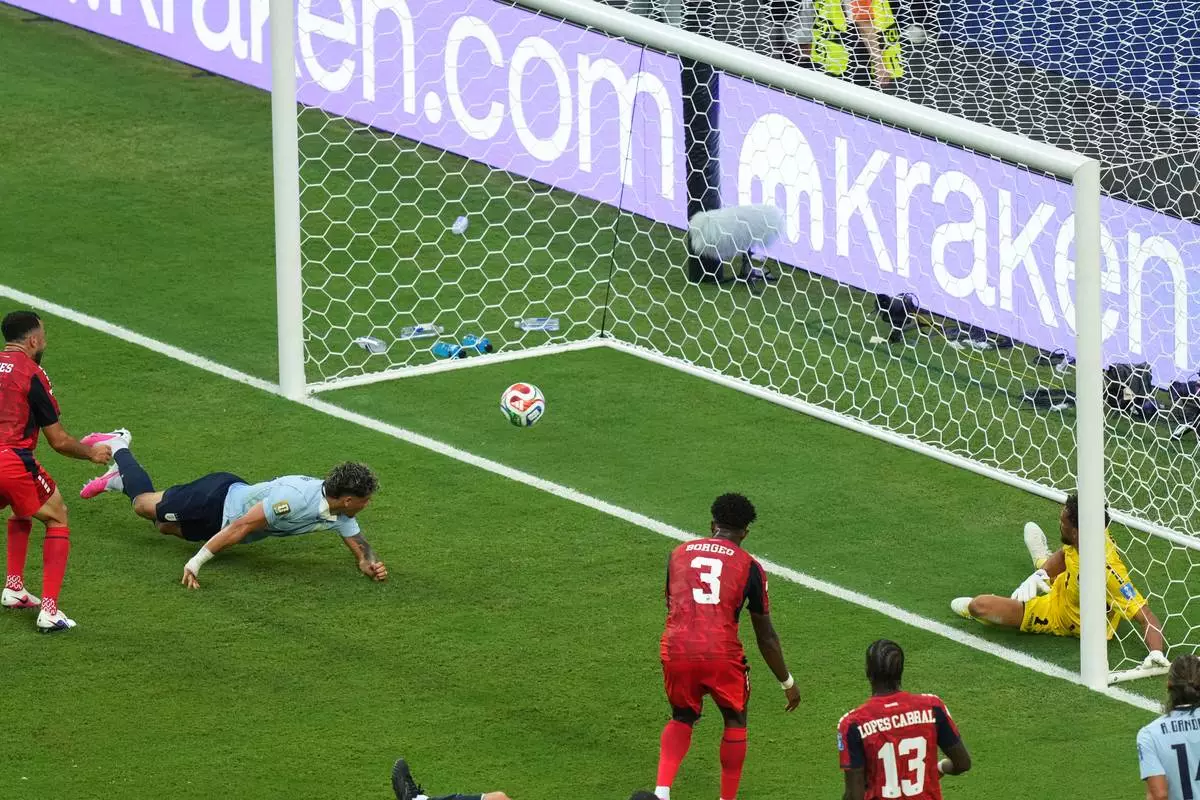
Maxi Araújo and Agustin Canobbio scored late first-half goals to put Uruguay ahead. But Varela, minutes after coming into the game in the second half, took advantage of a bad pass by Mathias Olivera and caught Muslera way off his line for a tying open-net goal and his first international score.

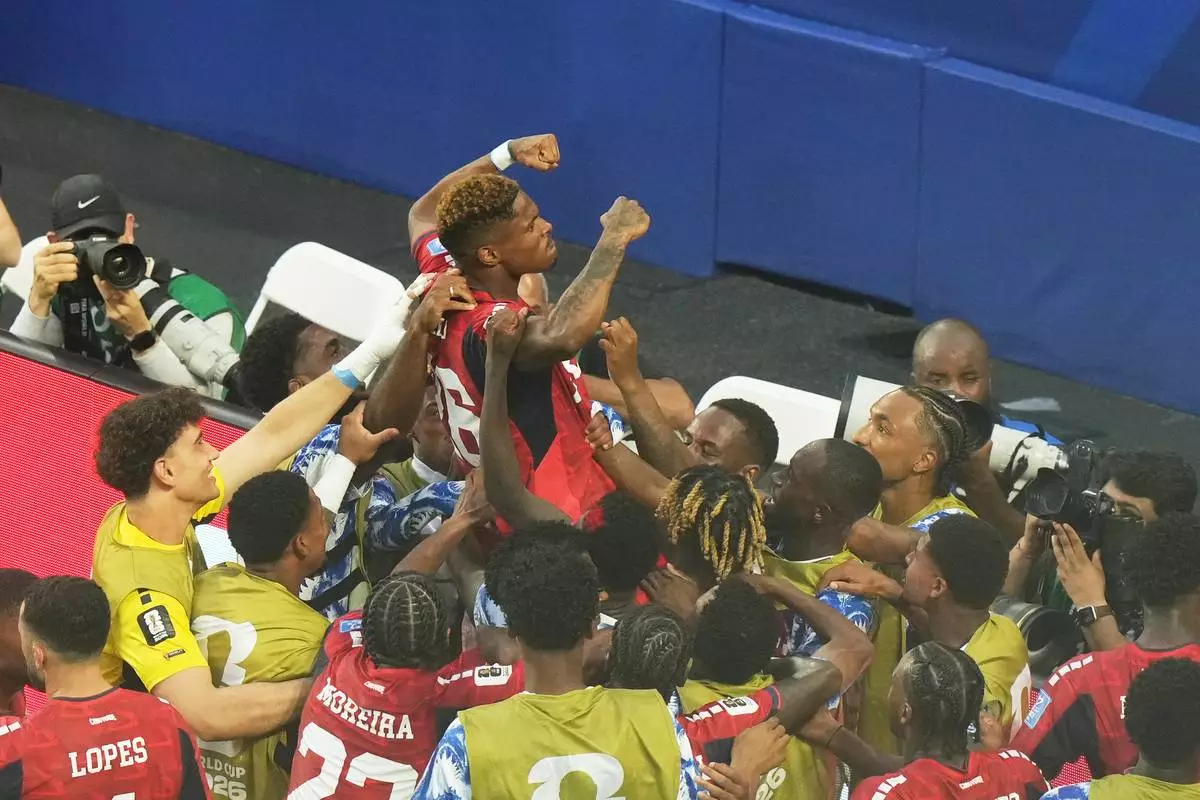
Varela celebrated by hopping into his teammates' arms and flexing atop their shoulders as Muslera and other Uruguay players dropped their heads in disappointment.

“The result, I think, was quite deserved,” coach Marcelo Bielsa said afterward through an interpreter.

It was Uruguay's second draw after a 1-1 finish against Saudi Arabia in their opener. La Celeste face Spain in their group stage finale, with an uphill climb to reach the knockout stage after failing to capitalize on several late chances to take the lead.

“The organizational mistakes that were made — that a squad makes — they always fall upon the driver,” Bielsa added. “What I mean by that is the head coach. ... There is no magical recipe whatsoever to fix them. It goes without saying we paid a very high cost for those mistakes.”

It was another special moment for Cape Verde's Vozinha, who became one of the tournament's breakout stars after shutting down Spain. The 40-year-old goalie had his mother in the stands for Sunday's match; she was unable to attend Cape Verde’s opening draw against Spain because she couldn’t obtain a visa.

It was also the first World Cup match with two starting goalies aged 40-plus. Muslera, who made his 18th World Cup appearance, turned 40 on June 16.

Vozinha waved at the crowd after the final whistle as his teammates ran to a section of Cape Verdean fans, who cheered and danced on their way out of the stadium as if they were celebrating a victory.

“You show up, you believe, and we work very hard as a team,” said Cape Verde defender Stopira. “I think all the world can see we play, we play very good, and we also have quality in the team. So now it’s on to the next game, and to try to reach the next one.”

AP World Cup: https://apnews.com/fifa-world-cup

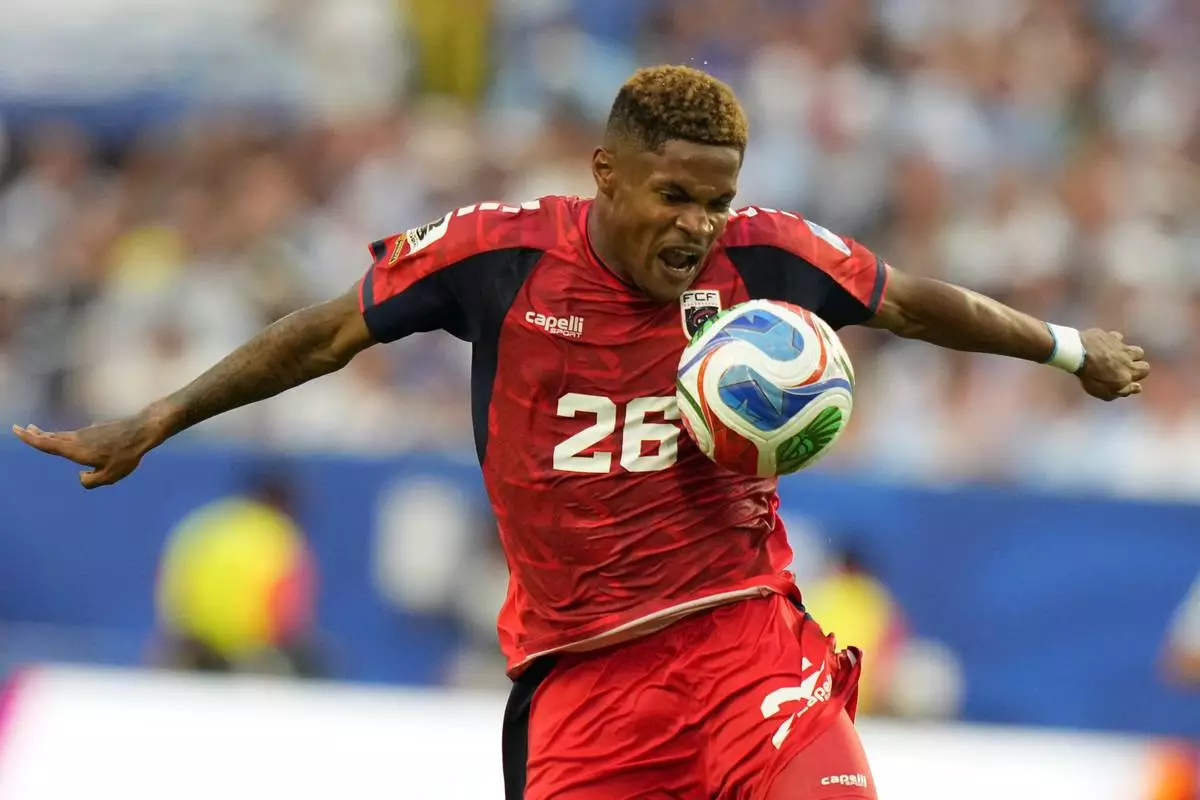
Cape Verde's Helio Varela controls the ball before scoring his side's second goal against Uruguay during the World Cup Group H soccer match in Miami Gardens, Fla., Sunday, June 21, 2026. (AP Photo/Lynne Sladky)

Cape Verde's Helio Varela controls the ball before scoring his side's second goal against Uruguay during the World Cup Group H soccer match in Miami Gardens, Fla., Sunday, June 21, 2026. (AP Photo/Lynne Sladky)

Uruguay's Maxi Araujo, (20) scores his side's opening goal during the World Cup Group H soccer match against Cape Verde in Miami Gardens, Fla., Sunday, June 21, 2026. (AP Photo/Marta Lavandier)

Uruguay's Maxi Araujo, (20) scores his side's opening goal during the World Cup Group H soccer match against Cape Verde in Miami Gardens, Fla., Sunday, June 21, 2026. (AP Photo/Marta Lavandier)

Cape Verde's Helio Varela, top, celebrates scoring his side's second goal against Uruguay during the World Cup Group H soccer match in Miami Gardens, Fla., Sunday, June 21, 2026. (AP Photo/Marta Lavandier)

Cape Verde's Helio Varela, top, celebrates scoring his side's second goal against Uruguay during the World Cup Group H soccer match in Miami Gardens, Fla., Sunday, June 21, 2026. (AP Photo/Marta Lavandier)

Cape Verde's Kevin Pina, second right, scores his team's first goalduring the World Cup Group H soccer match between Uruguay and Cape Verde in Miami Gardens, Fla., Sunday, June 21, 2026. (AP Photo/Rebecca Blackwell)

Cape Verde's Kevin Pina, second right, scores his team's first goalduring the World Cup Group H soccer match between Uruguay and Cape Verde in Miami Gardens, Fla., Sunday, June 21, 2026. (AP Photo/Rebecca Blackwell)

Cape Verde's Kevin Pina, left, celebrates with teammates after scoring his team's first goal during the World Cup Group H soccer match between Uruguay and Cape Verde in Miami Gardens, Fla., Sunday, June 21, 2026. (AP Photo/Rebecca Blackwell)

Cape Verde's Kevin Pina, left, celebrates with teammates after scoring his team's first goal during the World Cup Group H soccer match between Uruguay and Cape Verde in Miami Gardens, Fla., Sunday, June 21, 2026. (AP Photo/Rebecca Blackwell)

Cape Verde's Kevin Pina, center, celebrates with teammates after scoring the opening goal during the World Cup Group H soccer match between Uruguay and Cape Verde in Miami Gardens, Fla., Sunday, June 21, 2026. (AP Photo/Lynne Sladky)

Cape Verde's Kevin Pina, center, celebrates with teammates after scoring the opening goal during the World Cup Group H soccer match between Uruguay and Cape Verde in Miami Gardens, Fla., Sunday, June 21, 2026. (AP Photo/Lynne Sladky)

Recommended Articles