SOUTHAMPTON, N.Y. (AP) — Two winners could emerge at the U.S. Open barring any Sunday surprises at Shinnecock Hills.
That starts with Wyndham Clark, who went into the final round with a six-shot lead. No one has ever lost a 54-hole lead that large in U.S. Open history, and the last time anyone failed to win this major with a five-shot lead happened 107 years ago.
Click to Gallery
Sam Stevens watches his tee shot on the 14th hole during the third round of the U.S. Open golf tournament at Shinnecock Hills Golf Club in Southampton, N.Y., Saturday, June 20, 2026.(AP Photo/David J. Phillip)
Wyndham Clark hands his club to his caddie on the 10th hole during the third round of the U.S. Open golf tournament at Shinnecock Hills Golf Club in Southampton, N.Y., Saturday, June 20, 2026.(AP Photo/Gerald Herbert)
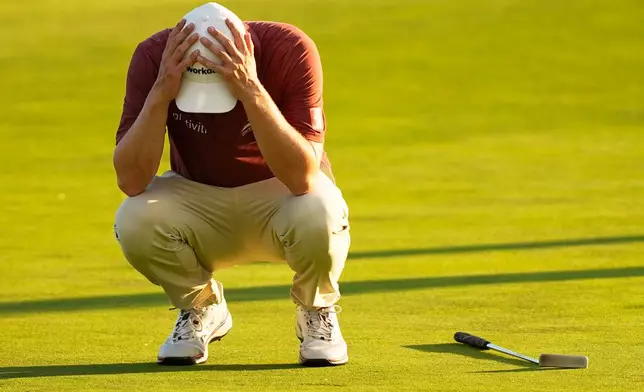
Matthew Fitzpatrick, of England, reacts after missing a putt on the 16th hole during the third round of the U.S. Open golf tournament at Shinnecock Hills Golf Club in Southampton, N.Y., Saturday, June 20, 2026. (AP Photo/Gerald Herbert)
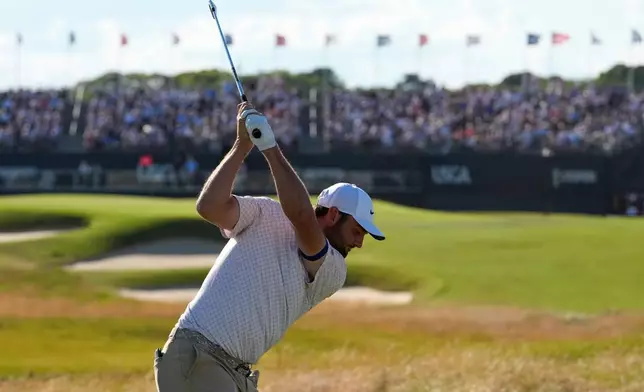
Scottie Scheffler hits his tee shot on the 17th hole during the third round of the U.S. Open golf tournament at Shinnecock Hills Golf Club in Southampton, N.Y., Saturday, June 20, 2026.(AP Photo/David J. Phillip)
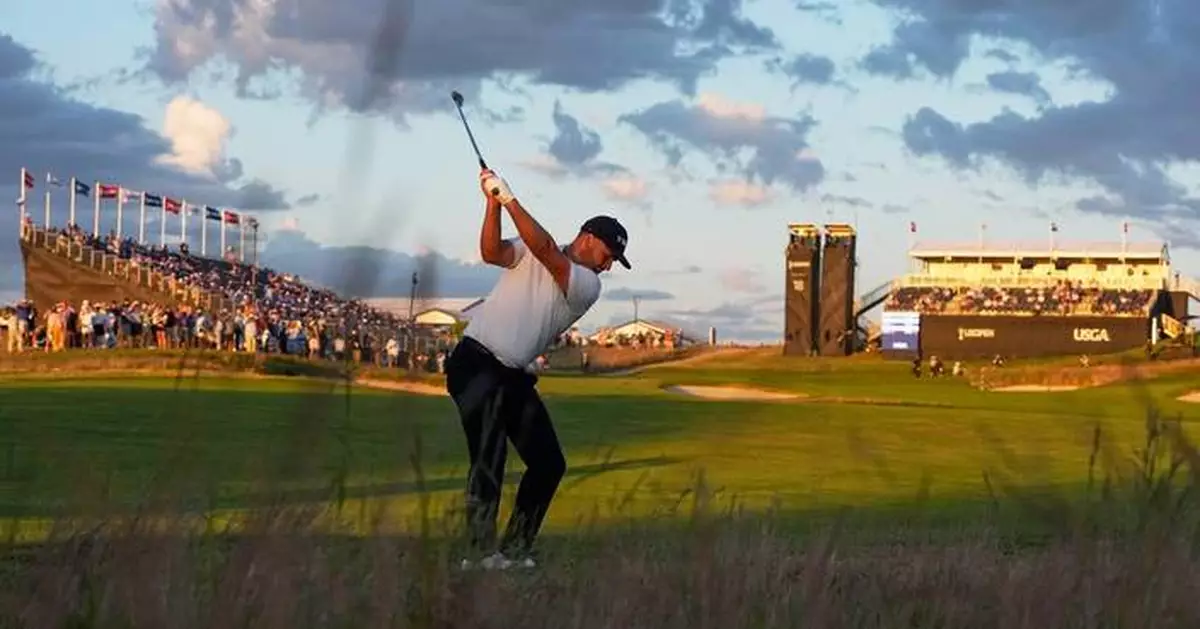
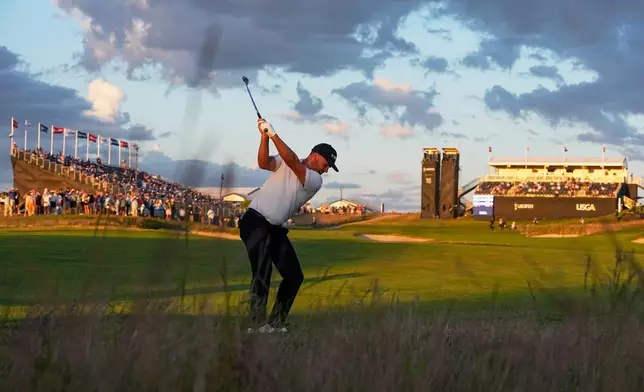
Wyndham Clark hits from the rough on the 18th hole during the third round of the U.S. Open golf tournament at Shinnecock Hills Golf Club in Southampton, N.Y., Saturday, June 20, 2026.(AP Photo/George Walker IV)
The other winner might be the USGA.
The toughest test in golf became too tough the last two U.S. Opens at Shinnecock Hills, the Long Island course where the the turf can go from soft to dry in a New York minute because of wind and sun and the sandy soil on which it was built.
It was so out of control in 2004 that no one broke par on the final day. The next time in 2018, some of the greens became borderline unplayable late in the afternoon and caused more chaos. That remains the last U.S. Open with a winning score over par.
This week has gone according to plan. John Bodenhamer, the chief competitions officer for the USGA, had wanted to go easy at the start and allow a natural progression of being tougher.
Clark, who won the U.S. Open at Los Angeles Country Club in 2023, didn't make it look that way. He has set a Shinnecock scoring record after each round with extraordinary golf, from making long putts to a sublime short game and one majestic 3-wood to make the only eagle all week at the par-5 16th.
He was at 7-under 203.
Throw out that performance, and only four other players were at 1-under par, with four others behind them at even par.
All that was left was 18 holes to determine if Clark could hold on to become the first wire-to-wire U.S. Open champion since Martin Kaymer at Pinehurst No. 2 in 2014, or if Scottie Scheffler could stage a rally on his 30th birthday to win the career Grand Slam.
AP golf: https://apnews.com/hub/golf

Sam Stevens watches his tee shot on the 14th hole during the third round of the U.S. Open golf tournament at Shinnecock Hills Golf Club in Southampton, N.Y., Saturday, June 20, 2026.(AP Photo/David J. Phillip)

Wyndham Clark hands his club to his caddie on the 10th hole during the third round of the U.S. Open golf tournament at Shinnecock Hills Golf Club in Southampton, N.Y., Saturday, June 20, 2026.(AP Photo/Gerald Herbert)
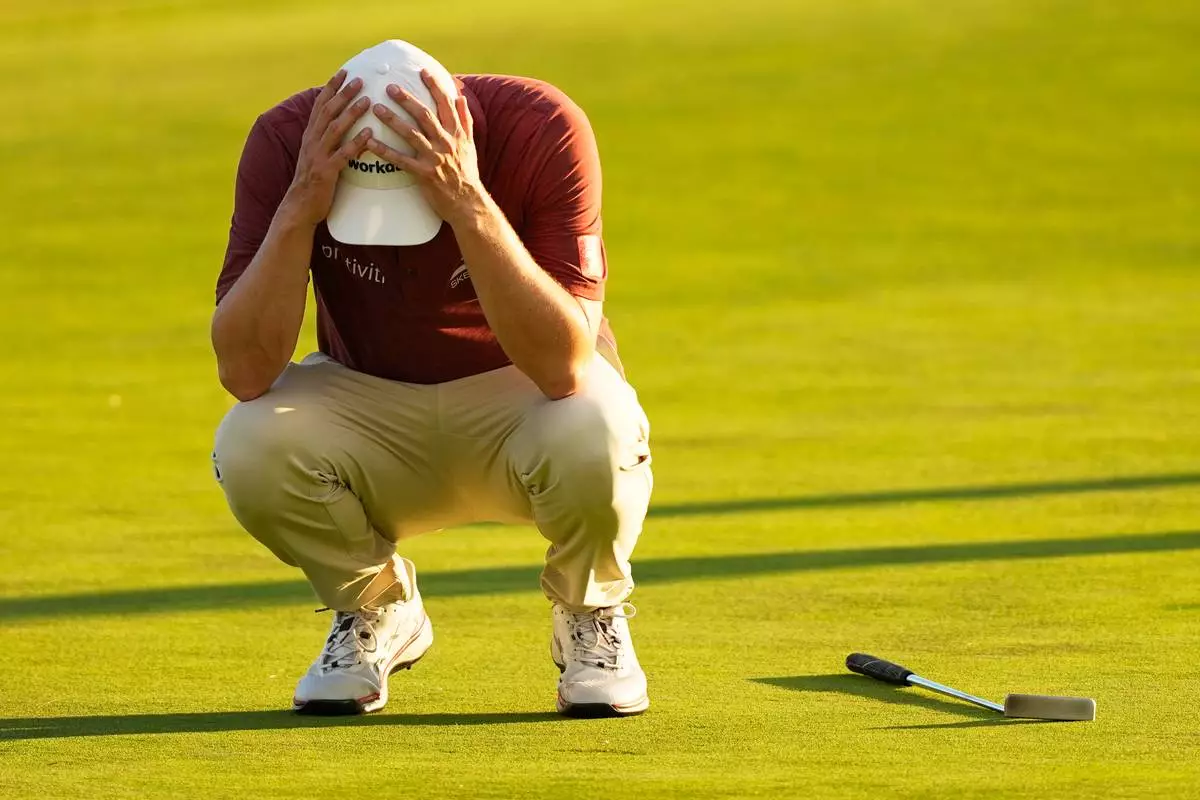
Matthew Fitzpatrick, of England, reacts after missing a putt on the 16th hole during the third round of the U.S. Open golf tournament at Shinnecock Hills Golf Club in Southampton, N.Y., Saturday, June 20, 2026. (AP Photo/Gerald Herbert)

Scottie Scheffler hits his tee shot on the 17th hole during the third round of the U.S. Open golf tournament at Shinnecock Hills Golf Club in Southampton, N.Y., Saturday, June 20, 2026.(AP Photo/David J. Phillip)

Wyndham Clark hits from the rough on the 18th hole during the third round of the U.S. Open golf tournament at Shinnecock Hills Golf Club in Southampton, N.Y., Saturday, June 20, 2026.(AP Photo/George Walker IV)
U.S. and Iranian negotiators were in Switzerland on Sunday for talks on their interim agreement to end the Iran war. Pakistani and Qatari mediators also were there for the technical-level discussions on resolving the conflict that the U.S. and Israel began in late February.
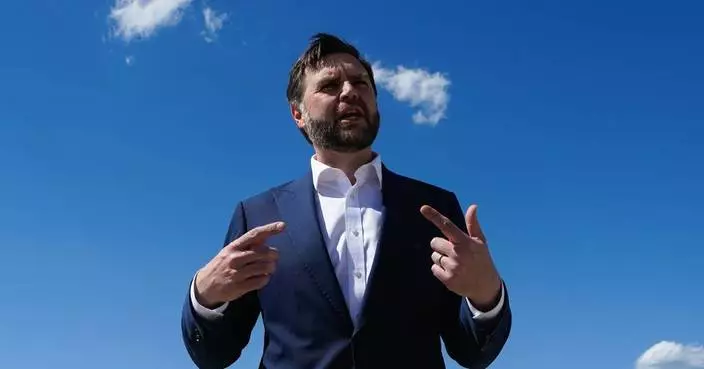
The U.S. team is led by Vice President JD Vance and includes Jared Kushner and Steve Witkoff. They are meeting with Iranian negotiators led by Parliament Speaker Mohammad Bagher Qalibaf and Foreign Minister Abbas Araghchi.
On the eve of talks, Tehran said it closed the Strait of Hormuz again over Israel’s ongoing military campaign in Lebanon. The interim deal is meant to stop fighting on all fronts, including Lebanon.
U.S. President Donald Trump has threatened to impose American tolls in the strait if a final deal with Iran isn’t reached in 60 days. The interim agreement calls for toll-free travel for 60 days in the waterway that is vital for the world’s supply of oil, natural gas and related goods like fertilizer.
Here is the latest:
U.S. Energy Secretary Chris Wright says 67 ships went through the Strait of Hormuz in the last 24 hours, similar to traffic before the war began in terms of oil and oil products.
Iran’s joint military command on Saturday said it had closed the strait over Israel’s military campaign in Lebanon against the Iranian-backed Hezbollah militant group. The U.S. disputed that announcement.
Wright also told Fox News that Iran has not yet “demined” the strait’s central shipping channel, but the U.S. has opened a separate channel to the south and has been escorting ships through it.
Wright acknowledged that some commercial shippers still have safety concerns.
Israel’s military issued a statement around the time that direct talks began. Its chief of staff, Lt. Gen. Eyal Zamir, was speaking from southern Lebanon. He said “the ceasefire that has been declared is fragile, and we must maintain a high level of readiness for the renewal of combat operations.”
He said the military continues to defend against the Iranian-backed Hezbollah and its efforts to rebuild.
The last time that Vance met directly with senior Iranian officials for such talks was in early April, days after a ceasefire took effect in the war. Those talks in Pakistan's capital of Islamabad ended after 21 hours without reaching an agreement. Again, Vance was meeting with lead negotiator Qalibaf.
It's now after 4 p.m. in Switzerland.
Both Iran and the White House say four-way talks have begun in Switzerland. Vance is meeting with Iranian officials.
Trump hopes to get the agreement signed last week back on track. Israel's ongoing military campaign in Lebanon against the Iranian-backed Hezbollah militant group threatens progress on implementation.
Iran says its main focus in these talks is the situation in Lebanon. Israel says it must defend itself from Hezbollah. But the U.S. side wants to get Iran locked into negotiations over its nuclear program, which has long been at the heart of tensions.
Trump has warned in a post on social media that Iran needs to stop Hezbollah from “causing trouble.”
"If they don’t, we’ll hit Iran very hard again, just like we did last week, only harder!!!” Trump wrote from Camp David, where he is spending the weekend.
The U.S. vice president spoke as officials were gathering for the start of the U.S.-Iran talks on Sunday.
“The question before us now is how much more can we accomplish together? Can we turn over a new leaf?” Vance said in brief comments ahead of the talks, dubbed the “Lake Lucerne Summit.”
“Can we change relations in the Middle East permanently, or do we go back to doing things the old way, which is not our preference, but is certainly very much something that can happen,” Vance added.
It was not clear if the Iranians were present during Vance's remarks.
The Israeli military says it killed two militants who were involved in helping transfer up to half a billion dollars to Hamas. The military says the two — Hussein Qadra and Mohammed Farra, who worked with Hamas and the militant group Palestinian Islamic Jihad — were killed in a strike last week.
It said on Sunday that the men oversaw a network of couriers and money exchange spots in both Gaza and Turkey that funneled money towards Hamas militants and infrastructure.
Both men were killed on Wednesday and buried on Thursday, according to their families. Farra’s family said his father, mother and sister were killed in an Israeli strike earlier in the war.
The conflict in Gaza is not part of the U.S-Iran talks underway in Switzerland.
Pakistan’s Prime Minister Shehbaz Sharif has separately met with JD Vance and with the Iranian delegation at the Bürgenstock Resort near Lucerne in Switzerland where the high-level talks are taking place.
Islamabad says Pakistan’s army chief, Field Marshal Asim Munir, accompanied Sharif at the meetings. It did not provide further details.
Sharif has repeatedly said Munir played a key role in brokering the memorandum of understanding between the U.S. and Iran.
A video released by Sharif’s office shows him warmly embracing Qalibaf, Iran's parliament speaker, and Araghchi, Iran's foreign minister, as Munir looks on.
Rafael Grossi, chief of the U.N. nuclear watchdog — the International Atomic Energy Agency — met with Swiss Foreign Minister Ignazio Cassis on the sidelines of the gathering at the picturesque mountainside resort near Lake Lucerne on Sunday morning.
The agency had monitored the 2015 nuclear deal negotiated between the U.S. and Iran under the Obama administration.
Trump in 2018 withdrew the U.S. from that agreement.
Iran's Foreign Ministry spokesman Esmail Baghaei says Tehran will mainly focus during the talks on Sunday on the ongoing fighting in Lebanon.
Tehran insists that the deal’s implementation start with a cessation of all fighting — including between Israel and Hezbollah.
Baghaei said the U.S. “has been unable or unwilling” to hold Israel to the ceasefire.
Iran will meet in the morning with Pakistani and Qatari mediators, and in the afternoon, there will be a four-way meeting including the U.S. negotiating team. There is currently only one day of negotiations planned, Baghaei told the state news agency.
“The implementation of any document is more important than its signing,” Baghaei also said Sunday.
Iran’s president has said that Iran will maintain its right to a nuclear program.
“What is certain is that we will never back down from the right to enrich uranium, and the other side is also forced to accept it,” Masoud Pezeshkian said on Sunday, according to state media.
As the U.S.-Iran talks were to kick off in Switzerland, a ceasefire appears to be holding in Lebanon, a lull that came after another day of heavy fighting.
Since the ceasefire, Israeli strikes on Friday and Saturday killed 97 people, including eight women and four children, Lebanese officials said. Five Israeli soldiers were also killed.
Israel says it targeted Hezbollah infrastructure on Saturday, including a tunnel network in the southern Lebanese town of Kfar Tebnit.
But by Sunday morning, residents in southern Lebanon reported a lull in Israeli strikes. There also were no reports of Hezbollah fire from the Israeli side.
Israel’s military has received instructions to uphold the ceasefire, and said it is only acting defensively, according to an Israeli military official who spoke on condition of anonymity in line with military guidelines.
—Melanie Lidman in Tel Aviv, Israel
Pakistani Prime Minister Shehbaz Sharif and army chief Field Marshal Asim Munir are also in Switzerland for the high-level U.S.-Iran talks, the prime minister's office said without providing further details.
The technical-level talks at Bürgenstock Resort near the Swiss city of Lucerne are being held after Sharif dispatched his special envoy, Interior Minister Mohsin Naqvi, to Tehran to persuade Iranian authorities to send a delegation to Switzerland. The meeting was originally scheduled for Friday but was delayed because of concerns raised by Iran.
Naqvi later informed Islamabad that Iran was willing to attend the talks. Pakistan subsequently conveyed the development to Washington.
The strait has emerged as a key focus, with Iran’s joint military command saying on Saturday that it was closed again because of the U.S. “clear breach of its commitments” by failing to end the war. The interim deal is meant to stop fighting on all fronts, including in Lebanon where Israeli forces are battling the militant Hezbollah group.
The U.S. disputed Iran’s announcement, with the U.S. Central Command saying that traffic continues to flow and that 55 merchant ships transited on Saturday with more than 17 million barrels of oil.
Ships began transiting after the interim U.S.-Iran agreement was signed last week. The U.S. lifted its blockade of Iran’s ports and now allows Tehran to sell its oil freely — terms that have left some in U.S. Congress asking whether the war was worth it.
The interim deal signed by Trump and Iranian President Masoud Pezeshkian gives negotiators 60 days to reach a nuclear agreement, but the time can be extended.
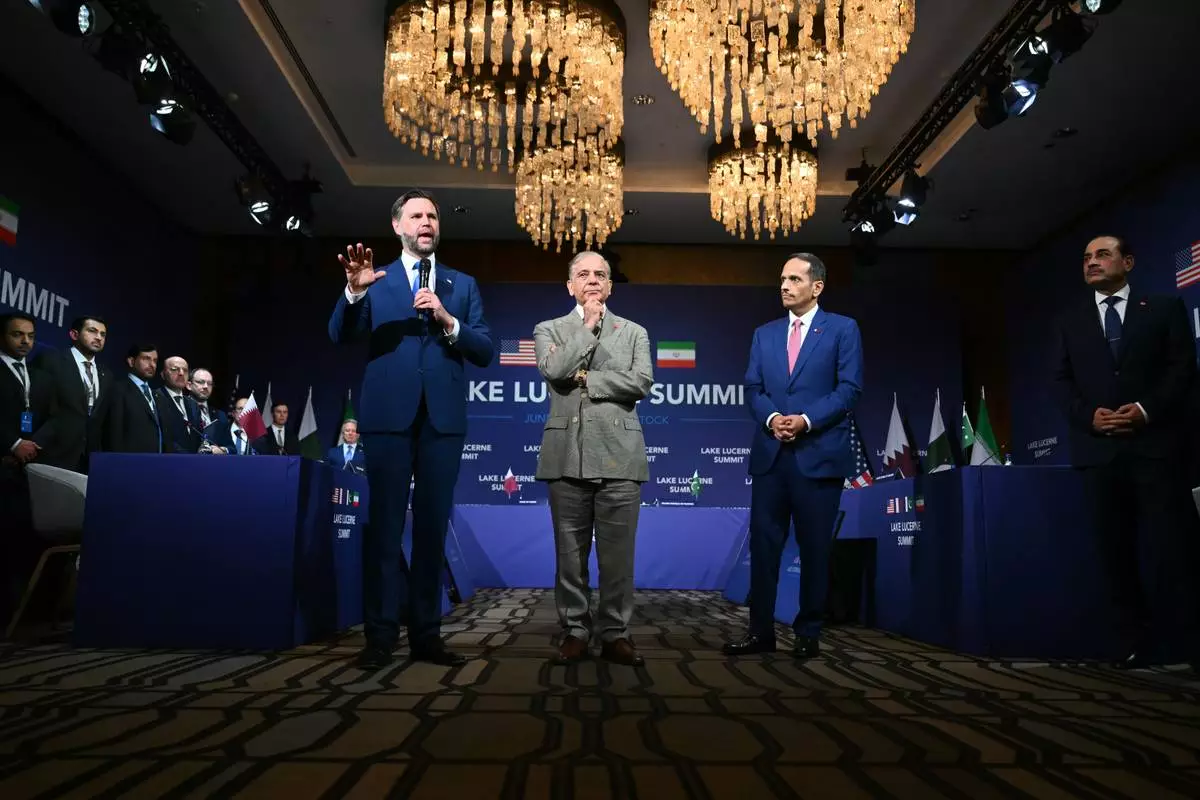
From left, US Vice President JD Vance speaks next to Pakistan's Prime Minister Shehbaz Sharif, Qatar's Prime Minister Sheikh Mohammed bin Abdulrahman bin Jassim al-Thani and Pakistan's Chief of Army Staff Field Marshal Asim Munir during a quadrilateral meeting between the United States, Iran, Pakistan and Qatar at the Burgenstock luxury hotel complex overlooking Lake Lucerne, Switzerland, Sunday June 21, 2026. (Fabrice Coffrini/Keystone via AP)
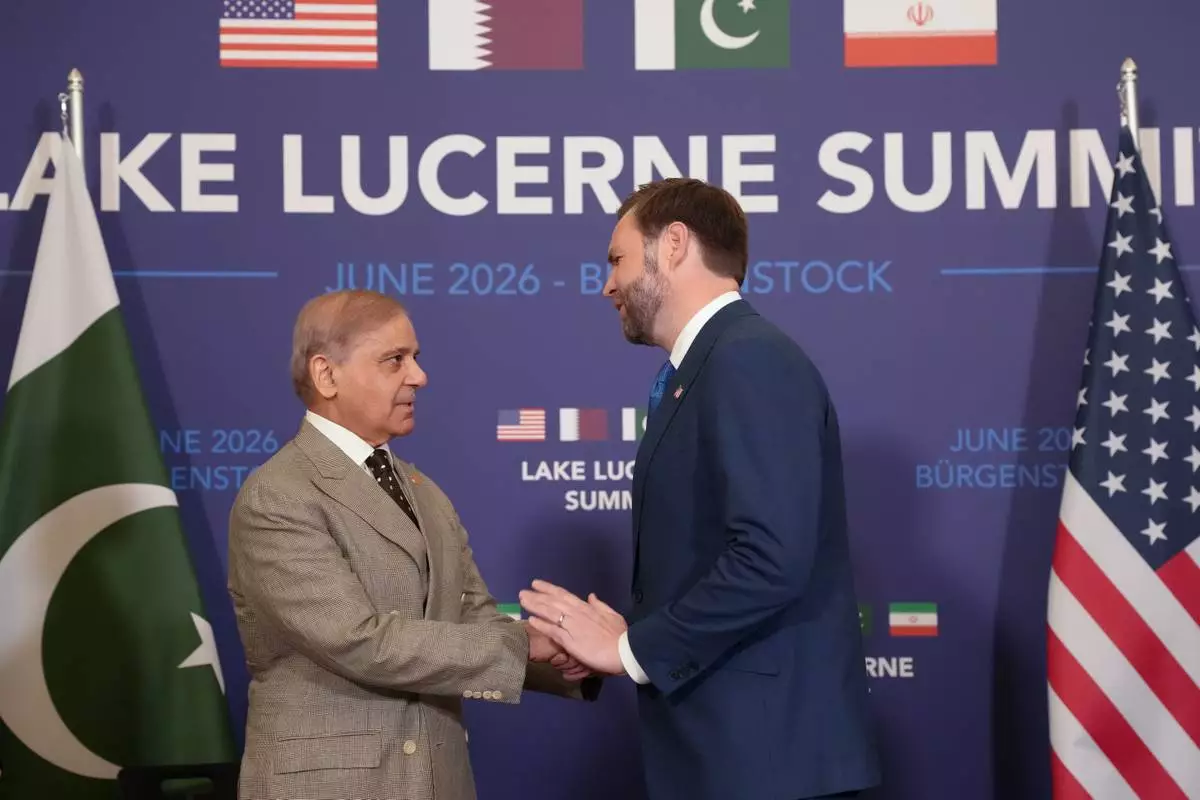
U.S. Vice President JD Vance, right, meets with Pakistan's Prime Minister Shehbaz Sharif, during high-level talks aimed at advancing a deal to end the Middle East conflict, at the Bürgenstock Resort in Obbuergen, near Lucerne, in Switzerland, Sunday, June 21, 2026. (Nathan Howard/Pool Photo via AP)
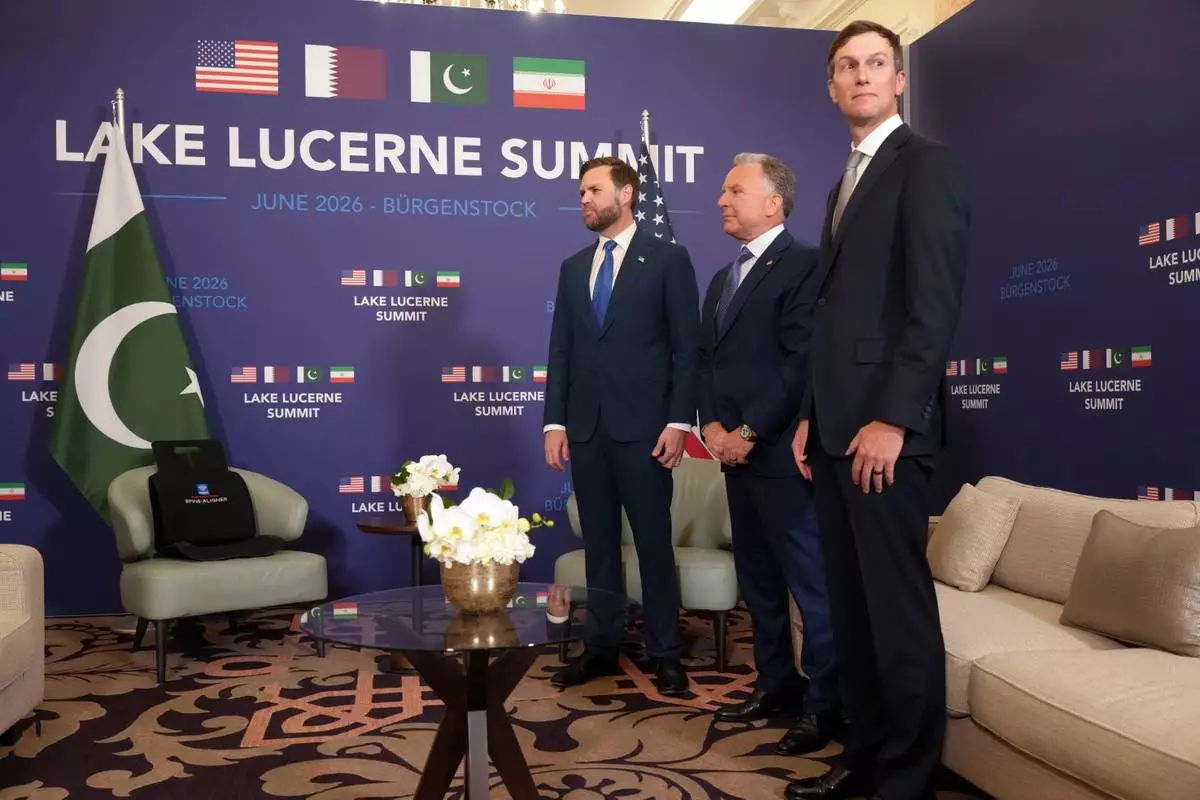
U.S. Vice President JD Vance waits, alongside U.S. President Donald Trump's envoys Steve Witkoff, second right, and Jared Kushner, right, to meet with Pakistan's Prime Minister Shehbaz Sharif for high-level talks aimed at advancing a deal to end the Middle East conflict, at the Bürgenstock Resort in Obbuergen, near Lucerne, in Switzerland, Sunday, June 21, 2026. (Nathan Howard/Pool Photo via AP)
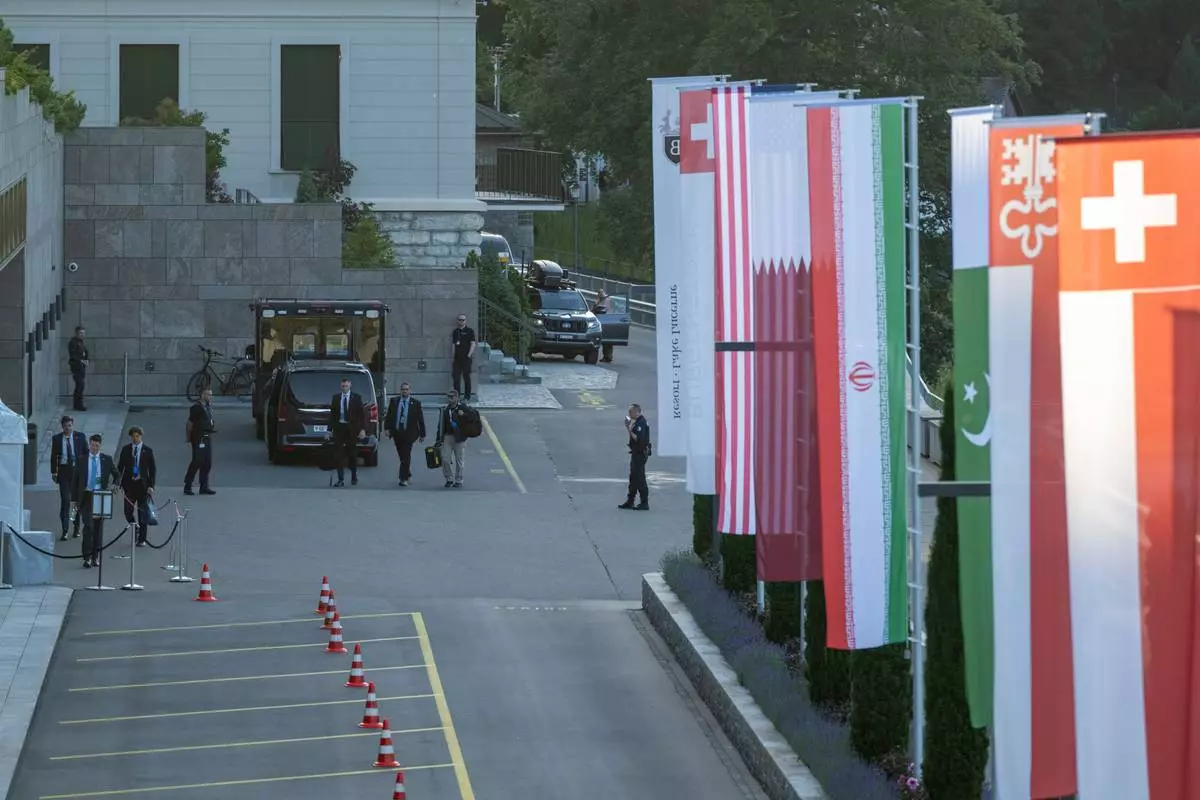
Flags of the U.S., Qatar, Iran, Pakistan, Nidwalden and Switzerland, from left, are seen at the Buergenstock resort in Obbuergen, near Lucerne, Switzerland, Sunday, June 21, 2026. (Urs Flueeler/Keystone Pool via AP)
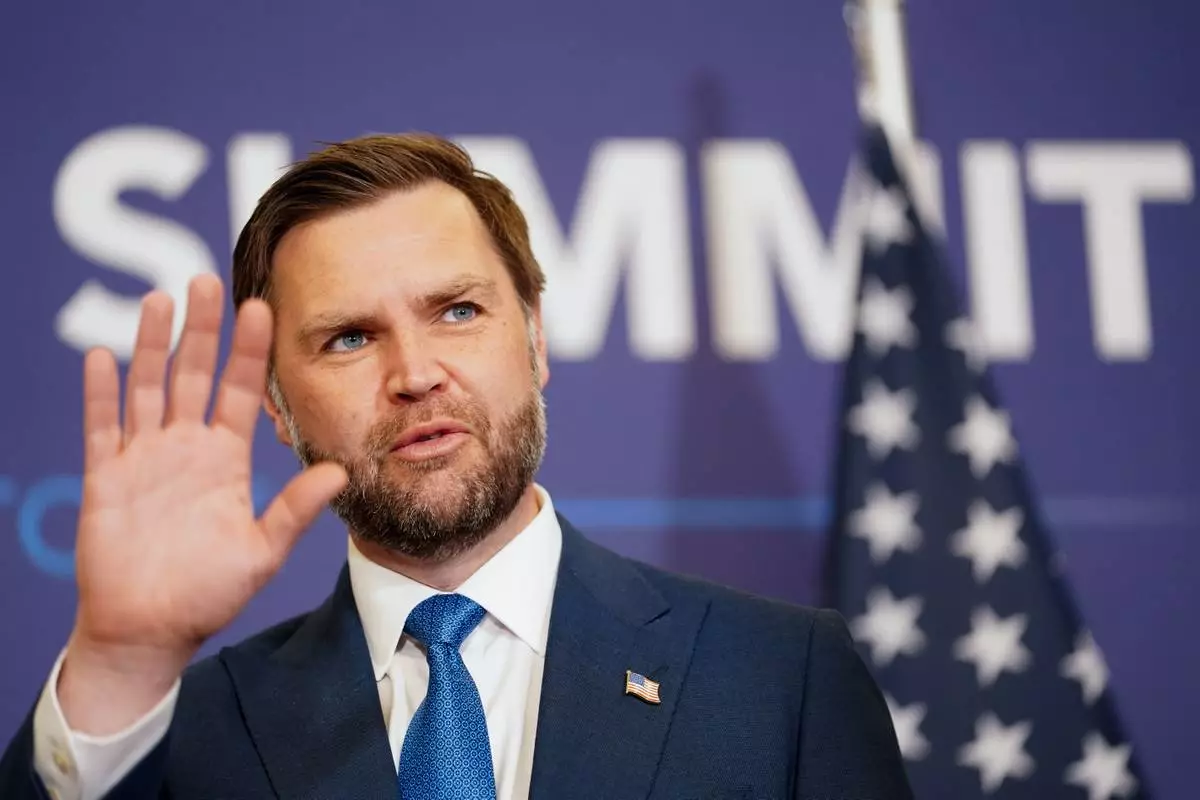
U.S. Vice President JD Vance, gestures as he meets with Pakistan's Prime Minister Shehbaz Sharif, during high-level talks aimed at advancing a deal to end the Middle East conflict, at the Bürgenstock Resort in Obbuergen, near Lucerne, in Switzerland, Sunday, June 21, 2026. (Nathan Howard/Pool Photo via AP)
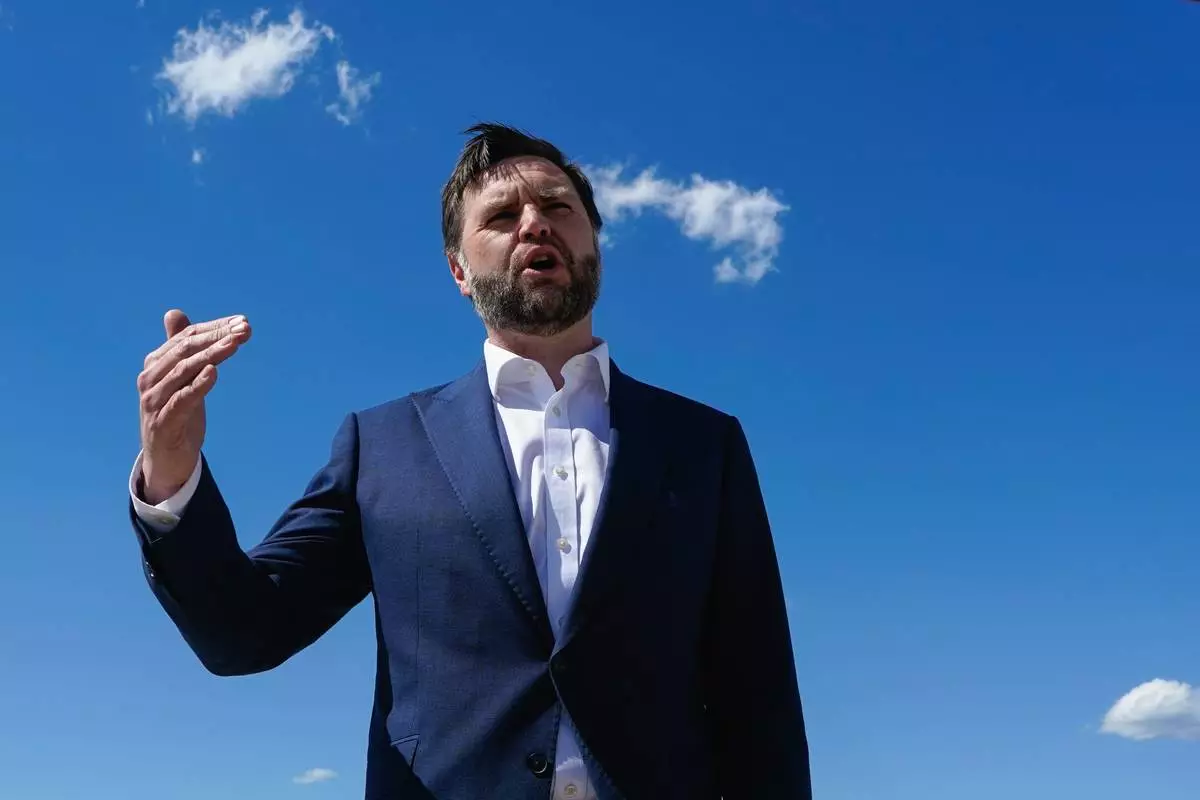
Vice President JD Vance speaks to reporters at Joint Base Andrews, Md., Saturday, June 20, 2026, en route to Switzerland. (Elizabeth Frantz/Pool Photo via AP)
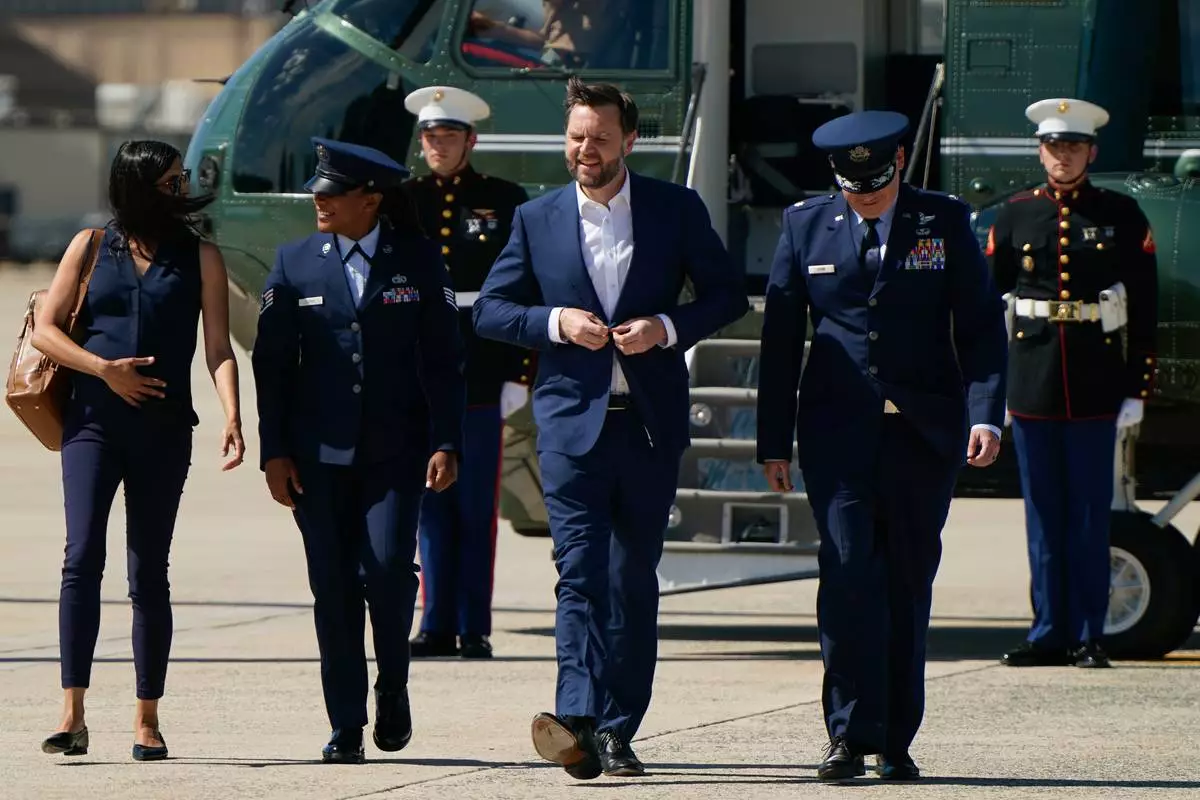
Vice President JD Vance, center, and second lady Usha Vance, left, walk from Marine Two as they arrive at Joint Base Andrews, Md., Saturday, June 20, 2026, en route to Switzerland. (Elizabeth Frantz/Pool Photo via AP)
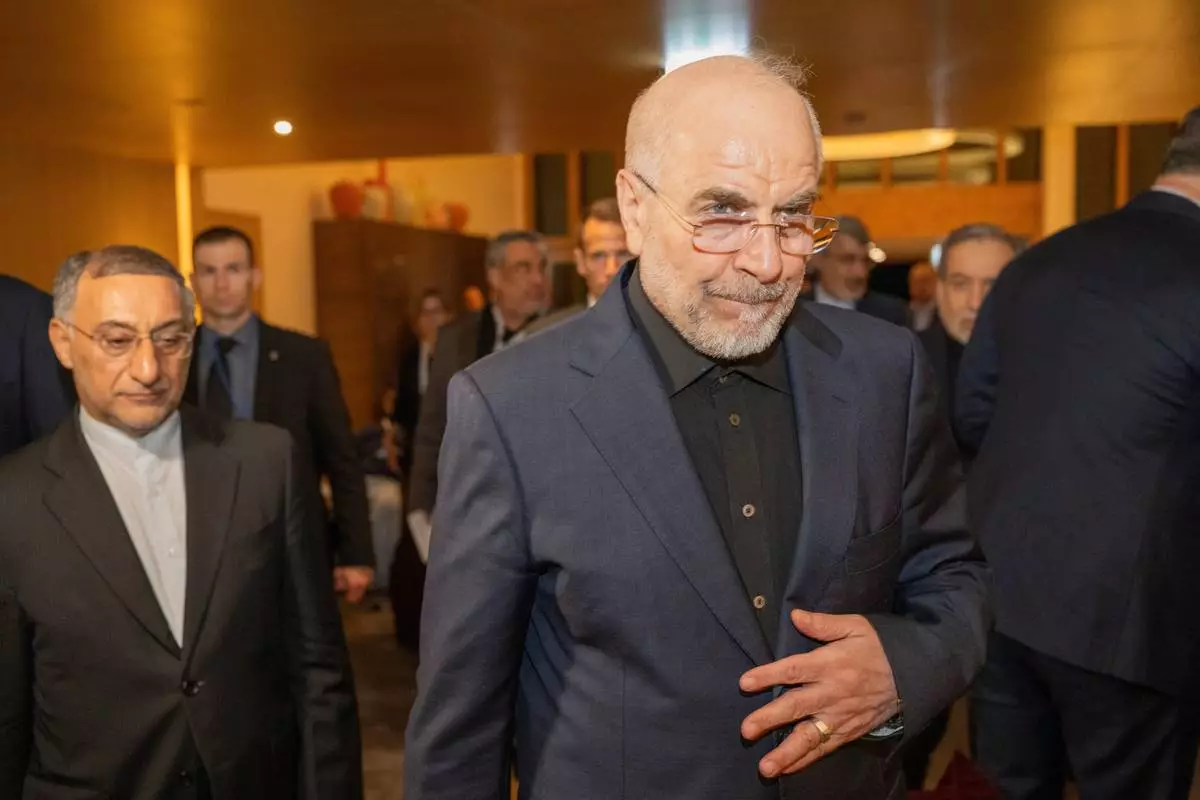
Speaker of the Islamic Parliament of Iran Mohammed Bagher Ghalibaf, center, arrives at the Buergenstock resort in Obbuergen, near Lucerne, Switzerland, early Sunday, June 21, 2026. (Urs Flueeler/Keystone, Pool via AP)
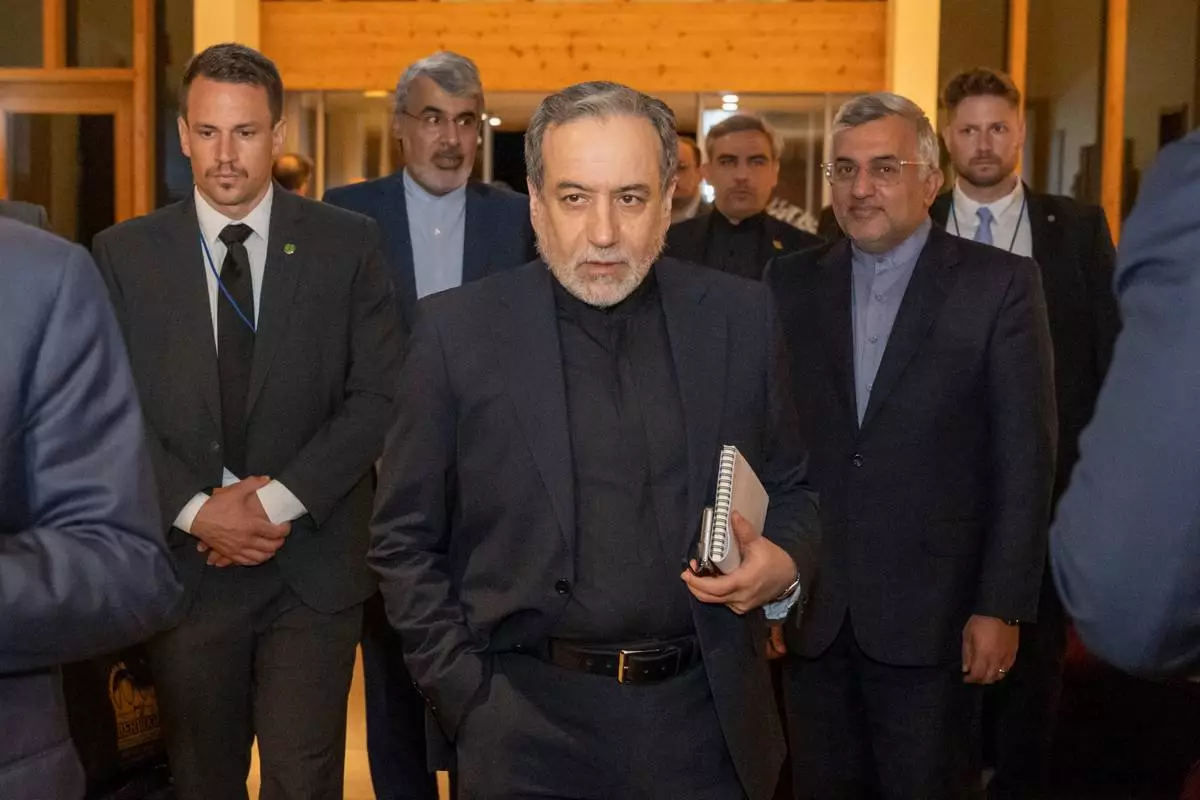
Iranian Foreign Minister Seyyed Abbas Araghchi, center, arrives at the Buergenstock resort in Obbuergen, near Lucerne, Switzerland, early Sunday, June 21, 2026. (Urs Flueeler/Keystone, Pool via AP)
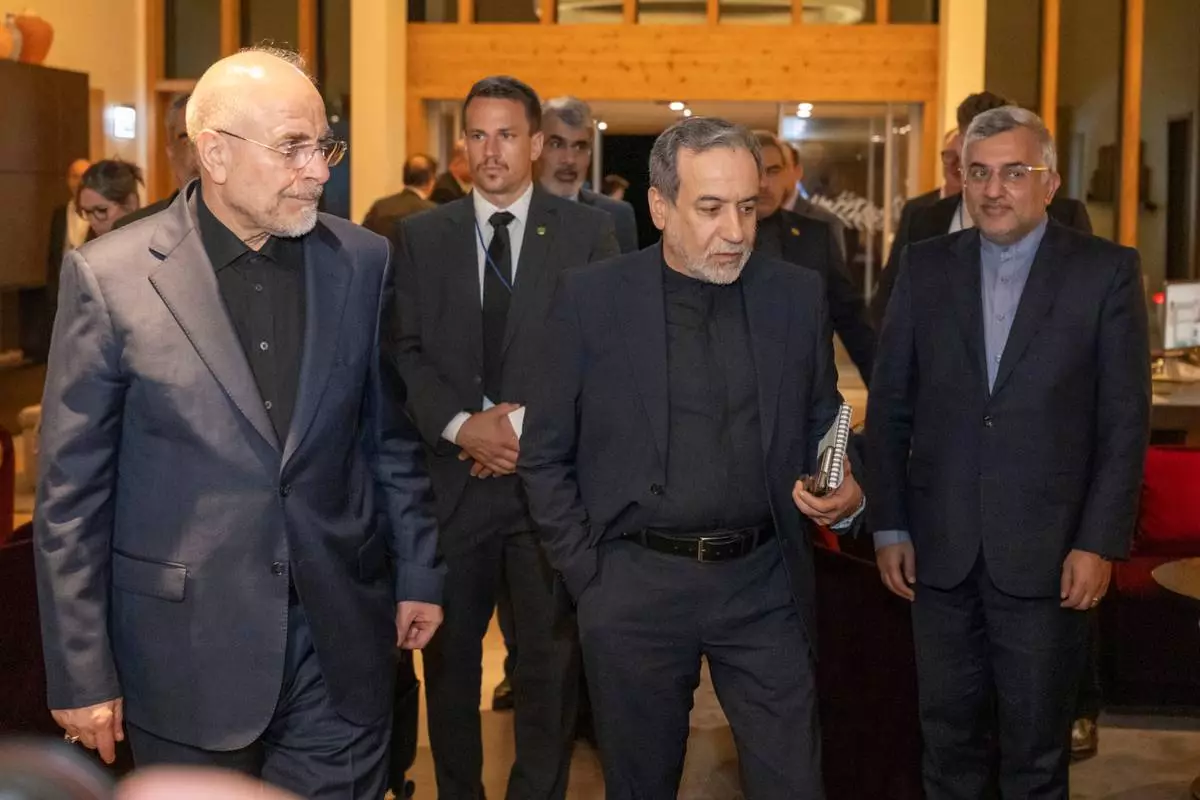
Iranian Foreign Minister Seyyed Abbas Araghchi, center, and Speaker of the Islamic Parliament of Iran Mohammed Bagher Ghalibaf, left, arrive at the Buergenstock resort in Obbuergen, near Lucerne, Switzerland, early Sunday, June 21, 2026. (Urs Flueeler/Keystone, Pool via AP)