LONDON (AP) — New Zealand had to beat England at The Oval.
Not just to square their series, but because England made itself an easier picking.
Click to Gallery
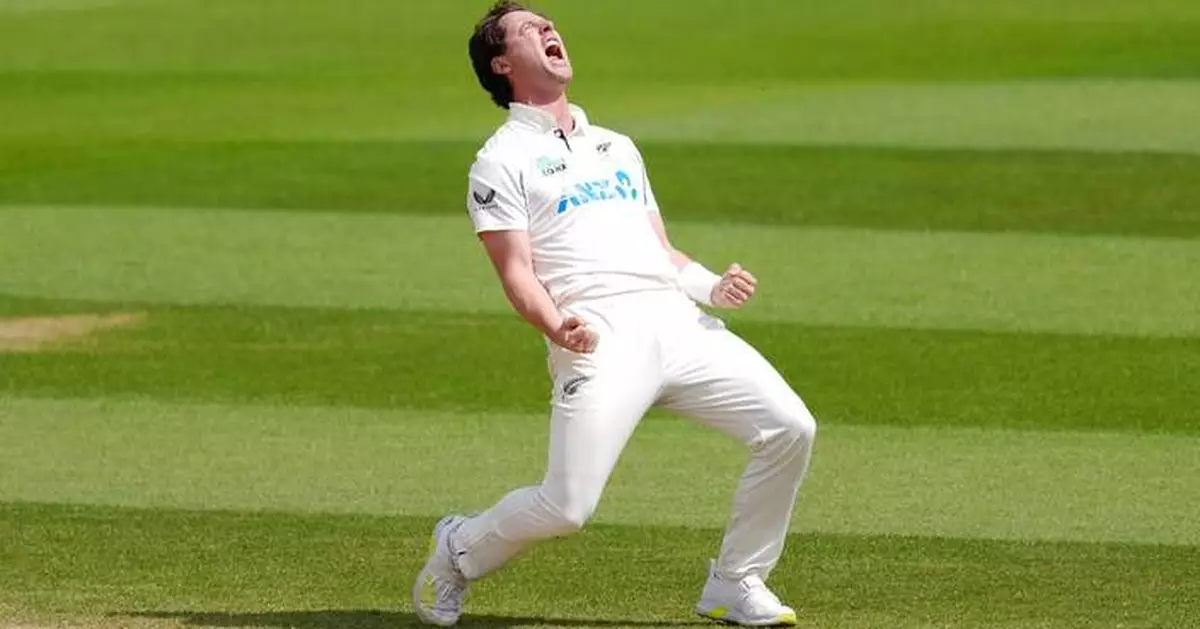
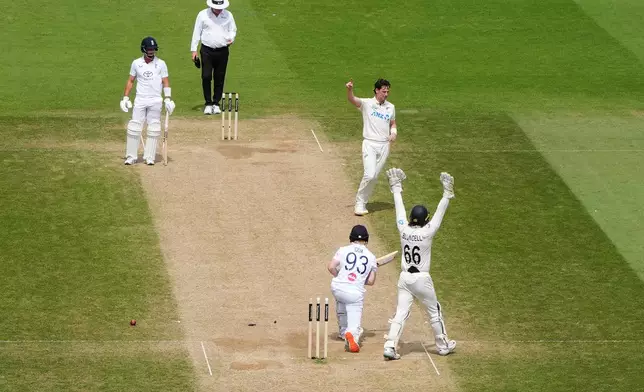
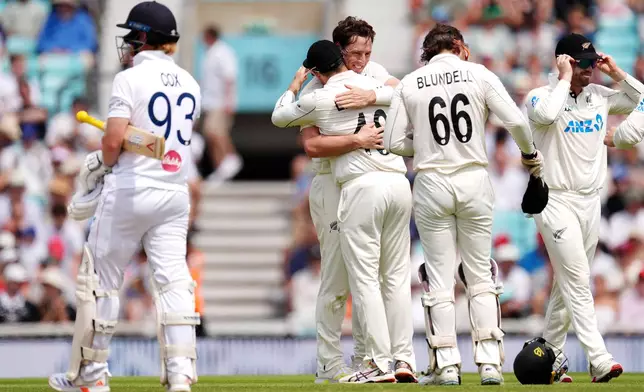
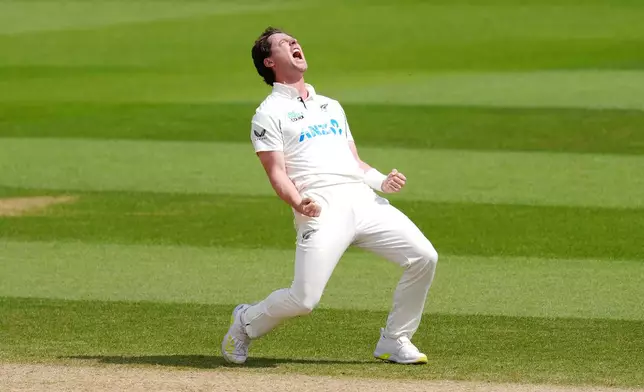
New Zealand's Matt Henry celebrates taking the wicket of England's Jordan Cox on day five of the Second Rothesay Test cricket match between England and New Zealand in London, England, Sunday, June 21, 2026. (Ben Whitley/PA via AP
New Zealand's Matt Henry celebrates taking the wicket of England's Jordan Cox on day five of the Second Rothesay Test cricket match between England and New Zealand in London, England, Sunday, June 21, 2026. (Ben Whitley/PA via AP
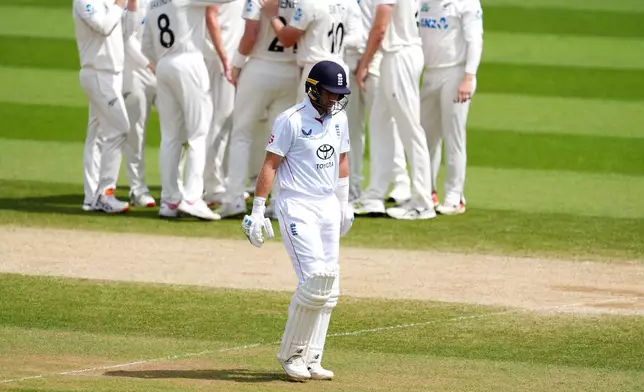
England's Joe Root reacts after being bowled out by New Zealand's Matt Henry on day five of the Second Rothesay Test cricket match between England and New Zealand in London, England, Sunday, June 21, 2026. (Ben Whitley/PA via AP
New Zealand's Matt Henry celebrates taking the wicket of England's Joe Root on day five of the Second Rothesay Test cricket match between England and New Zealand in London, England, Sunday, June 21, 2026. (Ben Whitley/PA via AP
To the team that won at Lord's, England made an off-the-wall five changes, four of them enforced by nightclub antics, injury and paternity. Three players debuted, two others had one cap each, and Joe Root stepped up as the stopgap captain. Root had more than half the team's caps and was suddenly the leading active wicket-taker.
England did everything but gift a rare seventh win to New Zealand in 95 years on home turf and the Black Caps went and grabbed it in style. It came to fruition on Sunday in the first 48 minutes of the fifth and final day when fast bowler Matt Henry cleaned up the last five wickets in 31 balls of a metronomic masterclass.
England collapsed from 182-5 overnight to all out for 209 and New Zealand won by 253 runs, its largest victory in England by runs. That set up a series decider in Nottingham starting Thursday.
“I didn't expect it to unfold like that today but probably saved a hot day in the field,” Henry said after leading New Zealand off the field, match ball raised high.
His 6-29 beside 5-80 in the first innings gave him 11-109, New Zealand's best-ever figures against England and his first 10-wicket match haul in 35 tests.
He completed a magnificent team effort.
Glenn Phillips withstood body blows from a venomous Jofra Archer on the first evening then reached his maiden test hundred — and the series' first century — with Kyle Jamieson the next morning while Archer rested from the previous night's exertions.
“That spell from Jofra, we wanted to take that wicket that night,” Root said. “Jofra was on a roll, full of confidence, bowling a great pace. You break the game open there and it's a very different concept. Phillips played brilliantly, same with (Henry) Nicholls in the second innings.”
Henry took out Root and Harry Brook in the span of three deliveries to help secure a 100-run lead on the first innings. No team had overcome a bigger deficit at The Oval in 124 years.
Nicholls, tasked with filling the shoes of the retired Kane Williamson, added his hundred in the second innings in a 161-run partnership with Rachin Ravindra that batted England out of the game. The phenomenal 463 target was 45 runs above the most successful fourth-innings chase in test history.
Jamieson undermined England hopes immediately and Henry polished off the win on Sunday starting with Root. England's last glimmer of hope added only two runs from overnight and was lbw between bat and pad on 77.
“It wasn't going to be easy on that surface and the pace going out of it but the way the bowlers were able to operate, hitting the top of off, bit of old-school cricket,” New Zealand captain Tom Latham said.
England was already thinking of Trent Bridge before play on Sunday, by withdrawing regular skipper Ben Stokes and Gus Atkinson from their county sides so they're ready for the third test. Both were dropped for breaking England's midnight curfew while celebrating the Lord's win.
Stokes warmed up with 95 on Saturday and Atkinson took four wickets. The availability of wicketkeeper Jamie Smith after the Tuesday birth of his second child may also be key. His replacement, debutant James Rew, conceded the most byes by an England keeper in 12 years. Ollie Robinson, who took seven wickets at Lord's, missed The Oval because of knee soreness, the third straight test in which he's suffered an injury.
Root captained England for the first time since 2022, and was the only survivor from that side. He said he enjoyed leading again through an “unsettling” buildup; he became the second man to 14,000 test runs, though his record as test captain fell to 27-27.
“In terms of depth and exposure, normally when guys come in it's one at a time and they're helped through by seniority and guys around them,” Root said. “This week's been quite different with the circumstances. Off the back of that, all you can really ask of players is to come in and give everything and they definitely did that.”
AP cricket: https://apnews.com/hub/cricket
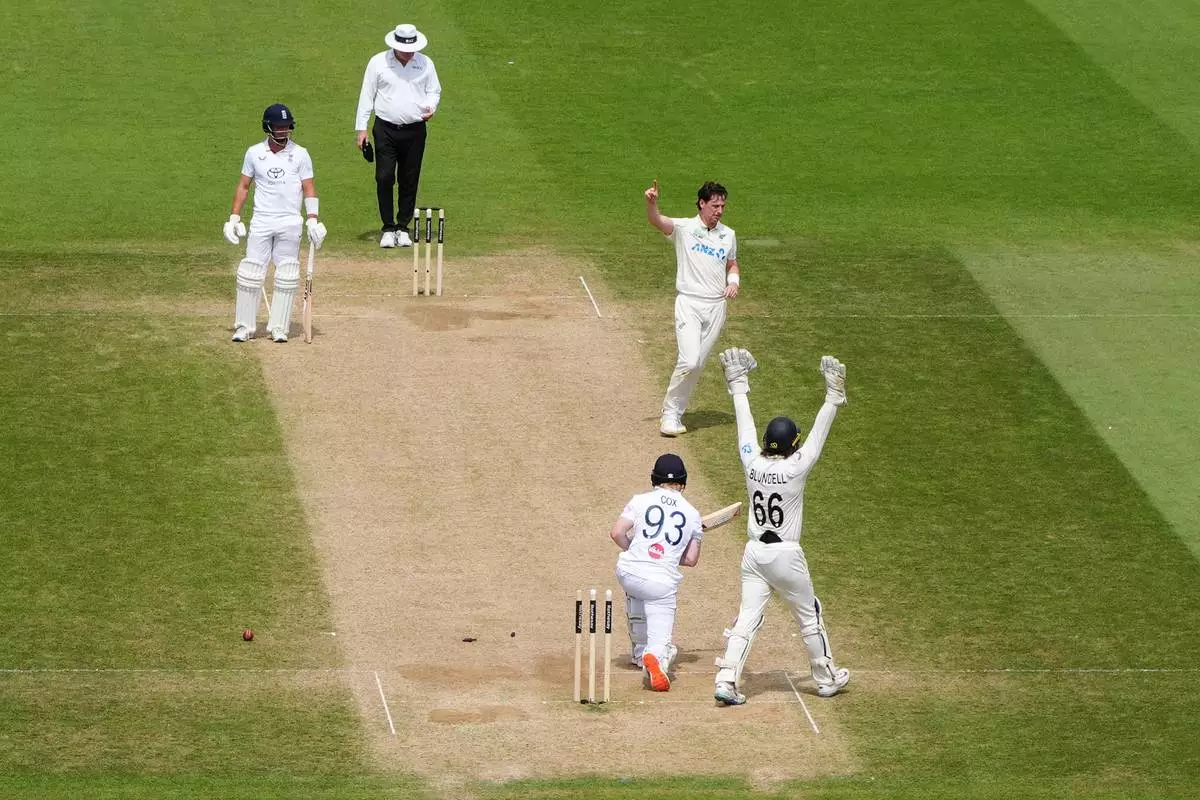
New Zealand's Matt Henry celebrates taking the wicket of England's Jordan Cox on day five of the Second Rothesay Test cricket match between England and New Zealand in London, England, Sunday, June 21, 2026. (Ben Whitley/PA via AP
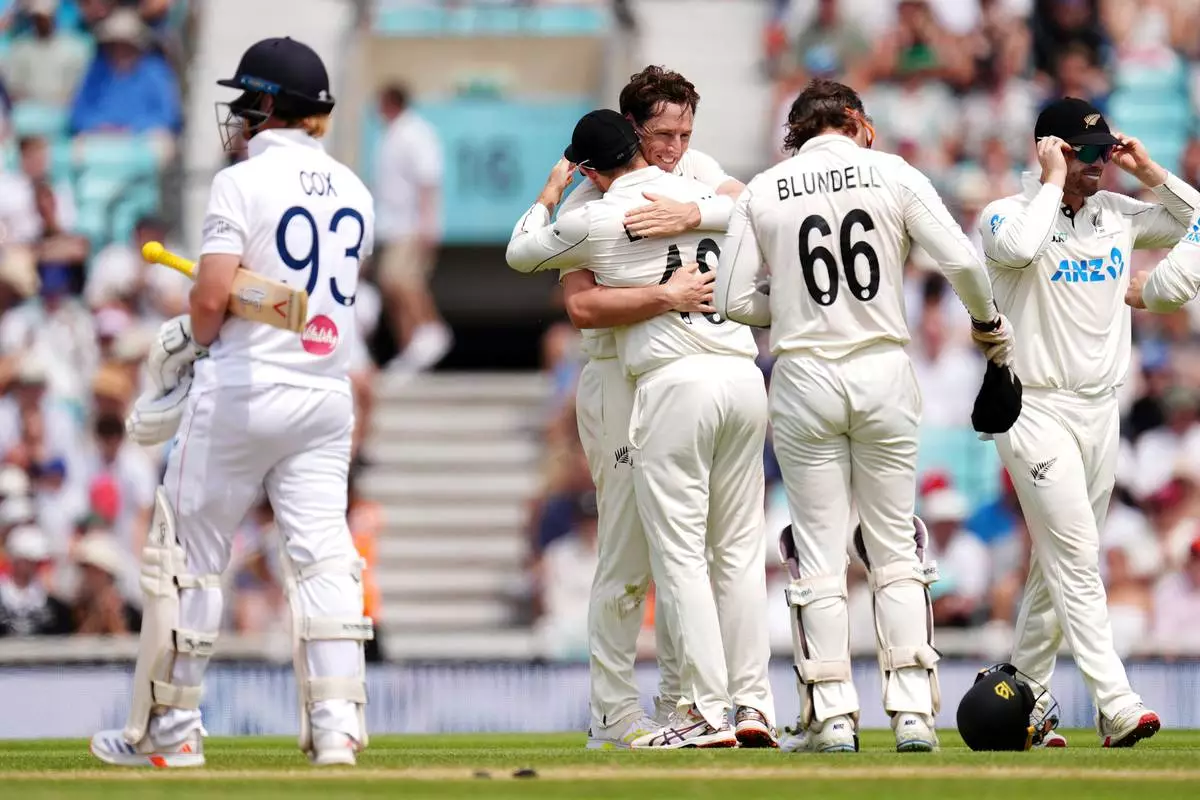
New Zealand's Matt Henry celebrates taking the wicket of England's Jordan Cox on day five of the Second Rothesay Test cricket match between England and New Zealand in London, England, Sunday, June 21, 2026. (Ben Whitley/PA via AP
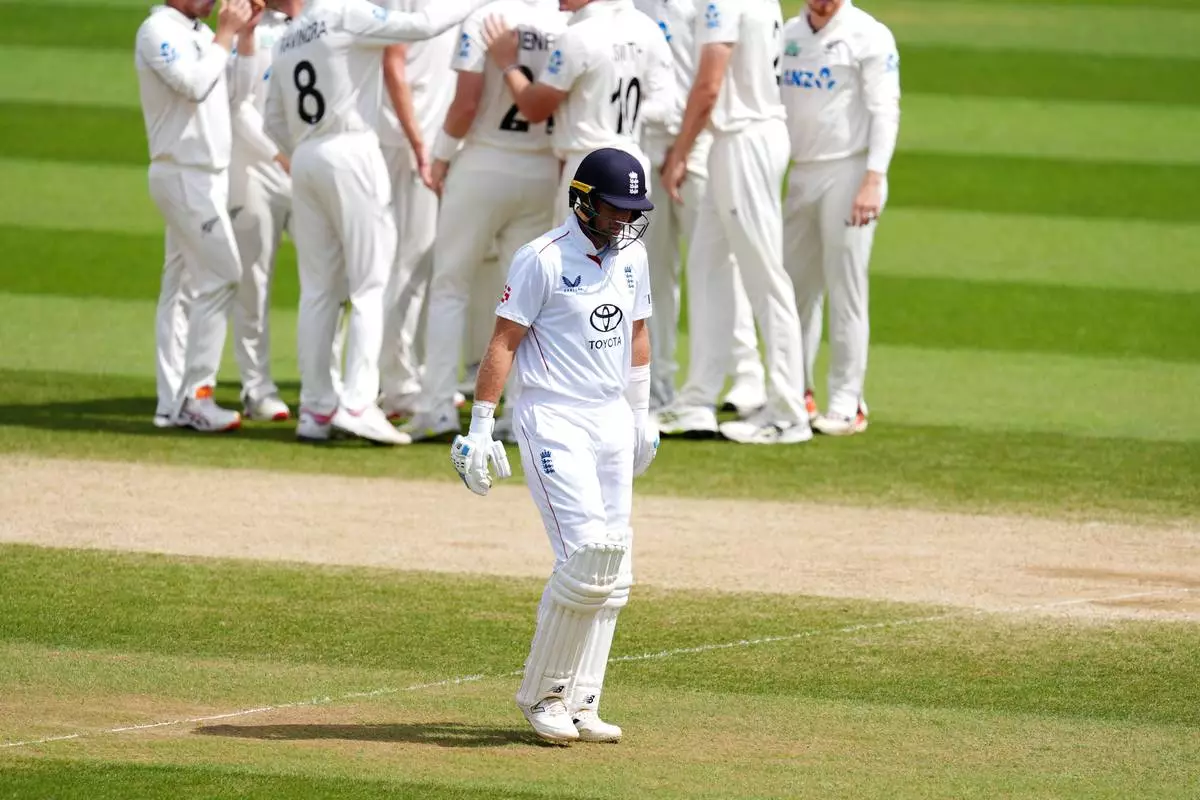
England's Joe Root reacts after being bowled out by New Zealand's Matt Henry on day five of the Second Rothesay Test cricket match between England and New Zealand in London, England, Sunday, June 21, 2026. (Ben Whitley/PA via AP
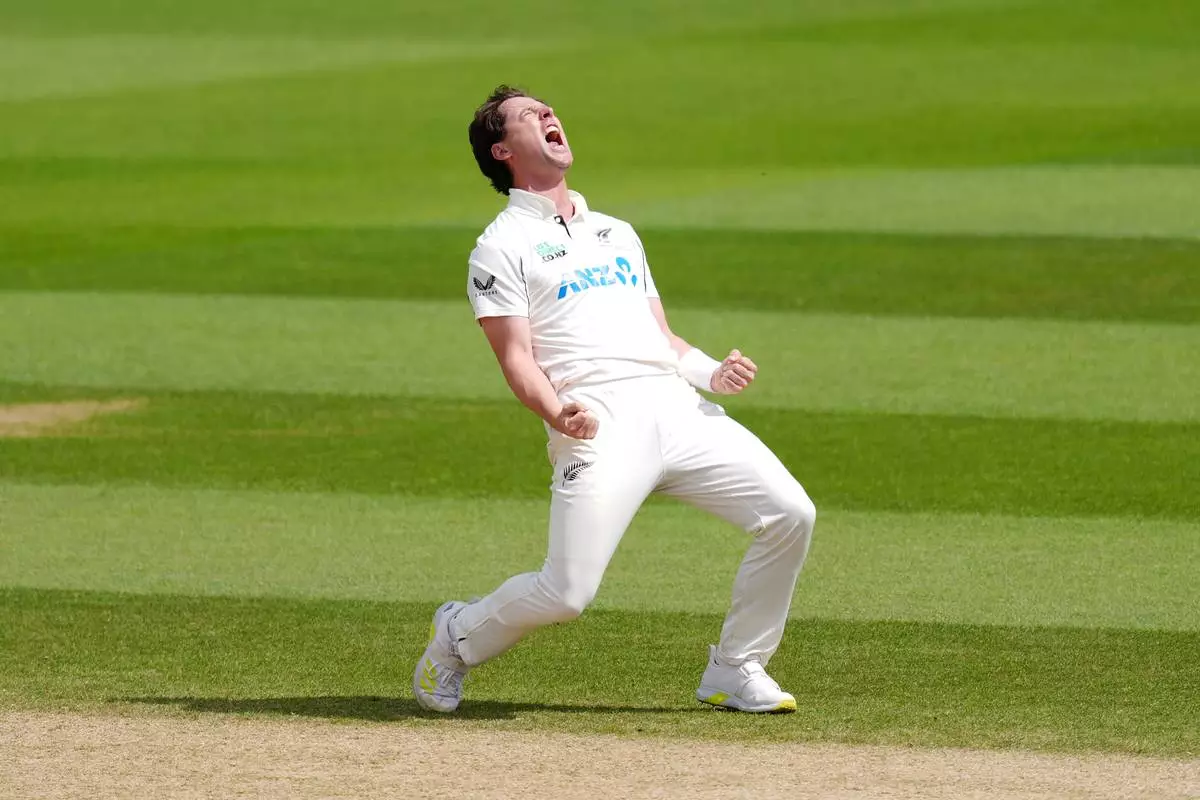
New Zealand's Matt Henry celebrates taking the wicket of England's Joe Root on day five of the Second Rothesay Test cricket match between England and New Zealand in London, England, Sunday, June 21, 2026. (Ben Whitley/PA via AP
U.S. and Iranian negotiators were in Switzerland on Sunday for talks on their interim agreement to end the Iran war. Pakistani and Qatari mediators were also at the scene for the technical-level discussions on resolving the conflict that began in late February.
The U.S. team is led by Vice President JD Vance and includes Jared Kushner and Steve Witkoff. They will meet with Iranian negotiators led by Parliament Speaker Mohammad Bagher Qalibaf and Foreign Minister Abbas Araghchi.
On the eve of the talks, Tehran announced it has closed the Strait of Hormuz again over Israel’s ongoing military campaign in Lebanon. The interim deal between the U.S. and Iran is meant to stop fighting on all fronts, including Lebanon, as well as calling for billions of dollars of Iran’s assets to be unfrozen.
U.S. President Donald Trump has threatened to impose American tolls in the strait if a final deal with Iran isn’t reached in 60 days. The interim agreement calls for toll-free travel for 60 days in the waterway that is vital for the world’s oil supply.
Here is the latest:
The U.S. vice president spoke as officials were gathering for the start of the U.S.-Iran talks on Sunday.
“The question before us now is how much more can we accomplish together? Can we turn over a new leaf?” Vance said in brief comments ahead of the talks, dubbed the “Lake Lucerne Summit.”
“Can we change relations in the Middle East permanently, or do we go back to doing things the old way, which is not our preference, but is certainly very much something that can happen,” Vance added.
It was not clear if the Iranians were present during Vance's remarks.
The Israeli military says it killed two militants who were involved in helping transfer up to half a billion dollars to Hamas. The military says the two — Hussein Qadra and Mohammed Farra, who worked with Hamas and the militant group Palestinian Islamic Jihad — were killed in a strike last week.
It said on Sunday that the men oversaw a network of couriers and money exchange spots in both Gaza and Turkey that funneled money towards Hamas militants and infrastructure.
Both men were killed on Wednesday and buried on Thursday, according to their families. Farra’s family said his father, mother and sister were killed in an Israeli strike earlier in the war.
The conflict in Gaza is not part of the U.S-Iran talks underway in Switzerland.
Pakistan’s Prime Minister Shehbaz Sharif has separately met with JD Vance and with the Iranian delegation at the Bürgenstock Resort near Lucerne in Switzerland where the high-level talks are taking place.
Islamabad says Pakistan’s army chief, Field Marshal Asim Munir, accompanied Sharif at the meetings. It did not provide further details.
Sharif has repeatedly said Munir played a key role in brokering the memorandum of understanding between the U.S. and Iran.
A video released by Sharif’s office shows him warmly embracing Qalibaf, Iran's parliament speaker, and Araghchi, Iran's foreign minister, as Munir looks on.
Rafael Grossi, chief of the U.N. nuclear watchdog — the International Atomic Energy Agency — met with Swiss Foreign Minister Ignazio Cassis on the sidelines of the gathering at the picturesque mountainside resort near Lake Lucerne on Sunday morning.
The agency had monitored the 2015 nuclear deal negotiated between the U.S. and Iran under the Obama administration.
Trump in 2018 withdrew the U.S. from that agreement.
Iran's Foreign Ministry spokesman Esmail Baghaei says Tehran will mainly focus during the talks on Sunday on the ongoing fighting in Lebanon.
Tehran insists that the deal’s implementation start with a cessation of all fighting — including between Israel and Hezbollah.
Baghaei said the U.S. “has been unable or unwilling” to hold Israel to the ceasefire.
Iran will meet in the morning with Pakistani and Qatari mediators, and in the afternoon, there will be a four-way meeting including the U.S. negotiating team. There is currently only one day of negotiations planned, Baghaei told the state news agency.
“The implementation of any document is more important than its signing,” Baghaei also said Sunday.
Iran’s president has said that Iran will maintain its right to a nuclear program.
“What is certain is that we will never back down from the right to enrich uranium, and the other side is also forced to accept it,” Masoud Pezeshkian said on Sunday, according to state media.
As the U.S.-Iran talks were to kick off in Switzerland, a ceasefire appears to be holding in Lebanon, a lull that came after another day of heavy fighting.
Since the ceasefire, Israeli strikes on Friday and Saturday killed 97 people, including eight women and four children, Lebanese officials said. Five Israeli soldiers were also killed.
Israel says it targeted Hezbollah infrastructure on Saturday, including a tunnel network in the southern Lebanese town of Kfar Tebnit.
But by Sunday morning, residents in southern Lebanon reported a lull in Israeli strikes. There also were no reports of Hezbollah fire from the Israeli side.
Israel’s military has received instructions to uphold the ceasefire, and said it is only acting defensively, according to an Israeli military official who spoke on condition of anonymity in line with military guidelines.
—Melanie Lidman in Tel Aviv, Israel
Pakistani Prime Minister Shehbaz Sharif and army chief Field Marshal Asim Munir are also in Switzerland for the high-level U.S.-Iran talks, the prime minister's office said without providing further details.
The technical-level talks at Bürgenstock Resort near the Swiss city of Lucerne are being held after Sharif dispatched his special envoy, Interior Minister Mohsin Naqvi, to Tehran to persuade Iranian authorities to send a delegation to Switzerland. The meeting was originally scheduled for Friday but was delayed because of concerns raised by Iran.
Naqvi later informed Islamabad that Iran was willing to attend the talks. Pakistan subsequently conveyed the development to Washington.
The strait has emerged as a key focus, with Iran’s joint military command saying on Saturday that it was closed again because of the U.S. “clear breach of its commitments” by failing to end the war. The interim deal is meant to stop fighting on all fronts, including in Lebanon where Israeli forces are battling the militant Hezbollah group.
The U.S. disputed Iran’s announcement, with the U.S. Central Command saying that traffic continues to flow and that 55 merchant ships transited on Saturday with more than 17 million barrels of oil.
Ships began transiting after the interim U.S.-Iran agreement was signed last week. The U.S. lifted its blockade of Iran’s ports and now allows Tehran to sell its oil freely — terms that have left some in U.S. Congress asking whether the war was worth it.
The interim deal signed by Trump and Iranian President Masoud Pezeshkian gives negotiators 60 days to reach a nuclear agreement, but the time can be extended.
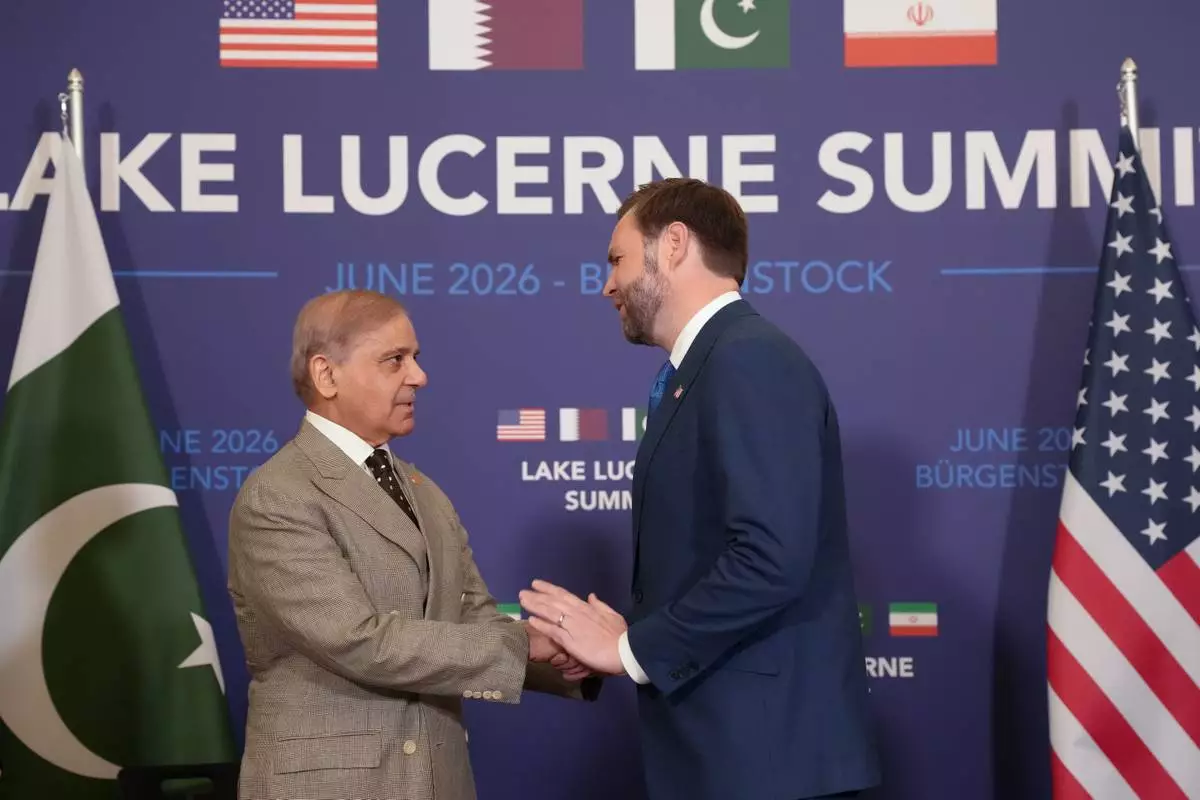
U.S. Vice President JD Vance, right, meets with Pakistan's Prime Minister Shehbaz Sharif, during high-level talks aimed at advancing a deal to end the Middle East conflict, at the Bürgenstock Resort in Obbuergen, near Lucerne, in Switzerland, Sunday, June 21, 2026. (Nathan Howard/Pool Photo via AP)
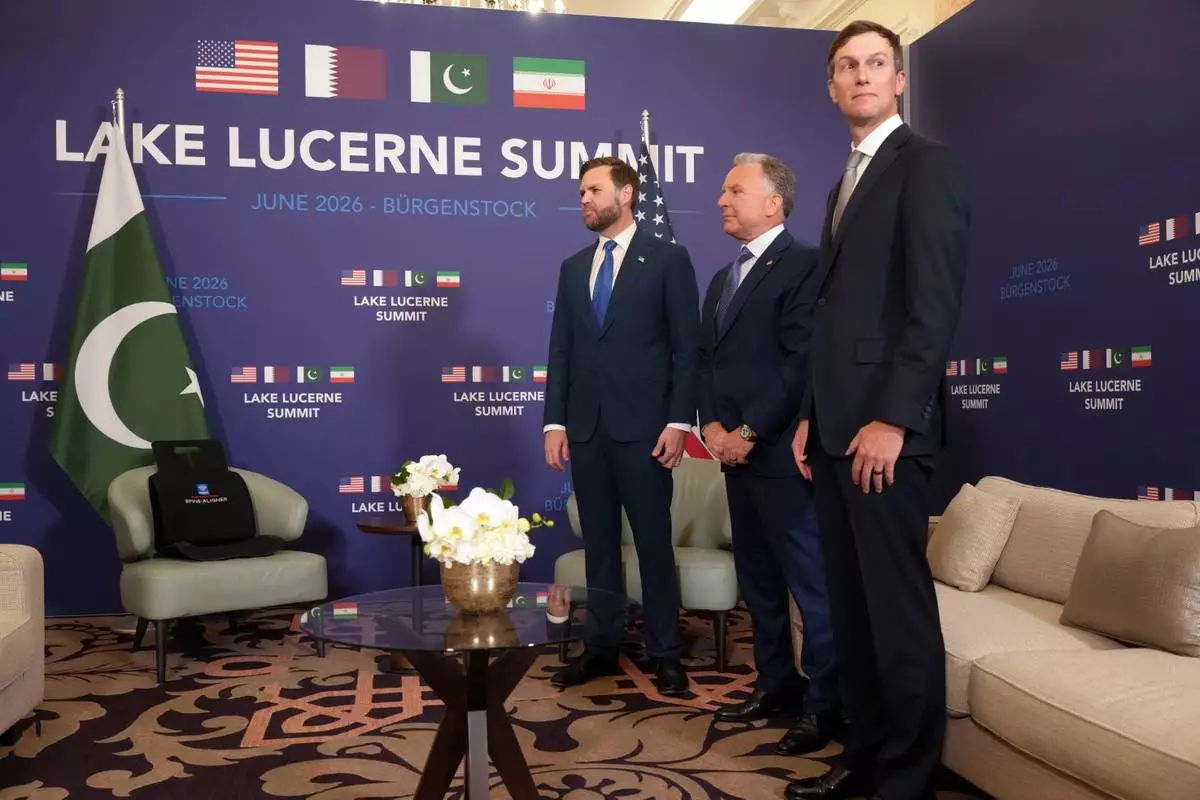
U.S. Vice President JD Vance waits, alongside U.S. President Donald Trump's envoys Steve Witkoff, second right, and Jared Kushner, right, to meet with Pakistan's Prime Minister Shehbaz Sharif for high-level talks aimed at advancing a deal to end the Middle East conflict, at the Bürgenstock Resort in Obbuergen, near Lucerne, in Switzerland, Sunday, June 21, 2026. (Nathan Howard/Pool Photo via AP)
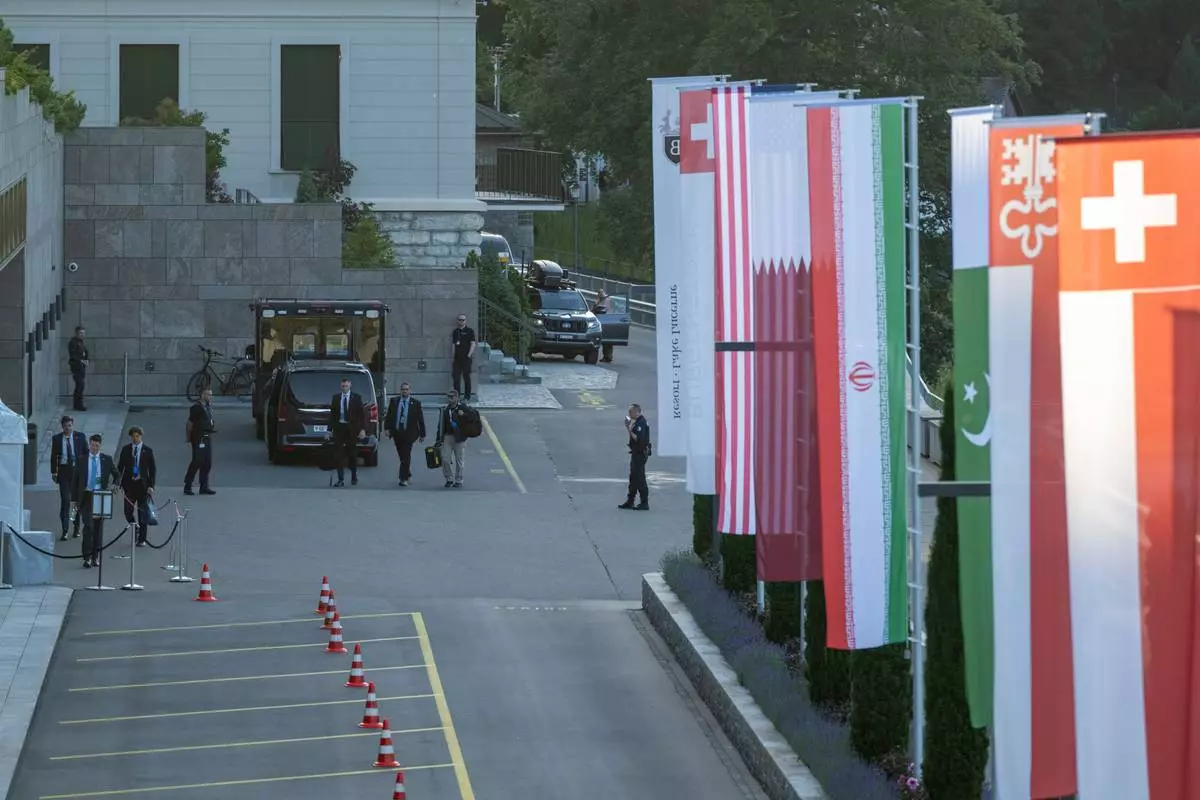
Flags of the U.S., Qatar, Iran, Pakistan, Nidwalden and Switzerland, from left, are seen at the Buergenstock resort in Obbuergen, near Lucerne, Switzerland, Sunday, June 21, 2026. (Urs Flueeler/Keystone Pool via AP)
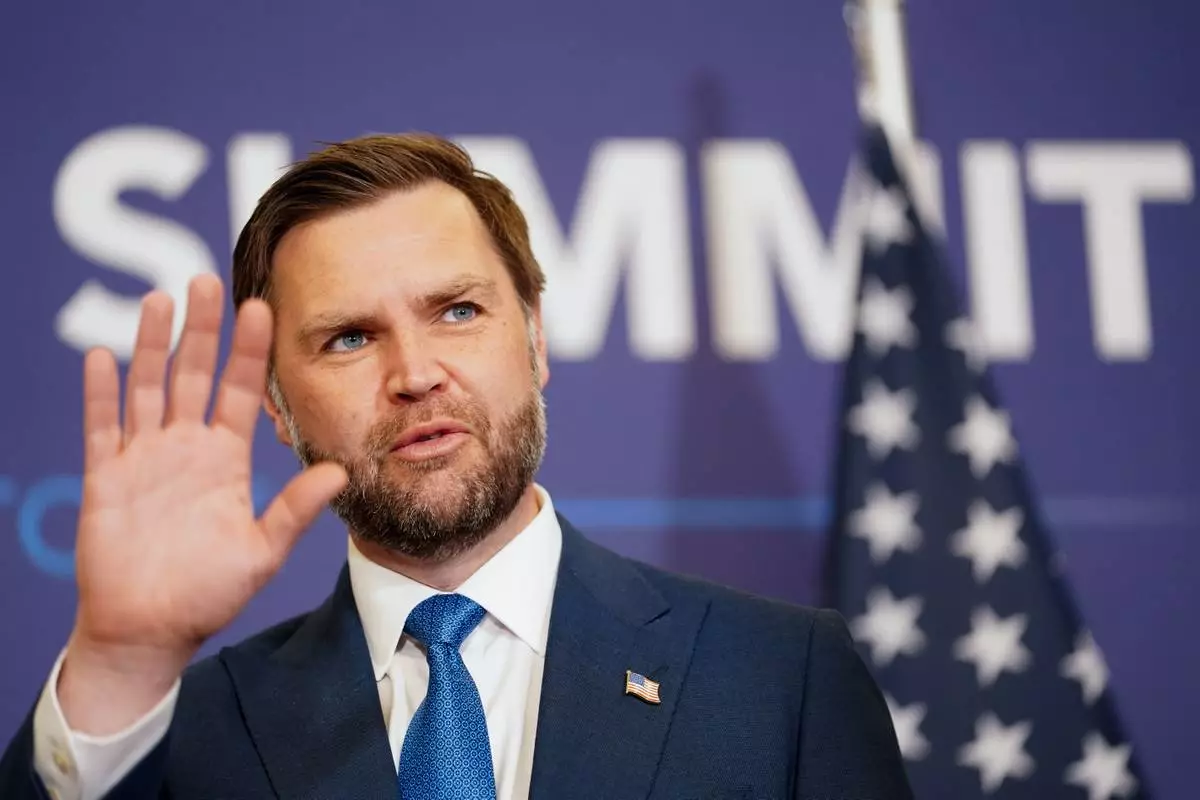
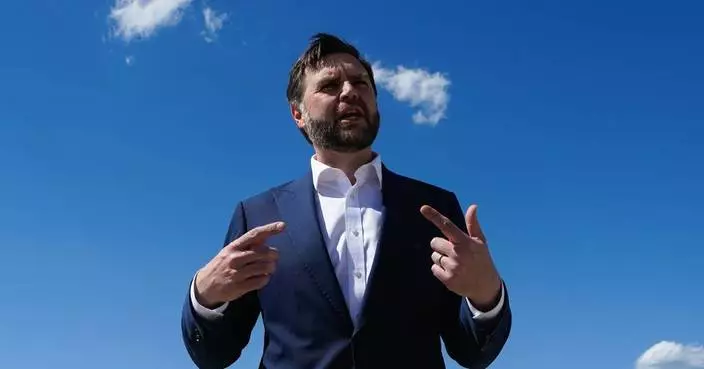
U.S. Vice President JD Vance, gestures as he meets with Pakistan's Prime Minister Shehbaz Sharif, during high-level talks aimed at advancing a deal to end the Middle East conflict, at the Bürgenstock Resort in Obbuergen, near Lucerne, in Switzerland, Sunday, June 21, 2026. (Nathan Howard/Pool Photo via AP)
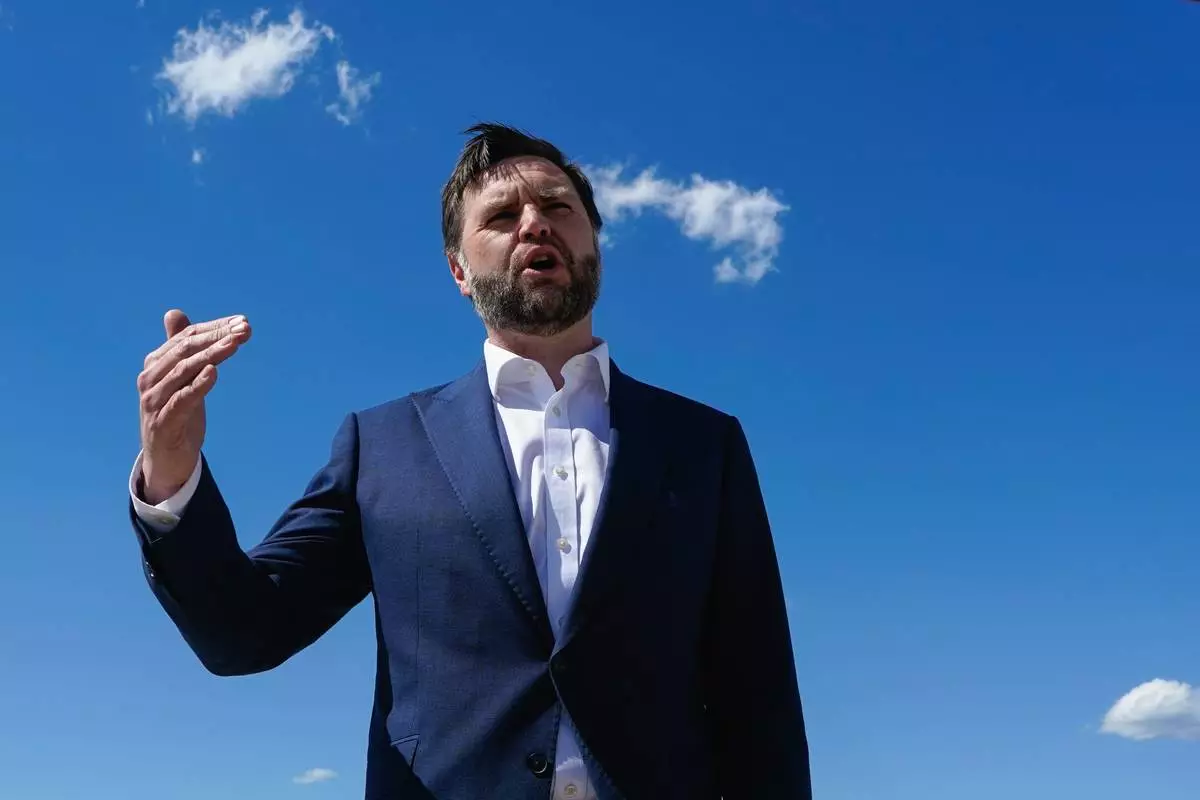
Vice President JD Vance speaks to reporters at Joint Base Andrews, Md., Saturday, June 20, 2026, en route to Switzerland. (Elizabeth Frantz/Pool Photo via AP)
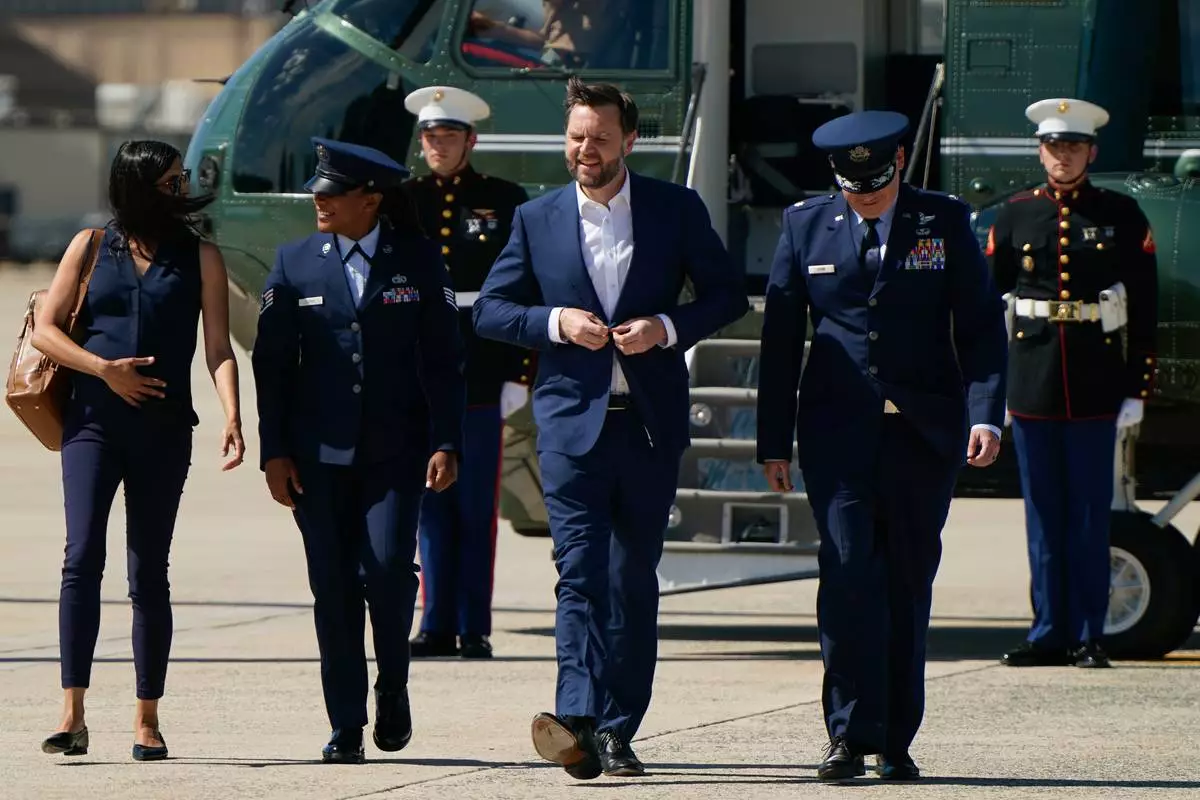
Vice President JD Vance, center, and second lady Usha Vance, left, walk from Marine Two as they arrive at Joint Base Andrews, Md., Saturday, June 20, 2026, en route to Switzerland. (Elizabeth Frantz/Pool Photo via AP)
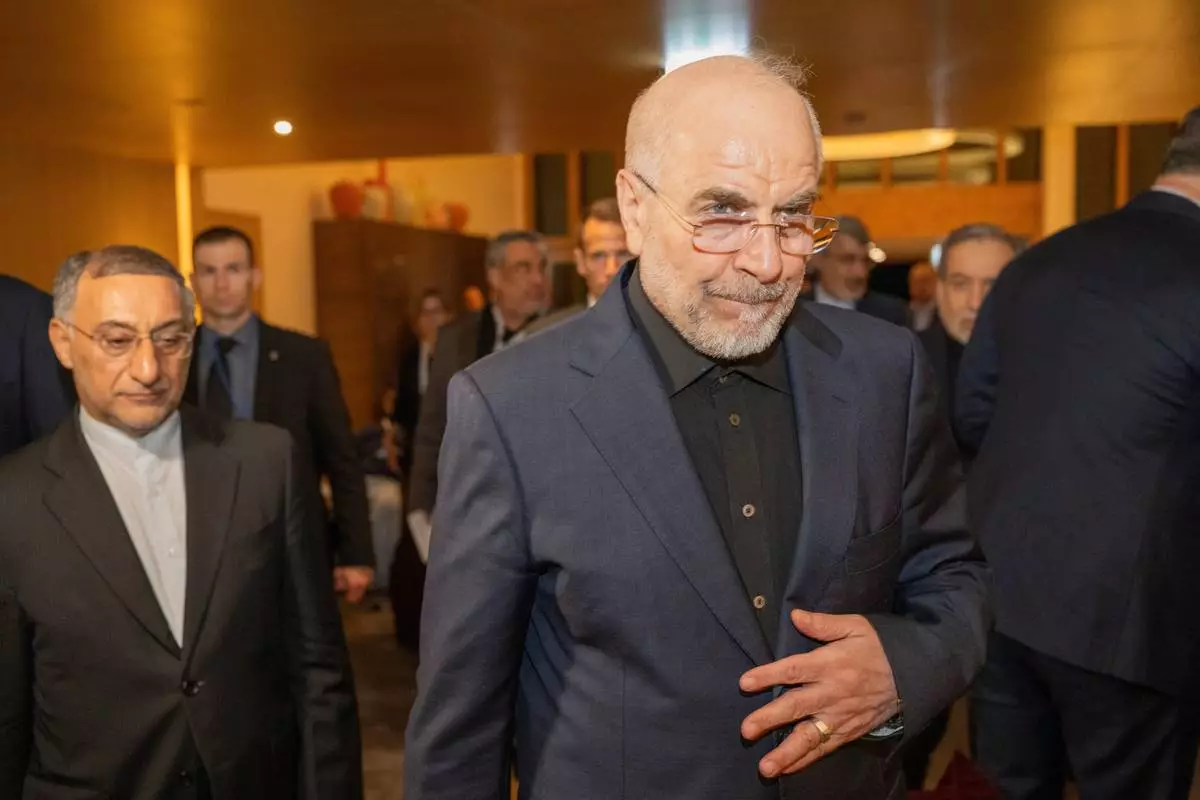
Speaker of the Islamic Parliament of Iran Mohammed Bagher Ghalibaf, center, arrives at the Buergenstock resort in Obbuergen, near Lucerne, Switzerland, early Sunday, June 21, 2026. (Urs Flueeler/Keystone, Pool via AP)
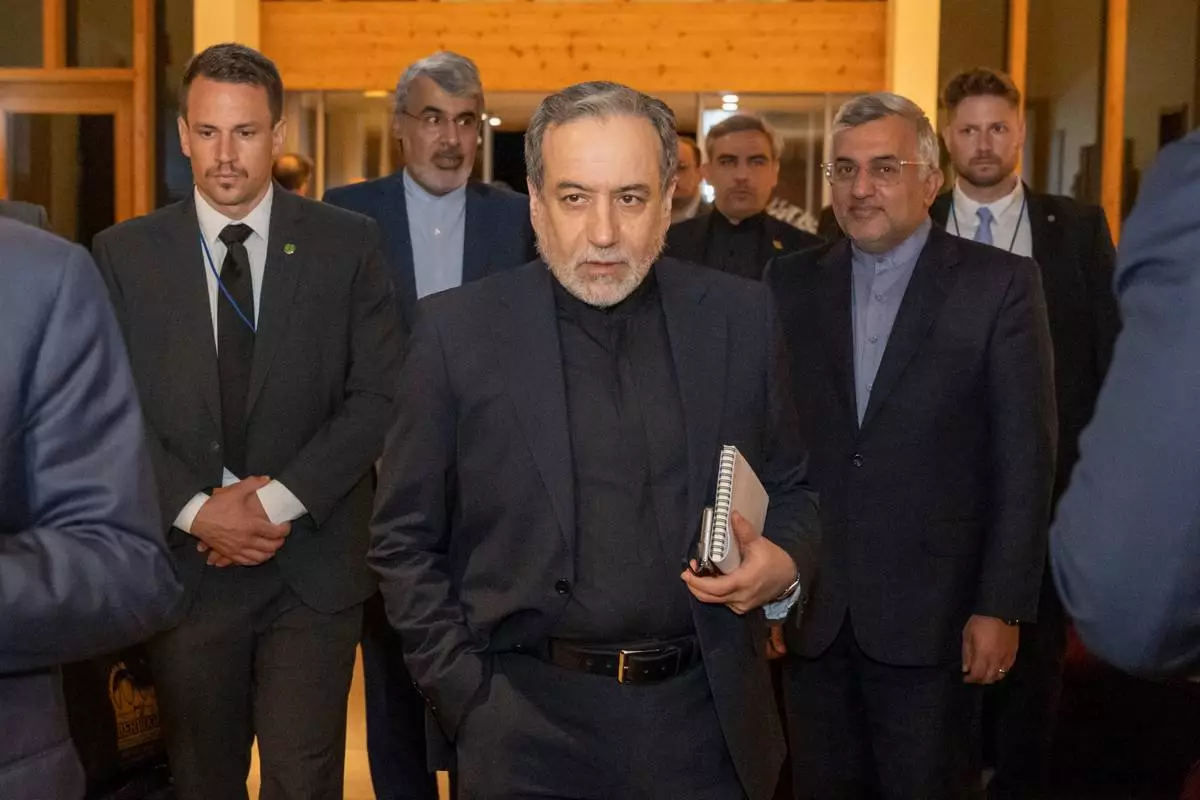
Iranian Foreign Minister Seyyed Abbas Araghchi, center, arrives at the Buergenstock resort in Obbuergen, near Lucerne, Switzerland, early Sunday, June 21, 2026. (Urs Flueeler/Keystone, Pool via AP)
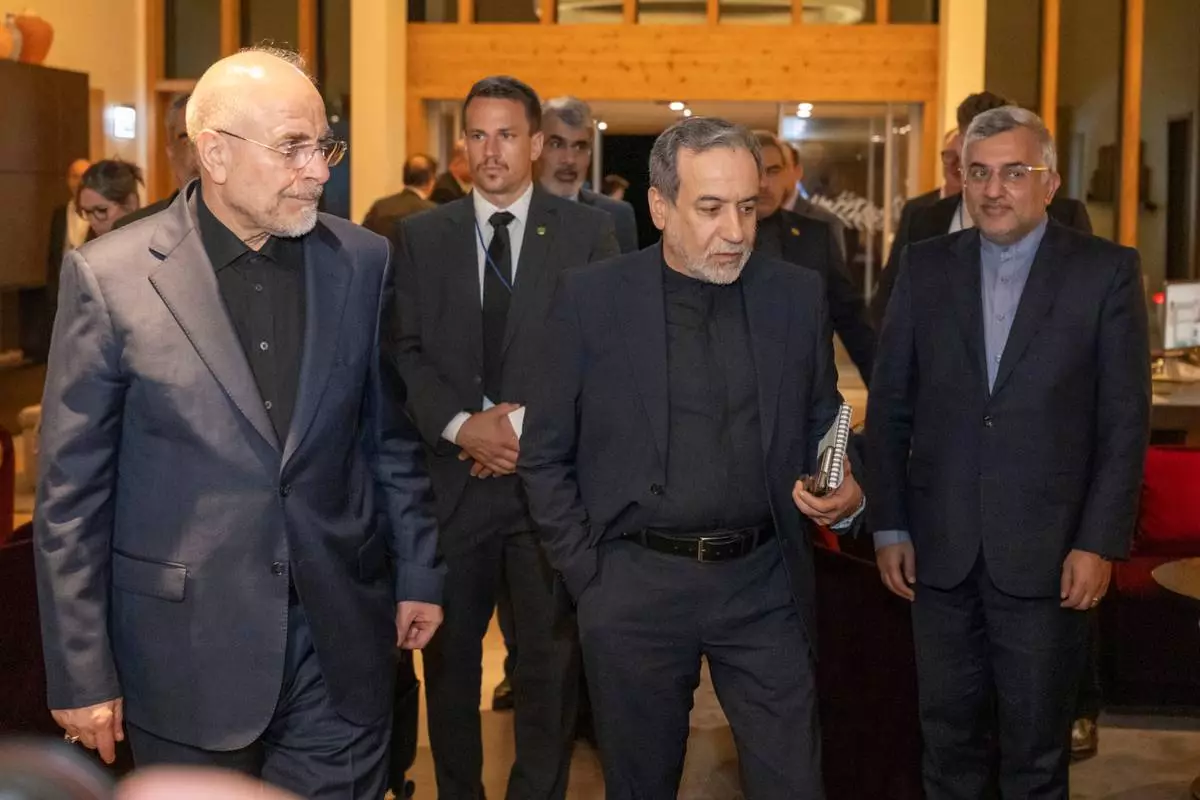
Iranian Foreign Minister Seyyed Abbas Araghchi, center, and Speaker of the Islamic Parliament of Iran Mohammed Bagher Ghalibaf, left, arrive at the Buergenstock resort in Obbuergen, near Lucerne, Switzerland, early Sunday, June 21, 2026. (Urs Flueeler/Keystone, Pool via AP)