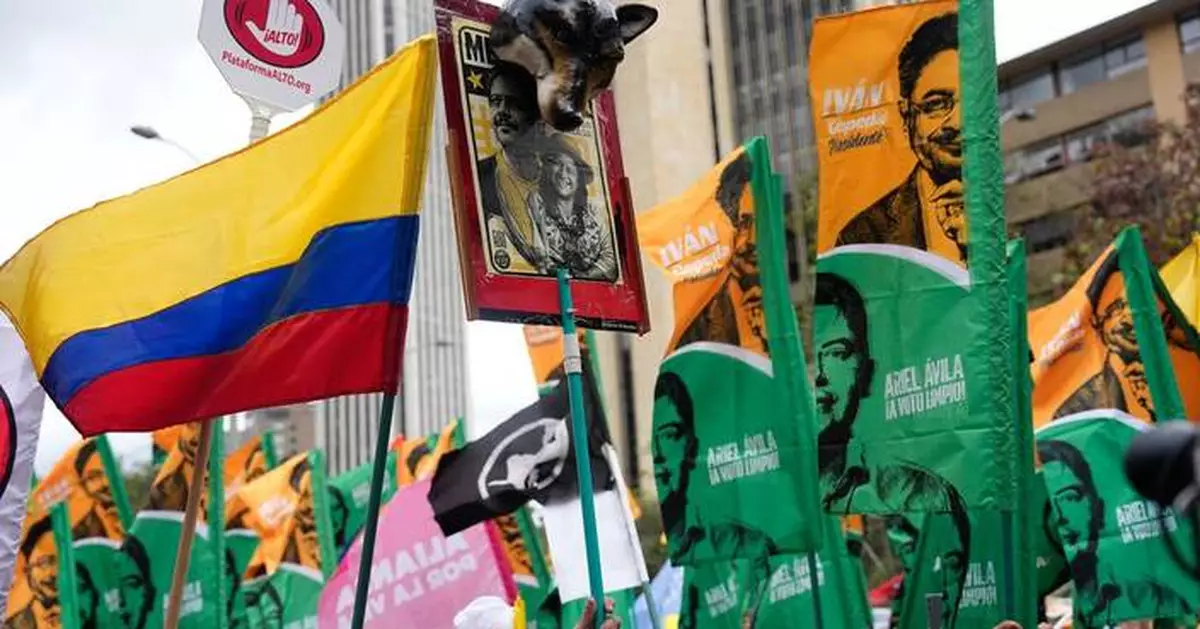
BOGOTA, Colombia (AP) — A deeply divided electorate will choose Colombia’s next president in a runoff on Sunday that pits a progressive against a conservative outsider, with both candidates tapping into fears of a renewed internal conflict in the country.
Voters will choose between businessman and lawyer Abelardo de la Espriella and Iván Cepeda, a lawmaker and heir to the political movement of outgoing President Gustavo Petro, the nation’s first leftist leader. The two defeated nine other contenders in a May 31 vote.
Click to Gallery
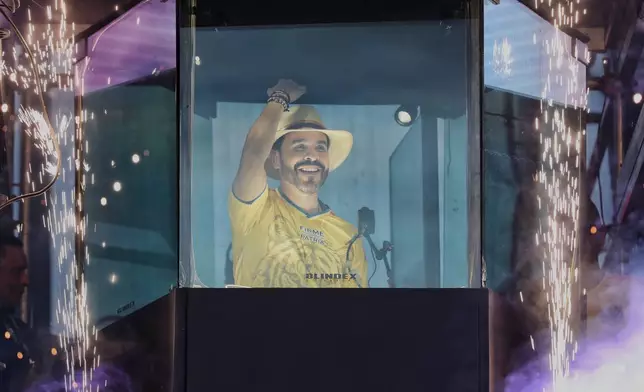
Presidential candidate Abelardo de la Espriella stands before supporters from inside a bulletproof booth during his campaign rally in Buga, Colombia, Sunday, June 14, 2026. (AP Photo/Santiago Saldarriaga)
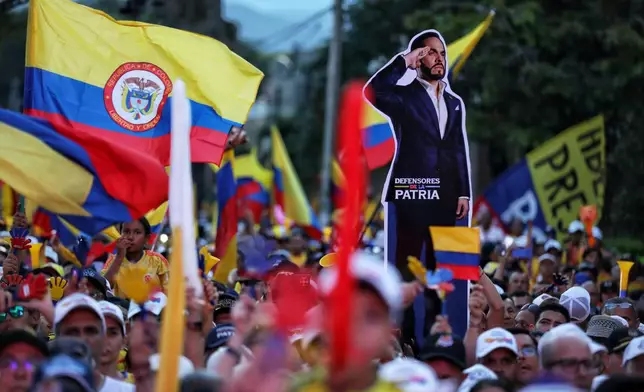
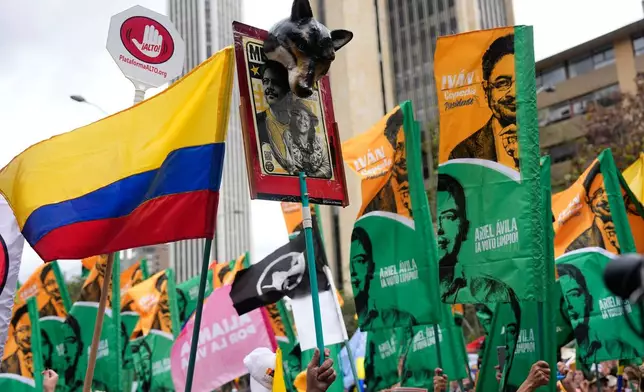
Supporters of presidential candidate Abelardo de la Espriella attend his campaign rally in Buga, Colombia, Sunday, June 14, 2026. (AP Photo/Santiago Saldarriaga)
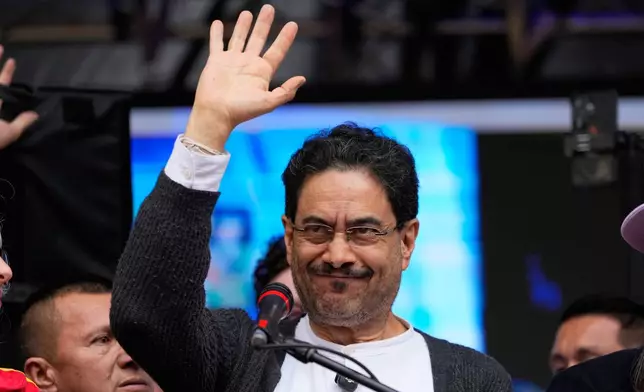
Historic Pact coalition presidential candidate Ivan Cepeda waves during a campaign rally in Bogota, Colombia, Saturday, June 13, 2026. (AP Photo/Fernando Vergara)
Supporters of Historic Pact coalition presidential candidate Ivan Cepeda attend his campaign rally in Bogota, Colombia, Saturday, June 13, 2026. (AP Photo/Fernando Vergara)
Both are pitching strategies that they say will prevent the South American country from experiencing the nonstop merciless violence, such as car bombs, kidnappings, disappearances and forced displacements that Colombians lived with in previous decades.
De la Espriella is proposing a heavy-handed approach that has earned him the endorsement of U.S. President Donald Trump.
Cepeda is promising to continue Petro’s efforts, including attempts at establishing dialogue with multiple illegal armed groups even though those efforts have largely failed.
The two candidates also are offering differing solutions for the country’s struggling health system, ballooning public debt and entrenched corruption.
“Right now, what worries me is the polarization that exists between us: there are two very extreme sides, and the violence is concerning,” John Manrique, a lawyer in the capital, Bogota, said as he walked his dog.
“What I hope is that people accept who won,” he added. “Let’s accept it, regardless of the side, and try to reach a social consensus. … Let’s not go out and fight.”
In the first round, Cepeda earned 41% of the vote, while de la Espriella garnered 44%, according to official results. Petro, without evidence, sowed doubts in the results after Cepeda, who had consistently lead polls ahead of the May vote, did not win outright and even finished behind de la Espriella.
The election comes 10 years after Colombia signed a historic peace pact with guerrillas of the Revolutionary Armed Forces of Colombia, or FARC, that had offered hope to break the nation’s vicious cycle of fighting between rebel groups and the government.
But violence has since roared back, particularly as most rebel groups abandoned their ideologically driven fight for the financial benefits of drug trafficking.
Last year, authorities recorded 14,780 homicides, the most since at least 2015 and driven by clashes among illegal armed groups. Among those killed was conservative presidential hopeful Miguel Uribe. Extortions have also soared, reaching 13,417 cases in 2025, more than double the number tallied in 2015.
More than 41 million people are eligible to vote on Sunday.
De la Espriella, a political newcomer nicknamed “The Tiger,” has promised to fiercely go after criminals and build 10 mega-prisons, emulating the policies of El Salvador's President Nayib Bukele that have lowered homicide rates but have fueled accusations of human rights abuses.
Cepeda wants to carry on Petro's fraught signature plan to achieve “total peace” by negotiating pacts with guerrillas and criminal gangs. The heavily criticized strategy that Petro kicked off in 2022 took until Thursday to see the first armed group — one with about 100 members — give up its weapons and begin a resettlement process that will lead to their reintegration into civilian life. Colombia's illegal groups have more than 27,000 members.
Yamile Guevara, a retired teacher in Bogota, said Petro's plans need more time to bear results as he could not reasonably be expected to make lasting changes in a conflict that has gone on for six decades. She also criticized what she described as voters' perennial distrust of Colombia's left over its long-held association with rebel groups.
“The left has always been viewed negatively; it has been harsh, and many people have died,” Guevara, a Cepeda supporter, said. “So, one wonders what’s wrong with people who have forgotten history … how can they not think carefully about which candidate they are going to elect?”
The lead-up to the runoff has seen an increase in verbal attacks between the candidates as well as accusations of fraud, vote-buying and intimidation.
Cepeda filed a complaint with the Colombian Attorney General’s Office and the International Criminal Court against de la Espriella, accusing him of having ties to paramilitary groups. De la Espriella has denied the accusation.
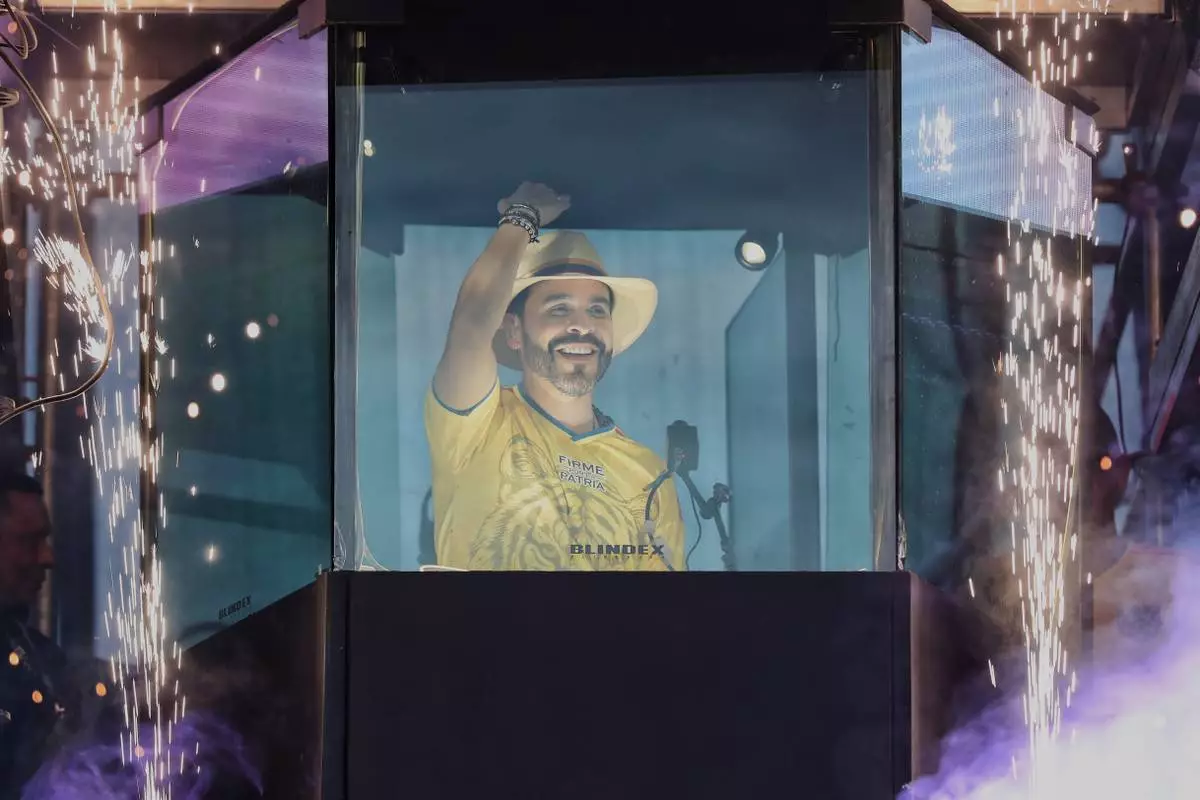
Presidential candidate Abelardo de la Espriella stands before supporters from inside a bulletproof booth during his campaign rally in Buga, Colombia, Sunday, June 14, 2026. (AP Photo/Santiago Saldarriaga)
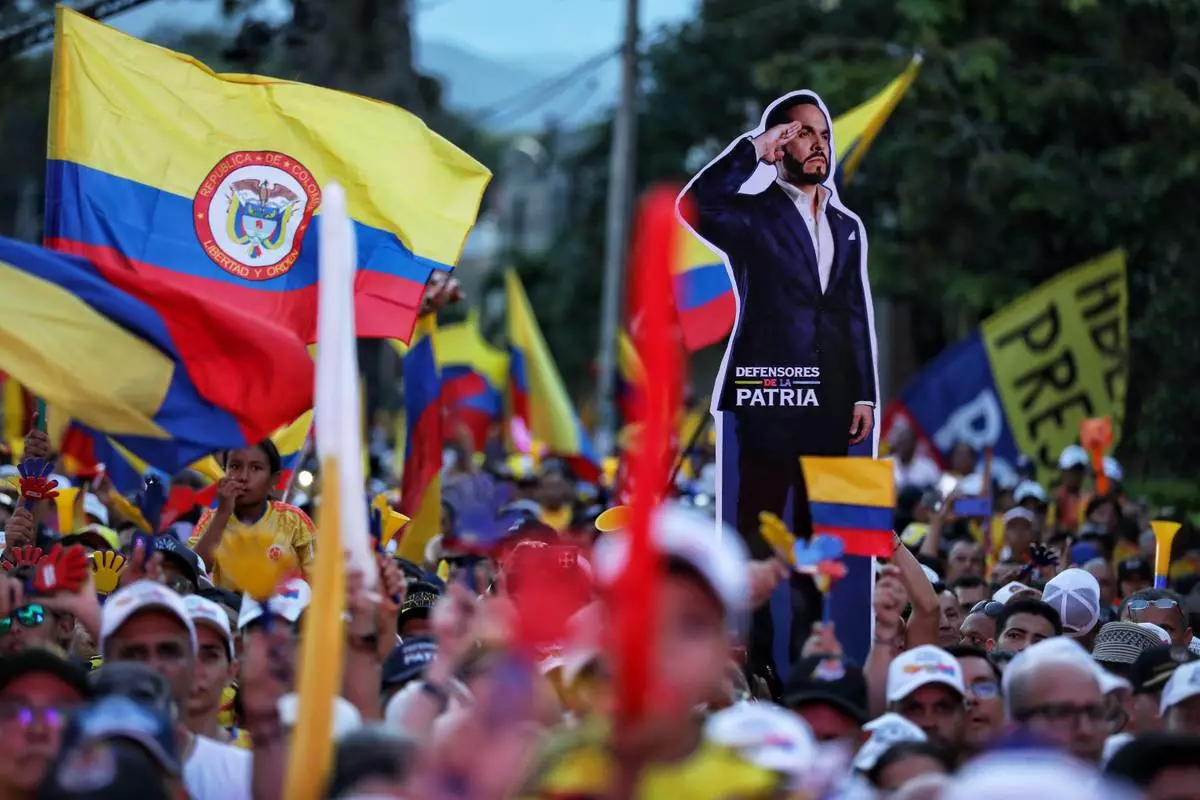
Supporters of presidential candidate Abelardo de la Espriella attend his campaign rally in Buga, Colombia, Sunday, June 14, 2026. (AP Photo/Santiago Saldarriaga)
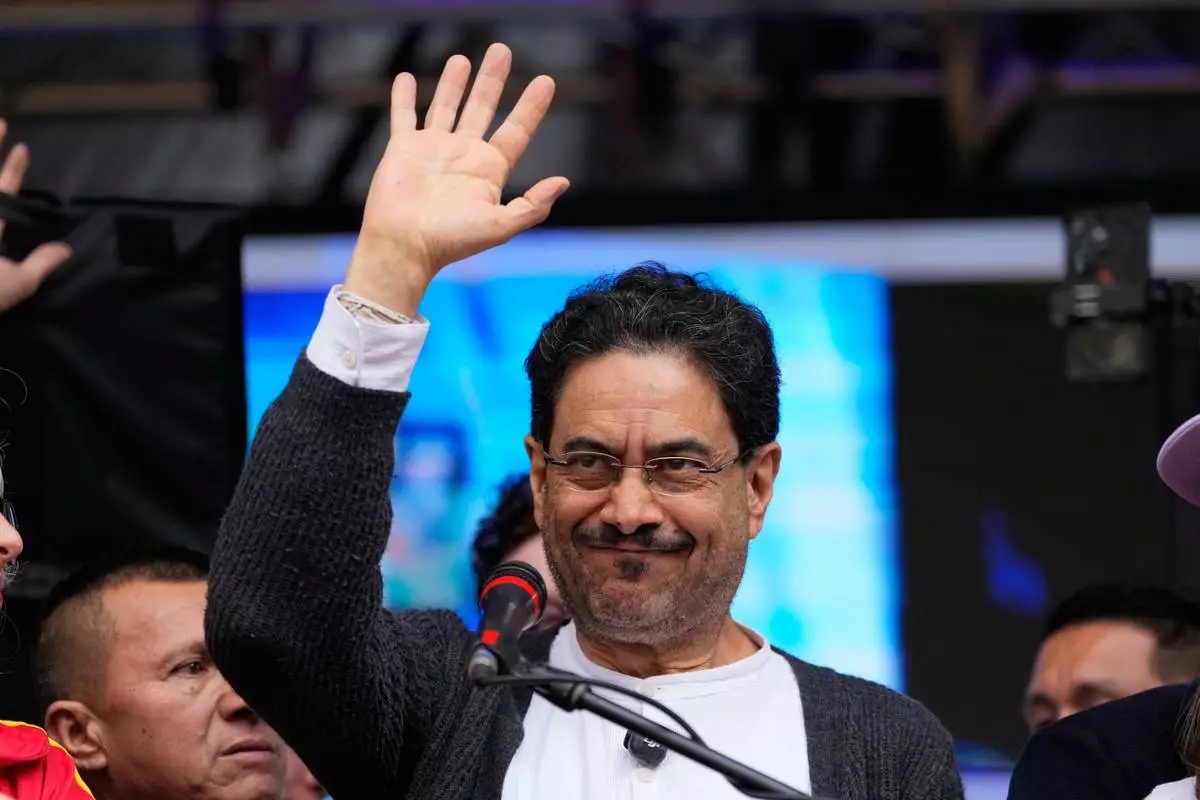
Historic Pact coalition presidential candidate Ivan Cepeda waves during a campaign rally in Bogota, Colombia, Saturday, June 13, 2026. (AP Photo/Fernando Vergara)
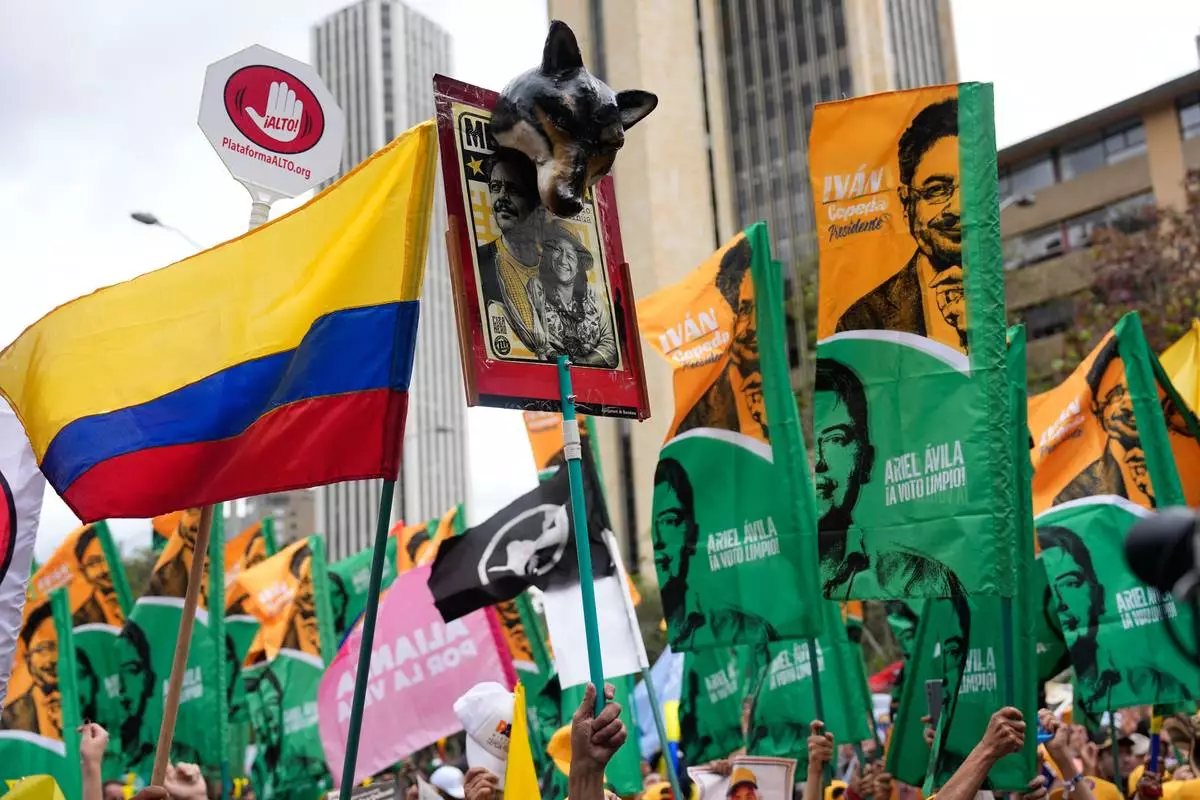
Supporters of Historic Pact coalition presidential candidate Ivan Cepeda attend his campaign rally in Bogota, Colombia, Saturday, June 13, 2026. (AP Photo/Fernando Vergara)
U.S. and Iranian negotiators are in Switzerland on Sunday for talks on working out key details of their interim agreement to end the Iran war.
A team led by U.S. Vice President JD Vance, including Jared Kushner and Steve Witkoff, is to meet with g Iranian negotiators led by parliamentary Speaker Mohammad Bagher Qalibaf and Foreign Minister Abbas Araghchi.
Pakistani envoys are also in place, as well as Qatari mediators, for the technical-level discussions to end the conflict that began in late February.
Vance said he was optimistic about making progress in talks about Iran’s nuclear program and a ceasefire in southern Lebanon.
On the eve of the talks, Tehran announced it has closed the Strait of Hormuz again over Israel’s ongoing military campaign in Lebanon. The interim deal between the U.S. and Iran is meant to stop fighting on all fronts, including Lebanon, as well as calling for billions of dollars of Iran’s assets to be unfrozen.
U.S. President Donald Trump has threatened to impose American tolls in the strait if a final deal with Iran isn’t reached in 60 days. The interim agreement calls for toll-free travel for 60 days in the waterway that is vital for the world's oil supply.
Here is the latest:
Iran's Foreign Ministry spokesman Esmail Baghaei says Tehran will mainly focus during the talks on Sunday on the ongoing fighting in Lebanon.
Tehran insists that the deal’s implementation start with a cessation of all fighting — including between Israel and Hezbollah.
Baghaei said the U.S. “has been unable or unwilling” to hold Israel to the ceasefire.
Iran will meet in the morning with Pakistani and Qatari mediators, and in the afternoon, there will be a four-way meeting including the U.S. negotiating team. There is currently only one day of negotiations planned, Baghaei told the state news agency.
“The implementation of any document is more important than its signing,” Baghaei also said Sunday.
Iran’s president has said that Iran will maintain its right to a nuclear program.
“What is certain is that we will never back down from the right to enrich uranium, and the other side is also forced to accept it,” Masoud Pezeshkian said on Sunday, according to state media.
As the U.S.-Iran talks were to kick off in Switzerland, a ceasefire appears to be holding in Lebanon, a lull that came after another day of heavy fighting.
Lebanon’s Health Ministry reported over 50 killed in Israeli strikes since the deal was signed on Thursday. Five Israeli soldiers were also killed.
Israel says it targeted Hezbollah infrastructure on Saturday, including a tunnel network in the southern Lebanese town of Kfar Tebnit.
But by Sunday morning, residents in southern Lebanon reported a lull in Israeli strikes. There also were no reports of Hezbollah fire from the Israeli side.
Israel’s military has received instructions to uphold the ceasefire, and said it is only acting defensively, according to an Israeli military official who spoke on condition of anonymity in line with military guidelines.
—Melanie Lidman in Tel Aviv, Israel
Pakistani Prime Minister Shehbaz Sharif and army chief Field Marshal Asim Munir are also in Switzerland for the high-level U.S.-Iran talks, the prime minister's office said without providing further details.
The technical-level talks at Bürgenstock Resort near the Swiss city of Lucerne are being held after Sharif dispatched his special envoy, Interior Minister Mohsin Naqvi, to Tehran to persuade Iranian authorities to send a delegation to Switzerland. The meeting was originally scheduled for Friday but was delayed because of concerns raised by Iran.
Naqvi later informed Islamabad that Iran was willing to attend the talks. Pakistan subsequently conveyed the development to Washington.
The strait has emerged as a key focus, with Iran’s joint military command saying on Saturday that it was closed again because of the U.S. “clear breach of its commitments” by failing to end the war. The interim deal is meant to stop fighting on all fronts, including in Lebanon where Israeli forces are battling the militant Hezbollah group.
The U.S. disputed Iran’s announcement, with the U.S. Central Command saying that traffic continues to flow and that 55 merchant ships transited on Saturday with more than 17 million barrels of oil.
Ships began transiting after the interim U.S.-Iran agreement was signed last week. The U.S. lifted its blockade of Iran’s ports and now allows Tehran to sell its oil freely — terms that have left some in U.S. Congress asking whether the war was worth it.
The interim deal signed by Trump and Iranian President Masoud Pezeshkian gives negotiators 60 days to reach a nuclear agreement, but the time can be extended.
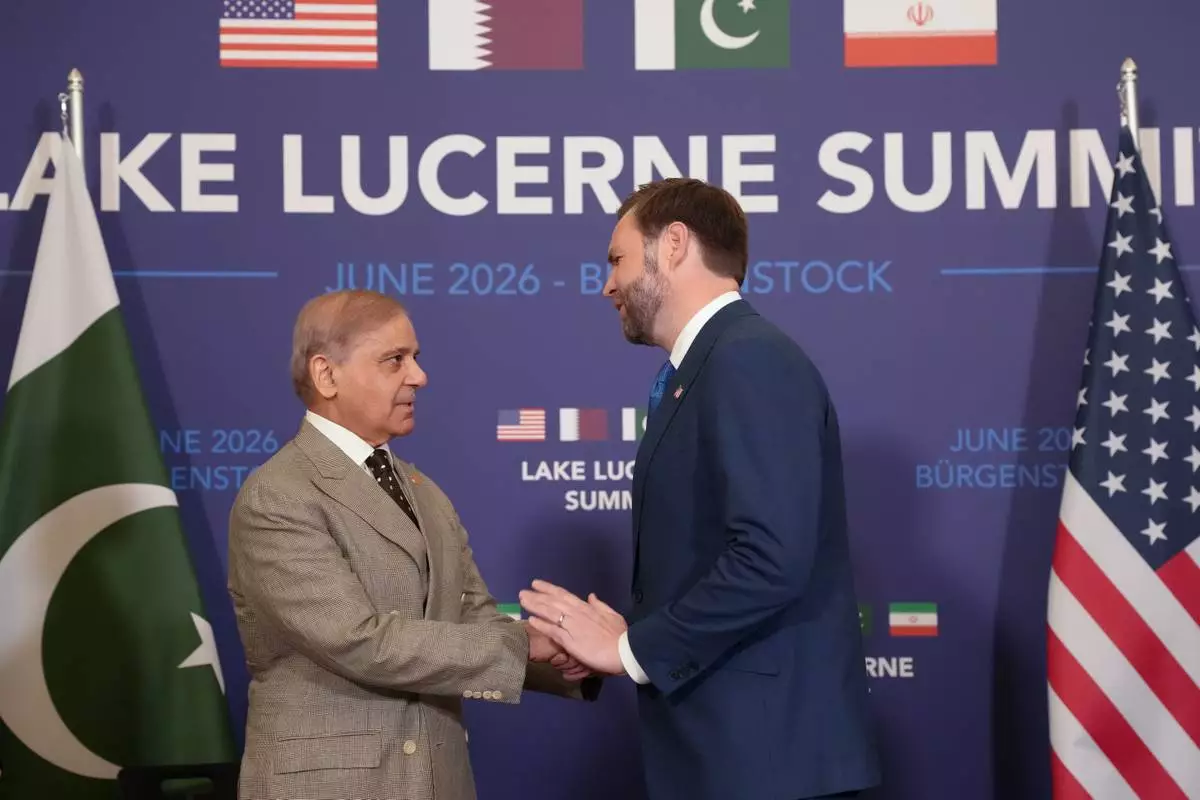
U.S. Vice President JD Vance, right, meets with Pakistan's Prime Minister Shehbaz Sharif, during high-level talks aimed at advancing a deal to end the Middle East conflict, at the Bürgenstock Resort in Obbuergen, near Lucerne, in Switzerland, Sunday, June 21, 2026. (Nathan Howard/Pool Photo via AP)
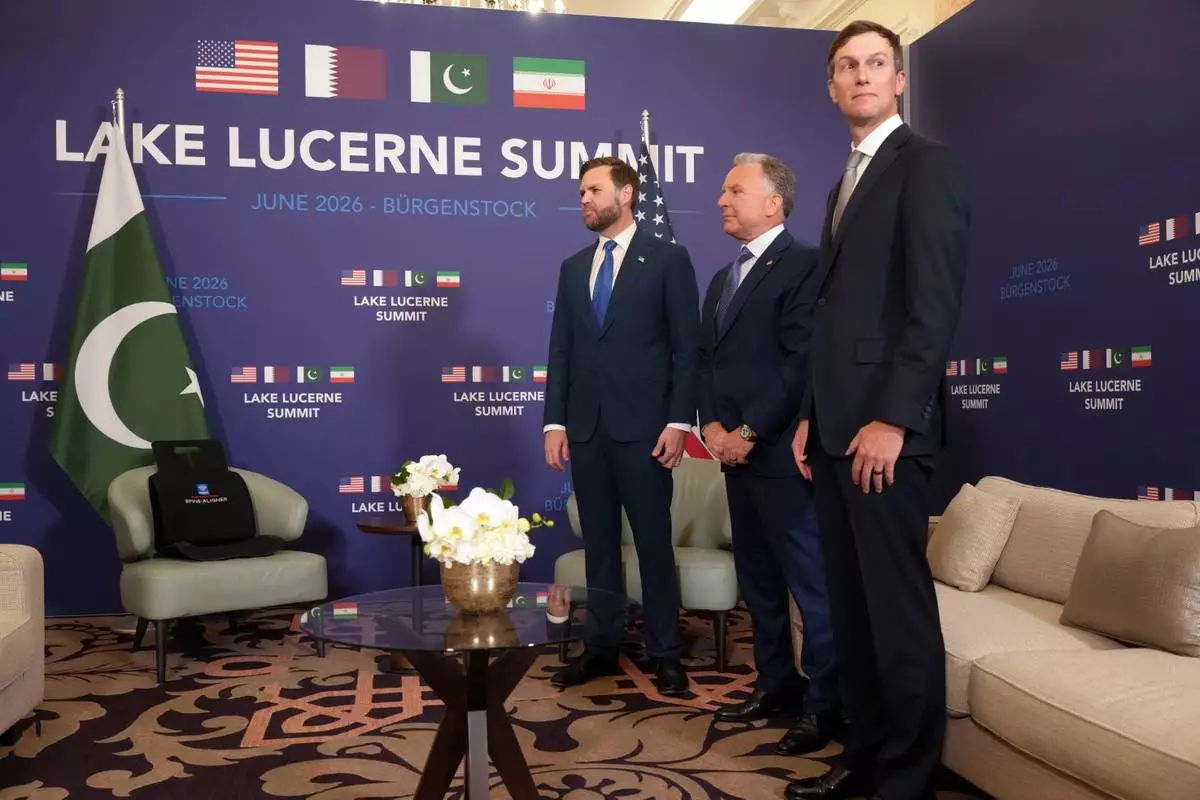
U.S. Vice President JD Vance waits, alongside U.S. President Donald Trump's envoys Steve Witkoff, second right, and Jared Kushner, right, to meet with Pakistan's Prime Minister Shehbaz Sharif for high-level talks aimed at advancing a deal to end the Middle East conflict, at the Bürgenstock Resort in Obbuergen, near Lucerne, in Switzerland, Sunday, June 21, 2026. (Nathan Howard/Pool Photo via AP)
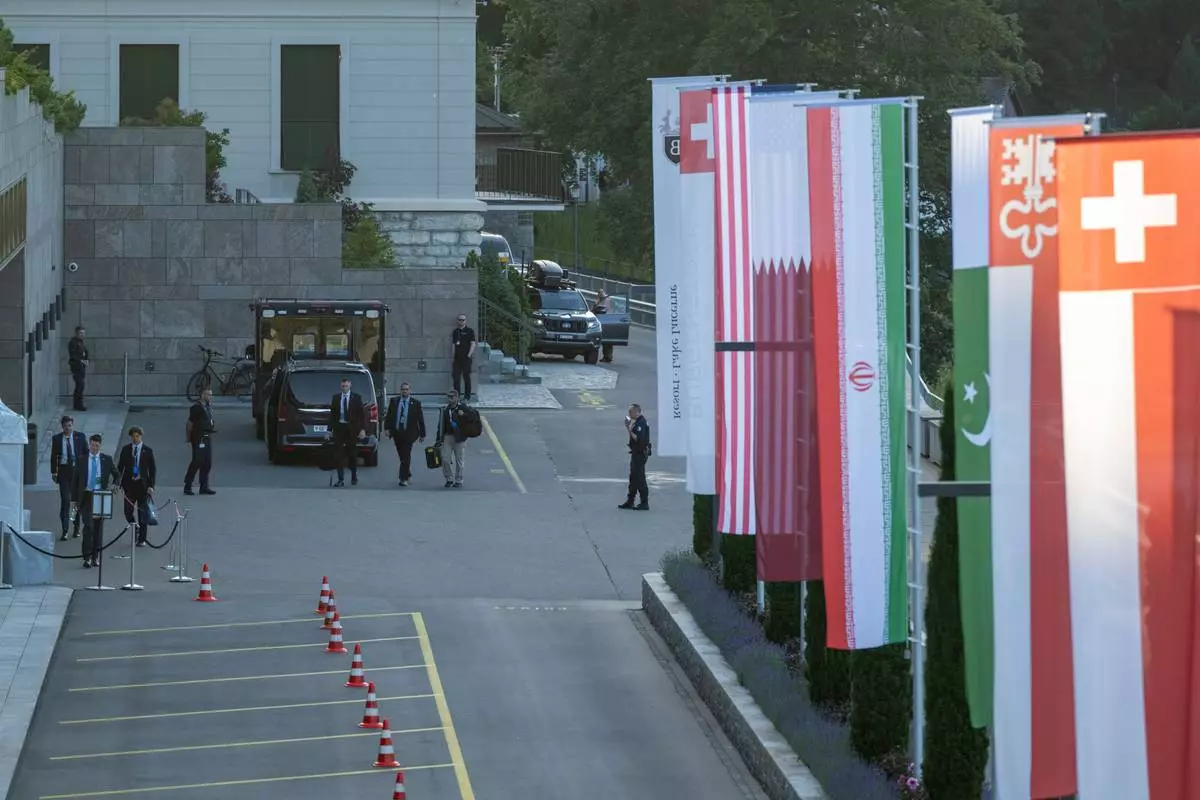
Flags of the U.S., Qatar, Iran, Pakistan, Nidwalden and Switzerland, from left, are seen at the Buergenstock resort in Obbuergen, near Lucerne, Switzerland, Sunday, June 21, 2026. (Urs Flueeler/Keystone Pool via AP)
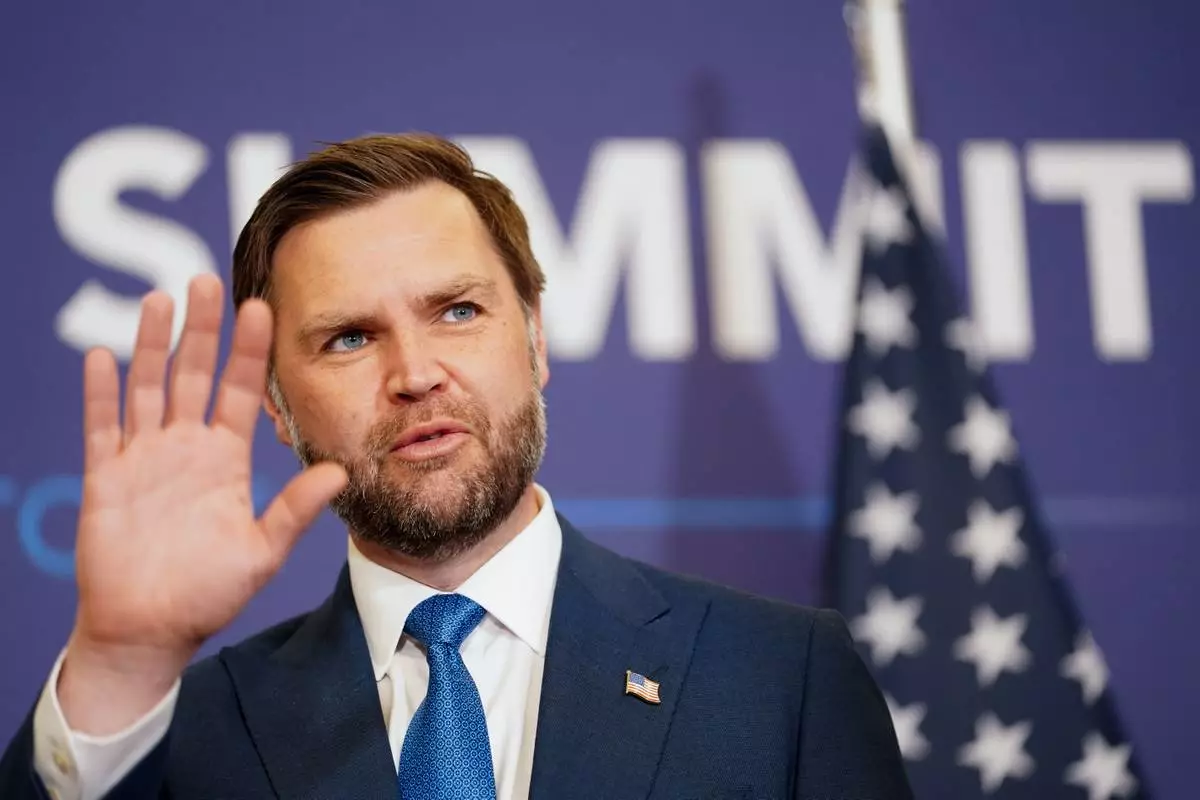
U.S. Vice President JD Vance, gestures as he meets with Pakistan's Prime Minister Shehbaz Sharif, during high-level talks aimed at advancing a deal to end the Middle East conflict, at the Bürgenstock Resort in Obbuergen, near Lucerne, in Switzerland, Sunday, June 21, 2026. (Nathan Howard/Pool Photo via AP)
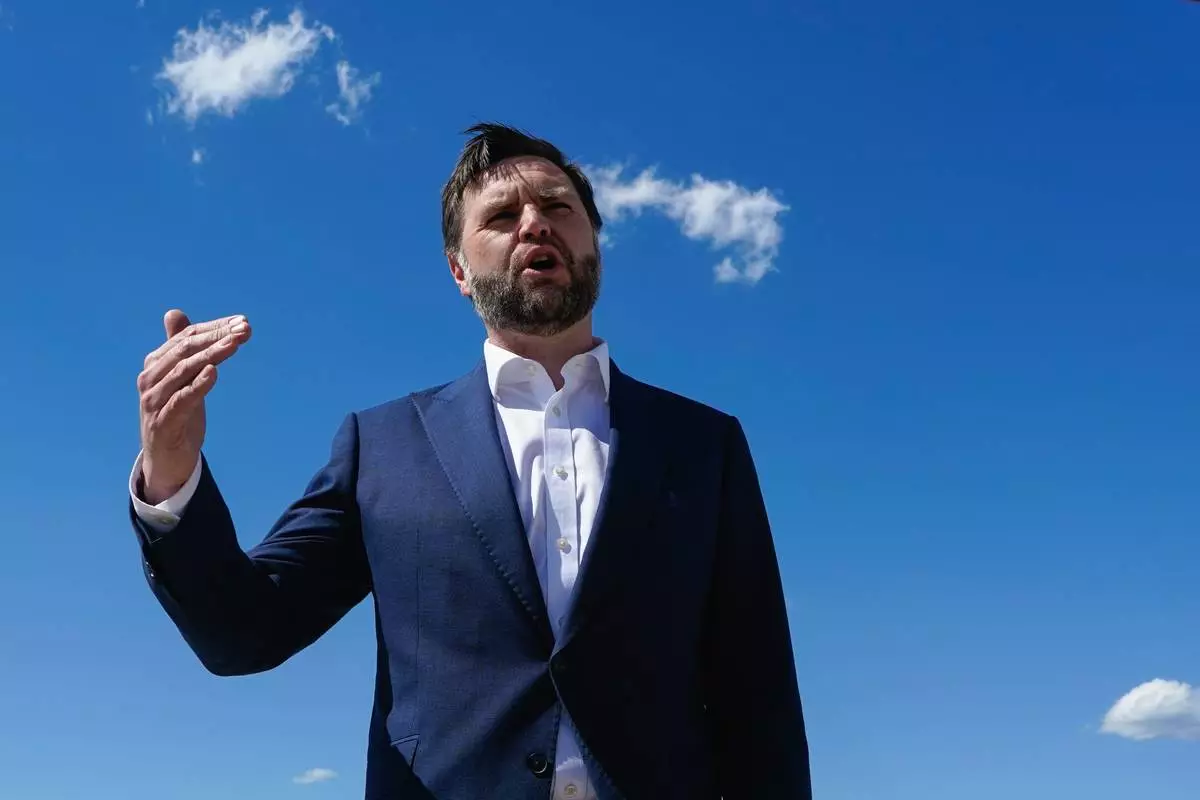
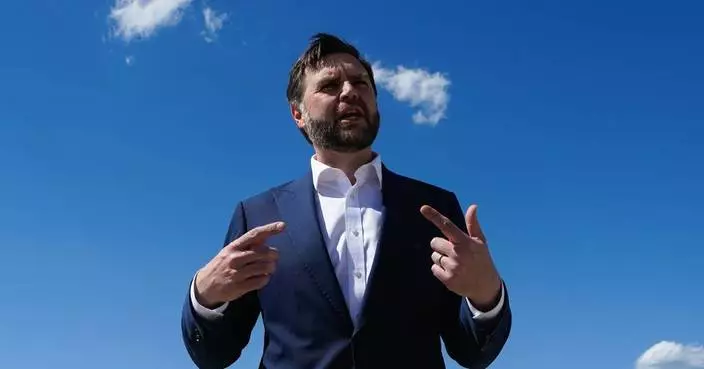
Vice President JD Vance speaks to reporters at Joint Base Andrews, Md., Saturday, June 20, 2026, en route to Switzerland. (Elizabeth Frantz/Pool Photo via AP)
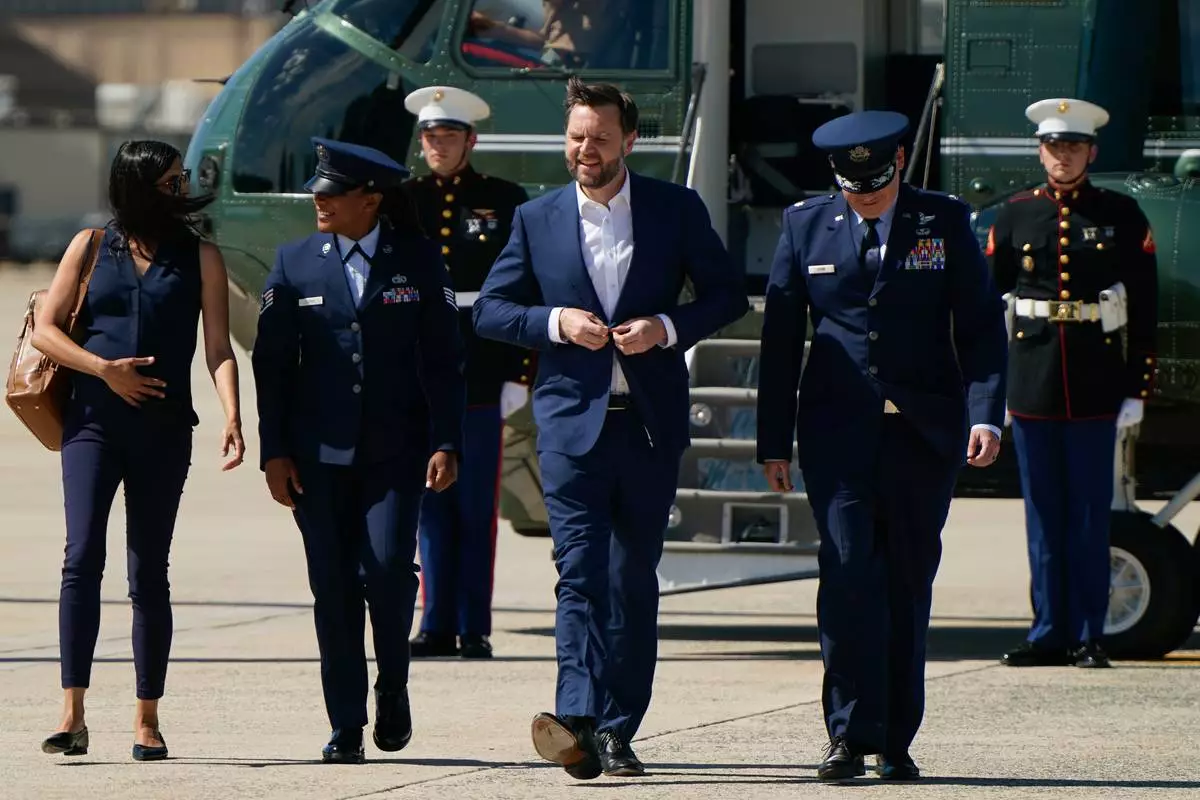
Vice President JD Vance, center, and second lady Usha Vance, left, walk from Marine Two as they arrive at Joint Base Andrews, Md., Saturday, June 20, 2026, en route to Switzerland. (Elizabeth Frantz/Pool Photo via AP)
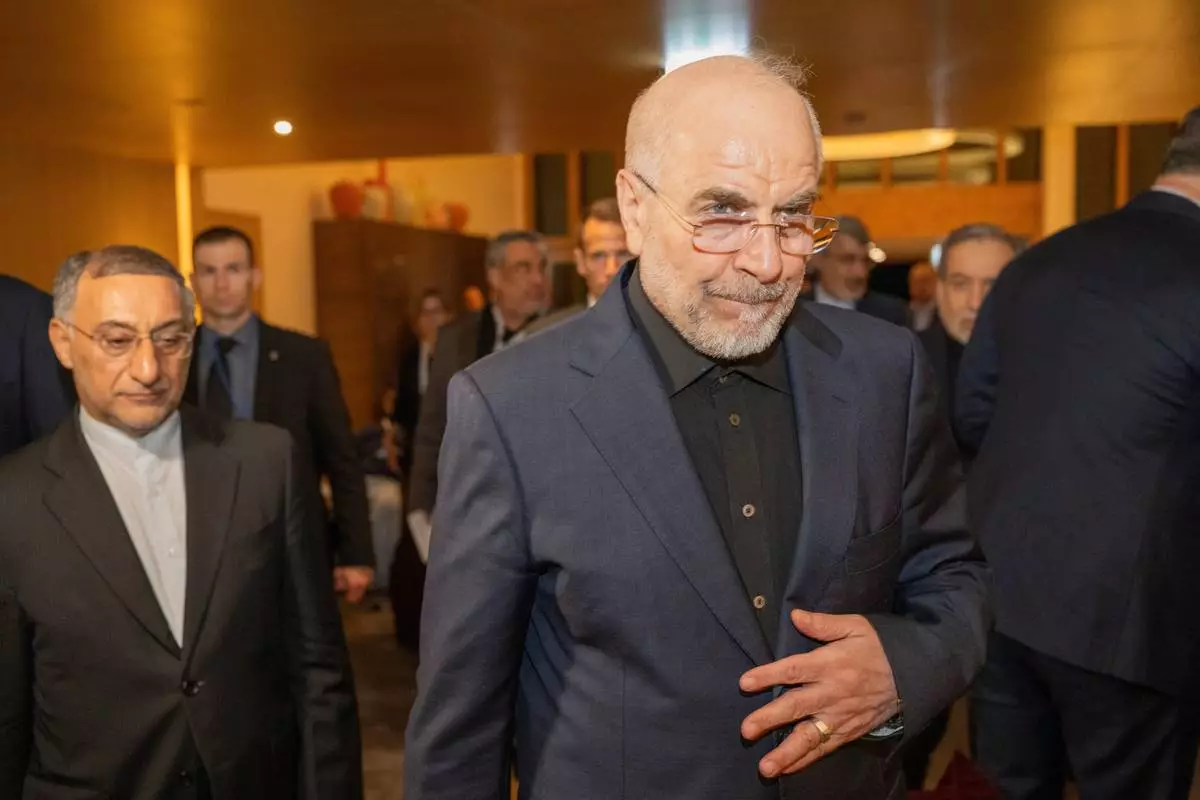
Speaker of the Islamic Parliament of Iran Mohammed Bagher Ghalibaf, center, arrives at the Buergenstock resort in Obbuergen, near Lucerne, Switzerland, early Sunday, June 21, 2026. (Urs Flueeler/Keystone, Pool via AP)
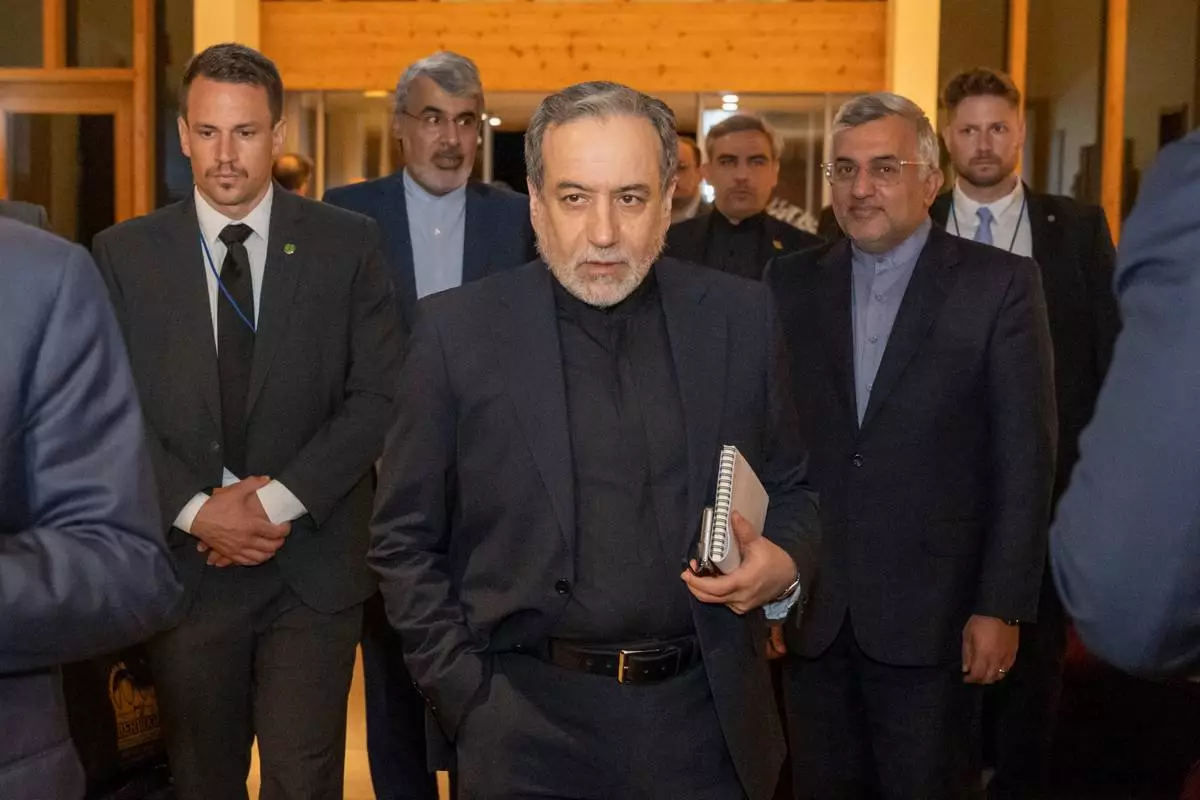
Iranian Foreign Minister Seyyed Abbas Araghchi, center, arrives at the Buergenstock resort in Obbuergen, near Lucerne, Switzerland, early Sunday, June 21, 2026. (Urs Flueeler/Keystone, Pool via AP)
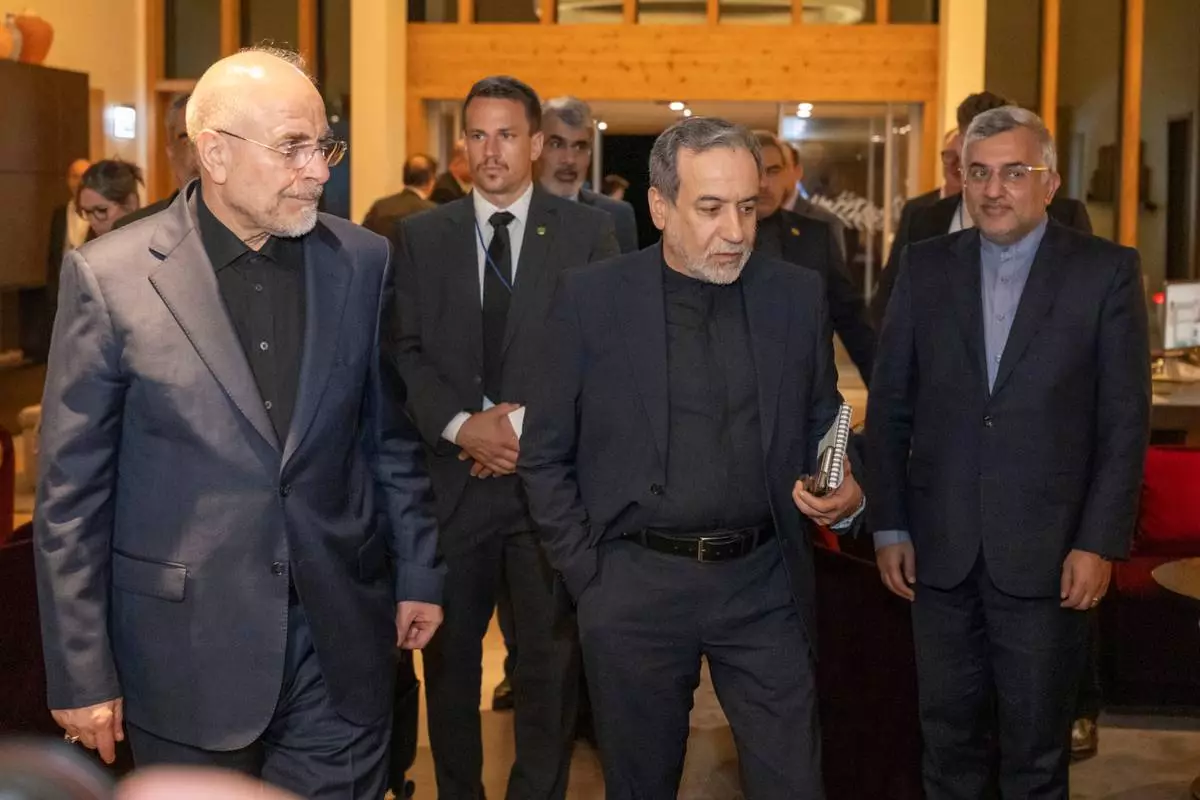
Iranian Foreign Minister Seyyed Abbas Araghchi, center, and Speaker of the Islamic Parliament of Iran Mohammed Bagher Ghalibaf, left, arrive at the Buergenstock resort in Obbuergen, near Lucerne, Switzerland, early Sunday, June 21, 2026. (Urs Flueeler/Keystone, Pool via AP)