Skip to Content Facebook Feature Image

Republicans grapple with voter frustration over rising health care premiums

News

Republicans grapple with voter frustration over rising health care premiums
News

News

Republicans grapple with voter frustration over rising health care premiums

2025-10-27 23:39 Last Updated At:23:40

WASHINGTON (AP) — The first caller on a telephone town hall with Maryland Rep. Andy Harris, leader of the House’s conservative Freedom Caucus, came ready with a question about the Affordable Care Act. Her cousin's disabled son is at risk of losing the insurance he gained under that law, the caller said.

“Now she’s looking at two or three times the premium that she’s been paying for the insurance,” said the woman, identified as Lisa from Harford County, Maryland. “I’d love for you to elucidate what the Republicans’ plan is for health insurance?”

More Images
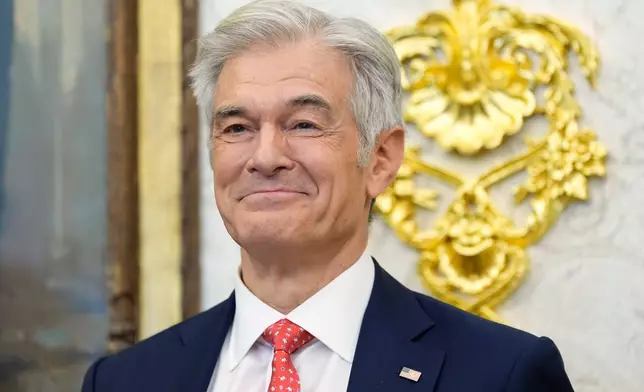
Centers for Medicare & Medicaid Services administrator Dr. Mehmet Oz listens as President Donald Trump speaks in the Oval Office of the White House, Thursday, Oct. 16, 2025, in Washington. (AP Photo/Alex Brandon)
Centers for Medicare & Medicaid Services administrator Dr. Mehmet Oz listens as President Donald Trump speaks in the Oval Office of the White House, Thursday, Oct. 16, 2025, in Washington. (AP Photo/Alex Brandon)

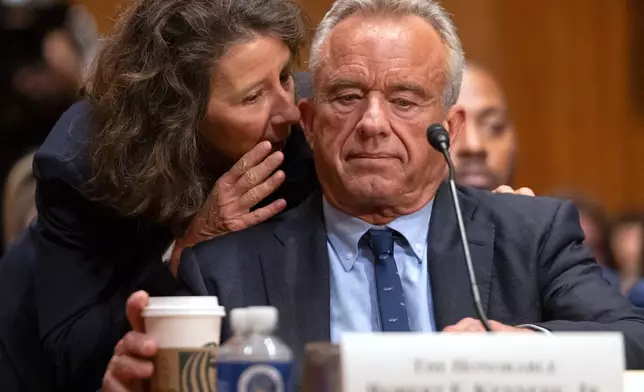
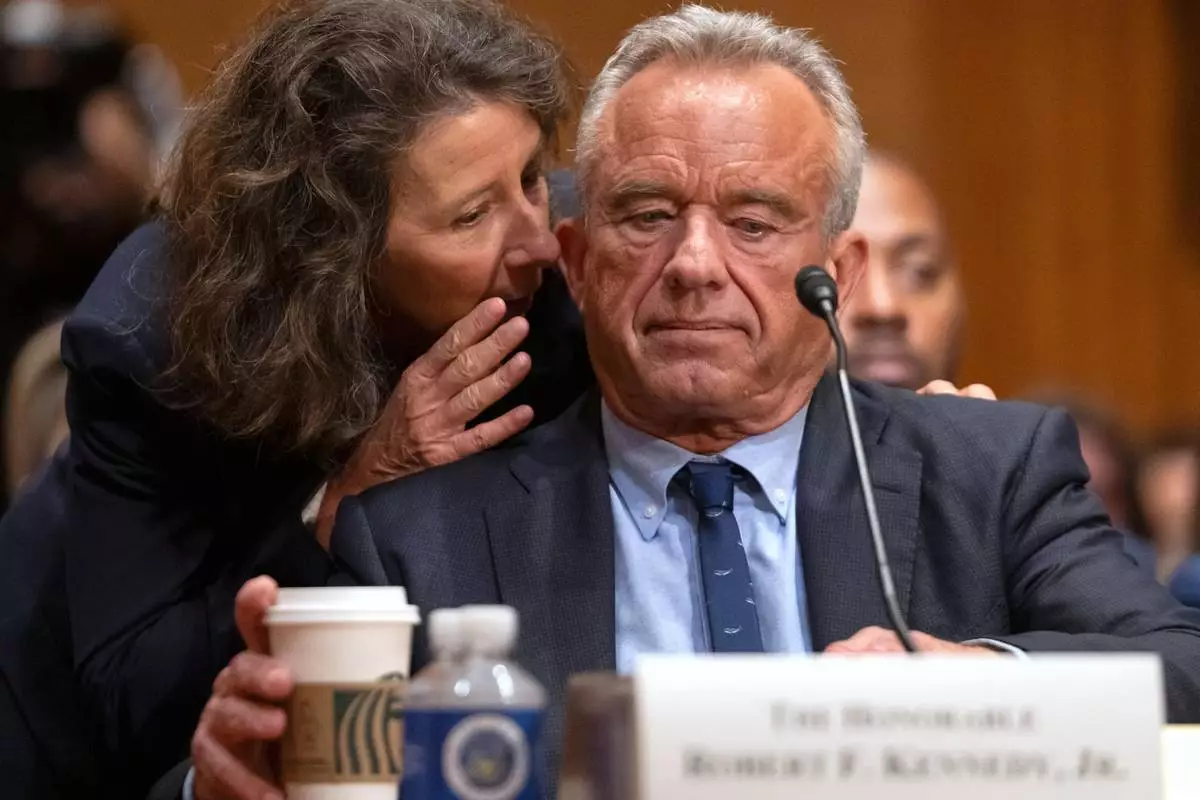
FILE - Secretary of Health and Human Services Robert F. Kennedy Jr. listens to deputy chief of staff Stefanie Spear speaks to him during a hearing the Senate Finance Committee, on Capitol Hill in Washington, Thursday, Sept. 4, 2025. (AP Photo/Mark Schiefelbein, File)
FILE - Secretary of Health and Human Services Robert F. Kennedy Jr. listens to deputy chief of staff Stefanie Spear speaks to him during a hearing the Senate Finance Committee, on Capitol Hill in Washington, Thursday, Sept. 4, 2025. (AP Photo/Mark Schiefelbein, File)

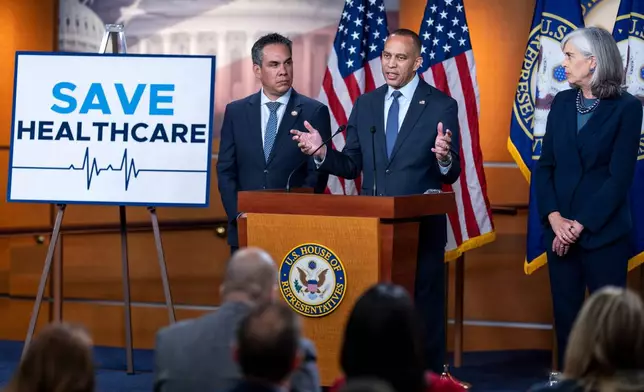
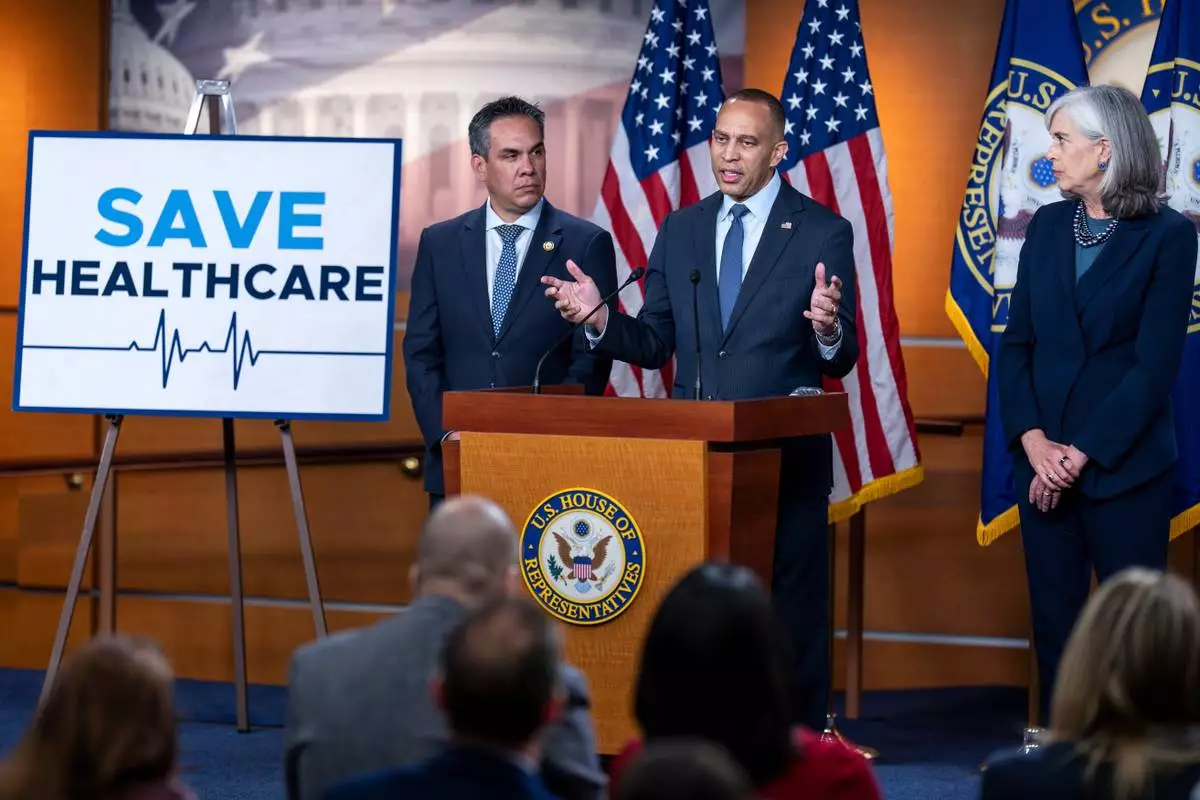
House Minority Leader Hakeem Jeffries, D-N.Y., flanked by Rep. Pete Aguilar, D-Calif., left, and Rep. Katherine Clark, D-Mass., speaks during a news conference on day 22 of the government shutdown to discuss its impact on health care, at the Capitol in Washington, Wednesday, Oct. 22, 2025. (AP Photo/J. Scott Applewhite)

House Minority Leader Hakeem Jeffries, D-N.Y., flanked by Rep. Pete Aguilar, D-Calif., left, and Rep. Katherine Clark, D-Mass., speaks during a news conference on day 22 of the government shutdown to discuss its impact on health care, at the Capitol in Washington, Wednesday, Oct. 22, 2025. (AP Photo/J. Scott Applewhite)

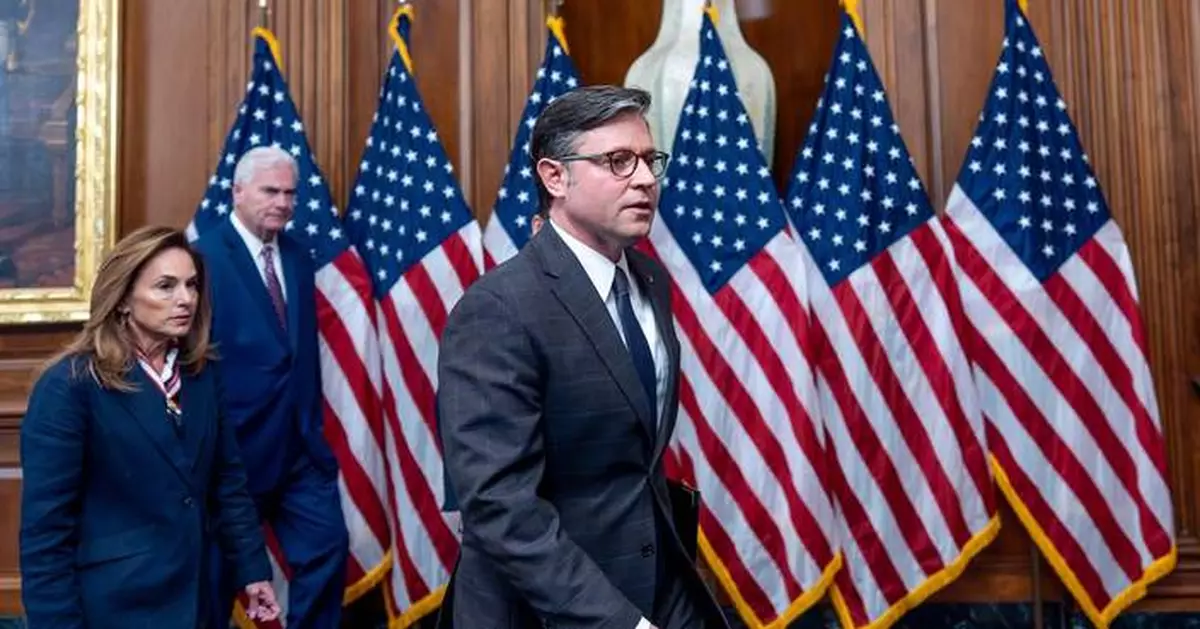
Speaker of the House Mike Johnson, R-La., center, joined from left by Rep. Lisa McClain, R-Mich., chair of the House Republican Conference, and House Majority Whip Tom Emmer, R-Minn., wrap up a news conference on day 23 of the government shutdown, at the Capitol in Washington, Thursday, Oct. 23, 2025. (AP Photo/J. Scott Applewhite)

Speaker of the House Mike Johnson, R-La., center, joined from left by Rep. Lisa McClain, R-Mich., chair of the House Republican Conference, and House Majority Whip Tom Emmer, R-Minn., wrap up a news conference on day 23 of the government shutdown, at the Capitol in Washington, Thursday, Oct. 23, 2025. (AP Photo/J. Scott Applewhite)

Harris, a seven-term Republican, didn’t have a clear answer. “We think the solution is to try to do something to make sure all the premiums go down,” he said, predicting Congress would “probably negotiate some off-ramp” later.

His uncertainty reflected a familiar Republican dilemma: Fifteen years after the Affordable Care Act was enacted, the party remains united in criticizing the law but divided on how to move forward. That tension has come into sharp focus during the government shutdown as Democrats seize on rising premiums to pressure Republicans into extending expiring subsidies for the law, often referred to as Obamacare.

President Donald Trump and GOP leaders say they’ll consider extending the enhanced tax credits that otherwise expire at year's end — but only after Democrats vote to reopen the government. In the meantime, people enrolled in the plans are already being notified of hefty premium increases for 2026.

As town halls fill with frustrated voters and no clear Republican plan emerges, the issue appears to be gaining political strength heading into next year's midterm elections.

“Premiums are going up whether it gets extended or not,” said GOP Sen. Rick Scott. “Premiums are going up because health care costs are going up. Because Obamacare is a disaster.”

At the center of the shutdown — now in its fourth week with no end in sight — is a Democratic demand that Affordable Care Act subsidies passed in 2021 be extended.

Trump has long promised an alternative. “The cost of Obamacare is out of control, plus, it’s not good Healthcare,” he wrote on Truth Social in November 2023. “I’m seriously looking at alternatives.”

Pressed on health care during a September 2024 presidential debate, Trump said he had “concepts of a plan.”

But nearly 10 months into his presidency, that plan has yet to come. Dr. Mehmet Oz, administrator of the Centers for Medicare and Medicaid Services, told NBC on Wednesday, “I fully believe the president has a plan,” but didn't go into details.

Republicans say they want a broader overhaul of the health care system, though such a plan would be difficult to advance before next year. Party leaders have not outlined how they’ll handle the expiring tax credits, insisting they won’t negotiate on the issue until Democrats agree to end the shutdown.

A September analysis from the nonpartisan Congressional Budget Office estimated that permanently extending the tax credits would increase the deficit by $350 billion from 2026 to 2035. The number of people with health insurance would rise by 3.8 million in 2035 if the credits are kept, CBO projected.

House Speaker Mike Johnson told a press conference Monday that the tax credits are “subsidizing bad policy." Republicans "have a long list of ideas" to address health care costs, he said, and are “grabbing the best ideas that we’ve had for years to put it on paper and make it work.”

“We believe in the private sector and the free market and individual providers,” he added.

With notices of premium spikes landing in mailboxes now and the open enrollment period for Affordable Care Act health plans beginning Nov. 1, the political pressure has been evident in Republican town halls.

In Idaho, Rep. Russ Fulcher told concerned callers that “government provided health care is the wrong path” and that “private health care is the right path.” In Texas, freshman Rep. Brandon Gill responded to a caller facing a sharp premium increase by saying Republicans are focused on cutting waste, fraud and abuse.

Harris echoed a message shared by many in his party during his Maryland town hall, saying costs are “just going back to what it was like before COVID."

But the number of people who rely on Affordable Care Act health insurance has increased markedly since before the pandemic. More than 24 million people were enrolled in the marketplace plans in 2025, up from about 11 million in 2020, according to an analysis from the health care research nonprofit KFF.

Sara from Middleville, Michigan, told Rep. John Moolenaar during his town hall that if health insurance premiums go up by as much as 75%, most people will probably go without health care. "So how do you address that?” she asked.

Moolenaar, who represents a district he handily won last year, responded: “We have time to negotiate, figure out a plan going forward and I think that’s something that could occur.”

Some Republicans have shown urgent concern. In a letter sent to Johnson, a group of 13 battleground House Republicans wrote that the party must “immediately turn our focus to the growing crisis of health care affordability” once the shutdown ends.

“While we did not create this crisis, we now have both the responsibility and the opportunity to address it,” the lawmakers wrote.

Some Republicans dismiss projections that ACA premiums will more than double without the subsidies, calling them exaggerated and arguing the law has fueled fraud and abuse that must be curbed.

Many Democrats credited their ability to flip the House in 2018 during Trump’s first term to the GOP’s attempt at repealing Obamacare, and they’re forecasting a similar outcome this time.

About 4 in 10 U.S. adults say they trust the Democrats to do a better job handling health care, compared with about one-quarter who trust the Republicans more, a recent AP-NORC poll found. About one-quarter trust neither party, and about 1 in 10 trust both equally, according to the poll.

Even as GOP leaders pledge to discuss ending the subsidies when the government opens, it's clear that many Republican lawmakers are adamantly opposed to an extension.

“At least among Republicans, there’s a growing sense that just maintaining the status quo is very destructive,” said Brian Blase, the president of Paragon Health Institute and a former health policy adviser to Trump during his first term.

Michael Cannon, director of health policy studies at the libertarian Cato Institute, said he’s working with multiple congressional offices on alternatives that would let the subsidies end. For example, he wants to expand the Affordable Care Act exemption given to U.S. territories to all 50 states and reintroduce a first-term Trump policy that gave Americans access to short-term health insurance plans outside the Affordable Care Act marketplace.

Cannon declined to name the lawmakers he’s working with, but said he hopes they act on his ideas “sooner than later.”

David McIntosh, president of the influential conservative group Club For Growth, told reporters Thursday that the group has “urged the Republicans not to extend those COVID-era subsidies.”

“We have a big spending problem,” McIntosh said.

“I think most people are going to say, OK, I had a great deal during COVID,” he said. “But now it’s back to business as usual, and I should be paying for health care.”

__

Swenson reported from New York.
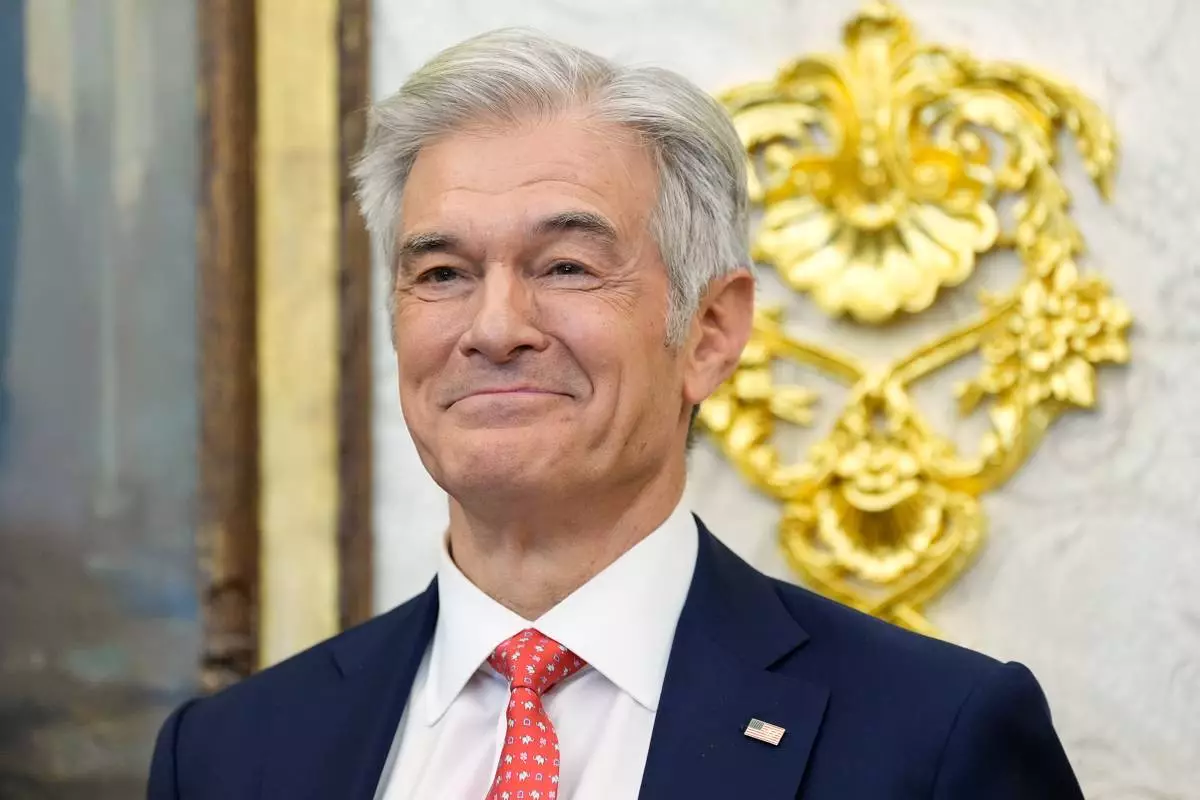
Centers for Medicare & Medicaid Services administrator Dr. Mehmet Oz listens as President Donald Trump speaks in the Oval Office of the White House, Thursday, Oct. 16, 2025, in Washington. (AP Photo/Alex Brandon)
Centers for Medicare & Medicaid Services administrator Dr. Mehmet Oz listens as President Donald Trump speaks in the Oval Office of the White House, Thursday, Oct. 16, 2025, in Washington. (AP Photo/Alex Brandon)

FILE - Secretary of Health and Human Services Robert F. Kennedy Jr. listens to deputy chief of staff Stefanie Spear speaks to him during a hearing the Senate Finance Committee, on Capitol Hill in Washington, Thursday, Sept. 4, 2025. (AP Photo/Mark Schiefelbein, File)
FILE - Secretary of Health and Human Services Robert F. Kennedy Jr. listens to deputy chief of staff Stefanie Spear speaks to him during a hearing the Senate Finance Committee, on Capitol Hill in Washington, Thursday, Sept. 4, 2025. (AP Photo/Mark Schiefelbein, File)

House Minority Leader Hakeem Jeffries, D-N.Y., flanked by Rep. Pete Aguilar, D-Calif., left, and Rep. Katherine Clark, D-Mass., speaks during a news conference on day 22 of the government shutdown to discuss its impact on health care, at the Capitol in Washington, Wednesday, Oct. 22, 2025. (AP Photo/J. Scott Applewhite)

House Minority Leader Hakeem Jeffries, D-N.Y., flanked by Rep. Pete Aguilar, D-Calif., left, and Rep. Katherine Clark, D-Mass., speaks during a news conference on day 22 of the government shutdown to discuss its impact on health care, at the Capitol in Washington, Wednesday, Oct. 22, 2025. (AP Photo/J. Scott Applewhite)

Speaker of the House Mike Johnson, R-La., center, joined from left by Rep. Lisa McClain, R-Mich., chair of the House Republican Conference, and House Majority Whip Tom Emmer, R-Minn., wrap up a news conference on day 23 of the government shutdown, at the Capitol in Washington, Thursday, Oct. 23, 2025. (AP Photo/J. Scott Applewhite)
Speaker of the House Mike Johnson, R-La., center, joined from left by Rep. Lisa McClain, R-Mich., chair of the House Republican Conference, and House Majority Whip Tom Emmer, R-Minn., wrap up a news conference on day 23 of the government shutdown, at the Capitol in Washington, Thursday, Oct. 23, 2025. (AP Photo/J. Scott Applewhite)
NEW YORK (AP) — Stocks are climbing worldwide, and oil prices are easing Wednesday as hopes build that the war with Iran could end soon. Some of the moves are tentative, though, after financial markets have already seen similar bouts of optimism get quickly undercut several times.

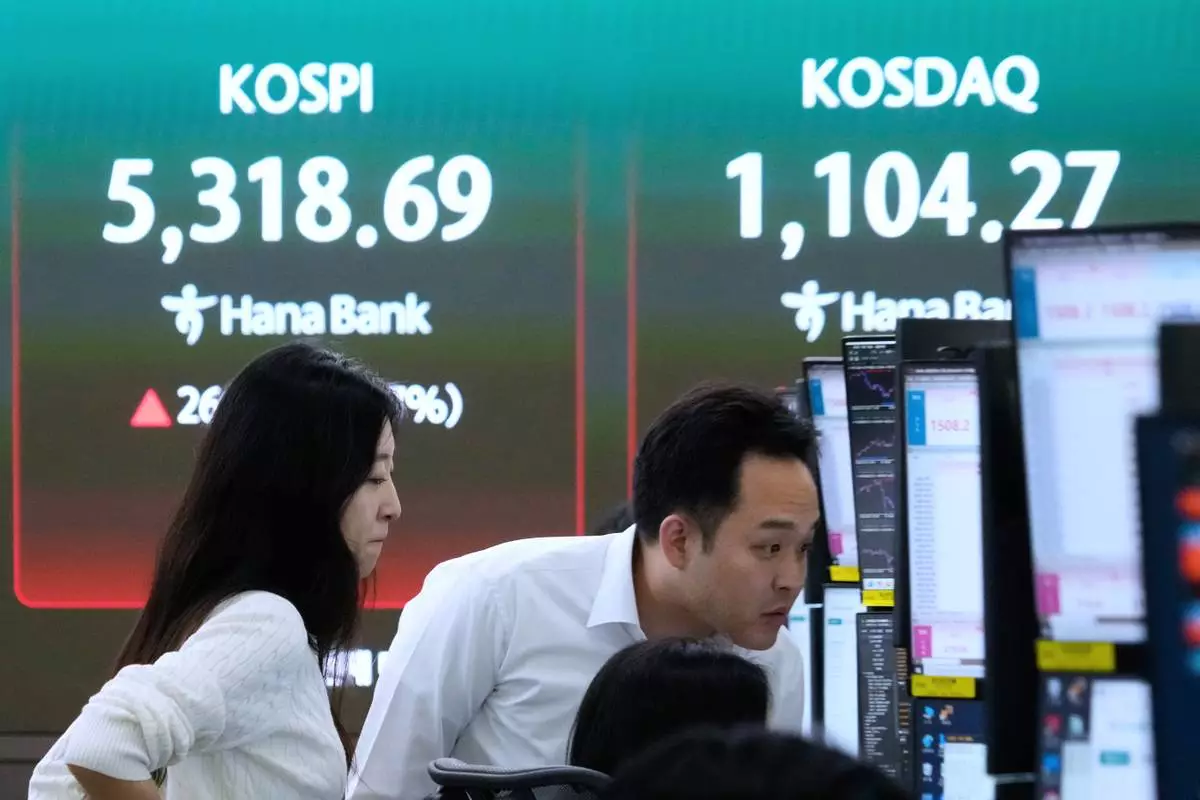
The S&P 500 rose 0.6% and added to its leap from the day before, which was its best since last spring. That followed even bigger gains for stock markets across Europe and Asia, including an 8.4% surge in South Korea, which were catching up to Wall Street’s rally from Tuesday.

The Dow Jones Industrial Average was up 292 points, or 0.6%, as of 10 a.m. Eastern time, and the Nasdaq composite was 1% higher.

Oil prices also fell back toward $100 per barrel after President Donald Trump said shortly before Wall Street began trading that Iran “has just asked the United States of America for a CEASEFIRE!”

“We will consider when Hormuz Strait is open, free, and clear. Until then, we are blasting Iran into oblivion or, as they say, back to the Stone Ages!!!”

Trump had said the night before that the U.S. military could end its offensive in two to three weeks. That added to optimism following a couple tenuous signals of hope from earlier Tuesday that Wall Street latched onto, including a news report quoting Iran’s president as saying that it has “the necessary will to end the war” as long as certain requirements are met, including “guarantees to prevent a recurrence of aggression.”

The worry on Wall Street has been that the war may last a long time and keep oil and natural gas from the Persian Gulf out of global markets, which could create a brutal blast of inflation.

But hope has been quick to swing to doubt on Wall Street since the war with Iran began, triggering manic swings back and forth for financial markets. Trump has also made statements that lifted markets, only to see the gains quickly disappear after increasing his military threats against Iran. Investors say Trump’s statements are becoming less impactful for financial markets.

And oil prices remain high, even if they’ve eased so far this week. The price for a barrel of Brent crude oil, the international standard, was sitting at $101.16 following its declines, which is still up from roughly $70 before the war began.

U.S. gas prices rose again overnight to a national average of $4.06, according to the auto club AAA.

Iran hit an oil tanker off the coast of Qatar and Kuwait’s airport on Wednesday while airstrikes battered Tehran as the fighting continued. Iran also continues to hold a grip on the Strait of Hormuz, where a fifth of the world’s traded oil passes during peacetime.

“De-escalation hopes have given markets a lift, but we think the effects of the war would, in many cases, persist even if the war did end soon,” Thomas Mathews, head of markets, Asia Pacific at Capital Economics, said in a research note Wednesday.

“It’s worth thinking through how markets might fare if the war were to end ‘very soon,’” he wrote. “Do markets have further to recover if sentiment continues to improve? The answer is almost certainly yes.”

The White House said Trump will deliver a public address Wednesday evening on the Iran war.

On Wall Street, the majority of stocks rose, with Big Tech powering the move higher. Gains of 2.8% for Alphabet and 0.8% for Nvidia were two of the strongest forces lifting the S&P 500.

They helped offset a 13.1% drop for Nike, which fell even though it reported a stronger profit for the latest quarter than expected. Analysts said it gave some lackluster financial forecasts.

Hasbro fell 3.6% after the toy company found someone had gained unauthorized access to its computer network and is working to see what the full impact was.

In stock markets abroad, indexes leaped more than 1% in France, Germany and the United Kingdom. Asian markets had even bigger gains.

Tokyo’s Nikkei 225 jumped 5.2% after a survey by Japan’s central bank showed business sentiment for major Japanese manufacturers improved despite Iran war worries.

In the bond market, Treasury yields held relatively steady after a report said U.S. retailers made more money in February than economists expected. A separate report said U.S. manufacturing growth last month was slightly faster than economists expected. The 10-year Treasury yield rose to 4.32% from 4.30% late Tuesday.

AP Business Writers Chan Ho-him and Matt Ott contributed.

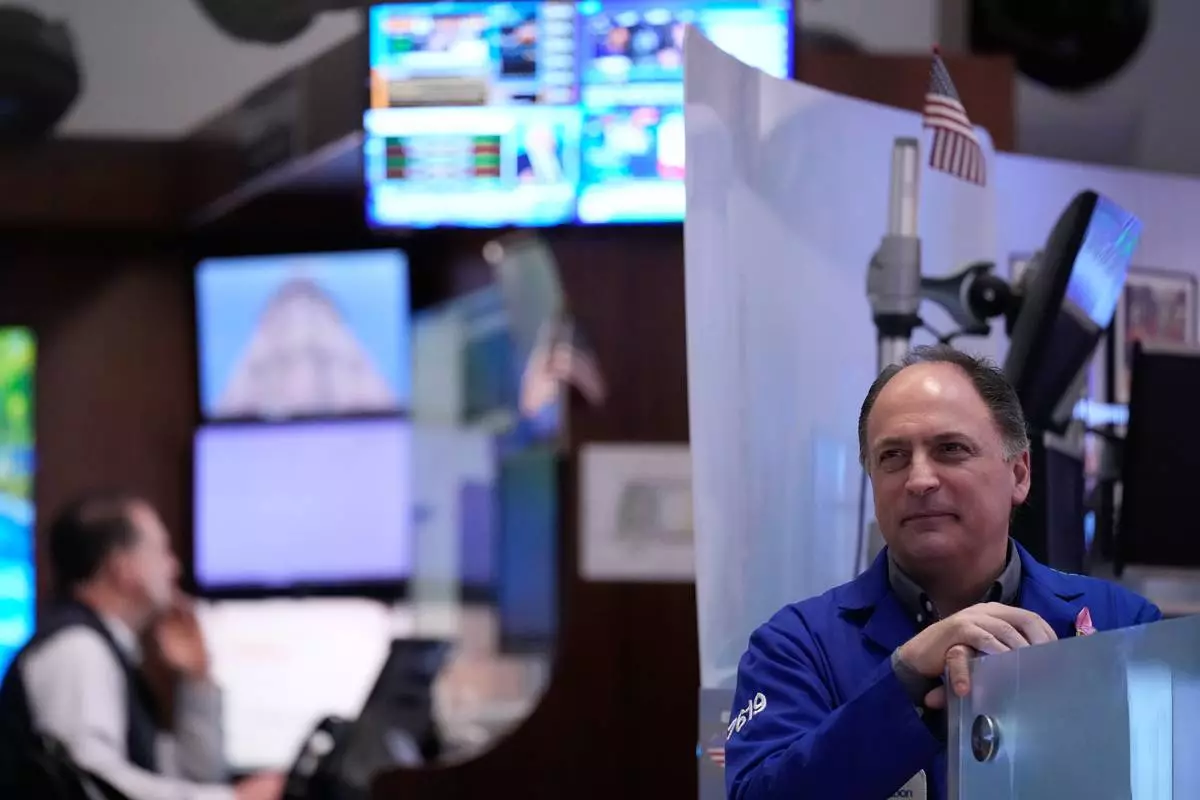
James Conti works on the floor at the New York Stock Exchange in New York, Tuesday, March 31, 2026. (AP Photo/Seth Wenig)

James Conti works on the floor at the New York Stock Exchange in New York, Tuesday, March 31, 2026. (AP Photo/Seth Wenig)

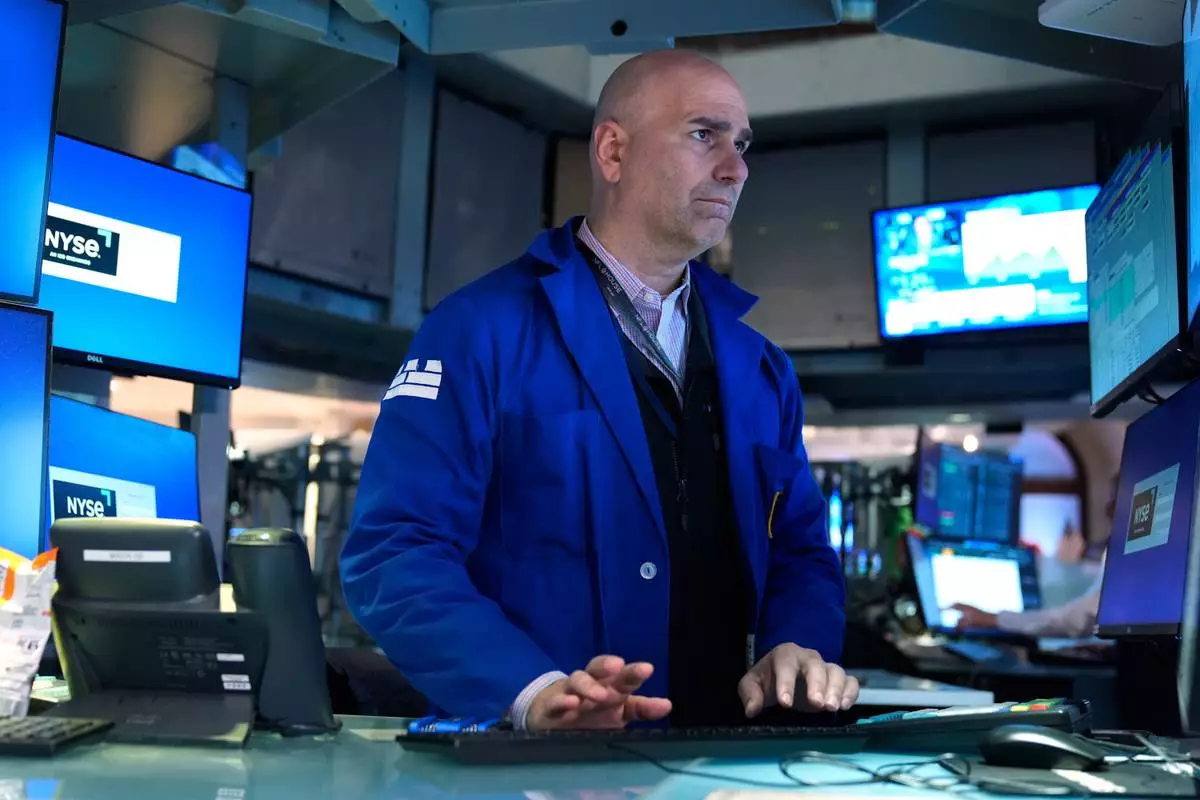
Philip Finale works on the floor at the New York Stock Exchange in New York, Tuesday, March 31, 2026. (AP Photo/Seth Wenig)

Philip Finale works on the floor at the New York Stock Exchange in New York, Tuesday, March 31, 2026. (AP Photo/Seth Wenig)

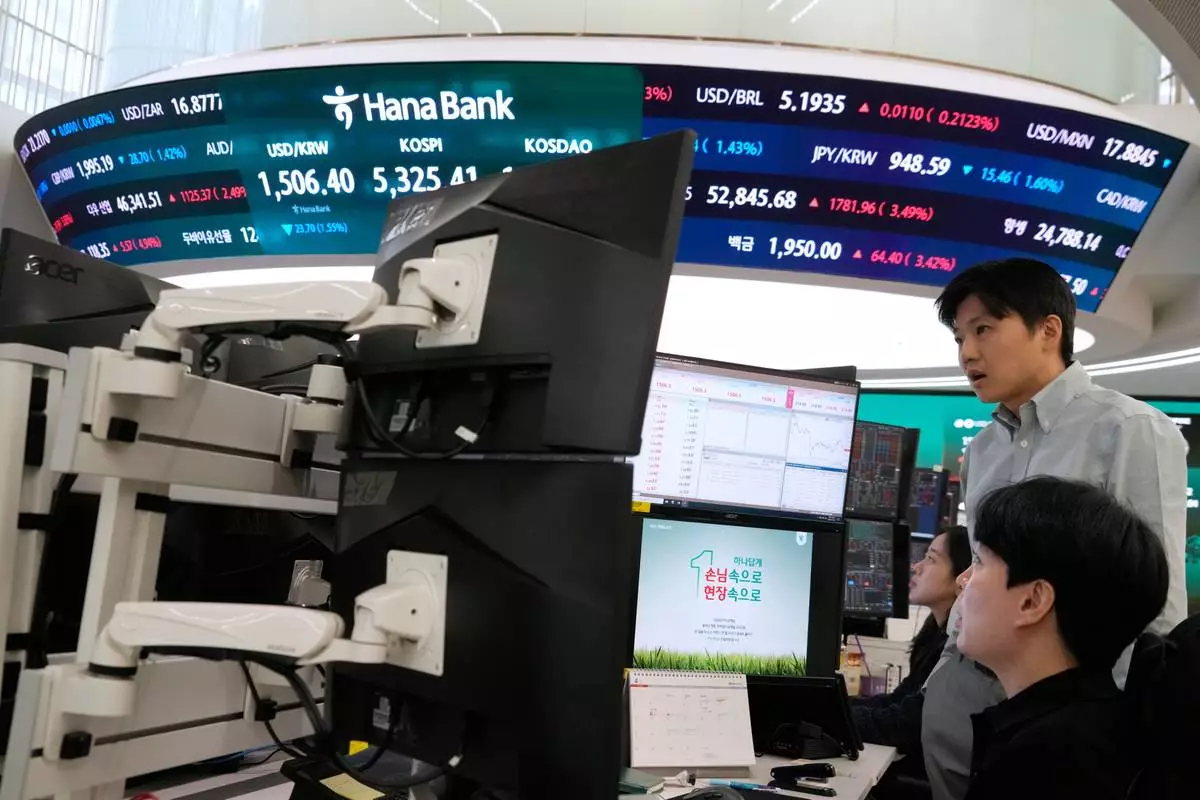
Currency traders watch monitors near a screen showing the Korea Composite Stock Price Index (KOSPI), left, at the foreign exchange dealing room of the Hana Bank headquarters in Seoul, South Korea, Wednesday, April 1, 2026. (AP Photo/Ahn Young-joon)

Currency traders watch monitors near a screen showing the Korea Composite Stock Price Index (KOSPI), left, at the foreign exchange dealing room of the Hana Bank headquarters in Seoul, South Korea, Wednesday, April 1, 2026. (AP Photo/Ahn Young-joon)

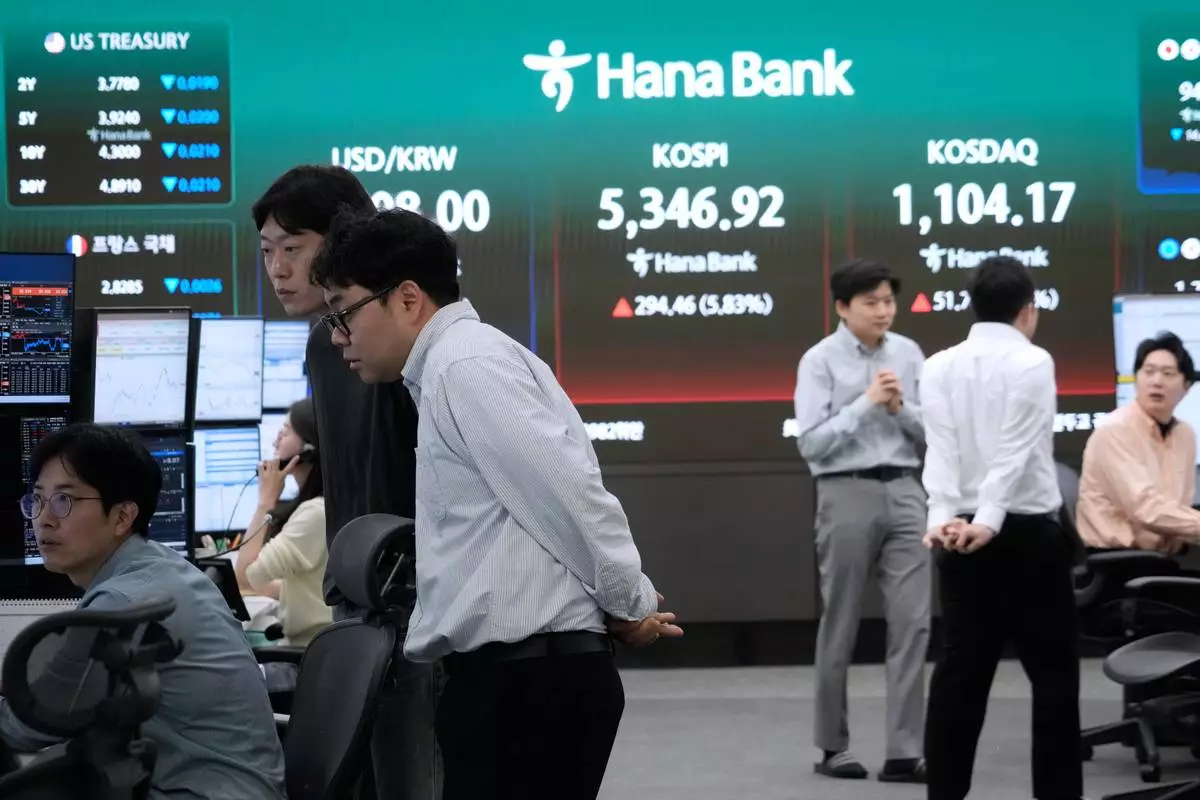
Currency traders watch monitors near a screen showing the Korea Composite Stock Price Index (KOSPI), top center, and the foreign exchange rate between U.S. dollar and South Korean won, top center left, at the foreign exchange dealing room of the Hana Bank headquarters in Seoul, South Korea, Wednesday, April 1, 2026. (AP Photo/Ahn Young-joon)

Currency traders watch monitors near a screen showing the Korea Composite Stock Price Index (KOSPI), top center, and the foreign exchange rate between U.S. dollar and South Korean won, top center left, at the foreign exchange dealing room of the Hana Bank headquarters in Seoul, South Korea, Wednesday, April 1, 2026. (AP Photo/Ahn Young-joon)

Currency traders work at the foreign exchange dealing room of the Hana Bank headquarters in Seoul, South Korea, Wednesday, April 1, 2026. (AP Photo/Ahn Young-joon)

Currency traders work at the foreign exchange dealing room of the Hana Bank headquarters in Seoul, South Korea, Wednesday, April 1, 2026. (AP Photo/Ahn Young-joon)

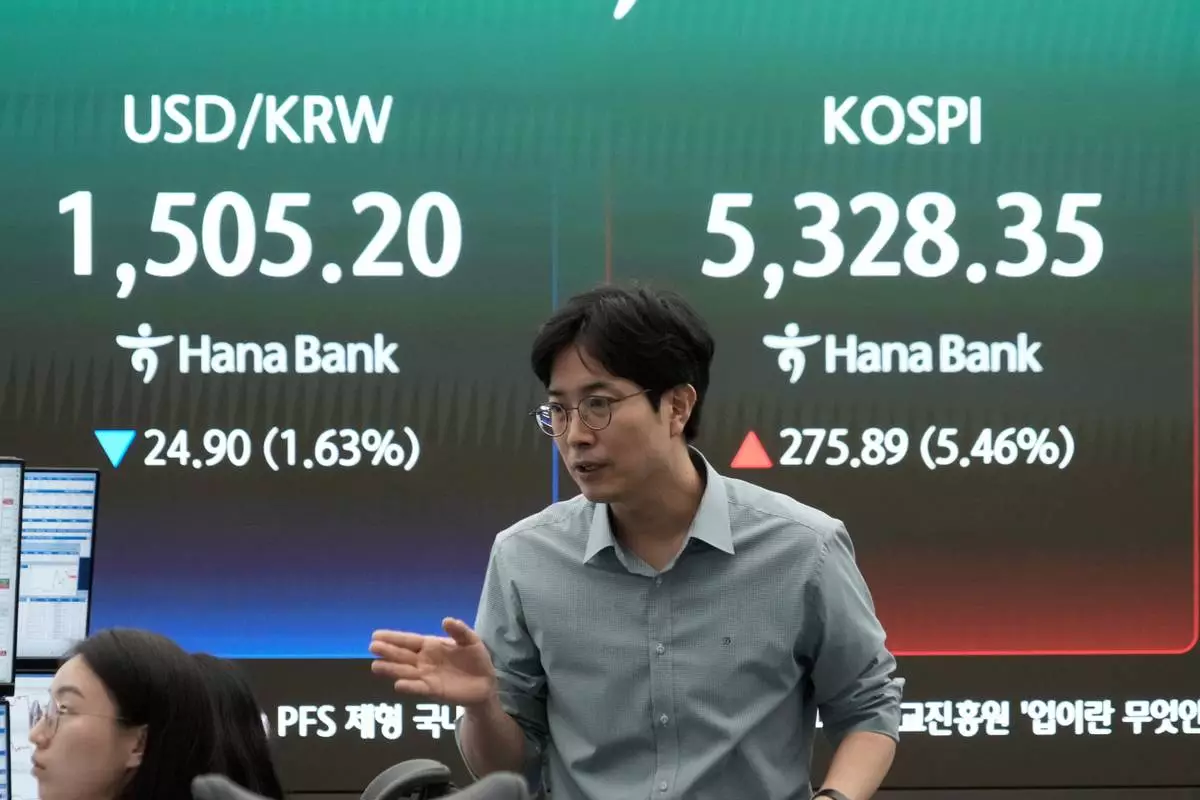
A currency trader reacts near a screen showing the Korea Composite Stock Price Index (KOSPI), right, and the foreign exchange rate between U.S. dollar and South Korean won at the foreign exchange dealing room of the Hana Bank headquarters in Seoul, South Korea, Wednesday, April 1, 2026. (AP Photo/Ahn Young-joon)

A currency trader reacts near a screen showing the Korea Composite Stock Price Index (KOSPI), right, and the foreign exchange rate between U.S. dollar and South Korean won at the foreign exchange dealing room of the Hana Bank headquarters in Seoul, South Korea, Wednesday, April 1, 2026. (AP Photo/Ahn Young-joon)

A screen displays financial information on the floor at the New York Stock Exchange in New York, Tuesday, March 31, 2026. (AP Photo/Seth Wenig)

A screen displays financial information on the floor at the New York Stock Exchange in New York, Tuesday, March 31, 2026. (AP Photo/Seth Wenig)

Recommended Articles