Skip to Content Facebook Feature Image

What to know about the Louvre heist investigation

News

What to know about the Louvre heist investigation
News

News

What to know about the Louvre heist investigation

2025-10-31 00:23 Last Updated At:11-06 16:52

PARIS (AP) — More than 100 investigators are racing to piece together how thieves pulled off the brazen heist at the Louvre Museum in Paris, working to recover the stolen gems and bring those responsible to justice.

The daytime theft of centuries-old jewels from the world’s most-visited museum, thought to be of significant cultural and monetary value, has captured the world’s attention for its audacity and movie plot-like details.

More Images
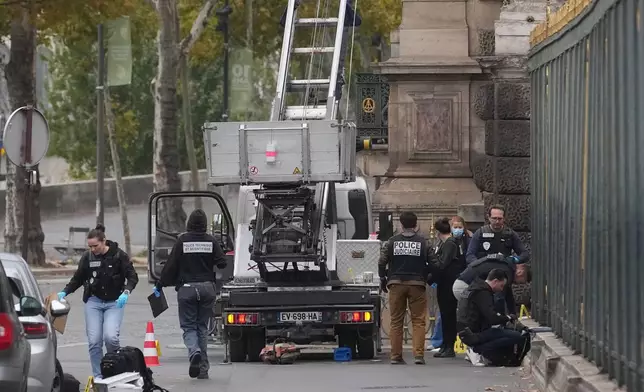
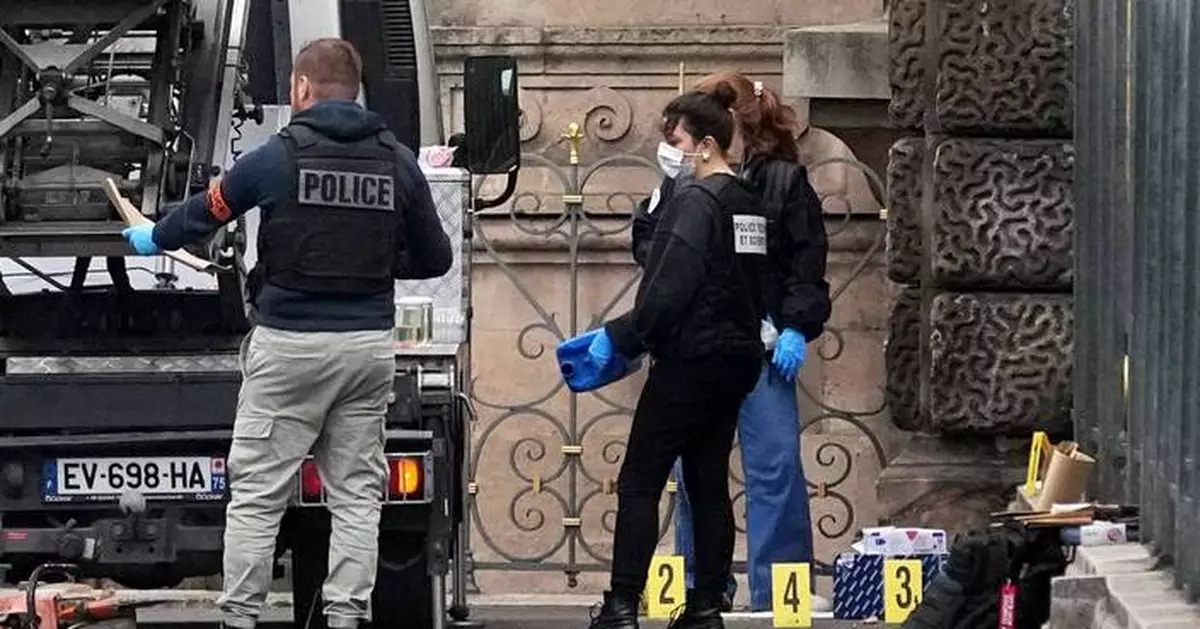
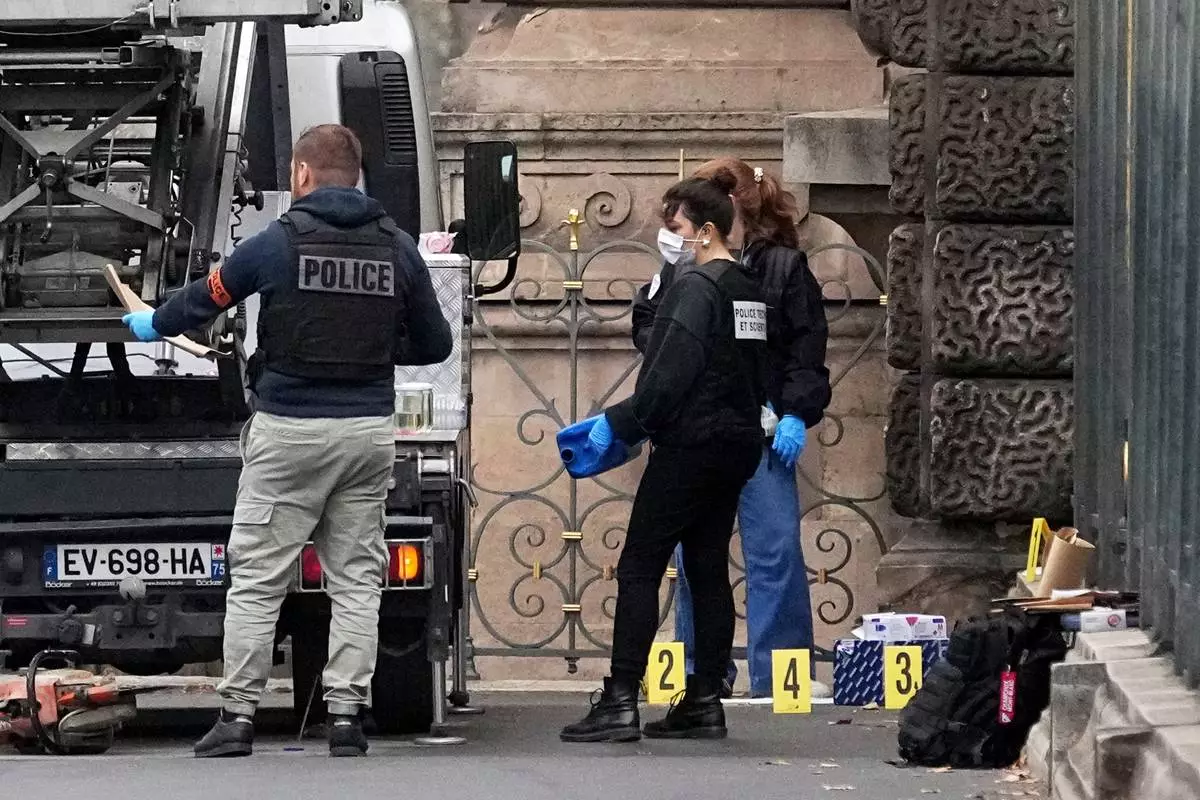
Police officers look for clues by a basket lift used by thieves Sunday, Oct. 19, 2025 at the Louvre museum in Paris. (AP Photo/Thibault Camus)
Police officers look for clues by a basket lift used by thieves Sunday, Oct. 19, 2025 at the Louvre museum in Paris. (AP Photo/Thibault Camus)

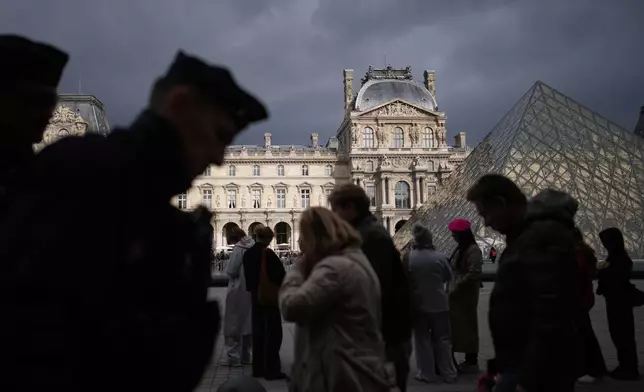
Police officers, left, patrol as people queue to enter Le Louvre museum Monday, Oct. 27, 2025 in Paris. (AP Photo/Christophe Ena)
Police officers, left, patrol as people queue to enter Le Louvre museum Monday, Oct. 27, 2025 in Paris. (AP Photo/Christophe Ena)

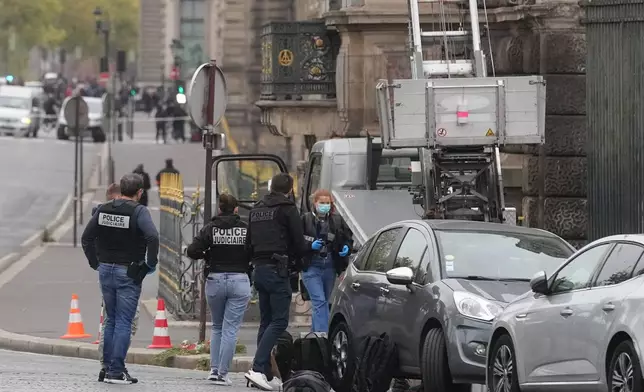
Police officers work by a basket lift used by thieves Sunday, Oct. 19, 2025 at the Louvre museum in Paris. (AP Photo/Thibault Camus)
Police officers work by a basket lift used by thieves Sunday, Oct. 19, 2025 at the Louvre museum in Paris. (AP Photo/Thibault Camus)

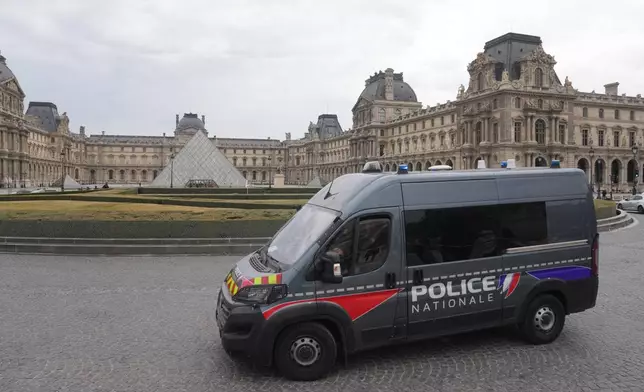
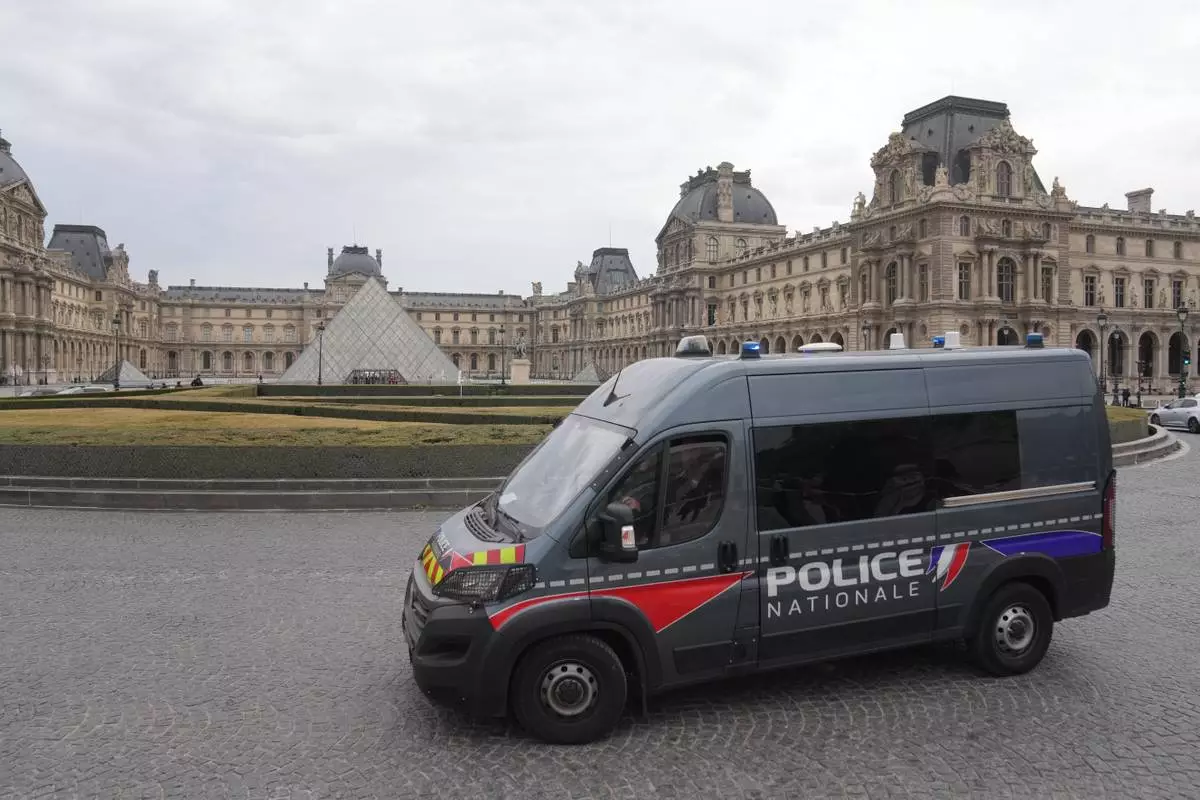
A police van patrols in the courtyard of the closed Louvre museum after a robbery Sunday, Oct. 19, 2025 in Paris. (AP Photo/Thibault Camus)
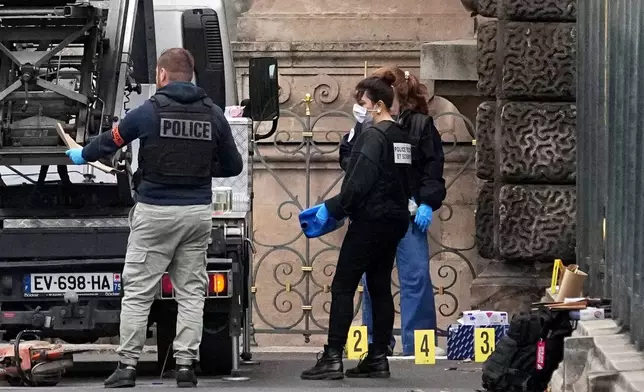
A police van patrols in the courtyard of the closed Louvre museum after a robbery Sunday, Oct. 19, 2025 in Paris. (AP Photo/Thibault Camus)

Police officers look for clues by a basket lift used by thieves Sunday, Oct. 19, 2025 at the Louvre museum in Paris. (AP Photo/Thibault Camus)

Police officers look for clues by a basket lift used by thieves Sunday, Oct. 19, 2025 at the Louvre museum in Paris. (AP Photo/Thibault Camus)

Two suspects were arrested last weekend and five more were arrested overnight into Thursday. The seven in custody include three of four members of the suspected “commando” team that carried out the heist. Beyond the numbers, little has been revealed about how the investigation is unfolding, a source of frustration for those accustomed to the 24-hour flow of information in American true crime or British tabloids.

Suspects, like the jewels themselves, have remained out of sight, the case file cloaked in mystery and French authorities characteristically discreet.

Paris prosecutor Laure Beccuau said that more details would come once the suspects’ custody period ends, expected midweek.

But here's what we know so far about the case:

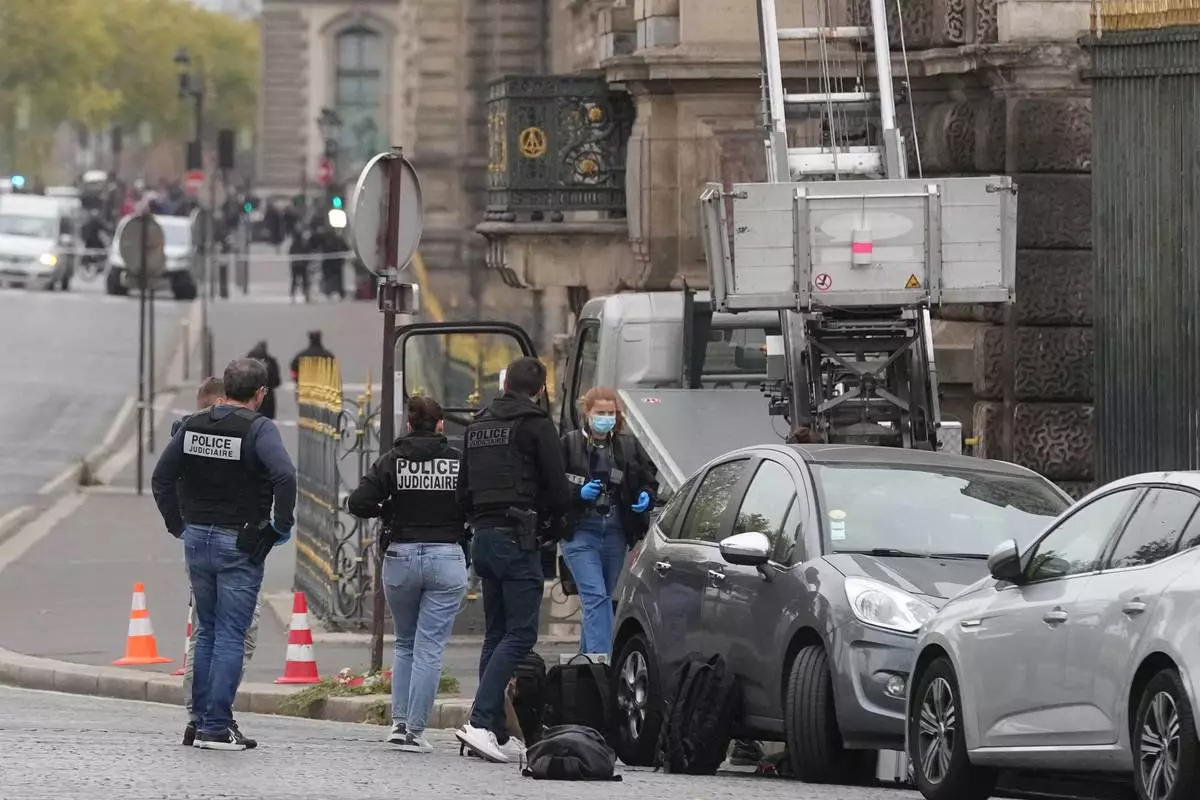
Authorities have said that the heist was carried out using a truck-mounted lift — the kind movers use to reach upper floors — stolen nine days before the raid. The preservation of the lift kept intact a key source of evidence, the prosecutor said.

It took mere minutes for thieves to ride the lift up the side of the museum, smash display cases and steal eight objects worth an estimated 88 million euros ($102 million) on Oct. 19. The haul included a sapphire diadem, necklace and an earring from a set linked to 19th-century queens Marie-Amélie and Hortense.

Beccuau said an investigation was opened into potential charges of criminal conspiracy and organized theft, which can carry hefty fines and yearslong prison sentences.

Beccuau said investigators made arrests Saturday evening and late Wednesday into early Thursday. One suspect, she added, was stopped at a Paris airport while trying to leave the country for Algeria on Saturday.

The two taken into custody on Saturday, men aged 34 and 39 from Aubervilliers, north of Paris, were charged Wednesday with theft by an organized gang and criminal conspiracy after nearly 96 hours in custody. Beccuau said both gave “minimalist” statements and “partially admitted” their involvement.

But despite global attention, neither names nor extensive biographical details have been made public about those arrested. In France, where privacy laws are strict, images of criminal suspects are not made public as they often are elsewhere. Suspects aren’t paraded before cameras upon arrest or shown in mug shots.

James Whitman, a Yale Law School professor of comparative and foreign law, said the French are often startled by how openly criminal suspects are treated in the United States. Both countries technically protect the presumption of innocence but France takes the principle further.

“In France, naming suspects in the press is regarded as a violation of the presumption of innocence,” Whitman said.

Such was the case in 2011 when media outlets photographed Dominique Strauss-Kahn, then head of the International Monetary Fund and a contender for France’s presidency, on a “perp walk” to a New York jail after he was indicted on charges he sexually assaulted a hotel maid. The charges were eventually dismissed.

Information about investigations is meant to be secret under French law, to avoid compromising police work and to ensure victims' right to privacy, a policy known as "secret d’instruction.'' Only the prosecutor can speak publicly about developments, and violators can be prosecuted.

Police and investigators are not supposed to divulge information about arrests or suspects without the prosecutor's approval, though in high-profile cases, police union officials have leaked partial details. Beccuau on Saturday rued the leak of information about the ongoing investigation.

Prosecutors said last week that the two thieves who entered the museum were assisted by two others, who waited outside before fleeing along the Seine. Investigators say there is no sign of insider help for now.

The more than 100 investigators that Beccuau said are assigned to the case are combing through 150 DNA samples, surveillance footage and evidence left behind in the thieves’ wake.

Those assigned include the Brigade for the Repression of Banditry — the special police unit in charge of armed robberies, serious burglaries and art thefts — and the Central Office for the Fight Against Trafficking in Cultural Goods.

Recovering the jewels could be among the most difficult parts of investigators' work. French authorities have added the jewels to Interpol’s Stolen Works of Art Database, a global repository of about 57,000 missing cultural items.

Interpol, the world’s largest international police network, does not issue arrest warrants. But if authorities worry a suspect may flee, Interpol can circulate the information using a color-coded notice system.

The French investigators can also work with European authorities if required. They can turn to the European Union’s judicial cooperation agency, Eurojust, or its law enforcement agency, Europol. Eurojust works through judicial cooperation between prosecutors and magistrates, while Europol works with police agencies.

Both can help facilitate investigations and arrests throughout the 27-member bloc. Requests for help must come from the national authorities, and neither organization can initiate an investigation.

Extensive information about suspects is not routinely published in France while an investigation is ongoing. Trials are open to the public but are not televised, and no one is allowed to film or photograph anything inside the courtroom during a trial.

Metz reported from Rabat, Morocco. Molly Quell in The Hague, Netherlands, contributed to this report.
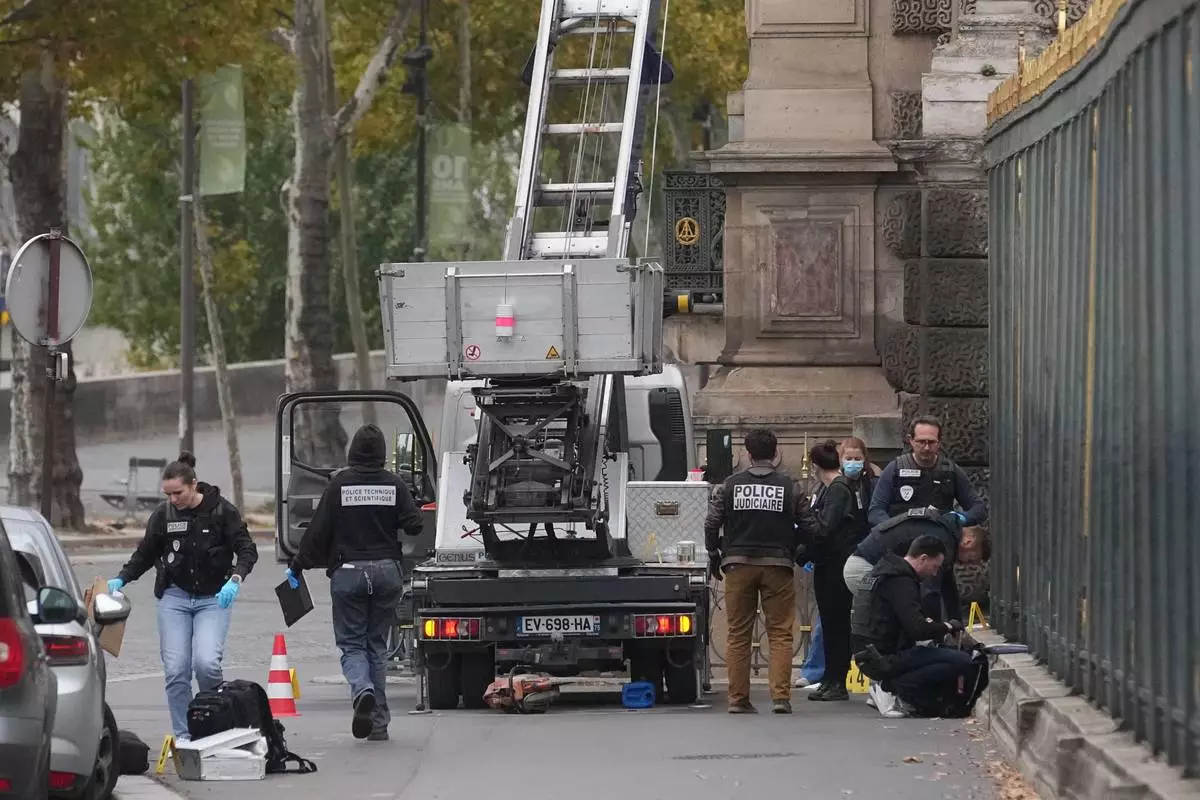
Police officers look for clues by a basket lift used by thieves Sunday, Oct. 19, 2025 at the Louvre museum in Paris. (AP Photo/Thibault Camus)
Police officers look for clues by a basket lift used by thieves Sunday, Oct. 19, 2025 at the Louvre museum in Paris. (AP Photo/Thibault Camus)

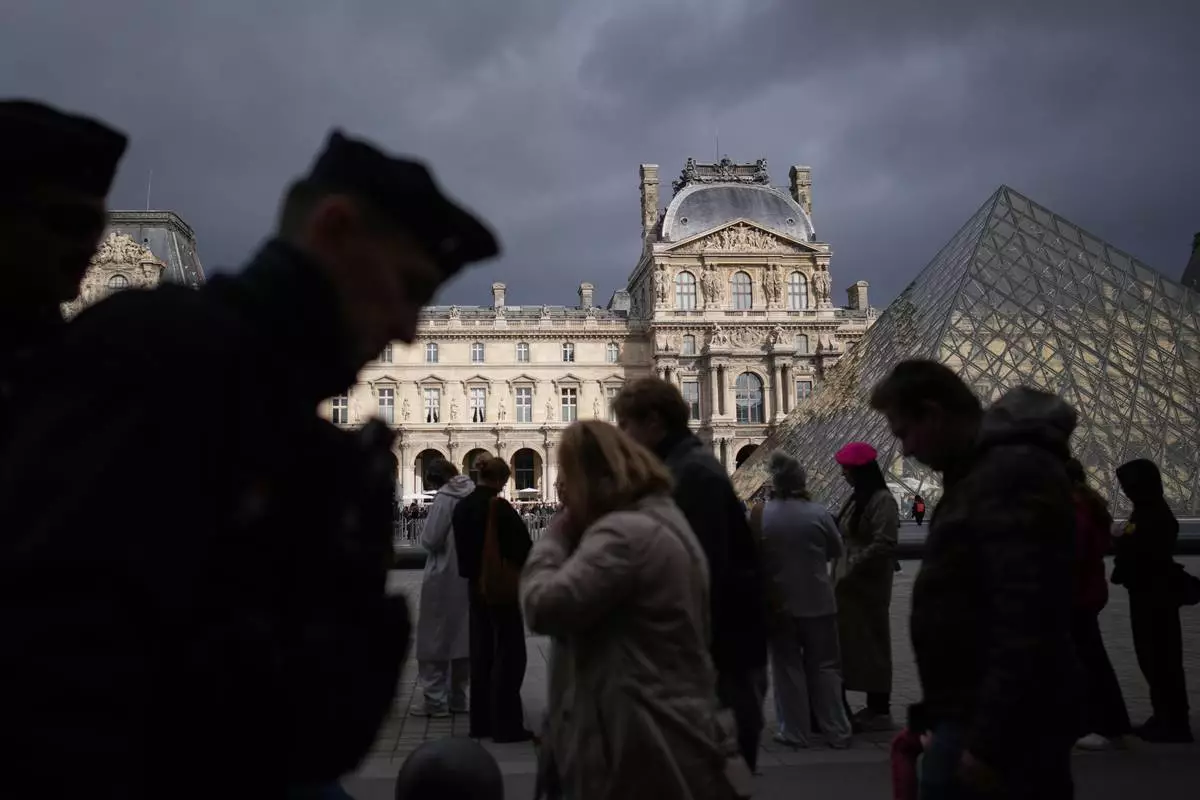
Police officers, left, patrol as people queue to enter Le Louvre museum Monday, Oct. 27, 2025 in Paris. (AP Photo/Christophe Ena)
Police officers, left, patrol as people queue to enter Le Louvre museum Monday, Oct. 27, 2025 in Paris. (AP Photo/Christophe Ena)

Police officers work by a basket lift used by thieves Sunday, Oct. 19, 2025 at the Louvre museum in Paris. (AP Photo/Thibault Camus)
Police officers work by a basket lift used by thieves Sunday, Oct. 19, 2025 at the Louvre museum in Paris. (AP Photo/Thibault Camus)

A police van patrols in the courtyard of the closed Louvre museum after a robbery Sunday, Oct. 19, 2025 in Paris. (AP Photo/Thibault Camus)
A police van patrols in the courtyard of the closed Louvre museum after a robbery Sunday, Oct. 19, 2025 in Paris. (AP Photo/Thibault Camus)

Police officers look for clues by a basket lift used by thieves Sunday, Oct. 19, 2025 at the Louvre museum in Paris. (AP Photo/Thibault Camus)
Police officers look for clues by a basket lift used by thieves Sunday, Oct. 19, 2025 at the Louvre museum in Paris. (AP Photo/Thibault Camus)
MINNEAPOLIS (AP) — A judge on Wednesday gave the Trump administration time to respond to a request to suspend an immigration crackdown in Minnesota, while the Pentagon looked for military lawyers to join what has become a chaotic law enforcement effort in the state.

Plumes of tear gas, bursts of chemical irritants and the screech of protest whistles have become common on the streets of Minneapolis, especially since an immigration agent fatally shot Renee Good in the head on Jan. 7 as she drove away.

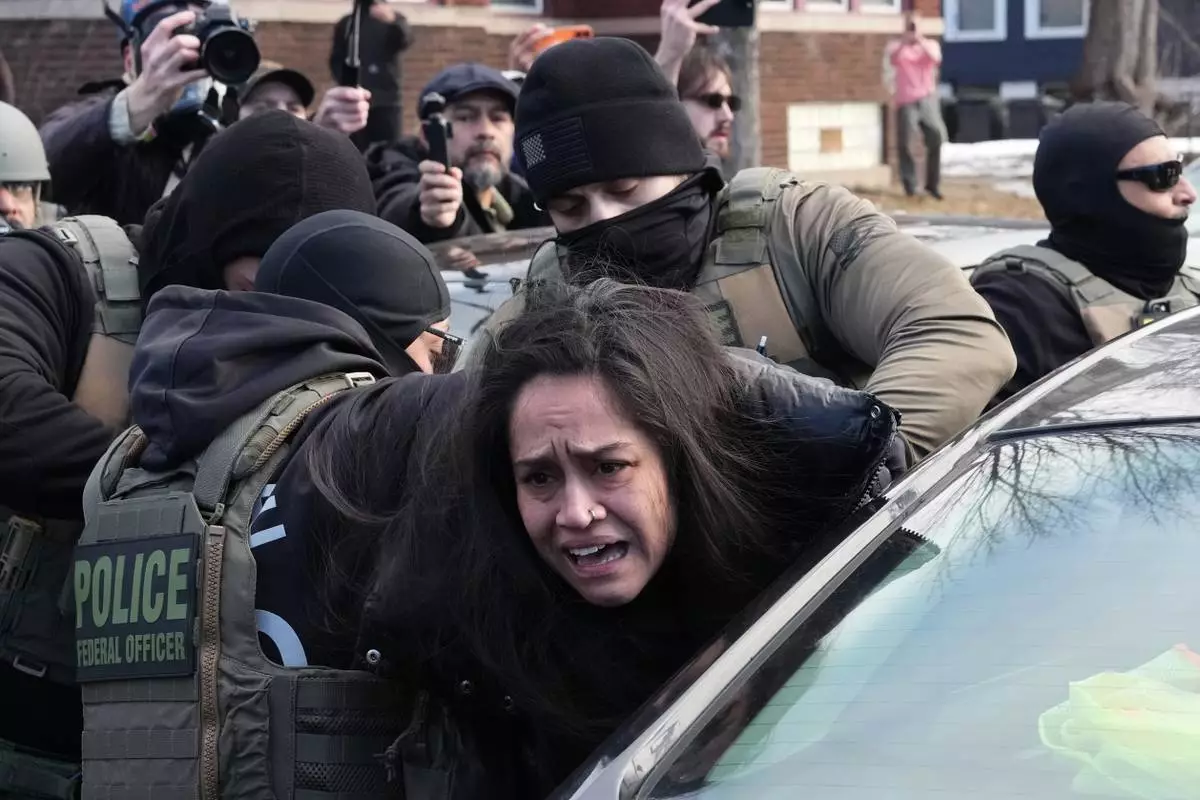
Agents have yanked people from cars and homes and been confronted by angry bystanders who are demanding that officers pack up and leave.

“What we need most of all right now is a pause. The temperature needs to be lowered," state Assistant Attorney General Brian Carter said during the first hearing in a lawsuit filed by Minnesota and the cities of Minneapolis and St. Paul.

Local leaders say the government is violating free speech and other constitutional rights with the surge of law enforcement. U.S. District Judge Katherine Menendez promised to keep the case “on the front burner” and gave the U.S. Justice Department until Monday to file a response to a request for a restraining order.

The judge said these are "grave and important matters,” and that there are few legal precedents to apply to some of the key points in the case.

Justice Department attorney Andrew Warden suggested the approach set by Menendez was appropriate.

The judge is also handling a separate lawsuit challenging the tactics used by Immigration and Customs Enforcement and other federal officers when they encounter protesters and observers. A decision could be released this week.

During a news conference Wednesday evening, Gov. Tim Walz described Minnesota as being in chaos, saying what's happening in the state “defies belief.”

“Let’s be very, very clear, this long ago stopped being a matter of immigration enforcement," he said. "Instead, it’s a campaign of organized brutality against the people of Minnesota by our own federal government.”

Walz added that “accountability” will be coming through the courts.

The Department of Homeland Security says it has made more than 2,000 arrests in the state since early December and is vowing to not back down. The Pentagon is preparing to send military lawyers to Minneapolis to assist.

CNN, citing an email circulating in the military, says Defense Secretary Pete Hegseth is asking the branches to identify 40 lawyers known as judge advocate general officers or JAGs, and 25 of them will serve as special assistant U.S. attorneys in Minneapolis.

Pentagon spokesperson Kingsley Wilson appeared to confirm the CNN report by posting it on X with a comment that the military “is proud to support” the Justice Department.

The Pentagon did not immediately respond to emails from The Associated Press seeking more details.

It’s the latest step by the Trump administration to dispatch military and civilian attorneys to areas where federal immigration operations are taking place. The Pentagon last week sent 20 lawyers to Memphis, U.S. Attorney D. Michael Dunavant said.

Mark Nevitt, an associate professor at Emory University School of Law and a former Navy JAG, said there's concern that the assignments are taking lawyers away from the military justice system.

“There are not many JAGs but there are over one million members of the military, and they all need legal support,” he said.

Jonathan Ross, the Immigration and Customs Enforcement officer who killed Good, suffered internal bleeding to his torso during the encounter, a Homeland Security official told The Associated Press.

The official spoke to AP on condition of anonymity in order to discuss Ross’ medical condition. The official did not provide details about the severity of the injuries, and the agency did not respond to questions about the extent of the bleeding, exactly how he suffered the injury, when it was diagnosed or his medical treatment.

There are many causes of internal bleeding, and they vary in severity from bruising to significant blood loss. Video from the scene showed Ross and other officers walking without obvious difficulty after Good was shot and her Honda Pilot crashed into other vehicles.

She was killed after three ICE officers surrounded her SUV on a snowy street a few blocks from her home.

Bystander video shows one officer ordering Good to open the door and grabbing the handle. As the vehicle begins to move forward, Ross, standing in front, raises his weapon and fires at least three shots at close range. He steps back as the SUV advances and turns.

Homeland Security Secretary Kristi Noem has said Ross was struck by the vehicle and that Good was using her SUV as a weapon — a self-defense claim that has been deeply criticized by Minnesota officials.

Chris Madel, an attorney for Ross, declined to comment on any injuries.

Good’s family, meanwhile, has hired a law firm, Romanucci & Blandin, that represented George Floyd’s family in a $27 million settlement with Minneapolis. Floyd, who was Black, died after a white police officer pinned his neck to the ground in the street in May 2020.

The firm said Good was following orders to move her car when she was shot. It said it would conduct its own investigation and publicly share what it learns.

“They do not want her used as a political pawn,” the firm said, referring to Good and her family, “but rather as an agent of peace for all.”

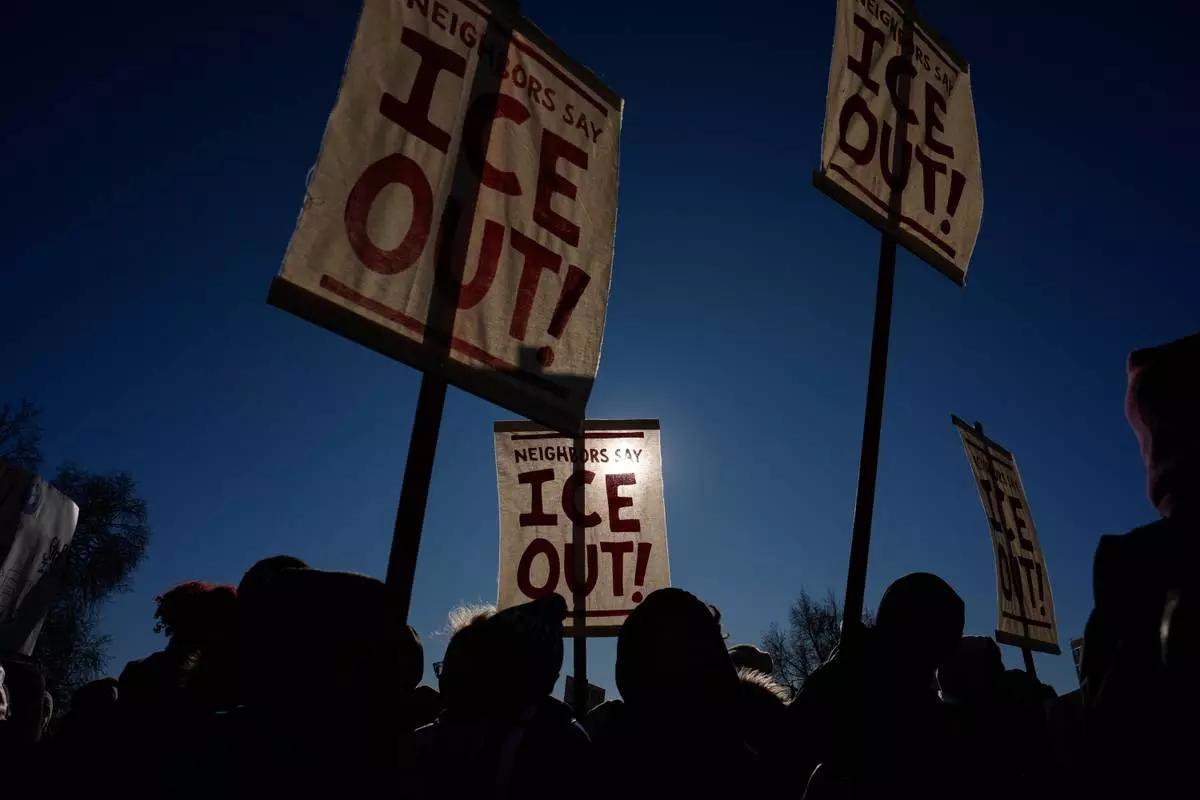
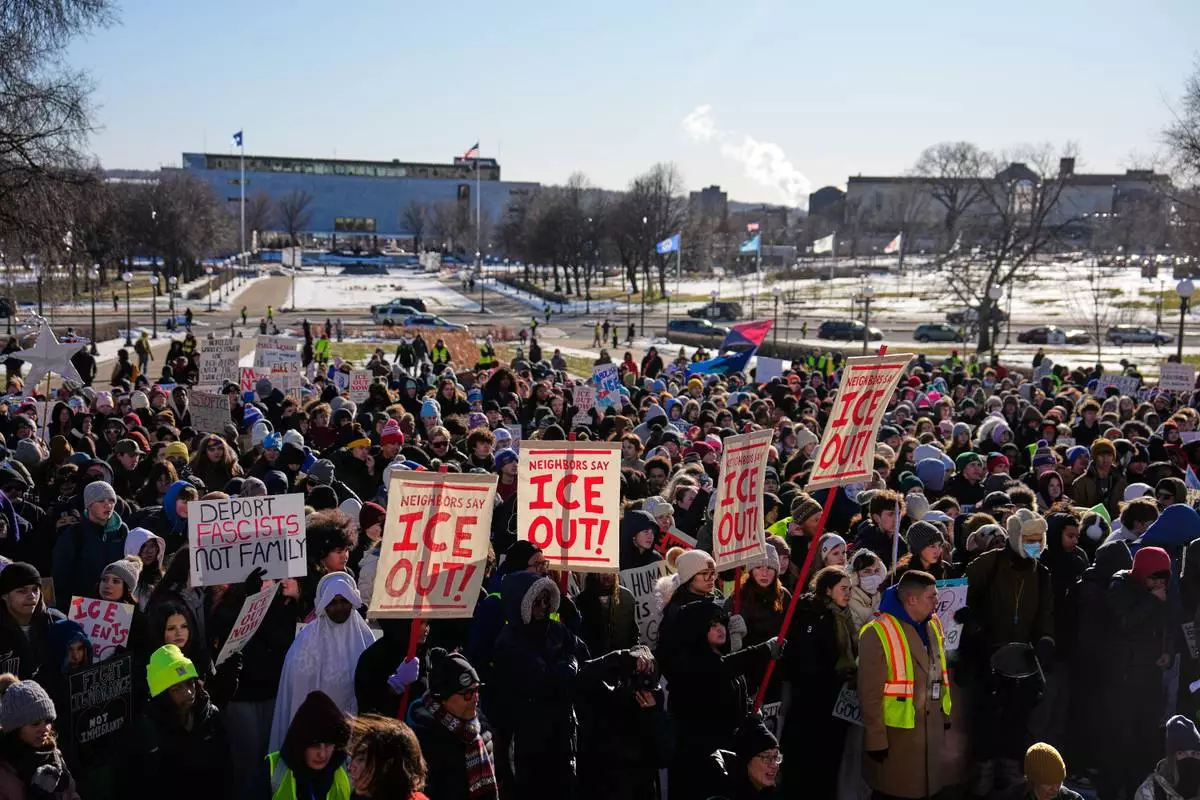
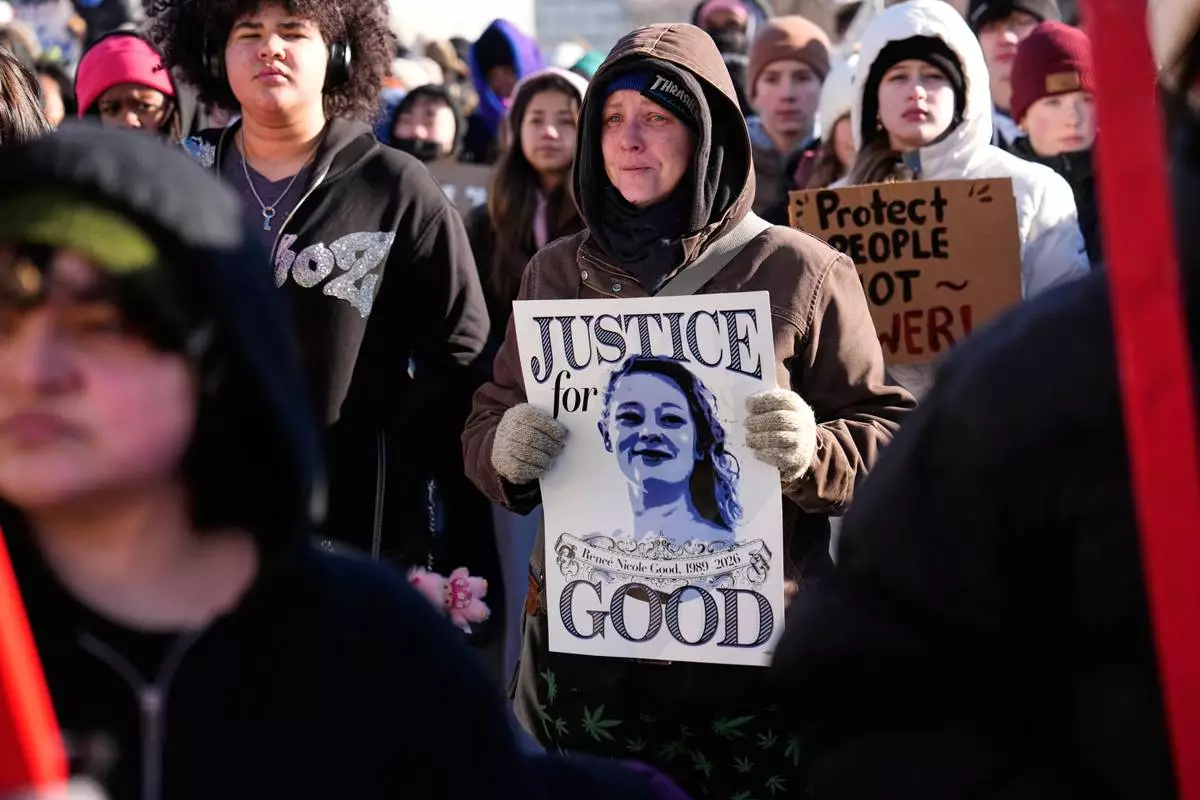
Waving signs reading “Love Melts ICE” and “DE-ICE MN,” hundreds of teenagers left school in St. Paul and marched in freezing temperatures to the state Capitol for a protest and rally.

The University of Minnesota, meanwhile, informed its 50,000-plus students that there could be online options for some classes when the new term starts next week. President Rebecca Cunningham noted that “violence and protests have come to our doorstep.” The campus sits next to the main Somali neighborhood in Minneapolis.

Associated Press reporters Julie Watson in San Diego, California; Rebecca Santana in Washington, D.C.; Ed White in Detroit; Giovanna Dell’Orto in Minneapolis; Graham Lee Brewer in Oklahoma City, Oklahoma; and Hallie Golden in Seattle contributed.

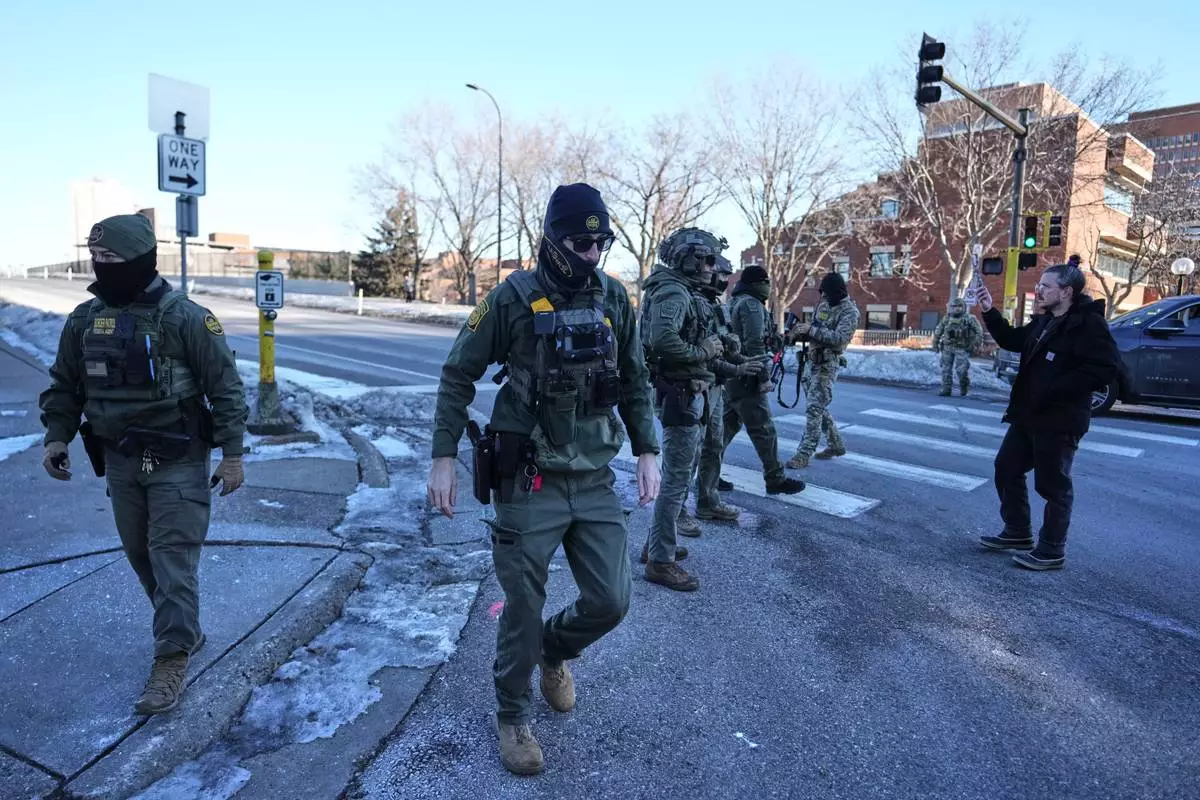
Federal immigration officers are seen Wednesday, Jan. 14, 2026, in Minneapolis. (AP Photo/Abbie Parr)

Federal immigration officers are seen Wednesday, Jan. 14, 2026, in Minneapolis. (AP Photo/Abbie Parr)

Hundreds of protesters gather in front of the Minnesota State Capitol in response to the death of Renee Good, who was fatally shot by an ICE officer last week, Wednesday, Jan. 14, 2026, in St. Paul, Minn. (AP Photo/John Locher)

Hundreds of protesters gather in front of the Minnesota State Capitol in response to the death of Renee Good, who was fatally shot by an ICE officer last week, Wednesday, Jan. 14, 2026, in St. Paul, Minn. (AP Photo/John Locher)

Protesters gather in front of the Minnesota State Capitol in response to the death of Renee Good, who was fatally shot by an ICE officer last week, Wednesday, Jan. 14, 2026, in St. Paul, Minn. (AP Photo/John Locher)

Protesters gather in front of the Minnesota State Capitol in response to the death of Renee Good, who was fatally shot by an ICE officer last week, Wednesday, Jan. 14, 2026, in St. Paul, Minn. (AP Photo/John Locher)

Protesters gather in front of the Minnesota State Capitol in response to the death of Renee Good, who was fatally shot by an ICE officer last week, Wednesday, Jan. 14, 2026, in St. Paul, Minn. (AP Photo/John Locher)

Protesters gather in front of the Minnesota State Capitol in response to the death of Renee Good, who was fatally shot by an ICE officer last week, Wednesday, Jan. 14, 2026, in St. Paul, Minn. (AP Photo/John Locher)

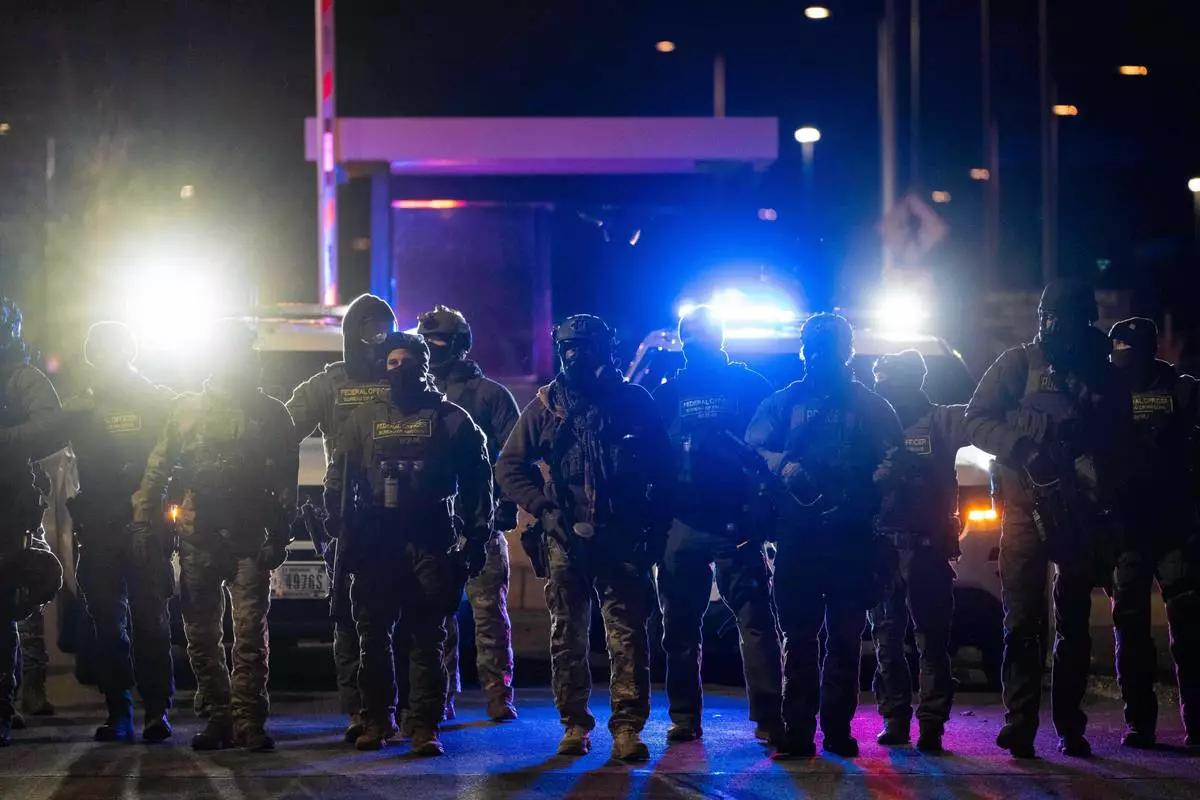
Federal officers stand guard after detaining people outside of Bishop Henry Whipple Federal Building, Tuesday, Jan. 13, 2026, in Minneapolis. (AP Photo/Adam Gray)

Federal officers stand guard after detaining people outside of Bishop Henry Whipple Federal Building, Tuesday, Jan. 13, 2026, in Minneapolis. (AP Photo/Adam Gray)

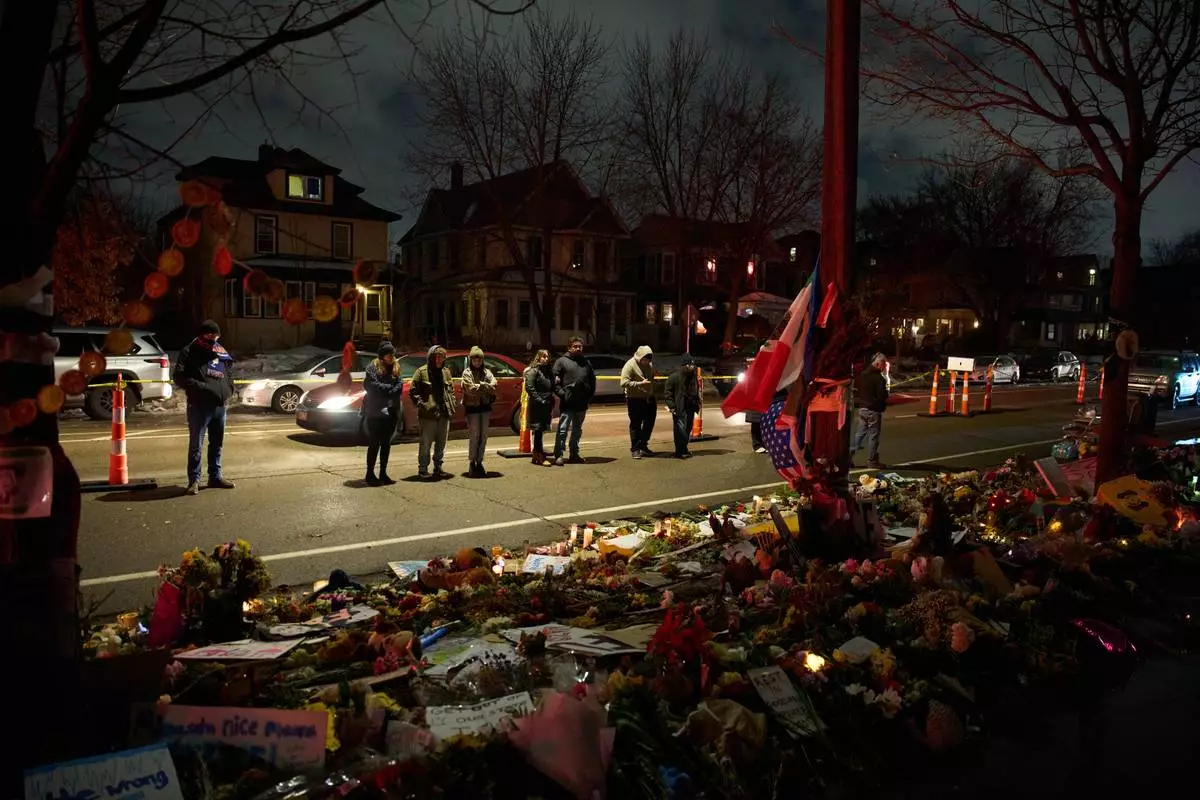
People visits a makeshift memorial for Renee Good, who was fatally shot by an ICE officer last week, Tuesday, Jan. 13, 2026, in Minneapolis. (AP Photo/John Locher)

People visits a makeshift memorial for Renee Good, who was fatally shot by an ICE officer last week, Tuesday, Jan. 13, 2026, in Minneapolis. (AP Photo/John Locher)

A person is detained by federal agents near the scene where Renee Good was fatally shot by an ICE officer last week, Tuesday, Jan. 13, 2026, in Minneapolis. (AP Photo/Adam Gray)

A person is detained by federal agents near the scene where Renee Good was fatally shot by an ICE officer last week, Tuesday, Jan. 13, 2026, in Minneapolis. (AP Photo/Adam Gray)

Recommended Articles