HO CHI MINH CITY, Vietnam, Oct. 28, 2025 /PRNewswire/ -- Vietnam Innovators Digest successfully hosted the Vietnam Healthcare Summit 2025 under the theme "Making Vietnam an Innovation Hub Through Healthcare", held at JW Marriott Hotel & Suites Saigon. The event gathered over 200 healthcare leaders, investors, policymakers, and experts both domestically and internationally, to engage in strategic dialogue on Vietnam's potential to become a regional hub for healthcare innovation.
The morning sessions focused on patient-centered innovation and enhancing access to healthcare services. The agenda opened with a report from Hello Health Group, highlighting the latest data on the healthcare perspective, attitudes, and needs of Vietnamese citizens. Subsequent discussions explored strategies to advance effective public–private collaboration, strengthen community-level healthcare delivery, and transform pharmacies into integrated care platforms. In parallel, technological solutions aimed at improving clinical outcomes and building digital infrastructure were also presented.
Ms. Alexandra Smith, British Consul General in Ho Chi Minh City and Director for Trade at the British Consulate-General, shared: "Vietnam is a very exciting and forward-looking market - one that is actively seeking scalable solutions and embracing technology to meet the healthcare needs of its people. Innovation and digital tools are key enablers, but trust remains the foundation for lasting partnerships. We see strong potential in building deeper UK-Vietnam connections through trusted brands, investment, and collaboration. We're seeing more British companies entering the Vietnamese market, and I believe this is only the beginning."
In the afternoon, the summit delved into themes of digital transformation and emerging financial models aimed at scaling innovation in healthcare. Discussions highlighted the potential for collaboration between health-tech startups and traditional hospital systems to optimize costs and improve treatment outcomes. The sessions also introduced Vietnam's first social loan for healthcare, and shared insights on how multinational corporations are partnering with public institutions to drive system transformation through innovative public–private partnership (PPP) models, with a vision toward building a more sustainable and modern healthcare system.
As part of the summit agenda, the Live Interactive Session offered multidimensional perspectives on how Vietnam can redefine the future of healthcare. In addition to a Networking Lunch for all attendees, the summit also hosted an Executive Lunch, a closed-door gathering for speakers, investors, and senior leaders, providing a strategic setting for dialogue and the development of long-term healthcare partnerships.
Commitment to Innovation and Sustainable Impact
Mr. Deepanshu Madan, Chief Executive Officer of Pharmacity Pharmacy Joint Stock Company, emphasized: "Innovation in healthcare is not just about technology or capital; it begins with understanding what people truly need and creating solutions that improve their lives every day. That requires close collaboration among consumers, policymakers, and partners to stay focused on what truly matters."
Mr. Francis Tuan Anh Nguyen, Founder and CEO of OneMedic Joint Stock Company, highlighted: "The goal of artificial intelligence in healthcare is not to replace doctors, but to support them in making faster, more accurate decisions and expanding access to care, even in remote and underserved areas. Ultimately, physicians remain responsible for diagnosis and treatment, but with AI as a tool, the quality of care can be elevated to an entirely new level."
With the support of both domestic and international partners, the Vietnam Healthcare Summit 2025 served as a comprehensive platform to address urgent challenges and shape innovative solutions for the healthcare sector. From cutting-edge medical technologies and long-term investment strategies to enabling policies and public–private partnership models, the summit's discussions reflected the evolving trajectory of Vietnam's healthcare system within both regional and global contexts. It was also an opportunity to mobilize resources, accelerate digital transformation, and outline a vision for building a modern, sustainable, and people-centered healthcare system.
Through its professional organization and strong alignment between content and practical action, the summit reaffirmed a long-term commitment to positioning innovation as a driving force for the sustainable development of Vietnam's healthcare sector.
** The press release content is from PR Newswire. Bastille Post is not involved in its creation. **
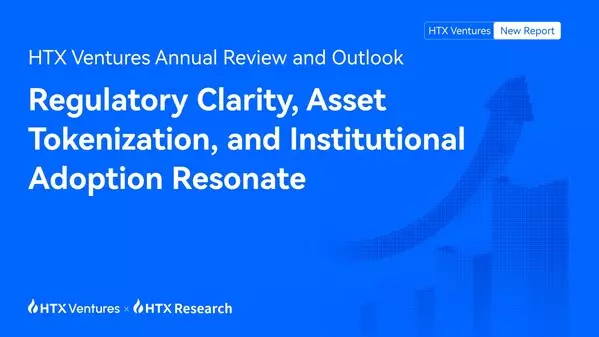
PANAMA CITY, Jan. 29, 2026 /PRNewswire/ -- Recently, HTX Ventures, the global investment arm of HTX, released its latest research report, 2025 Annual Review: Crypto Assets Move Toward Mainstream Adoption. As long-term participants deeply embedded in the industry, HTX and HTX Ventures remain focused on building foundational capabilities that endure across market cycles. On one hand, HTX Ventures tracks structural trends through rigorous research to identify the market's long-term direction. Through investment and ecosystem collaboration, it supports teams with tangible product strength and sustainable business models, advancing the integration of crypto technology into broader real-world use cases in a more resilient and sustainable manner.
Regulation Becomes Predictable: Clear Rules Drawing Institutional Capital In
HTX Ventures notes that in 2025, regulatory ambiguity across major global jurisdictions narrowed significantly. Moving from a phase of grey-zone tolerance to one of formal rule-setting, regulators focus on stablecoin frameworks, market structure compliance, and stricter requirements for trading, custody, and disclosure. In the United States, the GENIUS Act established a federal-level framework for payment stablecoins, reinforcing requirements such as full 1:1 reserve backing. In Europe, the implementation of MiCA has materially raised compliance thresholds, pushing the industry from growth-at-all-costs toward compliant competition. Hong Kong, meanwhile, has advanced its stablecoin regulatory regime through issuer licensing frameworks and the rollout of new rules.
Everything On-Chain: Stablecoin Payments and RWA Tokenization Entering an Expansion Phase
In 2025, two forces jointly reshaped on-chain infrastructure: the expansion of stablecoins and the institutional adoption of RWA tokens.
Stablecoins accelerated their evolution from crypto-native tools into global financial infrastructure. Total stablecoin market capitalization reached a record high of $308 billion in Oct. 2025 and stabilized around $309.4 billion by mid-Dec. representing a 50.3% increase over the year. Annual on-chain transaction volume exceeded $46 trillion, comparable to the combined annual volumes of Visa, Mastercard, and PayPal.
The RWA tokenization market entered a phase of accelerated growth. As of Dec. 17, 2025, the total value of on-chain distributed RWA assets (excluding stablecoins) reached $18.74 billion, more than tripling since the beginning of the year. Tokenized U.S. Treasuries reached approximately 8.7 billion, accounting for 47.3%, with landmark products such as BlackRock's BUIDL (approximately $2.006 billion). This exemplifies deeper integration between traditional asset management and on-chain tokenization.
Clearer Institutional Entry Paths: From "Whether to Allocate" to "How to Allocate Compliantly"
HTX Ventures characterizes 2025 as the year when institutional adoption pathways became quantifiable. The core shift was not institutions broadly betting on high-volatility assets, but rather entering the crypto space through more auditable, standardized structures aligned with traditional balance sheet frameworks, decomposing on-chain capabilities into deployable financial modules.
Institutional participation is advancing through several well-defined paths: gaining crypto exposure through ETFs and ETPs; incorporating BTC into corporate treasuries; migrating payments and settlement on-chain via stablecoins; and transforming cash equivalents and collateral into composable on-chain assets through RWA tokenization.
Crucially, institutional participation is changing how the market functions. HTX Ventures summarizes these structural effects in three areas:
Rising market concentration as capital gravitates toward major assets.
Emphasis on compliance and risk management, with increased demands for data transparency.
Pricing and yield curves that increasingly resemble traditional finance, incorporating concepts such as term structure and funding costs.
Strategically, institutions favor low-risk, medium-yield strategies—such as arbitrage, market making, and delta-neutral hedging—acting as structure providers rather than short-term price drivers.
HTX Ventures' Focus Areas for 2026
Alec, Head of HTX Ventures, commented: "After the structural shifts of 2025, the industry is entering a critical phase defined by infrastructure competition. Capital is flowing in along pathways that are regulated, auditable, and scalable. As a result, the next phase will be less about short-term price performance and more about which players can continuously accumulate value at the infrastructure layer."
Building upon the trends, HTX Ventures will focus on the following areas in 2026:
AI x Blockchain: AI agent frameworks, machine accounts and payments, on-chain execution automation, and closed-loop data pricing and settlement
Stablecoins and Payment Infrastructure: Compliant issuance and reserve management, on-chain settlement and reconciliation, risk management and AML, enterprise-grade wallet permissions, and payment routing optimization
RWA Tokenization Expansion and Secondary Liquidity: Tokenization of cash equivalents, private credit, and institutional assets; the development of trading and liquidity infrastructure
User Experience and Productization: Applications and protocols that lower barriers to on-chain finance through improved interaction, one-click cross-chain functionality, and mobile security
Multi-chain Application Ecosystem: Identifying strong applications and integrated platforms that can retain users, cash flows, and developers in a multi-chain environment
In 2026, HTX and HTX Ventures will keep pursuing value creation with longtermism, focusing on critical infrastructure and real-world use cases, and advancing crypto technology adoption toward a more open, fair, and transparent global financial system.
About HTX Ventures
HTX Ventures is the global investment arm of HTX, integrating investment, incubation, and research to identify and discover the best and most innovative projects in the market. Visit us here.
PANAMA CITY, Jan. 29, 2026 /PRNewswire/ -- Recently, HTX Ventures, the global investment arm of HTX, released its latest research report, 2025 Annual Review: Crypto Assets Move Toward Mainstream Adoption. As long-term participants deeply embedded in the industry, HTX and HTX Ventures remain focused on building foundational capabilities that endure across market cycles. On one hand, HTX Ventures tracks structural trends through rigorous research to identify the market's long-term direction. Through investment and ecosystem collaboration, it supports teams with tangible product strength and sustainable business models, advancing the integration of crypto technology into broader real-world use cases in a more resilient and sustainable manner.
Regulation Becomes Predictable: Clear Rules Drawing Institutional Capital In
HTX Ventures notes that in 2025, regulatory ambiguity across major global jurisdictions narrowed significantly. Moving from a phase of grey-zone tolerance to one of formal rule-setting, regulators focus on stablecoin frameworks, market structure compliance, and stricter requirements for trading, custody, and disclosure. In the United States, the GENIUS Act established a federal-level framework for payment stablecoins, reinforcing requirements such as full 1:1 reserve backing. In Europe, the implementation of MiCA has materially raised compliance thresholds, pushing the industry from growth-at-all-costs toward compliant competition. Hong Kong, meanwhile, has advanced its stablecoin regulatory regime through issuer licensing frameworks and the rollout of new rules.
Everything On-Chain: Stablecoin Payments and RWA Tokenization Entering an Expansion Phase
In 2025, two forces jointly reshaped on-chain infrastructure: the expansion of stablecoins and the institutional adoption of RWA tokens.
Stablecoins accelerated their evolution from crypto-native tools into global financial infrastructure. Total stablecoin market capitalization reached a record high of $308 billion in Oct. 2025 and stabilized around $309.4 billion by mid-Dec. representing a 50.3% increase over the year. Annual on-chain transaction volume exceeded $46 trillion, comparable to the combined annual volumes of Visa, Mastercard, and PayPal.
The RWA tokenization market entered a phase of accelerated growth. As of Dec. 17, 2025, the total value of on-chain distributed RWA assets (excluding stablecoins) reached $18.74 billion, more than tripling since the beginning of the year. Tokenized U.S. Treasuries reached approximately 8.7 billion, accounting for 47.3%, with landmark products such as BlackRock's BUIDL (approximately $2.006 billion). This exemplifies deeper integration between traditional asset management and on-chain tokenization.
Clearer Institutional Entry Paths: From "Whether to Allocate" to "How to Allocate Compliantly"
HTX Ventures characterizes 2025 as the year when institutional adoption pathways became quantifiable. The core shift was not institutions broadly betting on high-volatility assets, but rather entering the crypto space through more auditable, standardized structures aligned with traditional balance sheet frameworks, decomposing on-chain capabilities into deployable financial modules.
Institutional participation is advancing through several well-defined paths: gaining crypto exposure through ETFs and ETPs; incorporating BTC into corporate treasuries; migrating payments and settlement on-chain via stablecoins; and transforming cash equivalents and collateral into composable on-chain assets through RWA tokenization.
Crucially, institutional participation is changing how the market functions. HTX Ventures summarizes these structural effects in three areas:
Strategically, institutions favor low-risk, medium-yield strategies—such as arbitrage, market making, and delta-neutral hedging—acting as structure providers rather than short-term price drivers.
HTX Ventures' Focus Areas for 2026
Alec, Head of HTX Ventures, commented: "After the structural shifts of 2025, the industry is entering a critical phase defined by infrastructure competition. Capital is flowing in along pathways that are regulated, auditable, and scalable. As a result, the next phase will be less about short-term price performance and more about which players can continuously accumulate value at the infrastructure layer."
Building upon the trends, HTX Ventures will focus on the following areas in 2026:
AI x Blockchain: AI agent frameworks, machine accounts and payments, on-chain execution automation, and closed-loop data pricing and settlement
Stablecoins and Payment Infrastructure: Compliant issuance and reserve management, on-chain settlement and reconciliation, risk management and AML, enterprise-grade wallet permissions, and payment routing optimization
RWA Tokenization Expansion and Secondary Liquidity: Tokenization of cash equivalents, private credit, and institutional assets; the development of trading and liquidity infrastructure
User Experience and Productization: Applications and protocols that lower barriers to on-chain finance through improved interaction, one-click cross-chain functionality, and mobile security
Multi-chain Application Ecosystem: Identifying strong applications and integrated platforms that can retain users, cash flows, and developers in a multi-chain environment
In 2026, HTX and HTX Ventures will keep pursuing value creation with longtermism, focusing on critical infrastructure and real-world use cases, and advancing crypto technology adoption toward a more open, fair, and transparent global financial system.
About HTX Ventures
HTX Ventures is the global investment arm of HTX, integrating investment, incubation, and research to identify and discover the best and most innovative projects in the market. Visit us here.
** The press release content is from PR Newswire. Bastille Post is not involved in its creation. **