Venezuela's centuries-old coffee industry faces tests posed by global climate change and U.S. sanctions after years of efforts to its revival under government support.
Once a leading coffee exporter in Latin America, Venezuela is now working to restore its coffee sector as part of a broader push for economic diversification. But erratic weather patterns and restricted access to international financial systems caused by U.S. sanctions are threatening the fragile momentum.
Reinaldo Mujica, a coffee grower in the Mirandinos, south of Venezuela's capital Caracas, expanded his plantation from five to 14 hectares over the past five years, encouraged by rising global coffee prices. But last year, extreme weather slashed his harvest from eight tons to five.
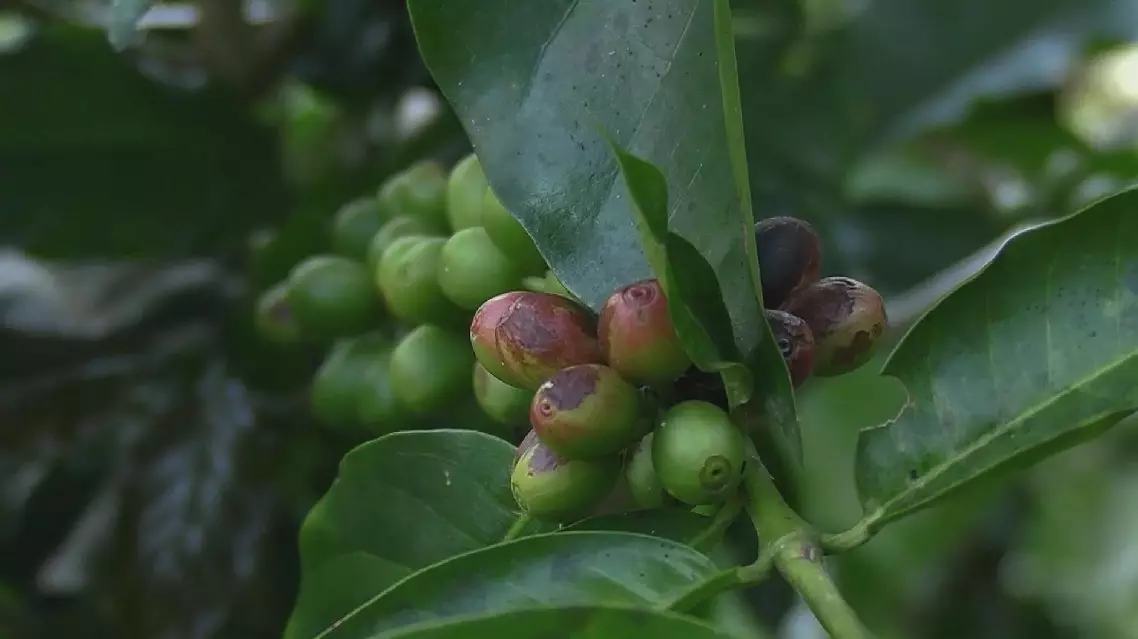
"Climate change hit us hard last year. The mornings were unusually cold, which is normal for the highlands. But strangely enough, by eight in the morning, the sun was scorching, and it burned immature beans and resulting in a quality decline of the coffee beans. For a farm like ours that produces premium highland coffee, these beans are unusable," said Mujica.
In addition to erratic weather, U.S. sanctions have made it increasingly difficult to access to foreign currency and raised the cost of fertilizers and other inputs, squeezing small and medium-sized producers.
Vicente Perez, executive director of National Agricultural Federation of Venezuela (Fedeagro) and head of the coffee department, said that although coffee is not directly sanctioned, financial restrictions still pose hurdles.
"It must be stressed again that the banking system is a real issue. In international settlement system such as SWIFT, if a transaction needs to pass through two or three banks, and one of them needs to view the transaction information, they may reject the transaction if they see the name of 'Venezuela.' Therefore, sometimes the funds between banks have to go through a very long circle before the money can reach Venezuela," said Perez.
Despite these obstacles, Venezuela's coffee output is approaching its historical peak of 1.8 million bags, and exports are on the rise. Last year, Venezuela exported 150,000 bags of coffee. The figure is expected to surpass 200,000 this year.
Venezuela currently has about 227,000 hectares under coffee cultivation, and the government has ramped up support for coffee growers, offering training, breeding programs, and fertilizer subsidies.
Gabriel Gonzalez, head of the Venezuela Specialty Coffee Exchange, said the sector must now embrace regenerative and smart farming practices.
"We need to promote the regenerative and smart farming practices, and encourage growers to adopt a more resilient, ecologically-friendly farming systems," said Gabriel Gonzalez, president of the Venezuelan Specialty Coffee International Encounter (EICEV) Foundation.
Climate change, US sanctions impact Venezuela's coffee revival