Leveraging a 1,000-year-old spiritual bond with South Korea, the Jiuhua Mountain, one of China's four great Buddhist peaks in Chizhou City of east China's Anhui Province, is now playing a role in strengthening modern ties between the two countries through a surge in tourism and cultural exchanges.
In 2023, Chizhou became a sister city with Gyeongju, the host city of the 32nd APEC Economic Leaders' Meeting. Since then, the two cities have deepened their exchanges in tourism and industrial cooperation.
Before this year's APEC summit, a reporter from China Global Television Network (CGTN) teamed up with a counterpart from Maeil Broadcasting Network (MBN) to visit the Jiuhua Mountain, exploring how the natural scenery continues to strengthen the bond between the two peoples.
Stretching across 120 square kilometers and rising 1,300 meters above sea level, the Jiuhua Mountain stands among China's four sacred Buddhist mountains and is home to 99 Buddhist temples and 11 scenic spots.
The Jiuhua Mountain also shares a profound historical and cultural bond with South Korea. Legend traces this connection back to ancient China's Tang Dynasty (618-907) when Korean monk Kim Gyo-gak journeyed to the mountain and established a Buddhist monastery there.
This ancient linkage continues to resonate today. According to Ma Le, deputy director of the management committee of the Jiuhua Mountain Scenic Area, the mountain's deep-rooted ties with South Korea have helped drive a surge in tourist arrivals from the country in recent years.
"When South Korean tourists come to China, they feel homey. When they come to Jiuhua Mountain, they feel like visiting relatives," Ma said.
MBN reporter Kim Han-joon noted that the Korean monk's settlement at the Jiuhua Mountain marked the origins of the cultural bond between the two countries.
"We can see the sign along the road. You can also find it in South Korea. It's culture and history. During the Tang Dynasty, over 1,000 years ago, a monk from now South Korea came here, and tourists now follow suit," he said.
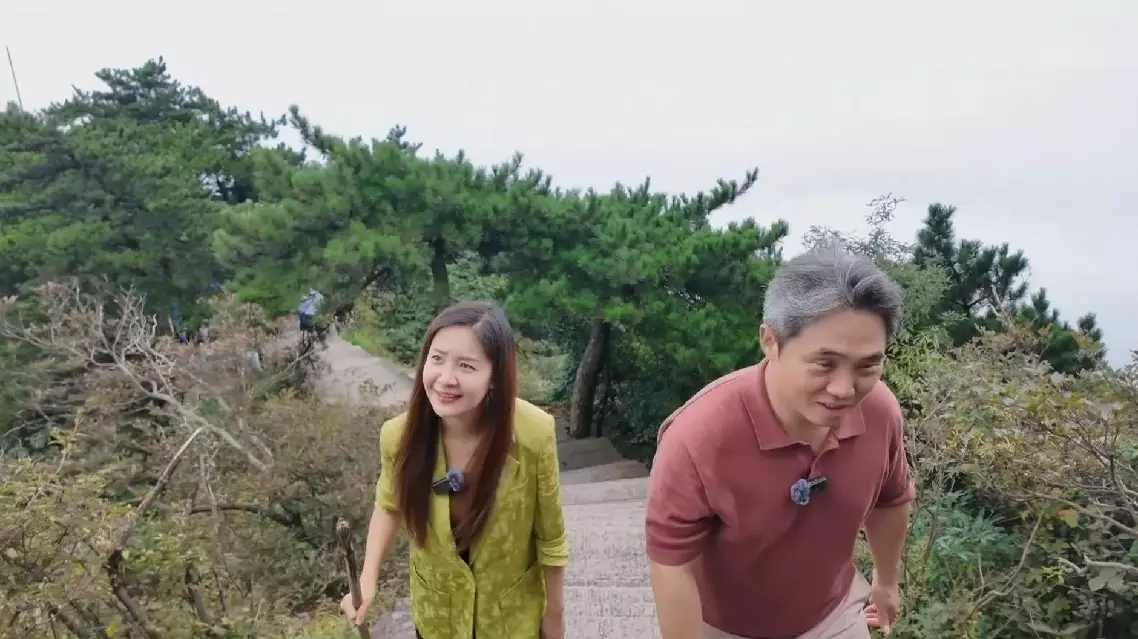
Buddhist mountain in east China's Anhui becomes bridge for China-South Korea exchanges