TROY, Mich.--(BUSINESS WIRE)--Oct 28, 2025--
As the broader financial services industry is pushing to deliver more personalized, digital-first experiences, the annuities industry is struggling to keep pace. Modernizing engagement in this space could unlock significant growth and elevate the industry’s relevance in today’s client-centric landscape. According to the J.D. Power 2025 U.S. Individual Annuity Study, SM released today, overall customer satisfaction with individual annuities declined 6 points year over year (on a 1,000-point scale) driven primarily by frustrations among newer clients early in the relationship and challenges with digital channels.
This press release features multimedia. View the full release here: https://www.businesswire.com/news/home/20251028213640/en/
“Today’s customers—especially those who are new to annuities—expect a level of clarity and convenience comparable to what they experience in other sectors,” said Craig Martin, executive director, global insurance intelligence at J.D. Power. “The data makes it clear that subpar experiences early in the relationship coupled with ineffective digital tools are leading to frustration, which not only threatens customer satisfaction but also strains long-term loyalty to the annuity provider and the financial professionals selling these products.”
Following are some key findings of the 2025 study:
Study Ranking
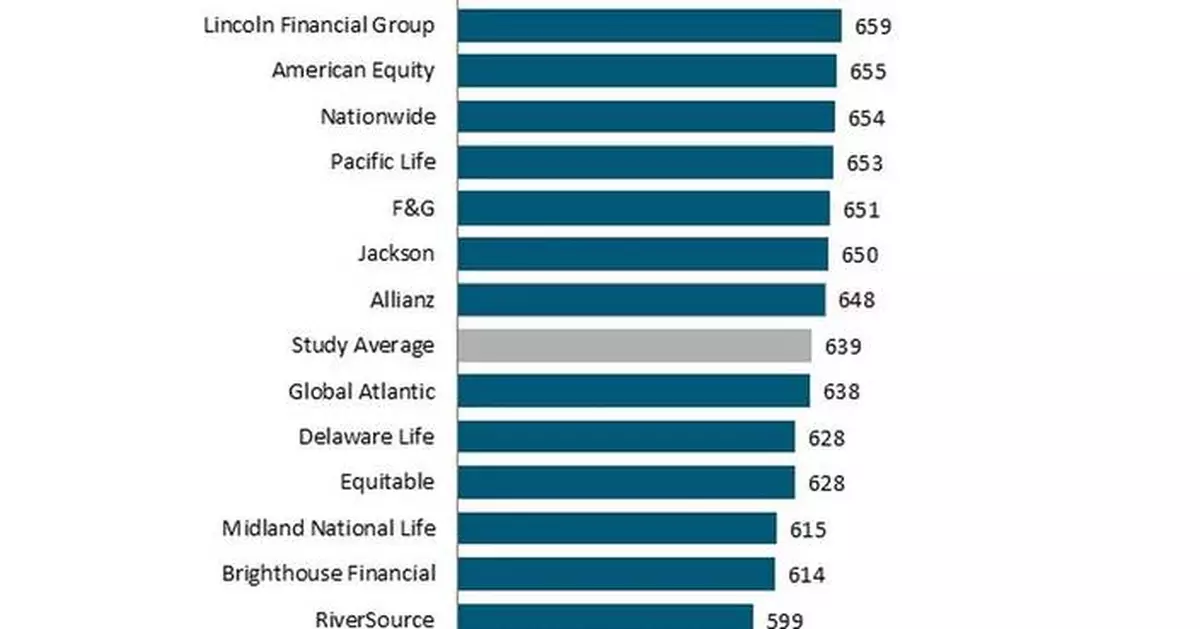
USAA ranks highest among individual annuity providers for a second consecutive year, with a score of 740. Western & Southern Life (684) ranks second and New York Life (675) ranks third.
The U.S. Individual Annuity Study measures the experiences of customers of the largest individual annuity companies in the United States across eight core dimensions (in order of importance): trust; value for price; ability to get service; ease of doing business; people; product offerings; digital channels; and problem resolution. The 2025 study is based on responses from 4,682 individual annuity customers and was fielded from August 2024 through July 2025.
For more information about the U.S. Individual Annuity Study, visit
https://www.jdpower.com/business/insurance/us-annuity-study.
To view the online press release, please visit http://www.jdpower.com/pr-id/2025140.
About J.D. Power
J.D. Power is a global leader in consumer insights, advisory services, and data and analytics. A pioneer in the use of big data, artificial intelligence (AI) and algorithmic modeling capabilities to understand consumer behavior, J.D. Power has been delivering incisive industry intelligence on customer interactions with brands and products for more than 55 years. The world's leading businesses across major industries rely on J.D. Power to guide their customer-facing strategies.
J.D. Power has offices in North America, Europe and Asia Pacific. To learn more about the company's business offerings, visit JDPower.com/business. The J.D. Power auto-shopping tool can be found at JDPower.com.
About J.D. Power and Advertising/Promotional Rules:www.jdpower.com/business/about-us/press-release-info
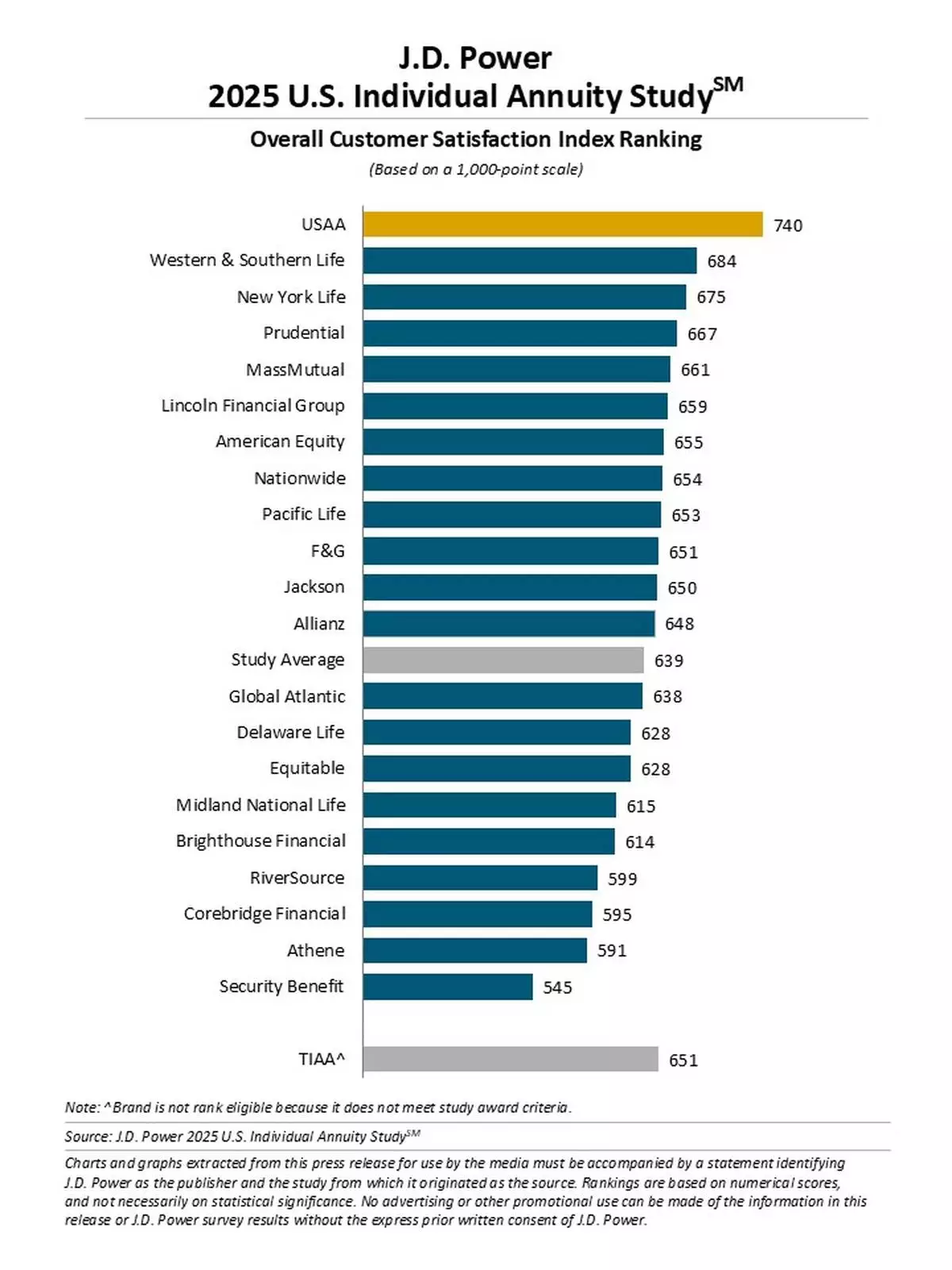
J.D. Power 2025 U.S. Individual Annuity Study
LONDON (AP) — A British court sent two men to prison Friday for setting fire to property linked to British Prime Minister Keir Starmer in a plot orchestrated by a mysterious Russian-speaking figure.
Ukrainian national Roman Lavrynovych, 22, and Stanislav Carpiuc, a 27-year-old Romanian citizen, were imprisoned for 7 years and 2 years, respectively, after being found guilty of conspiracy to damage property by fire.
The men targeted a car and two properties linked to Starmer over three nights in May 2025 on the orders of a Russian-speaking figure going by the name of “El Money,” according to prosecutors. The identity of El Money, who communicated on the messaging app Telegram with Lavrynovych, was never revealed and they were not charged.
Lavrynovych was a “useful idiot, a fool,” who could be manipulated to his handler’s advantage, Judge Neil Garnham Garnham said. The court heard that Carpuic was a middleman tasked with facilitating payment — which never came — and recruiting someone to film the fires.
The plot fits the description of Russian state-backed sabotage, Cmdr. Dominic Murphy has said previously. He oversaw the initial investigation into the fires as head of the counterterrorism team at the Metropolitan Police before retiring in March.
He said evidence gathered by police showed that El Money spoke Russian and is “likely to be in Russia.” El Money’s methods were “very similar” to those known to be used by Russian intelligence services acting in the U.K. Such plots, he said, often have “very senior sign-off.”
Western officials say Russia is carrying out a sabotage campaign against European countries that support Ukraine. The Associated Press has tracked at least 192 attacks across Europe since the 2022 invasion of Ukraine that include arson and cyberattacks as well as attempted assassinations.
When asked by AP in June if Russia is waging a covert war against the West, President Vladimir Putin brushed off the allegations.
Addressing Lavrynovych in the dock, Garnham said he agreed to carry out this “mindless piece of arson for money.”
“You are not a man of great principle. And you were easily bought,” Garnham said. He said that Lavrynovych is a man of “significantly low-level intellectual functioning,” and was therefore vulnerable to manipulation.
He accepted the job from El Money as he had also accepted “other grubby little tasks,” Garnham said.
Lavrynovych’s defense lawyer James Scobie said his client was “low-hanging fruit” used by El Money to deliberately target the prime minister and was prime “fodder for this type of infiltration.” Lavrynovych, he said, had brought shame on his family in Ukraine where his father worked with the military before he died.
The U.K. Home Office called the fires an “abhorrent attack” and said those responsible have been brought to justice. It did not respond to requests for comment about whether the British government planned to attribute the fires to Russia.
Lavrynovych was tasked with setting and filming the fires over several days in May 2025, according to evidence presented during his six-week trial. El Money recruited him online and sent detailed instructions, including the locations of the targets and how to mix flammable liquids from a hardware store.
The attacks did not cause injuries or major damage, but the prime minister’s sister-in-law, Judith Alexander, said she was left “struggling to breathe” after smoke filled her house in the third attack. She and her family were staying at the residence, which had been Starmer’s home before he became prime minister.
Messages recovered from Lavrynovych’s phone showed he discussed other vandalism he conducted for money, such as painting the windshields of cars black and putting up anti-Islam posters in Muslim areas of London.
He was not charged with that activity and it will be investigated, said Cmdr. Helen Flanagan, the current head of the Metropolitan Police’s counterterrorism team.
Counterterrorism police are dealing with more and more crimes, such as arson, which are being directed by anonymous people online promising payment, Flanagan said in a statement after the sentencing.
People who consider carrying out such activity should “think again,” because they could, like Lavrynovych, not get paid and go to jail instead, she said.
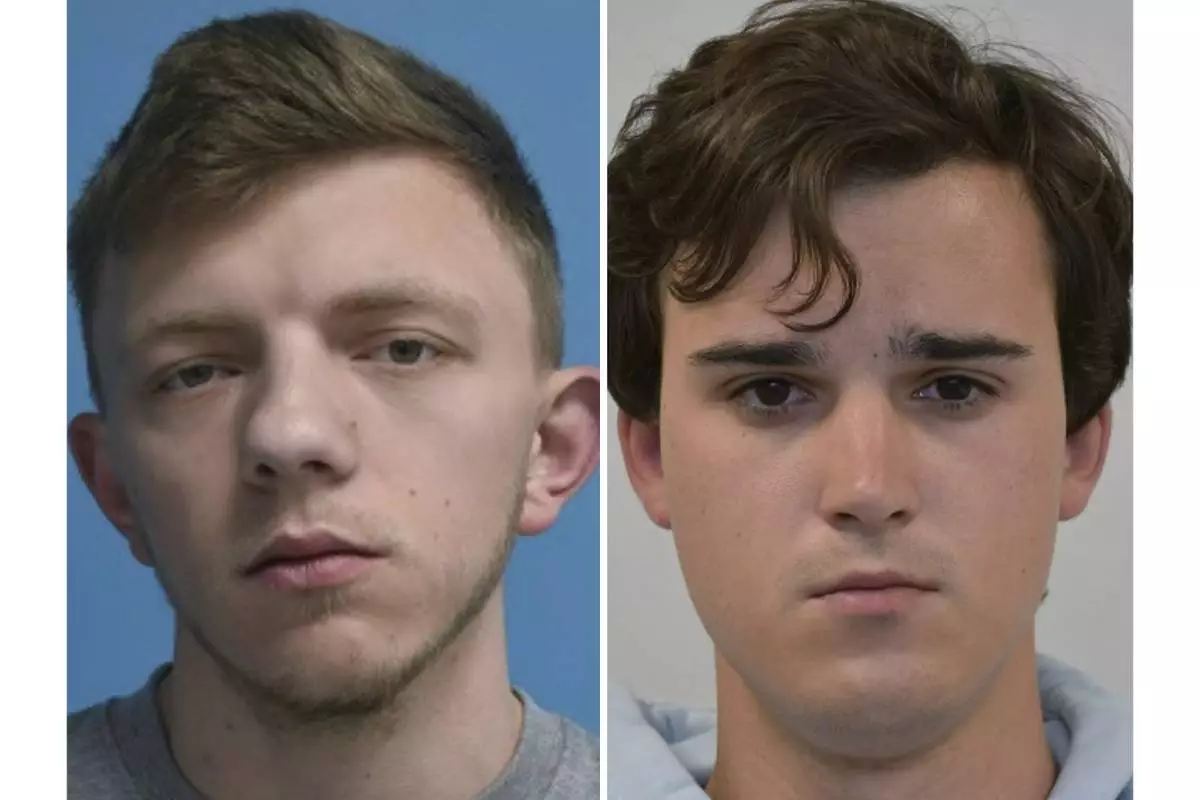
This photo combination of undated photos originally issued on April 29, 2025 by the Metropolitan Police shows Roman Lavrynovych, left, and Stanislav Carpiuc. (Metropolitan Police /PA via AP)