Skip to Content Facebook Feature Image

New wave of Chinese travelers powers South Korea's tourism recovery

China

China

China

New wave of Chinese travelers powers South Korea's tourism recovery

2025-10-28 21:18 Last Updated At:22:07

South Korea is witnessing strong signs of recovery in tourism as an increasing number of Chinese tourists flock to the country, fueling a cross-border tourism resurgence that is revitalizing local businesses and rebuilding people-to-people ties between the two neighboring countries.

The COVID-19 pandemic caused a years-long lull in Chinese travel to South Korea, but visitors from the neighboring country are finally filling the streets of Seoul once again. At the Myeongdong shopping area, from the trendy shops to local eateries, many are rediscovering the city's charm and contributing to a resurgence in cross-border tourism.

"Taking the subway is very convenient, and the South Korean people are very enthusiastic. Even if we can't understand each other, we can communicate through translation applications," said Zhang Ruolian, a Chinese tourist.

"Most of the places we went, there are some merchants that have Alipay, WeChat or even other banks like OCBC, they have the QR code. We can scan it and it's good for us to pay with when we don't have much more cash, Korean won," said Li Yi, another Chinese tourist.

Myeongdong has long been a top destination for Chinese tourists, and its crowded streets now testify to a robust recovery in travel. Experts say this renewed interest is not only helping to revitalize local businesses but also to strengthen broader people-to-people ties between China and South Korea.

The exchange is also flowing in the opposite direction. South Korean travel influencers such as Hello Jackson are introducing China's landscapes and culture to an expanding online audience, helping to bridge perceptions between the two neighboring countries.

"The videos that get the most likes on my channel tend to be from nature spots -- places like Zhangjiajie, Huangshan Mountain, or Mount Tai. A lot of my fans are in their 50s to 70s, and they love seeing those grand, breathtaking landscapes. It's like watching a traditional Chinese ink painting come to life right in front of your eyes," said the content creator.

Tourism experts say this renewed interest is more than just a travel trend. The return of Chinese tourists is giving a significant boost to South Korea's economy and could provide momentum for broader regional cooperation.

"When we factor in secondary effects such as production and job creation, the total contribution of Chinese tourism is projected to reach nearly 14 billion dollars this year. At a time when South Korea's domestic consumption has been sluggish, the return of Chinese travelers could provide a much-needed boost to the local economy," said Jeong Ran-soo, a professor in the Department of Tourism at Hanyang University.

That message of economic recovery and inclusiveness echoes the spirit of APEC, where leaders will gather in Gyeongju this week to discuss sustainable growth and cross-border collaboration.

"If APEC can help foster more inclusive and open societies, tourism can serve as a powerful tool to build those connections. I believe that through this, we can strengthen both the international community and relations between South Korea and China," Jeong said.

The upcoming 32nd APEC Economic Leaders' Meeting will be held in Gyeongju from Oct 31 to Nov 1.

New wave of Chinese travelers powers South Korea's tourism recovery
New wave of Chinese travelers powers South Korea's tourism recovery
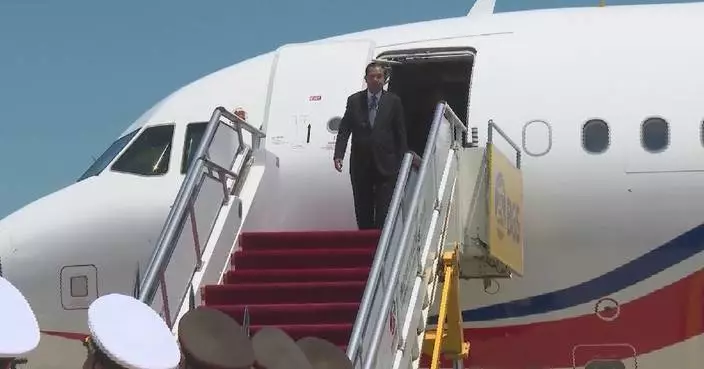
China's first 500-kV cross-border alternating-current power interconnection project entered service Monday, creating the highest voltage grid tie between the two countries and advancing Belt and Road energy cooperation.

The project raises two-way power transfer capacity between the two countries from 50,000 kW to 1.5 million kW, enabling the annual transmission of about 3 billion kWh of clean electricity, roughly 30 times the capacity of previous lines, according to China Southern Power Grid.

As the largest cross-border grid project and the highest-voltage power link between China and Laos, it connects southwest China's Yunnan Province with Oudomxay and Luang Namtha provinces in northern Laos.

Cross-border electricity trading began as the project entered operation. About 4.81 million kWh of power from clean energy bases in northern Laos was transmitted to Yunnan through the new line, marking a more regular and institutionalized phase of power connectivity between the two countries.

It is also the first time an overseas new energy project has participated in China's electricity market, the company said. The power involved in the transaction came from a large mountain photovoltaic project in Laos, one of the core supporting power sources for the interconnection line.

"This project is the cross-border power grid project with the highest voltage level between China and Laos. Leveraging the China-Laos power grid interconnection and the power markets in southern China, surplus hydropower from Laos can be transmitted to China during the rainy season, while China can supply supplemental power to northern Laos during the dry season. This project represents yet another landmark achievement between China and Laos in deepening power cooperation and jointly advancing the high-quality development of the Belt and Road Initiative," said Li Jingru, general manager of Electricite du Laos Transmission Company Limited (EDL-T), a joint venture of China Southern Power Grid and Lao state-run Electricite du Laos.

The solar project has an average annual power generation capacity of about 1.65 billion kWh. In 2026, it is expected to transmit about 1.1 billion kWh of solar power across the border, supporting energy complementarity between the two countries.

"In the future, efforts will be made to further promote normalized cross-border electricity trading, meet the trading needs such as electricity transmission from Laos to China's Yunnan, from China's Yunnan to Laos, and from Laos to China's Guangdong, and facilitate the optimal allocation of energy resources in the Lancang-Mekong region," said Li Minhong, marketing director of China Southern Power Grid.

Construction of the interconnection project began in late February last year. Spanning a total length of 177.5 km, the transmission line includes a 145-km Chinese section and a 32.5-km Lao section.

New China-Laos power link expands transfer capacity 30-fold, boosts electricity trading

New China-Laos power link expands transfer capacity 30-fold, boosts electricity trading

Recommended Articles